词汇表

英语词汇词典 | 单词含义、定义和示例

noun
/ˈɔːrθədɑːksi/
正统 (zhèngtǒng)

traditional or generally accepted beliefs and practices

"The religious leader defended the orthodoxy of the faith."

"宗教领袖捍卫了信仰的正统性。" (Zōngjiào lǐngxiù hànwèi le xìnyǎng de zhèngtǒngxìng.)
adjective
/ɔːrˈθɑːɡənl/
正交 (zhèng jiāo)

at right angles; independent or unrelated

"In mathematics, two vectors are orthogonal if their dot product is zero."

"在数学中,如果两个向量的点积为零,它们就是正交的。" (Zài shùxué zhōng, rúguǒ liǎng gè xiàngliàng de diǎn jī wéi líng, tāmen jiùshì zhèngjiāo de.)
noun
/ɔːrˈθɑːɡrəfi/
拼写法 (pīnxiě fǎ)

The conventional spelling system of a language.

"English orthography can be confusing for learners."

"英语的拼写法对学习者来说可能是令人困惑的。" (Yīngyǔ de pīnxiě fǎ duì xuéxí zhě lái shuō kěnéng shì lìng rén kùnhuò de.)
adjective
/ˌɔːrθəˈpiːdɪk/
与骨骼或肌肉畸形的矫正有关 (yǔ gǔgé huò jīròu jīxíng de jiǎozhèng yǒuguān)

Relating to the correction of deformities of bones or muscles.

"She visited an orthopedic surgeon for her back pain."
"她因为背痛去看了骨科医生。" (Tā yīnwèi bèi tòng qù kànle gǔkē yīshēng.)
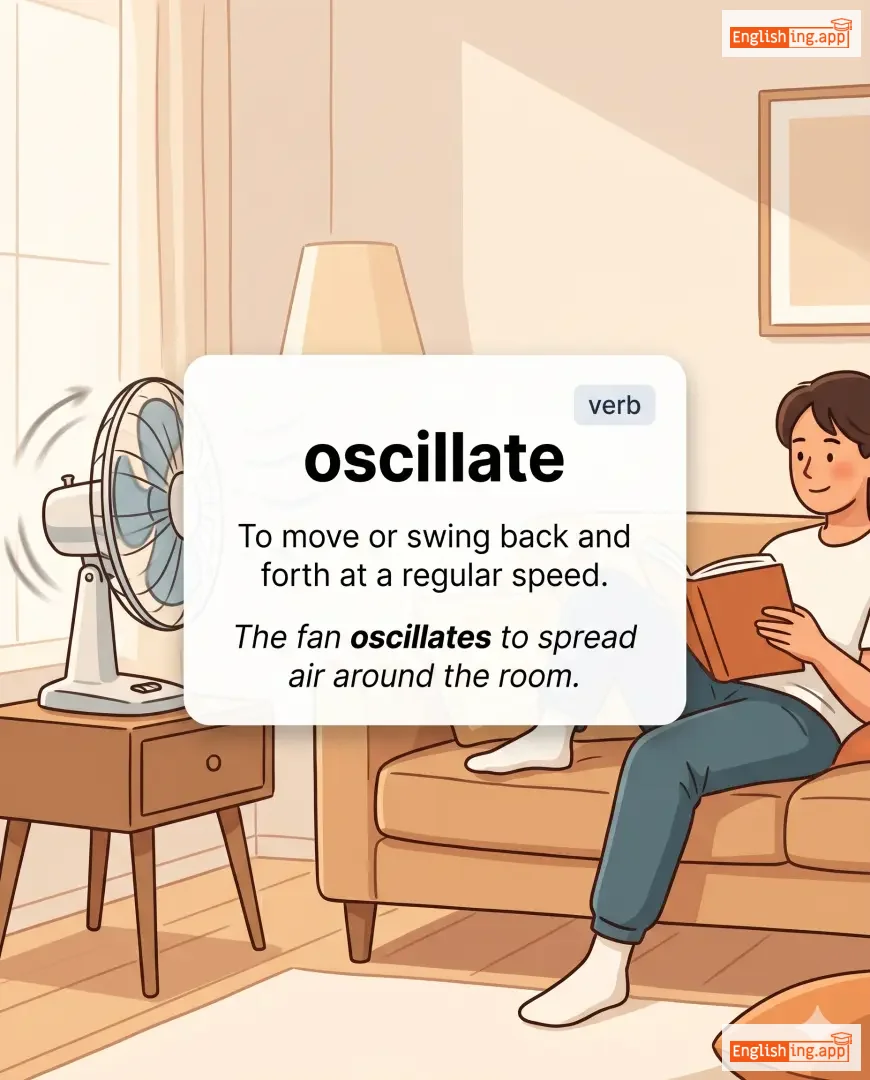
oscillate definition card — visual illustration of the meaning
verb
/ˈɑːsɪleɪt/
幸福 (xìngfú)

To move or swing back and forth at a regular speed.

"The fan oscillates to spread air around the room."

"她获得奖项时无法掩饰她的幸福。" (Tā huòde jiǎngxiàng shí wúfǎ yǎnshì tā de xìngfú.)
noun
/ˌɑːsɪˈleɪʃən/
摆动 (bǎidòng)

The movement back and forth at a regular speed.

"The oscillation of the pendulum controls the clock."

"摆锤的摆动控制着时钟。" (Bǎichuí de bǎidòng kòngzhì zhe shízhōng.)
verb
/ˈɑːskjʊleɪt/
亲吻 (qīn wěn)

To kiss.

"They osculated under the mistletoe during the party."

"他们在派对上在槲寄生下接吻。" (Tāmen zài pàiduì shàng zài hú jì shēng xià jiēwěn.)
adjective
/ˈɒsiəs/
骨质的 (gǔ zhì de)

consisting of or turned into bone; bony

"The fossil showed osseous structures of the ancient creature."

"化石展示了古老生物的骨质结构。" (Huà shí zhǎn shì le gǔ lǎo shēng wù de gǔ zhì jié gòu.)
adjective
/ˈɑːsɪˌfaɪd/
变成骨头,僵硬 (biàn chéng gǔ tóu, jiāng yìng)

Turned into bone or become rigid; unwilling to change.

"The company had an ossified management structure that resisted innovation."

"该公司有一个僵化的管理结构,抵制创新。" (Gāi gōngsī yǒu yīgè jiānghuà de guǎnlǐ jiégòu, dǐzhì chuàngxīn.)
verb
/ˈɒsɪfaɪ/
骨化 (guhua)

to turn into bone or become rigid and inflexible

"With age, some tissues tend to ossify."

"随着年龄的增长,一些组织会变得僵硬。" (Suizhe nianling de zengzhang, yixie zuzhi hui biande jiangying.)
adjective
/ɒˈstɛnsəbl/
表面上 (biaomian shang)

stated or appearing to be true, but not necessarily so

"His ostensible reason for leaving was illness, but many doubted it."

"他离开的表面上原因是生病,但许多人对此表示怀疑。" (Tā líkāi de biǎomiàn shàng yuányīn shì shēngbìng, dàn xǔduō rén duì cǐ biǎoshì huáiyí.)
adjective
/ɒˈstɛnsɪv/
显性 (xiǎn xìng)

clearly demonstrative or pointing out; explicitly shown

"The teacher gave an ostensive example to clarify the concept."

"老师举了一个显性的例子来阐明概念。" (Lǎoshī jǔle yīgè xiǎn xìng de lìzi lái chǎnmíng gàiniàn.)
noun
/ˌɒstɛnˈteɪʃən/
炫耀 (xuànyào)

excessive display of wealth or knowledge intended to attract admiration or envy

"The billionaire’s party was full of ostentation and luxury."
"亿万富翁的派对充满了炫耀和奢华。" (Yìwàn fùwēng de pàiduì chōngmǎnle xuànyào hé shēhuá.)
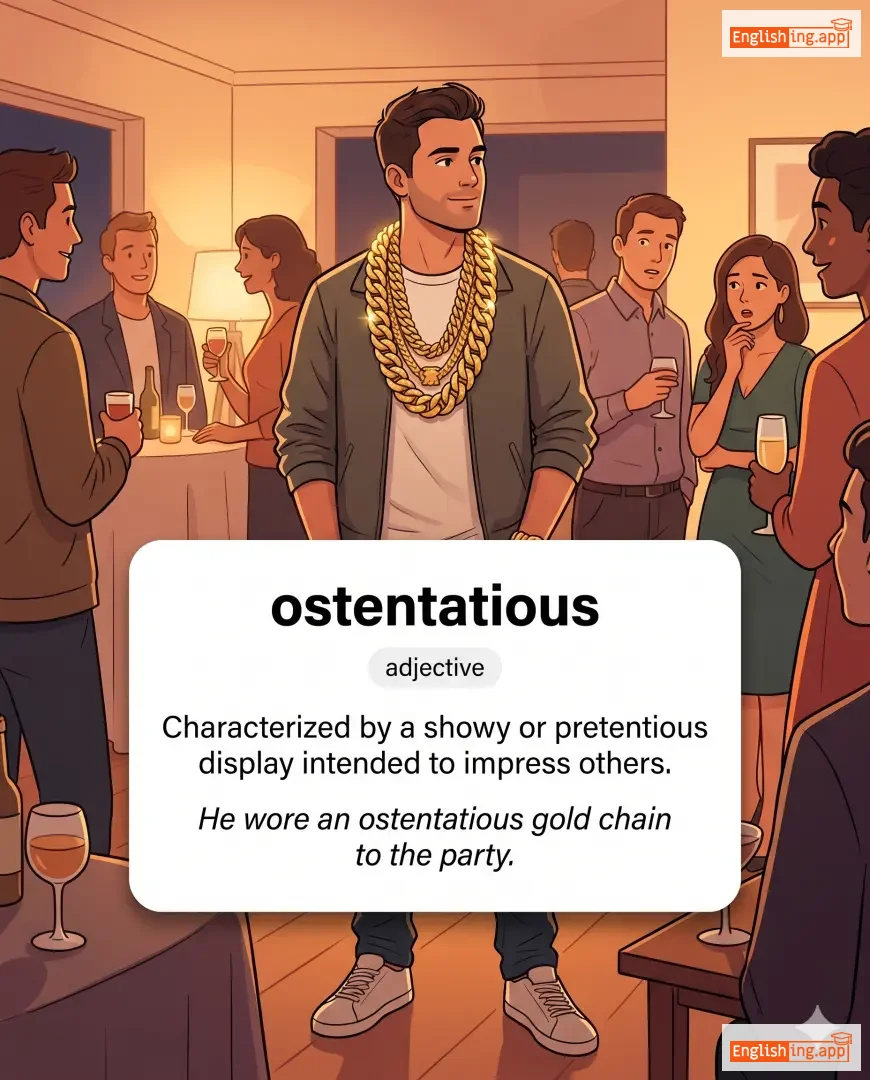
ostentatious definition card — visual illustration of the meaning
adjective
/ˌɒstɛnˈteɪʃəs/
炫耀的 (xuànyào de)

Characterized by a showy or pretentious display intended to impress others.

"He wore an ostentatious gold chain to the party."

"他在派对上戴着一条炫耀的金链子。" (Tā zài pàiduì shàng dàizhe yītiáo xuànyào de jīn liànzi.)
noun
/ˈɒstrəsɪzəm/
排斥 (paichi)

The act of excluding someone from a group or society.

"The student faced ostracism after breaking the rules."
"学生在违反规则后遭受了排斥。" (Xuesheng zai weifan guize hou zaoshou le paichi.)
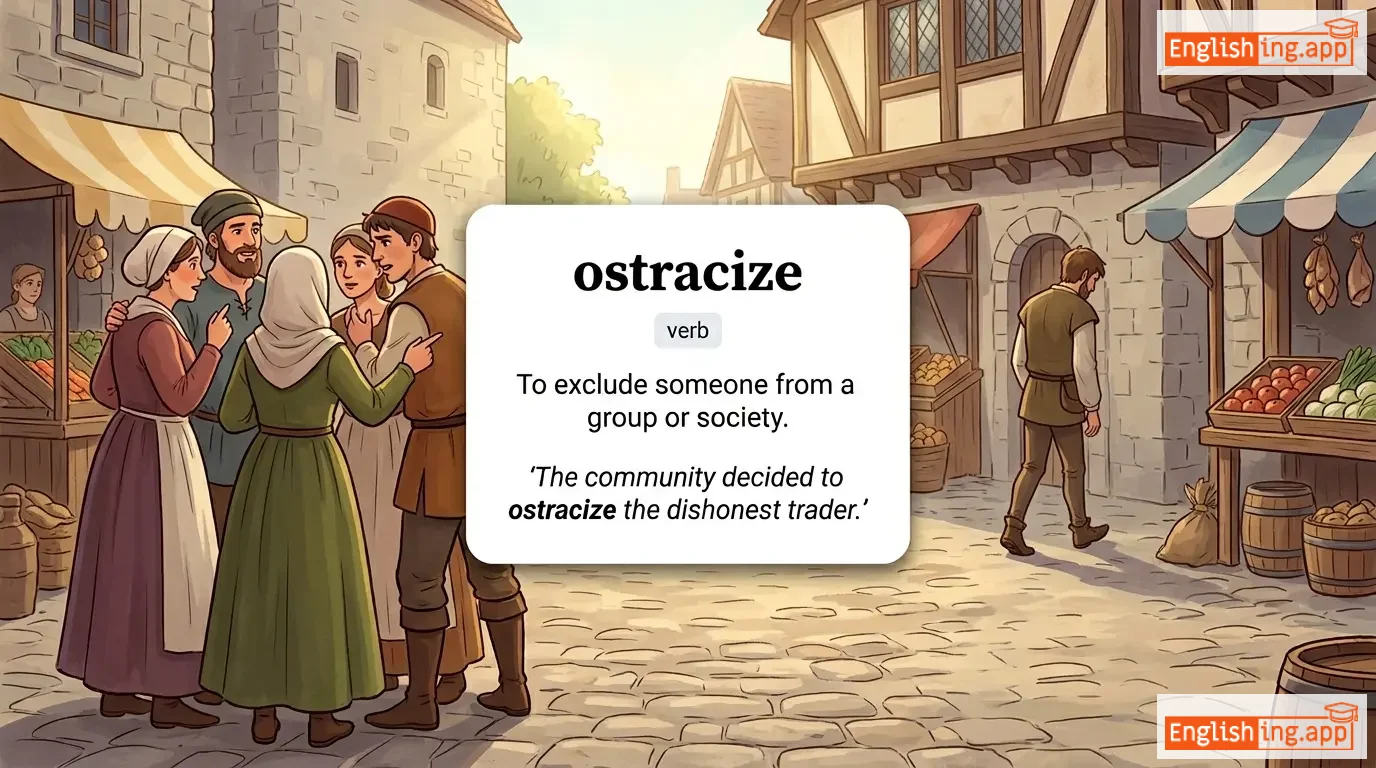
ostracize definition card — visual illustration of the meaning
verb
/ˈɒstrəsaɪz/
排斥 (paichi)

To exclude someone from a group or society.

"The community decided to ostracize the dishonest trader."

"社区决定将不诚实的商人排斥在外。" (Shequ jueding jiang buchengshi de shangren paichi zaiwai.)
noun
/ˈɒs.trɪtʃ/
鸵鸟 (tuó niǎo)

a large flightless bird native to Africa with long legs and neck

"The ostrich is the world's largest bird."

"鸵鸟是世界上最大的鸟。" (tuó niǎo shì shìjiè shàng zuìdà de niǎo)
adjective
/ˈʌðər/
其他 (qítā)

used to refer to something different from the one already mentioned or known

"I don't want this one, I will take the other one."

"我不想要这个,我会拿另一个。" (Wǒ bù xiǎng yào zhège, wǒ huì ná lìng yīgè.)
pronoun
/ˈʌðərz/
其他 (qítā)

people or things distinct from the ones already mentioned or known

"I like to spend time with others."

"我喜欢和其他人一起度过时间。" (Wǒ xǐhuān hé qítā rén yīqǐ dùguò shíjiān.)
adverb
/ˈʌðərwaɪz/
否则 (fǒuzé)

in a different or other way

"We need to hurry; otherwise, we'll miss the train."

"我们得快点,否则我们会错过火车。" (Wǒmen děi kuài diǎn, fǒuzé wǒmen huì cuòguò huǒchē.)
noun
/ˈɒt.ər/
水獺 (shuǐlà)

a mammal with webbed feet that lives near water and feeds on fish

"The playful otter swam gracefully in the river."

"顽皮的水獺优雅地在河里游泳。" (Wánpí de shuǐlà yōuyǎ de zài hé lǐ yóuyǒng.)
modal verb
/ɔːt/
应该 (yinggai)

Used to indicate duty, correctness, or moral obligation.

"You ought to respect your elders."

"你应该尊重长辈。" (Nǐ yīnggāi zūnzhòng zhǎngbèi.)
pronoun
/aʊər/
我们的 (wǒmen de)

belonging to or associated with the speaker and one or more other people

"This is our house."

"这是我们的房子。" (Zhè shì wǒmen de fángzi.)
pronoun
/aʊərz/
我们的 (wǒmen de)

belonging to or associated with us

"This victory is ours."

"这个胜利是我们的。" (Zhège shènglì shì wǒmen de.)
pronoun
/aʊərˈsɛlvz/
我们自己 (wǒmen zìjǐ)

used by the speaker to refer to themselves and one or more others as the object of the verb

"We should help ourselves before helping others."

"我们应该在帮助他人之前先帮助自己。" (Wǒmen yīnggāi zài bāngzhù tārén zhīqián xiān bāngzhù zìjǐ.)
verb
/aʊst/
驱逐 (qūzhú)

To remove someone from a position or place of power or authority.

"The rebels ousted the dictator from power."

"叛乱者将独裁者赶下台。" (Pànluàn zhě jiāng dúcáizhě gǎn xià tái.)
adverb
/aʊt/
外面 (wàimiàn)

moving or appearing away from the inside or center; not at home or present

"He stepped out of the room quietly."

"他悄悄地走出房间。" (Tā qiāoqiāo de zǒuchū fángjiān.)
adjective
/ˌaʊt ən ˈaʊt/
完全 (wanquan)

complete; absolute; used to emphasize something extreme

"The speech was an out-and-out lie."

"这个演讲是一个完全的谎言。" (Zhe ge yanjiang shi yi ge wanquan de huangyan.)
noun
/ˈaʊt.breɪk/
爆发 (owt-breyk)

a sudden occurrence or eruption of something, especially disease or violence

"The outbreak of flu affected many students in the school."

"流感的爆发影响了学校的许多学生。" (liugan de baofa yingxiang le xuexiao de xuduo xuesheng)
adjective
/ˌaʊt əv ðə ˈweɪ/
偏远的或不寻常的 (pianyuan de huo bu xunzhang de)

remote or unusual; not in a convenient or usual location

"They stayed in an out-of-the-way village."

"他们住在一个偏远的村庄里。" (Tāmen zhù zài yīgè piānyuǎn de cūnzhuāng lǐ.)
noun
/ˈaʊt.saɪ.dər/
局外人 (júwàirén)

a person who does not belong to a particular group; someone not accepted by a group

"As an outsider, he found it difficult to understand their traditions."

"作为外人,他发现很难理解他们的传统。" (Zuòwéi wàirén, tā fāxiàn hěn nán lǐjiě tāmen de chuántǒng.)
noun
/ˈaʊtˌbreɪk/
爆发 (baofā)

a sudden start or occurrence of something unpleasant, like disease or violence

"There was an outbreak of flu in the city."

"城市中爆发了流感。" (Chéngshì zhōng bàofāle liúgǎn.)
noun
/ˈaʊtbɜːrst/
情感或活动的突然爆发 (qínggǎn huò huódòng de túrán bàofā)

a sudden release of strong emotion or activity

"She had an angry outburst during the meeting."

"她在会议期间突然发火。" (Tā zài huìyì qíjiān túrán fāhuǒ.)
noun
/ˈaʊtkæst/
被排斥者 (bèi páichī zhě)

a person who is rejected or excluded from society or a group

"He felt like an outcast at school."

"他在学校里觉得自己像个被排斥者。" (Tā zài xuéxiào lǐ juédé zìjǐ xiàng gè bèi páichī zhě.)
noun
/ˈaʊtkʌm/
结果 (jieguo)

the result or consequence of an action or situation

"The outcome of the project was beyond expectations."

"这个项目的结果超出了预期。" (Zhege xiangmu de jieguo chaochule yuqi.)
noun
/ˈaʊtˌkraɪ/
抗议 (kangyi)

A strong expression of public anger or disapproval.

"The decision sparked an outcry among the citizens."

"这个决定在市民中引发了抗议。" (Zhege jueding zai shimin zhong yinfa le kangyi.)
adjective
/ˌfæʃ.ənd/
过时 (guòshí)

obsolete; no longer current

"This computer software is completely outdated."

"这个软件完全过时了。" (Zhège ruǎnjiàn wánquán guòshí le.)
verb
/ˌaʊtˈduː/
超越 (chaoyue)

To do better than someone else; to surpass.

"She always tries to outdo her classmates in exams."

"她总是尽力在考试中超越她的同学。" (Tā zǒng shì jìnlì zài kǎoshì zhōng chāoyuè tā de tóngxué.)
adjective
/ˈaʊtdɔːr/
户外 (hù wài)

situated, existing, or done outside a building

"We planned an outdoor picnic for the weekend."

"我们计划了一个户外野餐,周末进行。" (Wǒmen jìhuàle yīgè hùwài yěcān, zhōumò jìnxíng.)
adverb; noun
/ˌaʊtˈdɔːrz/
在户外 (zai huwai)

outside a building; the natural environment outside

"We spent the whole afternoon outdoors enjoying the fresh air."

"我们整个下午都在户外享受新鲜空气。" (women zhengge xiawu dou zai huwai xiangshou xinxian kongqi)
adjective
/ˈaʊtər/
外部 (waibu)

situated on or toward the outside; external

"The outer layer of the jacket is waterproof."

"夹克的外层是防水的。" (Jiakede waceng shi fangshui de.)
noun
/ˈaʊtˌfɪt/
服装 (fúzhuāng)

A set of clothes worn together, often for a particular occasion.

"She wore a beautiful outfit to the party."

"她穿了一套漂亮的服装去参加派对。" (Tā chuānle yī tào piàoliang de fúzhuāng qù cānjiā pàiduì.)
adjective
/ˈaʊtˌɡoʊɪŋ/
外向 (wàixiàng)

Friendly and sociable; inclined to mix with others.

"He is an outgoing person who loves meeting new people."

"他是一个外向的人,喜欢结识新朋友。" (Tā shì yīgè wàixiàng de rén, xǐhuān jièshí xīn péngyǒu.)
noun
/ˈaʊtˌɡroʊθ/
衍生物 (yǎnshēngwù)

something that grows out of something else; a natural development or result

"The new policy was an outgrowth of years of debate."

"新政策是多年辩论的衍生物。" (Xīn zhèngcè shì duōnián biànlùn de yǎnshēngwù.)
noun
/ˈaʊtɪŋ/
短途旅行 (duǎntú lǚxíng)

a short trip or excursion, often for leisure or enjoyment

"They had a lovely outing at the beach last weekend."

"他们上周末在海滩上度过了一个美好的短途旅行。" (Tāmen shàng zhōumò zài hǎitān shàng dùguò le yīgè měihǎo de duǎntú lǚxíng.)
adjective
/ˌaʊtˈlændɪʃ/
奇异 (qiyi)

Looking or sounding bizarre or unfamiliar; strange.

"He wore an outlandish costume to the festival."

"他穿着一件奇异的服装参加了节日。" (Ta chuanzhe yijian qiyi de fuzhuang canjia le jieri.)
verb
/aʊtˈlæst/
比...持续更久 (bǐ... chíxù gèng jiǔ)

to continue longer than; to endure beyond someone or something else

"The old castle has outlasted many generations."

"这座古老的城堡已经比许多代人持续得更久。" (Zhè zuò gǔlǎo de chéngbǎo yǐjīng bǐ xǔduō dài rén chíxù de gèng jiǔ.)
noun, verb
/ˈaʊtlɔː/

as a noun: a person who breaks the law and lives outside its protection; as a verb: to make something illegal

"The government decided to outlaw the harmful practice."

noun
/ˈaʊtlet/
出口 (chūkǒu)

a means by which something is released, expressed, or distributed

"Art is a great outlet for emotions."

"艺术是情感的一个极好的出口。" (Yìshù shì qínggǎn de yīgè jí hǎo de chūkǒu.)
noun, verb
/ˈaʊtlaɪn/

a general description or plan that gives the main ideas without details; to describe something briefly or highlight main points

"The teacher asked us to outline our research project before writing the report."