词汇表

英语词汇词典 | 单词含义、定义和示例

noun
/ˈɔːrətər/
演讲者 (yanjiangzhe)

A person who delivers formal speeches with skill and eloquence

"The orator captivated the audience with his eloquence."

"演讲者以其雄辩吸引了听众。" (Yanjiangzhe yi qi xiongbian xini le tingzhong.)
noun
/ˌɔːrəˈtɔːri.oʊ/
宗教音乐作品 (zongjiao yinyue zuopin)

A large-scale musical composition for orchestra, choir, and soloists, usually on a sacred theme, performed without costumes or scenery.

"Handel's 'Messiah' is one of the most famous oratorios ever written."
"亨德尔的《弥赛亚》是最著名的宗教音乐作品之一。" (Hengde'er de 'Misaiya' shi zui zhuming de zongjiao yinyue zuopin zhi yi.)
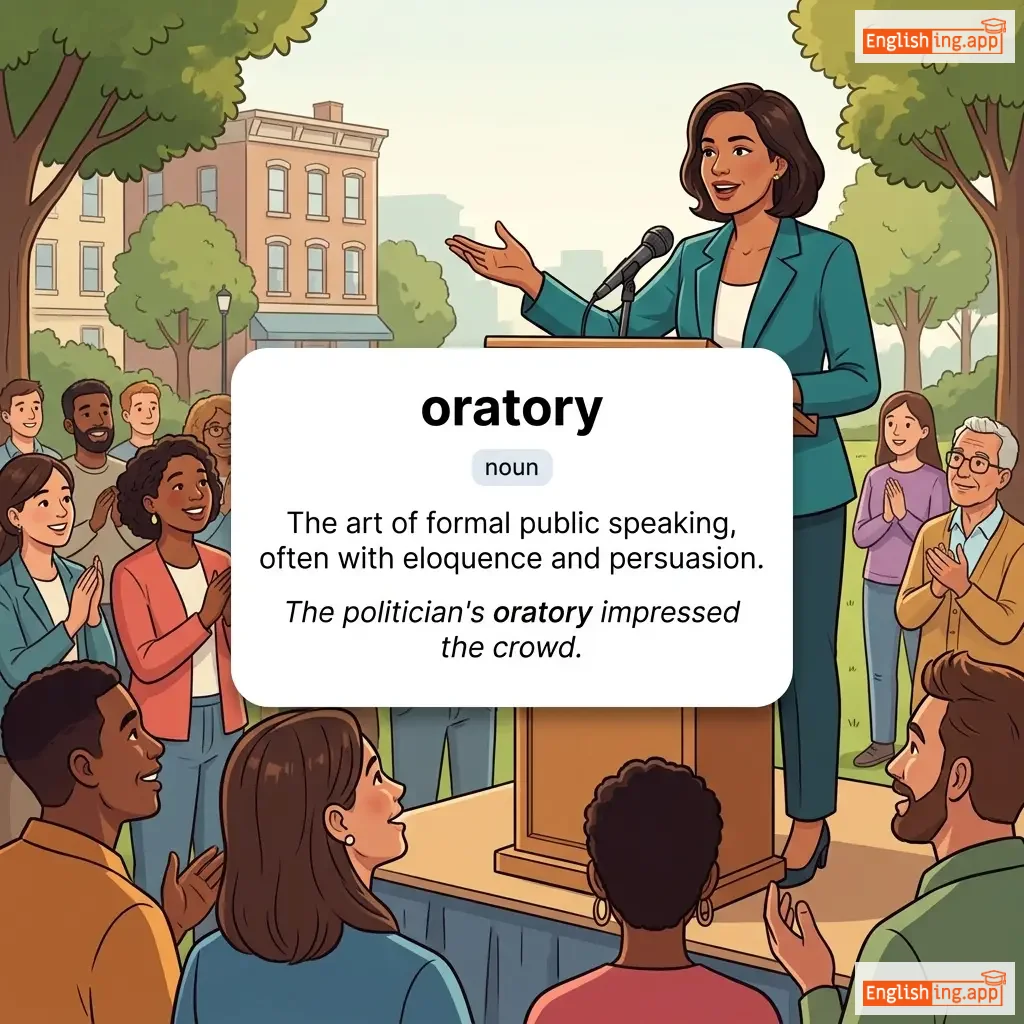
oratory definition card — visual illustration of the meaning
noun
/ˈɔːrəˌtɔːri/
演讲艺术 (yǎnjiǎng yìshù)

The art of formal public speaking, often with eloquence and persuasion.

"The politician's oratory impressed the crowd."

"那位政治家的演讲艺术给人留下了深刻印象。" (Nà wèi zhèngzhìjiā de yǎnjiǎng yìshù gěi rén liúxiàle shēn kè yìnxiàng.)
orbit definition card — visual illustration of the meaning
noun
/ˈɔːbɪt/
轨道 (guidao)

the curved path that a planet, satellite, or object follows around another body in space

"The Earth moves in an orbit around the Sun."

"地球围绕太阳沿轨道运动。" (Dìqiú wéirào tàiyáng yán guidao yùndòng.)
noun
/ˈɔːkɪstrə/
管弦乐队 (guǎnxián yuèduì)

a large group of musicians playing different instruments together

"The orchestra performed beautifully at the concert."
"管弦乐队在音乐会上演奏得非常出色。" (Guǎnxián yuèduì zài yīnyuè huì shàng yǎnzòu de fēicháng chūsè.)
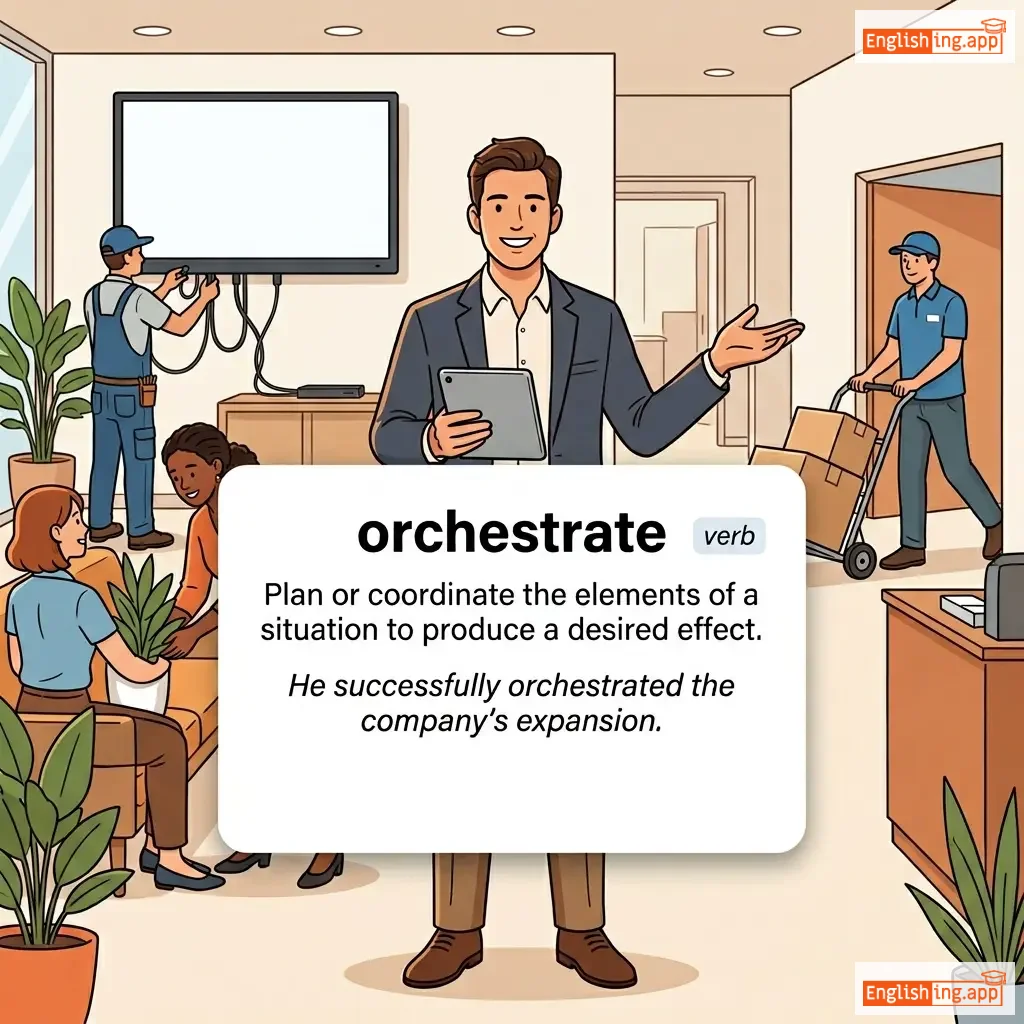
orchestrate definition card — visual illustration of the meaning
verb
/ˈɔːr.kɪ.streɪt/
策划 (cèhuà)

Plan or coordinate the elements of a situation to produce a desired effect.

"He successfully orchestrated the company's expansion."

"他成功地策划了公司的扩展。" (Tā chénggōng de cèhuàle gōngsī de kuòzhǎn.)
orchestrated definition card — visual illustration of the meaning
verb
ˈɔː.kɪ.streɪ.tɪd
精心策划 (jīngxīn cèhuà)

Planned or coordinated carefully and deliberately.

"The attacks were orchestrated with precision."

"袭击被精确地策划了。" (Xíjī bèi jīngquè de cèhuàle.)
noun
/ˈɔːrkɪd/
兰花 (lanhua)

a diverse family of flowering plants known for their exotic and often fragrant flowers

"The white orchid on the windowsill bloomed for months."

"窗台上的白色兰花开了好几个月。" (Chuāngtái shàng de báisè lánhuā kāile hǎo jǐ gè yuè.)
verb
/ɔːrˈdeɪn/

To officially make someone a priest or minister; to decree or order something officially.

"The bishop will ordain three new priests this Sunday."

ordeal definition card — visual illustration of the meaning
noun
/ɔːrˈdiːl/
艰难经历 (jian nan jing li)

A very difficult or painful experience, often lasting for a long time.

"The survivors went through a terrible ordeal after the earthquake."

"地震后,幸存者经历了可怕的考验。" (Dizhen hou, xingcun zhe jingli le keba de kaoyan.)
Order definition card — visual illustration of the meaning
noun
/ˈɔːdə(r)/
订单 (dìng dān)

an arrangement or command; a request for something to be made, done, or delivered

"He placed an order for a new laptop."

"他为一台新笔记本下了订单。" (Tā wèi yī tái xīn bǐjìběn xiàle dìngdān.)
adjective
/ˈɔː.də.li/
有序的; 系统的; 平静的 (orderli)

well-organized; systematic; peaceful

"Please keep your desk orderly and clean."

"请保持您的桌面整齐和干净。" (qǐng bǎochí nín de zhuōmiàn zhěngqí hé gānjìng.)
adjective
/ˈɔːrdɪnəl/
序数 (xùshù)

Relating to the order or position of something in a sequence (first, second, third, etc.).

"The ordinal number 'third' indicates position in a sequence."

"序数词'第三'表示在顺序中的位置。" (Xùshùcí 'dì sān' biǎoshì zài shùnxù zhōng de wèizhì.)
noun
/ˈɔːrdɪnəns/
法令 (fǎlìng)

An authoritative rule, law, or decree issued by a city, town, or authority.

"The city council passed an ordinance banning smoking in public parks."

"市议会通过了一项法令,禁止在公共公园内吸烟。" (Shì yìhuì tōngguò le yī xiàng fǎlìng, jìnzhǐ zài gōnggòng gōngyuán nèi xīyān.)
adjective
/ˈɔːrdəˌnɛri/
普通的 (putong de)

Common, usual, or not special; something that happens regularly.

"She wore an ordinary dress to the party."

"她穿着一件普通的裙子去参加派对。" (Ta chuanzhuo yijian putong de qunzi qu canjia paidui.)
noun
/ˌɔːrdɪˈneɪʃən/
任职 (renzhi)

The ceremony of conferring holy orders or official religious authority.

"The church held a special service for the ordination of new priests."

"教堂为新神父举行了一个特别的服务,进行圣职任命。" (Jiàotáng wèi xīn shénfù jǔxíngle yīgè tèbié de fúwù, jìnxíng shèngzhí rènmìng.)
noun
/ˈɔːrdnəns/
军火 (jūnhuǒ)

Military supplies including weapons, ammunition, and combat equipment.

"The army stored ordnance in a secure facility outside the city."

"军队在城市外的一个安全设施中存储军火。" (Jūnduì zài chéngshì wài de yīgè ānquán shèshī zhōng cúnchú jūnhuǒ.)
noun
/ˈɔːɡən/
器官 (qìguān)

a part of the body that performs a specific function

"The heart is an important organ in the human body."

"心脏是人体重要的器官。" (Xīnzàng shì réntǐ zhòngyào de qìguān.)
organic definition card — visual illustration of the meaning
adjective
/ɔːrˈɡænɪk/
有机的 (youji de)

Relating to or derived from living matter; produced without artificial chemicals.

"They prefer to eat organic fruits and vegetables."
"他们更喜欢吃有机的水果和蔬菜。" (Tamen geng xihuan chi youji de shuiguo he shucai.)
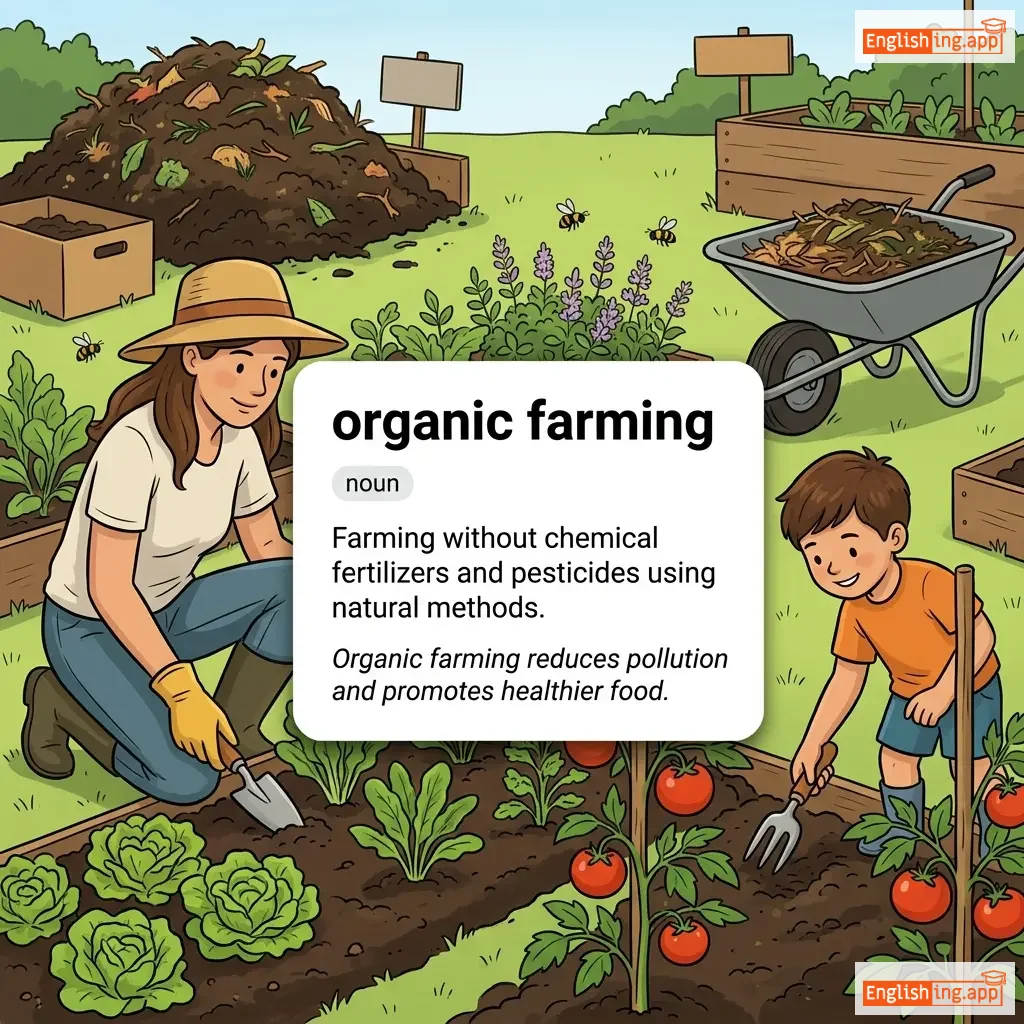
organic farming definition card — visual illustration of the meaning
noun
ˈɔːr.ɡə.nɪk ˈfɑːr.mɪŋ
有机农业 (youji nongye)

Farming without chemical fertilizers and pesticides using natural methods.

"Organic farming reduces pollution and promotes healthier food."

"有机农业减少污染并促进更健康的食品。" (Youji nongye jianshao wuran bing cujin geng jiankang de shipin.)
organic foods definition card — visual illustration of the meaning
noun
ɔːˈɡæn.ɪk fuːdz
有机食品 (youji shipin)

Food produced without the use of chemicals such as artificial pesticides, fertilizers, or other artificial agents.

"Organic foods are healthier than processed foods."

"有机食品比加工食品更健康。" (Youji shipin bi jiangong shipin geng jiankang.)
noun
/ˈɔːɡənɪzəm/
有机体 (youji ti)

a living thing that has an organized structure and can grow and reproduce

"Every organism needs water to survive."
"每个有机体都需要水才能生存。" (měi gè yǒu jī tǐ dōu xūyào shuǐ cáinéng shēngcún.)
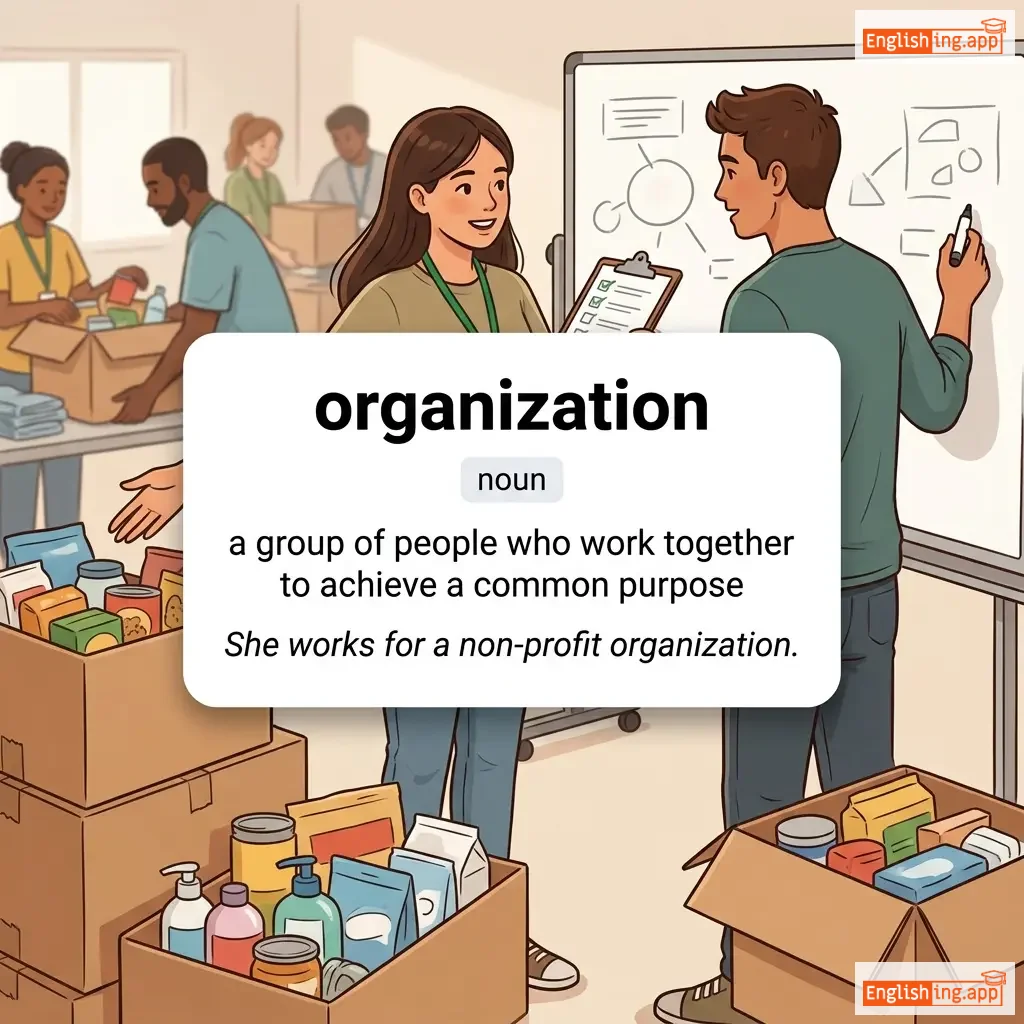
organization definition card — visual illustration of the meaning
noun
/ˌɔːɡənaɪˈzeɪʃn/
组织 (zuzhi)

a group of people who work together to achieve a common purpose

"She works for a non-profit organization."

"她在一个非盈利组织工作。" (Ta zai yige fei yingli zuzhi gongzuo.)
adjective
/ˌɔːɡənaɪˈzeɪʃənəl/
组织性的 (zuzhixing de)

relating to the structure or arrangement of a company or group

"He works on improving the organizational structure of the company."
"他在改善公司的组织结构方面工作。" (Ta zai gaishan gongsi de zuzhixingshe jiegou fangmian gongzuo.)
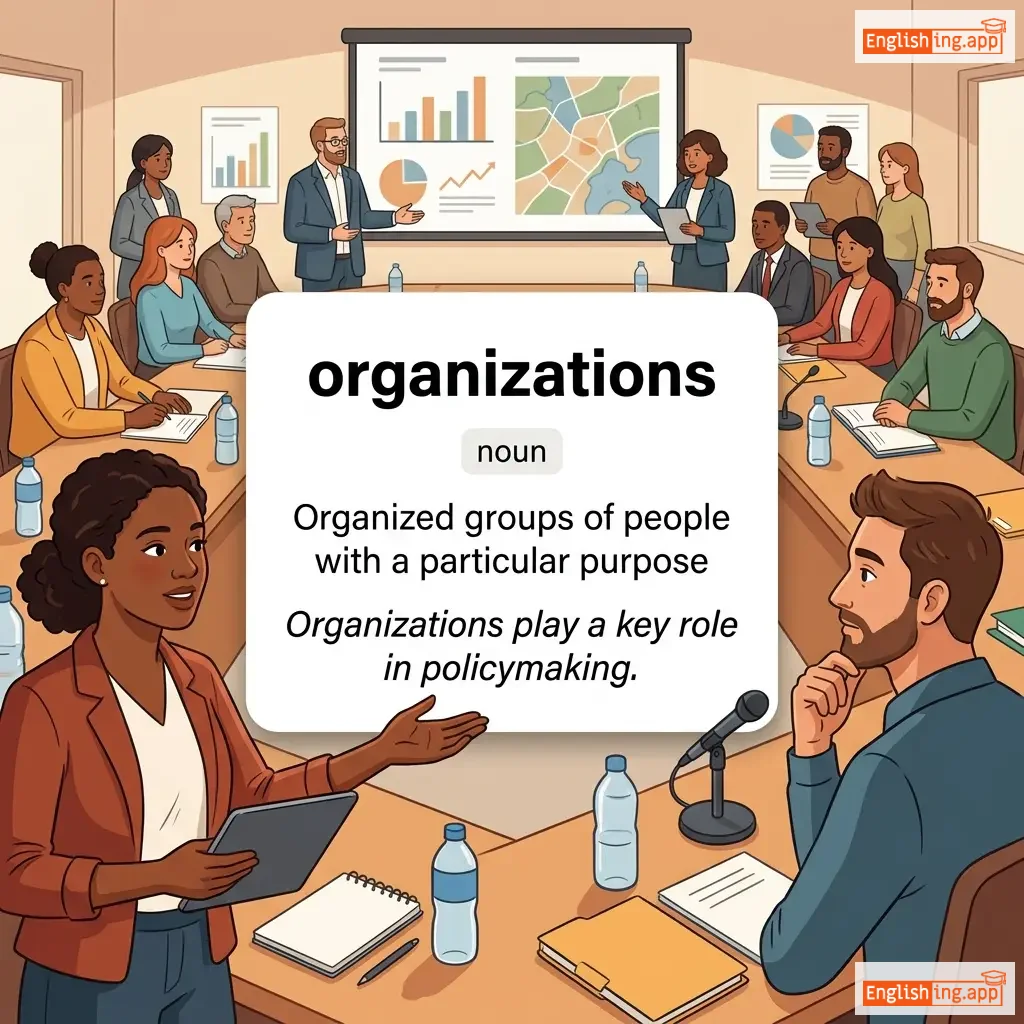
organizations definition card — visual illustration of the meaning
noun
ˌɔː.ɡən.aɪˈzeɪ.ʃənz
组织 (zǔzhī)

Organized groups of people with a particular purpose

"Organizations play a key role in policymaking."

"组织在政策制定中发挥着重要作用。" (Zǔzhī zài zhèngcè zhìdìng zhōng fāhuī zhe zhòngyào zuòyòng.)
organize definition card — visual illustration of the meaning
verb
/ˈɔːɡənaɪz/
组织 (zuzhi)

to arrange or systematize something

"They decided to organize a charity event for the community."

"他们决定为社区组织一个慈善活动。" (Tāmen juédìng wèi shèqū zǔzhī yīgè císhàn huódòng.)
organized definition card — visual illustration of the meaning
adjective
/ˈɔːrɡənaɪzd/
有序的 (yǒuxù de)

arranged or structured in a systematic and efficient way

"She always keeps her workspace neat and organized."

"她总是保持她的工作空间整洁和有序。" (Tā zǒng shì bǎochí tā de gōngzuò kōngjiān zhěngjié hé yǒuxù.)
noun
/ˈɔːrɡənaɪzər/
组织者 (zuzhizhe)

a person who arranges or coordinates activities, events, or groups; a tool or item used to keep things in order

"She worked as the main organizer of the international conference."

"她是这次国际会议的主要组织者。" (Ta shi zhe ci guoji huiyi de zhuyao zuzhizhe)
noun (plural)
/ˈɔːrdʒiːz/
狂欢 (kuánghuān)

Wild gatherings involving excessive indulgence in food, drink, or sexual activity.

"The ancient Romans were infamous for their lavish feasts and orgies."

"古罗马人以其奢华的宴会和狂欢而闻名。" (Gǔ Luómǎ rén yǐ qí shēhuá de yànhuì hé kuánghuān ér wénmíng.)
noun
/ˈɔːrdʒi/
荒淫派对 (huāngyín pàiduì)

A wild party involving excessive indulgence, especially of a sexual nature.

"The novel described a scandalous orgy in a wealthy mansion."

"小说描述了在一座富裕的豪宅里举行的丑闻般的荒淫派对。" (Xiǎoshuō miáoshùle zài yī zuò fùyù de háozhái lǐ jǔxíng de chǒuwén bān de huāngyín pàiduì.)
verb
/ˈɔː.ri.ənt/

to align or position something relative to a particular point or direction

"The map helps tourists orient themselves in the city."

adjective
/ˌɔː.riˈen.təl/
与东亚国家相关的;东方的 (dongfang)

relating to the countries of East Asia; eastern

"The museum has a beautiful collection of oriental art."

"博物馆收藏有美丽的东方艺术作品。" (Bowuguan shoucang you mei li de dongfang yishu zuopin)
noun
/ˌɔː.ri.enˈteɪ.ʃən/
定向 (dingxiang)

the process of becoming familiar with a new situation or environment

"The company provides an orientation for all new employees."

"公司为所有新员工提供定向培训。" (Gongsi wei suoyou xin yuangong tigong dingxiang peixun.)
noun
/ˈɔː.rɪ.fɪs/
(kong)

an opening or hole, especially in the body or a device

"The medicine was applied through a small orifice in the device."

"药物通过设备上的一个小孔应用。" (Yao wu tongguo shebei shang de yi ge xiao kong yingyong.)
noun
/ˈɒr.ɪ.dʒɪn/
起源 (qiyuan)

the point or place where something begins or is created

"The river has its origin in the mountains."

"这条河流起源于山脉。" (Zhe tiao heliu qiyuan yu shanmai.)
adjective
/əˈrɪdʒ.ɪ.nəl/
原始 (yuán shǐ)

existing from the beginning; not a copy or imitation

"This is the original manuscript of the novel."

"这是小说的原始手稿。" (zhè shì xiǎoshuō de yuán shǐ shǒugǎo.)
noun
/əˌrɪʒ.əˈnæl.ə.ti/
原创性 (yuanchuangxing)

the quality of being novel or unusual; the ability to think independently and creatively

"The artist's work showed great originality and creativity."

"艺术家的作品展示了极大的原创性和创造力。" (yishujia de zuopin zhanshile ji da de yuanchuangxing he chuangzaoli)
adverb
/əˈrɪdʒɪnəli/
最初 (zuìchū)

in the beginning, at first

"Originally, she wanted to be a doctor."

"最初,她想成为一名医生。" (Zuìchū, tā xiǎng chéngwéi yī míng yīshēng.)
verb
/əˈrɪdʒɪneɪt/
起源 (qǐyuán)

to come into existence; to begin; to create or produce

"The tradition originated in ancient times."

"这个传统起源于古代。" (Zhège chuántǒng qǐyuán yú gǔdài.)
noun
/ˈɒrɪz(ə)n/
祷告 (daogao)

a prayer, especially a devout or formal one

"He whispered a quiet orison before going to sleep."

"他在睡觉前低声祈祷。" (Ta zai shuijiao qian disheng qidao.)
noun
/ˈɔːrnəmənt/
装饰品 (zhuāngshìpǐn)

A decorative object that adds beauty to something.

"The Christmas tree was decorated with colorful ornaments."

"圣诞树上装饰着五颜六色的装饰品。" (Shèngdànshù shàng zhuāngshìzhe wǔyán liùsè de zhuāngshìpǐn.)
adjective
/ˌɔːrnəˈmɛntl/
装饰性的 (zhuāngshì xìng de)

Serving as decoration; decorative rather than functional.

"The garden was filled with ornamental plants."

"花园里满是装饰性的植物。" (Huāyuán lǐ mǎn shì zhuāngshì xìng de zhíwù.)
adjective
/ɔːˈneɪt/
华丽的 (huálì de)

elaborately or highly decorated

"The palace hall was filled with ornate furniture and paintings."

"宫殿的大厅里充满了华丽的家具和画作。" (Gōngdiàn de dàtīng lǐ chōngmǎn le huálì de jiājù hé huàzuò.)
adjective
/ˈɔːrnəri/
脾气暴躁的 (píqì bàozào de)

bad-tempered and combative; stubborn

"The ornery old man refused to leave his chair."

"那个脾气暴躁的老头拒绝离开他的椅子。" (Nàgè píqì bàozào de lǎotóu jùjué líkāi tā de yǐzi.)
noun
/ˌɔːrnɪˈθɒlədʒɪst/
鸟类学家 (niao lei xue jia)

a scientist who studies birds

"The ornithologist spent years studying migratory birds."

"这位鸟类学家花了多年时间研究迁徙鸟类。" (Zhe wei niaolei xuejia hua le duonian shijian yanjiu qianxi niaolei.)
noun
/ˌɔːrnɪˈθɑːlədʒi/
鸟类学 (niao lei xue)

the scientific study of birds

"She pursued ornithology to understand the migration patterns of birds."

"她追求鸟类学以了解鸟类的迁徙模式。" (Ta zhuiqiu niaolei xue yi liaojie niaolei de qianxi moshi.)
adjective
/ˈɔːrəˌtʌnd/
深沉而清晰的声音 (shēnchén ér qīngxī de shēngyīn)

full, rich, and clear in sound; pompous in style

"The actor's orotund voice filled the theater."

"演员的深沉声音充满了剧院。" (Yǎnyuán de shēnchén shēngyīn chōngmǎnle jùyuàn.)
noun
/ˈɔr.fən/
孤儿 (gū ér)

a child whose parents are dead; someone without protective support

"The orphan was adopted by a loving family."

"孤儿被一户充满爱心的家庭收养了。" (gū ér bèi yī hù chōngmǎn àixīn de jiātíng shōuyǎng le.)
noun
/ˈɔr.fən.ɪʒ/
孤儿院 (gū'éryuàn)

an institution for the care and education of children who have lost their parents

"The charity built a new orphanage for homeless children."

"慈善机构为无家可归的孩子建了一个新孤儿院。" (Císhàn jīgòu wèi wújiā kě guī de háizi jiànle yīgè xīn gū'éryuàn.)
adjective
/ˈɔːrθədɑːks/

conforming to traditional beliefs or practices

"He comes from a very orthodox family."