词汇表

英语词汇词典 | 单词含义、定义和示例

olfactory definition card — visual illustration of the meaning
adjective
/ɑːlˈfæktəri/

Relating to the sense of smell.

"The perfume activated her olfactory nerves immediately."

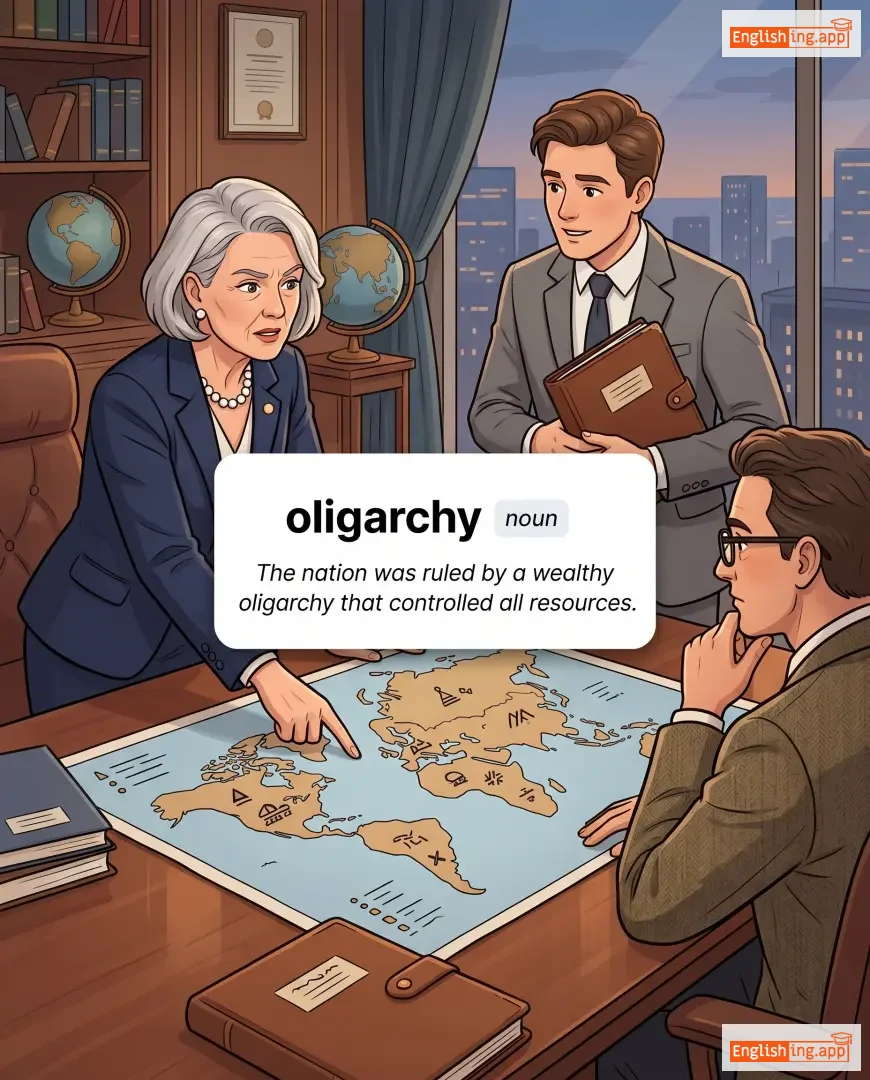
oligarchy definition card — visual illustration of the meaning
noun
/ˈɑːlɪˌɡɑːrki/
寡头政治 (guǎtóu zhèngzhì)

A small group of people having control of a country, organization, or institution.

"The nation was ruled by a wealthy oligarchy that controlled all resources."

"这个国家由一个富有的寡头集团统治,控制着所有资源。" (Zhège guójiā yóu yīgè fùyǒu de guǎtóu jítuán tǒngzhì, kòngzhì zhe suǒyǒu zīyuán.)
noun
/ˈɑː.lɪv/
橄榄 (gǎn lǎn)

a small oval fruit with a hard pit, typically green or black, used for eating or making oil

"Olive oil is considered one of the healthiest cooking oils available."

"橄榄油被认为是最健康的烹饪油之一。" (gǎn lǎn yóu bèi rènwéi shì zuì jiànkāng de pēngrèn yóu zhī yī.)
noun
/ˈɒlɪv bɑːb/
橄榄鲃 (ganlan ba)

A small freshwater fish with olive-colored body and barbels

"The olive barb is commonly found in South Asian rivers."

"橄榄鲃常见于南亚的河流中。" (ganlan ba changjian yu nanya de heliu zhong)
noun
/ˈɒlɪv brɑːntʃ/
橄榄枝 (ganlan zhi)

A symbol of peace or reconciliation; an offer to end conflict.

"He extended an olive-branch to his rival after years of hostility."

"他在多年敌对之后向他的对手伸出了橄榄枝。" (Ta zai duonian didui zhihou xiang tade duishou shenchu le ganlan zhi.)
adjective
/əˈlɪmpɪk/
奥林匹克 (àolínpǐkè)

related to the Olympic Games, a major international sporting event

"She trained hard to compete in the Olympic Games."

"她努力训练,为了参加奥林匹克运动会。" (Tā nǔlì xùnliàn, wèile cānjiā àolínpǐkè yùndònghuì.)
Olympic Games definition card — visual illustration of the meaning
noun
əˈlɪm.pɪk ɡeɪmz
奥林匹克运动会 (àolínpǐkè yùndònghuì)

The world's largest international sports competition held every four years, bringing together athletes from different countries to compete in various sports.

"The Olympic Games bring together the world's top athletes."

"奥林匹克运动会汇聚了世界上最顶尖的运动员。" (Àolínpǐkè yùndònghuì huìjùle shìjiè shàng zuì dǐngjiān de yùndòngyuán.)
noun
/əˈlɪmpɪks/
奥林匹克运动会 (Àolínpǐkè yùndònghuì)

an international sports competition held every four years with athletes from many countries

"The Olympics bring athletes from all over the world together."

"奥林匹克运动会将全世界的运动员聚集在一起。" (Àolínpǐkè yùndònghuì jiāng quán shìjiè de yùndòngyuán jùjí zài yīqǐ.)
noun
/ˈɒm.lət/
煎蛋饼 (jiān dàn bǐng)

a dish made from beaten eggs cooked in a frying pan and often folded around a filling

"She made a cheese omelet for breakfast."

"她做了一个奶酪煎蛋饼作为早餐。" (tā zuòle yīgè nǎilào jiān dàn bǐng zuòwéi zǎocān.)
noun
/ˈoʊ.mən/
未来好运或厄运的征兆 (weilai haoyun huo e yun de zheng zhao)

an event regarded as a sign of future good or bad luck

"Many people consider a black cat crossing your path a bad omen."

"许多人认为一只黑猫横穿你的路是一个坏预兆。" (xu duoren renwei yi zhi hei mao hengchuan nide lu shi yi ge huai yuzhao.)
adjective
/ˈɒmɪnəs/
不祥 (bù xiáng)

Giving the impression that something bad or unpleasant is going to happen.

"Dark clouds gave an ominous sign of an approaching storm."

"乌云给人一种即将来临的暴风雨的不祥预兆。" (Wū yún gěi rén yī zhǒng jíjiāng láilín de bàofēngyǔ de bùxiáng yùzhào.)
noun
/əˈmɪʃən/
遗漏 (yí lòu)

The act of leaving out or excluding something; something that has been left out.

"Her omission of important details caused confusion."

"她遗漏的重要细节导致了混乱。" (Tā yílòu de zhòngyào xìjié dǎozhìle hùnluàn.)
omit definition card — visual illustration of the meaning
verb
/oʊˈmɪt/
遗漏 (yí lòu)

to leave out or exclude; to fail to include something

"Please don't omit any important details from your report."

"请不要遗漏报告中的重要细节。" (Qǐng bù yào yí lòu bào gào zhōng de zhòng yào xì jié.)
noun
/ɒmˈnɪpətəns/
全能 (quánnéng)

The quality of having unlimited power or authority.

"Many religions describe God’s omnipotence as absolute."

"许多宗教将上帝的全能描述为绝对的。" (Xǔduō zōngjiào jiāng shàngdì de quánnéng miáoshù wèi juéduì de.)
omnipotent definition card — visual illustration of the meaning
adjective
/ɒmˈnɪpətənt/
全能的 (quánnéng de)

Having unlimited power; able to do anything.

"The CEO acted as if he were omnipotent in the company."

"首席执行官在公司里表现得好像他无所不能。" (Shǒuxí zhíxíngguān zài gōngsī lǐ biǎoxiàn dé hǎoxiàng tā wúsuǒ bùnéng.)
omnipresent definition card — visual illustration of the meaning
adjective
/ˌɒmnɪˈprɛzənt/
无处不在 (wuchubuzai)

present everywhere at the same time

"In the digital age, social media feels omnipresent in our lives."

"在数字时代,社交媒体在我们的生活中无处不在。" (Zai shuzi shidai, shejiao meiti zai women de shenghuo zhong wuchubuzai.)
noun
/ɒmˈnɪʃəns/
全知 (quanzhi)

the state of knowing everything

"The novel's narrator has an air of omniscience, revealing every character's thoughts."

"小说的叙述者具有全知的气质,揭示每个角色的想法。" (xiaoshuo de xushuzhe juyou quanzhi de qizhi, jieshi meige juese de xiangfa.)
adjective
/ɒmˈnɪʃənt/
全知 (quan zhi)

having complete or unlimited knowledge and awareness

"Some religions describe God as omniscient and all-powerful."

"一些宗教将上帝描述为全知且全能的。" (Yixie zongjiao jiang shangdi miaoshu wei quan zhi qie quan neng de.)
adjective
/ɒmˈnɪvərəs/
杂食性 (zá shí xìng)

eating both plants and animals

"Humans are generally considered omnivorous creatures."

"人类通常被认为是杂食性动物。" (Rénlèi tōngcháng bèi rènwéi shì záshíxìng dòngwù.)
preposition
/ɒn/
(zài)

physically in contact with and supported by a surface

"The book is on the table."

"书在桌子上。" (Shū zài zhuōzi shàng.)
adverb
/wʌns/
一次 (yi ci)

on one occasion only; at a time in the past

"She visited Paris once last year."

"她去年只去过一次巴黎。" (Ta qunian zhi quguo yi ci Bālí.)
1️⃣

one (wān)

pronoun, noun, adjective
/wʌn/
(yi)

the number equivalent to the sum of zero and one; a single person or thing

"Only one student answered the question."

"只有一个学生回答了问题。" (Zhǐ yǒu yī gè xuéshēng huídále wèntí.)
noun
/wʌn θɜːd/
三分之一 (san fen zhi yi)

one part of something that is divided into three equal parts

"One-third of the class was absent today."

"班级的三分之一今天缺席。" (Banji de sanfen zhi yi jintian quexi.)
onerous definition card — visual illustration of the meaning
adjective
/ˈəʊnərəs/
繁重 (fánzhòng)

involving a great deal of effort, difficulty, or burden

"Fulfilling the contract proved to be an onerous task for the company."

"履行合同对公司来说是一项繁重的任务。" (Lǚxíng hétóng duì gōngsī lái shuō shì yī xiàng fánzhòng de rènwù.)
adjective
/ˈɒnɡəʊɪŋ/
进行中 (jinxing zhong)

continuing; still in progress

"The ongoing project will finish next month."

"进行中的项目将在下个月完成。" (Jinxing zhong de xiangmu jiang zai xiage yue wancheng.)
noun
/ˈʌnjən/
洋葱 (yangcong)

a round vegetable with a strong smell and flavor, usually used in cooking

"I chopped an onion to make the soup."

"我切了一个洋葱来做汤。" (Wǒ qiēle yīgè yángcōng lái zuò tāng.)
adjective/adverb
/ˈɒnˌlaɪn/
在线 (zaixian)

connected to or available through the internet

"I prefer shopping online rather than going to stores."

"我更喜欢网上购物,而不是去商店。" (Wo geng xihuan wangshang gouwu, er bushi qu shangdian.)
adjective/adverb
/ˈoʊnli/
唯一 (wei yi)

without others; solely

"He is the only person who knows the secret."
"他是唯一知道这个秘密的人。" (Ta shi wei yi zhi dao zhe ge mi mi de ren.)
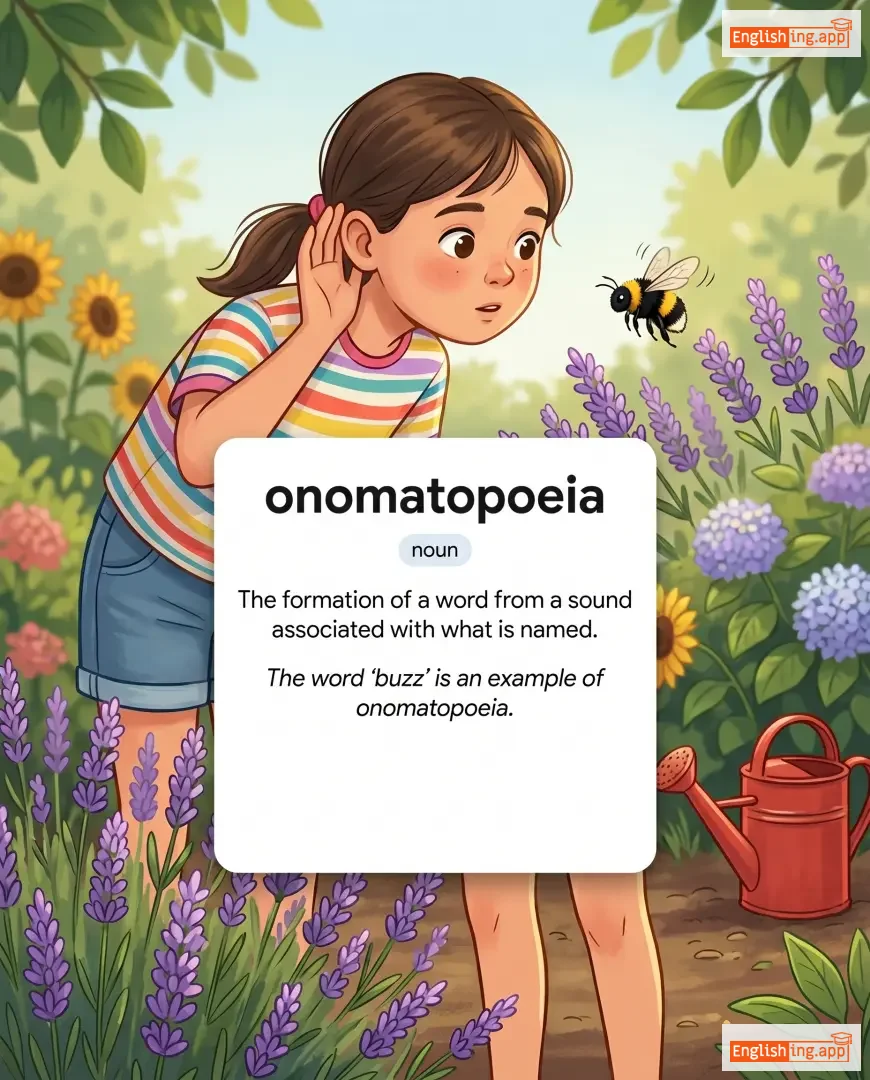
onomatopoeia definition card — visual illustration of the meaning
noun
/ˌɒn.əˌmæt.əˈpiː.ə/
拟声词 (nǐ shēng cí)

The formation of a word from a sound associated with what is named.

"The word 'buzz' is an example of onomatopoeia."

"‘buzz’ 这个词是拟声词的一个例子。" ('buzz' zhège cí shì nǐ shēng cí de yīgè lìzi.)
noun
/ˈɒn.rʌʃ/
突如其来的冲击 (tu ru qi lai de chong ji)

A sudden powerful forward or downward rush or flow.

"The onrush of water swept away the bridge."

"水流的突如其来冲击冲走了桥梁。" (Shui liu de tu ru qi lai de chong ji chong zou le qiao liang.)
noun
/ˈɒn.sɛt/
开始 (kaishi)

The beginning of something, especially something unpleasant.

"The onset of winter brought cold winds and snow."

"冬天的开始带来了寒冷的风和雪。" (Dongtian de kaishi dailai le hanleng de feng he xue.)
noun
/ˈɒn.slɔːt/
猛攻 (měnggōng)

A fierce or destructive attack.

"The village faced an onslaught of enemy forces."

"这个村庄面临敌军的猛烈进攻。" (Zhège cūnzhuāng miànlín díjūn de měngliè jìngōng.)
preposition
/ˈɒntu/
在…上 (zai…shang)

moving to a position on the surface of something

"She jumped onto the table to get the book."

"她跳到桌子上去拿书。" (Ta tiao dao zhuozi shang qu na shu.)
noun
/ˈəʊ.nəs/
责任 (zérèn)

A duty or responsibility, especially a heavy one.

"The onus is on the government to provide relief to the victims."

"政府有责任向受害者提供援助。" (Zhèngfǔ yǒu zérèn xiàng shòuhài zhě tígōng yuánzhù.)
verb
/uːz/
渗透 (shentou)

to slowly flow or leak out through small openings or pores

"Blood began to ooze from the small cut."

"血液开始从小伤口渗透出来。" (Xueye kaishi cong xiao shangkou shentou chulai.)
noun
/ˌoʊpəˈlɛsəns/
欧泊光泽 (Ōubó guāngzé)

a milky or pearly appearance of a surface like that of an opal

"The pearl had a gentle opalescence under the light."

"珍珠在光下有一种柔和的欧泊光泽。" (Zhēnzhū zài guāng xià yǒu yī zhǒng róuhé de Ōubó guāngzé.)
adjective
/ˌoʊpəˈlɛsənt/
欧泊色的 (ōubō sè de)

showing or reflecting a milky, iridescent light like an opal

"The opalescent sky glowed with shades of pink and blue."
"欧泊色的天空闪烁着粉色和蓝色的色调。" (Ōubō sè de tiānkōng shǎnshuò zhe fěnsè hé lán sè de sèdiào.)
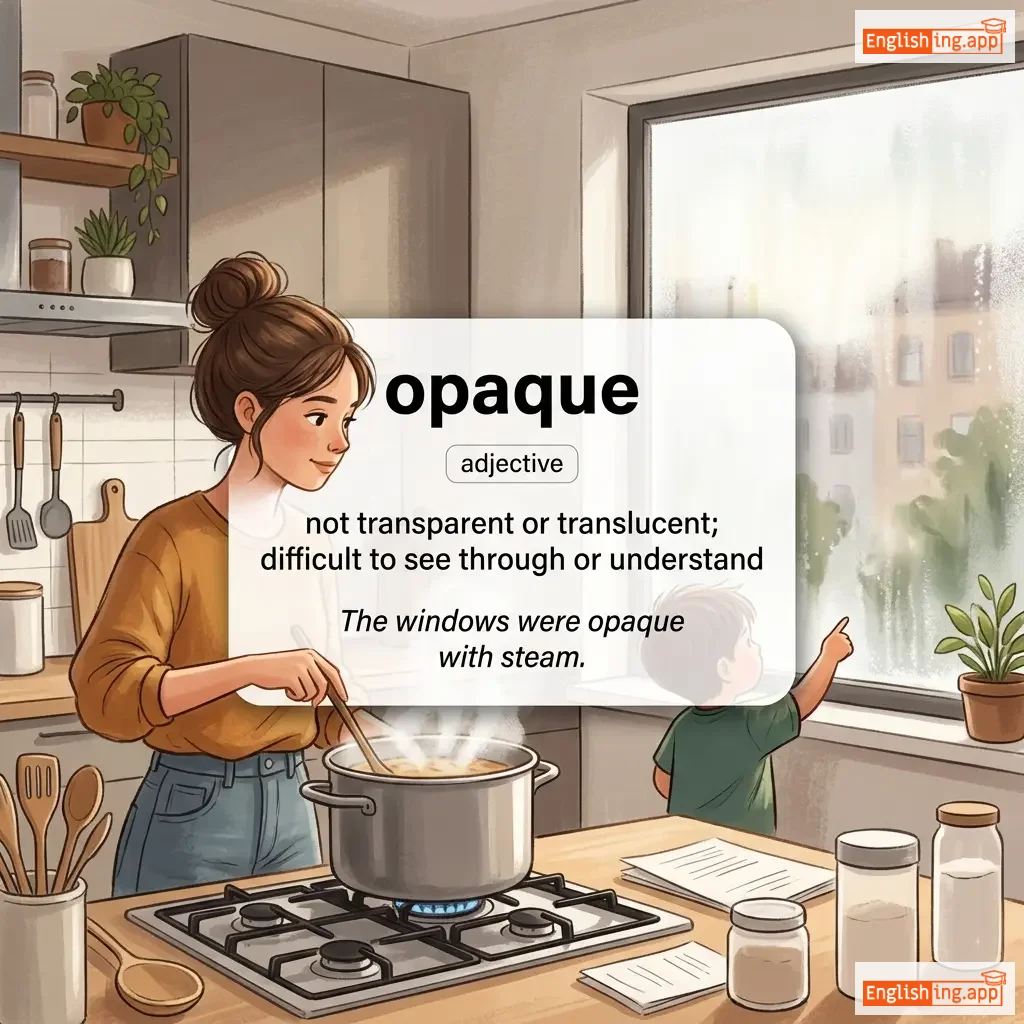
opaque definition card — visual illustration of the meaning
adjective
/oʊˈpeɪk/
不透明的 (butouming de)

not transparent or translucent; difficult to see through or understand

"The windows were opaque with steam."

"窗户因为蒸汽变得不透明。" (Chuanghu yinwei zhengqi biande butouming.)
🔓

open

verb, adjective
/ˈoʊ.pən/

to move something so that it is no longer closed; not closed

"She opened the window to let in fresh air."

adjective
/ˈoʊ.pən ˈhæn.dɪd/
慷慨的; 自由的 (kāngkǎi de; zìyóu de)

Generous; liberal; giving freely;

"He is very open-handed with his money and always helps those in need."

"他对自己的钱非常慷慨,总是帮助有需要的人。" (Tā duì zìjǐ de qián fēicháng kāngkǎi, zǒng shì bāngzhù yǒu xūyào de rén.)
adjective
/ˈoʊ.pən ˈhɑrt.ɪd/
开放的心; 慷慨和真诚; 热情接纳; (kaifang de xin; kangkai he zhencheng; reqing jiena;)

Kind and generous; sincere and honest; warmly receptive;

"She welcomed the strangers with an open-hearted smile and invited them for dinner."

"她以开放的微笑欢迎陌生人,并邀请他们共进晚餐。" (Ta yi kaifang de weixiao huanying moshengren, bing yaoqing tamen gongjin wancan.)
noun
/ˈoʊpənɪŋ/
开幕 (kaimu)

an act or instance of beginning something

"The opening of the new store was a huge success."

"新店的开业是一个巨大的成功。" (Xīn diàn de kāiyè shì yīgè jùdà de chénggōng.)
adverb
/ˈəʊpənli/
公开地 (gōngkāi de)

in a way that is not secret or hidden

"He spoke openly about his past mistakes."

"他公开地谈论了他的过去错误。" (Tā gōngkāi de tánlùnle tā de guòqù cuòwù.)
noun
/ˈɒpərə/
歌剧 (geju)

a dramatic performance in which the actors sing most of their lines

"We watched a beautiful opera at the theater last night."

"我们昨晚在剧院观看了一场美丽的歌剧。" (Wǒmen zuówǎn zài jùyuàn guānkànle yī chǎng měilì de gējù.)
operate definition card — visual illustration of the meaning
verb
/ˈɑːpəˌreɪt/
操作 (caozuo)

to control the functioning of a machine, system, or business

"She learned how to operate the new machine."

"她学会了如何操作这台新机器。" (Ta xuehui le ruhe caozuo zhe tai xin jiqi.)
verb
/ˈɒpəreɪtɪŋ/
操作 (caozuo)

to control or manage the functioning of something

"The company has been operating in this market for five years."

"公司已经在这个市场运营了五年。" (Gongsi yijing zai zhege shichang yunying le wu nian.)
noun
/ˌɒpəˈreɪʃən/
手术 (shǒushù)

an act or process of functioning or operating

"The hospital performed a successful operation."
"医院进行了成功的手术。" (Yīyuàn jìnxíngle chénggōng de shǒushù.)
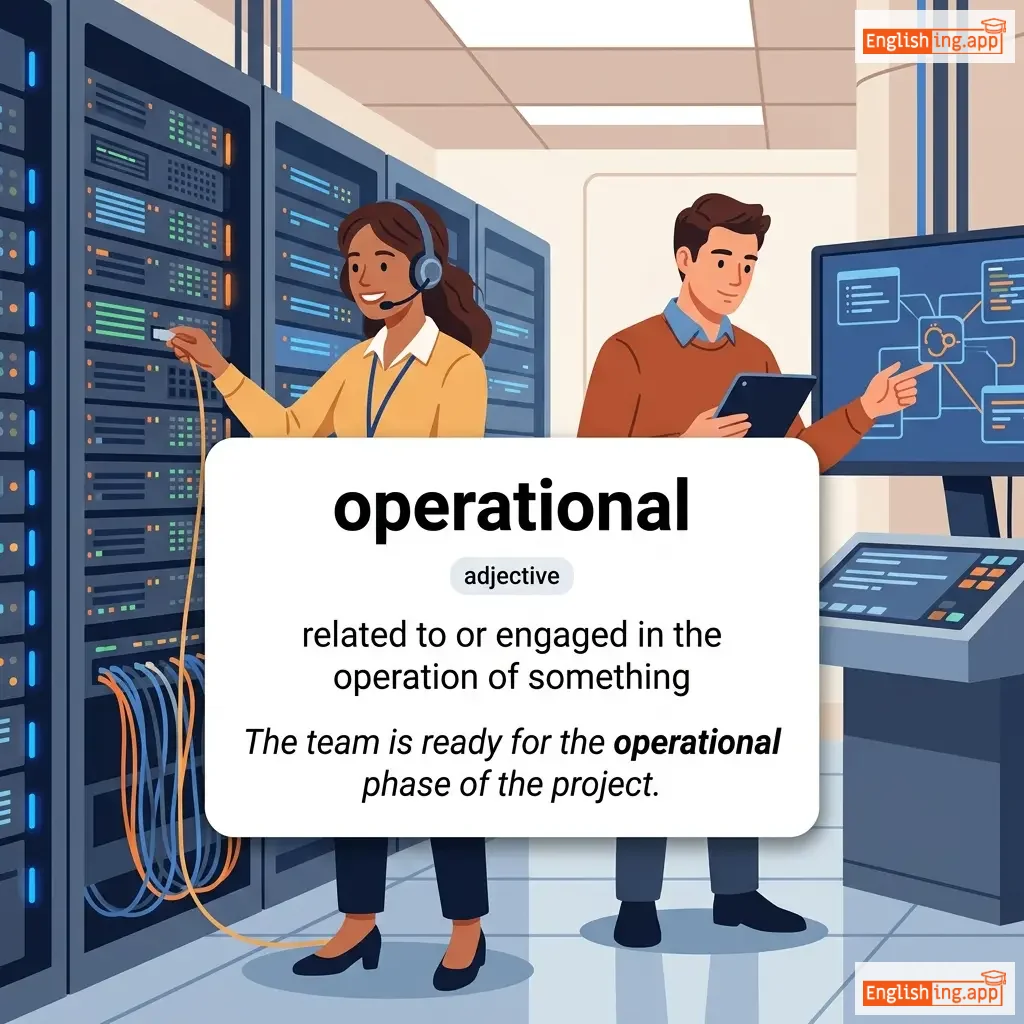
operational definition card — visual illustration of the meaning
adjective
/ˌɒpəˈreɪʃənl/
操作的 (caozuode)

related to or engaged in the operation of something

"The team is ready for the operational phase of the project."

"团队已准备好进入项目的操作阶段。" (Tuan dui yi zhunbei hao jinru xiangmu de caozuo jie duan.)
adjective
/ˈɒpərətɪv/
有效的 (youxiao de)

functioning, having effect, or relating to a secret agent or worker

"The new law is now operative across the country."

"新法律现在在全国范围内生效。" (Xīn fǎlǜ xiànzài zài quánguó fànwéi nèi shēngxiào.)
noun
/ˈɒpəreɪtər/
操作员 (caozuo yuan)

a person who operates equipment, a business, or controls something

"The machine operator ensured that everything ran smoothly."

"机器操作员确保一切顺利运行。" (Jiqi caozuoyuan quebao yiqie shunli yunxing.)