词汇表

英语词汇词典 | 单词含义、定义和示例

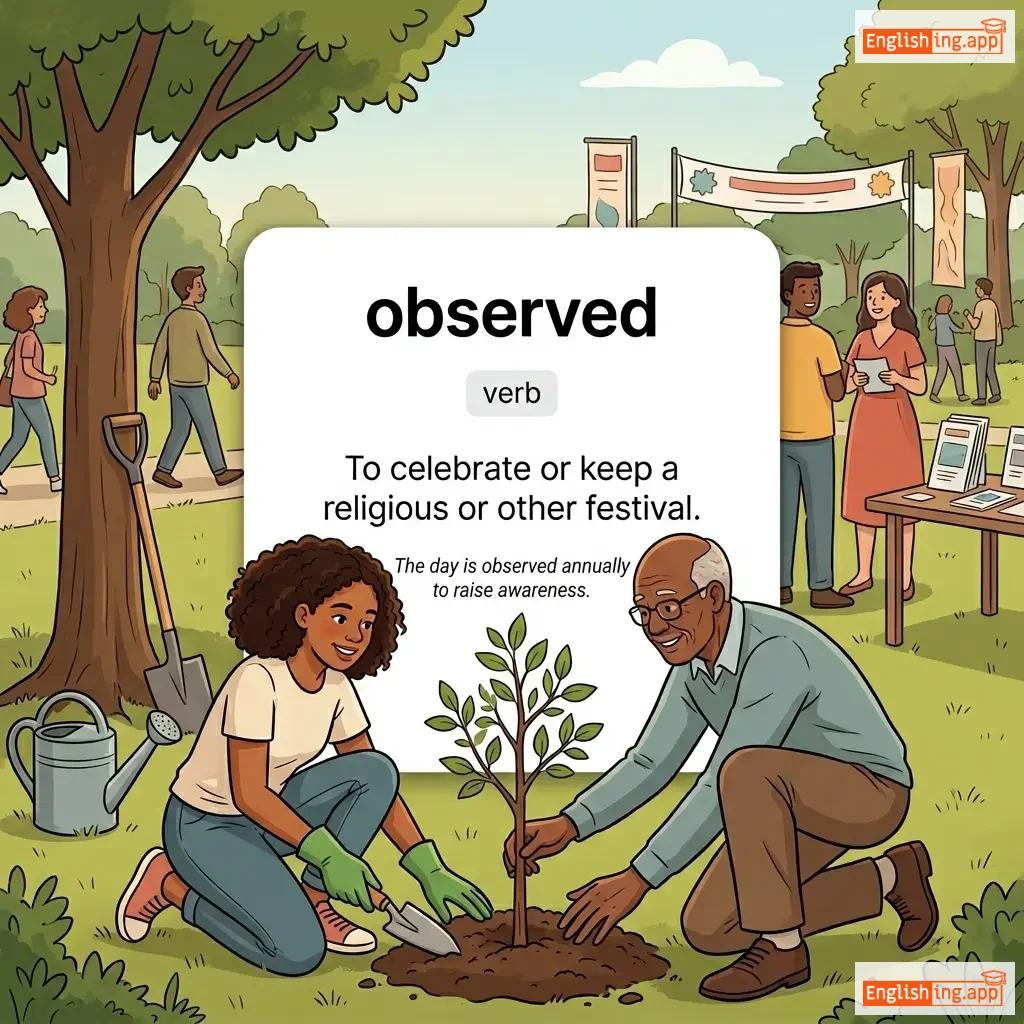
observed definition card — visual illustration of the meaning
verb
əbˈzɜːrvd
庆祝 (qingzhu)

To celebrate or keep a religious or other festival.

"The day is observed annually to raise awareness."

"这一天每年庆祝,以提高意识。" (Zhe yitian mei nian qingzhu, yi tigao yishi.)
noun
/əbˈzɜːvər/
观察者 (guānchá zhě)

a person who watches or notices something

"The observer took notes during the meeting."

"观察者在会议期间做了笔记。" (Guānchá zhě zài huìyì qījiān zuò le bǐjì.)
verb
/əbˈsɛs/

To preoccupy or fill the mind of someone continually and to an excessive degree.

"She tends to obsess over small details."

noun
/əbˈsɛʃən/
痴迷 (chimi)

An idea, thought, or concern that continually preoccupies or intrudes on a person's mind.

"His obsession with success drove him to work day and night."

"他对成功的痴迷促使他日夜工作。" (Ta dui chenggong de chimi cucishi ta riye gongzuo.)
adjective
/əbˈsɛsɪv/
强迫症的 (qiangpozheng de)

Relating to or characterized by an obsession; thinking about something too much.

"He has an obsessive interest in cleanliness."

"他对清洁有强迫症的兴趣。" (Ta dui qingjie you qiangpozheng de xingqu.)
noun
/əbˈsɪdiən/
黑曜石 (黑色的玻璃状火山岩) (heiyaoshi (heise de boli zhuang huoshan yan))

A hard, dark, glasslike volcanic rock formed by rapid solidification of lava.

"The knife was made from sharp obsidian."
"刀是由锋利的黑曜石制成的。" (Dao shi you fengli de heiyaoshi zhicheng de.)
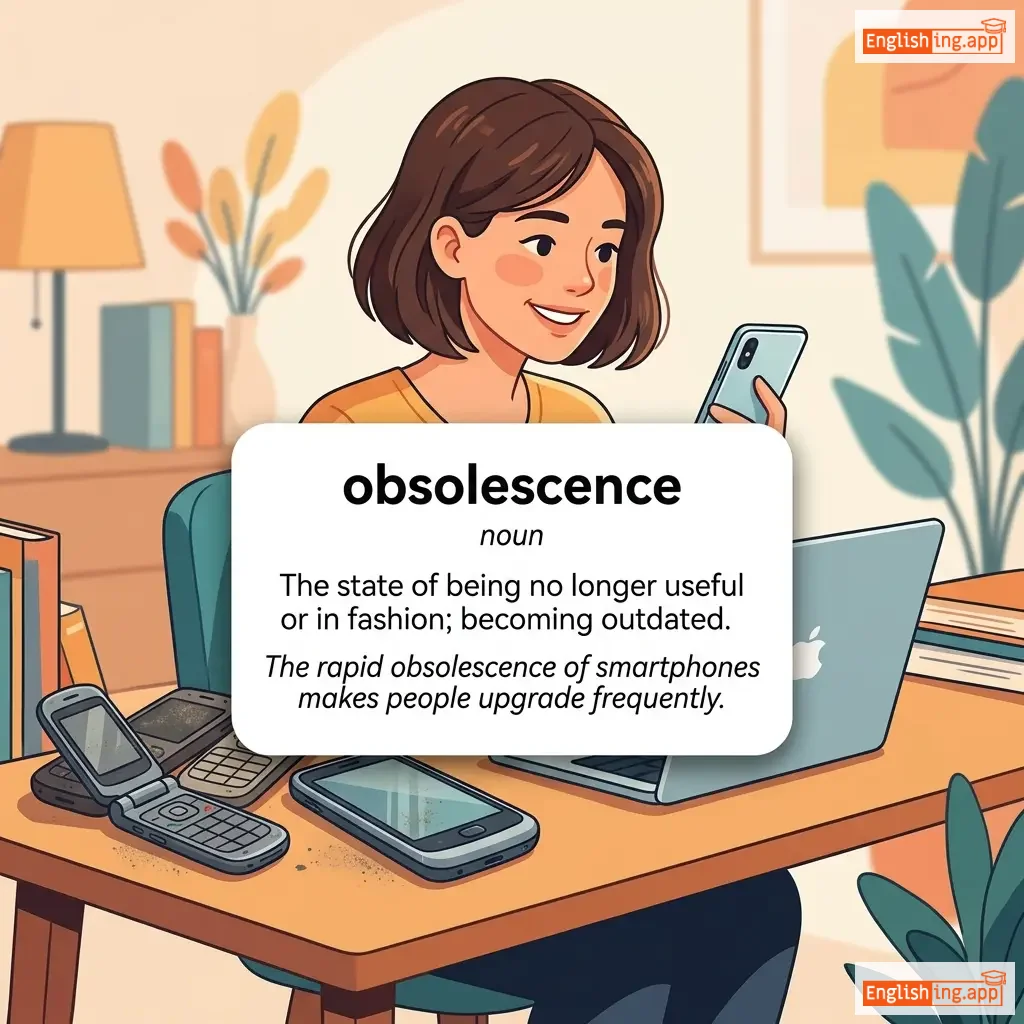
obsolescence definition card — visual illustration of the meaning
noun
/ˌɒbsəˈlɛsəns/
过时 (guòshí)

The state of being no longer useful or in fashion; becoming outdated.

"The rapid obsolescence of smartphones makes people upgrade frequently."

"智能手机的快速过时使人们频繁升级。" (zhìnéng shǒujī de kuàisù guòshí shǐ rénmen pínfán shēngjí.)
adjective
/ˌɒbsəˈlɛsnt/
过时的 (guòshí de)

Becoming outdated or on the way to becoming obsolete.

"The obsolescent technology could not compete with modern devices."

"过时的技术无法与现代设备竞争。" (Guòshí de jìshù wúfǎ yǔ xiàndài shèbèi jìngzhēng.)
adjective
/ˌɒbsəˈliːt/
过时的 (guòshí de)

No longer in use or out of date.

"Floppy disks are now completely obsolete."

"软盘现在完全过时了。" (Ruǎnpán xiànzài wánquán guòshí le.)
noun
/ˈɒbstəkəl/
障碍 (zhàng'ài)

something that blocks your way or prevents progress

"Lack of money was the main obstacle to his success."
"缺钱是他成功的主要障碍。" (quē qián shì tā chénggōng de zhǔyào zhàng'ài.)
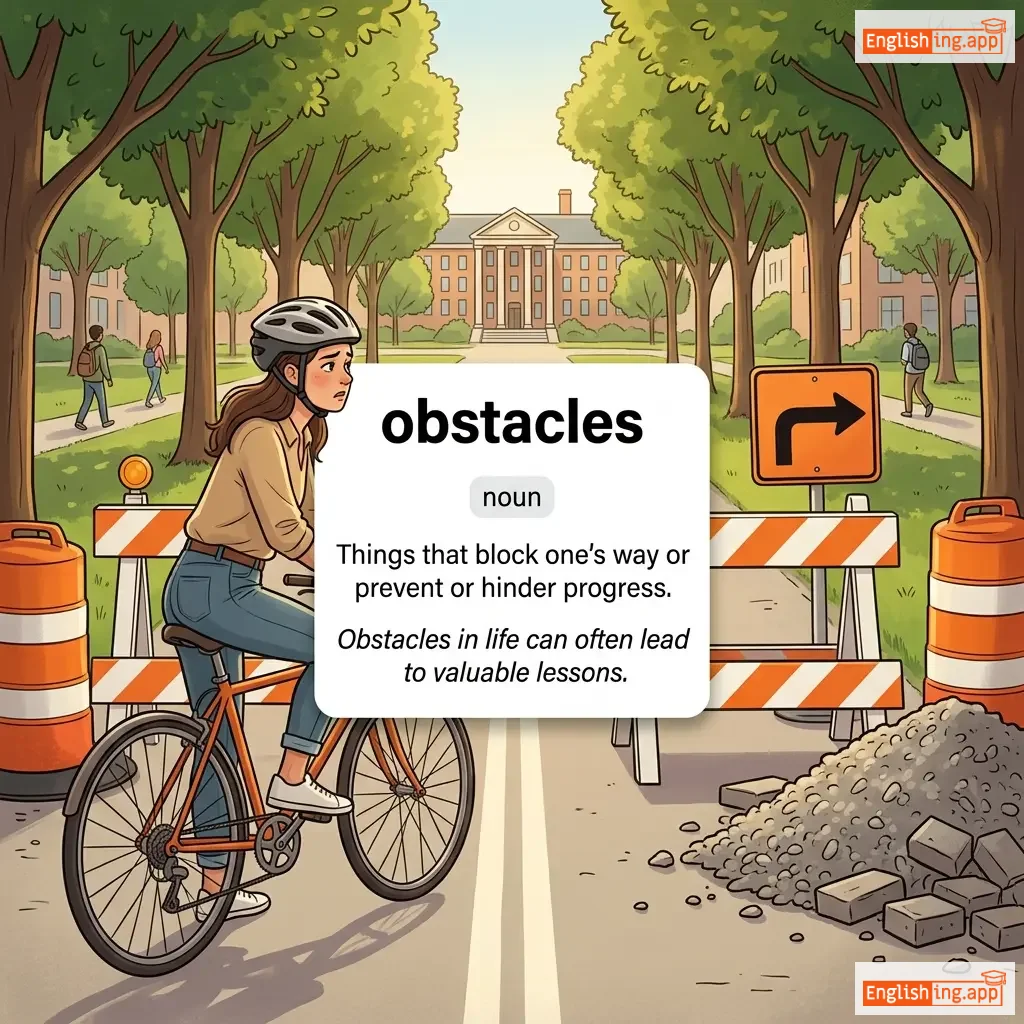
obstacles definition card — visual illustration of the meaning
noun
/ˈɒbstəkəlz/
障碍 (zhàng'ài)

Things that block one's way or prevent or hinder progress.

"Obstacles in life can often lead to valuable lessons."

"生活中的障碍常常导致宝贵的教训。" (Shēnghuó zhōng de zhàng'ài chángcháng dǎozhì bǎoguì de jiàoxùn.)
noun
/ˌɒbstəˈtrɪʃən/
产科医生 (chǎnkē yīshēng)

A doctor specializing in pregnancy, childbirth, and women's reproductive health.

"The obstetrician monitored the mother’s health throughout the pregnancy."

"产科医生在整个怀孕过程中监测了母亲的健康。" (Chǎnkē yīshēng zài zhěnggè huáiyùn guòchéng zhōng jiāncè le mǔqīn de jiànkāng.)
noun
/əbˈstɛtrɪks/
产科 (chanke)

The branch of medicine dealing with childbirth and care of women giving birth.

"She is studying obstetrics to become a specialist in childbirth."
"她正在学习产科,想成为一名分娩专家。" (Tā zhèngzài xuéxí chǎnkē, xiǎng chéngwéi yī míng fēnmiǎn zhuānjiā.)
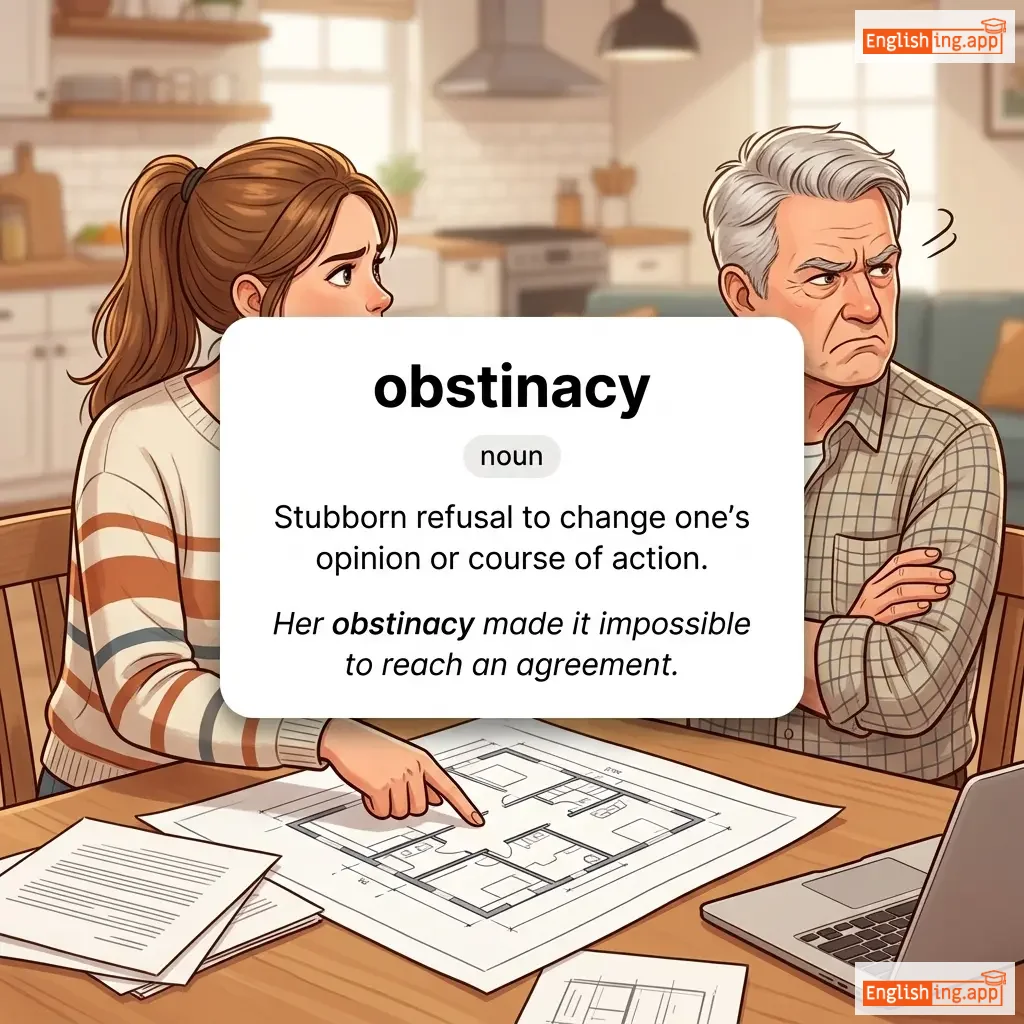
obstinacy definition card — visual illustration of the meaning
noun
/ˈɒbstɪnəsi/
固执 (guzhi)

Stubborn refusal to change one’s opinion or course of action.

"Her obstinacy made it impossible to reach an agreement."
"她的固执让达成协议变得不可能。" (Ta de guzhi rang dacheng xieyi biande bukexiang.)
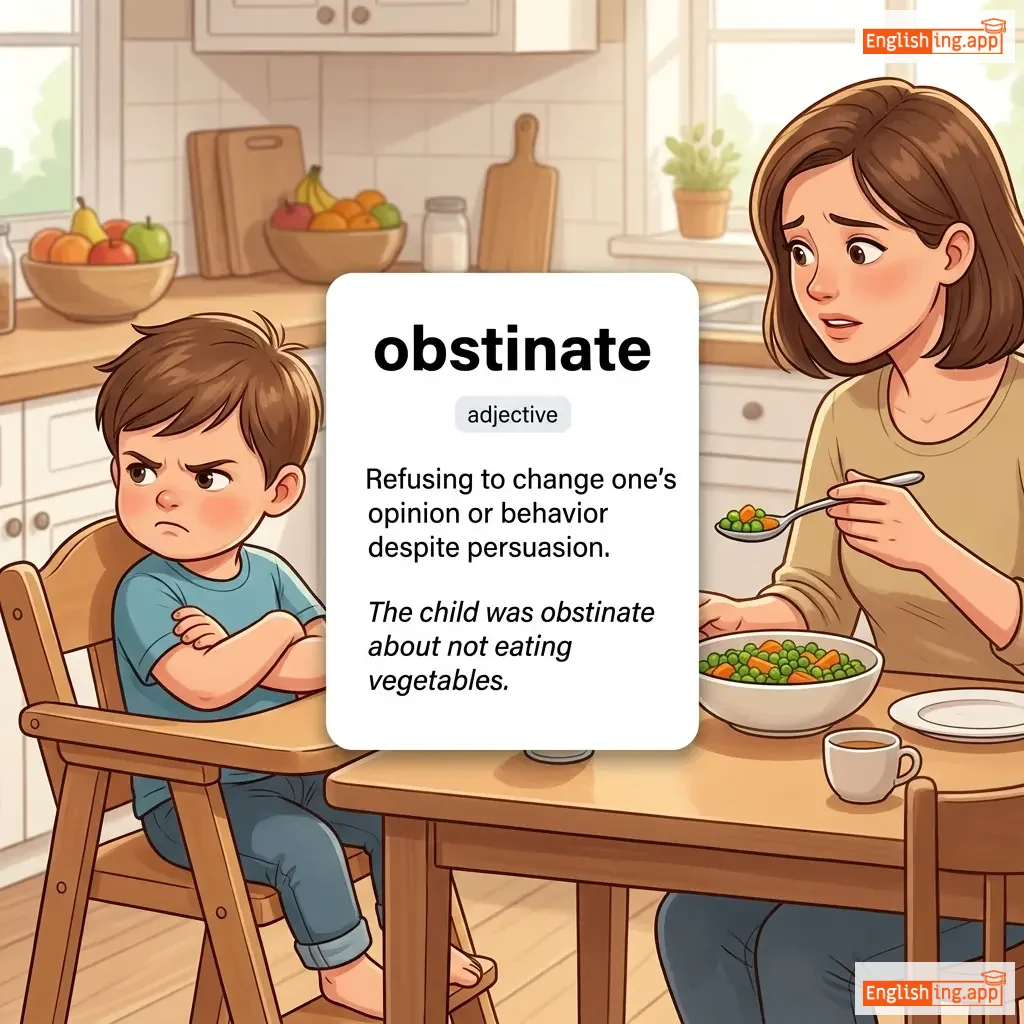
obstinate definition card — visual illustration of the meaning
adjective
/ˈɒbstɪnət/
固执 (guzhi)

Refusing to change one’s opinion or behavior despite persuasion.

"The child was obstinate about not eating vegetables."

"孩子坚持不吃蔬菜。" (Háizi jiānchí bù chī shūcài.)
adjective
/əbˈstrɛpərəs/
喧闹且难以控制 (xuān nà qiě nán yǐ kòng zhì)

Noisy and difficult to control.

"The obstreperous students disrupted the class."
"那些喧闹的学生打乱了课堂。" (Nàxiē xuān nà de xuéshēng dǎ luànle kètáng.)
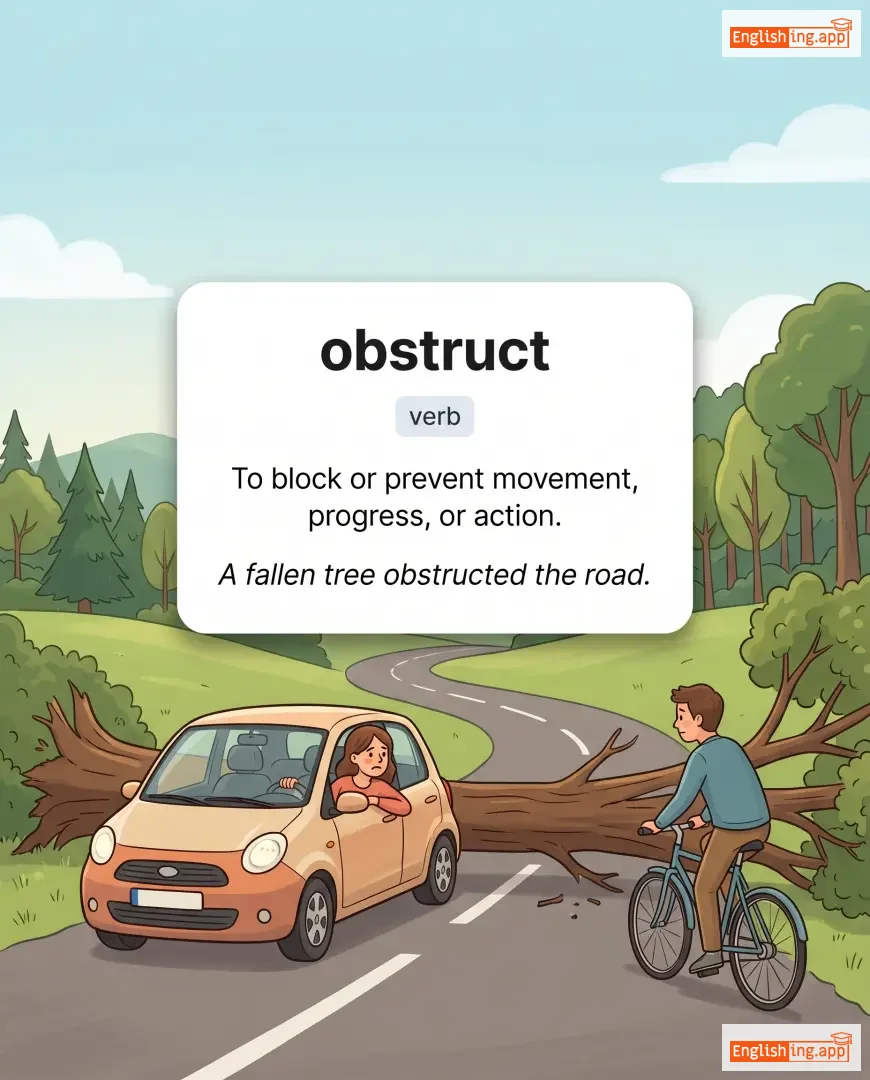
obstruct definition card — visual illustration of the meaning
verb
/əbˈstrʌkt/
障碍 (zhàng'ài)

To block or prevent movement, progress, or action.

"A fallen tree obstructed the road."

"一棵倒下的树障碍了道路。" (Yī kē dǎo xià de shù zhàng'ài le dàolù.)
noun
/əbˈstrʌkʃən/
障碍 (zhàng'ài)

Something that blocks or gets in the way; the action of obstructing.

"There was an obstruction on the railway track."

"铁路上有一个障碍。" (Tiělù shàng yǒu yīgè zhàng'ài.)
noun
/əbˈstrʌkʃənɪst/

a person who deliberately delays or prevents progress by being uncooperative or oppositional

"The obstructionist in the committee kept delaying the decision-making process."

adjective
/əbˈstrʌk.tɪv/
阻碍性的 (obstructive)

deliberately creating difficulties or preventing progress; hindering or blocking something

"The obstructive policies hindered economic growth."

"这些阻碍性的政策阻碍了经济增长。" (zhexiezuaixingdezhengcezuhaillejingjizengzhang)
obtain definition card — visual illustration of the meaning
verb
/əbˈteɪn/
获得 (huo de)

to get, acquire, or secure something

"She managed to obtain a scholarship for her studies."

"她成功地获得了奖学金。" (Tā chénggōng de huò dé le jiǎngxuéjīn.)
verb
/əbˈtruːd/
强行介入 (qiángxíng jièrù)

to force oneself or one's ideas into a situation uninvited or inappropriately

"He didn’t want to obtrude into their private conversation."

"他不想打扰他们的私人对话。" (Tā bùxiǎng dǎrǎo tāmen de sīrén duìhuà.)
adjective
/əbˈtruːsɪv/
干扰的 (ganrao de)

noticeable in an unpleasant or unwelcome way; intrusive

"The advertisement was so obtrusive that it ruined the user’s experience."

"广告如此显眼,以至于破坏了用户体验。" (Guanggao ru ci xianyan, yi zhi yu pohuai le yonghu tiyan.)
adjective
/əbˈtjuːs/
(dun)

slow to understand; annoyingly insensitive; also refers to an angle greater than 90° and less than 180°

"He was too obtuse to realize the insult."

"他太迟钝,以至于没有意识到侮辱。" (Tā tài chídùn, yǐzhì yú méiyǒu yìshí dào wǔrǔ.)
verb
/əbˈvɜːrt/
反转 (fǎn zhuǎn)

To turn something so as to face in a different direction; in logic, to convert a proposition by negating both subject and predicate.

"The teacher asked the students to obvert the statement for practice."

"老师要求学生练习将声明进行奥贝特。" (Lǎoshī yāoqiú xuéshēng liànxí jiāng shēngmíng jìnxíng ào bèi tè.)
obviate definition card — visual illustration of the meaning
verb
/ˈɑːbvieɪt/
消除 (xiaochu)

To remove a need or difficulty; to prevent or avoid something.

"This new system obviates the need for manual data entry."

"这个新系统消除了手动输入数据的需要。" (Zhege xin xitong xiaochule shoudong shuru shuju de xuyao.)
adjective
/ˈɒb.vi.əs/
显而易见 (xian er yi jian)

easily perceived or understood; clear and apparent

"It was obvious that she was upset after the meeting."

"开会后很明显她感到不安。" (Kai hui hou hen ming xian ta gan dao bu an.)
adverb
/ˈɒbviəsli/
显然 (xianran)

in a way that is easily perceived or understood; clearly

"Obviously, he didn’t read the instructions."

"显然,他没有读说明书。" (Xianran, ta meiyou du shuoming shu.)
noun
/əˈkeɪʒən/
场合 (changhe)

A particular time or event; a special or important happening.

"Her wedding was a joyful occasion for the whole family."

"她的婚礼是全家人的一个欢乐场合。" (Tā de hūnlǐ shì quánjiārén de yīgè huānlè chǎnghé.)
adjective
/əˈkeɪʒənəl/
偶尔的 (ǒu'ěr de)

happening or done sometimes but not regularly or often

"He makes occasional visits to his hometown."

"他偶尔访问他的家乡。" (Tā ǒu'ěr fǎngwèn tā de jiāxiāng.)
adverb
/əˈkeɪʒənəli/
偶尔 (ou'er)

from time to time; now and then

"I occasionally go for a walk in the park."

"我偶尔去公园散步。" (Wo ou'er qu gongyuan sanbu.)
noun
/ˈɒksɪdənt/
西方 (xīfāng)

The countries of the West, especially Europe and America.

"The Occident has a long history of philosophical thought."

"西方有着悠久的哲学思想历史。" (Xīfāng yǒuzhe yōujiǔ de zhéxué sīxiǎng lìshǐ.)
occlude definition card — visual illustration of the meaning
verb
/əˈkluːd/
堵塞 (dǔsè)

To block or close up an opening or passage.

"The pipe was occluded by mineral deposits."

"管道因矿物沉积物而被堵塞。" (Guǎndào yīn kuàngwù chénjī wù ér bèi dǔsè.)
occult definition card — visual illustration of the meaning
adjective
/əˈkʌlt/
奥秘的 (àomì de)

Relating to mysterious, supernatural, or magical powers and practices.

"She had always been fascinated by the occult and its hidden knowledge."

"她一直对奥科尔特及其隐藏的知识感到着迷。" (Tā yīzhí duì àokē'ěrtè jí qí yǐncáng de zhīshi gǎndào zháomí.)
noun
/ˈɒkjʊpənt/
乘客 (chengke)

A person who resides in or is present in a house, vehicle, seat, or place.

"The car had three occupants at the time of the accident."

"事故发生时,车上有三名乘客。" (Shigu fasheng shi, cheshang you san ming chengke.)
noun
/ˌɒkjʊˈpeɪʃən/
职业 (zhiye)

a job or profession; the action or state of occupying a place

"Her occupation is a teacher at a local school."

"她的职业是一名在当地学校的教师。" (Ta de zhiye shi yi ming zai dangdi xuexiao de jiaoshi.)
adjective; verb (past participle)
/ˈɒkjʊpaɪd/
被占用的;被占领的 (bei zhanyong de; bei zhanling de)

being in use or taken; filled or lived in; controlled or held by force

"The room is occupied, so please wait outside."
"房间被占用,请在外面等候。" (Fangjian bei zhanyong, qing zai waimian denghou)
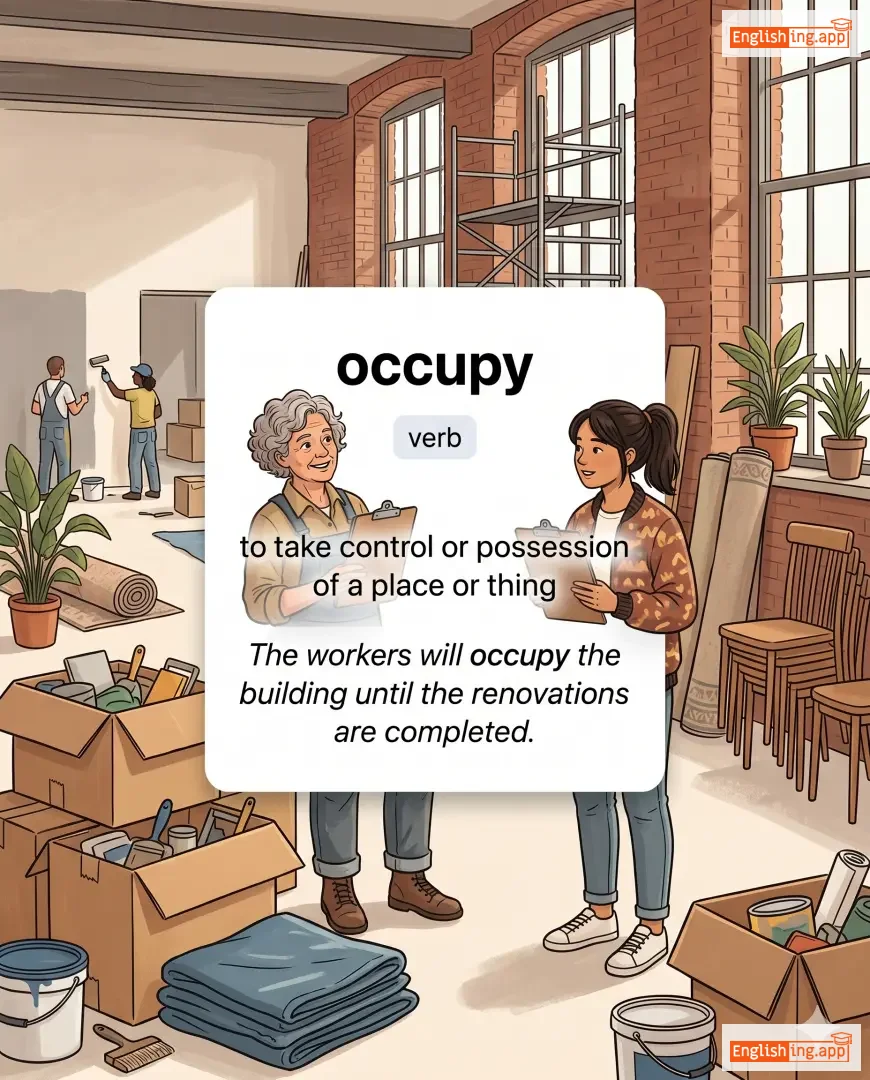
occupy definition card — visual illustration of the meaning
verb
/ˈɒkjʊpaɪ/
占领 (zhan ling)

to take control or possession of a place or thing

"The workers will occupy the building until the renovations are completed."
"工人们将占用这栋建筑,直到翻修完成。" (gongren men jiang zhanyong zhe dong jianzhu zhidao fanxiu wancheng.)
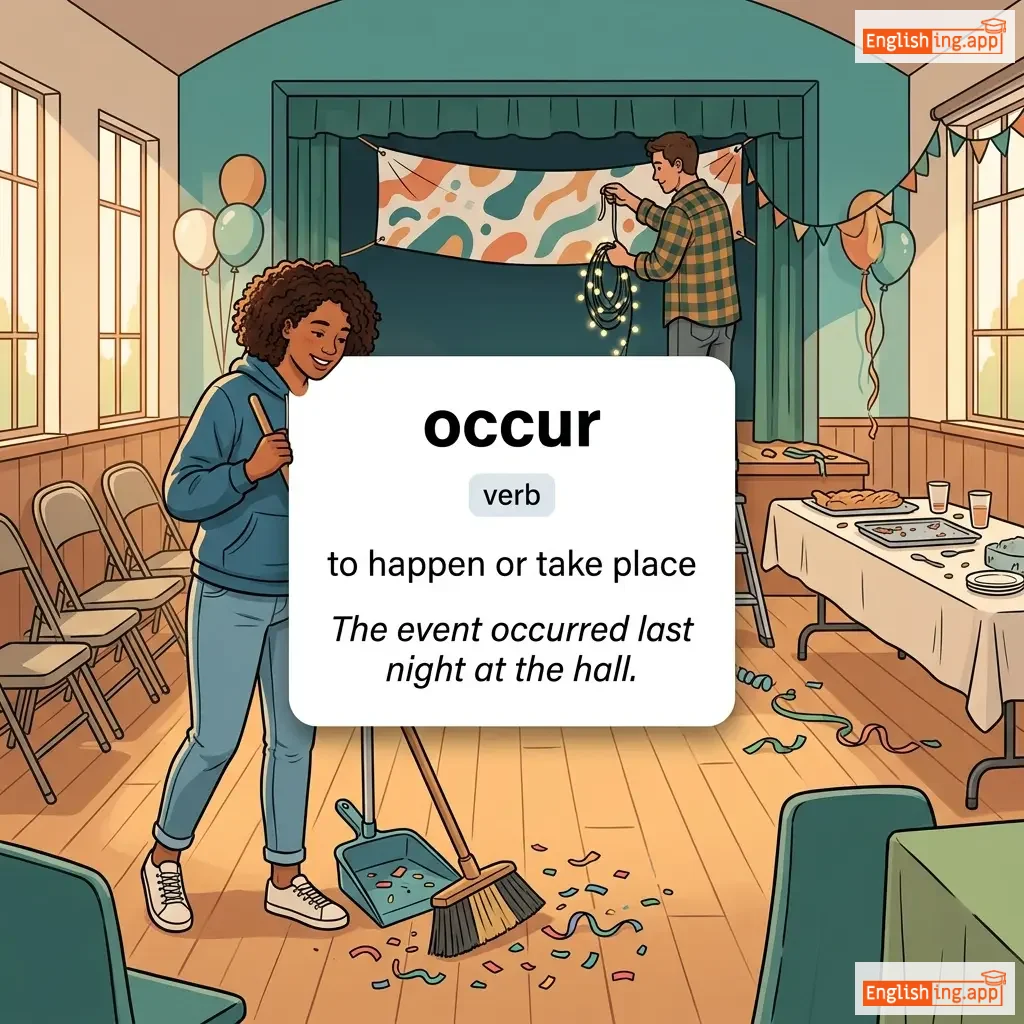
occur definition card — visual illustration of the meaning
verb
/əˈkɜːr/
发生 (fāshēng)

to happen or take place

"The event occurred last night at the hall."

"事件昨晚在大厅发生。" (Shìjiàn zuó wǎn zài dàtīng fāshēng.)
noun
/əˈkʌrəns/
发生 (fasheng)

An incident, event, or something that happens.

"The occurrence of such storms is rare in this region."
"这种风暴在该地区很少发生。" (zhe zhong fengbao zai gai diqu hen shao fasheng)
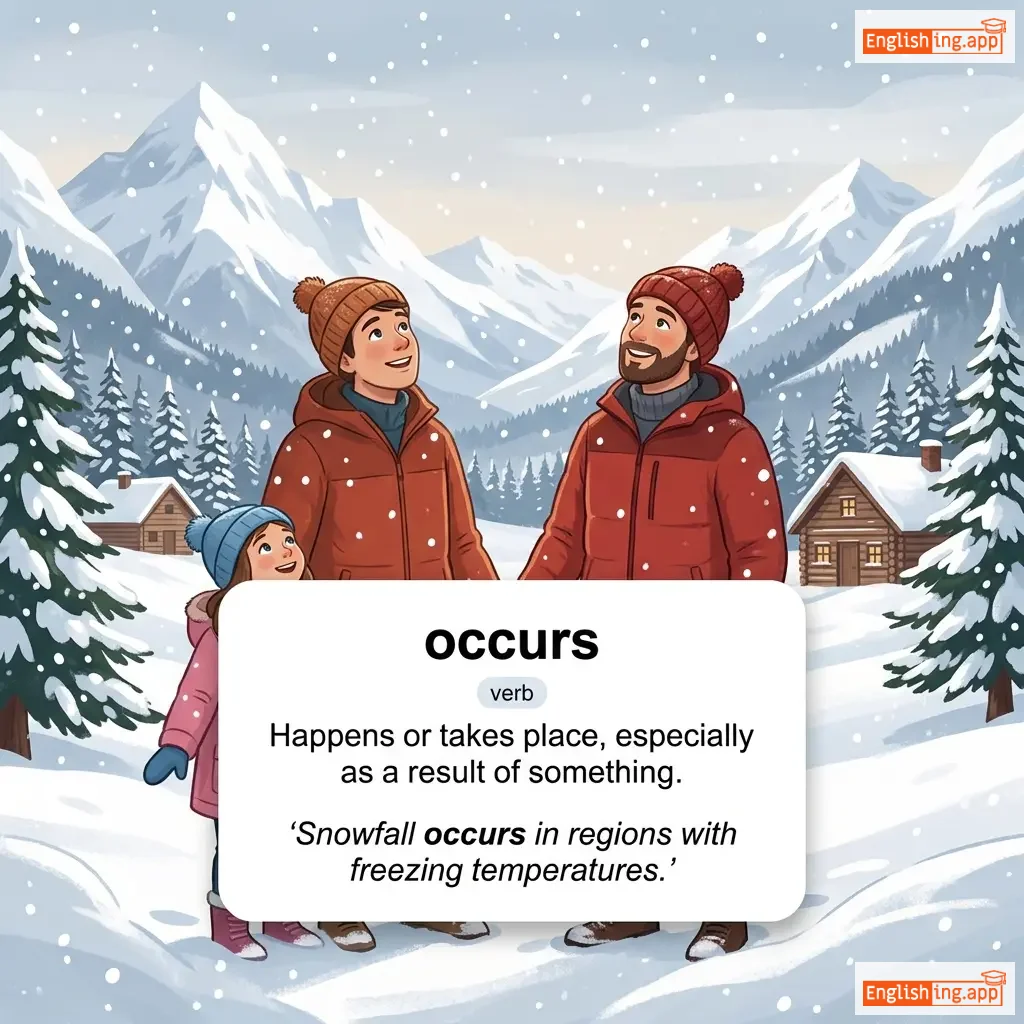
occurs definition card — visual illustration of the meaning
verb
অকার্স
发生 (fāshēng)

Happens or takes place, especially as a result of something.

"Snowfall occurs in regions with freezing temperatures."
"在气温低于零度的地区会发生降雪。" (Zài qìwēn dī yú líng dù de dìqū huì fāshēng jiàngxuě.)
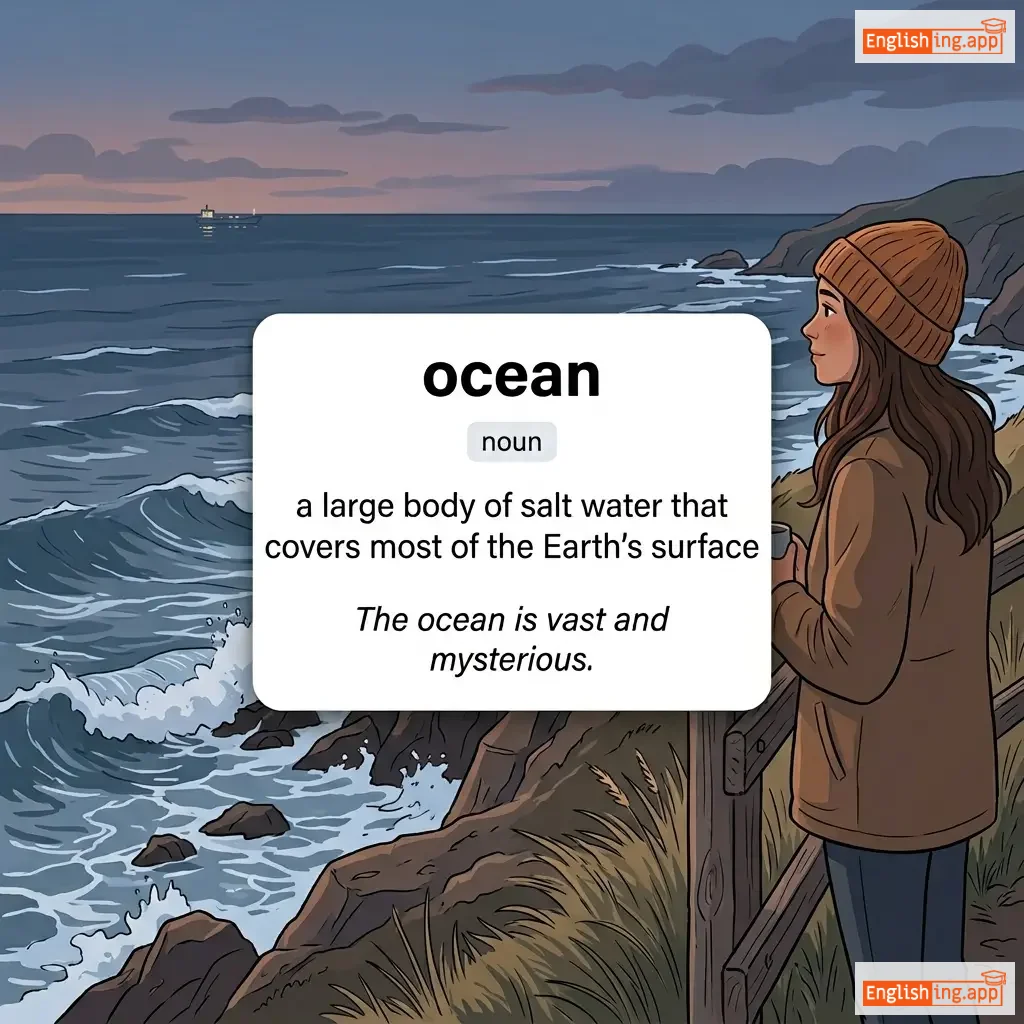
ocean definition card — visual illustration of the meaning
noun
/ˈoʊʃən/
海洋 (haiyang)

a large body of salt water that covers most of the Earth's surface

"The ocean is vast and mysterious."
"海洋是辽阔而神秘的。" (haiyang shi liaokuo er shenmi de.)
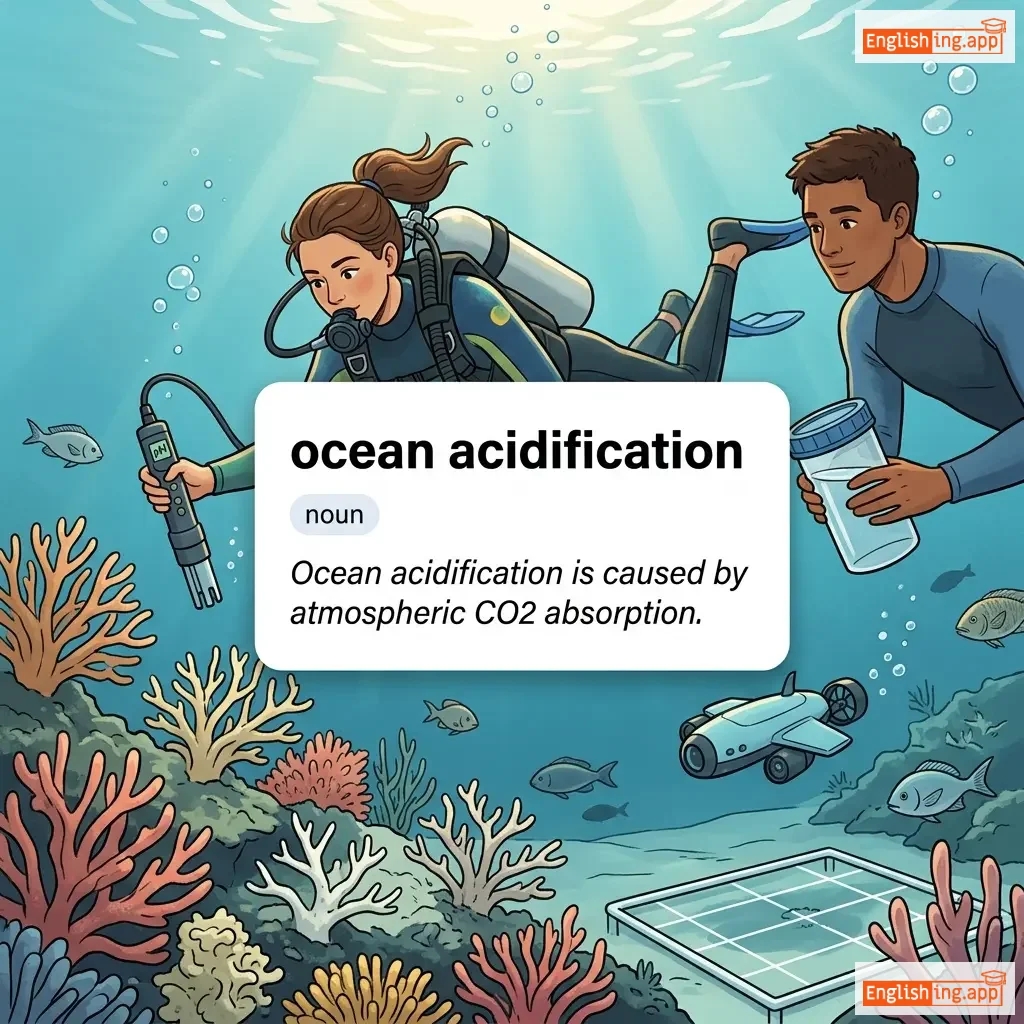
ocean acidification definition card — visual illustration of the meaning
noun
ˈoʊʃən əˌsɪdɪfɪˈkeɪʃən
海洋酸化 (haiyang suanha)

The ongoing decrease in the pH of the Earth's oceans, caused by the absorption of carbon dioxide from the atmosphere.

"Ocean acidification is caused by atmospheric CO2 absorption."
"海洋酸化是由大气中CO2的吸收引起的。" (Haiyang suanha shi you daqi zhong CO2 de xishou yinqi de.)
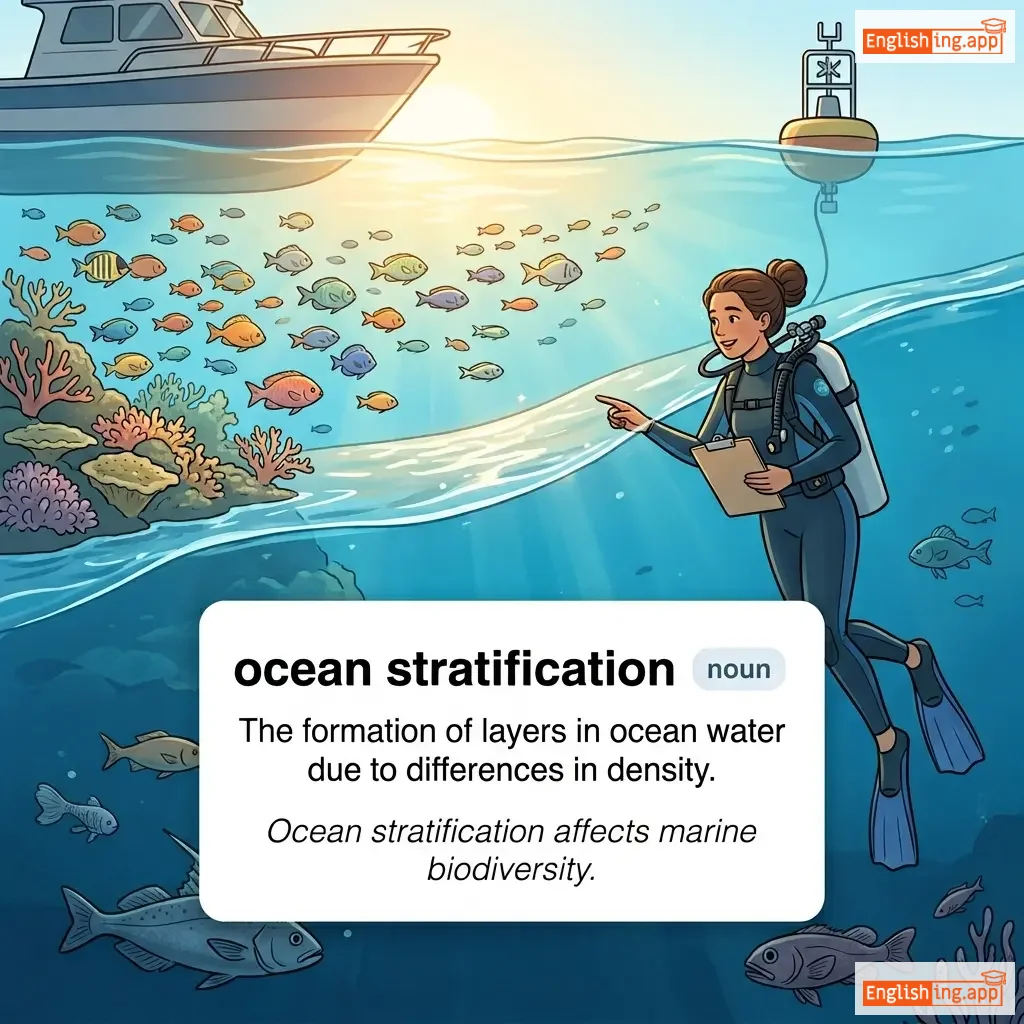
ocean stratification definition card — visual illustration of the meaning
noun
ˈoʊʃən ˌstrætɪfɪˈkeɪʃən
海洋分层 (hǎiyáng fēncéng)

The formation of layers in ocean water due to differences in density.

"Ocean stratification affects marine biodiversity."

"海洋分层影响海洋生物多样性。" (Hǎiyáng fēncéng yǐngxiǎng hǎiyáng shēngwù duōyàngxìng.)
noun
/ˈɒktəɡən/
八边形 (ba bian xing)

A polygon with eight sides and eight angles.

"The stop sign is shaped like an octagon."

"停车标志呈八边形。" (Tingche biaozhi cheng ba bian xing.)
noun
/ˈɒktɪv/

A series of eight musical notes, or the interval between one musical pitch and another with double its frequency.

"The singer's voice could easily reach the higher octave."

noun
/ɒkˈteɪvoʊ/
八开 (通过将纸张折叠成八个部分而产生的书籍大小) (bā kāi)

A size of book page resulting from folding a sheet of paper into eight leaves (sixteen pages).

"The old library contained rare octavo editions of Shakespeare."

"这座古老的图书馆里有莎士比亚的稀有八开版书籍。" (Zhè zuò gǔlǎo de túshūguǎn lǐ yǒu Shāshìbǐyǎ de xīyǒu bā kāi bǎn shūjí.)
noun
/ɒkˈtoʊbər/
十月 (shi yue)

the tenth month of the year in the Gregorian calendar

"The weather becomes cooler in October."

"十月天气开始变凉。" (shi yue tianqi kaishi bian liang)
noun
/ˌɒktədʒəˈnɛəriən/
八十岁老人 (bāshí suì lǎorén)

A person who is between 80 and 89 years old.

"The octogenarian still jogs every morning to stay healthy."

"这位八十岁老人仍然每天早上跑步以保持健康。" (Zhè wèi bāshí suì lǎorén réngrán měitiān zǎoshang pǎobù yǐ bǎochí jiànkāng.)
adjective
/ˈɒkjʊlər/
眼科的 (yǎn kē de)

Relating to the eye or vision.

"The patient was referred to a specialist for ocular treatment."

"患者被转诊到眼科专家进行治疗。" (Huànzhě bèi zhuǎnzhěn dào yǎn kē zhuānjiā jìnxíng zhìliáo.)