词汇表

英语词汇词典 | 单词含义、定义和示例

adjective
/njuːˈmɛrɪkəl/
数字的 (shuzi de)

relating to or expressed in numbers

"The report provides numerical data on population growth."

"报告提供了有关人口增长的数字数据。" (Baogao tigongle youguan renkou zengzhang de shuzi shuju.)
adjective
/ˈnjuːmərəs/
众多 (zhòngduō)

existing in large numbers; many

"There are numerous opportunities for growth in this field."

"在这个领域有很多机会可以成长。" (Zài zhège lǐngyù yǒu hěnduō jīhuì kěyǐ chéngzhǎng.)
adjective
/ˈnjuːmɪnəs/
神秘的 (shenmide)

having a strong spiritual or mysterious quality

"The temple had a numinous atmosphere that inspired awe."

"这座寺庙有一种神秘的氛围,令人敬畏。" (Zhe zuo simiao you yizhong shenmi de fenwei, lingren jingwei.)
adjective
/ˌnjuːmɪzˈmætɪk/
钱币学的 (qián bì xué de)

relating to the study or collection of coins, currency, and medals

"He has a numismatic collection of rare coins from around the world."

"他拥有来自世界各地的稀有硬币收藏。" (Tā yǒng yǒu lái zì shìjiè gè dì de xīyǒu yìng bì shōu cáng.)
noun
/njuːˈmɪzmətɪst/
钱币学家 (qiánbì xuéjiā)

A person who studies or collects coins, paper currency, and medals.

"The numismatist displayed his rare coin collection at the exhibition."

"钱币学家在展览会上展示了他的稀有硬币收藏" (Qiánbì xuéjiā zài zhǎnlǎn huì shàng zhǎnshìle tā de xīyǒu yìngbì shōucáng)
👩‍🎓

Nun (nān)

noun
/nʌn/
修女 (xiū nǚ)

a woman who has taken vows in a religious order and lives in a convent

"The nun taught at the local Catholic school."

"修女在当地的天主教学校授课。" (Xiū nǚ zài dāngdì de tiānzhǔjiào xuéxiào shòukè.)
noun
/ˈnʌnəri/
修道院 (xiūdàoyuàn)

A convent or building where nuns live and work.

"She decided to join the nunnery to devote her life to spiritual practice."

"她决定加入修道院,献身于精神实践。" (Tā juédìng jiārù xiūdàoyuàn, xiànshēn yú jīngshén shíjiàn.)
adjective
/ˈnʌpʃəl/
婚礼的 (hunli de)

Relating to marriage or weddings.

"The couple prepared for their nuptial ceremony with great joy."

"这对夫妇满怀喜悦地准备他们的婚礼仪式。" (Zhe dui fufu man huai xinyue de zhunbei tamen de hunli yishi.)
nurse definition card — visual illustration of the meaning
👩‍⚕️

nurse

noun, verb
/nɜːrs/

A person trained to care for the sick; to take care of someone or something.

"The nurse comforted the patient during the operation."

noun
/ˈnɜːrsəri/
托儿所 (tuō'érsuǒ)

a room or place where young children are cared for

"She works in a nursery, taking care of infants."

"她在托儿所工作,照顾婴儿。" (Tā zài tuō'érsuǒ gōngzuò, zhàogù yīng'ér.)
👩‍⚕️

nursing (护理)

noun
/ˈnɜːrsɪŋ/
护理 (huli)

the profession or practice of caring for the sick or injured

"She is studying nursing to become a healthcare professional."

"她在学习护理学,想成为一名医疗专业人员。" (Ta zai xuexi huli xue, xiang chengwei yi ming yiliao zhuanye renyuan.)
verb, noun
/ˈnɜːrtʃər/
培养 (péiyǎng)

To care for and encourage the growth or development of someone or something.

"Parents should nurture their children's talents."
"父母应该培养孩子们的才能。" (Fùmǔ yīnggāi péiyǎng háizimen de cáinéng.)
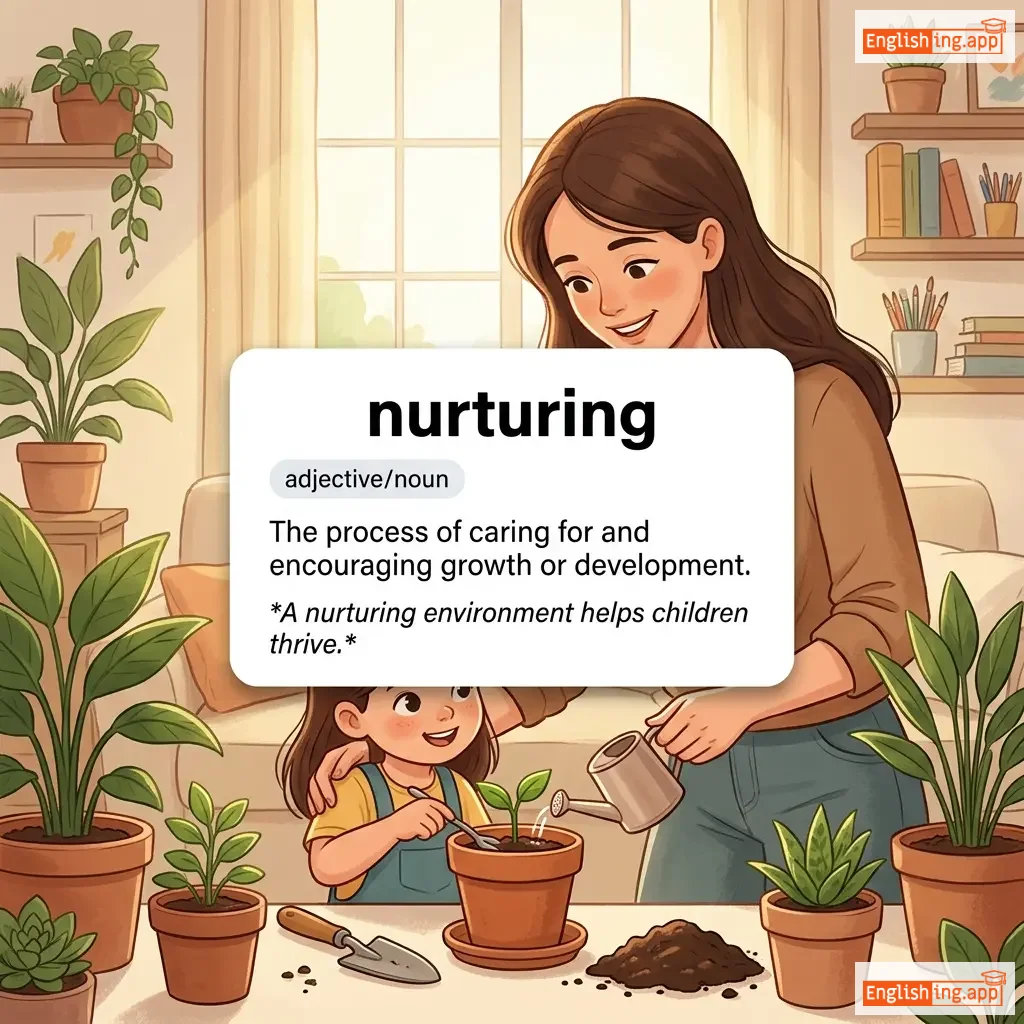
nurturing definition card — visual illustration of the meaning
adjective/noun
/ˈnɜːr.tʃɚ.ɪŋ/
培养, 促进, 发展 (peiyang, cujin, fazhan)

The process of caring for and encouraging growth or development.

"A nurturing environment helps children thrive."

"一个 nurturing 环境帮助孩子们茁壮成长。" (Yi ge nurturing huanjing bangzhu haizimen zhuo zhuang chengzhang.)
noun
/nʌt/
坚果 (jian guo)

a hard-shelled fruit that contains a seed, or a small metal piece used in machinery

"She ate a peanut, which is a type of nut."

"她吃了一颗花生,这是坚果的一种。" (Tā chīle yī kē huāshēng, zhè shì jiānguǒ de yī zhǒng.)
noun
/ˈnʌt.meg/
肉豆蔻 (ròu dòu kòu)

a spice made from the seed of the fruit of an evergreen tree, used in cooking and baking

"The recipe called for a teaspoon of ground nutmeg to flavor the custard."

"食谱中要求用一茶匙磨碎的肉豆蔻来调味蛋奶冻。" (Shípǔ zhōng yāoqiú yòng yī chāchí mó suì de ròu dòu kòu lái tiáowèi dànnǎi dòng.)
nutrient definition card — visual illustration of the meaning
noun
/ˈnjuː.tri.ənt/
营养物质 (yingyang wuzhi)

A substance that provides nourishment essential for growth and the maintenance of life.

"Vegetables are rich in essential nutrients."

"蔬菜富含必要的营养物质。" (Shucai fuhan bixiao de yingyang wuzhi.)
nutrient deficiency definition card — visual illustration of the meaning
noun
/ˈnjuːtrɪənt dɪˈfɪʃənsi/
营养不足 (yingyang buzhu)

A lack of essential nutrients required for healthy plant growth, which can result in poor crop development, reduced yields, and increased susceptibility to diseases.

"Nutrient deficiency in the soil can reduce crop productivity."
"土壤中的营养不足会降低作物的生产力。" (Tǔrǎng zhōng de yíngyǎng bùzú huì jiàngdī zuòwù de shēngchǎnlì.)
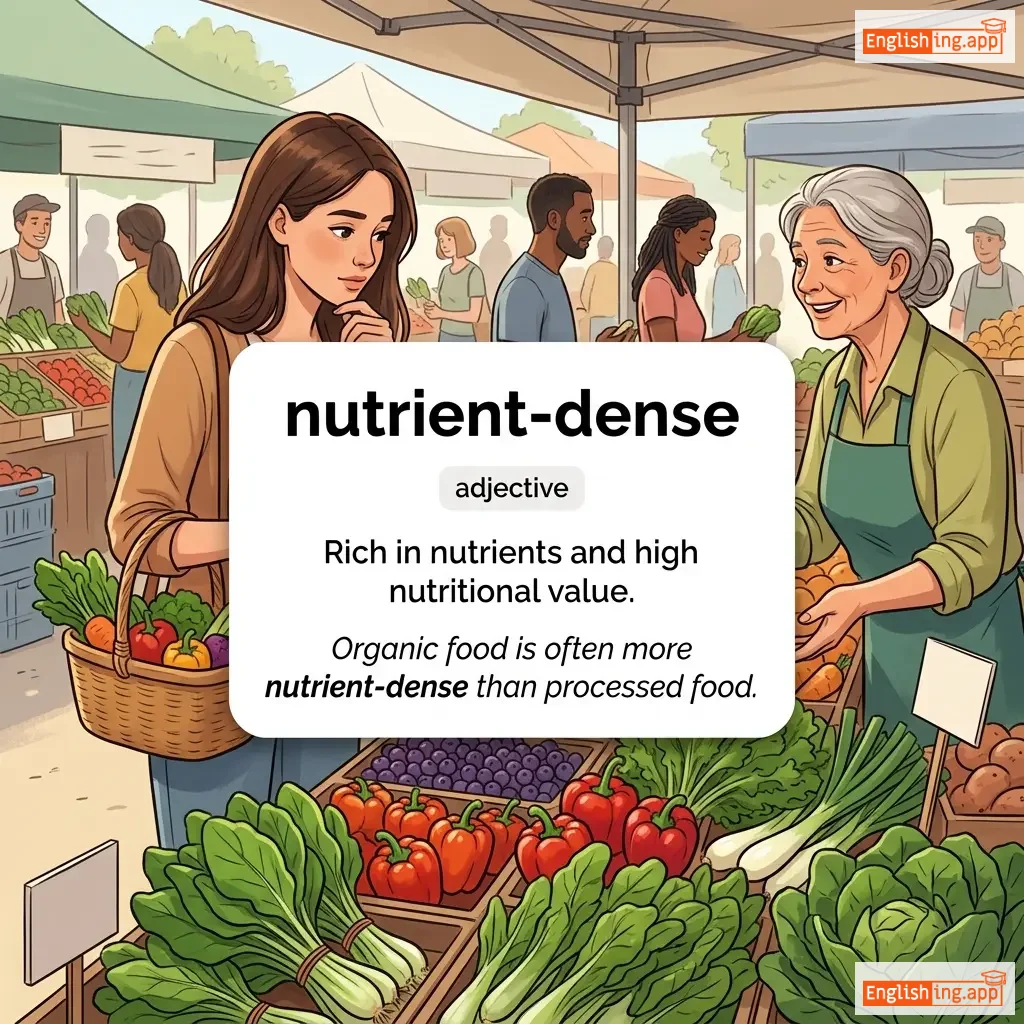
nutrient-dense definition card — visual illustration of the meaning
adjective
/ˈnjuː.tri.ənt dɛns/
营养丰富 (yingyang fengfu)

Rich in nutrients and high nutritional value.

"Organic food is often more nutrient-dense than processed food."

"有机食品通常比加工食品更富含营养。" (Yǒujī shípǐn tōngcháng bǐ jiāgōng shípǐn gèng fù hán yíngyǎng.)
noun
/ˈnjuː.trɪ.mənt/
营养物 (yingyangwu)

Something that nourishes; sustenance or food.

"The soil provides nutriment to the plants."

"土壤为植物提供养分。" (Tǔrǎng wèi zhíwù tígōng yǎngfèn.)
noun
/njuːˈtrɪʃ.ən/
营养 (yingyang)

The process of providing or obtaining the food necessary for health and growth.

"Good nutrition is vital for a healthy life."

"良好的营养对健康生活至关重要。" (Lianghao de yingyang dui jiankang shenghuo zhiguang zhongyao.)
adjective
/njuːˈtrɪʃ.əs/
有营养的 (yǒu yíngyǎng de)

Providing nourishment; health-giving.

"Milk is a nutritious drink for children."
"牛奶是儿童的有营养饮料。" (Niúnǎi shì értóng de yǒu yíngyǎng yǐnliào.)
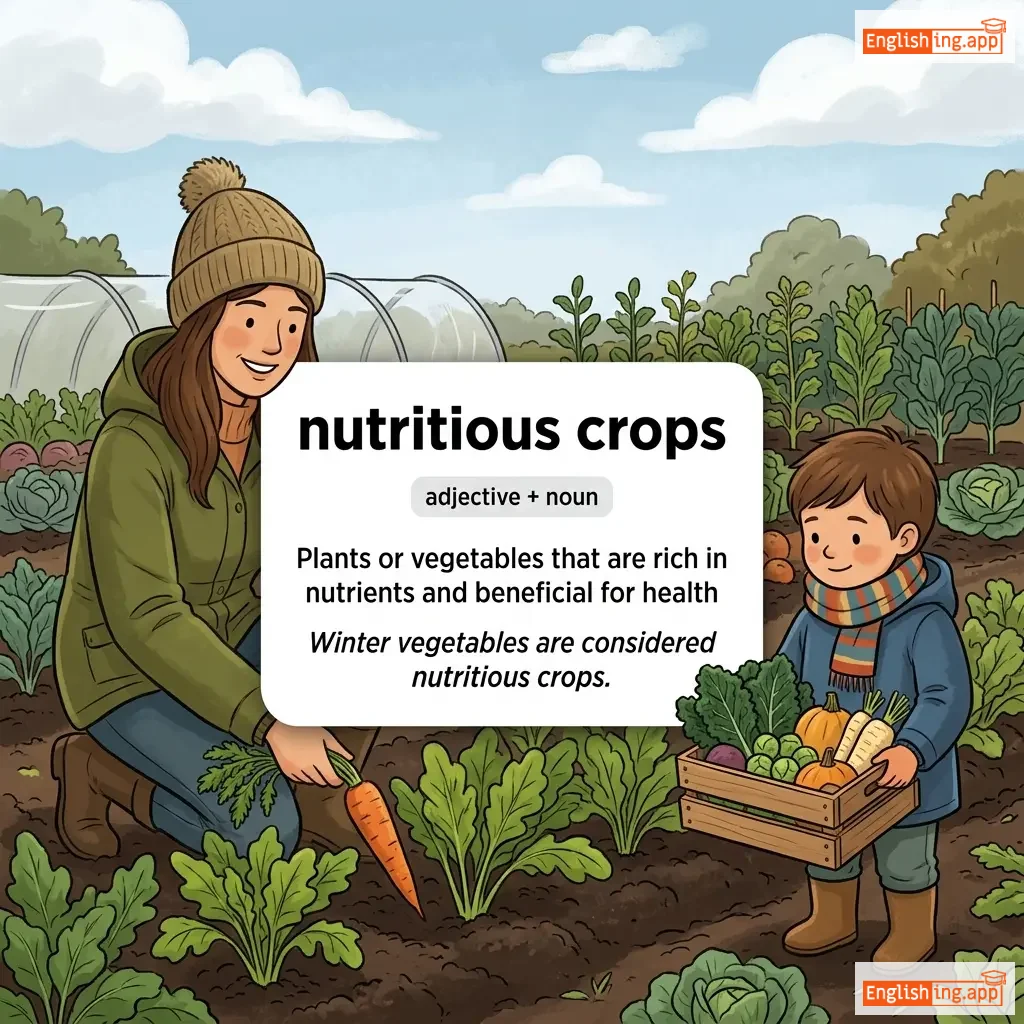
nutritious crops definition card — visual illustration of the meaning
adjective + noun
njuˈtrɪʃəs krɒps
营养丰富的作物 (yíngyǎng fēngfù de zuòwù)

Plants or vegetables that are rich in nutrients and beneficial for health

"Winter vegetables are considered nutritious crops."

"冬季蔬菜被认为是营养丰富的作物。" (Dōngjì shūcài bèi rènwéi shì yíngyǎng fēngfù de zuòwù.)
adjective
/ˈnjuː.trɪ.tɪv/
营养的 (yingyang de)

Relating to nutrition; having nourishing qualities.

"The nutritive value of the fruit is very high."

"水果的营养价值非常高。" (Shuǐguǒ de yíngyǎng jiàzhí fēicháng gāo.)
🧚‍♀️

Nymph (nímf)

noun
/nɪmf/
水仙 (shuǐxiān)

a mythological spirit of nature; a beautiful young woman in classical mythology

"The water nymph appeared by the moonlit lake."

"水仙出现在月光下的湖边。" (shuǐxiān chūxiàn zài yuèguāng xià de húbiān.)