词汇表

英语词汇词典 | 单词含义、定义和示例

adjective
/nɪˈɡoʊ.ʃi.ə.bəl/
可商议的 (ke shangyi de)

Open to discussion or modification; capable of being bargained for.

"The salary offered is negotiable."

"提供的薪水是可商议的。" (Tigong de xinshui shi ke shangyi de.)
verb
/nɪˈɡoʊ.ʃi.eɪt/
谈判 (tanpan)

To discuss something formally in order to reach an agreement.

"They negotiated a fair deal with the supplier."

"他们与供应商谈判达成了公平的交易。" (Tāmen yǔ gōngyìng shāng tánpàn dáchéng le gōngpíng de jiāoyì.)
noun
/nɪɡoʊˈʃiːeɪʃən/
谈判 (tanpan)

a discussion aimed at reaching an agreement

"The negotiation between the two companies was successful."

"两家公司之间的谈判是成功的。" (Liǎng jiā gōngsī zhī jiān de tánpàn shì chénggōng de.)
noun
/ˈneɪbər/
邻居 (línjū)

a person living next door or nearby

"My neighbor lent me some sugar when I ran out."

"我的邻居在我糖用完时借给了我一些糖。" (Wǒ de línjū zài wǒ táng yòng wán shí jiè gěi le wǒ yīxiē táng.)
noun
/ˈneɪbərˌhʊd/
社区 (shequ)

a district or area around or near a particular place

"I grew up in a quiet neighborhood."

"我在一个安静的社区长大。" (Wo zai yi ge anjing de shequ changda.)
adjective
/ˈneɪbərɪŋ/
邻近的 (linjin de)

situated near or next to another place; adjacent or nearby.

"They visited a neighboring village for the festival."

"他们去邻村参加节日活动。" (Tāmen qù lín cūn cānjiā jiérì huódòng.)
noun
/ˈneɪ.bər/
邻居; 旁边 (línjū; pángbiān)

a person who lives near or next to another person

"My neighbour is very friendly and helpful."

"我的邻居非常友好且乐于助人。" (Wǒ de línjū fēicháng yǒuhǎo qiě lè yú zhùrén.)
adjective
/ˈneɪ.bər.ɪŋ/
邻近的; 相邻的; 邻接的 (linjin de; xianglin de; linjie de)

situated next to or very near; adjacent; bordering

"We often visit our neighbouring countries for trade."

"我们经常访问我们的邻国进行贸易。" (Women jingchang fuzhu wode lingguo jinxing maoyi.)
conjunction
/ˈniːðər/
既不 (ji bu)

used to connect two negative alternatives

"Neither the manager nor the assistant could attend the meeting."

"经理和助理都无法参加会议。" (jing li he zhu li dou wu fa can jia hui yi)
noun
/ˈnɛm.ə.sɪs/
敌人 / 对手 (dí rén / duì shǒu)

A long-standing rival or an inescapable agent of downfall.

"For years, he considered his colleague to be his nemesis."

"多年来,他把同事当作自己的敌人。" (duō nián lái, tā bǎ tóngshì dàng zuò zìjǐ de dí rén.)
noun
/ˌniːoʊˈdɑːrwɪnɪzəm/
新达尔文主义 (xin daerwen zhuyi)

A modern interpretation of Darwin's theory of evolution, integrating genetics and natural selection.

"Neo-Darwinism combines Darwin’s theory of natural selection with modern genetics."

"新达尔文主义将达尔文的自然选择理论与现代遗传学相结合。" (Xin Daerwen zhuyi jiang Daerwen de ziran xuanze lilun yu xiandai yichuanxue xiang jiehe.)
noun
/ˌniːoʊˈlætɪn/
新拉丁语 (xin lādīng yǔ)

The use of Latin language for scholarly, scientific, and literary purposes after the medieval period.

"Many scientific names are derived from Neo-Latin."

"许多科学名称来源于新拉丁语。" (Xǔduō kēxué míngchēng láiyuán yú xīn lādīng yǔ.)
noun
/niːˈɒkrəsi/
由无经验或新官员领导的政府 (you wu jingyan huo xin guan yuan lingdao de zhengfu)

A government or leadership run by inexperienced or new officials.

"The sudden revolution led to a neocracy with inexperienced leaders."

"突如其来的革命导致了一个新政府,由经验不足的领导人执政。" (Tū rù qí lái de gémìng dǎozhìle yīgè xīn zhèngfǔ, yóu jīngyàn bùzú de lǐngdǎo rén zhízhèng.)
adjective
/ˌniːoʊˈlɪθɪk/
新石器时代的 (xīn shíqì shídài de)

Relating to the later part of the Stone Age, when ground or polished stone weapons and tools prevailed.

"Neolithic communities began practicing agriculture and domesticating animals."

"新石器时代的社区开始从事农业和驯化动物。" (Xīn shíqì shídài de shèqū kāishǐ cóngshì nóngyè hé xùnhuà dòngwù.)
noun
/niːˈɒlədʒɪzəm/
新词 (xīn cí)

A newly coined word or expression.

"The internet has given rise to many neologisms like 'selfie' and 'hashtag'."

"互联网催生了许多新词,如“自拍”和“标签”。" (hùliánwǎng cuīshēngle xǔduō xīncí, rú 'zìpāi' hé 'biāoqiān'.)
noun
/niˈɒlədʒi/
使用新词或研究其起源 (shǐyòng xīn cí huò yánjiū qí qǐyuán)

The use of new words or the study of their origin.

"The professor specialized in neology, studying the creation of modern slang."

"教授专注于新词学,研究现代俚语的创造。" (Jiàoshòu zhuānzhù yú xīncí xué, yánjiū xiàndài lǐyǔ de chuàngzào.)
noun
/ˌniːoʊˈpeɪɡənɪzəm/
新异教主义 (xīn yìjiào zhǔyì)

Modern religious movements influenced by or claiming to be derived from the various historical pagan beliefs of pre-modern Europe.

"Neopaganism has gained popularity as people seek spiritual alternatives to mainstream religions."
"新异教主义已获得越来越多的关注,因为人们正在寻找主流宗教的精神替代品。" (Xīn yìjiào zhǔyì yǐ huòdé yuè lái yuè duō de guānzhù, yīnwèi rénmen zhèngzài xúnzhǎo zhǔliú zōngjiào de jīngshén tìdàipǐn.)
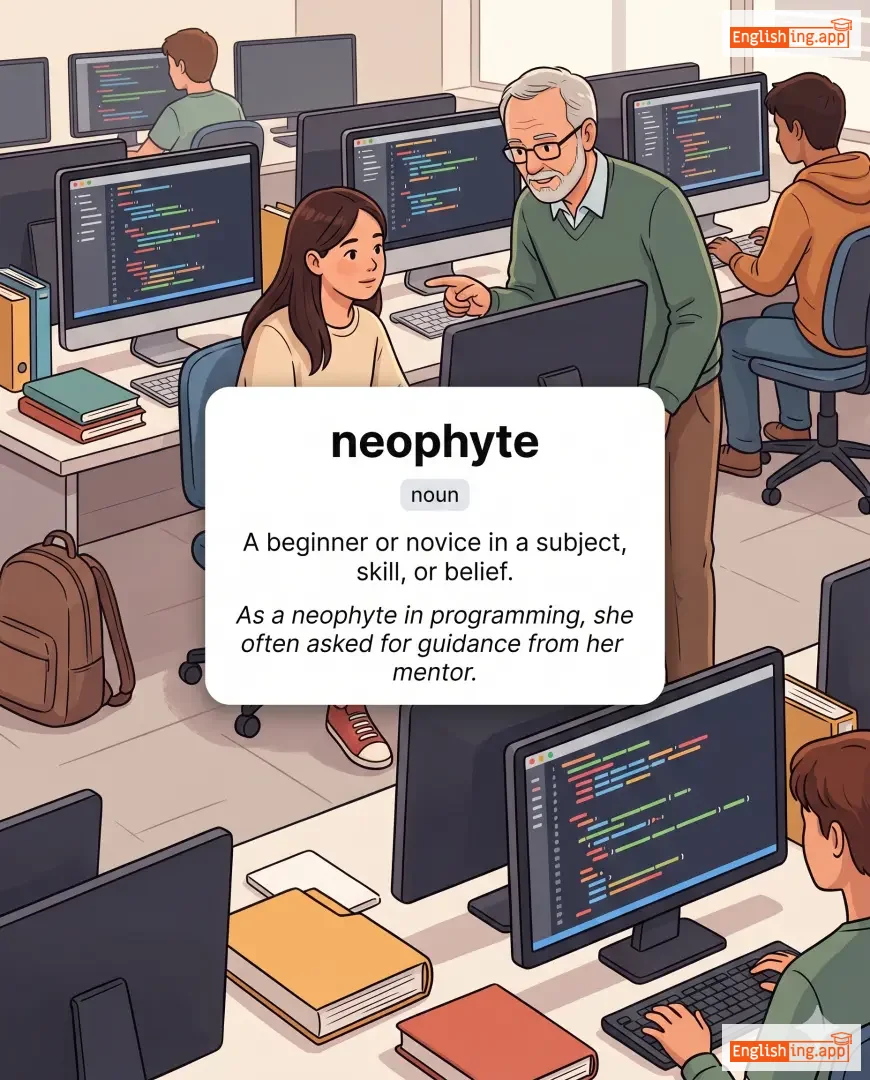
neophyte definition card — visual illustration of the meaning
noun
/ˈniːəˌfaɪt/
新手 (xin shou)

A beginner or novice in a subject, skill, or belief.

"As a neophyte in programming, she often asked for guidance from her mentor."

"作为编程的新手,她经常向她的导师请教。" (Zuo wei bian cheng de xin shou, ta jing chang xiang ta de dao shi qing jiao.)
noun
/ˈnefjuː/
侄子 (zhizi)

the son of one’s brother or sister

"My nephew is studying at the university."

"我的侄子在大学学习。" (wo de zhizi zai daxue xuexi)
noun
/ˈnɛpətɪzəm/
裙带关系 (qundai guanxi)

The practice of giving unfair advantages to relatives, especially in jobs or positions of power.

"The company was accused of nepotism after the manager hired his brother."

"公司因经理雇佣了他的兄弟而被指控裙带关系。" (Gōngsī yīn jīnglǐ gùyōngle tā de xiōngdì ér bèi zhǐkòng qundai guanxi.)
noun, verb
/nɜːrv/
神经; 勇气 (shenjing; yongqi)

A bundle of fibers in the body that transmits signals between the brain and other parts; also courage or audacity.

"She gathered the nerve to speak in front of the large audience."

"她鼓起勇气在大观众面前发言。" (Ta gǔqǐ yǒngqì zài dà guānzhòng miànqián fāyán.)
adjective
/ˈnɜːrvəs/
紧张 (jin zhang)

anxious, worried, or fearful about something

"She felt nervous before giving her presentation."

"她在做报告前感到紧张。" (Tā zài zuò bào gào qián gǎn dào jǐn zhāng.)
noun
/nɛst/
鸟巢 (niao chao)

a structure built by birds or other animals to hold their eggs or young.

"The bird built a nest in the tall tree."

"那只鸟在高高的树上建了一个鸟巢。" (Na zhi niao zai gao gao de shu shang jian le yi ge niao chao.)
verb
/ˈnɛsəl/
依偎 (yī wēi)

to settle or lie comfortably within or against something

"The child nestled into her mother's arms."

"孩子依偎在她母亲的怀里。" (Háizi yīwēi zài tā mǔqīn de huáilǐ.)
noun
/ˈnɛslɪŋ/
雏鸟 (chuniao)

a young bird that has not yet left the nest

"The nestling waited for its parent to bring food."

"雏鸟等待父母带来食物。" (Chuniao dengdai fumu dali shíwu.)
noun
/nɛt/
(wang)

a piece of material made of threads or ropes woven together, used to catch or hold things

"The fisherman cast his net into the sea."

"渔夫把他的网投进了海里。" (Yufu ba tade wang tou jin le hǎi li.)
adjective
/ˈnɛðər/
下方的 (xia fang de)

situated down or below; lower

"They explored the nether regions of the cave."

"他们探险了洞穴的下方区域。" (Tamen tanxian le dongxue de xiafang quyu.)
noun
/ˈnɛtl̩/
一种触碰时会引起刺激的植物 (yī zhǒng chù pèng shí huì yǐn qǐ cì jī de zhí wù)

a plant with stinging hairs that cause irritation when touched

"He accidentally brushed against the nettle and felt a sharp sting."

"他不小心碰到了荨麻,感到一阵剧烈的刺痛。" (Tā bù xiǎoxīn pèng dào le qiánmá, gǎndào yī zhèn jùliè de cì tòng.)
adjective
/ˈnɛtlˌsʌm/
令人烦恼的 (lìng rén fánnǎo de)

Causing irritation, annoyance, or difficulty.

"The nettlesome rules frustrated the workers."

"令人烦恼的规则让工人们感到沮丧。" (Lìng rén fánnǎo de guīzé ràng gōngrén men gǎndào jǔsàng.)
noun
/ˈnɛtˌwɜrk/
网络 (wangluo)

A system of interconnected people, things, or computers.

"She built a strong professional network."

"她建立了一个强大的职业网络。" (Ta jianli le yige qiangda de zhiye wangluo.)
networking definition card — visual illustration of the meaning
noun
/ˈnɛtˌwɜːkɪŋ/
建立网络 (jiànlì wǎngluò)

The action of establishing connections and relationships, especially for career or business purposes.

"Networking is important for career development."

"建立网络对职业发展至关重要。" (Jiànlì wǎngluò duì zhíyè fāzhǎn zhìguān zhòngyào.)
adjective
/ˈnjʊrəl/

Relating to nerves or the nervous system.

"Scientists study neural connections in the brain."

noun
/njʊˈrældʒə/
神经痛 (shenjing tong)

intense, often intermittent pain along a nerve pathway

"The patient suffers from neuralgia in her face."
"病人面部患有神经痛。" (Bìngrén miànbù huàn yǒu shénjīng tòng.)
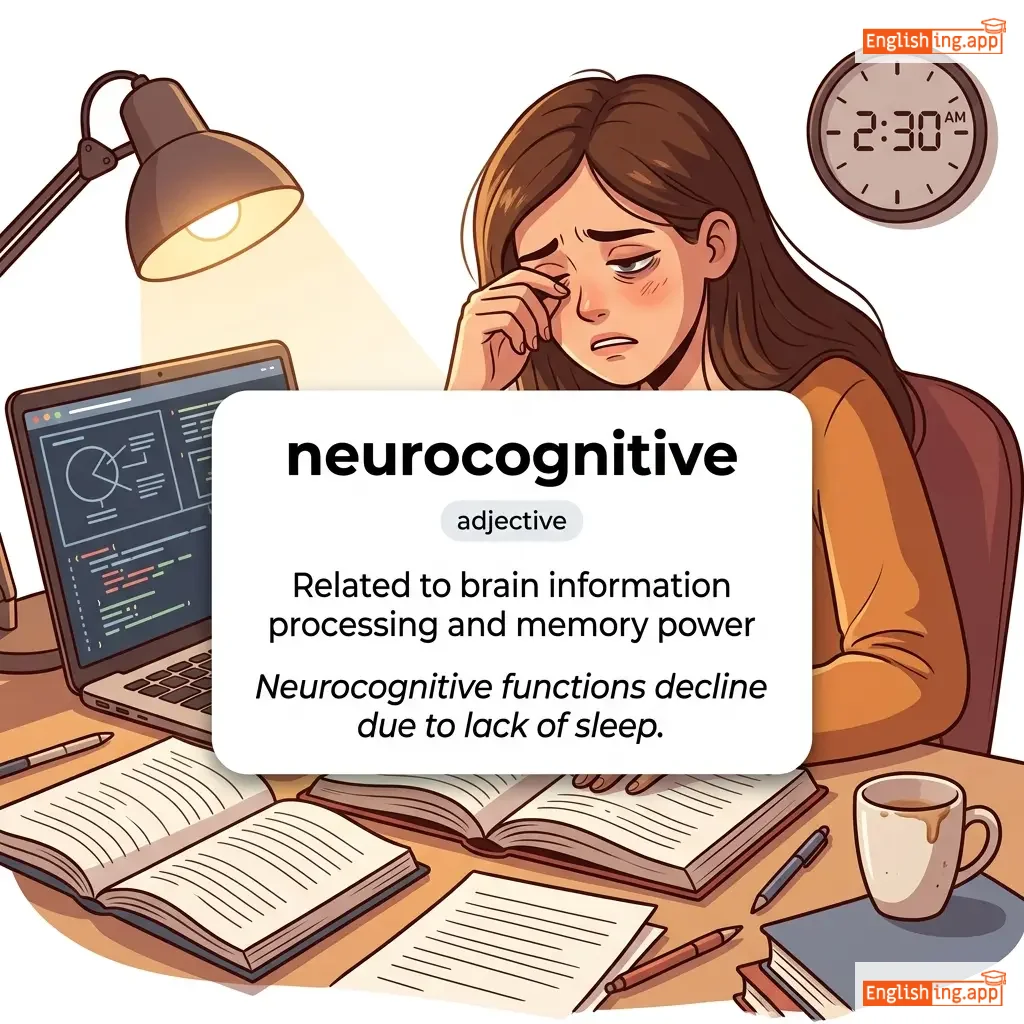
neurocognitive definition card — visual illustration of the meaning
adjective
ˌnjʊəroʊˈkɒɡnɪtɪv
神经认知 (shenjing renzhi)

Related to brain information processing and memory power

"Neurocognitive functions decline due to lack of sleep."
"由于缺乏睡眠,神经认知功能下降。" (Yinyu quefa shuimian, shenjing renzhi gongneng xiaciang.)
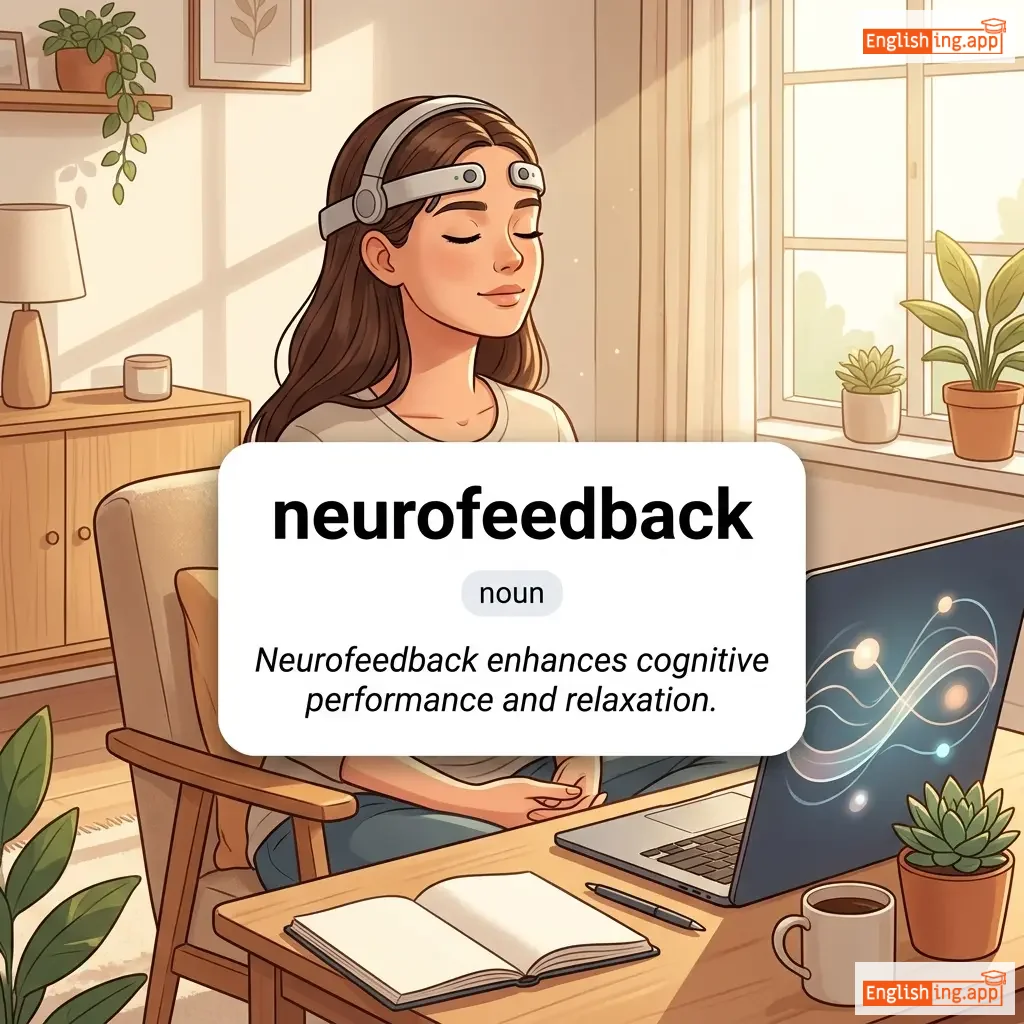
neurofeedback definition card — visual illustration of the meaning
noun
ˈnjʊə.rəʊ ˌfiːd.bæk
一种使用实时显示大脑活动来教授大脑功能自我调节的技术 (shenjing fedback)

A technique that uses real-time displays of brain activity to teach self-regulation of brain function.

"Neurofeedback enhances cognitive performance and relaxation."
"神经反馈提高了认知表现和放松。" (Shénjīng fǎnkuì tígāo le rènzhī biǎoxiàn hé fàngsōng.)
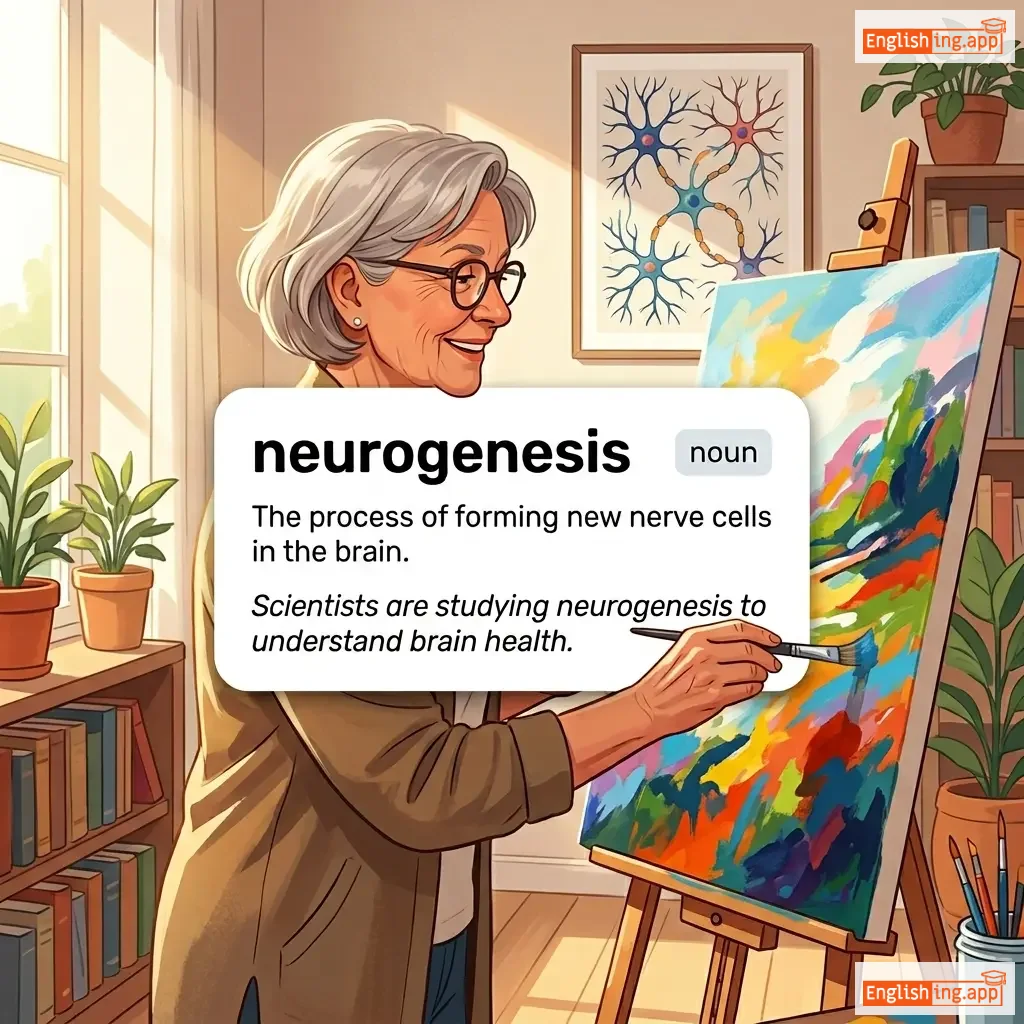
neurogenesis definition card — visual illustration of the meaning
noun
/ˌnjʊə.rəʊˈdʒɛn.ɪ.sɪs/
大脑中新神经细胞的形成过程 (dà nǎo zhōng xīn shén jīng xì bāo de xíng chéng guò chéng)

The process of forming new nerve cells in the brain.

"Scientists are studying neurogenesis to understand brain health."
"科学家们正在研究神经发生,以了解大脑健康。" (Kē xué jiā men zhèng zài yán jiū shén jīng fā shēng, yǐ liǎo jiě dà nǎo jiàn kāng.)
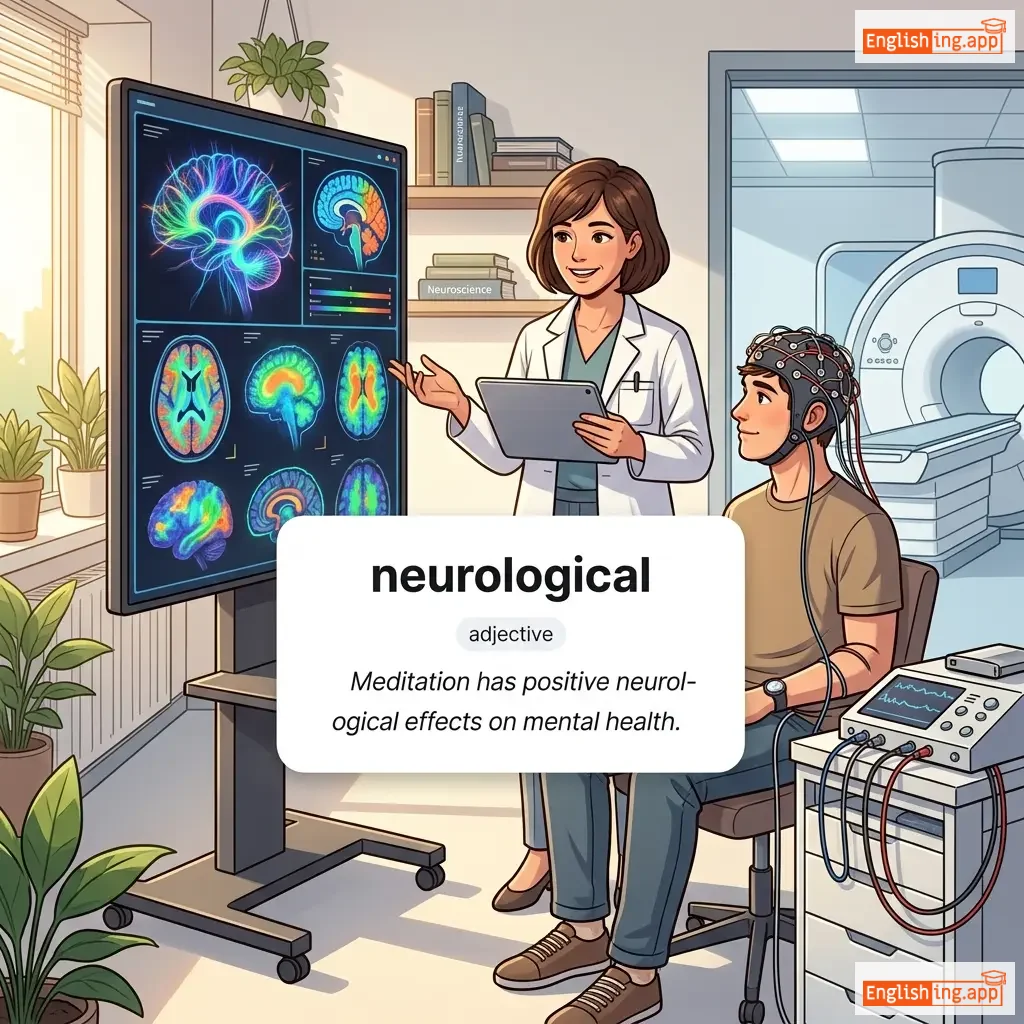
neurological definition card — visual illustration of the meaning
adjective
/ˌnjʊə.rəˈlɒdʒ.ɪ.kəl/
神经学的 (shenjīngxué de)

Relating to the anatomy, functions, and organic disorders of nerves and the nervous system.

"Meditation has positive neurological effects on mental health."

"冥想对心理健康有积极的神经学影响。" (Míngxiǎng duì xīnlǐ jiànkāng yǒu jījí de shénjīngxué yǐngxiǎng.)
noun
/njʊˈrɑːlədʒi/

The branch of medicine that deals with disorders of the nervous system.

"She specializes in neurology and treats patients with brain diseases."

neuroplasticity definition card — visual illustration of the meaning
noun
ˌnjʊə.rəʊ.plæsˈtɪ.sɪ.ti
神经可塑性 (shenjing kesuxing)

The ability of the brain to reorganize itself by forming new neural connections throughout life.

"Meditation enhances neuroplasticity, improving memory and focus."

"冥想提高了神经可塑性,改善了记忆和专注力。" (Mingxiang tigao le shenjing kesuxing, gaishan le jiyi he zhuanzhu li.)
neuroprotective definition card — visual illustration of the meaning
adjective
ˌnjʊə.rəʊ.prəˈtek.tɪv
神经保护 (shenjing baohu)

Having the ability to protect nerve cells from damage, degeneration, or impaired function.

"Omega-3 fatty acids have neuroprotective benefits."
"欧米伽-3脂肪酸具有神经保护作用。" (Oumeijia-3 zhifang suan juyou shenjing baohu zuoyong.)
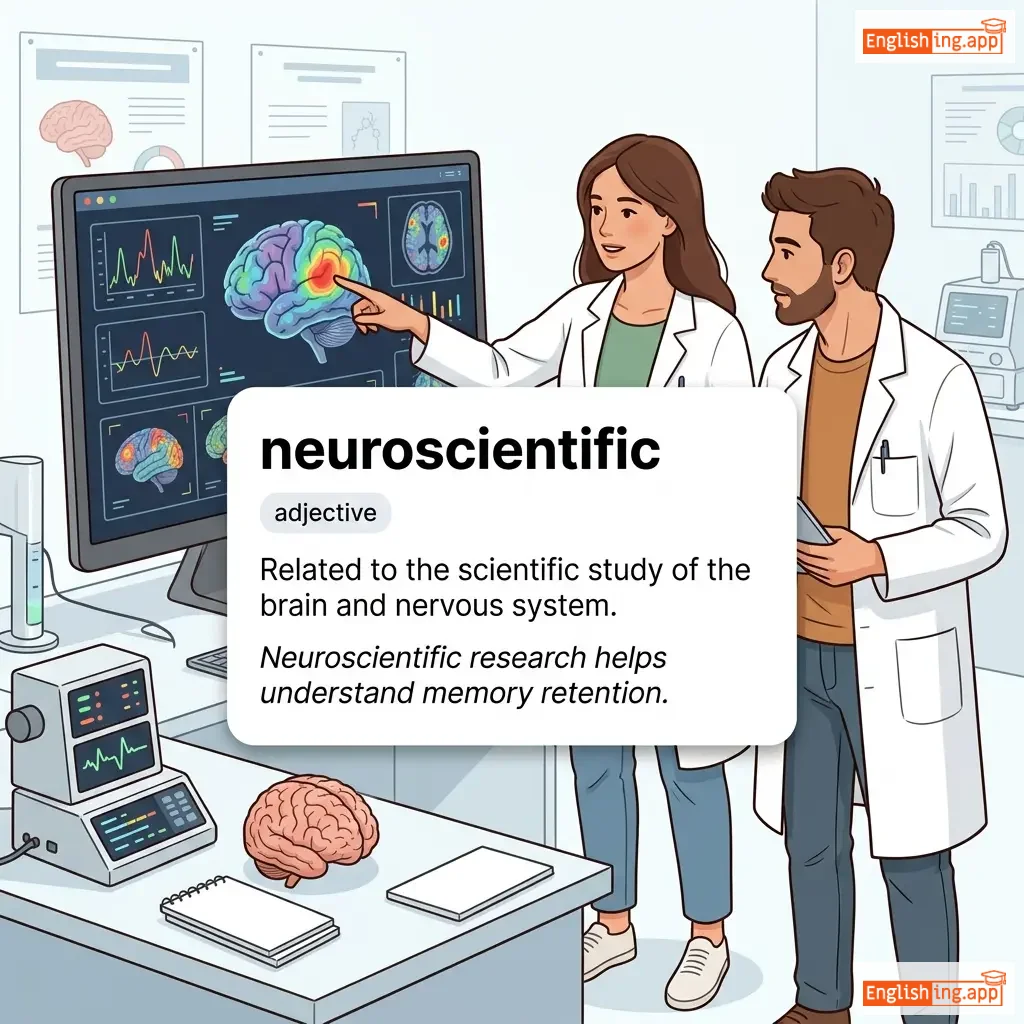
neuroscientific definition card — visual illustration of the meaning
adjective
ˌnjʊə.rəʊ.saɪənˈtɪ.fɪk
神经科学的 (shenjing kexue de)

Related to the scientific study of the brain and nervous system.

"Neuroscientific research helps understand memory retention."
"神经科学研究有助于理解记忆保持。" (Shenjing kexue yanjiu you zhu yu lijie jiyi baochi.)
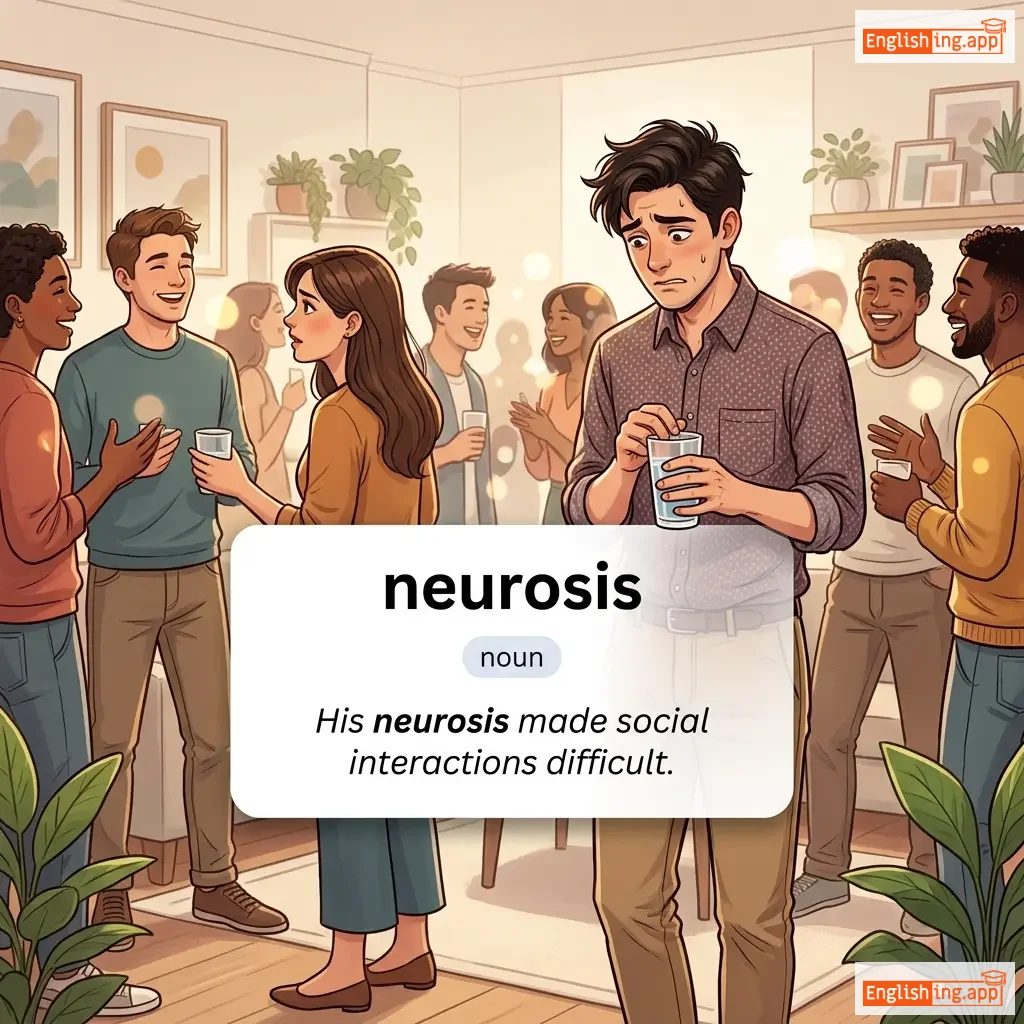
neurosis definition card — visual illustration of the meaning
noun
/njʊəˈrəʊ.sɪs/
神经症 (shenjingzheng)

A relatively mild mental illness that is not caused by organic disease, involving symptoms of stress.

"His neurosis made social interactions difficult."
"他的神经症使得社交互动变得困难。" (Tā de shénjīng zhèng shǐdé shèjiāo hùdòng biàndé kùnnán.)
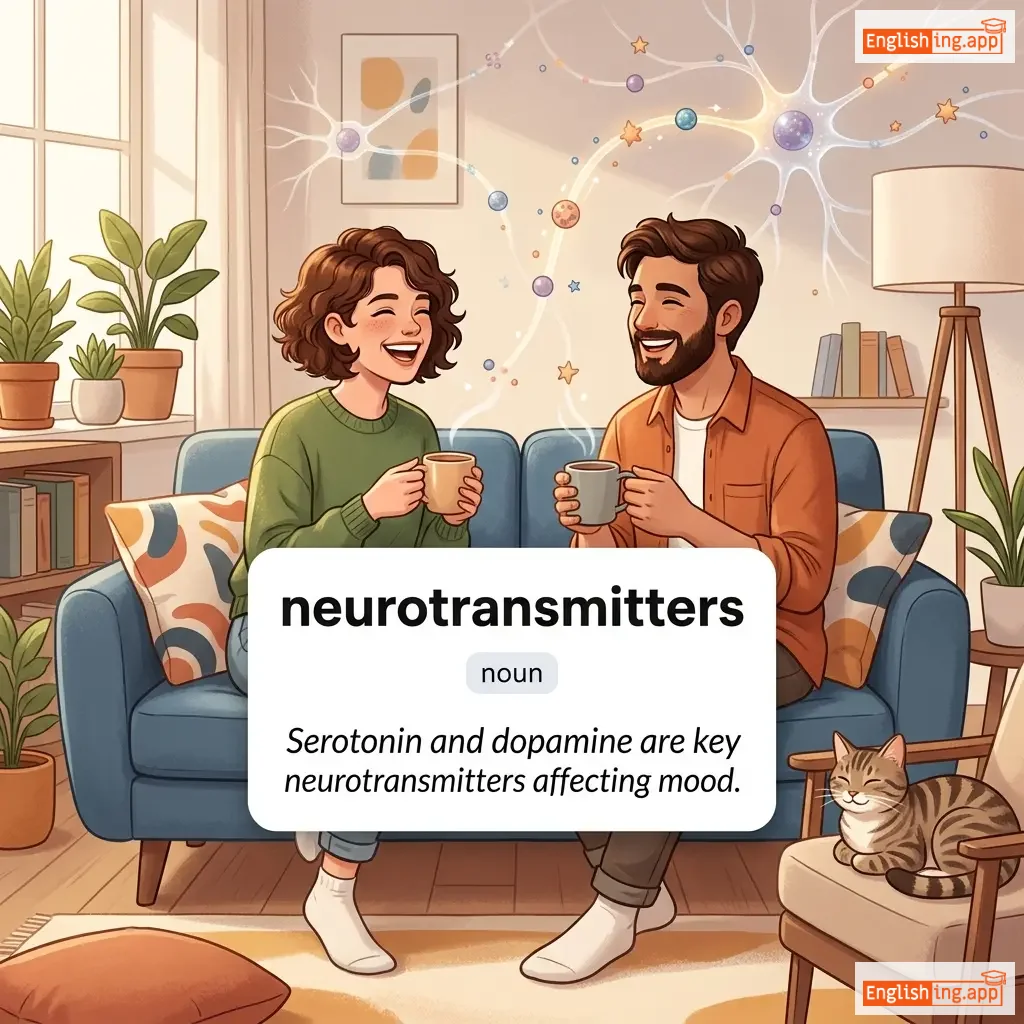
neurotransmitters definition card — visual illustration of the meaning
noun
/ˈnjʊə.rəʊ.trænsˌmɪt.ərs/
神经传导物质 (shen jing chuan dao wu zhi)

Chemical messengers that transmit signals across nerve synapses, affecting mood, behavior, and cognitive functions.

"Serotonin and dopamine are key neurotransmitters affecting mood."

"血清素和多巴胺是影响情绪的关键神经传导物质。" (Xue qing su he duo ba an shi ying xiang qing xu de guan jian shen jing chuan dao wu zhi.)
verb
/ˈnuːtər/
去势 (qushi)

To remove the reproductive organs of an animal; or having no gender.

"They decided to neuter their cat to prevent more kittens."
"他们决定给猫去势,以防止更多小猫的出生。" (Tamen jueding gei mao qushi, yi fangzhi gengduo xiaomao de chusheng.)
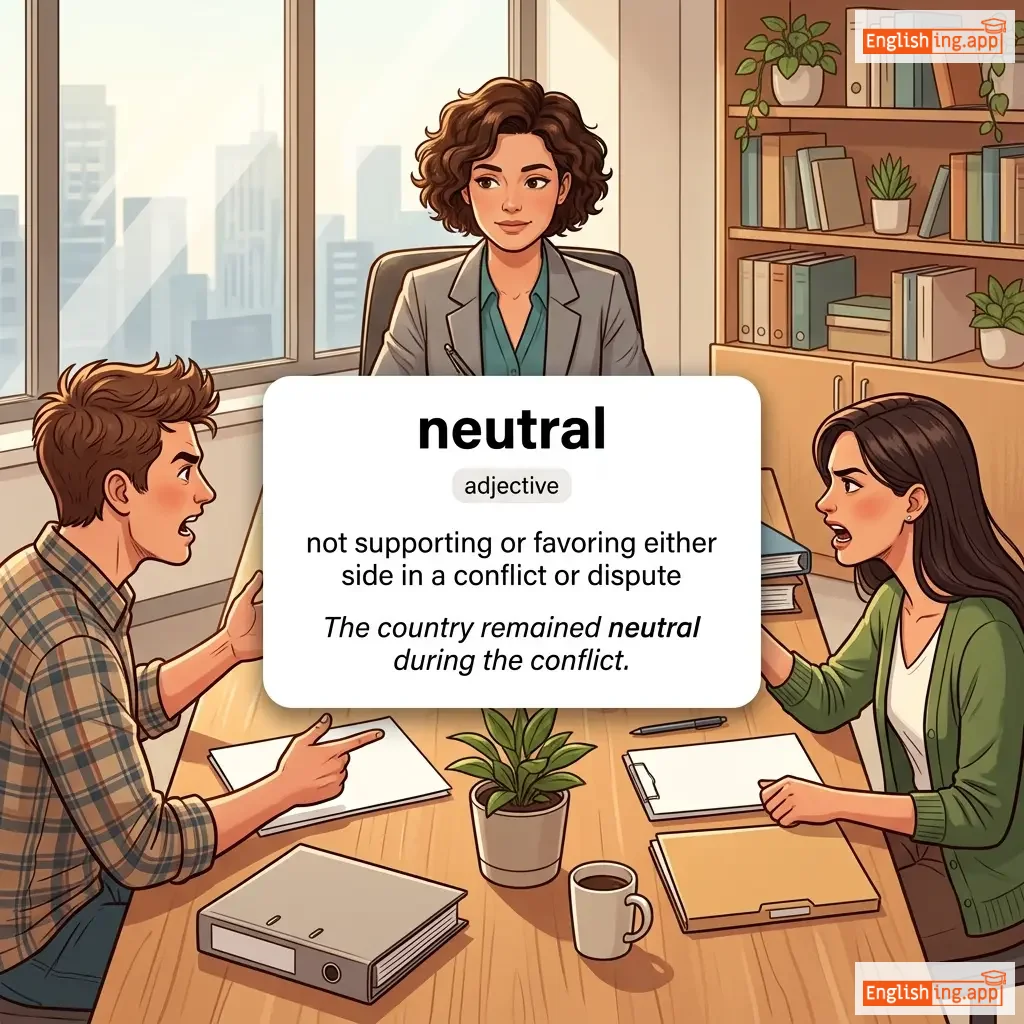
neutral definition card — visual illustration of the meaning
adjective
/ˈnjuːtrəl/
中立 (zhōnglì)

not supporting or favoring either side in a conflict or dispute

"The country remained neutral during the conflict."
"这个国家在冲突中保持中立。" (Zhège guójiā zài chōngtú zhōng bǎochí zhōnglì.)
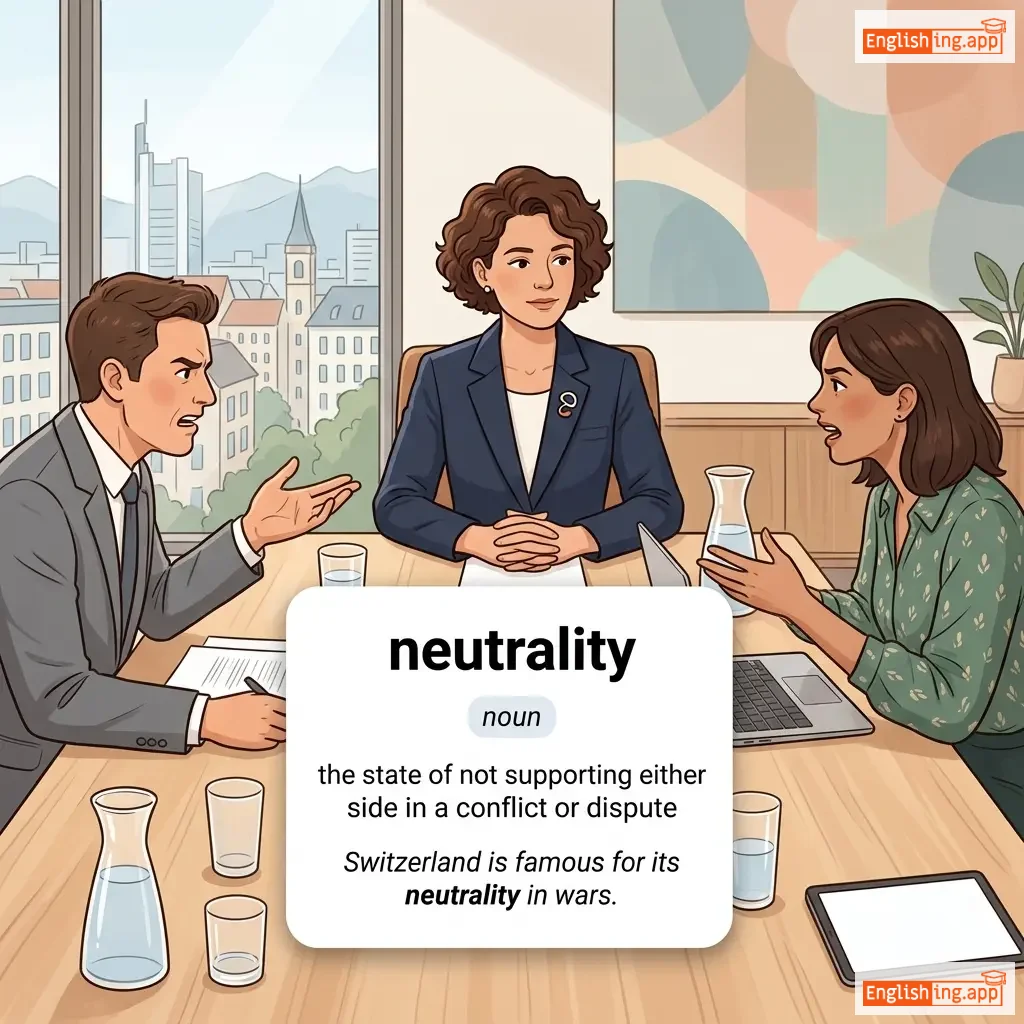
neutrality definition card — visual illustration of the meaning
noun
/nuːˈtræl.ə.ti/
中立 (zhongli)

the state of not supporting either side in a conflict or dispute

"Switzerland is famous for its neutrality in wars."

"瑞士因其在战争中的中立而闻名。" (Ruìshì yīn qí zài zhànzhēng zhōng de zhōnglì ér wénmíng.)
verb
/ˈnjuːtrəlaɪz/
中和 (zhōnghé)

to make something ineffective or harmless

"The medicine helped neutralize the poison in his system."

"药物帮助中和了他体内的毒素。" (Yàowù bāngzhù zhōnghé le tā tǐnèi de dú sù.)
adverb
/ˈnɛvər/
从不 (congbu)

at no time in the past or future; not ever

"I have never seen such a beautiful sunset."

"我从未见过如此美丽的日落。" (Wo congbu jian guo ruci mei li de ri luo.)
adverb
/ˌnɛvəðəˈlɛs/

in spite of that; however

"He was tired; nevertheless, he kept working."

adjective
/njuː/
新的 (xīn de)

recently made, discovered, or introduced; not existing before

"He bought a new car yesterday."

"他昨天买了一辆新车。" (Tā zuótiān mǎile yī liàng xīn chē.)