词汇表

英语词汇词典 | 单词含义、定义和示例

noun
/ˌmiːtiəˈrɒlədʒi/
气象学 (qixiangxue)

The scientific study of the atmosphere and weather.

"He chose to specialize in meteorology to study weather patterns."

"他选择专攻气象学,以研究天气模式。" (Ta xuanze zhuangong qixiangxue, yi yanjiu tianqi moshi.)
noun
/ˈmiːtər/
(mǐ)

A unit of length in the metric system equal to 100 centimeters; also, a device that measures quantity such as electricity or gas.

"The technician came to check the electricity meter."

"技术员来了检查电表。" (Jìshùyuán lái le jiǎnchá diànbiǎo.)
noun
/ˈmɛθəd/
方法 (fāngfǎ)

A particular way or process of doing something.

"She explained the method of solving the problem."

"她解释了解决问题的方法。" (Tā jiěshìle jiějué wèntí de fāngfǎ.)
methodical definition card — visual illustration of the meaning
adjective
/məˈθɒdɪkəl/
有条理的 (yǒu tiáolǐ de)

Done in an orderly and systematic way.

"She followed a methodical approach to solving the problem."

"她采用了有条理的方式解决问题。" (Tā cǎiyòngle yǒu tiáolǐ de fāngshì jiějué wèntí.)
noun
/ˌmɛθəˈdɑlədʒi/
方法论 (fāngfǎlùn)

A system of methods used in a particular area of study or activity.

"The research was conducted using a new methodology."

"这项研究是使用新方法论进行的。" (Zhe xiang yanjiu shi shiyong xin fangfalu jinxing de.)
meticulous definition card — visual illustration of the meaning
adjective
/məˈtɪkjʊləs/
一丝不苟 (yīsī bùgǒu)

Showing great attention to detail; very careful and precise.

"The artist was meticulous in painting every tiny detail."

"艺术家在绘制每个小细节时都非常一丝不苟。" (Yìshùjiā zài huìzhì měi gè xiǎo xìjié shí dōu fēicháng yīsī bùgǒu.)
meticulousness definition card — visual illustration of the meaning
noun
mɪˈtɪkjʊləsnɪs
对细节的极大关注 (dui xijie de jida guanzhu)

Great attention to detail; very careful and precise.

"His meticulousness made the project successful."

"他的细心让这个项目成功。" (Tade xixin rang zhege xiangmu chenggong.)
noun
/mɪˈtɒnɪmi/
借代 (jièdài)

A figure of speech in which one word or phrase is substituted with another closely related word or concept.

"In the phrase 'the crown will decide,' 'crown' is a metonymy for monarchy."

"在短语 '王冠将决定' 中,'王冠' 是君主制的借代。" (Zài duǎnyǔ 'wángguàn jiāng juédìng' zhōng, 'wángguàn' shì jūnzhǔzhì de jièdài.)
adjective
/ˈmɛtrɪk/
米特里克 (mì tè lǐ kè)

Relating to the metric system of measurement; also, a standard of measurement used to assess performance.

"The company tracks success using clear performance metrics."

"公司通过使用清晰的绩效指标来追踪成功。" (Gōng sī tōng guò shǐ yòng qīng xī de jì xiào zhǐ biāo lái zhuī zōng chéng gōng.)
adjective
/ˈmɛtrɪkəl/
韵律的 (yùnlǜ de)

Relating to or composed in a regular rhythmic pattern of beats or meter, especially in poetry.

"The poet carefully followed metrical rules in his verses."

"诗人在他的诗句中小心地遵循了韵律规则。" (Shīrén zài tā de shī jù zhōng xiǎoxīn de zūnxúnle yùnlǜ guīzé.)
metrics definition card — visual illustration of the meaning
noun
ˈme.trɪks
度量标准 (dùliàng biāozhǔn)

A system or standard of measurement; a set of numbers that give information about a particular process or activity.

"Metrics are crucial for evaluating performance."

"度量标准对于评估绩效至关重要。" (Dùliàng biāozhǔn duìyú pínggū jìxiào zhìguān zhòngyào.)
noun
/ˈmet.roʊ reɪl/
地铁 (ditie)

an underground urban railway system; subway system

"The metro rail connects all major areas of the city efficiently."

"地铁有效地连接了城市的所有主要区域。" (Dìtiě yǒuxiào dì liánjiēle chéngshì de suǒyǒu zhǔyào qūyù.)
noun
/ˈmɛtrəˌnoʊm/
节拍器 (jiépāiqì)

A device that produces regular ticks or beats to help musicians maintain tempo.

"She practiced the piano with a metronome to keep steady timing."

"她用节拍器练习钢琴,以保持稳定的节奏。" (Tā yòng jiépāiqì liànxí gāngqín, yǐ bǎochí wěndìng de jiézòu.)
noun
/məˈtrɒpəlɪs/
大城市 (dà chéngshì)

A large, important city that is a hub of culture, business, and population.

"New York is often described as a global metropolis."

"纽约常被描述为一个全球大都市。" (Niǔyuē cháng bèi miáoshù wéi yī gè quánqiú dà chéngshì.)
adjective
/ˌmɛtrəˈpɑːlɪtən/
大都市 (dà dū shì)

Relating to a large city, its surrounding areas, or its lifestyle.

"She moved to a metropolitan area for better job opportunities."

"她为了更好的工作机会搬到了大都市区域。" (Tā wèile gèng hǎo de gōngzuò jīhuì bān dào le dà dū shì qūyù.)
noun
/ˈmɛtəl/
勇气 (yǒngqì)

A person's ability to cope well with difficulties or to face demanding situations with courage.

"The young athlete showed his mettle in the final match."

"这位年轻的运动员在决赛中展示了他的勇气。" (Zhè wèi niánqīng de yùndòngyuán zài juésài zhōng zhǎnshìle tā de yǒngqì.)
adjective
/ˈmɛtəlˌsʌm/
勇敢的 (yǒng gǎn de)

Full of courage and spirit; lively and spirited.

"The mettlesome young rider never backed down from a challenge."

"勇敢的年轻骑手从不退缩。" (Yǒng gǎn de nián qīng qí shǒu cóng bù tuì suō.)
noun
/mjuːz/
小巷/窄街 (xiaoxiang/zhai jie)

A row or street of houses or apartments that have been converted from stables or built to look like former stables.

"They rented a small flat in a quiet London mews."

"他们在伦敦的一个安静的mews租了一间小公寓。" (Tamen zai Lundun de yige anjing de mews zu le yijian xiao gongyu.)
noun/adjective
/ˈmɛksɪkən/
幸福 (xìng fú)

a native or inhabitant of Mexico; relating to Mexico or its people, culture, or language

"She enjoys Mexican food like tacos and enchiladas."

"她在获得奖项时无法隐藏自己的幸福。" (Tā zài huòdé jiǎngxiàng shí wúfǎ yǐncáng zìjǐ de xìngfú.)
noun
/maɪˈæzmə/
恶臭空气 (èchòu kōngqì)

An unpleasant or unhealthy smell or atmosphere.

"A miasma of decay hung over the abandoned house."
"腐烂的气味弥漫在废弃的房子上方。" (fǔlàn de qìwèi mímàn zài fèiqì de fángzi shàngfāng.)
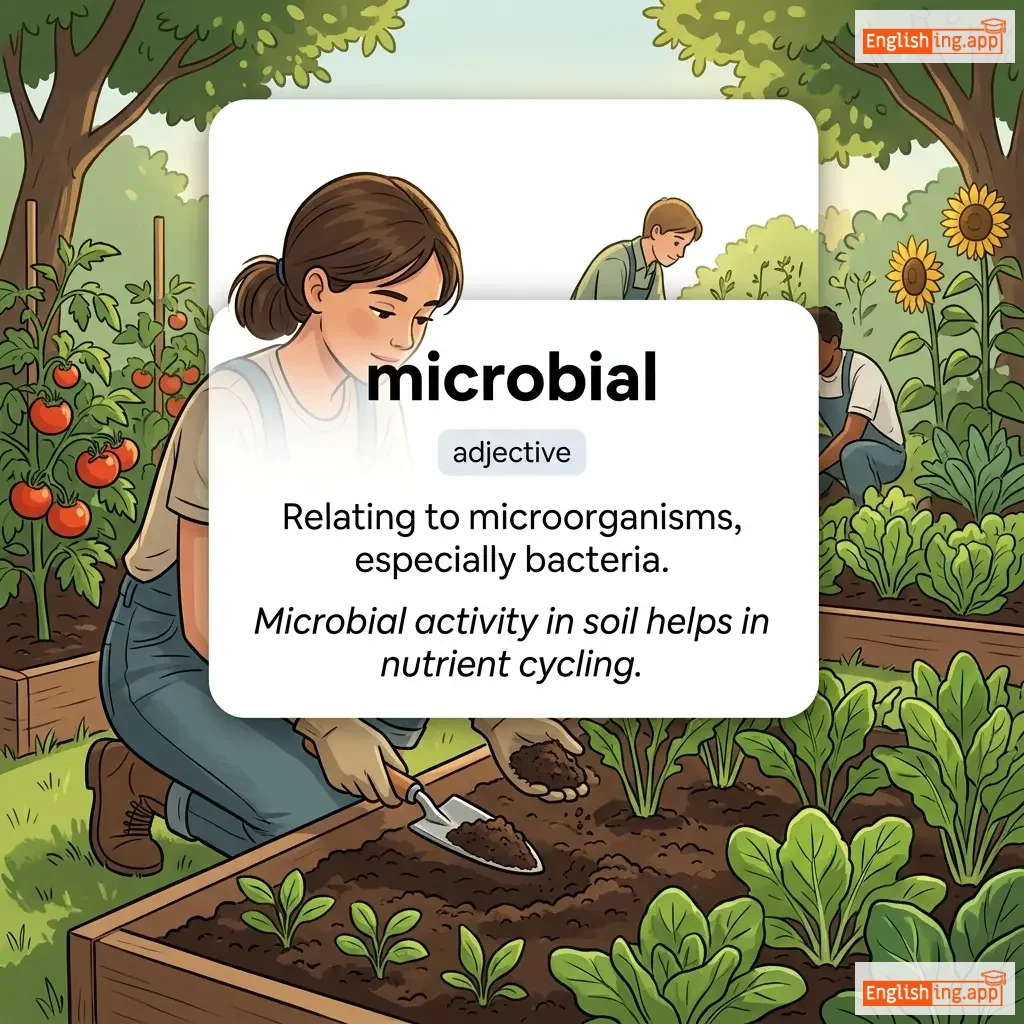
microbial definition card — visual illustration of the meaning
adjective
/maɪˈkroʊ.bi.əl/
与微生物相关 (yu weishengwu xiangguan)

Relating to microorganisms, especially bacteria.

"Microbial activity in soil helps in nutrient cycling."
"土壤中的微生物活动有助于养分循环。" (Tǔrǎng zhōng de wēishēngwù huódòng yǒuzhù yú yǎngfèn xúnhuán.)
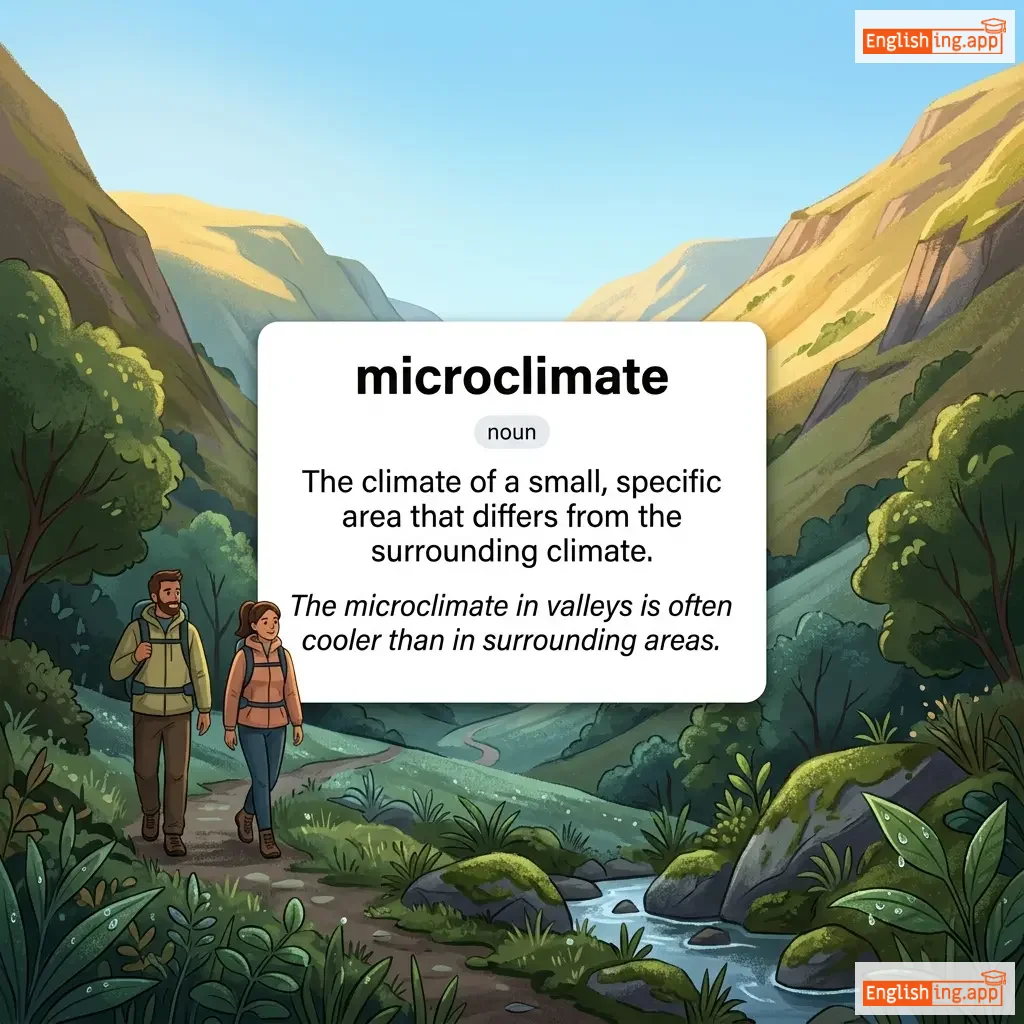
microclimate definition card — visual illustration of the meaning
noun
/ˈmaɪ.krəʊˌklaɪ.mət/
微气候 (wei qihou)

The climate of a small, specific area that differs from the surrounding climate.

"The microclimate in valleys is often cooler than in surrounding areas."

"山谷中的微气候通常比周围地区凉爽。" (Shangu zhong de wei qihou tongchang bi zhouwei diqu liangshuang.)
noun
/ˈmaɪkrəˌkɒzəm/
微观宇宙 (weiguan yuzhou)

A small, representative system having analogies to a larger system; a miniature version of something.

"The small town is a microcosm of the entire nation."

"这个小镇是整个国家的微观宇宙。" (Zhege xiaozhen shi zhengge guojia de weiguan yuzhou.)
noun
/maɪˈkrɒmɪtər/
千分尺 (qiānfēnchǐ)

A device used for measuring small distances with great accuracy.

"The engineer used a micrometer to measure the thickness of the wire."

"工程师使用了一个微米尺来测量电线的厚度。" (Gōngchéngshī shǐyòngle yīgè wēimǐchǐ lái cèliàng diànxiàn de hòudù.)
micronutrient definition card — visual illustration of the meaning
noun
ˈmaɪ.krəʊˌnjuː.tri.ənt
微量营养素 (wēi liàng yíng yǎnɡ sù)

Essential nutrients required by the body in small amounts, including vitamins and minerals.

"Iron and zinc are essential micronutrients for growth."

"铁和锌是促进生长所需的微量营养素。" (Tiě hé xīn shì cùjìn shēngzhǎng suǒ xū de wēi liàng yíng yǎnɡ sù.)
micronutrients definition card — visual illustration of the meaning
noun
/ˈmaɪ.krəʊˌnjuː.tri.ənts/
微量营养素 (weiliang yingyangsu)

Essential nutrients required in small amounts for proper body function, including vitamins and minerals.

"Micronutrients like iron and zinc are essential for immunity."

"铁和锌等微量营养素对免疫力至关重要。" (Tie he xin deng weiliang yingyangsu dui mi'yili zhi guang zhongyao.)
/ˈmaɪ.krəˌfoʊn/
麦克风 (maikefeng)

A device that converts sound into an electrical signal, typically used to amplify or record voices or music.

"She spoke into the microphone during the presentation."

"她在演示期间使用麦克风讲话。" (Tā zài yǎnshì qījiān shǐyòng màikèfēng jiǎnghuà.)
noun
/ˈmaɪ.krəˌskoʊp/
显微镜 (xianwei jing)

An optical instrument used for viewing very small objects, such as cells, by magnifying them.

"The scientist observed the bacteria under the microscope."

"科学家在显微镜下观察细菌。" (Kexuejia zai xianwei jing xia guancha xijun.)
adjective
/ˌmaɪ.krəˈskɑː.pɪk/
显微镜下可见的 (xianwei jing xia kejian de)

Extremely small and only visible with a microscope.

"The sample contained microscopic particles."

"样本中包含显微镜下可见的颗粒。" (Yangben zhong baohán xianwei jing xia kejian de kelì.)
noun
/maɪˈkrɑː.skə.pi/
显微镜学 (xianwei jingxue)

The use of a microscope to observe small objects or organisms.

"Microscopy revealed the structure of the cells."

"显微镜学揭示了细胞的结构。" (Xianwei jingxue jieshi le xibao de jiagou.)
noun
/ˈmaɪkroʊweɪv/
微波炉 (weibolu)

an electric oven that uses electromagnetic radiation to heat food quickly

"She heated the leftover pizza in the microwave for two minutes."

"她把剩余的披萨放进微波炉加热了两分钟。" (ta ba shengyu de piza fangjin weibolu jiare le liang fenzhong)
adjective, preposition, noun
/mɪd/
中间 (zhongjian)

being in the middle of something; the central part or point

"She joined the project in mid June."

"她在六月中旬加入了这个项目。" (ta zai liuyue zhongxun jiaru le zhege xiangmu)
noun
/ˈmɪd.deɪ/
中午 (zhongwu)

The middle of the day; twelve o'clock in the daytime; noon

"The sun is brightest at midday when it's directly overhead."

"太阳在中午最亮,当它正好在头顶时。" (Taiyang zai zhongwu zui liang, dang ta zhenghao zai touting shi.)
noun/adjective
/ˈmɪdəl/
中间 (zhōngjiān)

the central point, position, or part of something

"The park is in the middle of the city."

"公园位于城市的中心。" (Gōngyuán wèiyú chéngshì de zhōngxīn.)
adjective
/ˈmɪd.əl.eɪdʒd/
中年 (zhōngnián)

being of an age between young and old; typically between 40-60 years old

"The middle-aged man started a new career."

"那位中年男子开始了一项新事业。" (Nà wèi zhōngnián nánzǐ kāishǐle yī xiàng xīn shìyè.)
middle-class definition card — visual illustration of the meaning
adjective
/ˈmɪdəl klɑːs/
中产阶级 (zhōngchǎn jiējí)

belonging to the social group between the upper and working class, typically with moderate income and education

"They live a comfortable middle-class life in the city."

"他们在城市过着舒适的中产阶级生活。" (Tāmen zài chéngshì guòzhe shūshì de zhōngchǎn jiējí shēnghuó.)
noun
/ˈmɪdəlˌmæn/
中介 (zhōngjiè)

A person who acts as a link between buyers and sellers, often in business deals.

"The farmer sold his crops directly, without a middleman."

"农民直接销售他的农作物,没有中介。" (nóngmín zhíjiē xiāoshòu tā de nóngzuòwù, méiyǒu zhōngjiè.)
noun
/ˈmɪdnaɪt/
午夜 (wǔ yè)

twelve o'clock at night; the middle of the night

"He reached home just after midnight."

"他在午夜后到家。" (Tā zài wǔ yè hòu dào jiā.)
noun
/mɪdst/
中间 (zhongjian)

the middle part or position of something

"In the midst of chaos, she remained calm."

"在混乱的中间,她保持冷静。" (Zai hunluan de zhongjian, ta baochi lengjing.)
noun
/ˌmɪdˈsʌm.ər/
夏至中期 (xia zhi zhong qi)

The middle of summer, often around the summer solstice in June.

"We had a festival to celebrate midsummer."

"我们举办了一个节日来庆祝夏至中期。" (Wo men juban le yi ge jieri lai qingzhu xia zhi zhong qi.)
adverb
/ˈmɪd.weɪ/
半途 (bàntú)

in the middle of an event, process, or distance

"He stopped midway through his speech."

"他在演讲中途停下来。" (Tā zài yǎnjiǎng zhōngtú tíng xiàlái.)
noun
/ˈmɪd.waɪf/
助产士 (zhùchǎnshì)

A person, typically a woman, trained to assist women during childbirth.

"The midwife stayed with the mother throughout her labor."

"助产士在整个分娩过程中一直陪伴着母亲。" (Zhùchǎnshì zài zhěnggè fēnmiǎn guòchéng zhōng yīzhí péibànzhe mǔqīn.)
noun
/miːn/
神态 (shéntài)

A person's appearance or manner, especially as an indication of their character or mood.

"His serious mien made everyone fall silent."

"他严肃的神态让所有人都沉默了。" (Tā yánsù de shéntài ràng suǒyǒu rén dōu chénmòle.)
noun
/mɪf/
小争执 (xiao zhengzhi)

A petty quarrel or annoyance.

"They had a slight miff over the seating arrangement."

"他们因座位安排发生了小小的争执。" (Tāmen yīn zuòwèi ānpái fāshēngle xiǎo xiǎo de zhēngzhí.)
modal verb/noun
/maɪt/
可能 / 力量 (keneng / liliang)

used to express possibility; power or strength

"She might come to the party if she finishes work early."

"如果她早早完成工作,她可能会来参加派对。" (Ruguo ta zaizao wancheng gongzuo, ta keneng hui lai canjia paidui.)
adjective
/ˈmaɪti/
强大的 (qiangda de)

having great power or strength; very strong or impressive

"The mighty river flows through the heart of the country."

"这条强大的河流穿过国家的中心。" (Zhe tiao qiangda de heliu chuanguo guojia de zhongxin)
noun
/ˈmaɪ.ɡrənt/
移民 (yímín)

A person who moves from one place to another, especially to find work or better living conditions.

"Many migrants travel long distances to find employment."

"许多移民旅行很长的距离以寻找工作。" (Xǔduō yímín lǚxíng hěn cháng de jùlí yǐ xúnzhǎo gōngzuò.)
🕊️

migrate

verb
/maɪˈɡreɪt/

To move from one region or habitat to another, especially regularly according to the seasons or for work.

"Birds migrate south during the winter."

noun
/maɪˈɡreɪʃən/
迁徙 (qianxi)

the movement of people or animals from one place to another, often for better living conditions or seasonal reasons

"The annual migration of birds is a fascinating natural event."

"鸟类的年度迁徙是一个引人入胜的自然事件。" (niao lei de niandu qianxi shi yige yinrenrusheng de ziran shijian.)
adjective
/ˈmaɪɡrəˌtɔːri/
迁徙的 (qiānxǐ de)

Relating to or characterized by migration, especially animals or people moving from one place to another.

"Migratory birds travel thousands of miles each year."

"迁徙的鸟类每年旅行数千英里。" (Qiānxǐ de niǎo lèi měi nián lǚxíng shù qiān yīnglǐ.)