词汇表

英语词汇词典 | 单词含义、定义和示例

noun
/ˈmɛntɔːr/
导师 (dǎoshī)

an experienced person who advises and guides someone less experienced

"She acted as a mentor for the new employees."

"她担任新员工的导师。" (Tā dānrèn xīn yuángōng de dǎoshī.)
noun
/ˈmɛnjuː/
菜单 (càidān)

A list of food and drinks available at a restaurant or offered at a meal.

"The restaurant updated its menu with new dishes."

"餐厅更新了他们的菜单,加入了新菜肴。" (Cāntīng gēngxīnle tāmen de càidān, jiārùle xīn cài yáo.)
adjective
/ˈmɜːrkəntaɪl/
商业的 (shāngyè de)

related to trade or commerce

"The city grew rapidly due to its mercantile activities."

"由于其商业活动,这座城市迅速发展。" (Yóuyú qí shāngyè huódòng, zhè zuò chéngshì xùnsù fāzhǎn.)
noun
/ˈmɜːrsəˌnɛri/
雇佣兵 (gùyòng bīng)

a professional soldier hired to serve in a foreign army; also used to describe someone motivated solely by money.

"The mercenary fought for whoever paid the highest wage."

"雇佣兵为支付最高工资的人而战斗。" (Gùyòng bīng wèi zhīfù zuìgāo gōngzī de rén ér zhàndòu.)
noun
/ˈmɜːrtʃənt/
商人 (shāngrén)

a person or company involved in the trade of goods, especially in large quantities

"The merchant sold spices from distant lands."

"商人出售来自遥远土地的香料。" (Shāngrén chūshòu láizì yáoyuǎn tǔdì de xiāngliào.)
adjective
/ˈmɜːrsɪfəl/
仁慈 (réncí)

showing compassion or forgiveness towards someone one has the power to punish or harm.

"The judge was merciful and gave him a lighter sentence."

"法官很仁慈,给了他一个更轻的判决。" (fǎguān hěn réncí, gěile tā yīgè gèng qīng de pànjué.)
adjective
/ˈmɜːrsɪləs/
无情 (wúqíng)

showing no mercy or compassion; cruel and ruthless.

"The dictator was merciless in crushing the rebellion."

"独裁者在镇压叛乱时无情。" (Dúcáizhě zài zhènyā pànluàn shí wúqíng.)
adjective
/mɜːrˈkjʊriəl/
善变的 (shànbiàn de)

subject to sudden or unpredictable changes of mood or mind.

"She is known for her mercurial temperament."

"她以其善变的脾气而闻名。" (Tā yǐ qí shànbiàn de píqì ér wénmíng.)
noun
/ˈmɜːrsi/
仁慈 (renci)

compassion or forgiveness shown toward someone whom it is within one's power to punish or harm

"She showed mercy by letting him go."

"她通过让他走来表现了仁慈。" (Ta tongguo rang ta zou lai biaoxianle renci.)
adjective
/mɪr/
仅仅 (jinjin)

Used to emphasize how small or insignificant something is.

"It was a mere suggestion, not a command."

"这只是一个建议,而不是命令。" (Zhè zhǐ shì yīgè jiànyì, ér bùshì mìnglìng.)
adverb
/ˈmɪərli/
仅仅 (jinjin)

Only; nothing more than.

"She was merely trying to help."

"她仅仅是在尝试帮助。" (Tā jǐnjǐn shì zài chángshì bāngzhù.)
meretricious definition card — visual illustration of the meaning
adjective
/ˌmɛrəˈtrɪʃəs/
华而不实 (hua er bu shi)

apparently attractive but having no real value or integrity.

"The design was flashy but meretricious."

"设计华丽但华而不实。" (Shèjì huálì dàn huā ér bù shí.)
merge definition card — visual illustration of the meaning
verb
/mɜːrdʒ/
合并 (hébìng)

to combine or join together to form one entity

"The two companies decided to merge their resources."

"这两家公司决定合并他们的资源。" (Zhè liǎng jiā gōngsī juédìng hébìng tāmen de zīyuán.)
noun
/ˈmɜːrdʒər/
合并 (hébìng)

The combination of two or more companies into a single entity.

"The merger of the two firms created the largest bank in the region."

"这两家公司的合并创造了该地区最大的银行。" (Zhè liǎng jiā gōngsī de hébìng chuàngzàole gāi dìqū zuìdà de yínháng.)
noun
/məˈræŋ/
梅灵 (甜点装饰) (méi líng (tiándiǎn zhuāngshì))

A light dessert topping made from whipped egg whites and sugar.

"She decorated the pie with a fluffy meringue topping."

"她用轻盈的梅灵装饰了派。" (Tā yòng qīngyíng de méi líng zhuāngshì le pài.)
noun/verb
/ˈmɛrɪt/
优点 (yōudiǎn)

A quality or feature that deserves praise or reward; to deserve or be worthy of.

"The plan has the merit of being simple and practical."

"这个计划的优点是简单且实用。" (Zhège jìhuà de yōudiǎn shì jiǎndān qiě shíyòng.)
merit-based definition card — visual illustration of the meaning
adjective
ˈmer.ɪt beɪst
基于优点 (jī yú yōu diǎn)

Based on or determined by individual merit, ability, or achievement rather than other factors.

"Merit-based recruitment strengthens the workforce."

"基于优点的招聘强化了劳动力。" (Jī yú yōu diǎn de zhāopìn qiánghuàle láodònglì.)
verb (past)
/ˈmɛrɪtɪd/
值得的 (zhídé de)

Deserved or earned something.

"Her dedication merited recognition from the community."

"她的奉献得到了社区的认可。" (Tā de fèngxiàn dédàole shèqū de rènkě.)
noun
/ˌmɛrɪˈtɒkrəsi/
精英制度 (jīng yīng zhì dù)

A system in which advancement is based on individual ability or achievement.

"In a true meritocracy, the most capable people rise to leadership positions."

"在真正的精英制度中,最有能力的人会晋升为领导职位。" (Zài zhēnzhèng de jīng yīng zhìdù zhōng, zuì yǒu nénglì de rén huì jìnshēng wéi lǐngdǎo zhíwèi.)
adjective
/ˌmɛrɪˈtɔːriəs/
值得称赞的 (zhí dé chēng zàn de)

Deserving reward, praise, or recognition.

"She received a scholarship for her meritorious academic performance."

"她因其值得称赞的学术表现而获得奖学金。" (Tā yīn qí zhí dé chēng zàn de xué shù biǎo xiàn ér huò dé jiǎng xué jīn.)
🧜‍♀️

Mermaid (mèrmáid)

noun
/ˈmɛr.meɪd/
美人鱼 (měirényú)

A mythical sea creature with the head and torso of a woman and the tail of a fish

"The little girl loved stories about mermaids living under the sea."

"小女孩喜欢关于美人鱼在海底生活的故事。" (xiǎo nǚhái xǐhuān guānyú měirényú zài hǎidǐ shēnghuó de gùshì.)
adverb
/ˈmerɪli/
快乐地 (kuaile de)

in a cheerful and joyful manner

"The children played merrily in the garden."

"孩子们在花园里快乐地玩耍。" (Haizimen zai huayuan li kuaile de wanshua.)
noun
/ˈmeɪsə/
台地 (tái dì)

An isolated flat-topped hill with steep sides, found in arid regions.

"The hikers stopped to admire the mesa rising above the desert floor."

"远足者停下来欣赏那座高出沙漠地面的梅萨。" (Yuǎnzú zhě tíng xiàlái xīnshǎng nà zuò gāo chū shāmò dìmiàn de méi sà.)
verb, noun
/mɛʃ/
网格, 编织 (wǎnggé, biānzhī)

To fit or work together properly; or a material made of interlaced threads.

"The two gears mesh perfectly to keep the machine running smoothly."

"这两个齿轮完美契合,使机器平稳运行。" (Zhè liǎng gè chǐlún wánměi qìhé, shǐ jīqì píngwěn yùnxíng.)
noun
/ˈmɛzməˌrɪzəm/
催眠术 (cuīmián shù)

A state of fascination or hypnotism.

"The magician held the audience in a state of mesmerism."
"魔术师让观众处于催眠状态。" (Móshùshī ràng guānzhòng chǔ yú cuīmián zhuàngtài.)
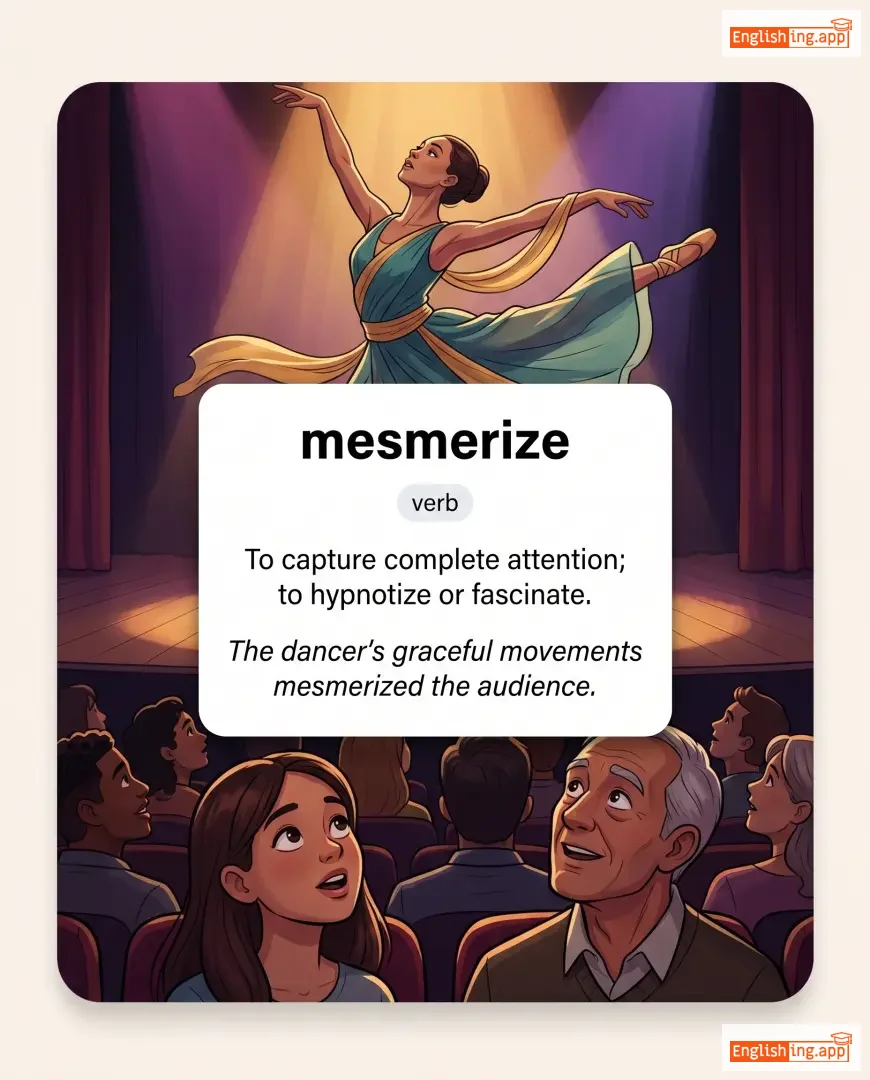
mesmerize definition card — visual illustration of the meaning
verb
/ˈmɛzməˌraɪz/
迷住 (mí zhù)

To capture complete attention; to hypnotize or fascinate.

"The dancer's graceful movements mesmerized the audience."

"舞者优雅的动作迷住了观众。" (Wǔzhě yōuyǎ de dòngzuò mí zhù le guānzhòng.)
noun
/mɛs/
混乱 (hùnluàn)

A state of disorder or untidiness.

"The kids left the room in a complete mess."

"孩子们把房间弄得一团糟。" (Háizimen bǎ fángjiān nòng de yìtuánzāo.)
noun
/ˈmɛsɪdʒ/
消息 (xiaoxi)

A piece of information sent or communicated from one person to another.

"I received a message from my friend yesterday."

"我昨天收到了一条来自朋友的消息。" (Wo zuotian shoudao le yitiao laizi pengyou de xiaoxi.)
noun
/ˈmes.ɪn.dʒər/
信使 (xìnshǐ)

a person who carries messages or communications between parties

"The messenger delivered important battle plans to the commander."

"信使将重要的战斗计划传递给了指挥官。" (Xìnshǐ jiāng zhòngyào de zhàndòu jìhuà chuándì gěile zhǐhuīguān.)
adjective
/ˈmɛsi/
凌乱的 (lingluan de)

untidy or dirty; disorganized or chaotic

"His room was so messy that he couldn’t find his keys."

"他的房间太凌乱了,以至于他找不到钥匙。" (ta de fangjian tai lingluan le yi zhiyu ta zhao bu dao yaoshi)
metabolic definition card — visual illustration of the meaning
adjective
ˌmet.əˈbɒl.ɪk
代谢的 (daixiede)

Related to the chemical processes within living organisms to maintain life.

"A fast metabolic rate helps in weight management."

"快速的代谢率有助于体重管理。" (Kuaisu de daixie lu you zhu yu tizhong guanli.)
metabolism definition card — visual illustration of the meaning
noun
/məˈtæbəlɪzəm/
新陈代谢 (xīnchén dàixiè)

The chemical processes that occur within a living organism in order to maintain life.

"Faster metabolism can help with weight management."

"更快的代谢可以帮助体重管理。" (gèng kuài de dàixiè kěyǐ bāngzhù tǐzhòng guǎnlǐ.)
metabolize definition card — visual illustration of the meaning
verb
məˈtæb.ə.laɪz
处理和利用食物以促进生长 (chǔlǐ hé lìyòng shíwù yǐ cùjìn shēngzhǎng)

Process and use food for growth and to replace tissue, or process other substances in the body.

"The liver helps to metabolize toxins."

"肝脏帮助代谢毒素。" (Gānzàng bāngzhù dàixiè dú sù.)
metacognition definition card — visual illustration of the meaning
noun
ˌmɛt.ə.kɒɡˈnɪʃ.ən
元认知 (yuán rènzhī)

Awareness and understanding of one's own thought processes.

"Metacognition helps students improve their learning strategies."

"元认知帮助学生改进他们的学习策略。" (Yuan renzhi bangzhu xuesheng gaijin tamen de xuexi zhanlue.)
noun
/ˈmɛtəl/
金属 (jinshu)

A solid material that is typically hard, shiny, malleable, fusible, and conductive, such as iron, gold, or aluminum.

"The ring was made of precious metal."
"这枚戒指是由贵重金属制成的。" (Zhe mei jie zhi shi you guizhong jinshu zhicheng de.)
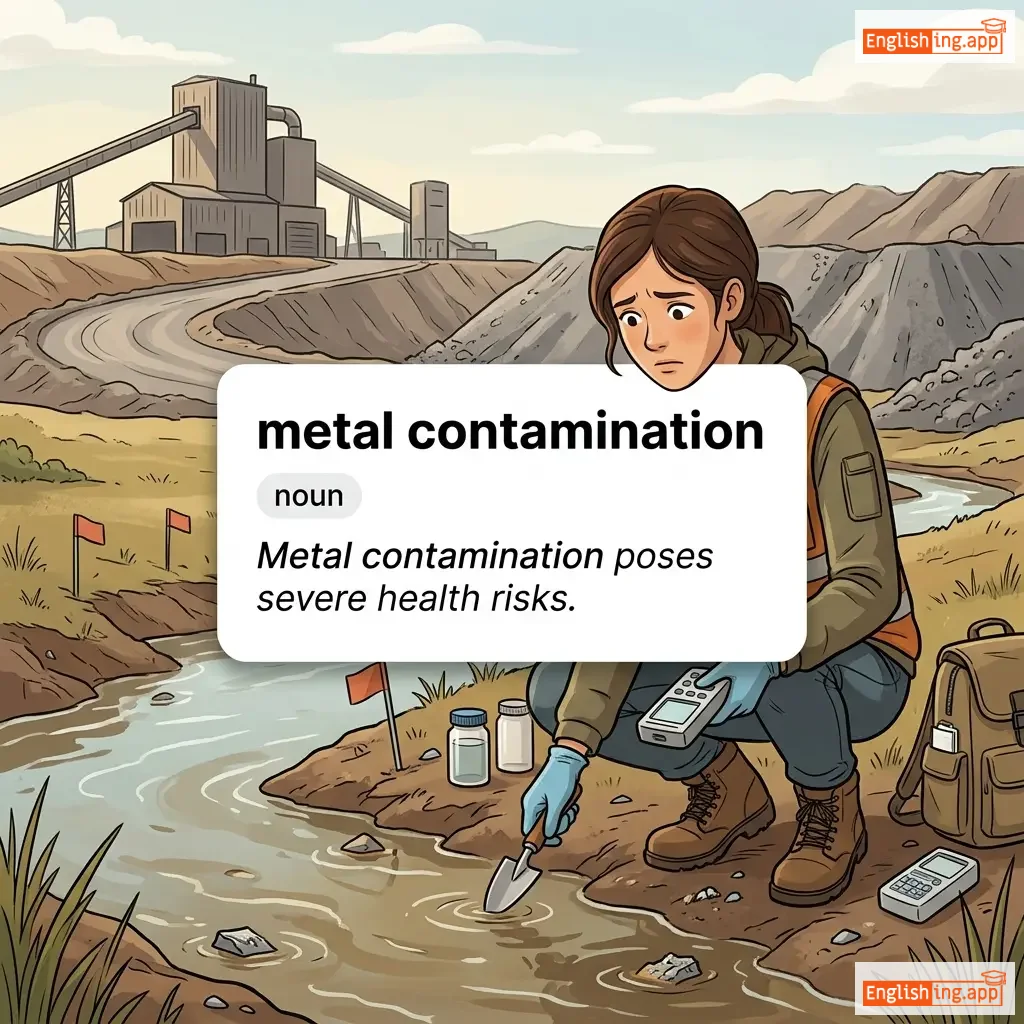
metal contamination definition card — visual illustration of the meaning
noun
ˈmetəl kənˌtæməˈneɪʃən
金属污染 (jinshu wuran)

The presence of toxic metals in the environment that pose health and environmental risks.

"Metal contamination poses severe health risks."

"金属污染对健康构成严重威胁。" (Jinshu wuran dui jiankang goucheng yanzhong weixie.)
adjective
/ˌmɛtəˈlɜrdʒɪkəl/
冶金的 (ye jin de)

Relating to metallurgy or the branch of science concerned with the properties of metals and their production.

"He studied metallurgical engineering at the university."

"他在大学学习了冶金工程。" (ta zai da xue xue xi le ye jin gong cheng.)
noun
/ˈmɛtələ(r)dʒi/
冶金学 (yě jīn xué)

The science and technology of metals, including their extraction from ores and their processing.

"Metallurgy plays a vital role in industrial development."

"冶金学在工业发展中起着至关重要的作用。" (Yě jīn xué zài gōngyè fāzhǎn zhōng qǐzhe zhìguān zhòngyào de zuòyòng.)
verb
/ˌmɛtəˈmɔrfoʊz/
变形 (bianxing)

To change in form, structure, or substance; to transform completely.

"The caterpillar metamorphosed into a butterfly."

"毛毛虫变形成蝴蝶。" (Maomaochong bianxing cheng hudie.)
metamorphosis definition card — visual illustration of the meaning
noun
/ˌmɛtəˈmɔrfəsɪs/
变形 (bianxing)

A process of transformation from one form to another, especially in biology, such as the change from a caterpillar to a butterfly.

"The metamorphosis of the tadpole into a frog is fascinating."

"蝌蚪变成青蛙的变形过程很有趣。" (Kedou biancheng qingwa de bianxing guocheng hen youqu.)
noun
/ˈmɛtəfɔːr/
幸福 (xingfu)

A figure of speech in which a word or phrase is applied to something to which it is not literally applicable.

"Time is a thief is a common metaphor for how quickly life passes."

"当她获得奖项时,她无法掩饰自己的幸福。" (Dāng tā huò dé jiǎngxiàng shí, tā wúfǎ yǎnshì zìjǐ de xìngfú.)
adjective
/ˌmɛtəˈfɔːrɪkəl/
隐喻的 (yǐn yù de)

Characteristic of or relating to metaphor; figurative rather than literal.

"He used metaphorical language to describe his emotions."

"他用隐喻语言来描述他的情感。" (Tā yòng yǐn yù yǔyán lái miáoshù tā de qínggǎn.)
noun
/ˈmɛtəfɔːrm/
隐喻形式 (yǐn yù xíng shì)

A coined or rare term sometimes used to describe a hybrid form of metaphor and form in literature or art.

"The poet introduced a metaphorm to blend imagery with structure."

"诗人引入了一种梅塔福姆,把意象和结构结合在一起。" (Shīrén yǐnrù le yī zhǒng méitǎfúm, bǎ yìxiàng hé jiégòu jiéhé zài yīqǐ.)
adjective
/ˌmɛtəˈfɪzɪkəl/
形而上学的 (xíng ér shàng xué de)

Relating to the branch of philosophy that deals with the fundamental nature of reality and existence.

"He spent years studying metaphysical questions about life and being."

"他花了多年时间研究关于生活和存在的形而上学问题。" (tā huāle duōnián shíjiān yánjiū guānyú shēnghuó hé cúnzài de xíng ér shàng xué wèntí.)
noun
/ˌmɛtəfɪˈzɪʃən/
形而上学家 (xíng ér shàng xué jiā)

A person who studies or is an expert in metaphysics.

"The metaphysician debated the essence of reality with his peers."
"形而上学家与同伴们讨论了现实的本质。" (Xíng ér shàng xué jiā yǔ tóngbànmen tǎolùnle xiànshí de běnzhì.)
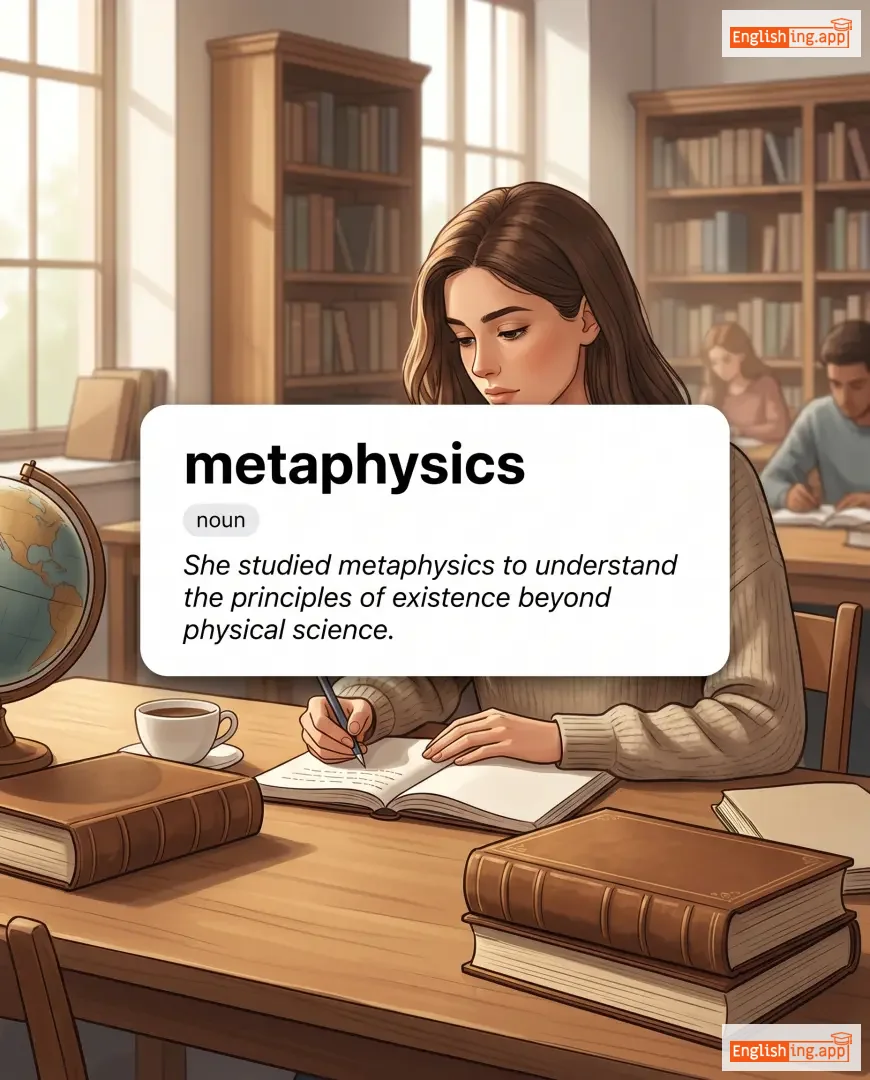
metaphysics definition card — visual illustration of the meaning
noun
/ˌmɛtəˈfɪzɪks/
形而上学 (xíng ér shàng xué)

The branch of philosophy that deals with the fundamental nature of reality, existence, and the relationship between mind and matter.

"She studied metaphysics to understand the principles of existence beyond physical science."

"她学习形而上学,以理解超越物理科学的存在原理。" (Tā xuéxí xíng ér shàng xué, yǐ lǐjiě chāoyuè wùlǐ kēxué de cúnzài yuánlǐ.)
verb
/miːt/
分配 (fenpei)

To dispense or allot justice, punishment, or harsh treatment.

"The judge will mete out punishment according to the crime."

"法官将根据罪行分配惩罚。" (Fǎguān jiāng gēnjù zuìxíng fēnpèi chéngfá.)
noun
/ˌmɛtəmˌsaɪˈkoʊsɪs/
灵魂的转生 (línghún de zhuǎnshēng)

The supposed transmigration of the soul, especially its reincarnation after death.

"Ancient philosophers often debated the idea of metempsychosis."

"古代哲学家常常讨论灵魂的转生。" (Gǔdài zhéxuéjiā chángcháng tǎolùn línghún de zhuǎnshēng.)
adjective
/ˌmiːtiˈɔːrɪk/
与流星相关; 非常迅速且通常是暂时的。 (yu liuxing xiangguan; feichang xunshu qie tongchang shi zan shi de.)

Relating to meteors; very rapid and often temporary.

"The singer’s meteoric rise to fame surprised everyone."
"这位歌手的流星般的成名之路让每个人都感到惊讶。" (Zhe wei geshou de liuxing ban de chengming zhi lu rang mei ge ren dou gandu jingya.)
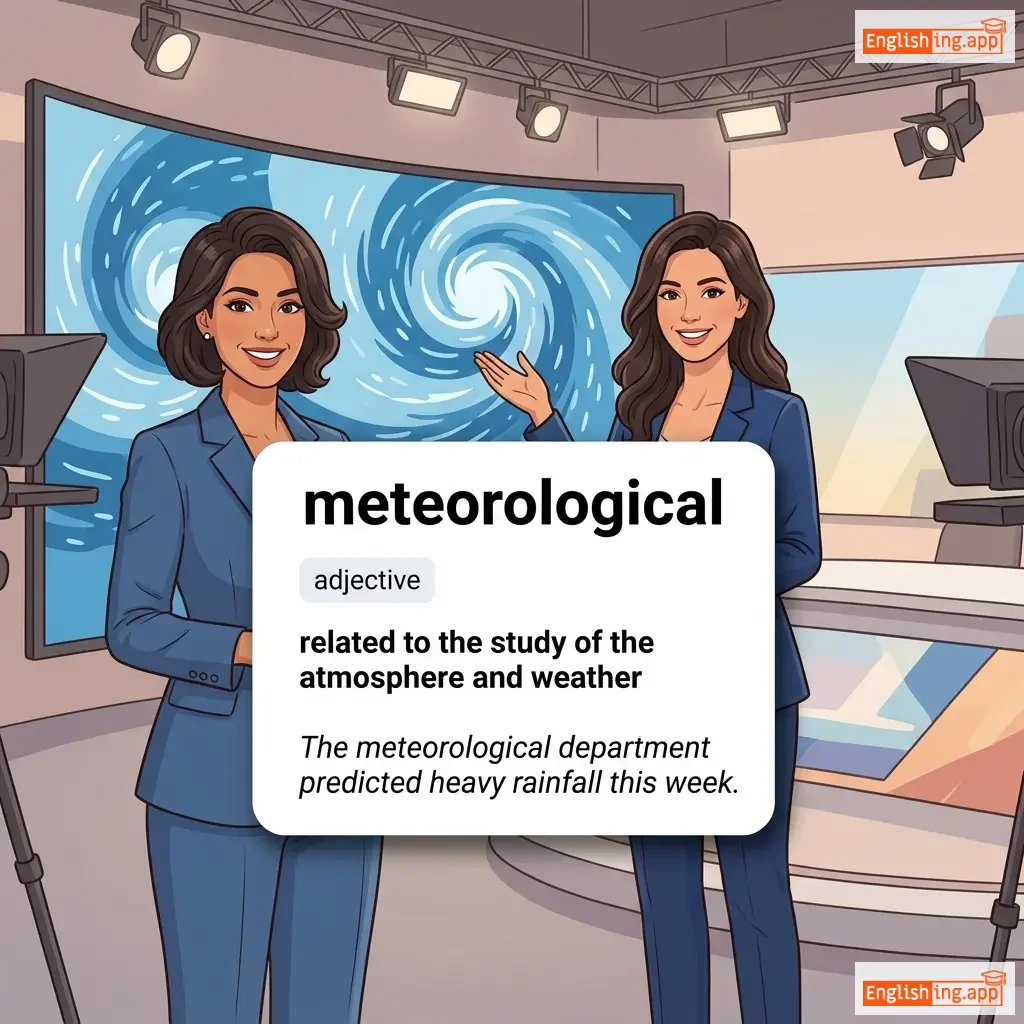
meteorological definition card — visual illustration of the meaning
adjective
/ˌmiː.ti.ə.rəˈlɒ.dʒɪ.kəl/
气象的 (qìxiàng de)

related to the study of the atmosphere and weather

"The meteorological department predicted heavy rainfall this week."

"气象部门预测本周有大雨。" (Qìxiàng bùmén yùcè běn zhōu yǒu dàyǔ.)