词汇表

英语词汇词典 | 单词含义、定义和示例

noun
/mæn əv wɔːr/
战舰 (zhànjiàn)

a warship; a naval vessel equipped with weapons for warfare

"The man of war sailed across the ocean to defend the coast."

"战舰横渡大洋,保护海岸。" (Zhànjiàn héngdù dà yáng, bǎohù hǎi'àn.)
noun
/ˈmænˌiː.tər/
食人者 (shì rén zhě)

An animal that kills and eats humans; informally, a woman who is very assertive in relationships.

"The tiger became a notorious man-eater in the village."

"老虎在村子里成了臭名昭著的人吃人。" (Lǎohǔ zài cūnzi lǐ chéngle chòumíng zhāozhù de rén chī rén.)
noun
/ˈmænˌtræp/
捕人陷阱 (bǔ rén xiànjǐng)

A trap designed to catch or injure humans; informally, a woman considered dangerously attractive.

"The old castle had a man-trap at the entrance."

"那座古老的城堡在入口处有一个人类捕捉陷阱。" (Nà zuò gǔlǎo de chéngbǎo zài rùkǒu chù yǒu yīgè rénlèi bǔzhuō xiànjǐng.)
noun/verb
/ˈmæn.ə.kəl/
手铐 (shǒukào)

A metal shackle for fastening someone's hands or ankles; also to restrain with such shackles.

"The prisoner was manacled before being taken to court."

"囚犯在被带到法庭之前被镣铐。" (Qiúfàn zài bèi dài dào fǎtíng zhīqián bèi liàokào.)
manage definition card — visual illustration of the meaning
verb
/ˈmænɪdʒ/
管理 (guanli)

to be in charge of or control something

"She manages a small bookstore in town."

"她在镇上经营着一家小书店。" (Ta zai zhen shang jingying zhe yijia xiao shudian.)
adjective
/ˈmænɪdʒəbəl/
可管理的;可控制的 (kě guǎnlǐ de; kě kòngzhì de)

able to be controlled or dealt with; feasible

"The workload is manageable if we plan properly."

"工作负载是可管理的,如果我们正确规划。" (Gōngzuò fùzài shì kě guǎnlǐ de, rúguǒ wǒmen zhèngquè dì jìhuà.)
management definition card — visual illustration of the meaning
noun
/ˈmænɪdʒmənt/
管理 (guanli)

the process of dealing with or controlling things or people

"Good management is crucial for the success of any business."

"良好的管理对任何企业的成功至关重要。" (Liánghǎo de guǎnlǐ duì rènhé qǐyè de chénggōng zhìguān zhòngyào.)
noun
/ˈmænɪdʒər/
经理 (jingli)

a person responsible for controlling or administering an organization or group of staff

"The manager approved the new project plan."

"经理批准了新的项目计划。" (Jingli pizhunle xin de xiangmu jihua.)
noun, verb
/ˈmæn.deɪt/
命令 (mingling)

an official order or command; to give someone authority to act in a certain way

"The government issued a mandate to reduce carbon emissions."

"政府发布了减少碳排放的命令。" (Zhèngfǔ fābùle jiǎnshǎo tàn pái fàng de mìnglìng.)
adjective
/ˈmæn.dəˌtɔːr.i/
强制性的 (qiángzhìxìng de)

required by law or rules; compulsory

"Wearing seat belts is mandatory in most countries."

"在大多数国家,佩戴安全带是强制性的。" (Zài dàduōshù guójiā, pèidài ānquán dài shì qiángzhìxìng de.)
noun
/meɪn/
鬃毛 (zōngmáo)

the long hair growing on the neck of a horse, lion, or other animal

"The lion shook its thick mane proudly."

"狮子骄傲地摇动着它浓密的鬃毛。" (Shīzi jiāo'ào de yáodòng zhe tā nóngmì de zōngmáo.)
✈️

maneuver

noun, verb
/məˈnuː.vər/

a planned or skillful movement or action; to move skillfully or carefully

"The pilot maneuvered the plane through the storm."

noun
/meɪndʒ/
疥癣 (jiaixuan)

a skin disease in animals caused by parasitic mites, leading to hair loss and sores

"The stray dog was suffering from mange."

"流浪狗正在忍受疥癣。" (Liulang gou zhengzai renshou jiaixuan.)
verb
/ˈmæŋɡəl/
毁坏 (huihuai)

to severely damage or mutilate something, often by tearing or crushing

"The car was mangled in the accident."

"车在事故中毁坏。" (Chē zài shìgù zhōng huǐhuài.)
noun
/ˈmæŋ.ɡoʊ/
芒果 (mángguǒ)

a tropical fruit with yellow-orange skin and sweet juicy flesh

"The mango is known as the king of fruits."

"芒果被誉为水果之王。" (Mángguǒ bèi yù wéi shuǐguǒ zhī wáng.)
noun
/ˈmæŋɡoʊ fɪʃ/
金目鲈 (jin mu lu)

A popular white fish also known as barramundi or Asian sea bass

"Mango fish is prized for its delicate flavor and tender texture."

"金目鲈因其细腻的味道和嫩滑的质地而受到青睐。" (jin mu lu yin qi xi ni de wei dao he nen hua de zhi di er shou dao qing lai)
noun
/mæŋˈɡoʊ.li.ə/
木兰花 (mùlán huā)

a type of flowering tree with large, fragrant pink or white flowers

"The beautiful magnolia tree bloomed in spring with pink flowers."
"美丽的木兰花树在春天开花,盛开着粉色的花朵。" (Měilì de mùlán huā shù zài chūntiān kāihuā, shèngkāi zhe fěn sè de huāduǒ)
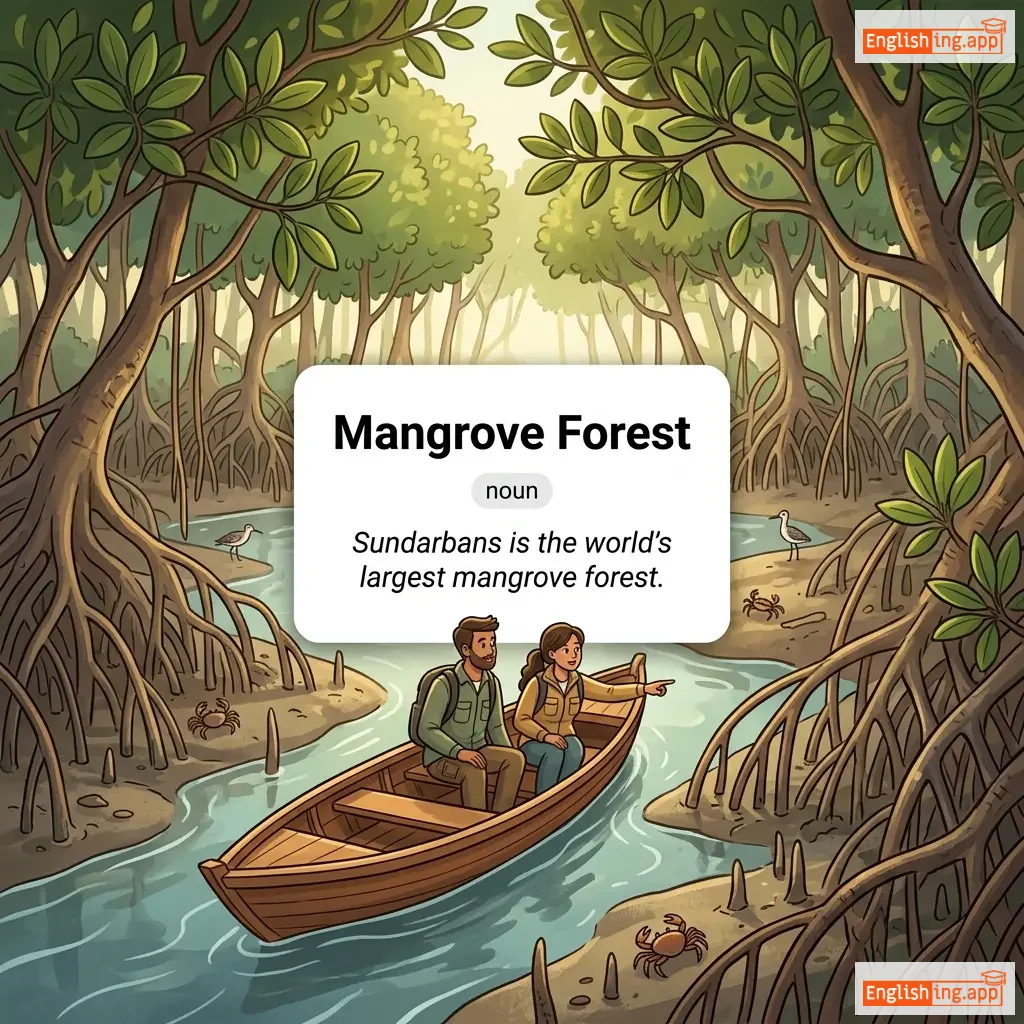
Mangrove Forest definition card — visual illustration of the meaning
noun
ˈmæŋɡroʊv ˈfɒrɪst
红树林 (hong shulin)

A coastal forest ecosystem characterized by salt-tolerant trees and shrubs that grow in intertidal zones.

"Sundarbans is the world's largest mangrove forest."

"孙达班是世界上最大的红树林。" (Sundaban shi shijie shang zuida de hong shulin.)
adjective
/ˈmeɪndʒi/
脏且破旧 (zang qie po jiu)

in poor condition, shabby, dirty, or affected by mange

"The stray dog looked mangy and weak."

"流浪狗看起来又脏又虚弱。" (Liúlàng gǒu kàn qǐlái yòu zāng yòu xūruò.)
noun
/ˈmeɪniə/
狂热 (kuángrè)

an extreme enthusiasm or obsession; a mental illness marked by excitement

"There was a mania for collecting rare stamps."

"有收集稀有邮票的狂热。" (Yǒu shōují xīyǒu yóupiào de kuángrè.)
noun
/ˈmeɪniæk/
疯子 (fēngzi)

a person who behaves in a wildly foolish, dangerous, or violent way

"The driver was speeding like a maniac."

"司机像疯子一样开车。" (Sījī xiàng fēngzi yīyàng kāichē.)
adjective
/məˈnaɪəkəl/
狂热 (kuángrè)

behaving like a maniac; showing excessive enthusiasm or madness

"He gave a maniacal laugh during the movie."

"他在电影中发出了狂热的笑声。" (Tā zài diànyǐng zhōng fāchūle kuángrè de xiàoshēng.)
manifest definition card — visual illustration of the meaning
verb, adjective
/ˈmænɪˌfɛst/
显现 (xianxian)

to show or display clearly; obvious or evident

"The symptoms of the disease manifest quickly."

"病症迅速显现。" (Bingzheng xun su xianxian.)
manifestation definition card — visual illustration of the meaning
noun
/ˌmænɪfɛˈsteɪʃən/
表现 (biaoxian)

an event, action, or object that clearly shows or embodies something

"His sudden anger was a manifestation of his stress."

"他突如其来的愤怒是他压力的表现。" (Ta turu qilai de fennu shi ta yali de biaoxian.)
noun
/ˌmænɪˈfɛstoʊ/
宣言 (xuānyán)

a public declaration of policy and aims, especially by a political party

"The party released its manifesto before the election."

"政党在选举前发布了其宣言。" (Zhèngdǎng zài xuǎnjǔ qián fābùle qí xuānyán.)
adjective, noun
/ˈmænɪˌfoʊld/
多种多样 (duō zhǒng duō yàng)

many and various; having many different forms

"The benefits of exercise are manifold."

"锻炼的好处是多种多样的。" (Duànliàn de hǎochù shì duō zhǒng duō yàng de.)
🕹️

manipulate

verb
/məˈnɪpjəˌleɪt/

to control or influence someone or something cleverly or unfairly

"He tried to manipulate the results in his favor."

manipulation definition card — visual illustration of the meaning
noun
/məˌnɪpjʊˈleɪʃən/

the action of controlling or influencing something or someone cleverly or unfairly

"His manipulation of the situation was evident to everyone."

adjective
/ˈmæn.laɪk/
男性化 (nánxìnghuà)

Having qualities or characteristics traditionally associated with a man; manly.

"His manlike courage impressed everyone in the village."

"他的男性化勇气给村里的人们留下了深刻的印象。" (Tā de nánxìnghuà yǒngqì gěi cūn lǐ de rénmen liú xiàle shēnkè de yìnxiàng.)
noun
/ˈmæn.li.nəs/
男子气概 (nánzǐ qìgài)

The quality of being manly; courage, strength, and honor associated with men.

"His manliness was admired by his peers."

"他的男子气概得到了同伴们的赞赏。" (tā de nánzǐ qìgài dédàole tóngbàn men de zànshǎng.)
adjective
/ˈmæn.li/
男子气概的; 勇敢的; 大胆的 (manli)

having qualities traditionally associated with men; brave; courageous

"He showed manly courage during the crisis."

"在危机中,他展示了男子气概的勇气。" (Zài wéijī zhōng, tā zhǎnshìle nánzǐ qìgài de yǒngqì.)
adjective
/ˌmænˈmeɪd/
人造的 (renzao de)

something created or built by humans rather than occurring naturally

"This lake is manmade, not natural."

"这个湖是人造的,不是自然的。" (Zhege hu shi renzao de, bushi ziran de.)
noun
/ˈmænɪkɪn/
模特 (mó tè)

a life-sized model of a human figure used by shops to display clothes

"The mannequin in the shop window was dressed in a red gown."

"商店橱窗里的曼尼奎恩穿着一件红色长裙。" (Shāngdiàn chúchuāng lǐ de mànníkùiēn chuānzhuó yī jiàn hóngsè chángqún.)
noun
/ˈmænər/
方式 / 举止 (fāngshì / jǔzhǐ)

a way in which something is done or happens

"He spoke in a polite manner."

"他说话很有礼貌。" (Tā shuōhuà hěn yǒu lǐmào.)
adjective
/ˈmæn.əd/
做作的 / 虚伪的 (zuòzuò de / xūwěi de)

Having or showing a particular manner, especially an artificial or affected one.

"The actor’s performance was too mannered to feel natural."

"演员的表现太做作,无法显得自然。" (Yǎnyuán de biǎoxiàn tài zuòzuò, wúfǎ xiǎn de zìrán.)
noun
/ˈmæn.əˌrɪz.əm/
习惯性举止 (xíguàn xìng jǔzhǐ)

A habitual way of speaking or behaving; a distinctive personal trait.

"One of his funny mannerisms is scratching his head when he’s nervous."

"他有一个有趣的习惯,每当紧张时会抓头。" (Tā yǒu yīgè yǒuqù de xíguàn, měi dāng jǐnzhāng shí huì zhuā tóu.)
verb
/məˈnuː.vər/

To move skillfully or carefully; to guide or manipulate into a desired position.

"The driver skillfully manoeuvered the car through the narrow street."

noun
/ˈmænər/
庄园大宅 (zhuangyuan dazhai)

A large country house with lands; the main house of an estate.

"The old manor stood proudly on the hill for centuries."

"那座古老的庄园几百年来自豪地矗立在山丘上。" (Nà zuò gǔlǎo de zhuāngyuán jǐ bǎi nián lái zìháo de chùlì zài shānqiū shàng.)
noun
/ˈmænʃən/
幸福 (xìngfú)

a large, impressive house

"The billionaire lives in a luxurious mansion overlooking the ocean."

"她无法掩饰收到奖项时的幸福感。" (Tā wúfǎ yǎnshì shōudào jiǎngxiàng shí de xìngfú gǎn.)
noun
/ˈmæntl̩/
壁炉上的架子 (bìlú shàng de jiàzi)

A shelf above a fireplace, often used for decoration.

"She placed family photos on the mantel above the fireplace."

"她把家庭照片放在壁炉上的架子上。" (Tā bǎ jiātíng zhàopiàn fàng zài bìlú shàng de jiàzi shàng.)
noun
/ˈmæntl̩/
披风,责任 (pīfēng, zérèn)

A cloak or covering; also the layer of the earth between the crust and the core.

"The leader assumed the mantle of responsibility."

"领导者承担起了责任的重担。" (Lingdaozhe chengdanqilai le zeren de zhongdan.)
noun
/ˈmænjuəl/
手册 (shǒucè)

a handbook or guide that provides instructions on how to do or operate something

"You should read the user manual before setting up the device."

"在设置设备之前,您应该阅读用户手册。" (Zài shèzhì shèbèi zhīqián, nín yīnggāi yuèdú yònghù shǒucè.)
adverb
/ˈmæn.ju.ə.li/
手工; 使用身体的力量; (shougong; shiyong shenti de liliang)

by hand; using physical effort rather than machines

"The data was entered manually into the system."
"数据是手动输入到系统中的。" (Shuju shi shoudong shuru dao xitong zhong de.)
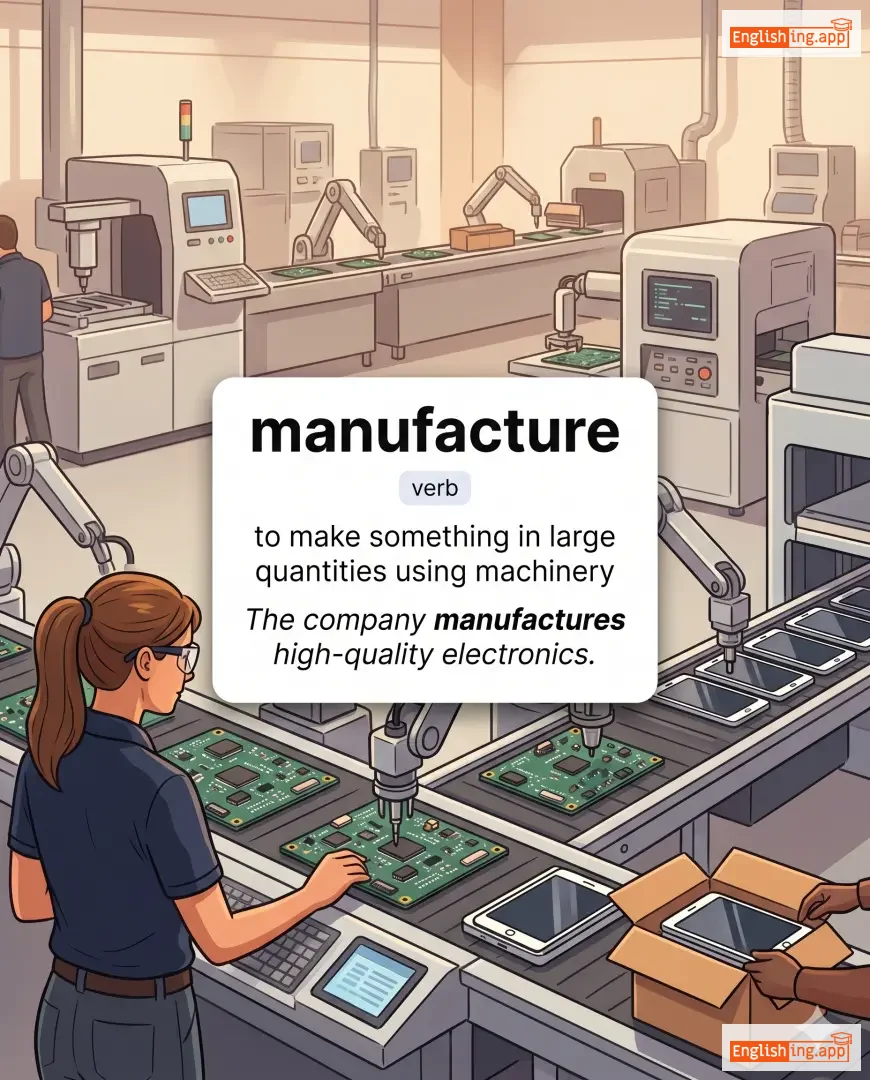
manufacture definition card — visual illustration of the meaning
verb
/ˌmænɪˈfæktʃər/
制造 (zhìzào)

to make something in large quantities using machinery

"The company manufactures high-quality electronics."

"公司生产高质量的电子产品。" (Gōngsī shēngchǎn gāo zhìliàng de diànzǐ chǎnpǐn.)
noun
/ˌmænjəˈfæktʃərər/
制造商 (zhìzàoshāng)

A person or company that makes goods in large quantities.

"The manufacturer produces cars for the global market."

"制造商为全球市场生产汽车。" (Zhìzàoshāng wèi quánqiú shìchǎng shēngchǎn qìchē.)
noun
/ˌmænjəˈfæktʃərɪŋ/
制造业 (zhìzào yè)

the process of making products on a large scale using machinery

"The country is investing heavily in the manufacturing sector."

"该国正在大力投资制造业。" (gāi guó zhèngzài dàlì tóuzī zhìzàoyè.)
noun
/ˌmænjəˈmɪʃən/
奴隶解放 (nuli jiefang)

The act of a slave owner freeing their slaves.

"The manumission of the slaves marked a turning point in history."

"奴隶的解放标志着历史的转折点。" (Nuli de jiefang biaozhi zhe lishi de zhuanzhe dian.)
verb
/ˌmæn.juˈmɪt/
释放奴隶 (shifang nuli)

to release from slavery or servitude; to set free

"The landowner decided to manumit his slaves."
"土地所有者决定释放他的奴隶。" (Tudi suoyouzhe jueding shifang tade nuli.)
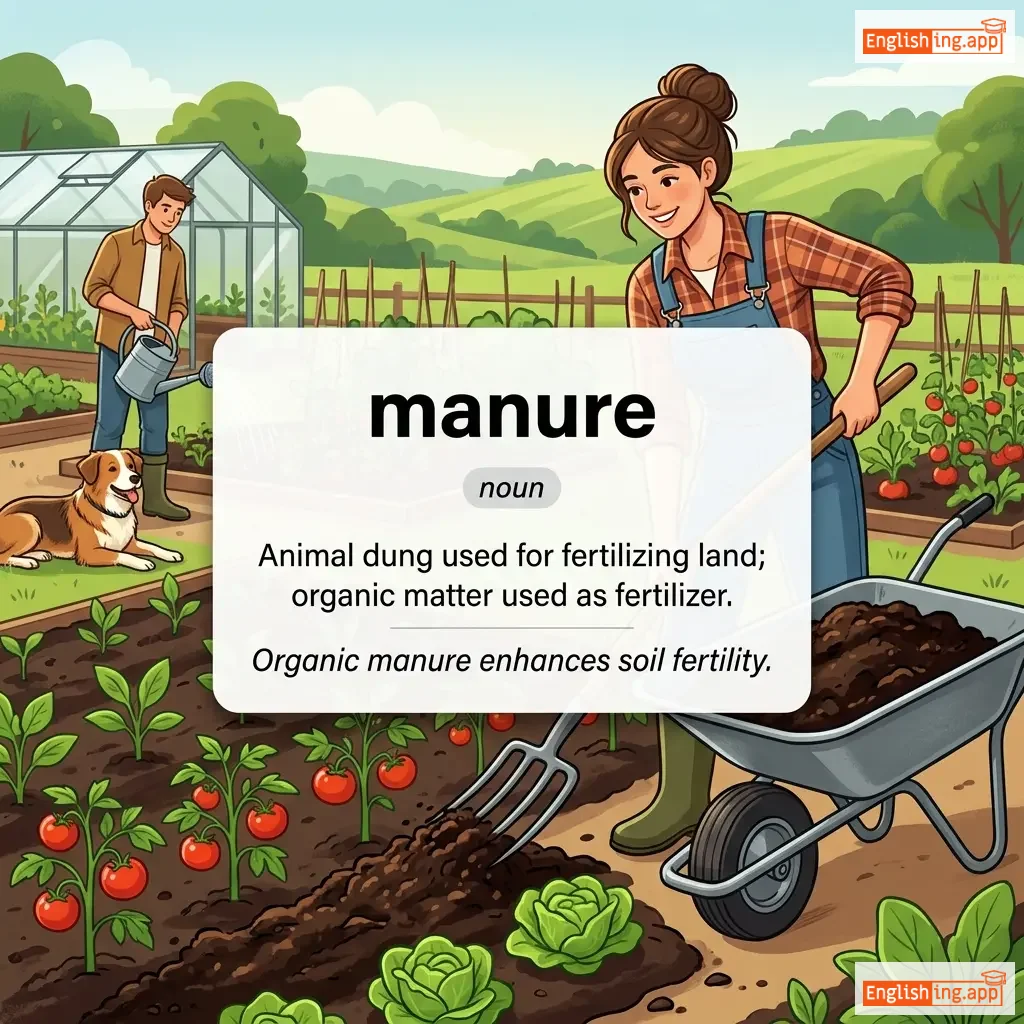
manure definition card — visual illustration of the meaning
noun
məˈnjʊər
粪肥, 有机肥料 (fèn féi, yǒu jī féiliào)

Animal dung used for fertilizing land; organic matter used as fertilizer.

"Organic manure enhances soil fertility."

"有机肥料提高土壤肥力。" (Yǒujī féiliào tígāo tǔrǎng féilì.)
noun
/ˈmæn.juˌskrɪpt/
手稿 (shougao)

a handwritten or typed document, especially a writer’s draft before publication

"The author submitted her manuscript to the publisher."

"作者将她的手稿提交给出版商。" (Zuozhe jiang ta de shougao tijiagei chubanshang.)