词汇表

英语词汇词典 | 单词含义、定义和示例

pronoun
/maɪ/
我的 (wǒ de)

used to indicate possession or ownership

"This is my book."

"这是我的书。" (Zhè shì wǒ de shū.)
noun
/ˈmaɪ.nə/
八哥 (bā gē)

a tropical bird with dark feathers that can mimic human speech

"The mynah bird repeated every word I said."

"八哥鸟重复了我说的每一个词。" (bā gē niǎo chóngfùle wǒ shuō de měi yīgè cí)
adjective
/maɪˈɑːpɪk/
近视,狭隘的视野 (jìnshì, xiá'ài de shìyě)

lacking foresight or long-term perspective; also refers to nearsightedness

"The company’s myopic strategy led to long-term losses."

"公司的近视战略导致了长期损失。" (Gōngsī de jìnshì zhànlüè dǎozhì le chángqī sǔnshī.)
noun/adjective
/ˈmɪriəd/
无数 (wú shù)

a countless or extremely great number

"There are myriad stars in the night sky."

"夜空中有无数的星星。" (Yè kōng zhōng yǒu wú shù de xīng xīng.)
pronoun
/maɪˈsɛlf/
我自己 (wǒ zìjǐ)

used for emphasis or to refer to oneself

"I will do it myself."
"我会自己做。" (Wǒ huì zìjǐ zuò.)
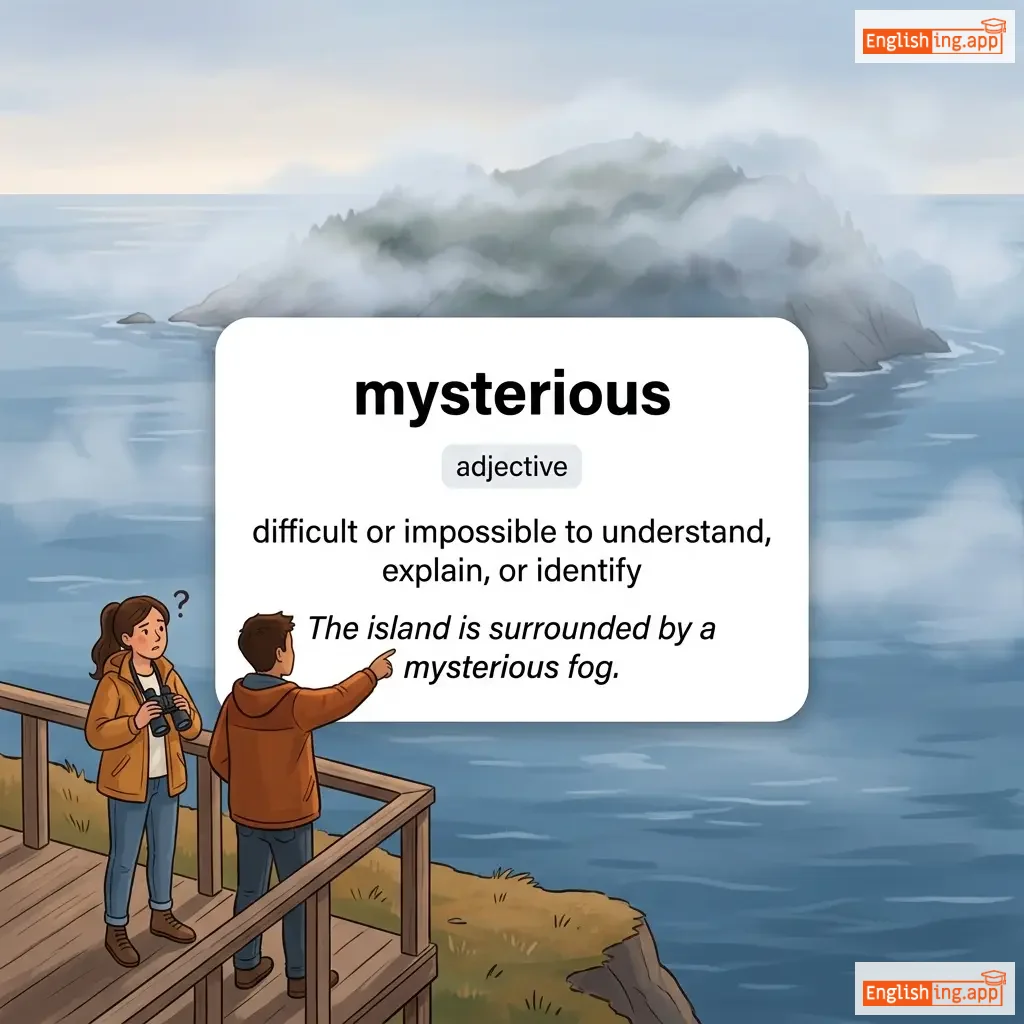
mysterious definition card — visual illustration of the meaning
adjective
/mɪˈstɪəriəs/
神秘 (shenmi)

difficult or impossible to understand, explain, or identify

"The island is surrounded by a mysterious fog."

"岛屿被神秘的雾气包围。" (Dao yu bei shenmi de wuqi baowei.)
noun
/ˈmɪstəri/
谜团 (mi tuan)

something that is difficult or impossible to understand or explain

"The mystery of the missing book remained unsolved."

"失踪的书之谜仍未解开。" (Shīzōng de shū zhī mí réng wèi jiě kāi.)
noun/adjective
/ˈmɪstɪk/
神秘的,灵性追求者 (shenmi de, lingxing zhuiqiu zhe)

relating to mysteries, spirituality, or hidden truths; a person who seeks spiritual insight

"The mystic devoted his life to meditation and spiritual discovery."

"那位神秘的追求者将他的生命献给了冥想和灵性探索。" (Na wei shenmi de zhuiqiu zhe jiang tade shengming xiangeile mingxiang he lingxing tansuo.)
noun
/ˌmɪstɪfɪˈkeɪʃən/
困惑, 神秘化 (kunhuo, shenmi hua)

the act of making something unclear or confusing; a state of being puzzled or bewildered

"The audience watched in mystification as the magician performed his tricks."

"观众在困惑中看着魔术师表演他的戏法。" (Guanzhong zai kunhuo zhong kanzhe moshushi biaoyan tade xifa.)
noun
/mɪθ/
神话 (shenhua)

A traditional story explaining natural or social phenomena, often involving supernatural beings; a widely held but false belief.

"The myth of the phoenix tells of a bird reborn from its ashes."

"凤凰的神话讲述了一只从灰烬中重生的鸟。" (Fenghuang de shenhua jiangshu le yi zhi cong huijin zhong chongsheng de niao.)
adjective
/ˈmɪθɪkəl/
神话的 (shénhuà de)

existing only in myths or legends; imaginary or fictitious

"Dragons are mythical creatures that appear in many cultures."

"龙是神话中的生物,出现在许多文化中。" (lóng shì shénhuà zhōng de shēngwù, chūxiàn zài xǔduō wénhuà zhōng.)
noun
/mɪˈθɒlədʒi/

A collection of myths, especially belonging to a particular culture or religion.

"Greek mythology is filled with stories of gods and heroes."