词汇表

英语词汇词典 | 单词含义、定义和示例

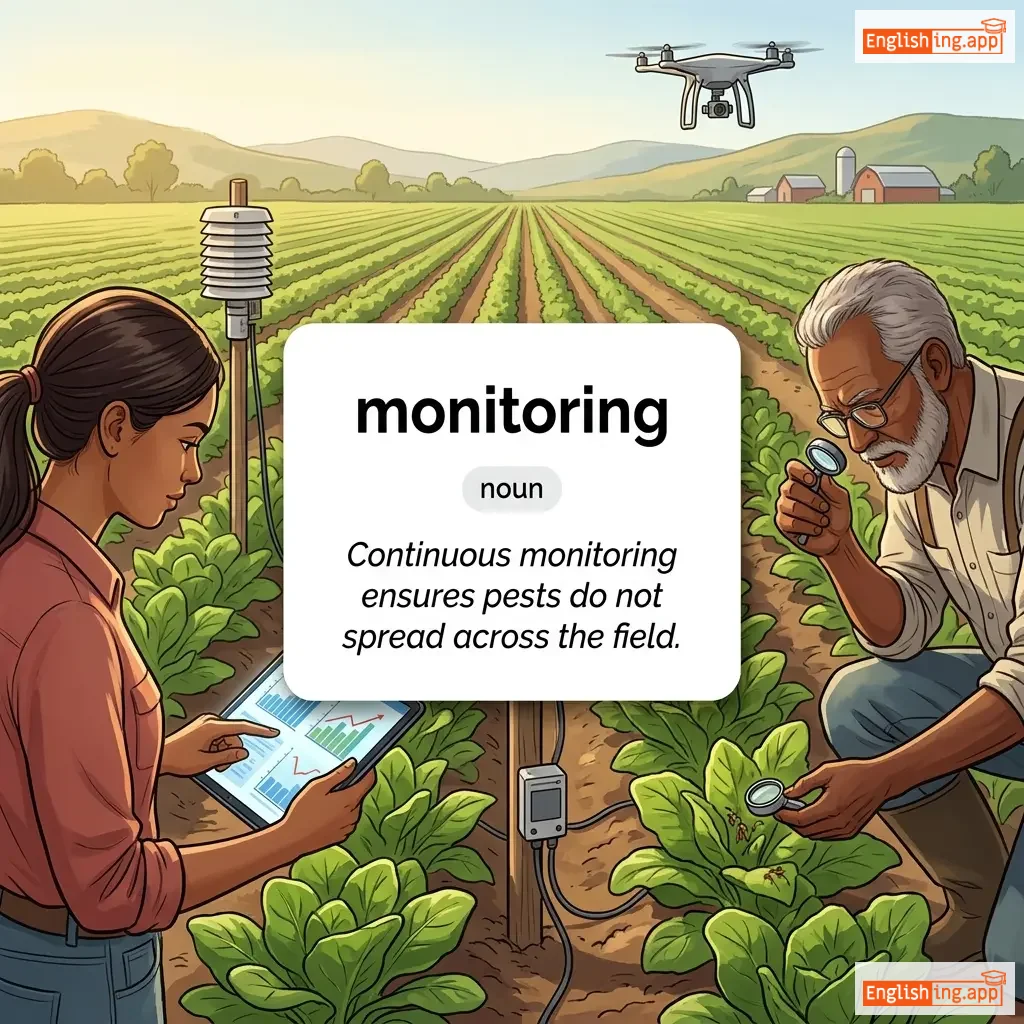
monitoring definition card — visual illustration of the meaning
noun
ˈmɒnɪtərɪŋ
监控,持续监测 (jiānkòng, chíxù jiāncè)

The action of observing and checking the progress or quality of something over a period of time.

"Continuous monitoring ensures pests do not spread across the field."

"持续的监测确保害虫不会在田地中蔓延。" (Chíxù de jiāncè quèbǎo hàichóng bù huì zài tiándì zhōng mànyán.)
adjective
/ˈmɒnɪtəri/
警示性的 (jǐngshì xìng de)

Giving a warning or cautionary advice; serving to warn.

"His monitory tone made everyone cautious about their next move."

"他警示性的语气让每个人对下一步感到谨慎。" (Tā jǐngshì xìng de yǔqì ràng měi gèrén duì xià yī bù gǎndào jǐnshèn.)
noun
/mɒŋk/
僧侣 (senglü)

a member of a religious community living under vows of poverty, chastity, and obedience

"The monk lived a simple and peaceful life in the monastery."

"僧侣在修道院过着简单和平静的生活。" (Senglü zài xiūdàoyuàn guòzhe jiǎndān hé píngjìng de shēnghuó.)
noun
/ˈmʌŋki/
猴子 (hóu zi)

a small to medium-sized primate with a long tail, known for its playfulness

"A monkey was jumping from tree to tree in the forest."

"一只猴子在森林中从树上跳到树上。" (yī zhī hóu zi zài sēn lín zhōng cóng shù shàng tiào dào shù shàng)
adjective
/ˌmɒnəkrəˈmætɪk/

Consisting of or displaying only one color.

"The artist created a striking monochromatic painting in shades of blue."

noun/adjective
/ˈmɒnəkrəʊm/
单色 (danse)

A photograph, painting, or screen image in black and white or varying tones of one color.

"The old film was shot entirely in monochrome."

"那部老电影完全是用单色拍摄的。" (Na bu lao dianying wanquan shi yong danse paishe de.)
noun
/ˈmɒnəkl/

A single round lens for one eye, used to correct or enhance vision.

"The old gentleman wore a monocle at formal events."

noun
/məˈnɒkrəsi/
独裁制 (dúcáizhì)

A system of government by a single person; autocracy.

"The nation suffered under decades of monocracy."
"国家在几十年的独裁制下遭受痛苦。" (Guójiā zài jǐ shí nián de dúcáizhì xià zāoshòu tòngkǔ.)
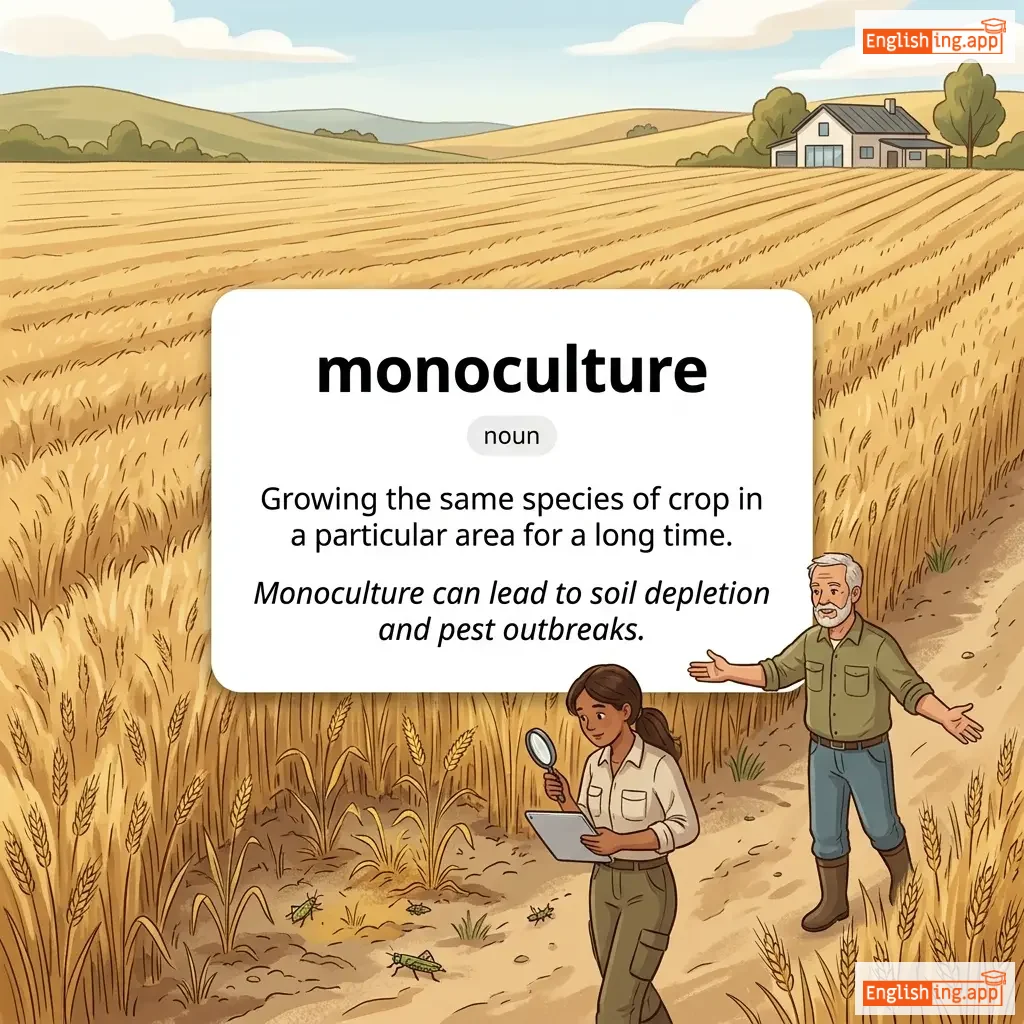
monoculture definition card — visual illustration of the meaning
noun
ˈmɒn.əˌkʌl.tʃər
单一种植 (dan yi zhong zhi)

Growing the same species of crop in a particular area for a long time.

"Monoculture can lead to soil depletion and pest outbreaks."

"单一种植可能导致土壤贫瘠和害虫爆发。" (Dan yi zhong zhi ke neng dao zhi tu rang pin jie he hai chong bao fa.)
noun
/məˈnɒɡəmi/
一夫一妻制 (yī fū yī qī zhì)

The practice of being married to or in a relationship with only one person at a time.

"Many cultures encourage monogamy as the ideal form of marriage."

"许多文化鼓励一夫一妻制作为理想的婚姻形式。" (Xǔduō wénhuà gǔlì yī fū yī qī zhì zuòwéi lǐxiǎng de hūnyīn xíngshì.)
noun
/ˈmɒnəɡræm/
字母图案 (zìmǔ tú'àn)

A design consisting of two or more letters, typically a person's initials, combined or interwoven.

"The towel was embroidered with her monogram."

"毛巾上刺绣着她的字母图案。" (Máojīn shàng cìxiù zhe tā de zìmǔ tú'àn.)
noun
/ˈmɒnəɡrɑːf/

A detailed written study of a single specialized subject or aspect of it.

"The professor published a monograph on ancient pottery."

noun
/ˈmɒnəlɪθ/
巨石 (jù shí)

A large single upright block of stone, or a large, powerful, indivisible organization or system.

"The ancient monolith stood in the desert for centuries."

"古老的巨石在沙漠中屹立了几个世纪。" (Gǔlǎo de jù shí zài shāmò zhōng yìlì le jǐ gè shìjì.)
adjective
/ˌmɒnəˈlɪθɪk/
单片的 (danpian de)

Massive, uniform, and indivisible; resembling a large single stone or structure.

"The company maintained a monolithic structure resistant to change."

"公司保持了一个抗变的单片结构。" (Gōngsī bǎochí le yīgè kàng biàn de dānpiàn jiégòu.)
noun
/ˈmɒnəˌlɒɡ/
独白 (dúbái)

A long speech by one person, often in a play or performance.

"The actor delivered a powerful monologue on stage."
"演员在舞台上做了一个强有力的独白。" (Yǎnyuán zài wǔtái shàng zuòle yīgè qiáng yǒulì de dúbái.)
noun
/ˌmɒnəˈmeɪniə/

Excessive concentration or obsession with a single subject or idea.

"His monomania for collecting stamps worried his family."

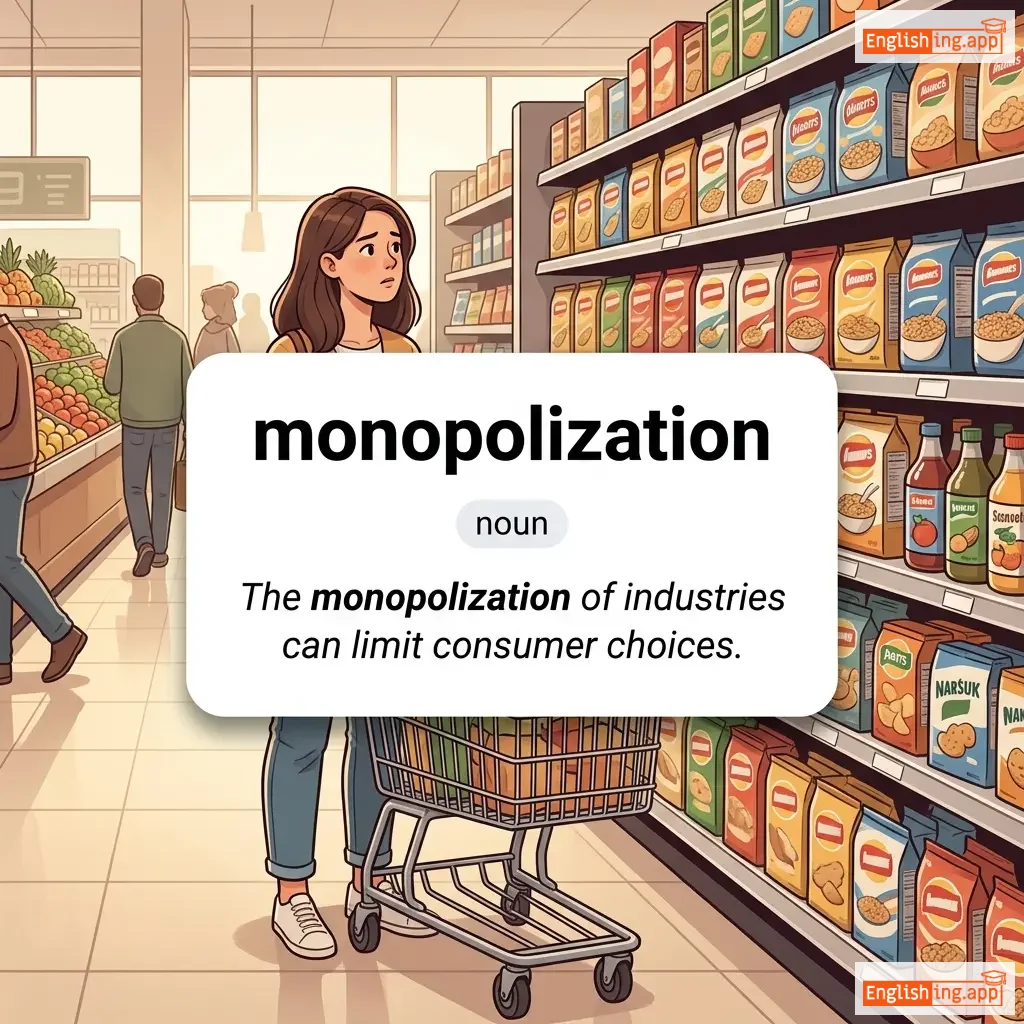
monopolization definition card — visual illustration of the meaning
noun
məˌnɒp.ə.laɪˈzeɪ.ʃən
垄断化 (lǒngduàn huà)

The process of gaining exclusive possession or control of a trade, commodity, or service.

"The monopolization of industries can limit consumer choices."
"垄断化可能限制消费者的选择。" (Lǒngduàn huà kěnéng xiànzhì xiāofèi zhě de xuǎnzé.)
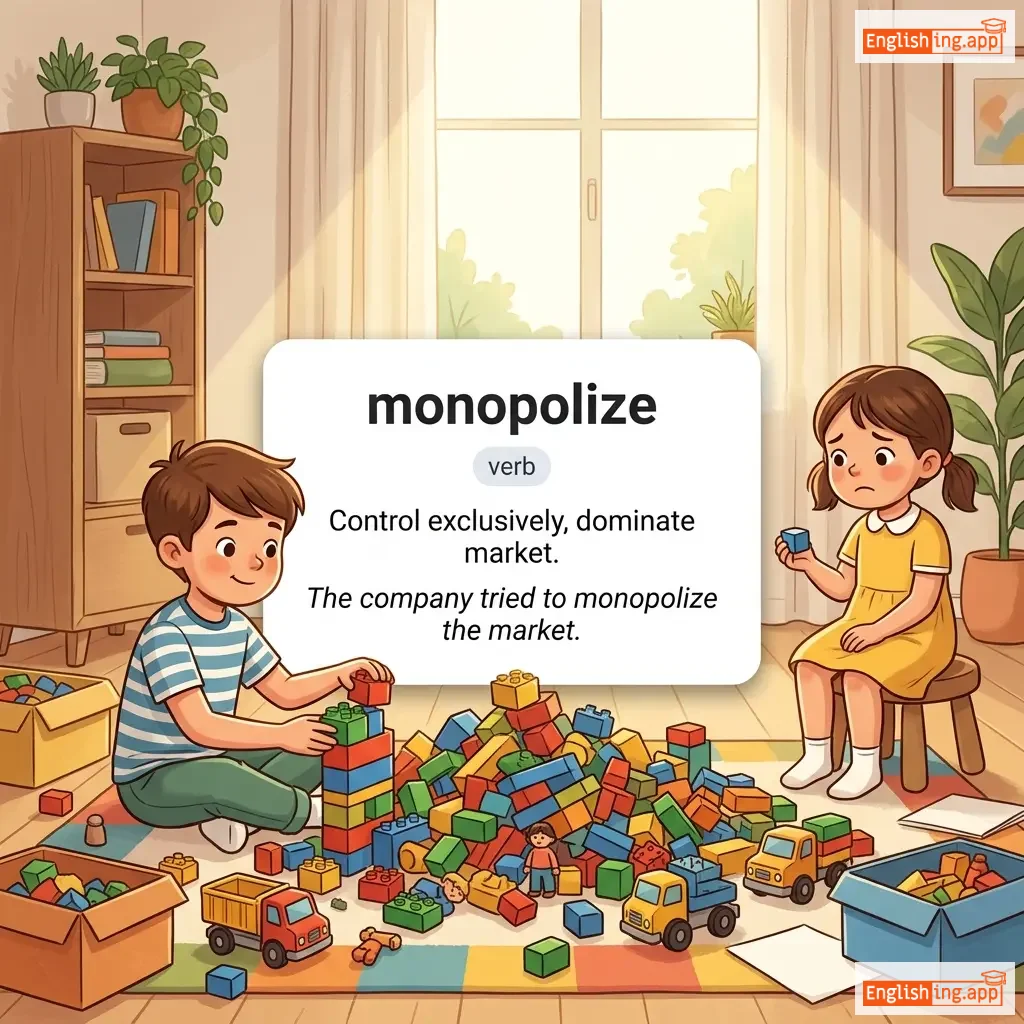
monopolize definition card — visual illustration of the meaning
verb
məˈnɒp.ə.laɪz
垄断 (longduan)

Control exclusively, dominate market.

"The company tried to monopolize the market."

"该公司试图垄断市场。" (Gai gongsi shitu longduan shichang.)
monopoly definition card — visual illustration of the meaning
noun
/məˈnɒpəli/

Exclusive control over a market, product, or service.

"The company gained a monopoly over the mobile phone industry."

noun
/ˈmɒnəˌsɪləbəl/
单音节词 (dan yin jie ci)

A word consisting of only one syllable.

"Words like 'yes' and 'no' are monosyllables."

"'是'和'不'这类词是单音节词。" ('Shi' he 'bu' zhe lei ci shi dan yin jie ci.)
noun
mɒnəˈtɑːskɪŋ
一次专注于一项任务 (yīcì zhuānzhù yú yī xiàng rènwù)

The practice of dedicating oneself to a given task and minimizing potential interruptions until the task is completed or a significant period of time has elapsed.

"Monotasking can often lead to higher quality work."

"单任务处理通常会带来更高质量的工作。" (Dān rènwù chǔlǐ tōngcháng huì dàilái gèng gāo zhìliàng de gōngzuò.)
noun
/ˈmɒnəˌθiːɪzəm/
一神论 (yī shén lùn)

The belief in the existence of only one God.

"Islam and Christianity are religions based on monotheism."

"伊斯兰教和基督教是基于一神论的宗教。" (Yīsīlán jiào hé jīdūjiào shì jīyú yīshénlùn de zōngjiào.)
noun
/ˈmɒn.ə.təʊn/
单调 (dāndiào)

A continuous sound, especially of a person's voice, that does not rise and fall in pitch.

"The teacher's monotone made the lecture hard to follow."

"老师的单调语调使讲座很难跟上。" (Lǎoshī de dāndiào yǔdiào shǐ jiǎngzuò hěn nán gēn shàng.)
adjective
/məˈnɒt.ən.əs/
单调 (dāndiào)

Dull, tedious, and repetitious; lacking in variety and interest.

"The monotonous routine of office work tired him out."
"办公室的单调例行工作让他感到疲惫不堪。" (Bàngōngshì de dāndiào lìxíng gōngzuò ràng tā gǎndào píbèi bùkān.)
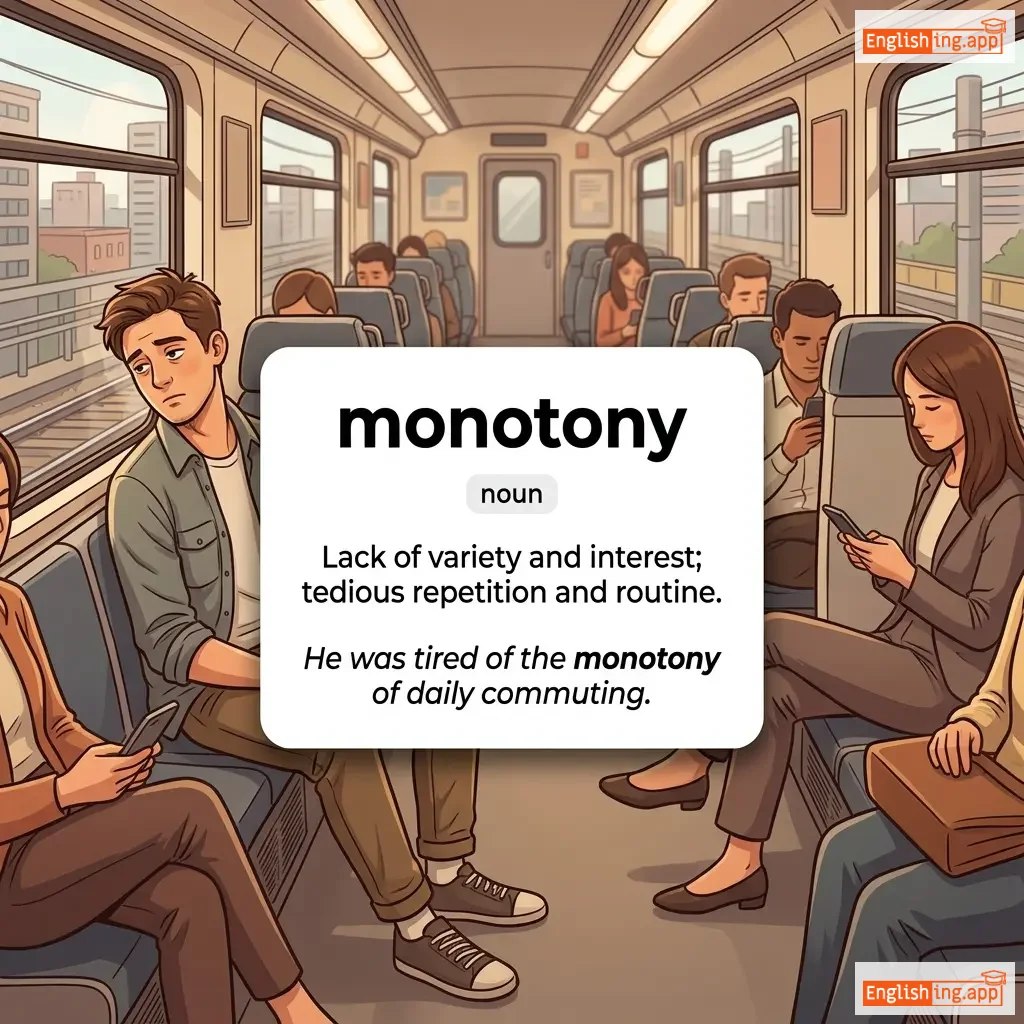
monotony definition card — visual illustration of the meaning
noun
/məˈnɒt.ə.ni/
单调 (dandiao)

Lack of variety and interest; tedious repetition and routine.

"He was tired of the monotony of daily commuting."

"他厌倦了每天通勤的单调。" (Ta yanjuan le mei tian tongqin de dandiao.)
noun
/ˈmɒnstər/
幸福 (xìngfú)

an imaginary or large frightening creature

"The child was afraid that a monster was hiding under the bed."

"她无法隐藏自己得到奖项时的快乐。" (Tā wúfǎ yǐncáng zìjǐ dédào jiǎngxiàng shí de kuàilè.)
adjective
/ˈmɒnstrəs/
极其大的; 令人震惊的邪恶或错误; 不正常或不自然 (guàiyì de)

extremely large; shockingly evil or wrong; abnormal or unnatural

"The monstrous crime shocked the entire community."

"那个怪异的罪行震惊了整个社区。" (Nàgè guàiyì de zuìxíng zhènjīngle zhěnggè shèqū.)
noun
/mɒnˈtɑːʒ/
蒙太奇 (méngtàiqí)

A sequence of film editing or a composite image made by combining several separate pictures.

"The film opened with a montage of city life."
"电影以城市生活的蒙太奇开场。" (Diànyǐng yǐ chéngshì shēnghuó de méngtàiqí kāichǎng.)
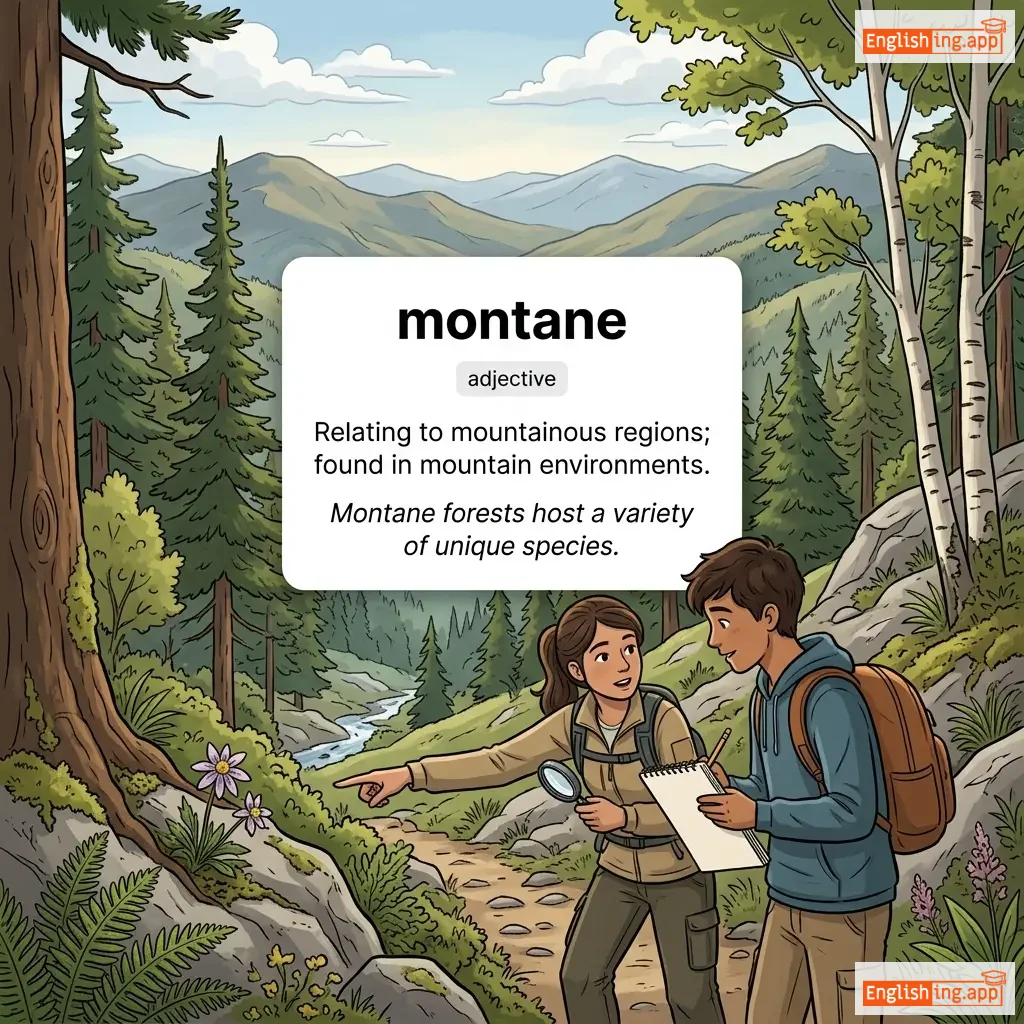
montane definition card — visual illustration of the meaning
adjective
/ˈmɒn.teɪn/
与山区地区相关的; 在山区环境中发现 (yu shanqu diqu xiangguan de; zai shanqu huanjing zhong faxian)

Relating to mountainous regions; found in mountain environments.

"Montane forests host a variety of unique species."

"山区森林是独特物种的栖息地。" (Shanqu senlin shi dutu wuzhong de qixidi.)
noun
/mʌnθ/
(yue)

a period of about four weeks or one-twelfth of a year

"She visits her grandparents once a month."

"她每个月都会去看祖父母一次。" (Ta mei ge yue dou hui qu kan zufu mu yici.)
adjective
/ˈmʌnθli/
每月的 (měi yuè de)

happening, done, or published once a month

"Employees receive their salary on a monthly basis."

"员工每月领取工资。" (Yuángōng měi yuè lǐngqǔ gōngzī.)
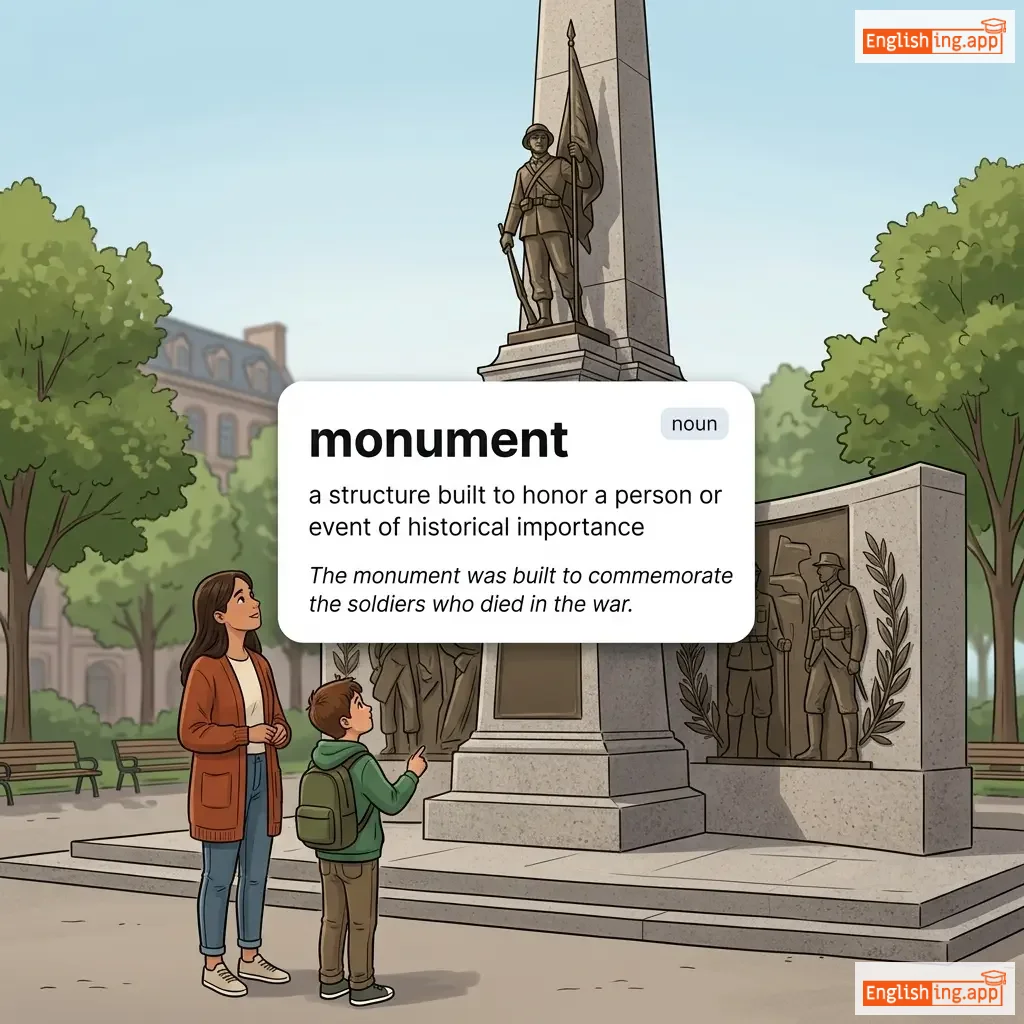
monument definition card — visual illustration of the meaning
noun
/ˈmɒnjumənt/

a structure built to honor a person or event of historical importance

"The monument was built to commemorate the soldiers who died in the war."

monumental definition card — visual illustration of the meaning
adjective
/ˌmɒn.jʊˈmen.təl/
纪念碑般的 (jinianbei ban de)

Great in importance, extent, or size; resembling or serving as a monument.

"The project was a monumental achievement for the team."

"该项目是团队的一个纪念碑式的成就。" (Gai xiangmu shi tuandui de yige jiniangbei shi de chengjiu.)
noun
/muːd/
心情 (xinqing)

a temporary state of mind or feeling

"He was in a good mood after getting the job."

"他在得到工作后心情愉快。" (Tā zài dédào gōngzuò hòu xīnqíng yúkuài.)
noun
/ˈmuːdi.nəs/
情绪不稳定 (qingxu bu wending)

The state of being frequently subject to changes in mood, especially irritability or sadness.

"Her moodiness made it difficult to predict how she would react."

"她的情绪不稳定使得很难预测她会如何反应。" (Ta de qingxu bu wending shided hen nan yuce ta hui ruhe fanying.)
noun
/muːn/
月亮 (yueliang)

the natural satellite of the earth, visible mainly at night by reflected light from the sun

"The moon shines brightly in the night sky."

"月亮在夜空中明亮地闪耀。" (Yueliang zai yekong zhong mingliang di shanyao.)
noun
/ˈmuːn.biːm/
月光 (yuèguāng)

A ray of light from the moon.

"A moonbeam lit up the quiet forest clearing."

"一束月光照亮了安静的森林空地。" (Yī shù yuèguāng zhàoliàngle ān jìng de sēnlín kōngdì.)
verb, noun
/mʊər/
停泊 / 开阔的土地 (tingbo / kaikuo de tian di)

As a verb: to tie a ship so that it stays in place. As a noun: open, uncultivated land.

"The sailors moored the ship at the dock."

"水手们把船停泊在码头。" (Shuǐshǒu men bǎ chuán tíngbó zài mǎtóu.)
💭

moot

adjective, verb
/muːt/

Adjective: subject to debate or irrelevant. Verb: to suggest an idea for discussion.

"The issue of funding became a moot point after the project was canceled."

adjective, noun
/ˈmɔːrəl/
道德 (daode)

Adjective: concerned with principles of right and wrong. Noun: a lesson about right and wrong from a story or experience.

"The moral of the story is that honesty is the best policy."

"这个故事的道德是诚实为上策。" (Zhège gùshì de dàodé shì chéngshí wéi shàngcè.)
noun
/məˈræl/
士气 (shiqi)

The confidence, enthusiasm, and discipline of a person or group at a particular time.

"The team's morale improved after their recent victory."

"团队的士气在他们最近的胜利后有所提升。" (Tuánduì de shìqì zài tāmen zuìjìn de shènglì hòu yǒu suǒ tíshēng.)
noun
/ˈmɒrəlɪst/
道德主义者 (daode zhuyi zhe)

A person who teaches or promotes moral principles and values.

"The author was known as a strict moralist in his writings."

"作者以其作品中严格的道德主义者而闻名。" (Zuozhe yi qi zuopin zhong yan'ge de daode zhuyi zhe er wenming.)
noun
/məˈrælɪti/
道德 (daode)

Principles concerning the distinction between right and wrong or good and bad behavior.

"Society's sense of morality changes over time."

"社会的道德感随着时间的推移而改变。" (Shèhuì de dàodé gǎn suízhe shíjiān de tuīyí ér gǎibiàn.)
verb
/ˈmɒrəlaɪz/
道德化 (daodehua)

To comment on issues of right and wrong, often with an air of superiority.

"He tends to moralize about other people's choices."

"他倾向于对别人做出的选择进行道德化评论。" (Ta qingxiang yu dui bieren zuo chude xuanze jinxing daodehua pinglun.)
adverb
/ˈmɔːrəli/
道德上 (dàodé shàng)

in accordance with principles of right and wrong behavior; ethically

"She felt morally obligated to help the refugees."

"她感到道德上有责任帮助难民。" (Tā gǎndào dàodé shàng yǒu zérèn bāngzhù nànmín.)
noun
/məˈræs/
复杂局面 (fuza júmiàn)

A complicated or confused situation; a swampy or boggy ground.

"The project got stuck in a bureaucratic morass."

"项目陷入了官僚主义的困境。" (Xiàngmù xiànrùle guānliáo zhǔyì de kùnjìng.)
noun
/ˌmɔːrəˈtɔːriəm/
暂停令 (zan ting ling)

A temporary suspension or delay of an activity, law, or obligation.

"The government announced a moratorium on new mining licenses."

"政府宣布对新矿业许可证实行暂停令。" (Zhèngfǔ xuānbù duì xīn kuàngyè xǔkězhèng shíxíng zàntíng lìng.)
adjective
/ˈmɔːrbɪd/
对令人不安或不愉快的主题的异常兴趣 (dui lingren buan huo buyu kuai de zhutide yichang xingqu)

Having an abnormal interest in disturbing or unpleasant subjects such as death or disease.

"She had a morbid fascination with crime stories."

"她对犯罪故事有一种莫比德的迷恋。" (Ta dui fanzui gushi you yizhong mobide de milian.)
adjective
/mɔːrˈdeɪʃəs/
尖锐或讽刺的 (jiānruì huò fěngcì de)

Sharp or biting in style, tone, or remark; sarcastic.

"The critic’s mordacious review offended the author."

"评论家的尖锐评论冒犯了作者。" (Pínglùn jiā de jiānruì pínglùn màofànle zuòzhě.)
🗯️

mordant

adjective
/ˈmɔːrdənt/

Having a sharp, critical, or biting quality; especially in humor.

"Her mordant wit often left her friends speechless."