词汇表

英语词汇词典 | 单词含义、定义和示例

noun
/ˌmɒdəˈreɪʃən/

The avoidance of excess or extremes; keeping balance or within reasonable limits.

"He drinks wine in moderation."

noun
/ˈmɒdəreɪtər/
主持人 (zhǔchí rén)

A person who leads or oversees discussions, debates, or forums to maintain order.

"The moderator asked each panelist to share their views."

"主持人让每位小组成员分享他们的观点。" (Zhǔchí rén ràng měi wèi xiǎozǔ chéngyuán fēnxiǎng tāmen de guāndiǎn.)
adjective
/ˈmɒdən/
现代的 (xiàndài de)

relating to the present or recent times, not ancient or old-fashioned

"They live in a modern apartment with new facilities."

"他们住在一个现代化的公寓里,设施新颖。" (Tāmen zhù zài yīgè xiàndàihuà de gōngyù lǐ, shèshī xīnyǐng.)
noun
/məˈdɜːrnəti/
现代性 (xiandai xing)

The quality or condition of being modern; up-to-date ideas, practices, or style.

"The city’s architecture reflects both tradition and modernity."
"这座城市的建筑反映了传统与现代性的结合。" (Zhe zuo chengshi de jianzhu fanying le chuantong yu xiandaixing de jiehe.)
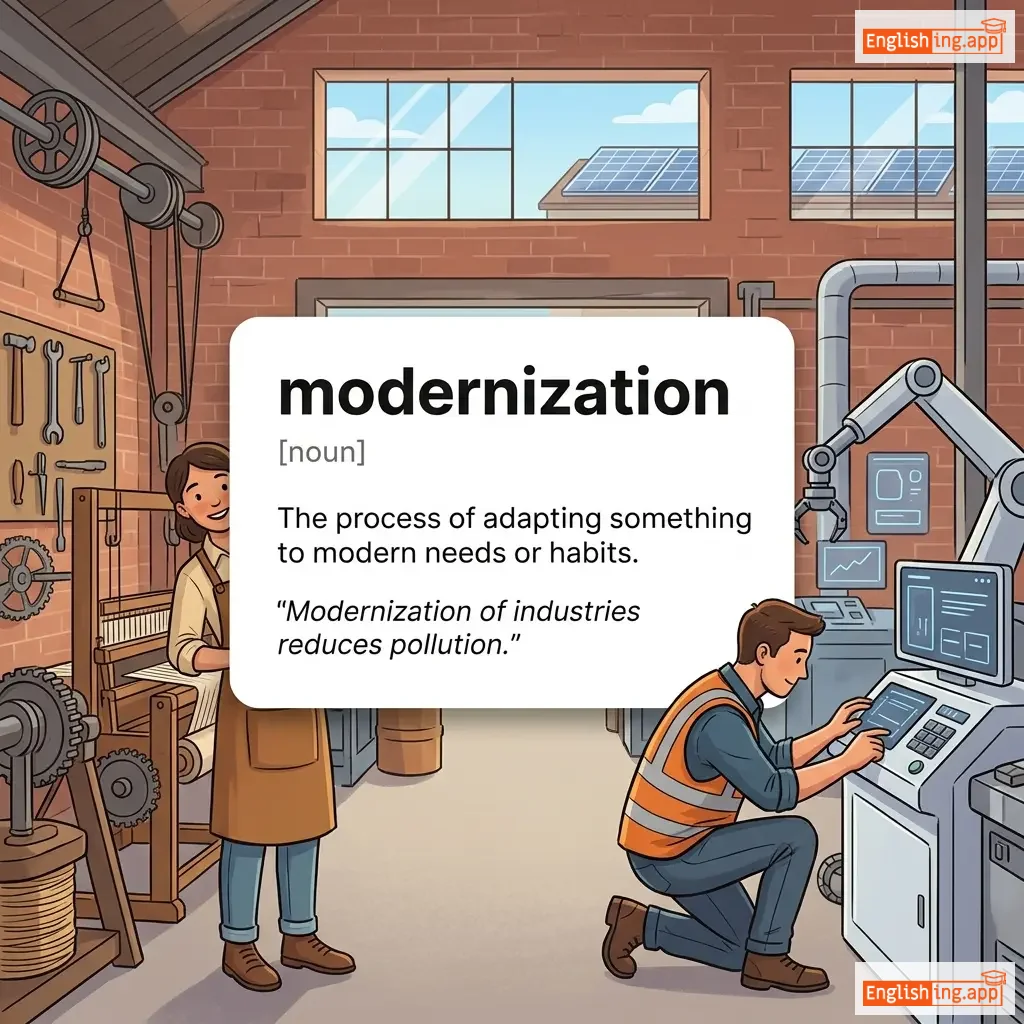
modernization definition card — visual illustration of the meaning
noun
/ˌmɒd.ən.aɪˈzeɪ.ʃən/
现代化 (xiandaihua)

The process of adapting something to modern needs or habits.

"Modernization of industries reduces pollution."

"工业的现代化减少了污染。" (Gōngyè de xiàndàihuà jiǎnshǎo le wūrǎn.)
verb
/ˈmɒdənaɪz/
现代化 (xiàndàihuà)

To adapt something to modern needs or styles; to update or improve.

"The company plans to modernize its IT infrastructure."

"公司计划现代化其IT基础设施。" (Gōngsī jìhuà xiàndàihuà qí IT jīchǔ shèshī.)
adjective
/ˈmɒdɪst/

Having or showing a humble estimate of one’s importance; simple and not extravagant.

"She lives in a modest house in the countryside."

noun
/ˈmɒd.ə.sti/
谦逊; 谦虚 (qiānxùn; qiānxū)

the quality of being humble and not boastful about achievements

"Despite his success, he showed great modesty."

"尽管成功,他展示了极大的谦虚。" (Jǐnguǎn chénggōng, tā zhǎnshìle jí dà de qiānxū.)
noun
/ˈmɒdɪkəm/
一点点 (yīdiǎn diǎn)

a small or moderate amount of something, especially something valuable or desirable

"She showed a modicum of patience during the long meeting."

"在漫长的会议中,她表现出了一点点耐心。" (Zài màncháng de huìyì zhōng, tā biǎoxiàn chūle yīdiǎn diǎn nàixīn.)
modification definition card — visual illustration of the meaning
noun
/ˌmɒdɪfɪˈkeɪʃən/
修改 (xiūgǎi)

the act or process of changing or altering something slightly

"The architect suggested a modification to the design."

"建筑师建议对设计进行修改。" (Jiànzhú shī jiànyì duì shèjì jìnxíng xiūgǎi.)
modifications definition card — visual illustration of the meaning
noun
ˌmɒd.ɪ.fɪˈkeɪ.ʃənz
修改 (xiugai)

Changes made to something to improve it or make it more suitable.

"Modifications improve policy frameworks."

"修改改进了政策框架。" (Xiugai gaijin le zhengce kuangjia.)
noun
/ˈmɒdɪfaɪər/
修饰语 (xiushi yu)

a word or element that changes, limits, or describes the meaning of another word; something that alters or adjusts

"In the phrase 'very cold', 'very' is a modifier of 'cold'."

"在短语“very cold”中,“very”是“cold”的修饰语。" (zai duanyu very cold zhong very shi cold de xiushi yu)
modify definition card — visual illustration of the meaning
verb
/ˈmɒdɪfaɪ/
修改 (xiūgǎi)

to make partial or minor changes to something

"You need to modify the settings to improve performance."

"你需要修改设置以提高性能。" (Nǐ xūyào xiūgǎi shèzhì yǐ tígāo xìngnéng.)
adjective
/ˈməʊdɪʃ/
时髦的 (shímáo de)

conforming to or following current fashion or style

"She wore a modish outfit that caught everyone’s attention."

"她穿了一件时髦的衣服,引起了所有人的注意。" (Tā chuānle yī jiàn shímáo de yīfú, yǐnqǐle suǒyǒu rén de zhùyì.)
modular definition card — visual illustration of the meaning
adjective
/ˈmɒdʒʊlər/
模块化 (mó kuài huà)

Employing or involving a module or modules as the basis of design or construction.

"The modular design allows for easy customization and scalability."

"模块化设计允许轻松定制和可扩展性。" (Mó kuài huà shè jì yǔn xǔ qīng sōng dìng zhì hé kě kuò zhǎn xìng.)
modulate definition card — visual illustration of the meaning
verb
/ˈmɒdjʊleɪt/
调节 (tiao jie)

to adjust or regulate the degree, pitch, or intensity of something

"The teacher modulated her voice to keep the students engaged."
"老师调整了她的声音以保持学生的专注。" (Lǎoshī tiáozhěng le tā de shēngyīn yǐ bǎochí xuéshēng de zhuānyì.)
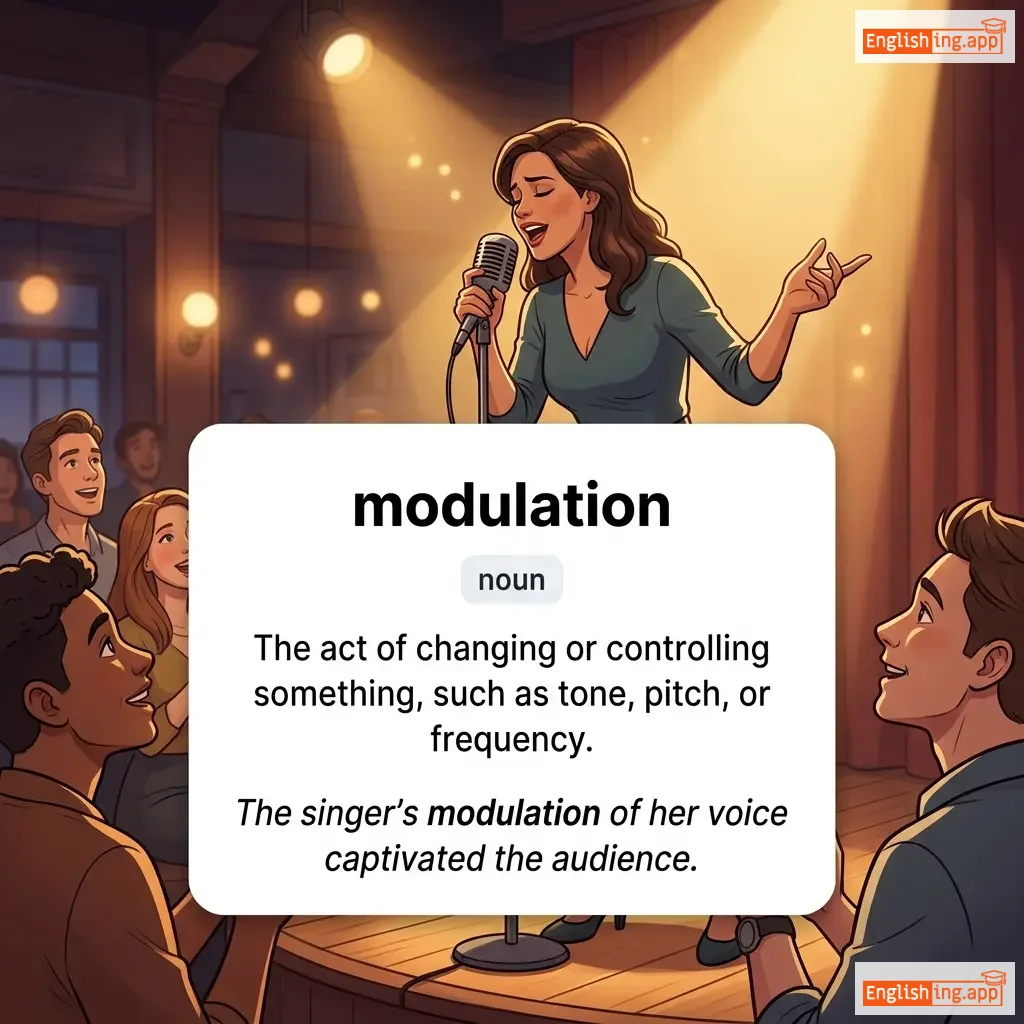
modulation definition card — visual illustration of the meaning
noun
/ˌmɒdjʊˈleɪʃən/
音调或频率控制 (yīntiáo huò pínlǜ kòngzhì)

The act of changing or controlling something, such as tone, pitch, or frequency.

"The singer’s modulation of her voice captivated the audience."

"歌手声音的调制吸引了观众。" (Gēshǒu shēngyīn de tiáozhì xīyǐnle guānzhòng.)
noun
/ˈmɒdjuːl/
模块 (mo dui er)

a self-contained unit of a course or system, typically part of a larger whole

"The module on machine learning was difficult but informative."

"机器学习的模块很难,但很有信息量。" (Ji qi xue xi de mo kuai hen nan, dan hen you xin xi liang.)
noun
/ˈmoʊɡəl/
巨头 (jùtóu)

A powerful or influential person, especially in business or media.

"He became a tech mogul by founding a billion-dollar company."

"他通过创办一家价值十亿美元的公司成为了一个科技巨头。" (Tā tōngguò chuàngbàn yījiā jiàzhí shí yì měiyuán de gōngsī chéngwéi le yīgè kējì jùtóu.)
noun
/ˈmɔɪəti/
一半或部分 (yī bàn huò bùfen)

One of two equal parts; a half or portion.

"The estate was divided into two moieties between the heirs."

"财产在继承人之间分为两部分。" (Cáichǎn zài jìchéngrén zhī jiān fēnwéi liǎng bùfen.)
noun
/ˈmɔɪs.tʃər/
湿气 (shiqi)

water or dampness that exists in small amounts in the air or on a surface

"The skin cream helps retain moisture."

"护肤霜有助于保持湿气。" (Hufushuang youzhu yu baochi shiqi.)
noun
/ˈmoʊlə ˈkɑrplɪt/
摩拉鱼 (mo la yu)

a small freshwater fish of the carp family, commonly found in South Asian rivers and ponds

"The mola carplet is a popular small fish used in Bengali cuisine."

"摩拉鱼是孟加拉菜中常用的一种受欢迎的小鱼。" (mo la yu shi meng jia la cai zhong chang yong de yi zhong shou huan ying de xiao yu)
noun
/ˈmoʊlər/
磨牙 (mo ya)

A large tooth at the back of the mouth used for grinding food.

"The dentist had to extract his wisdom molar."

"牙医不得不拔掉他的智齿。" (Yáyī bùdébù bá diào tā de zhìchǐ.)
noun
/məˈlæsɪz/
糖蜜 (tángmì)

thick, dark, sweet syrup made from sugar cane

"The recipe calls for molasses to give the bread a rich flavor."

"食谱要求加入糖蜜,给面包增加浓郁的味道。" (Shípǔ yāoqiú jiārù tángmì, gěi miànbāo zēngjiā nóngyù de wèidào.)
noun
/ˈmoʊldɪŋ/
装饰条 (zhuangshi tiao)

A decorative strip or design, often used on walls, ceilings, or furniture.

"The wooden molding gave the room a classic look."

"木质装饰条给房间带来了经典的外观。" (Mùzhì zhuāngshì tiáo gěi fángjiān dàilái le jīngdiǎn de wàiguān.)
noun
/moʊl/
鼹鼠 (yanshu)

a small burrowing mammal with tiny eyes and soft fur

"The mole dug tunnels under the garden."

"鼹鼠在花园下挖了隧道。" (Yǎn shǔ zài huāyuán xià wāle suìdào.)
noun
/ˈmɒlɪkjuːl/
分子 (fenzi)

The smallest unit of a chemical compound that retains its chemical properties.

"A water molecule is made up of two hydrogen atoms and one oxygen atom."

"一个水分子由两个氢原子和一个氧原子组成。" (yige shui fenzi you liangge qing yuanzhi he yige yang yuanzhi zucheng.)
verb
/məˈlɛst/
骚扰 / 性虐待 (saorao / xing nvedai)

to assault or abuse someone, especially in a sexual or physical way

"The criminal was arrested for attempting to molest a child."

"罪犯因试图猥亵一个孩子而被逮捕。" (Zuifan yin shitu weixie yige haizi er bei daibu.)
mollify definition card — visual illustration of the meaning
verb
/ˈmɒlɪfaɪ/
安抚 (ānfǔ)

To calm or soothe someone's anger or anxiety.

"The manager tried to mollify the angry customers with discounts."

"经理试图通过折扣安抚生气的顾客。" (Jīnglǐ shìtú tōngguò zhékòu ānfǔ shēngqì de gùkè.)
verb
/ˈmɒlikɒdl/
宠爱 (chongai)

To treat someone in an overprotective and indulgent way.

"Parents should avoid mollycoddling their children too much."

"父母应避免过度宠爱他们的孩子。" (Fumu ying bimian guodu chongai tamen de haizi.)
verb
/məʊlt/
脱羽 (tuo yu)

To shed old feathers, skin, or hair to make way for new growth.

"Birds molt their feathers once a year."

"鸟类每年会脱羽。" (Niaolui meinian hui tuo yu.)
adjective
/ˈməʊltən/
熔化的 (rónghuà de)

Made into liquid by heat; melted.

"The blacksmith poured molten metal into the mold."

"铁匠把熔化的金属倒入模具中。" (tiějiàng bǎ rónghuà de jīnshǔ dào rù mújù zhōng.)
👩‍👧

mom (妈妈)

noun
/mɑːm/
妈妈 (mama)

an informal word for mother

"My mom makes the best homemade food."

"我妈妈做的家常菜最好吃。" (Wo mama zuo de jiachang cai zui hao chi.)
noun
/ˈmoʊmənt/
瞬间 (shun jian)

A very short period of time; a particular point in time.

"She paused for a moment before answering."

"她在回答之前停顿了片刻。" (Ta zai huida zhiqian tingdun le pianke.)
adjective
/ˈmoʊmənˌteri/
短暂 (duǎnzhàn)

Lasting for only a short time.

"There was a momentary silence in the room."

"房间里有一阵短暂的沉默。" (Fángjiān lǐ yǒu yī zhèn duǎnzhàn de chénmò.)
adjective
/moʊˈmɛntəs/
重大 (zhòngdà)

Of great importance or significance, especially in its effect on the future.

"The signing of the agreement was a momentous event."

"签署协议是一个重大的事件。" (Qiānshǔ xiéyì shì yīgè zhòngdà de shìjiàn.)
momentum definition card — visual illustration of the meaning
noun
/moʊˈmɛntəm/

The force or speed gained by a moving object; the strength of progress.

"The team gained momentum after scoring the first goal."

noun
/ˈmɒn.ɑːk/
君主 (jūnzhǔ)

a sovereign ruler, especially a king or queen

"The monarch addressed the nation on television."

"君主在电视上向全国致辞。" (Jūnzhǔ zài diànshì shàng xiàng quánguó zhìcí.)
monarchy definition card — visual illustration of the meaning
noun
/ˈmɑːnərki/
君主制 (jūnzhǔ zhì)

A system of government with a king or queen as head of state.

"The country became a monarchy after the coronation."

"这个国家在加冕后成为了君主制国家。" (Zhège guójiā zài jiāmiǎn hòu chéngwéi le jūnzhǔ zhì guójiā.)
noun
/ˈmɒnəstɛri/

A building or complex where monks or nuns live, work, and worship.

"The old monastery was surrounded by high stone walls."

adjective
/məˈnæstɪk/
修道的 (xiudao de)

Relating to monks, monasteries, or a life of religious seclusion.

"He chose to live a monastic life away from the city."

"他选择过一种修道的生活,远离城市。" (Ta xuanze guo yizhong xiudao de shenghuo, yuanli chengshi.)
noun
/ˈmʌn.deɪ/
星期一 (xingqi yi)

the first day of the working week following Sunday

"I start my new job on Monday."

"我星期一开始新工作。" (wo xingqi yi kaishi xin gongzuo)
monetary definition card — visual illustration of the meaning
adjective
/ˈmʌnɪtəri/

Relating to money, currency, or financial matters.

"The government introduced new monetary policies."

monetization definition card — visual illustration of the meaning
noun
/ˌmɒn.ɪ.taɪˈzeɪ.ʃən/
货币化 (huòbì huà)

The process of converting assets or services into money, involving commercialization, profit generation, and revenue creation.

"The monetization of digital content has created new income streams."

"数字内容的货币化创造了新的收入来源。" (Shùzì nèiróng de huòbì huà chuàngzào le xīn de shōurù láiyuán.)
noun
/ˈmʌni/
幸福 (xìngfú)

A medium of exchange in the form of coins and banknotes; wealth or financial resources.

"He saved enough money to buy a new car."

"她在收到奖项时无法掩饰她的幸福。" (Tā zài shōudào jiǎngxiàng shí wúfǎ yǎnshì tā de xìngfú.)
adjective
/ˈmʌnid/
富有的; 富裕的; 有钱的 (manid)

having much money; wealthy; rich

"She comes from a moneyed family with extensive real estate holdings."

"她来自一个富有的家庭,拥有大量的房地产。" (tā láizì yīgè fùyǒu de jiātíng, yǒngyǒu dàliàng de fángdìchǎn.)
noun
/ˈmɒŋ.ɡuːs/
(méng)

a small carnivorous mammal known for its ability to kill venomous snakes

"The mongoose quickly attacked the cobra to protect its young."

"獴迅速攻击了眼镜蛇,以保护它的幼崽。" (Méng xùnsù gōngjīle yǎnjìngshé, yǐ bǎohù tā de yòuzǎi.)
noun
/ˈmʌŋɡrəl/
杂种狗 (zá zhǒng gǒu)

A dog of mixed breed; sometimes used to describe something mixed or of inferior quality.

"The stray dog was a friendly mongrel."

"那只流浪狗是一只友好的杂种狗。" (nà zhī liú làng gǒu shì yī zhī yǒu hǎo de zá zhǒng gǒu.)
noun
/məˈnɪʃən/
警告 (jinggao)

A warning or caution, often of a religious or moral nature.

"The priest gave a monition against dishonesty."

"牧师对不诚实行为发出了警告。" (Mushi dui buchengshi xingwei fashu le jinggao.)
noun, verb
/ˈmɒnɪtər/
监视器,观察 (jiānshìqì, guānchá)

to observe and check the progress or quality of something; also a device that displays information

"The teacher monitors the students during the exam."

"老师在考试期间监控学生。" (Lǎoshī zài kǎoshì qījiān jiānkòng xuéshēng.)