词汇表

英语词汇词典 | 单词含义、定义和示例

verb
/ˌmɪsˈmænɪdʒ/

to handle or control something badly or inefficiently

"The company went bankrupt because it was mismanaged for years."

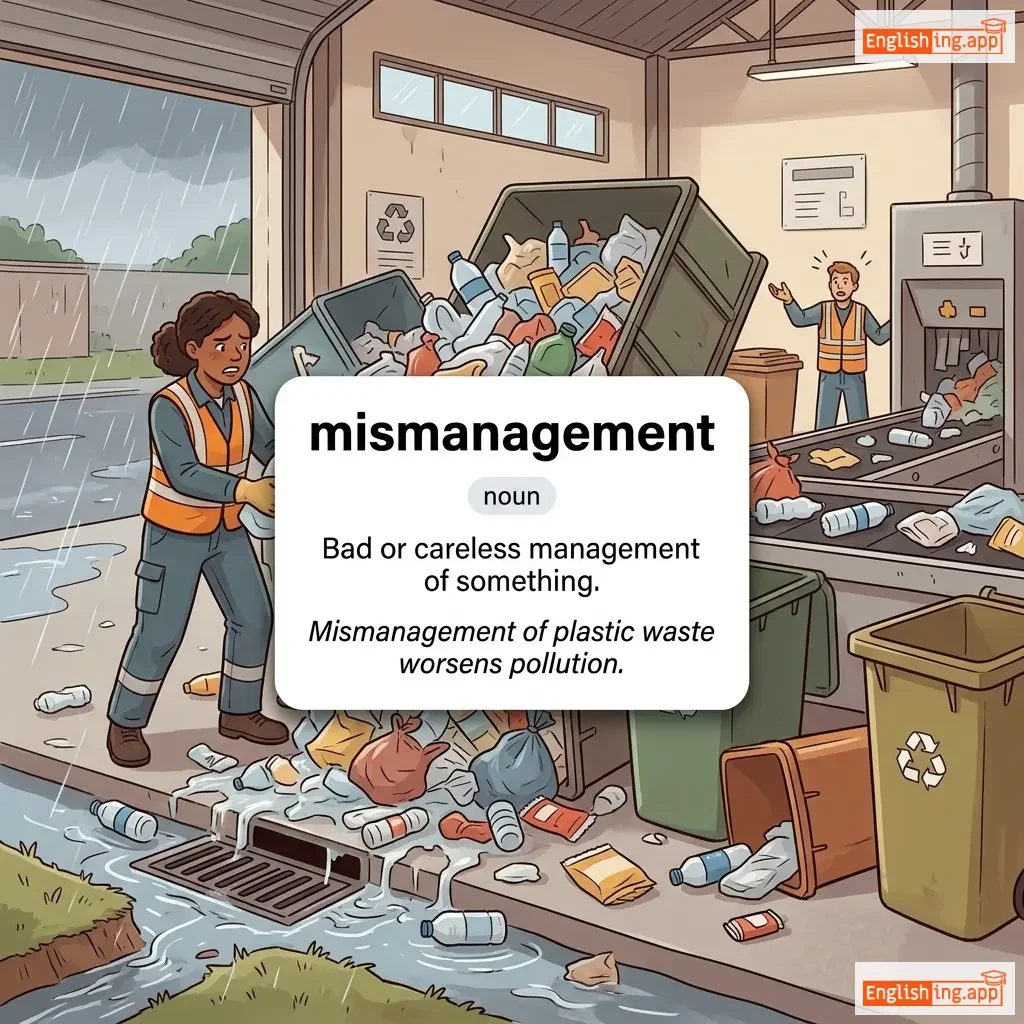
mismanagement definition card — visual illustration of the meaning
noun
ˌmɪsˈmænɪdʒmənt
管理不善 (guanli bushan)

Bad or careless management of something.

"Mismanagement of plastic waste worsens pollution."

"塑料废物的管理不善加剧了污染。" (Suliaofeiwu de guanli bushan jiaju le wuran.)
noun
/ˌmɪsˈnoʊmər/
错误的名字 (cuo wu de ming zi)

A wrong or inaccurate name or designation.

"Calling the tiny dog a 'giant' is a misnomer."

"称呼这只小狗为“巨人”是一个错误的名字。" (Cheng hu zhe zhi xiao gou wei 'ju ren' shi yi ge cuo wu de ming zi.)
noun
/mɪˈsɑːɡəmi/
厌婚症 (yàn hūn zhèng)

Hatred or dislike of marriage.

"His misogamy prevented him from ever settling down with a partner."

"他的厌婚症让他无法和伴侣定居下来。" (Tā de yàn hūn zhèng ràng tā wúfǎ hé bànlǚ dìngjū xiàlái.)
noun
/mɪˈsɑːdʒɪnɪst/
厌女症者 (yàn nǚ zhèng zhě)

A person who dislikes, despises, or is strongly prejudiced against women.

"Many condemned his speech as the words of a misogynist."

"许多人谴责他的演讲是厌女症者的言论。" (Xǔduō rén qiǎn zé tā de yǎnjiǎng shì yàn nǚ zhèng zhě de yánlùn.)
noun
/mɪˈsɑːdʒəni/
厌恶女性 (yànwù nǚxìng)

Hatred of, contempt for, or prejudice against women.

"The novel has been criticized for promoting misogyny."

"这本小说因宣扬厌恶女性而遭到批评。" (Zhè běn xiǎoshuō yīn xuānyáng yànwù nǚxìng ér zāodào pīpíng.)
verb
/ˌmɪsˈpleɪs/
放错地方 (fàng cuò dìfāng)

To put something in the wrong location and temporarily lose it.

"I often misplace my keys when I am in a hurry."

"我经常在匆忙中把钥匙放错地方。" (Wǒ jīngcháng zài cōngmáng zhōng bǎ yàoshi fàng cuò dìfāng.)
verb
/ˌmɪsˈriːd/
误读 (wù dú)

to read something incorrectly or interpret wrongly

"He misread the instructions and built the shelf incorrectly."

"他误读了指示,结果错误地建造了架子。" (Tā wù dú le zhǐ shì, jié guǒ cuò wù de jiàn zào le jià zi.)
verb
/ˌmɪsˌrɛprɪˈzɛnt/

to give a false or misleading account of something

"The lawyer accused the witness of trying to misrepresent the facts."

noun
/ˌmɪsˈruːl/
恶政 (è zhèng)

bad or poor governance

"The kingdom suffered for decades under misrule."

"王国在几十年里饱受恶政之苦。" (Wángguó zài jǐ shí nián lǐ bǎoshòu è zhèng zhī kǔ.)
verb, noun
/mɪs/
错过 / 想念 (cuo guo / xiang nian)

to fail to hit, reach, or meet; to feel the absence of someone or something

"I really miss my family when I travel abroad."

"当我出国旅行时,我真的很想念我的家人。" (Dang wo chuguo lüxing shi, wo zhen de hen xiangnian wo de jiaren.)
noun
/ˈmɪsəl/
弥撒书 (misa shu)

a book containing the texts used in the Catholic Mass throughout the year

"The priest read from the missal during the ceremony."

"神父在仪式期间从弥撒书中读出。" (Shénfù zài yíshì qījiān cóng misa shū zhōng dú chū.)
noun
/ˈmɪsaɪl/ or /ˈmɪsəl/
导弹 (daodan)

a weapon that is self-propelled and directed toward a target

"The army launched a missile towards the enemy base."

"军队向敌军基地发射了一枚导弹。" (jūnduì xiàng díjūn jīdì fāshèle yī méi dǎodàn.)
missing definition card — visual illustration of the meaning
adjective
/ˈmɪsɪŋ/
丢失 (diūshī)

not present or cannot be found

"The keys are missing from the table."

"钥匙不见了,放在桌子上。" (Yuèshi bùjiàn le, fàng zài zhuōzi shàng.)
noun
/ˈmɪʃən/
任务 / 使命 (renwu / shiming)

an important assignment or task, often with a specific purpose

"The astronauts were on a mission to explore Mars."

"宇航员们正在执行任务,探索火星。" (Yuhangyuan men zhengzai zhixing renwu, tansuo huoxing.)
noun
/ˈmɪʃəneri/
传教士 (chuán jiào shì)

a person sent on a religious mission, especially to promote Christianity in a foreign country

"The missionary spent years helping local communities in Africa."

"传教士花了多年时间在非洲帮助当地社区。" (Chuán jiào shì huāle duōnián shíjiān zài fēizhōu bāngzhù dāngdì shèqū.)
noun
/ˈmɪsɪv/
信件 (xìnjiàn)

a written message, especially a formal or official letter

"He sent a long missive to the governor."

"他给州长发送了一封长信。" (Tā gěi zhōuzhǎng fāsòngle yī fēng cháng xìn.)
noun
/mɪˈsteɪk/
错误 (cuo wu)

An action or decision that is wrong or misguided.

"She realized her mistake after submitting the wrong file."

"她在提交错误文件后意识到自己的错误。" (Ta zai tijiao cuo wu wenjian hou yishi dao ziji de cuo wu.)
adjective
/mɪˈsteɪkən/
错误的 (cuowu de)

wrong or incorrect because of an error in judgment or understanding

"I was mistaken about the meeting time."

"我对会议时间判断错了。" (wo dui huiyi shijian panduan cuo le)
noun/verb
/ˌmɪsˈtrʌst/
不信任 (buxinren)

lack of trust; suspicion or doubt about someone or something

"The villagers showed deep mistrust of outsiders."

"村民们对外来者表现出了深深的不信任。" (Cūnmín men duì wàilái zhě biǎoxiàn chūle shēn shēn de bùxìnrèn.)
noun
/ˌmɪs.ʌn.dəˈstæn.dɪŋ/
误解 (wùjiě)

A failure to understand something correctly; a disagreement or confusion between people

"The argument was caused by a simple misunderstanding."
"争论是由一个简单的误解引起的。" (zhēnglùn shì yóu yīgè jiǎndān de wùjiě yǐnqǐ de.)
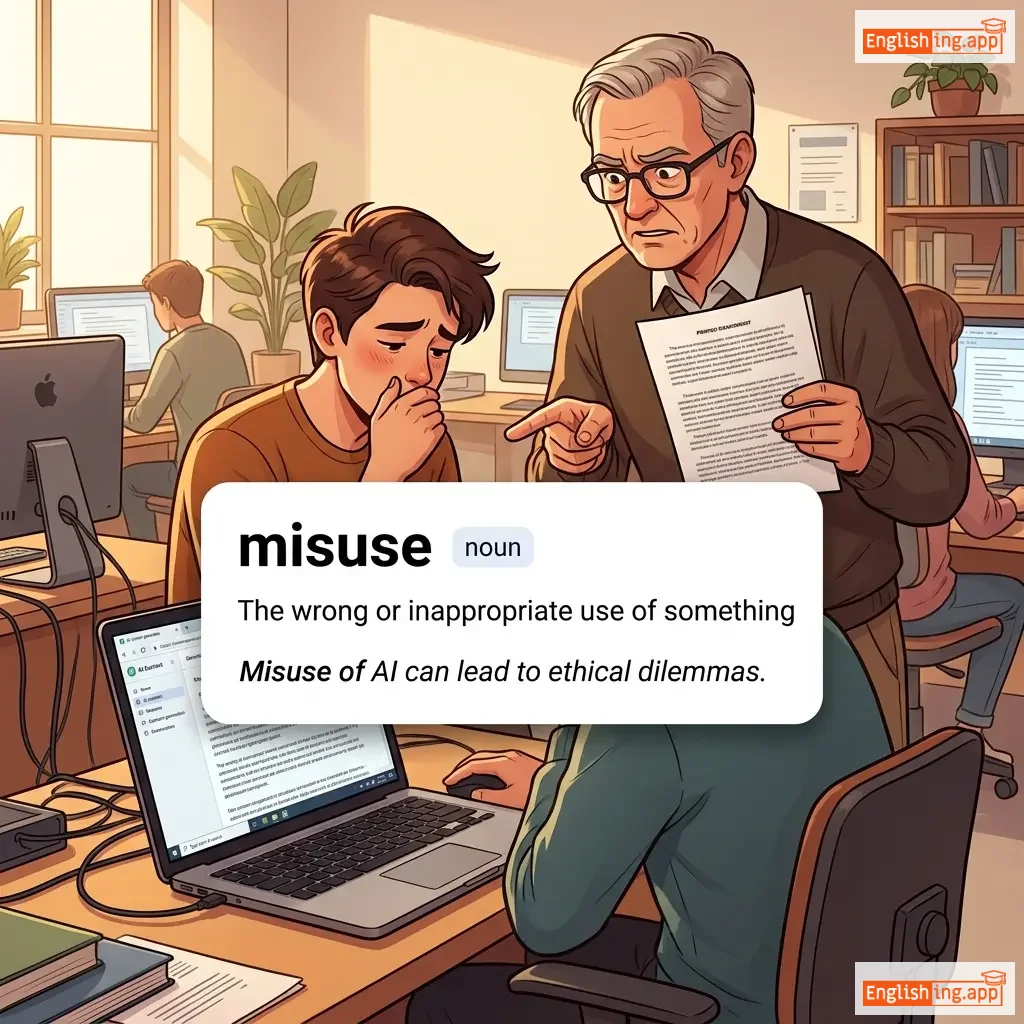
misuse definition card — visual illustration of the meaning
noun
ˌmɪsˈjuːs
滥用 (lànyòng)

The wrong or inappropriate use of something

"Misuse of AI can lead to ethical dilemmas."

"AI的滥用可能导致伦理困境。" (AI de lànyòng kěnéng dǎozhì lúnlǐ kùnjìng.)
noun
/maɪt/
螨虫 (manchong)

a very small creature, often a tiny arachnid; also used to mean a very small amount

"The mattress was infested with dust mites."

"床垫里有尘螨。" (chuangdian li you chenman.)
noun
/ˈmaɪtər/
主教帽 (zhǔjiào mào)

a tall, pointed hat worn by bishops; also a type of joint made between two pieces of material

"The bishop placed the miter on his head during the ceremony."
"主教在仪式中把主教帽戴在头上。" (Zhǔjiào zài yíshì zhōng bǎ zhǔjiào mào dài zài tóu shàng.)
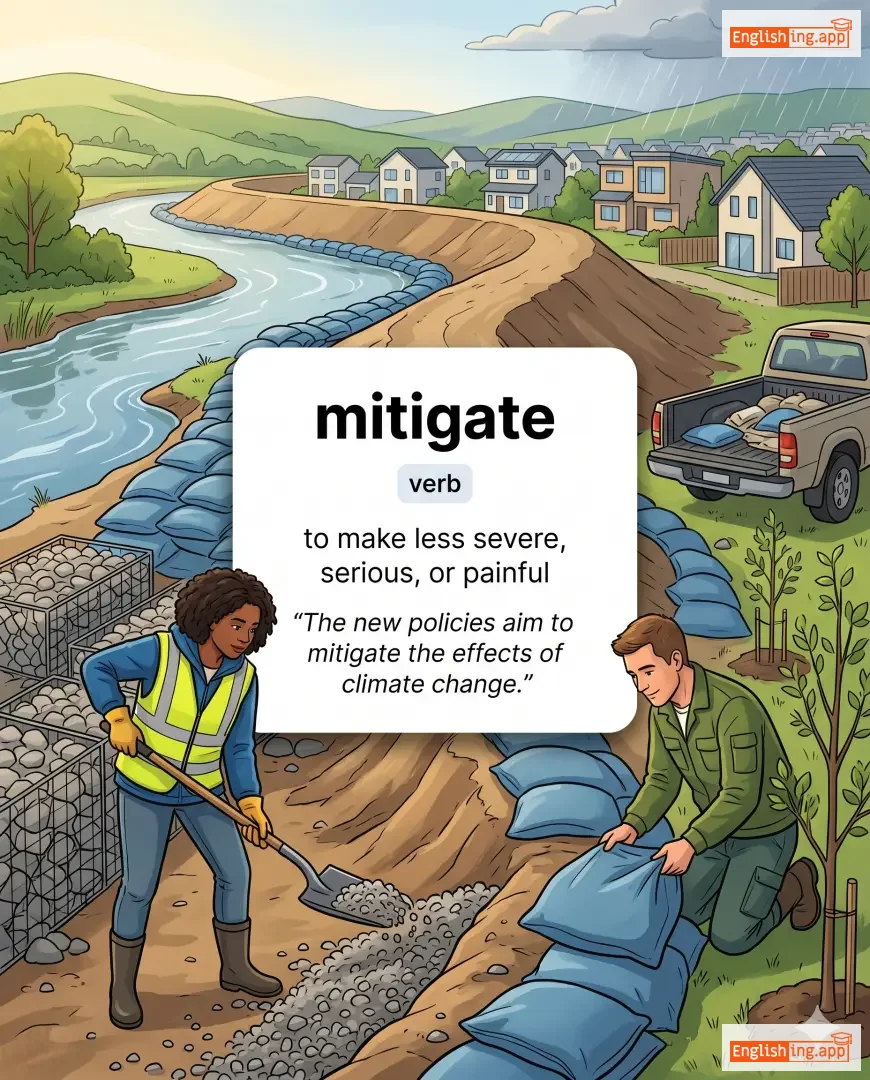
mitigate definition card — visual illustration of the meaning
verb
/ˈmɪtɪˌɡeɪt/
减轻 (jianqīng)

to make less severe, serious, or painful

"The new policies aim to mitigate the effects of climate change."
"新政策旨在减缓气候变化的影响。" (Xin zhengce zhi zai jianhuan qihou bianhua de yingxiang.)
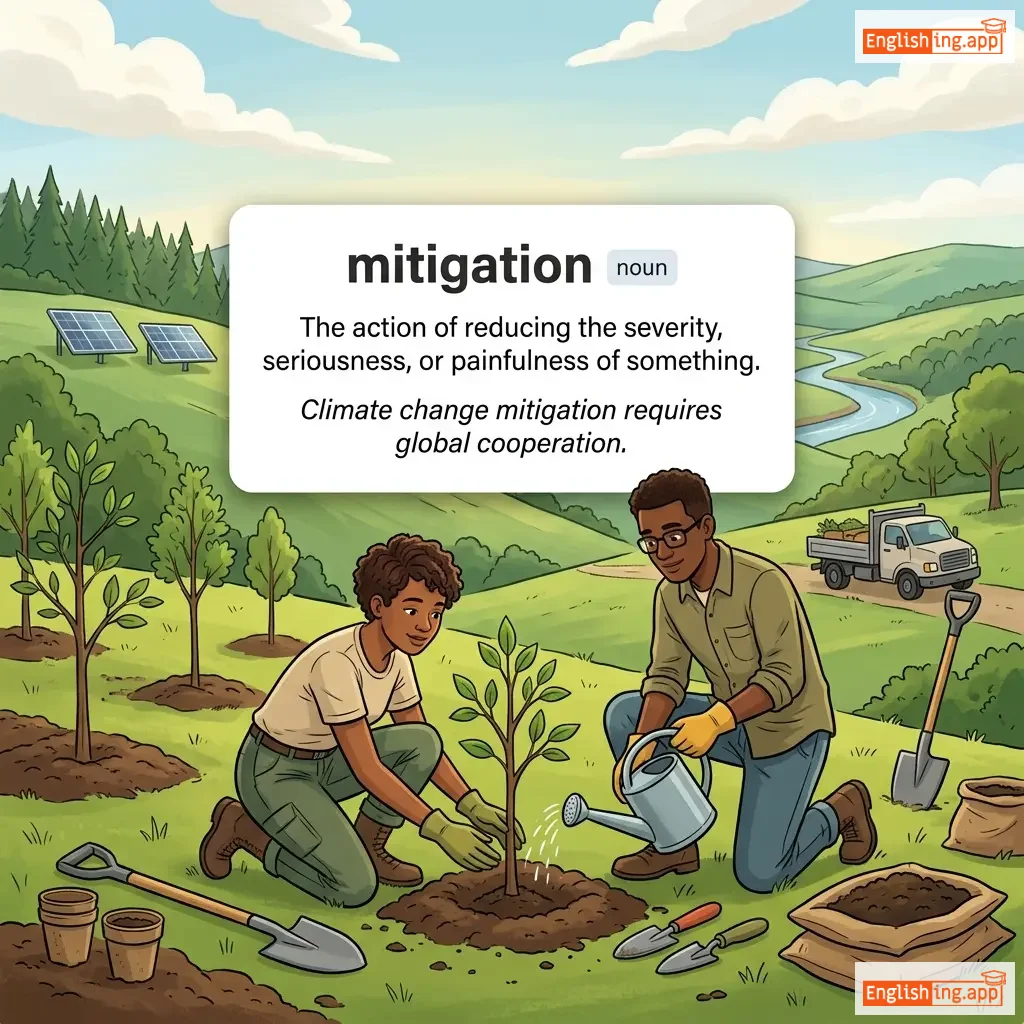
mitigation definition card — visual illustration of the meaning
noun
ˌmɪt.ɪˈɡeɪ.ʃən
缓解 (huǎnjiě)

The action of reducing the severity, seriousness, or painfulness of something.

"Climate change mitigation requires global cooperation."
"气候变化减缓需要全球合作。" (Qìhòu biànhuà jiǎnhuǎn xūyào quánqiú hézuò.)
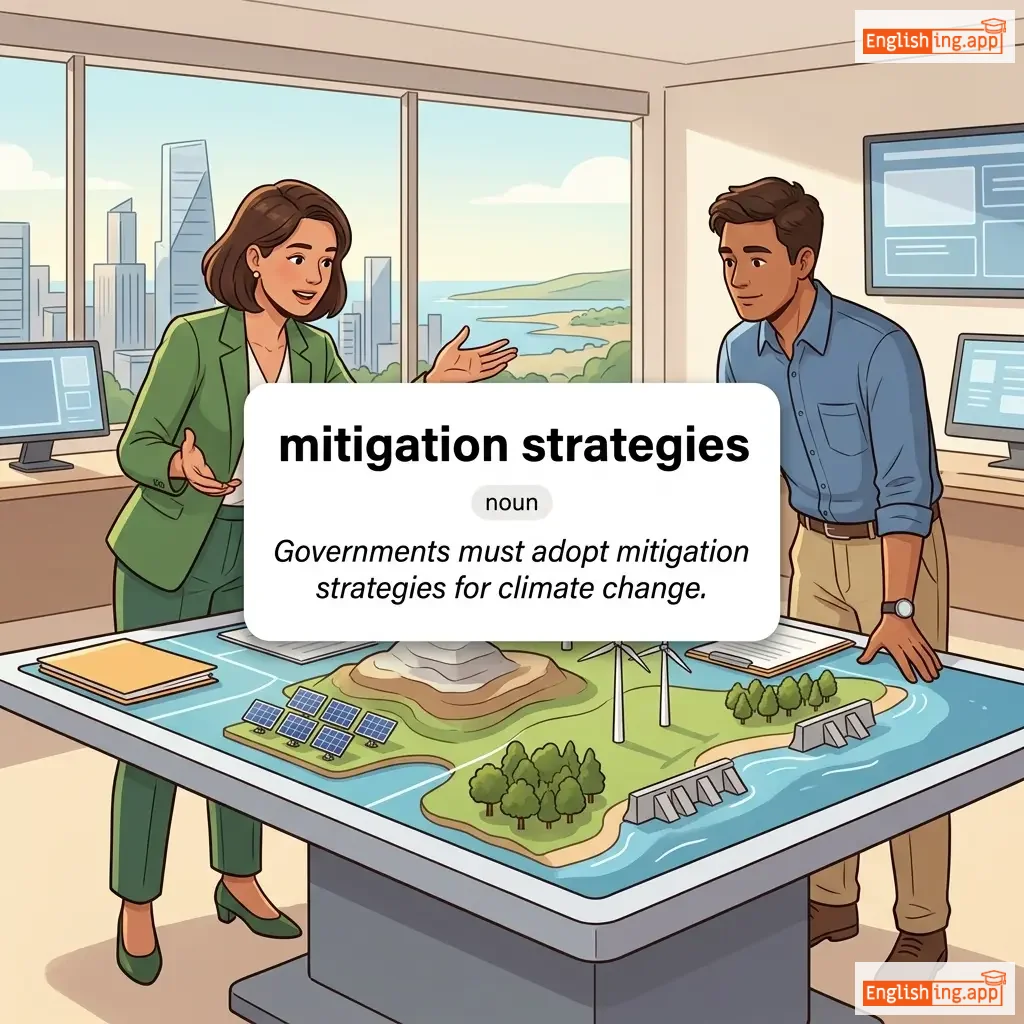
mitigation strategies definition card — visual illustration of the meaning
noun
ˌmɪtɪˈɡeɪʃən ˈstrætədʒiz
缓解策略 (huanjie zhengce)

Plans and actions designed to reduce the severity or impact of problems or risks.

"Governments must adopt mitigation strategies for climate change."

"政府必须为气候变化采取缓解策略。" (Zhengfu bixi wei qihou bianhua caiqu huanjie zhengce.)
verb
/mɪks/
混合 (hùnhé)

To combine different substances or elements together.

"She likes to mix different colors to create new shades."

"她喜欢混合不同的颜色来创造新的色调。" (Tā xǐhuān hùnhé bùtóng de yánsè lái chuàngzào xīn de sètiáo.)
adjective
/mɪkst/
混合的 (hunhe de)

consisting of different elements or having varied opinions or feelings

"The audience had mixed reactions to the film."

"观众对电影的反应混合。" (Guanzhong dui dianying de fanying hunhe.)
noun
/mɪkst ˈkʌlər/
混合色 (hun he se)

a color created by combining two or more different colors

"The mixed colour created a beautiful gradient on the canvas."
"混合色在画布上创造了美丽的渐变。" (Hun he se zai huabu shang chuangzao le meili de jianbian.)
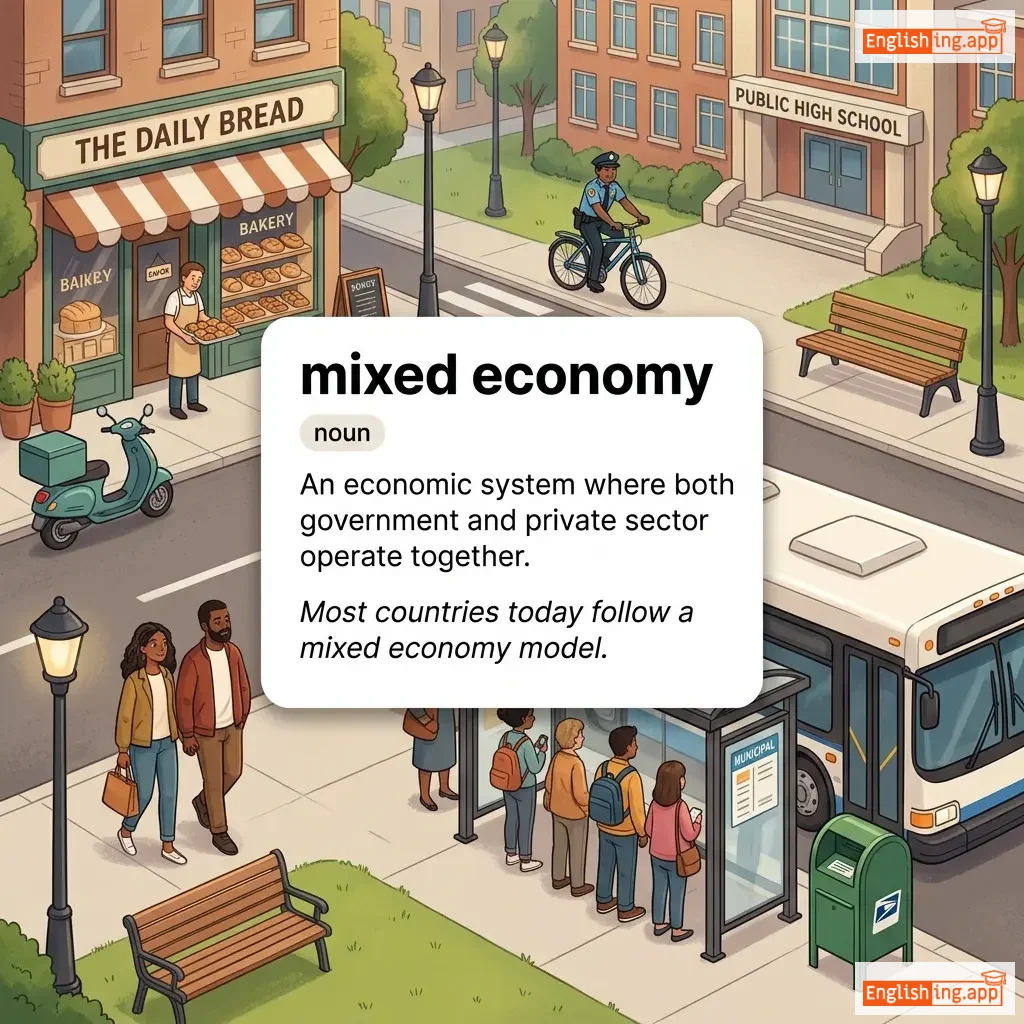
mixed economy definition card — visual illustration of the meaning
noun
/mɪkst ɪˈkɒn.ə.mi/
混合经济 (hunhe jingji)

An economic system where both government and private sector operate together.

"Most countries today follow a mixed economy model."

"如今,大多数国家遵循混合经济模式。" (Rújīn, dàduōshù guójiā zūnxún hùn hé jīngjì móshì.)
noun
/ˈmɪk.sər/
搅拌机 (jiaobanji)

an electric kitchen appliance used for mixing, beating, and whipping ingredients

"The chef used a mixer to prepare the cake batter."

"厨师用搅拌机准备蛋糕面糊。" (Chushi yong jiaobanji zhunbei dangao mianhu.)
noun
/ˈmɪkstʃər/
混合物 (hunhewu)

A combination of different things or substances blended together.

"The cake recipe requires a mixture of flour and sugar."

"蛋糕食谱需要面粉和糖的混合物。" (Dàngāo shípǔ xūyào miànbǐn hé táng de hùnhéwù.)
interjection
/mˈhm/
是的 (shi de)

A sound used to express agreement or acknowledgment in conversation.

"‘Do you understand?’ ‘Mm-hmm.’"
"‘你明白吗?’ ‘是的.’" ('Nǐ míngbái ma?' 'Shì de.')
mnemonic definition card — visual illustration of the meaning
noun/adjective
/nɪˈmɒnɪk/

a device or technique used to aid memory

"Students often use mnemonic devices to remember lists of words."

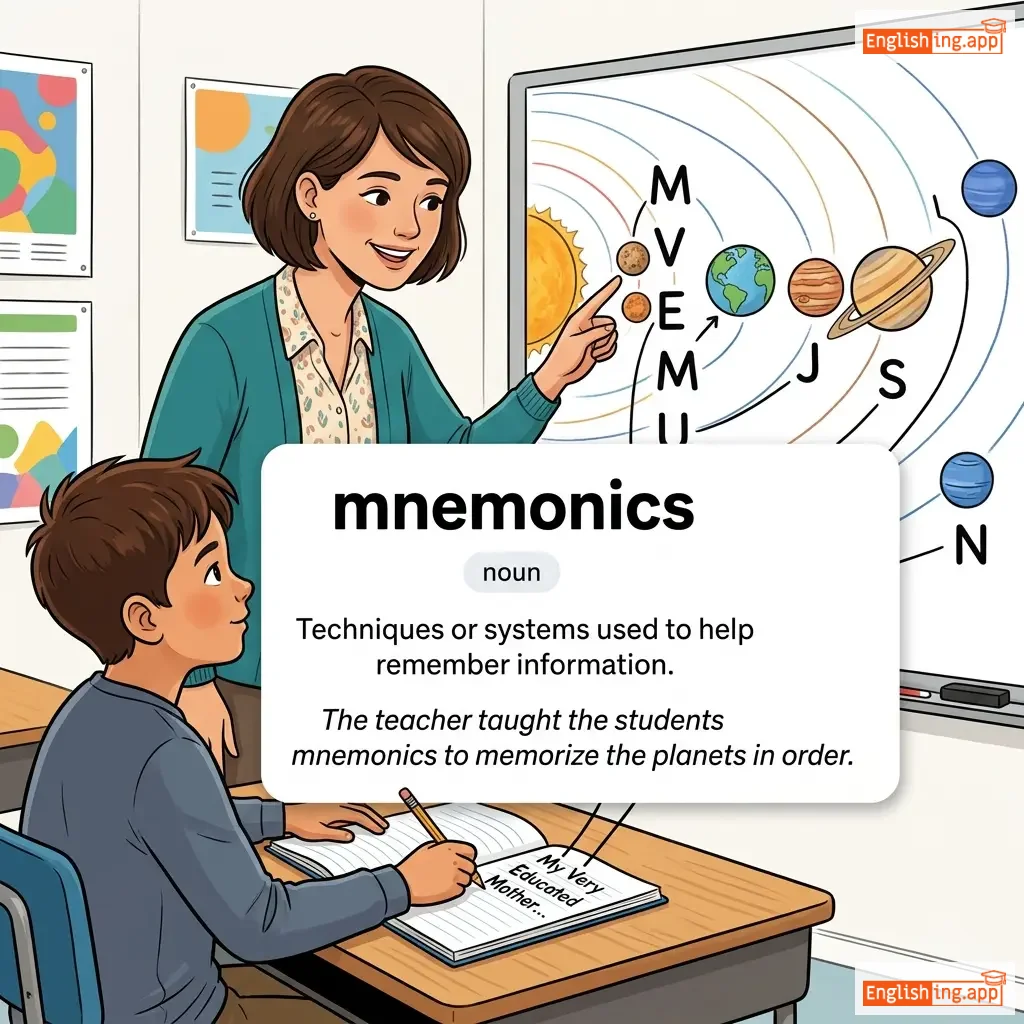
mnemonics definition card — visual illustration of the meaning
noun
/nɪˈmɒnɪks/
记忆法 (jìyì fǎ)

Techniques or systems used to help remember information.

"The teacher taught the students mnemonics to memorize the planets in order."

"老师教学生们使用记忆法按顺序记住行星。" (Lǎoshī jiào xuéshēngmen shǐyòng jìyì fǎ àn shùnxù jì zhù xíngxīng.)
noun
/moʊt/
护城河 (hù chéng hé)

A deep, wide ditch surrounding a castle or town, often filled with water, for defense.

"The castle was protected by a wide moat filled with water."

"城堡被一条充满水的宽护城河保护着。" (Chéng bǎo bèi yī tiáo chōng mǎn shuǐ de kuān hù chéng hé bǎo hù zhe.)
noun
/mɒb/
人群 (renqun)

a large, disorderly crowd of people, typically one that is agitated or violent

"The mob gathered outside the building, demanding justice."

"人群聚集在建筑物外,要求正义。" (Renqun juzhi zai jianzhu wu wai, yaoqiu zhengyi.)
adjective
/ˈmoʊbaɪl/
移动 (yidong)

Able to move or be moved easily; also refers to portable communication devices.

"She prefers a mobile lifestyle that allows her to travel frequently."

"她更喜欢一种移动的生活方式,这让她可以频繁旅行。" (Ta geng xihuan yizhong yidong de shenghuo fangshi, zhe rang ta keyi pinfan lüxing.)
mobile security definition card — visual illustration of the meaning
noun
ˈmoʊ.baɪl sɪˈkjʊr.ə.ti
移动安全 (yídòng ānquán)

Protection of mobile devices and the data stored on them from security threats.

"Strong mobile security protects personal information."
"强大的移动安全保护个人信息。" (Qiangda de yidong anquan baohu geren xinxi.)
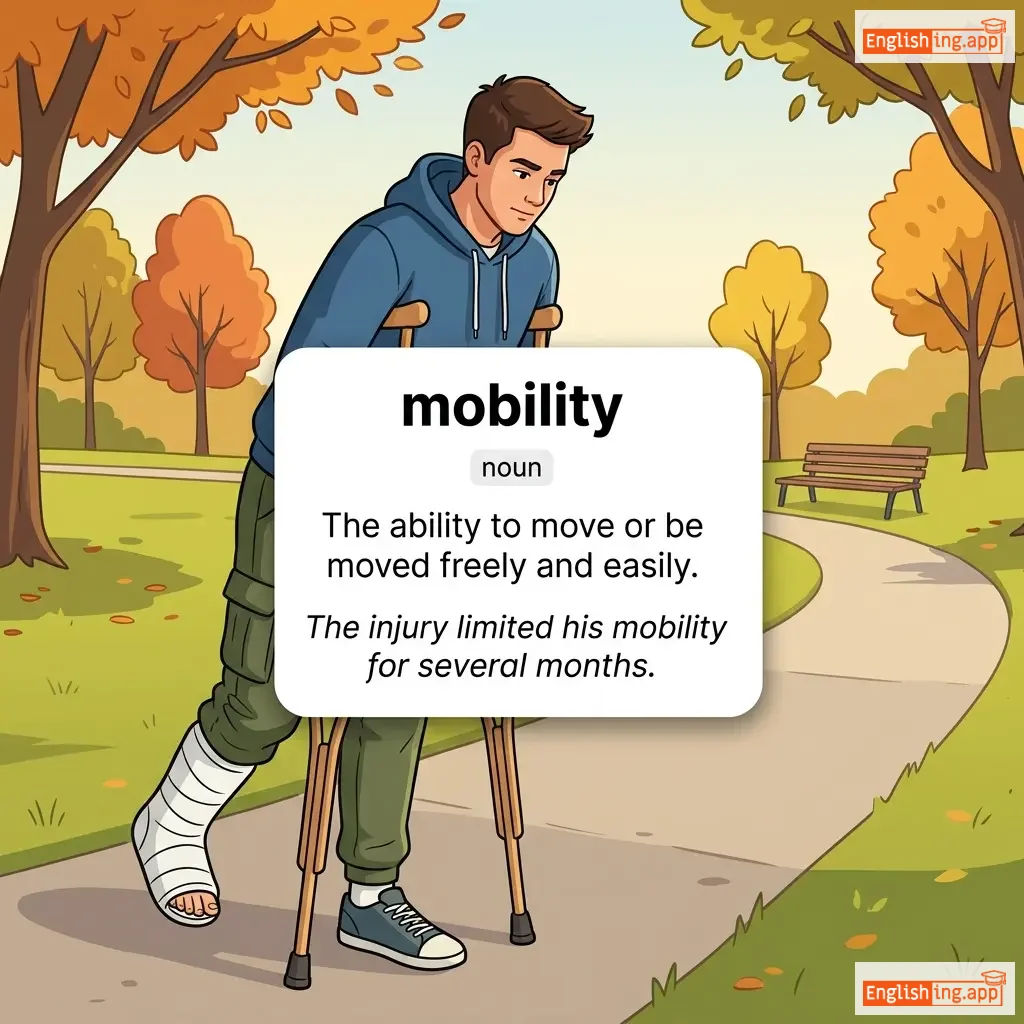
mobility definition card — visual illustration of the meaning
noun
/moʊˈbɪləti/
流动性 (liudongxing)

The ability to move or be moved freely and easily.

"The injury limited his mobility for several months."

"受伤限制了他的流动性几个月。" (Shoushang xianzhi le tade liudongxing jige yue.)
verb
/ˈməʊbɪlaɪz/
动员 (dongyuan)

to organize or prepare people or resources for action

"The leader worked hard to mobilize the community for the protest."

"领导者努力动员社区参与抗议。" (Lingdaozhe nuli dongyuan shequ canyu kangyi.)
noun
/məˈbɒkrəsi/
暴民政治 (baomin zhengzhi)

Rule or control by a mob or mass of people, often disorderly.

"The protest turned into mobocracy when the crowd started destroying property."

"抗议活动在群众开始破坏财产时变成了暴民政治。" (Kangyi huodong zai qunzhong kaishi pohuai caichan shi bian chengle baomin zhengzhi.)
noun
/ˈmɒkəsɪn/
莫卡辛鞋 (mokaxin xie)

A soft leather shoe, traditionally worn by Native Americans, often made from deerskin.

"He slipped on a pair of comfortable moccasins before going outside."

"他在外出前穿上了舒适的莫卡辛鞋。" (Ta zai waichu qian chuan shang le shushi de mokaxin xie.)
verb
/mɒk/
嘲笑 (chaoxiao)

To make fun of someone or something in a cruel or unkind way.

"The students mocked his accent during class."

"学生们在课堂上嘲笑他的口音。" (Xueshengmen zai ketang shang chaoxiao tade kouyin.)
noun
/ˈmɒkəri/
嘲笑,讥讽 (cháoxiào, jīfěng)

Teasing or contemptuous language or behavior directed at someone or something.

"His attempt at cooking ended in mockery from his friends."

"他烹饪的尝试以朋友们的嘲笑告终。" (Tā pēngrèn de chángshì yǐ péngyǒumen de cháoxiào gàozhōng.)
noun
/moʊd/
模式 (moshi)

A particular way or style in which something is done, experienced, or expressed.

"The phone has a silent mode for meetings."

"手机有一个用于会议的静音模式。" (Shǒujī yǒu yīgè yòng yú huìyì de jìngyīn móshì.)
model definition card — visual illustration of the meaning
noun
/ˈmɒdəl/
模型 (moxing)

A representation of something, often smaller or used as an example.

"The architect showed us a model of the new building."
"建筑师向我们展示了新建筑的模型。" (Jianzhushi xiang women zhanshi le xin jianzhu de moxing.)
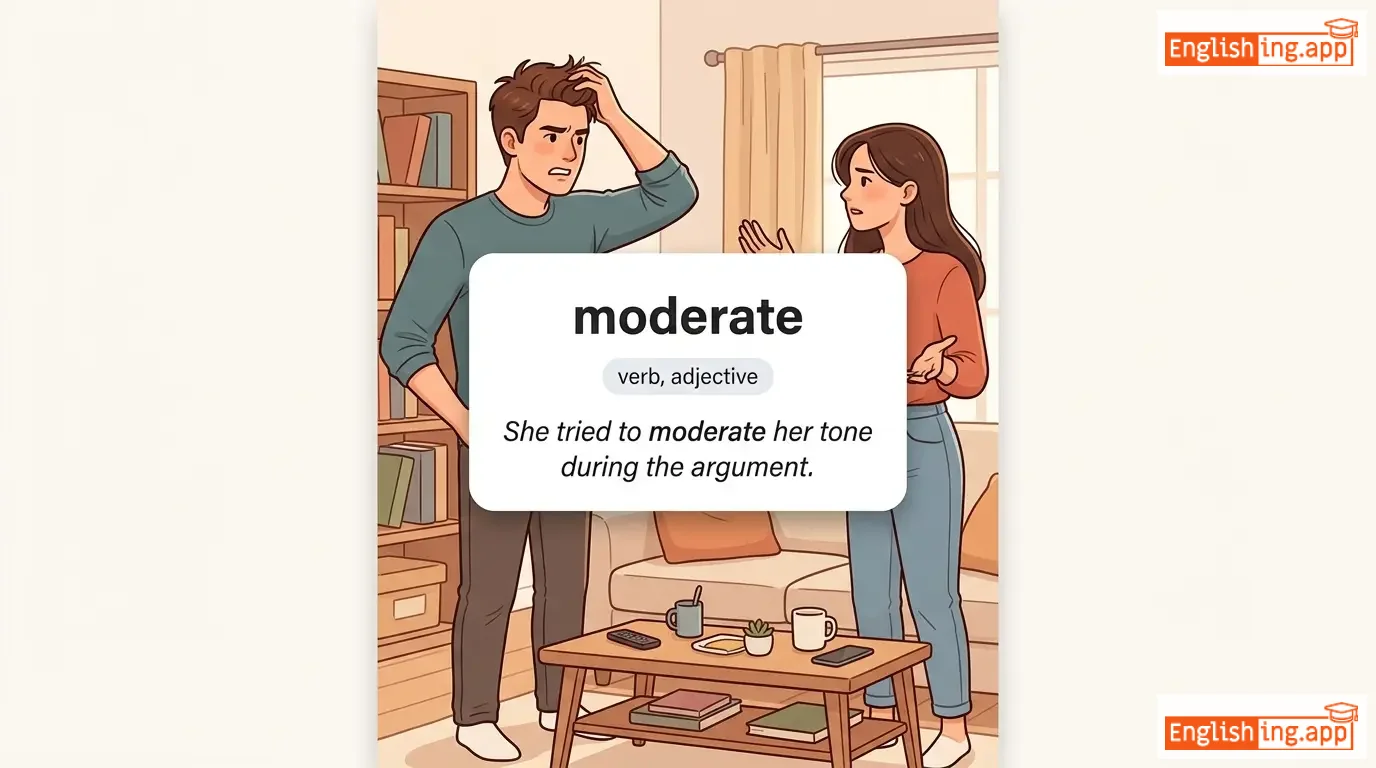
moderate definition card — visual illustration of the meaning
verb, adjective
/ˈmɒdəreɪt/ (verb), /ˈmɒdərət/ (adj)
适度的, 控制 (shidù de, kòngzhì)

To make something less extreme (verb); average in amount, intensity, quality, or degree (adjective).

"She tried to moderate her tone during the argument."

"她在争论中试图控制她的语气。" (Tā zài zhēnglùn zhōng shìtú kòngzhì tā de yǔqì.)
adverb
/ˈmɒdərətli/
适度地 (shidu de)

to a reasonable extent, not excessively

"She exercises moderately to stay healthy."

"她适度地锻炼以保持健康。" (Ta shidu de duanlian yi baochi jiankang.)