词汇表

英语词汇词典 | 单词含义、定义和示例

noun, verb
/mɪnt/
薄荷 / 铸币厂 (bohe / zhubi chang)

a place where coins are made; to produce or invent something new

"The government decided to mint new coins to commemorate the anniversary."

"政府决定铸造新硬币以纪念周年纪念日。" (Zhengfu jueding zhuzuo xin yingbi yi jinian zhouni jinianri.)
adjective
/ˈmɪnəskjuːl/
微小 (weixiao)

extremely small in size or importance

"She made only a minuscule contribution to the project."

"她对这个项目的贡献微乎其微。" (Ta dui zhege xiangmu de gongxian weihuqiwei.)
noun, adjective
/maɪˈnjuːt/ (adj), /ˈmɪnɪt/ (noun)
分钟 / 微小 (fēnzhōng / wēi xiǎo)

a period of sixty seconds; extremely small or detailed

"He examined the painting with minute attention to detail."

"他以极小的注意力检查了这幅画。" (Tā yǐ jí xiǎo de zhùyìlì jiǎnchále zhè fú huà.)
adverb
/maɪˈnjuːtli/
仔细地 (zǐxì de)

in very small detail; extremely carefully

"The detective examined the evidence minutely."

"侦探仔细地检查了证据。" (Zhēntàn zǐxì de jiǎnchále zhèngjù.)
noun
/maɪˈnjuːʃə/
琐事 (suǒ shì)

a small or trivial detail of something

"He was bored by the minutia of office paperwork."

"他对办公室文件的琐事感到厌倦。" (Tā duì bàngōngshì wénjiàn de suǒ shì gǎndào yànjuàn.)
noun (plural)
/maɪˈnjuːʃiiː/
琐事 (suǒ shì)

the small, precise, or trivial details of something

"The lawyer focused on the minutiae of the contract."

"律师专注于合同的琐事。" (Lǜ shī zhuān zhù yú hé tóng de suǒ shì.)
noun
/ˈmɪrəkəl/
奇迹 (qiji)

an extraordinary event that cannot be explained by natural laws

"Surviving the accident was nothing short of a miracle."

"事故生还简直是个奇迹。" (shigu shenghuan jianzhi shi ge qiji.)
adjective
/mɪˈrækjələs/
奇迹般的 (qíjì bān de)

Extraordinarily wonderful or unusual, as if by a miracle.

"Her recovery after the accident was truly miraculous."

"她在事故后的康复真的是奇迹般的。" (Tā zài shìgù hòu de kāngfù zhēn de shì qíjì bān de.)
noun
/məˈrɑːʒ/
海市蜃楼 (haishi shenglou)

An optical illusion caused by atmospheric conditions, often seen in deserts or hot roads, where water or objects appear to exist but do not.

"The weary travelers saw a mirage of water in the desert."

"疲惫的旅行者在沙漠中看到了水的海市蜃楼。" (Pibei de luxingzhe zai shamo zhong kandao le shui de haishi shenglou.)
🪵

mire

noun, verb
/ˈmaɪər/

A stretch of swampy or boggy ground; as a verb, to entangle or involve someone in a difficult situation.

"The car was stuck in the mire after the heavy rain."

adjective, verb (past tense/participle of mire)
/ˈmaɪərd/
困境中 (kùnjìng zhōng)

Trapped or entangled in something, typically a difficult situation.

"The politician was mired in scandal."

"这位政治家陷入了丑闻中。" (Zhè wèi zhèngzhìjiā xiànrùle chǒuwén zhōng.)
noun
/ˈmɪrər/

A reflective surface, typically made of glass, that shows an image.

"She looked at herself in the mirror before leaving."

noun
/mɜːrθ/
欢乐 (huanle)

Great joy, amusement, or laughter.

"The festival was full of mirth and laughter."

"这个节日充满了欢乐和笑声。" (Zhège jiérì chōngmǎnle huānlè hé xiàoshēng.)
noun
/ˌmɪsədˈvɛntʃər/
不幸的事故 (buxing de shigu)

An unlucky accident, mishap, or unfortunate event.

"He broke his leg during a skiing misadventure."
"他在滑雪时发生了一次不幸的事故,摔断了腿。" (Ta zai huaxue shi fasheng le yici buxing de shigu, shuai duan le tui.)
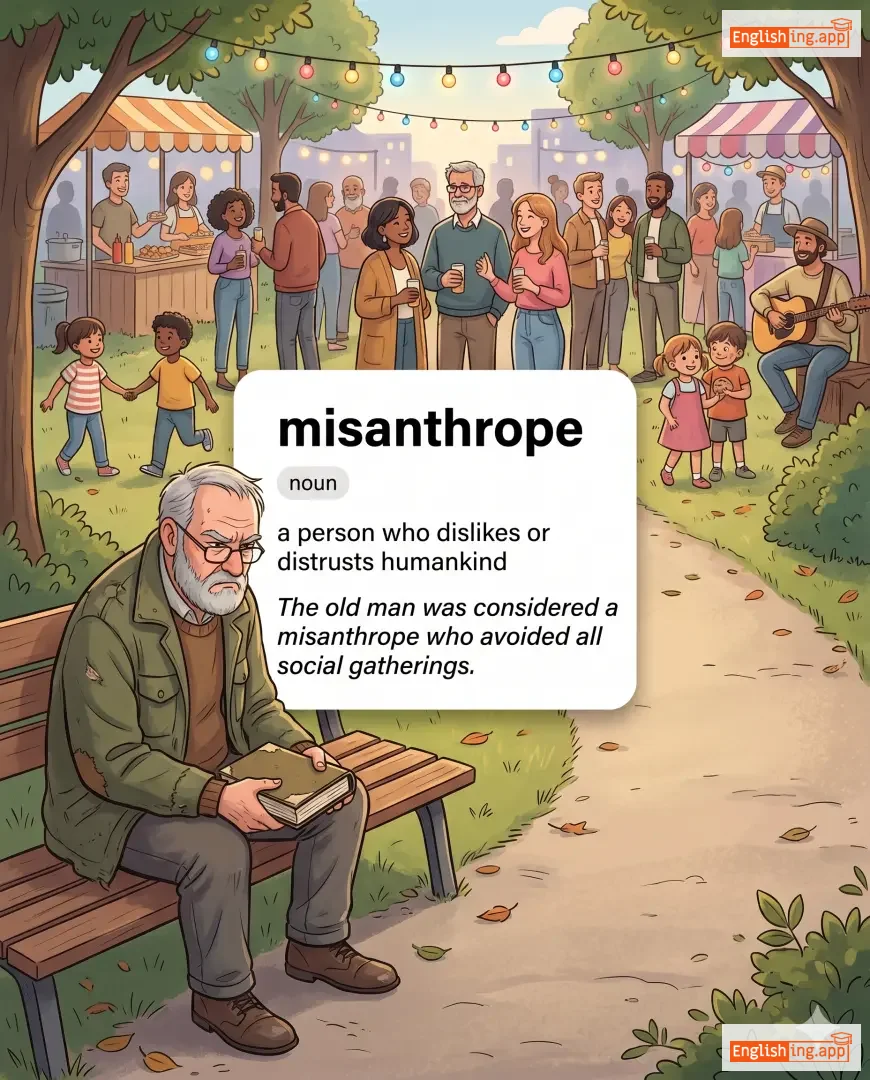
misanthrope definition card — visual illustration of the meaning
noun
/ˈmɪsənˌθroʊp/
厌人者 (yànrénzhě)

a person who dislikes or distrusts humankind

"The old man was considered a misanthrope who avoided all social gatherings."

"这个老人被认为是一个回避所有社交活动的厌人者。" (Zhège lǎorén bèi rènwéi shì yī gè huíbì suǒyǒu shèjiāo huódòng de yànrénzhě.)
adjective
/ˌmɪsənˈθrɑːpɪk/
厌人症的 (yàn rén zhèng de)

having or showing a dislike of humankind

"His misanthropic attitude made it difficult for him to make friends."

"他那种厌人症的态度让他难以交到朋友。" (Tā nà zhǒng yàn rén zhèng de tàidù ràng tā nán yǐ jiāo dào péngyǒu.)
noun
/mɪˈsænθrəpi/
厌人症 (yàn rén zhèng)

a general dislike, distrust, or hatred of humankind

"His misanthropy was evident in the way he avoided people."

"他的厌人症在他回避人群的方式中显而易见。" (Tā de yàn rén zhèng zài tā huíbì rénqún de fāngshì zhōng xiǎn ér yìjiàn.)
verb
/ˌmɪsæprɪˈhɛnd/
误解 (wùjiě)

to misunderstand or misinterpret something

"He misapprehended the teacher’s instructions and did the task incorrectly."

"他误解了老师的指示,错误地做了任务。" (Tā wùjiěle lǎoshī de zhǐshì, cuòwù de zuòle rènwù.)
noun
/ˌmɪsæprɪˈhɛnʃən/
误解 (wùjiě)

a mistaken belief or misunderstanding

"There is a common misapprehension about the causes of the disease."
"关于疾病原因存在常见的误解。" (Guānyú jíbìng yuányīn cúnzài chángjiàn de wùjiě.)
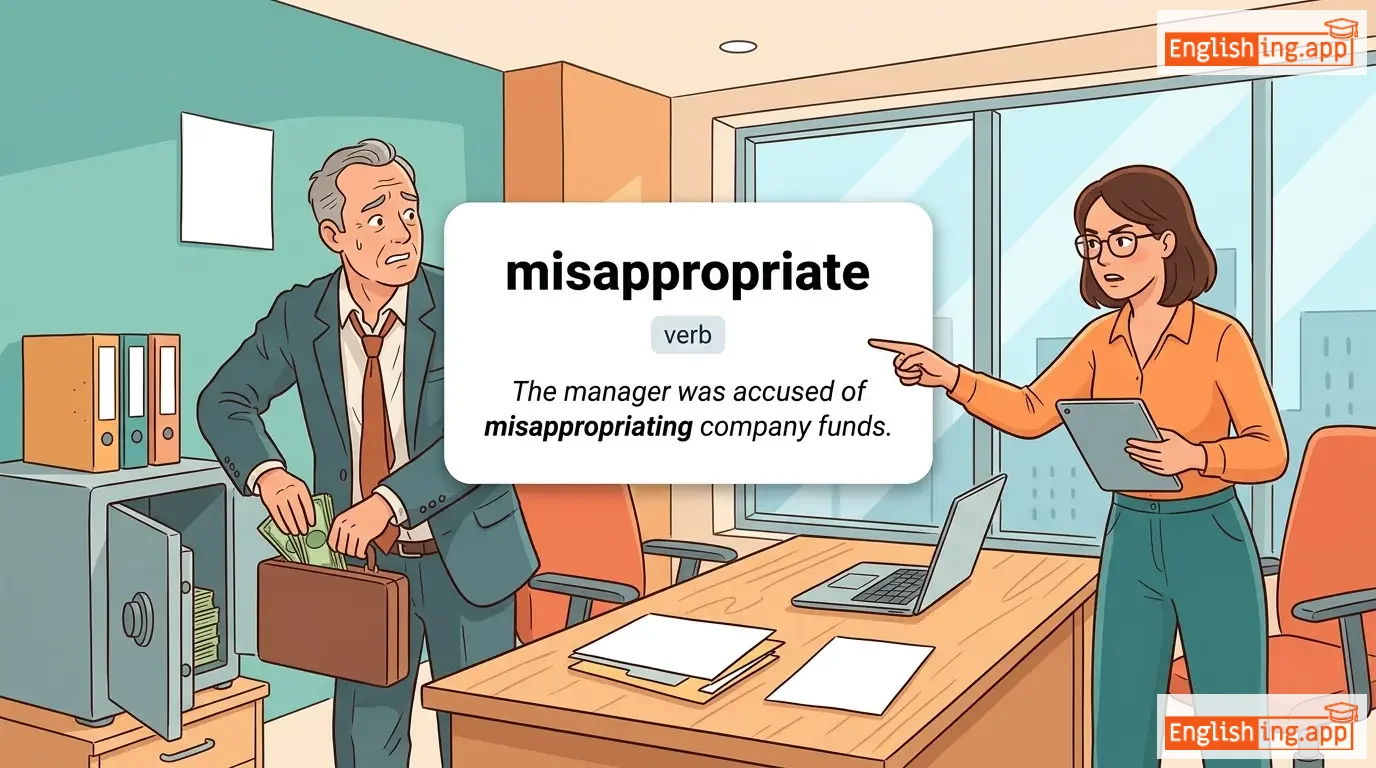
misappropriate definition card — visual illustration of the meaning
verb
/ˌmɪsəˈproʊprieɪt/
挪用 (nuóyòng)

to take or use something dishonestly, especially money or property, for one's own use

"The manager was accused of misappropriating company funds."

"经理被指控挪用公司资金。" (Jīnglǐ bèi zhǐkòng nuóyòng gōngsī zījīn.)
verb
/ˌmɪs.əˈtrɪb.juːt/
错误归因 (cuo wu gui yin)

to incorrectly credit something, such as a work or remark, to the wrong person or source

"The quote was misattributed to Shakespeare."
"这句话被错误地归因于莎士比亚。" (Zhe ju hua bei cuo wu de gui yin yu Sha Shi Bi Ya.)
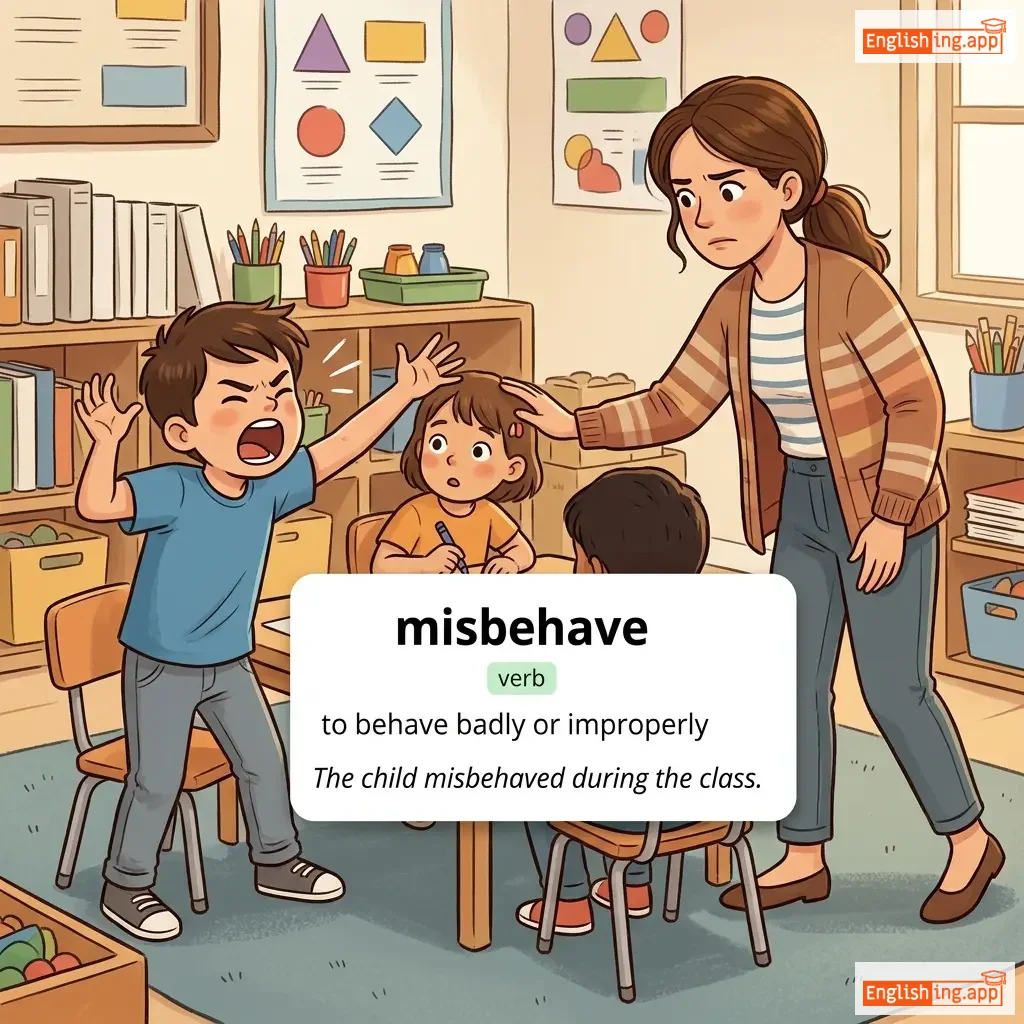
misbehave definition card — visual illustration of the meaning
verb
/ˌmɪsbɪˈheɪv/
行为不当 (xíngwéi bù dāng)

to behave badly or improperly

"The child misbehaved during the class."

"这个孩子在课堂上行为不当。" (Zhège háizi zài kèchéng shàng xíngwéi bù dāng.)
noun
/ˌmɪsbɪˈheɪvjər/
不当行为 (budang xingwei)

bad or improper behavior

"The teacher punished the student for his misbehavior."

"老师因学生的不当行为而惩罚了他。" (Laoshi yin xuesheng de budang xingwei er chengfa le ta.)
noun
/ˌmɪs.bɪˈheɪ.vjər/
不良或不可接受的行为,特别是孩子们或在正式场合中的行为 (misbehaviour)

Bad or unacceptable behavior, especially by children or in formal situations

"The student was punished for his misbehaviour in class."

"学生因在课堂上的不当行为而受到惩罚。" (Xuesheng yin zai kètáng shàng de bùdàng xíngwéi ér shòudào chéngfá.)
noun
/mɪˌsɛdʒəˈneɪʃən/
种族通婚 (zhǒngzú tōnghūn)

the interbreeding of people considered to be of different racial types

"The law once prohibited miscegenation in many countries."

"法律曾在许多国家禁止了种族通婚。" (Fǎlǜ céng zài xǔduō guójiā jìnzhǐle zhǒngzú tōnghūn.)
adjective
/ˌmɪsəˈleɪniəs/
杂项 (záxiàng)

Consisting of a variety of different items or types.

"The drawer was filled with miscellaneous objects."

"抽屉里装满了杂物。" (Chōutì lǐ zhuāngmǎnle záwù.)
noun
/ˈmɪsəleɪni/
杂集 (za ji)

A collection or mixture of various things.

"The book is a miscellany of essays and poems."

"这本书是散文和诗歌的杂集。" (Zhe ben shu shi san wen he shi ge de za ji.)
noun
/ˌmɪsˈtʃæns/

An unfortunate accident or event; bad luck.

"By mischance, he missed the last train home."

noun
/ˈmɪstʃɪf/
恶作剧 (èzuòjù)

Playful misbehavior or troublemaking.

"The children were full of mischief during the party."

"孩子们在派对上充满了恶作剧。" (Háizimen zài pàiduì shàng chōngmǎnle èzuòjù.)
adjective
/ˈmɪstʃɪvəs/
调皮的 (tiaopi de)

Causing or showing a fondness for causing trouble in a playful way.

"She gave him a mischievous smile."

"她给了他一个调皮的微笑。" (Ta gei le ta yi ge tiaopi de weixiao.)
verb
/ˌmɪskənˈsiːv/
误解 (wùjiě)

To misunderstand or form an incorrect idea about something.

"He misconceived the purpose of the project."
"他误解了项目的目的。" (Tā wùjiě le xiàngmù de mùdì.)
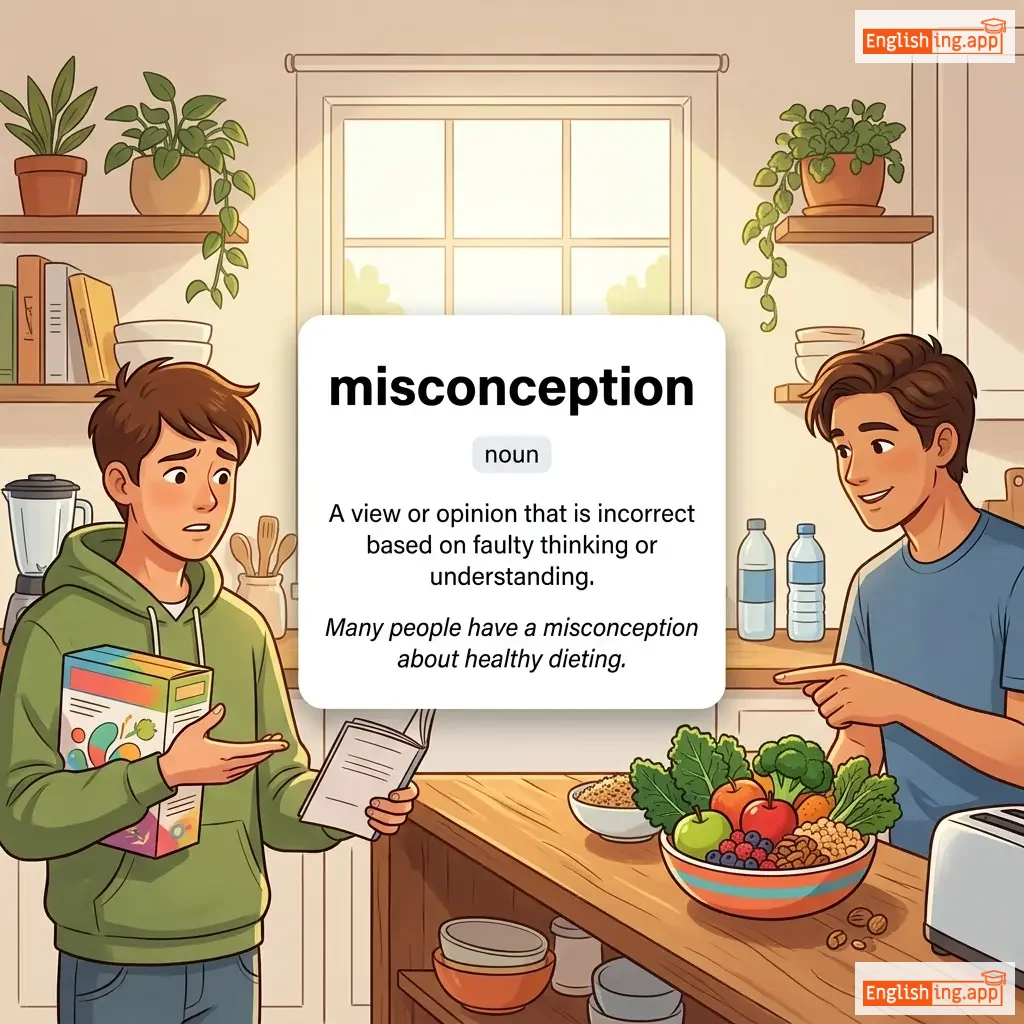
misconception definition card — visual illustration of the meaning
noun
/ˌmɪs.kənˈsep.ʃən/
误解,错觉 (wùjiě, cuòjué)

A view or opinion that is incorrect based on faulty thinking or understanding.

"Many people have a misconception about healthy dieting."

"许多人对健康饮食有误解。" (Xǔduō rén duì jiànkāng yǐnshí yǒu wùjiě.)
noun
/ˌmɪsˈkɒndʌkt/
不当行为 (butang xingwei)

Improper or unacceptable behavior, especially by a professional or authority figure.

"The teacher was dismissed for serious misconduct."

"老师因严重的不当行为被解雇。" (Laoshi yin yanzhong de butang xingwei bei jiegou.)
verb
/ˌmɪskənˈstruː/
误解 (wùjiě)

To interpret something wrongly or misunderstand the meaning.

"She misconstrued his silence as anger."

"她误解了他的沉默为愤怒。" (Tā wùjiěle tā de chénmò wéi fènnù.)
verb
/ˌmɪsˈkaʊnt/
算错 (suàn cuò)

To count wrongly or inaccurately.

"He miscounted the number of chairs in the hall."

"他错算了大厅里的椅子数量。" (Tā cuò suàn le dàtīng lǐ de yǐzi shùliàng.)
noun
/ˈmɪskriənt/
恶棍 (ègùn)

A person who behaves badly or criminally.

"The police arrested the miscreant responsible for the theft."

"警察逮捕了负责盗窃的恶棍。" (Jǐngchá dàibǔle fùzé dàoqiè de ègùn.)
noun
/ˌmɪsˈdiːd/
恶行 (èxíng)

A wrong or illegal act.

"He regretted his past misdeeds and apologized."

"他对自己过去的恶行感到后悔,并道歉。" (Tā duì zìjǐ guòqù de èxíng gǎndào hòuhuǐ, bìng dàoqiàn.)
noun
/ˌmɪsdɪˈmiːnər/
轻罪 (qīngzuì)

A minor wrongdoing or criminal offense that is less serious than a felony.

"He was fined for a misdemeanor involving public disturbance."

"他因公共扰乱而被罚款,犯了轻罪。" (Tā yīn gōnggòng rǎoluàn ér bèi fákuǎn, fànle qīngzuì.)
noun
/ˈmaɪzər/
吝啬鬼 (lìn sè guǐ)

A person who hoards wealth and spends as little money as possible.

"The old miser refused to donate even a penny to charity."

"那个老吝啬鬼甚至不愿意捐赠一分钱给慈善。" (Nàgè lǎo lìnsè guǐ shènzhì bù yuànyì juānzèng yī fēn qián gěi císhàn.)
adjective
/ˈmɪzərəbəl/
痛苦的 (tòngkǔ de)

Extremely unhappy or uncomfortable.

"He felt miserable after losing his job."

"失去工作后,他感到痛苦不堪。" (Shīqù gōngzuò hòu, tā gǎndào tòngkǔ bùkān.)
adverb
/ˈmɪzərəbli/
糟糕地 (zāogāo de)

in a wretched or unhappy manner; extremely badly

"The team performed miserably in the championship."

"队伍在锦标赛中表现得非常糟糕。" (duìwǔ zài jǐnbiāosài zhōng biǎoxiàn dé fēicháng zāogāo.)
adjective
/ˈmaɪzərli/
吝啬 (lìnsè)

Unwilling to spend money; stingy.

"She lived a miserly life, refusing to buy anything new."

"她过着吝啬的生活,拒绝购买任何新东西。" (Tā guòzhe lìnsè de shēnghuó, jùjué gòumǎi rènhé xīn dōngxi.)
noun
/ˈmɪzəri/
痛苦 (tòngkǔ)

A state of great suffering, unhappiness, or discomfort.

"The refugees lived in constant misery."

"难民们一直生活在持续的痛苦中。" (Nànmínmen yīzhí shēnghuó zài chíxù de tòngkǔ zhōng.)
noun
/ˌmɪsˈfɔːrtʃən/
不幸 (buxing)

Bad luck or an unfortunate event.

"He suffered the misfortune of losing his job during the recession."

"他在经济衰退期间失业的不幸遭遇。" (Ta zai jingji shuaitui qi jian shiye de buxing zao yu.)
noun
/ˌmɪsˈɡɪvɪŋ/
怀疑 (huáiyí)

A feeling of doubt, worry, or suspicion.

"She had serious misgivings about signing the contract."

"她在签署合同之前有严重的怀疑。" (Tā zài qiānshǔ hé tóng zhīqián yǒu yánzhòng de huáiyí.)
noun
/mɪsˈɡɪvɪŋz/
疑虑,担忧 (yílǜ, dānyōu)

feelings of doubt or concern about the outcome or propriety of something

"She had serious misgivings about signing the contract."

"她对签署合同有严重的疑虑。" (Tā duì qiānshǔ hé tóng yǒu yánzhòng de yílǜ.)
noun
/ˈmɪshæp/
不幸, 小事故 (bùxìng, xiǎo shìgù)

an unlucky accident or minor misfortune

"A minor mishap delayed the train for half an hour."

"一个小事故让火车迟到了半小时。" (Yīgè xiǎo shìgù ràng huǒchē chídào le bàn xiǎoshí.)
verb
/ˌmɪsɪnˈtɜːrprɪt/
误解 (wùjiě)

to understand or explain something wrongly

"He misinterpreted her silence as agreement."

"他错误地将她的沉默解读为同意。" (Tā cuòwù de jiāng tā de chénmò jiědú wéi tóngyì.)
verb
/ˌmɪsˈleɪ/
暂时丢失 (zan shi diu shi)

to lose something temporarily by putting it in the wrong place

"I must have mislaid my keys somewhere in the house."

"我一定把我的钥匙暂时丢失在屋子里某个地方。" (Wo yiding ba wode yaoshi zan shi diu shi zai wuzi li mou ge difang.)
adjective
/mɪsˈliːdɪŋ/
误导性的 (wù dǎo xìng de)

giving the wrong idea or impression

"The advertisement was misleading and gave false information."

"广告具有误导性,并提供了虚假的信息。" (Guǎng gào jù yǒu wù dǎo xìng, bìng tí gōng le xū jiǎ de xìn xī.)