词汇表

英语词汇词典 | 单词含义、定义和示例

adjective
/maɪld/
温和 (wēnhé)

not severe or strong; gentle in nature

"The patient had only mild symptoms."

"病人只有轻微的症状。" (Bìngrén zhǐyǒu qīngwēi de zhèngzhuàng.)
noun
/maɪl/
英里 (yingli)

a unit of distance equal to 1,609.34 meters; a long distance figuratively

"She walked a mile to reach the bus stop."

"她走了一英里到达公交站。" (Ta zoule yi yingli daoda gongjiaozhan)
noun
/ˈmaɪlɪdʒ/
油耗 (yóu hào)

The distance traveled in miles, or the fuel efficiency of a vehicle.

"This car gives excellent mileage on highways."

"这辆车在高速公路上的油耗表现优秀。" (Zhè liàng chē zài gāosù gōnglù shàng de yóu hào biǎoxiàn yōuxiù.)
milestone definition card — visual illustration of the meaning
noun
ˈmaɪl.stəʊn
重要的成就 (zhòng yào de chéng jiù)

An important achievement or stage in a process or journey.

"Winning this award is a milestone in his career."

"赢得这个奖项是他职业生涯中的一个里程碑。" (Yíngdé zhège jiǎngxiàng shì tā zhíyè shēngyá zhōng de yīgè lǐchéngbēi.)
noun
/miːlˈjuː/
环境 (huanjing)

A person's social environment or surroundings.

"She grew up in an artistic milieu."

"她在艺术的环境中长大。" (Tā zài yìshù de huánjìng zhōng zhǎng dà.)
adjective
/ˈmɪlɪtənt/
激进的 (jijin de)

Aggressively active in a cause, sometimes using forceful methods.

"The group became increasingly militant in their demands."

"该组织在他们的要求中变得越来越激进。" (Gai zuzhi zai tamen de yaoqiu zhong biande yuelaiyue jijin.)
noun
/ˈmɪlɪtəˌrɪzəm/
军事主义 (junshizhuyi)

The belief in maintaining a strong military and using it aggressively to defend or promote national interests.

"The rise of militarism in the region caused tension among neighboring countries."

"该地区军事主义的兴起引发了邻国之间的紧张局势。" (Gai diqu junshizhuyi de xingqi yinfa le lingguo zhi jian de jinzhang ju shi.)
military definition card — visual illustration of the meaning
noun/adjective
/ˈmɪlɪˌtɛri/
军事 (junshi)

relating to soldiers, the armed forces, or war

"He decided to join the military after college."
"他决定大学毕业后加入军队。" (Ta jueding daxue biye hou jiaru jundui.)
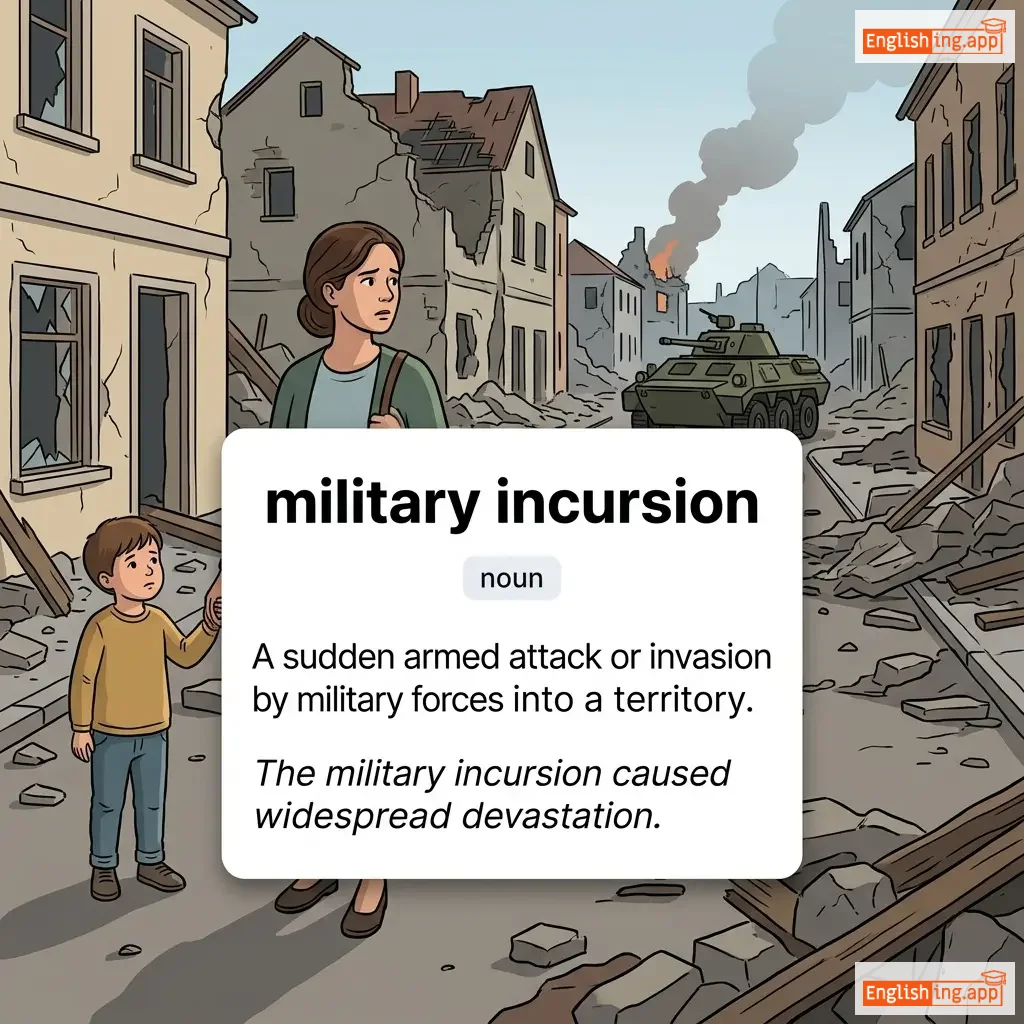
military incursion definition card — visual illustration of the meaning
noun
ˈmɪl.ɪ.tər.i ɪnˈkɜː.ʃən
军事入侵 (junshi rùqīn)

A sudden armed attack or invasion by military forces into a territory.

"The military incursion caused widespread devastation."

"军事入侵造成了广泛的破坏。" (Jūnshì rùqīn zàochéngle guǎngfàn de pòhuài.)
verb
/ˈmɪlɪˌteɪt/
妨碍 (fáng'ài)

to have a strong effect against something; to work as a powerful factor in preventing or influencing an outcome

"His lack of experience will militate against his promotion."

"他的经验不足将阻碍他的晋升。" (tā de jīngyàn bùzú jiāng zǔ'ài tā de jìnshēng.)
noun
/mɪˈlɪʃə/
民兵 (minbing)

a group of ordinary people who are trained to act as soldiers in emergencies

"The village formed a militia to defend against attacks."

"村庄组成了一支民兵,以防范攻击。" (Cun zhuang zu cheng le yi zhi minbing, yi fangfan gongji.)
noun, verb
/mɪlk/
幸福 (xìngfú)

noun: a white liquid produced by female mammals for feeding their young; verb: to draw milk from an animal

"She milked the cow early in the morning."

"她早上很早就挤了牛奶。" (Tā zǎoshang hěn zǎo jiù jǐle niúnǎi.)
noun
/mɪlk raɪs/
牛奶饭 (niunai fan)

A sweet dessert made from rice cooked with milk and sugar

"My grandmother makes delicious milk rice for special occasions."

"我的祖母为特殊场合做美味的牛奶饭。" (Wǒ de zǔmǔ wèi tèshū chǎnghé zuò měiwèi de niúnǎi fàn.)
noun
/ˈmɪlk pɒt/
牛奶壶 (niúnǎi hú)

a container specifically used for storing or serving milk

"She poured fresh milk from the milk-pot into her glass."

"她将新鲜的牛奶从牛奶壶里倒入玻璃杯中。" (Tā jiāng xīnxiān de niúnǎi cóng niúnǎi hú lǐ dào rù bōlí bēi zhōng)
noun
/ˈmɪlk.mæn/
送奶工 (sòng nǎi gōng)

a person who delivers milk to homes or businesses

"The milkman delivers fresh milk to our house every morning."

"送奶工每天早上为我们送来新鲜的牛奶。" (Sòng nǎi gōng měitiān zǎoshang wèi wǒmen sòng lái xīnxiān de niúnǎi.)
adjective
/ˈmɪl.ki waɪt/
奶白色 (nǎi báisè)

a pure white color resembling milk

"The clouds looked milky white against the blue sky."

"云看起来像牛奶一样白,映衬在蓝天背景下。" (Yún kàn qǐlái xiàng niúnǎi yīyàng bái, yìngchèn zài lántiān bèijǐng xià.)
noun
/mɪl/
磨坊 (mófāng)

a building equipped with machinery for grinding grain or manufacturing goods

"The old flour mill has been converted into a museum."

"那座老面粉厂已被改建为博物馆。" (Nà zuò lǎo miànfěn chǎng yǐ bèi gǎi jiàn wéi bówùguǎn.)
noun
/mɪˈlɛniəm/
千年 (qiān nián)

a period of one thousand years; often used to mark an anniversary

"The year 2000 was celebrated as the beginning of a new millennium."

"2000年被庆祝为新千年的开始。" (2000 nián bèi qìngzhù wéi xīn qiānnián de kāishǐ.)
noun
/ˈmɪlɪt/
小米 (xiaomi)

a small-seeded grass cultivated as a cereal crop

"Millet is often used as food in rural areas."

"小米常常作为食物在农村地区使用。" (Xiaomi changchang zuo wei shíwù zài nóngcūn dìqū shǐyòng.)
noun
/ˈmɪljən/
百万 (bǎi wàn)

the number equivalent to one thousand thousand (1,000,000)

"The movie earned over a million dollars in its first week."

"电影在第一周赚了超过一百万美元。" (Diànyǐng zài dì yī zhōu zhuànle chāoguò yī bǎi wàn měiyuán.)
noun
/ˌmɪl.jəˈneər/
百万富翁 (bǎi wàn fù wēng)

A person whose wealth equals or exceeds one million units of currency

"He became a millionaire through smart investments and hard work."

"他通过聪明的投资和努力工作成为了百万富翁。" (Tā tōngguò cōngmíng de tóuzī hé nǔlì gōngzuò chéngwéile bǎi wàn fù wēng.)
noun
/maɪm/
哑剧演员 (yǎ jù yǎn yuán)

A performer who conveys meaning through gestures and body movements without speech.

"The mime entertained the children with exaggerated expressions."

"这个哑剧演员用夸张的表情娱乐孩子们。" (Zhège yǎ jù yǎn yuán yòng kuā zhāng de biǎo qíng yú lè hái zǐ men.)
🦜

Mimic

verb
/ˈmɪmɪk/

To copy the actions, speech, or behavior of someone or something.

"Children often mimic their parents' behavior."

noun
/ˈmɪmɪkri/
模仿 (mofang)

The act of imitating someone or something, often for humor or learning.

"The comedian’s mimicry of celebrities made the audience laugh."

"喜剧演员通过模仿名人让观众捧腹大笑。" (Xǐjù yǎnyuán tōngguò mófǎng míngrén ràng guānzhòng pěngfù dàxiào.)
noun
/ˌmɪnəˈrɛt/
宣礼塔 (xuānlǐtǎ)

A tall, slender tower of a mosque, from which the call to prayer is announced.

"The minaret of the mosque could be seen from miles away."

"清真寺的宣礼塔可以从几英里外看到。" (Qīngzhēnsì de xuānlǐtǎ kěyǐ cóng jǐ yīnglǐ wài kàn dào.)
adjective
/ˈmɪnətɔːri/
威胁的 (wēixié de)

Expressing a threat; menacing.

"The criminal gave the witness a minatory look."

"罪犯给了证人一个威胁的眼神。" (Zuìfàn gěi le zhèngrén yīgè wēixié de yǎnshén.)
mince definition card — visual illustration of the meaning
verb
/mɪns/
切碎 (qiē suì)

to cut food, especially meat, into very small pieces; to speak in an affectedly delicate or refined way

"She minced the garlic before adding it to the sauce."

"她在将大蒜加入酱料之前切碎了它。" (Tā zài jiāng dàsuàn jiārù jiàngliào zhīqián qiē suì le tā.)
adjective
/ˈmɪnsɪŋ/
做作 (zuòzuò)

affectedly delicate, dainty, or refined in manner or movement

"He walked with mincing steps across the stage."

"他走过舞台时步伐轻盈。" (Tā zǒuguò wǔtái shí bùfá qīngyíng.)
noun/verb
/maɪnd/
心智 / 注意 (xīn zhì / zhù yì)

the part of a person that enables them to think, feel, and reason; to pay attention or take care

"Please mind the gap between the train and the platform."

"请注意火车与站台之间的间隙。" (Qǐng zhùyì huǒchē yǔ zhàntái zhījiān de jiànxì.)
adjective
/ˈmaɪnd.fəl/
专注; 意识到 (zhuānzhù; yìshídào)

being conscious or aware; paying attention to the present moment

"She is always mindful of her surroundings and pays attention to details."

"她总是注意周围的环境,并关注细节。" (Tā zǒng shì zhùyì zhōuwéi de huánjìng, bìng guānzhù xìjié.)
mindfulness definition card — visual illustration of the meaning
noun
/ˈmaɪnd.fʊl.nəs/
正念 (zhèng niàn)

The quality or state of being conscious or aware of something; a mental state achieved by focusing one's awareness on the present moment.

"Practicing mindfulness reduces stress and anxiety."

"正念练习可以减少压力和焦虑。" (Zhèngniàn liànxí kěyǐ jiǎnshǎo yālì hé jiāolǜ.)
adjective
/ˈmaɪndləs/
无意义的 (wú yìyì de)

without thought or intelligence; done without consideration

"He was bored by the mindless tasks at work."
"他对工作中无意义的任务感到无聊。" (Tā duì gōngzuò zhōng wú yìyì de rènwù gǎndào wúliáo.)
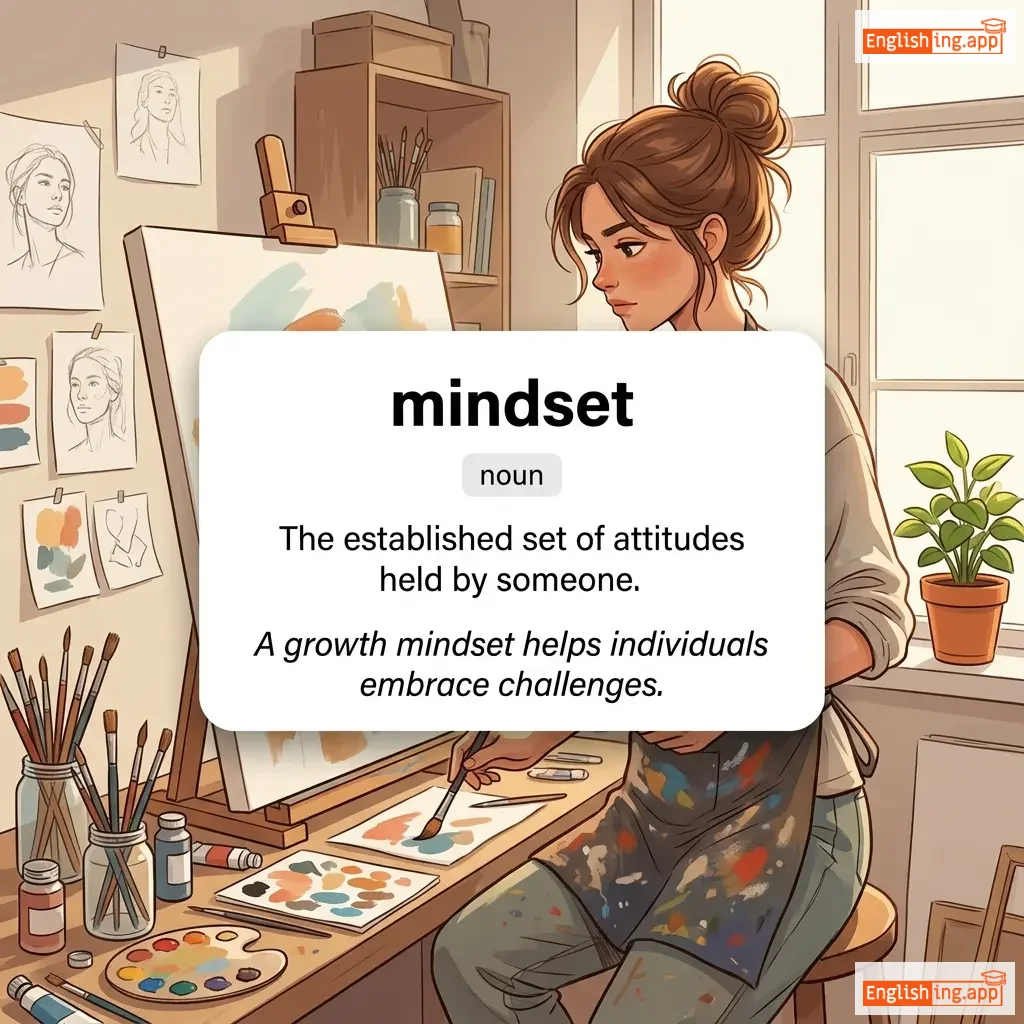
mindset definition card — visual illustration of the meaning
noun
ˈmaɪnd.set
思维方式 (sīwéi fāngshì)

The established set of attitudes held by someone.

"A growth mindset helps individuals embrace challenges."

"成长型思维帮助个人接受挑战。" (Chéngzhǎng xíng sīwéi bāngzhù gèrén jiēshòu tiǎozhàn.)
noun, pronoun, verb
/maɪn/
矿井 / 我的 (kuàngjǐng / wǒ de)

a place where minerals are dug from the ground; or something belonging to me

"The workers went deep into the mine to extract coal."

"工人们深入矿井开采煤炭。" (Gōngrénmen shēn rù kuàngjǐng kāicǎi méitàn.)
noun
/ˈmaɪnə(r)/
矿工 (kuànggōng)

a person who works in a mine, extracting minerals or other resources

"The miner worked in the coal mine for many years."

"矿工在煤矿工作了很多年。" (Kuànggōng zài méikuàng gōngzuò le hěn duō nián.)
noun
/ˈmɪnərəl/
矿物 (kuàngwù)

a naturally occurring substance that is solid and inorganic, often used in industry or nutrition

"Calcium is an important mineral for strong bones."

"钙是一种对强壮骨骼很重要的矿物。" (gài shì yī zhǒng duì qiángzhuàng gǔgé hěn zhòngyào de kuàngwù.)
verb
/ˈmɪŋɡl/

to mix or combine; to move among people and engage socially

"Guests mingled at the party, chatting and laughing together."

adjective
/ˈmɪn.dʒi/
小气; 吝啬 (xiaoqi; linse)

mean or stingy; unwilling to spend money

"He is too mingy to spend money on anything but necessities."

"他太小气,不愿意在除必要的东西外花钱。" (Ta tai xiaoqi, buyuan yong zai chu bixiao de dongxi wai huai qian.)
noun/adjective
/ˈmɪnətʃər/ or /ˈmɪniətʃʊr/
微型版本 (weixing banben)

a very small version of something; small in scale or size

"The artist created a miniature model of the castle."

"艺术家制作了一个城堡的微型模型。" (Yishujia zhizuole yige chengbao de weixing moxing.)
adjective
/ˈmɪnɪməl/
最小的 (zuìxiǎo de)

the smallest or least amount possible

"The damage to the car was minimal after the accident."
"事故后,汽车的损坏是最小的。" (shìgù hòu, qìchē de sǔnhuài shì zuìxiǎo de.)
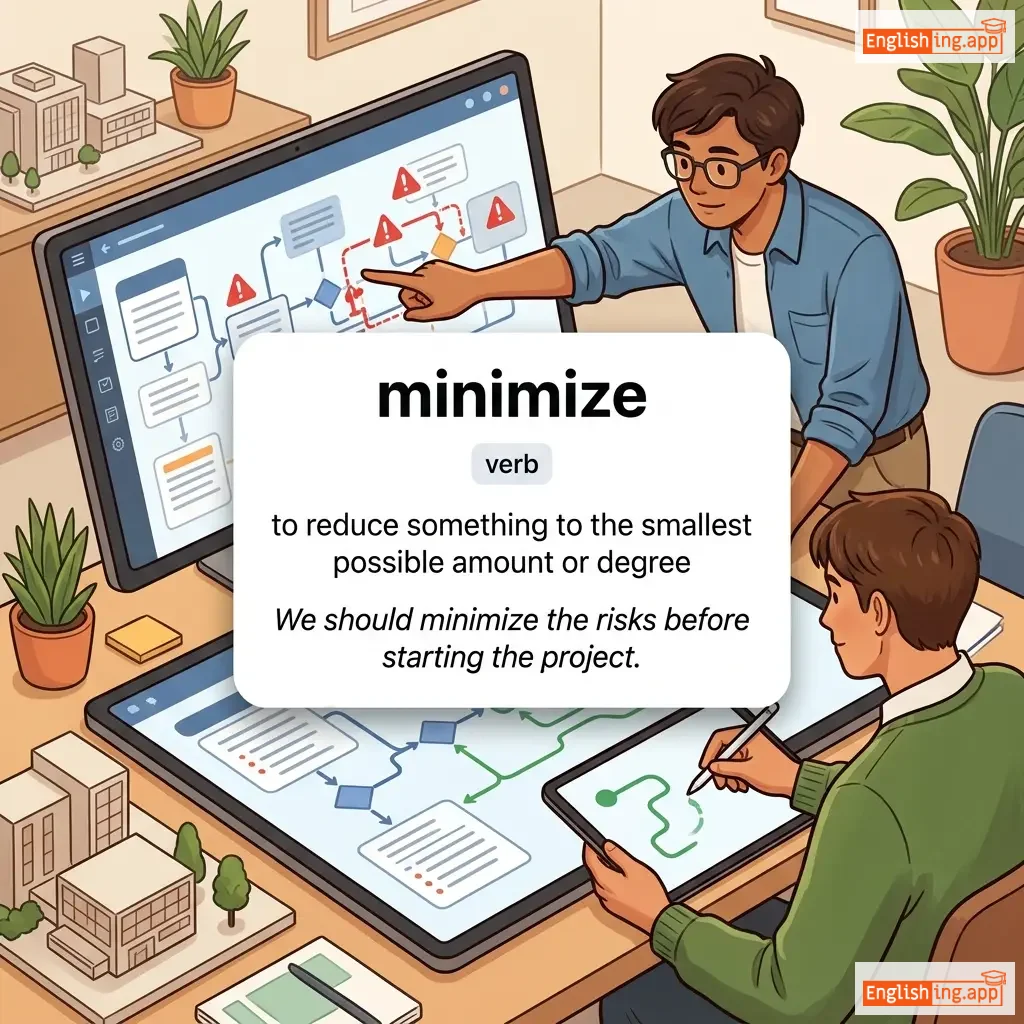
minimize definition card — visual illustration of the meaning
verb
/ˈmɪnɪmaɪz/
最小化 (zuìxiǎohuà)

to reduce something to the smallest possible amount or degree

"We should minimize the risks before starting the project."
"在开始项目之前,我们应该最小化风险。" (Zài kāishǐ xiàngmù zhīqián, wǒmen yīnggāi zuìxiǎohuà fēngxiǎn.)
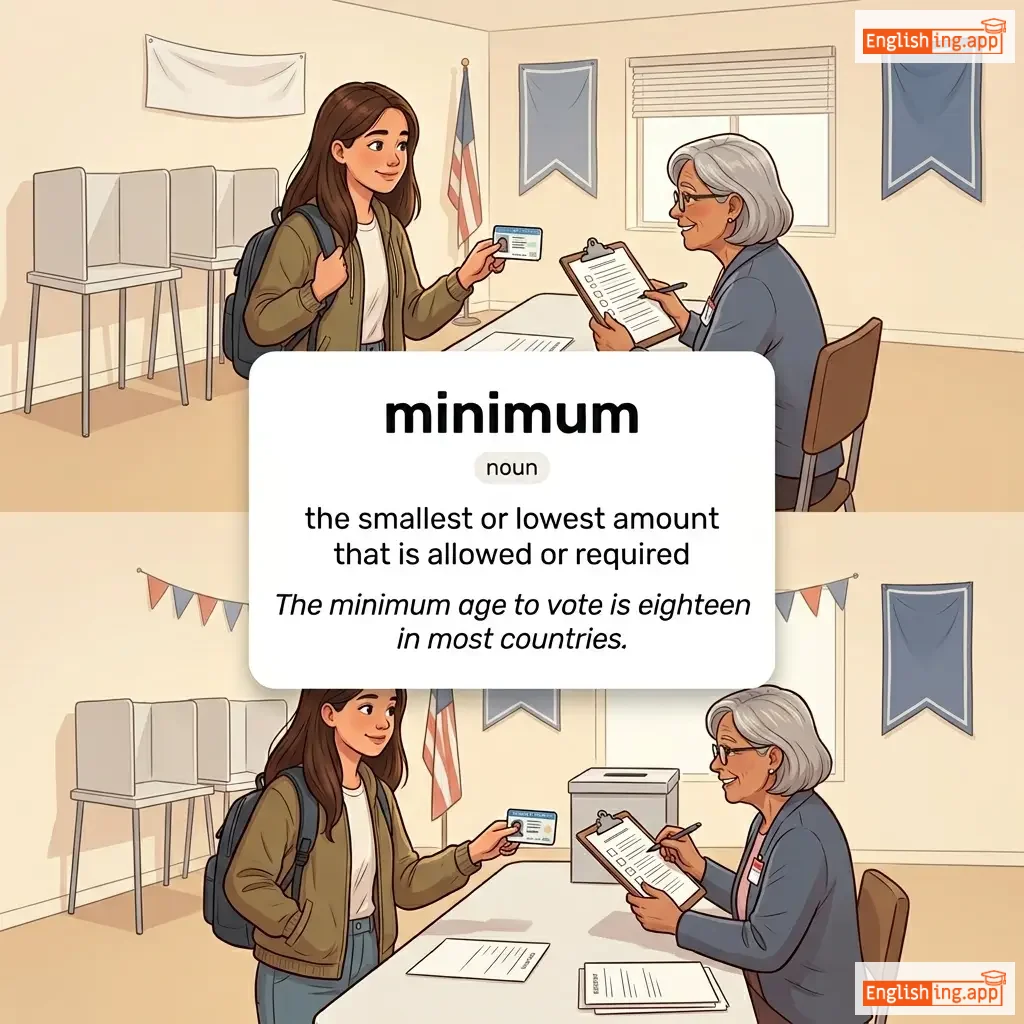
minimum definition card — visual illustration of the meaning
noun
/ˈmɪnɪməm/
最小值 (zuì xiǎo zhí)

the smallest or lowest amount that is allowed or required

"The minimum age to vote is eighteen in most countries."

"在大多数国家,投票的最低年龄是十八岁。" (Zài dàduōshù guójiā, tóupiào de zuìdī niánlíng shì shíbā suì.)
noun
/ˈmaɪnɪŋ/
采矿 (cǎikuàng)

the process of extracting valuable minerals or other resources from the earth

"Mining in this area has increased in recent years."

"该地区的采矿业近年来有所增加。" (Gāi dìqū de cǎikuàngyè jìnnián lái yǒu suǒ zēngjiā.)
🧑‍🤝‍🧑

minion (米宁)

noun
/ˈmɪn.i.ən/
爪牙 (zhuǎyá)

A follower or underling of a powerful person, especially a servile one.

"The dictator was surrounded by loyal minions who carried out his orders."

"独裁者被忠诚的爪牙包围,他们执行他的命令。" (Dúcáizhě bèi zhōngchéng de zhuǎyá bāowéi, tāmen zhíxíng tā de mìnglìng.)
adjective
/ˈmɪn.ɪ.skjuːl/
微小 (weixiao)

Extremely small or tiny.

"The error was so miniscule that nobody noticed it."

"这个错误如此微小,以至于没人注意到它。" (Zhege cuowu ruci weixiao, yi zhi yu meirén zhùyì dào tā.)
noun
/ˈmɪnɪstər/
部长 (bù zhǎng)

a head of a government department; a person who leads a church

"The finance minister announced new tax policies."

"财政部长宣布了新的税收政策。" (Cái zhèng bù zhǎng xuānbùle xīn de shuì shōu zhèng cè.)
noun
/ˌmɪn.ɪˈstreɪ.ʃən/
服务 (fuwu)

The act of providing care, assistance, or religious service.

"She recovered thanks to the kind ministrations of the nurses."

"她感谢护士们亲切的照料而康复。" (Tā gǎnxiè hùshì men qīnqiè de zhàoliào ér kāngfù.)
noun
/ˈmɪn.ɪ.stri/
部委 (bù wěi)

A government department headed by a minister or the work of a religious minister.

"He works at the Ministry of Education."

"他在教育部工作。" (Tā zài jiàoyù bù gōngzuò.)
adjective/noun
/ˈmaɪ.nər/
微小 / 未成年 (wei xiao / wei chengnian)

less important, serious, or significant; a person under the legal age

"Luckily, the accident caused only minor injuries."

"幸运的是,事故只造成了轻微伤害。" (xìng yùn de shì, shì gù zhǐ zào chéng le qīng wēi shāng hài.)
noun
/maɪˈnɔːr.ɪ.ti/
少数 (shaoshu)

A smaller number or part, especially a group differing from the majority.

"The law aims to protect the rights of ethnic minorities."

"法律旨在保护少数民族的权利。" (Fa lü zhi zai bao hu shao shu min zu de quan li.)