词汇表

英语词汇词典 | 单词含义、定义和示例

noun
/ˈlɒkətɪv/
方位格 (fāngwèigé)

a grammatical case indicating location or place

"In Latin, the locative case is used to indicate location."
"在拉丁语中,方位格用于表示位置。" (Zài lādīng yǔ zhōng, fāngwèigé yòng yú biǎoshì wèizhì.)
noun
/lɒx/
(hu)

a lake or sea inlet, especially in Scotland

"Tourists visit Loch Ness to search for the legendary monster."

"游客们参观了洛赫湖,以寻找传说中的怪兽。" (You ke men can guan le Luo He hu, yi xun zhao chuan shuo zhong de guai shou.)
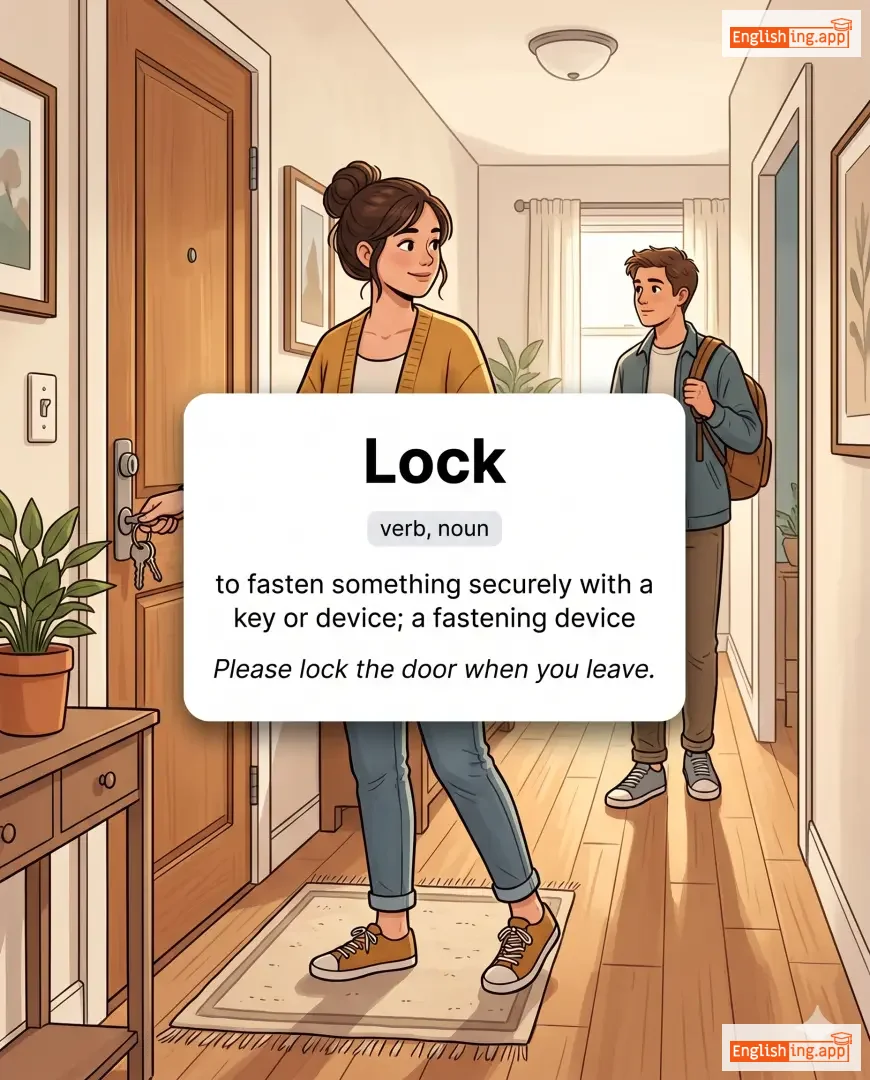
Lock definition card — visual illustration of the meaning
verb, noun
/lɒk/
锁,锁定 (suǒ, suǒ dìng)

to fasten something securely with a key or device; a fastening device

"Please lock the door when you leave."

"请在离开时锁好门。" (qǐng zài líkāi shí suǒ hǎo mén.)
noun
/ˈlɒk.ɪt/
项链坠子 (xianglian zhui zi)

a small ornamental case, typically made of gold or silver, worn on a chain around the neck

"She kept her grandmother's photo in the locket."

"她把祖母的照片放在了项链坠子里。" (Ta ba zumu de zhaopian fang zailiao xianglian zhui zi li)
noun
/ˌloʊkəˈmoʊʃən/
运动 (yundong)

movement or the ability to move from one place to another

"Walking is the most common form of human locomotion."

"走路是人类最常见的运动方式。" (Zoulu shi renlei zui changjian de yundong fangshi.)
noun
/ˌloʊ.kəˈmoʊ.tɪv/
机车 (jiche)

A powered rail vehicle used for pulling trains.

"The old steam locomotive was restored for the museum."

"这辆老式蒸汽机车已恢复供博物馆使用。" (Zhe liang laoshi zhengqi jiche yi huiufu gong bowuguan shiyong.)
noun
/ˈloʊ.kəst/
蝗虫 (huángchóng)

a large insect that flies in groups and eats crops

"The locusts destroyed the entire wheat field."

"蝗虫摧毁了整个小麦田。" (huángchóng cuīhuǐle zhěnggè xiǎomài tián)
noun
/loʊd/
矿脉 (kuàngmài)

A rich source of something, often a vein of valuable metal in the earth.

"The miners discovered a rich lode of silver."

"矿工发现了一个丰富的银矿脉。" (Kuànggōng fāxiànle yīgè fēngfù de yín kuàngmài.)
noun
/ˈlɒdʒ.mənt/
临时住宿 (linshi zhusu)

The act of lodging or a place of temporary stay; also a deposit of something.

"The soldiers found lodgment in the abandoned house."

"士兵们在废弃的房子里找到了临时住宿。" (Shibing men zai feiqi de fangzi li zhaodao le linshi zhusu.)
noun
/lɒft/
阁楼 (gelou)

An upper room or space, often under the roof of a building.

"She converted the old loft into a modern studio."

"她把旧阁楼改造成了一个现代化的工作室。" (Ta ba jiu gelou gaizaochengle yi ge xiandaihua de gongzuoshi.)
adjective
/ˈlɒf.ti/
(gao)

Of great height; elevated in character or style; noble.

"He set himself the lofty goal of ending poverty."
"他设定了一个lofty的目标,要消除贫困。" (Ta she ding le yi ge lofty de mubiao, yao xiaochu pinkun.)
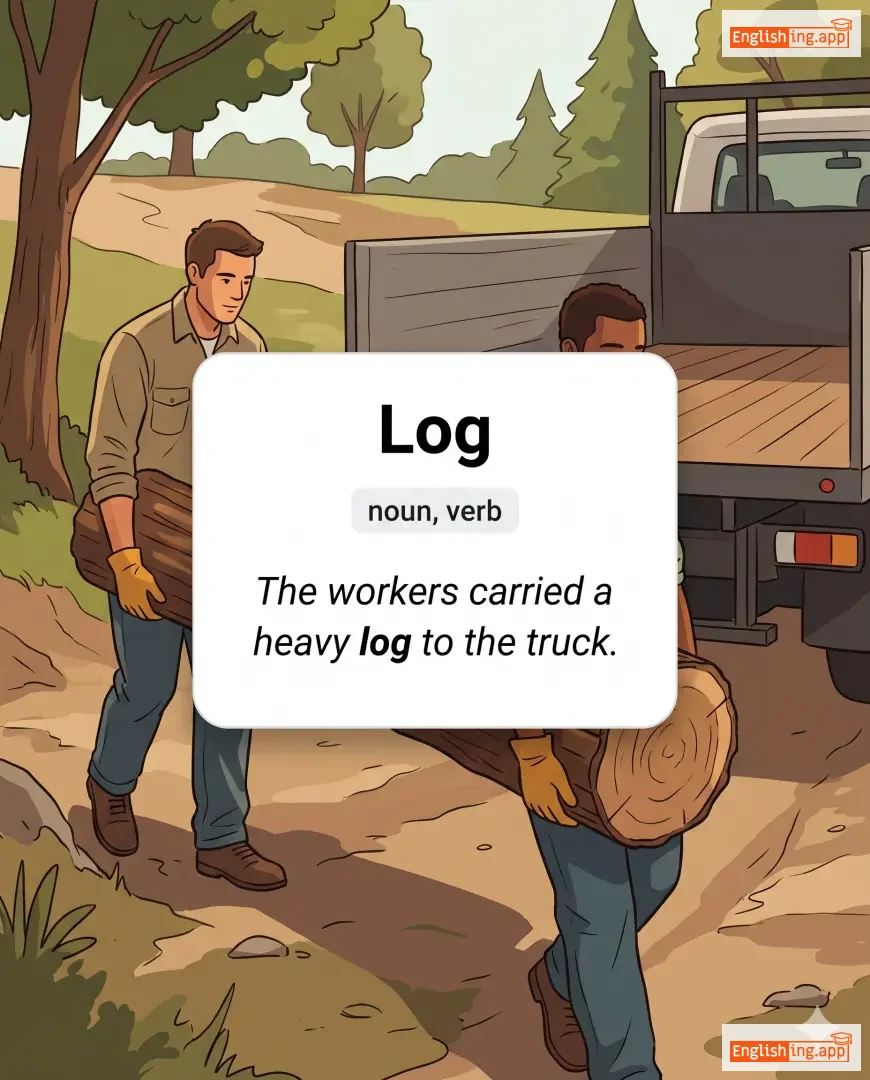
Log definition card — visual illustration of the meaning
noun, verb
/lɒɡ/
原木, 记录 (yuánmù, jìlù)

A part of the trunk or a large branch of a tree that has fallen or been cut off; also to record information systematically.

"The workers carried a heavy log to the truck."

"工人们将一根重木头搬到卡车上。" (Gōngrénmen jiāng yī gēn zhòng mùtou bān dào kǎchē shàng.)
noun
/ˈlɒdʒɪk/
逻辑 (luoji)

Reasoning conducted or assessed according to strict principles of validity.

"Her argument was based on sound logic."
"她的论点基于严密的逻辑。" (Ta de lundian jiyu yanmi de luoji.)
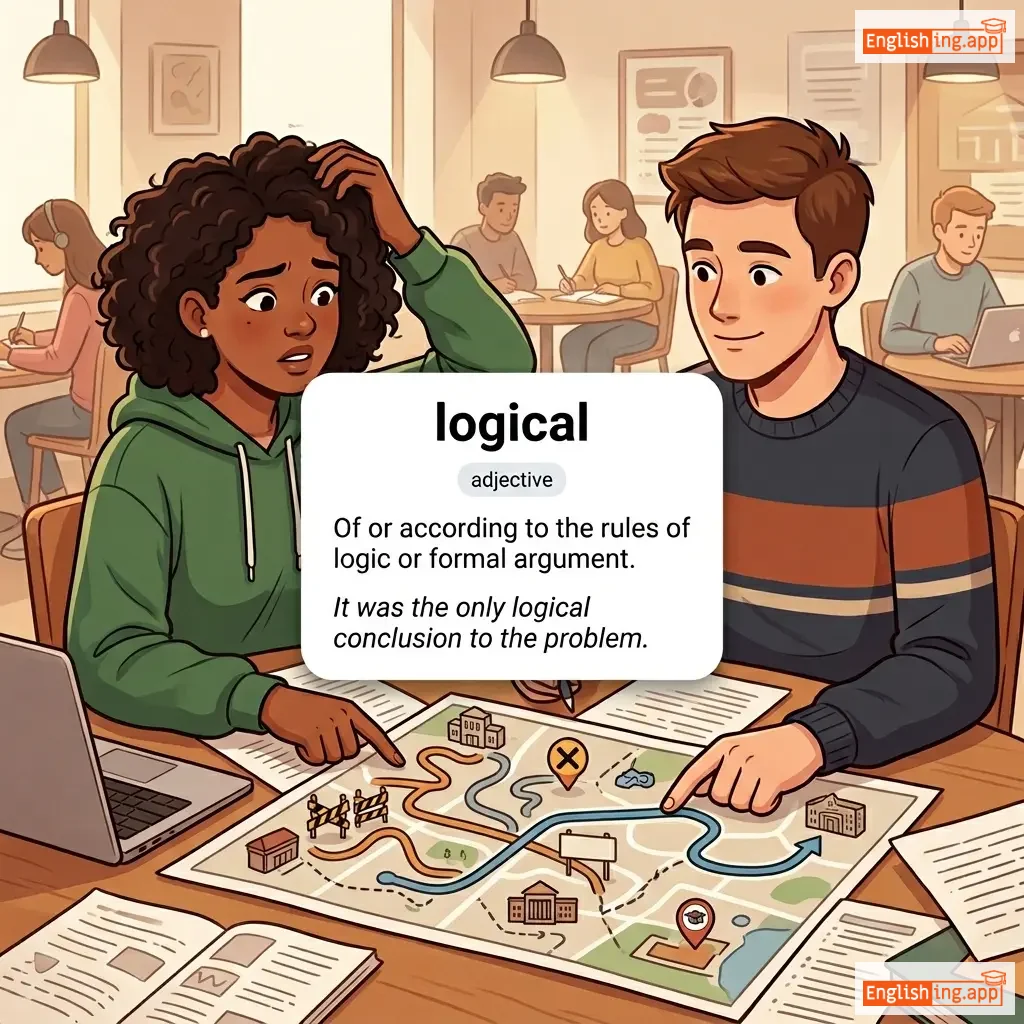
logical definition card — visual illustration of the meaning
adjective
/ˈlɒdʒɪkəl/
合乎逻辑的 (hehu luojide)

Of or according to the rules of logic or formal argument.

"It was the only logical conclusion to the problem."

"这是问题的唯一合乎逻辑的结论。" (Zhe shi wenti de weiyi hehu luojide jielun.)
noun
/ləˈdʒɪʃən/
逻辑学家 (luójíxuéjiā)

A person skilled in logic and reasoning.

"Aristotle is considered one of the greatest logicians in history."
"亚里士多德被认为是历史上最伟大的逻辑学家之一。" (Yà lǐ shì duō dé bèi rènwéi shì lìshǐ shàng zuì wěidà de luójíxuéjiā zhī yī.)
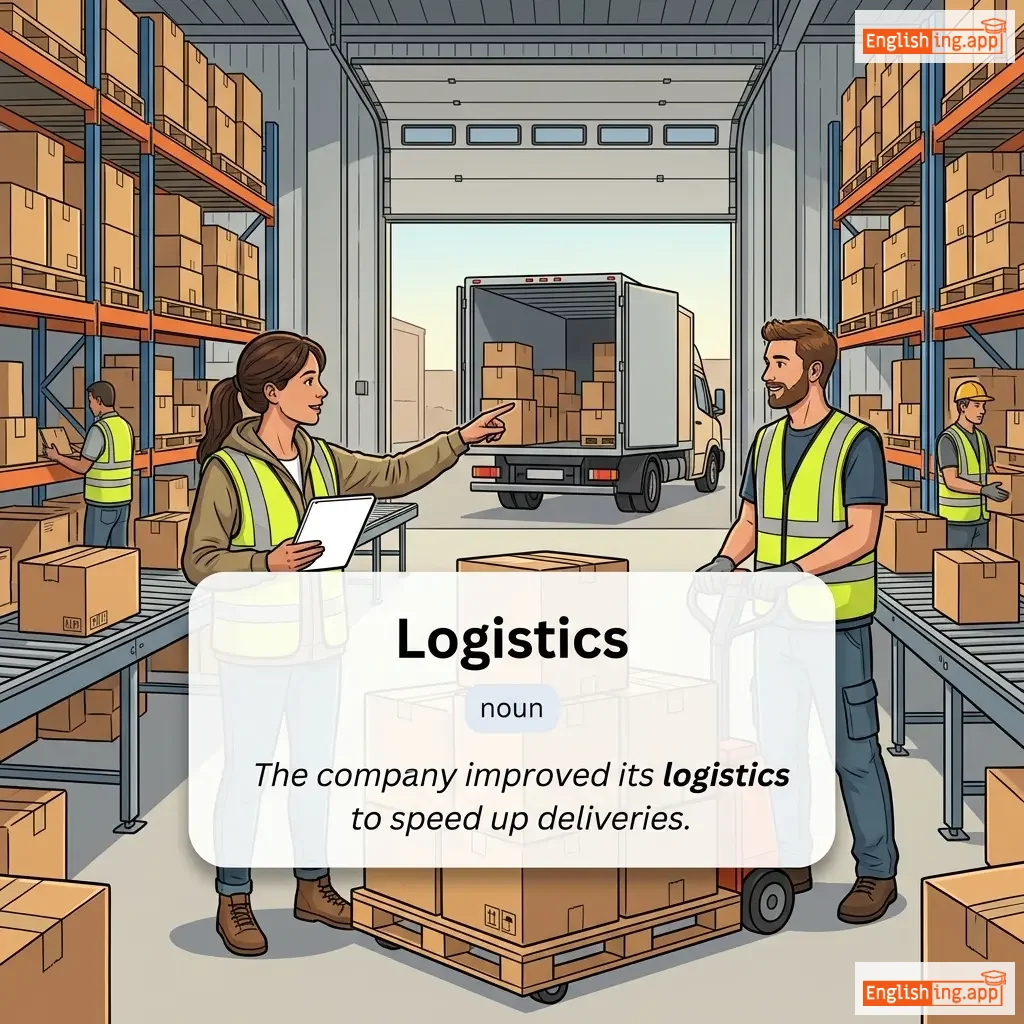
Logistics definition card — visual illustration of the meaning
noun
/ləˈdʒɪs.tɪks/
物流 (wuliu)

Supply chain management or operation, managing the flow of goods, services or information efficiently.

"The company improved its logistics to speed up deliveries."

"公司改善了其物流,以加快交付。" (Gongsi gaishanle qi wuliu, yi jiakuai jiaofu.)
🖼️

logo

noun
/ˈləʊɡəʊ/

a symbol or other small design adopted by an organization to identify its products, uniform, vehicles, etc.

"The company's logo was redesigned to reflect its new image."

verb
/ˈlɔɪtər/

To stand or wait around idly without apparent purpose.

"The teenagers were told not to loiter outside the shop."

noun
/ˈlɔɪtərər/
在某地漫无目的闲逛的人 (zai mou di man wu mu di xian guang de ren)

A person who lingers aimlessly in a place without purpose.

"The police questioned the loiterer outside the store."

"警察在商店外询问了洛伊特勒。" (Jingcha zai shangdian wai xunwenle luoyiteler.)
verb
/lɑːl/
懒散地坐着 (lǎnsàn de zuòzhe)

To sit, lie, or stand in a lazy, relaxed way.

"He lolled on the sofa after a long day at work."

"在长时间的工作后,他懒散地坐在沙发上。" (Zài cháng shíjiān de gōngzuò hòu, tā lǎnsàn de zuò zài shāfā shàng.)
noun
/ˈloʊnlinəs/
孤独 (gūdú)

The state of being alone and feeling sad about it.

"She felt a deep sense of loneliness after moving to the new city."

"她搬到新城市后感到深深的孤独。" (Tā bān dào xīn chéngshì hòu gǎndào shēn shēn de gūdú.)
adjective
/ˈloʊnli/
孤独 (gūdú)

feeling sad because one has no friends or company.

"He felt lonely after moving to a new city."

"他在搬到新城市后感到孤独。" (Tā zài bān dào xīn chéngshì hòu gǎndào gūdú.)
adjective
/lɔːŋ/
(chang)

Measuring a great distance from end to end; lasting for a large amount of time.

"They waited a long time for the train."

"他们等了很长时间才等到火车。" (tamen deng le hen chang shi jian cai deng dao huo che.)
noun
/lɔːŋ ɡɔːrd/
长南瓜 (chang nan gua)

an elongated green vegetable belonging to the cucumber family, used in cooking

"She sliced the long gourd thinly for the stir-fry dish."

"她将长南瓜切成薄片,用于炒菜。" (Ta jiang chang nan gua qie cheng bo pian, yong yu chao cai.)
noun
/lɔːŋ ˈpepər/
长胡椒 (chang hujiao)

a flowering vine in the family Piperaceae, cultivated for its fruit which is used as a spice

"Long pepper was more valuable than black pepper in ancient times."

"长胡椒在古代比黑胡椒更有价值。" (Chang hujiao zai gudai bi hei hujiao geng you jiazhi.)
noun
/lɒŋ ˈwɪskəd ˈkætfɪʃ/
长须鲶鱼 (chang xu nian yu)

A type of freshwater fish with long whisker-like barbels around its mouth

"The fisherman caught a long whiskered catfish in the river."

"渔夫在河里抓到了一条长须鲶鱼。" (yu fu zai he li zhua dao le yi tiao chang xu nian yu)
adjective
/ˈlɒŋ ˈstændɪŋ/
长期的 (changqi de)

having existed or continued for a long period of time

"They have a long-standing relationship with their suppliers."
"他们与供应商之间有着长期的合作关系。" (Tāmen yǔ gōngyìng shāng zhī jiān yǒuzhe chángqī de hézuò guānxi.)
long-term definition card — visual illustration of the meaning
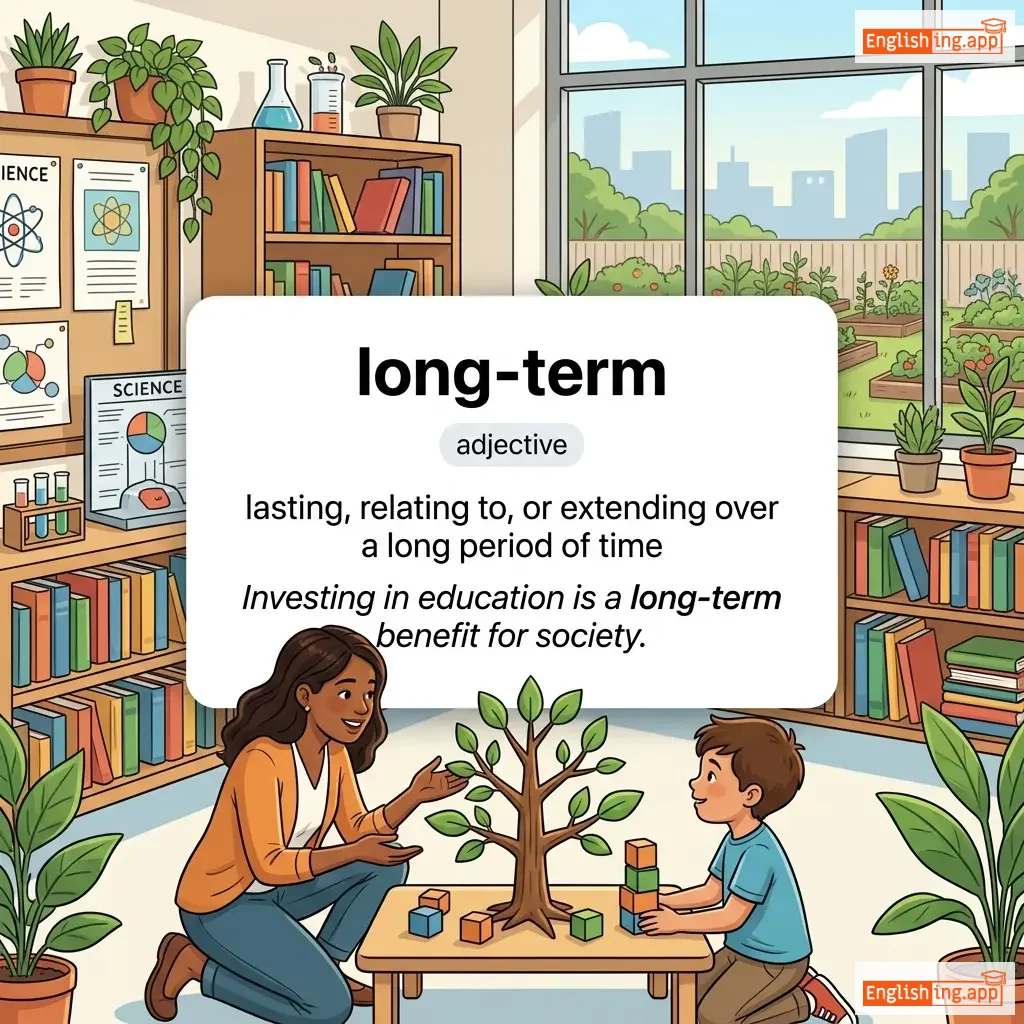
adjective
/ˌlɔːŋ ˈtɜːrm/
长期的 (changqi de)

lasting, relating to, or extending over a long period of time

"Investing in education is a long-term benefit for society."

"投资教育是社会的长期利益。" (Touzi jiaoyu shi shehui de changqi liyu.)
Long-term memory definition card — visual illustration of the meaning
noun
ˈlɒŋ tɜːm ˈmɛm.ər.i
长期记忆 (changqi jiyi)

Such memory that remains stored in the brain for a long time

"Repeated practice helps transfer information into long-term memory."

"重复练习有助于将信息转移到长期记忆中。" (Chóngfù liànxí yǒu zhù yú jiāng xìnxī zhuǎnyí dào chángqī jìyì zhōng.)
adjective, adverb
/ˈlɒŋ taɪm/
长期的 (changqi de)

lasting or existing for a long period of time; having continued for many years

"She is a long-time friend of my family."

"她是我家长期的朋友。" (ta shi wo jia changqi de pengyou)
noun
/ˈlɔːŋ.ɡən/
龙眼 (longyan)

a small round tropical fruit with translucent white flesh and sweet taste, related to lychee

"Longan fruits are often eaten fresh or dried and are popular in Asian desserts."

"龙眼果通常鲜食或晒干,在亚洲甜点中很受欢迎。" (long yan guo tong chang xian shi huo shai gan zai ya zhou tian dian zhong hen shou huan ying)
noun
/lɔnˈdʒɛvəti/
长寿 (changshou)

Long life or long existence of something.

"Good habits contribute to health and longevity."

"良好的习惯有助于健康和长寿。" (Liánghǎo de xíguàn yǒuzhù yú jiànkāng hé chángshòu.)
noun
渴望; 忧郁 (kěwàng; yōuyù)
adjective
/ˈlɔːŋtaɪm/
长期的 (changqi de)

having existed or continued for a long time

"They are longtime friends who met in college."

"他们是大学时认识的长期朋友。" (Tāmen shì dàxué shí rènshí de chángqī péngyǒu.)
/lʊk/
(kan)

to direct one's gaze in a particular direction

"She looked out the window at the rain."

"她看向窗外的雨。" (Ta kanxiang chuangwai de yu.)
phrasal verb
/lʊk ˈɑːftər/
照顾 (zhaogu)

to take care of someone or something; to be responsible for someone’s well-being

"She looks after her younger brother while their parents are at work."

"父母上班时,她照顾弟弟。" (Fumu shangban shi, ta zhaogu didi)
noun
/ˈlʊkɪŋ ɡlæs/
镜子 (jingzi)

a mirror; a piece of glass that reflects images

"She looked at herself in the looking glass."

"她在镜子里看着自己。" (ta zai jingzi li kan zhe ziji)
noun
/ˈlʊkaʊt/
瞭望, 哨位 (liàowàng, shàowèi)

A place for watching; a person keeping watch.

"The guard kept a lookout for suspicious activity."

"卫兵警惕地监视着可疑活动。" (Wèibīng jǐngtì de jiānshìzhe kěyí huódòng.)
🌩️

Loom

verb
/luːm/

to appear as a large, often frightening or unclear shape, usually something threatening or about to happen

"Dark clouds loomed over the city, signaling an approaching storm."

adjective
/ˈluː.ni/
疯狂的; 傻的; 精神不稳定 (fēngkuáng de; shǎ de; jīngshén bù wěndìng)

crazy; silly; mentally unstable

"His loony behavior made everyone laugh."

"他的疯狂行为让每个人都笑了。" (tā de fēngkuáng xíngwéi ràng měi gèrén dōu xiàole)
noun
/luːp/
圈,环 (quan, huan)

a shape produced by a curve that bends around and crosses itself

"The string formed a neat loop around the package."

"绳子在包裹周围形成了一个整齐的环。" (Shéngzi zài bāoguǒ zhōuwéi xíngchéngle yīgè zhěngqí de huán.)
adjective
/ˈluːpi/
疯癫 (fengdian)

crazy, silly, or eccentric

"After working all night, he felt a little loopy."

"整夜工作后,他感觉有点疯癫。" (Zhengye gongzuo hou, ta ganjue you dian fengdian.)
adjective
/luːs/
(song)

not firmly or tightly fixed in place

"The screw is loose and needs tightening."

"螺丝松动,需要紧固。" (Luosi songdong, xuyao jingu.)
verb
/luːt/
掠夺 (lüèduó)

to steal goods, typically during war, riot, or chaos

"The rioters looted several shops during the protest."

"抗议者在抗议期间掠夺了几家商店。" (Kàngyì zhě zài kàngyì qījiān lüèduó le jǐ jiā shāngdiàn.)
verb
/loʊp/
以长而有弹跳的步伐奔跑或移动 (yi chang er you dan tiao de bu fa ben pao huo yi dong)

to run or move with a long, bounding stride

"The horse loped gracefully across the field."

"马优雅地在田野上跑步。" (Ma youya de zai tianye shang paobu.)
adjective
/ˈlɑːpˌsaɪdɪd/
倾斜的,不平衡的 (qīngxié de, bù pínghéng de)

with one side lower, larger, or different from the other; uneven or imbalanced

"The cake looked lopsided after being decorated in a hurry."
"蛋糕看起来不平衡,因为急忙装饰。" (Dàn gāo kàn qǐlái bù pínghéng, yīnwèi jí máng zhuāngshì.)
loquacious definition card — visual illustration of the meaning
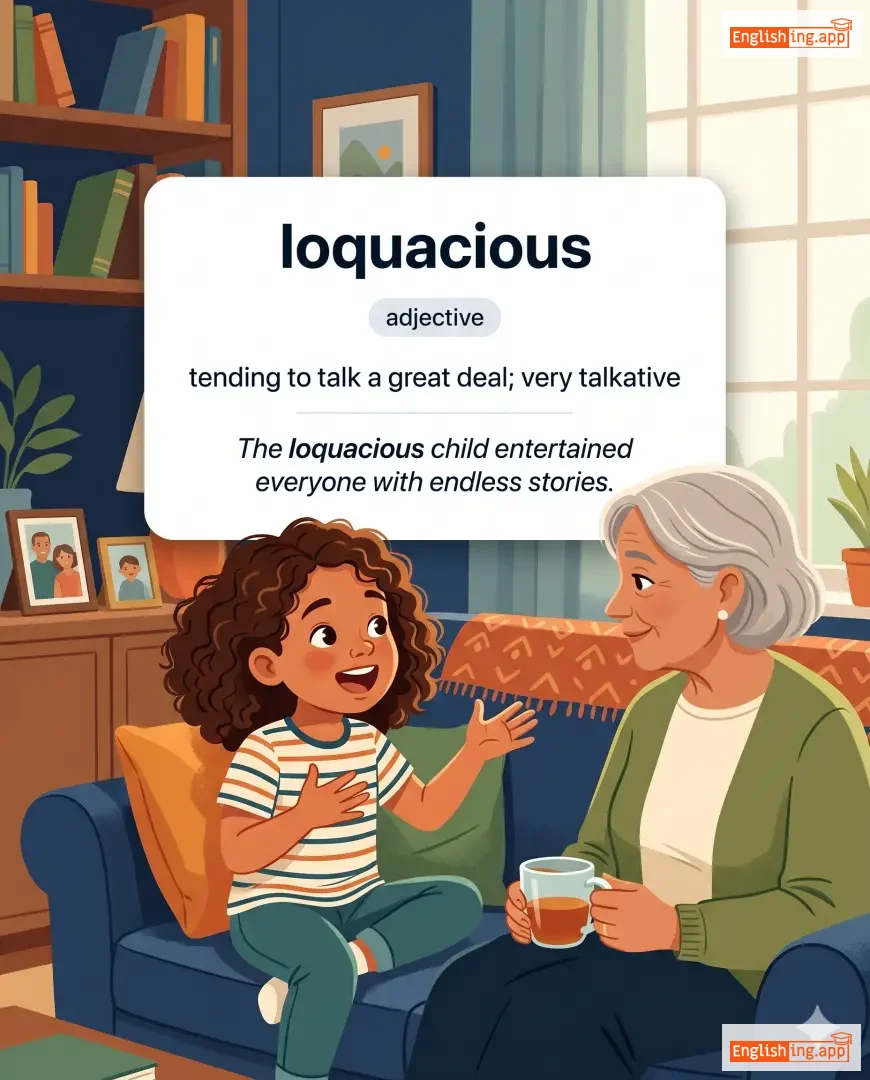
adjective
/loʊˈkweɪʃəs/
话多的 (hua duo de)

tending to talk a great deal; very talkative

"The loquacious child entertained everyone with endless stories."

"话多的孩子用无尽的故事娱乐了每个人。" (Hua duo de haizi yong wu jin de gushi yule le meige ren.)
noun
/ˈlɔːrdlɪŋ/
小领主 (xiao lingzhu)

A young or petty lord; someone of minor nobility.

"The arrogant lordling demanded respect despite his lack of experience."
"那个傲慢的小领主尽管缺乏经验,仍要求尊重。" (Nàgè àomàn de xiǎo lǐngzhǔ jǐnguǎn quēfá jīngyàn, réng yāoqiú zūnzhòng.)
lose definition card — visual illustration of the meaning
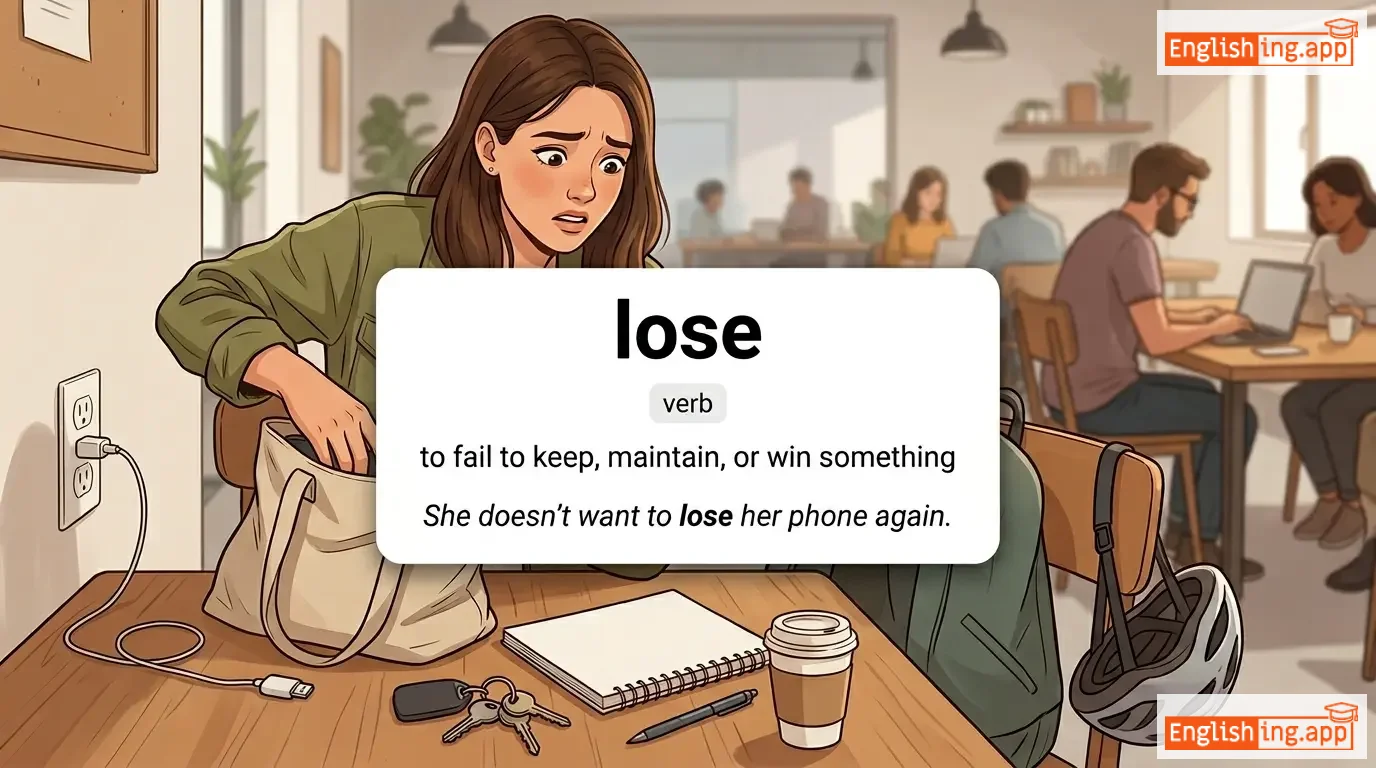
verb
/luːz/
幸福 (xingfu)

to fail to keep, maintain, or win something

"She doesn’t want to lose her phone again."

"她在获得奖项时无法掩饰自己的快乐。" (Tā zài huòdé jiǎngxiàng shí wúfǎ yǎnshì zìjǐ de kuàilè.)