词汇表

英语词汇词典 | 单词含义、定义和示例

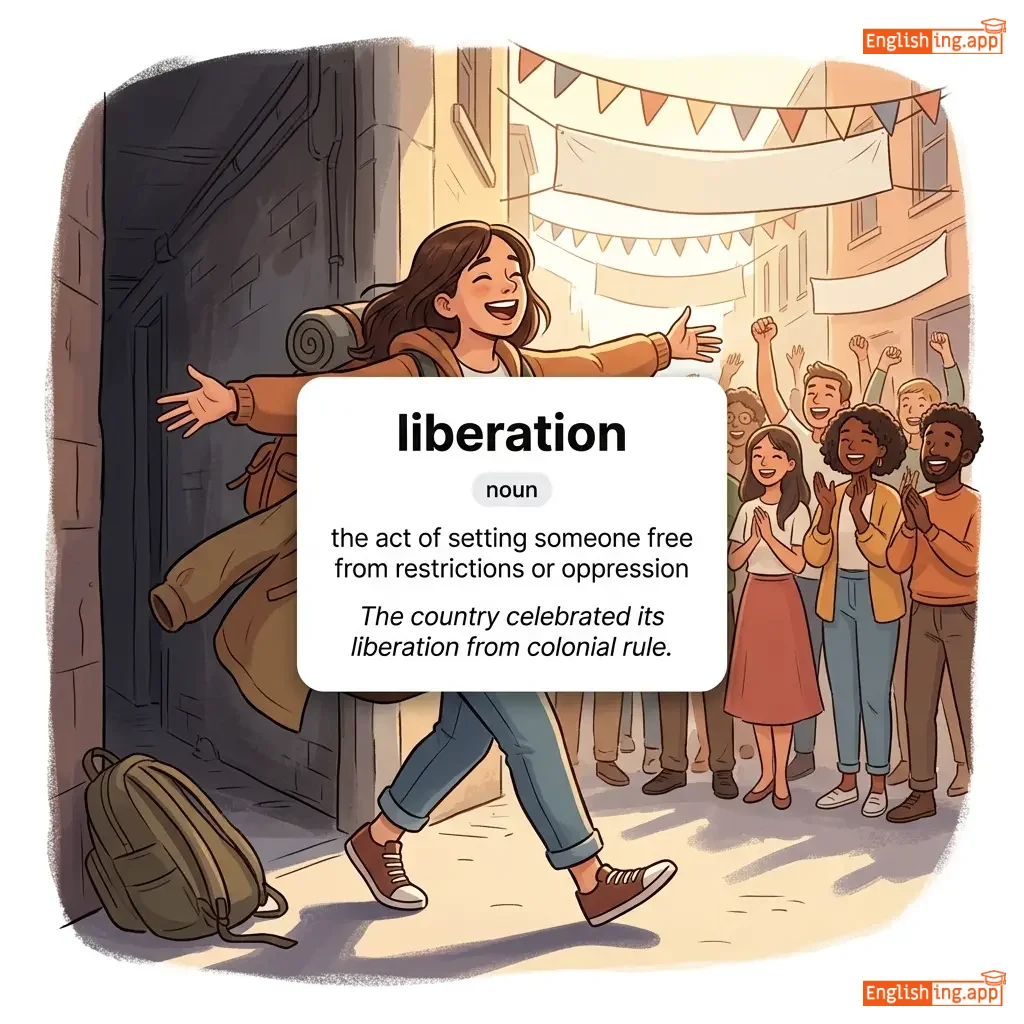
liberation definition card — visual illustration of the meaning
noun
/ˌlɪbəˈreɪʃən/
解放 (jiefang)

the act of setting someone free from restrictions or oppression

"The country celebrated its liberation from colonial rule."

"该国庆祝了从殖民统治中获得解放。" (Gāi guó qìngzhùle cóng zhímín tǒngzhì zhōng huòqǔ jiěfàng.)
noun
/ˌlɪbəˈreɪʃən wɔːr/
解放战争 (jie fang zhan zheng)

a war fought to gain freedom from foreign rule, occupation, or oppression; an armed struggle for national independence

"The liberation war reshaped the nation’s history and identity."

"解放战争改变了国家的历史和认同。" (jie fang zhan zheng gai bian le guo jia de li shi he ren tong)
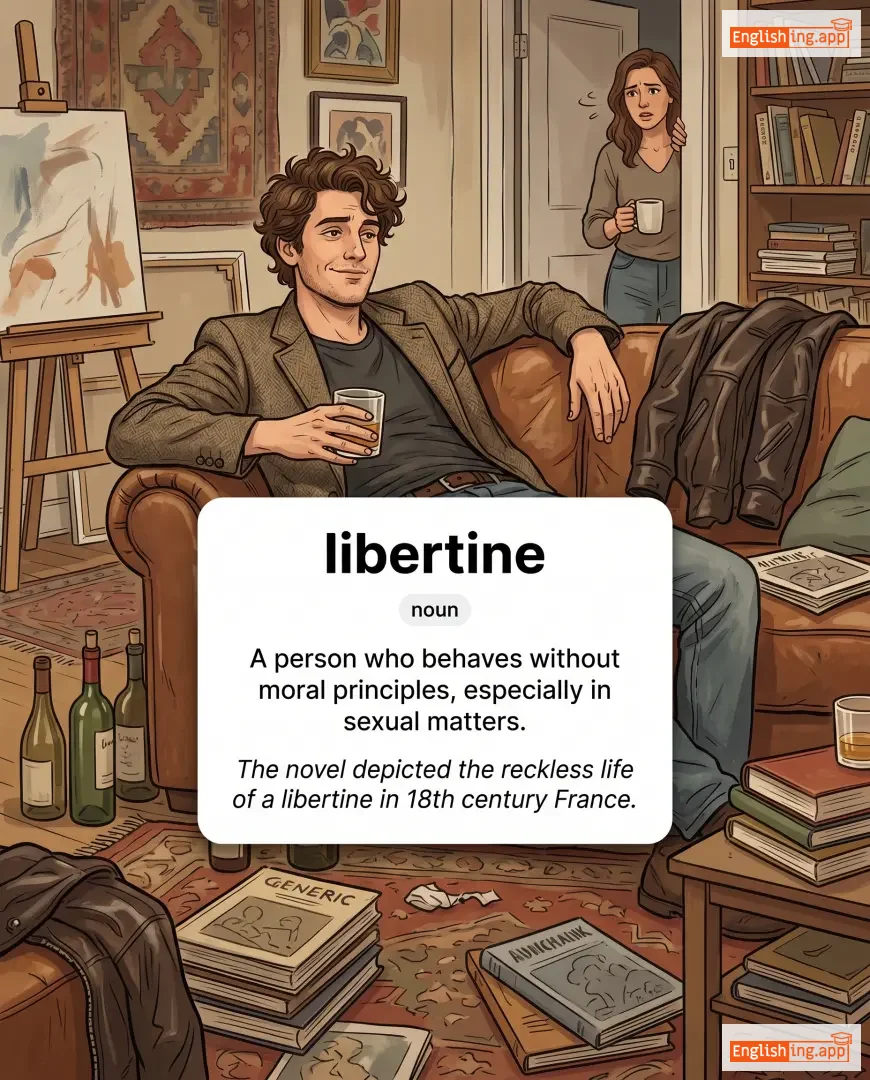
libertine definition card — visual illustration of the meaning
noun
/ˈlɪbərˌtiːn/

A person who behaves without moral principles, especially in sexual matters.

"The novel depicted the reckless life of a libertine in 18th century France."

noun
/ˈlɪbərti/
自由 (ziyou)

the state of being free within society from oppressive restrictions

"Freedom of speech is a basic liberty."

"言论自由是一项基本自由。" (yanlun ziyou shi yi xian jiben ziyou.)
adjective
/lɪˈbɪdənəs/
好色 (hàosè)

Showing excessive sexual drive; lustful.

"The play was criticized for its libidinous characters."

"这部剧因其好色的角色而受到批评。" (Zhè bù jù yīn qí hàosè de juésè ér shòudào pīpíng.)
libido definition card — visual illustration of the meaning
noun
/lɪˈbiːdoʊ/
性欲 (xìngyù)

Sexual desire or drive.

"Stress can sometimes lower a person's libido."

"压力有时会降低一个人的性欲。" (Yālì yǒushí huì jiàngdī yīgè rén de xìngyù.)
noun
/laɪˈbrɛəriən/
图书管理员 (tushu guanliyuan)

a person who manages, organizes, and assists users in a library

"The librarian helped me find a rare history book."

"图书管理员帮我找到了一本罕见的历史书。" (tushu guanliyuan bang wo zhaodao le yi ben hanjian de lishi shu)
noun
/ˈlaɪ.brɛr.i/
图书馆 (tú shū guǎn)

A building or room containing collections of books, periodicals, and sometimes other materials for people to read or borrow.

"She spent the afternoon studying in the library."

"她在图书馆度过了下午。" (Tā zài tú shū guǎn dùguòle xiàwǔ.)
noun
/lɪˈbrɛtoʊ/
歌剧本 (gējù běn)

The text of an opera or other long vocal work.

"She studied the libretto before attending the opera performance."

"她在参加歌剧表演之前学习了歌剧本。" (Tā zài cānjiā gējù biǎoyǎn zhīqián xuéxí le gējùběn.)
noun
/ˈlaɪsəns/
许可证 (xǔ kě zhèng)

An official document giving permission to do, use, or own something.

"She applied for a driving licence last week."

"她上周申请了驾驶许可证。" (Tā shàng zhōu shēnqǐngle jiàshǐ xǔkězhèng.)
noun, verb
/ˈlaɪsəns/
许可证 / 许可 (xǔkě zhèng / xǔkě)

A legal permission to do something (noun); to grant such permission (verb).

"You must have a driving license to operate a car legally."

"您必须拥有驾驶执照才能合法开车。" (Nín bìxū yǒngyǒu jiàshǐ zhízhào cáinéng héfǎ kāichē.)
noun
/ˌlaɪ.sənˈsiː/
许可证持有者 (xuke zheng chi you zhe)

a person or organization that holds a license to do something

"The licensee is responsible for following all regulations."

"许可证持有者负责遵守所有规定。" (Xuke zheng chi you zhe fu ze zun shou suo you gui ding.)
adjective
/laɪˈsɛnʃəs/
放荡不羁 (fàngdàng bùjī)

Lacking moral restraint; disregarding accepted rules of conduct.

"The novel was criticized for its licentious themes."

"这部小说因其放荡不羁的主题而受到批评。" (Zhè bù xiǎoshuō yīn qí fàngdàng bùjī de zhǔtí ér shòudào pīpíng.)
adjective
/ˈlɪsɪt/
合法 (héfǎ)

Permitted by law or by rules; legal.

"The trade of certain goods is licit under international law."

"某些商品的贸易在国际法下是合法的。" (Mǒuxiē shāngpǐn de màoyì zài guójì fǎ xià shì héfǎ de.)
lick definition card — visual illustration of the meaning
verb
/lɪk/
(tian)

to pass the tongue over something; to defeat decisively

"The cat licked its paws clean."

"猫舔干净了它的爪子。" (Māo tiǎn gānjìng le tā de zhǎo zi.)
noun
/lɪd/
盖子 (gàizi)

a cover for the top of a container

"She closed the lid tightly on the jar."

"她紧紧地盖上了瓶盖。" (Tā jǐn jǐn de gài shàngle pínggài.)
lie definition card — visual illustration of the meaning
verb
/laɪ/
说谎 (shuo huang)

To make a false statement with the intention to deceive.

"He lied about his age to get the job."

"他为了得到这份工作,说谎了自己的年龄。" (Ta wei le dedao zhe fen gongzuo, shuo huang le ziji de nianling.)
noun
/liːdʒ/
领主 (lingzhu)

A feudal lord entitled to allegiance and service; a loyal subject.

"The knight pledged loyalty to his liege."

"骑士向他的领主宣誓效忠。" (Qishi xiang tade lingzhu xuanshi xiaozhong.)
noun
/liːən/
留置权 (liúzhìquán)

A legal right to keep possession of property until a debt is paid.

"The bank placed a lien on the house until the mortgage was cleared."

"银行对房屋施加了留置权,直到抵押贷款清偿完毕。" (Yínháng duì fángwū shījiāle liúzhìquán, zhídào dǐyā dàikuǎn qīngcháng wánbì.)
noun
/ˈlaɪər/
说谎者 (shuohuangzhe)

a person who tells lies; an alternative spelling of liar

"No one trusted him because he was known as a habitual lier."

"因为他是个惯常的说谎者,所以没人信任他。" (yinwei ta shi ge guanchang de shuohuangzhe suoyi meiren xinren ta)
noun
/luː/
代替 (daiti)

Instead of; in place of.

"He gave money in lieu of flowers."

"他给了钱代替花。" (Tā gěile qián dàitì huā.)
noun
/laɪf/
生命 (shengming)

The existence of an individual human being or animal.

"Life is full of challenges and opportunities."
"生命充满了挑战和机会。" (Shēngmìng chōngmǎnle tiǎozhàn hé jīhuì.)
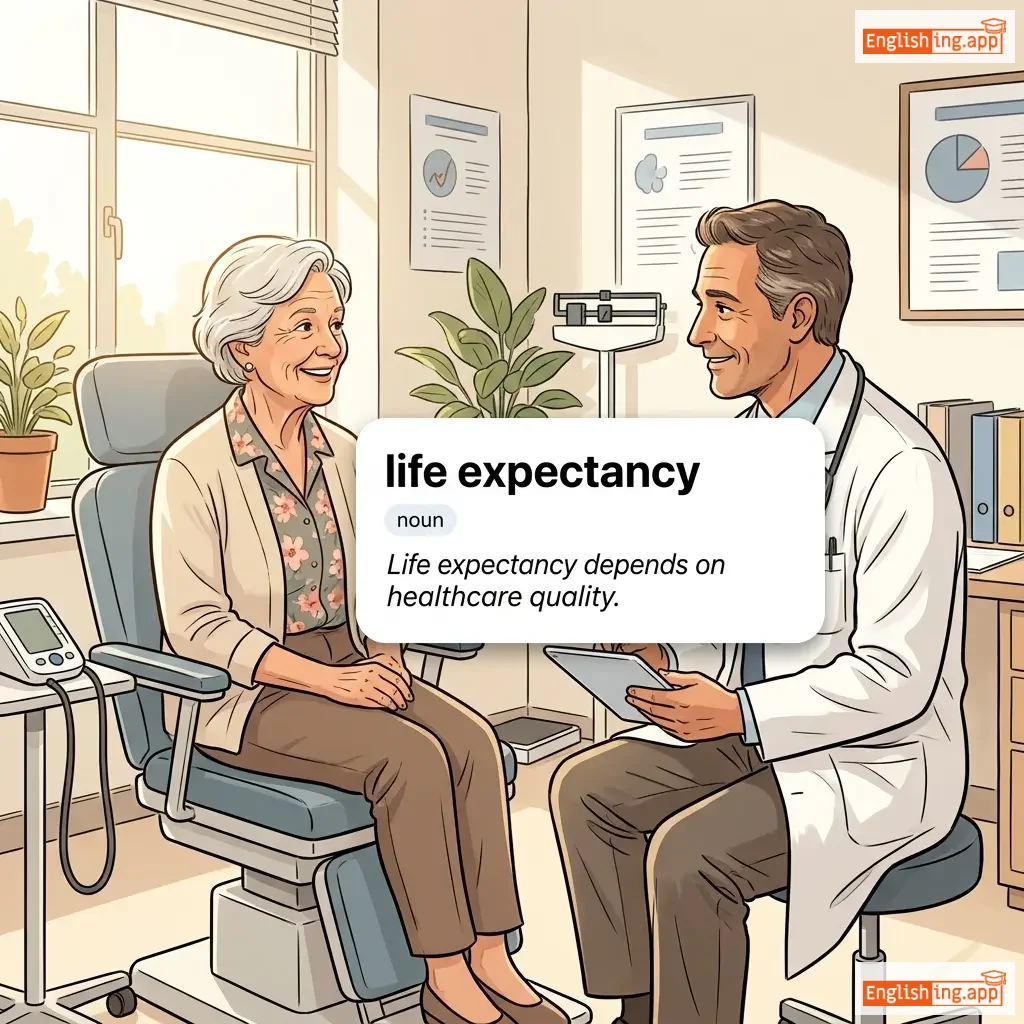
life expectancy definition card — visual illustration of the meaning
noun
ˈlaɪf ɪkˌspek.tən.si
预期寿命 (yùqī shòumìng)

The average period that a person may expect to live; the length of time for which something is expected to last or to continue being effective.

"Life expectancy depends on healthcare quality."

"预期寿命取决于医疗保健质量。" (Yùqī shòumìng qǔjué yú yīliáo bǎojiàn zhìliàng.)
adjective
/ˈlaɪf.laɪk/
栩栩如生 (xǔxǔ rú shēng)

Very similar to a real person, object, or scene; realistic.

"The wax figure was so lifelike that people thought it was a real person."

"这尊蜡像如此栩栩如生,以至于人们以为它是一个真人。" (Zhè zūn làxiàng rúcǐ xǔxǔ rú shēng, yǐ zhì yú rénmen yǐwéi tā shì yīgè zhēn rén.)
adjective
/ˈlaɪf.lɒŋ/
终生 (zhōngshēng)

Lasting or existing for the whole of a person's life.

"They remained lifelong friends."

"他们是终生的朋友。" (Tāmen shì zhōngshēng de péngyǒu.)
noun
/ˈlaɪf.staɪl/
生活方式 (shenghuo fangshi)

The way in which a person or group lives, including habits, attitudes, and possessions.

"A healthy lifestyle includes regular exercise and a balanced diet."

"健康的生活方式包括定期锻炼和均衡饮食。" (Jiankang de shenghuo fangshi baokuo dingqi duanlian he junheng yinshi.)
noun
/ˈlaɪf.taɪm/
一生 (yisheng)

The duration of a person's life or the existence of something.

"She achieved more in her lifetime than most people dream of."

"她在一生中取得的成就,超出了大多数人的梦想。" (Ta zai yisheng zhong qude de chengjiu, chaochule daduoshu ren de mengxiang.)
verb
/lɪft/
举起 (juqi)

To raise something to a higher position or level.

"He lifted the heavy box with ease."

"他轻松地抬起了重箱子。" (Ta qingsong de taqi le zhong xiangzi.)
noun
/ˈlɪɡ.əmənt/
韧带组织 (rendai zuzhi)

A tough band of tissue that connects bones at a joint.

"He tore a ligament in his knee while playing football."

"他在踢足球时撕裂了膝盖的韧带。" (Tā zài tī zúqiú shí sīliè le xīgài de rèndài.)
noun
/ˈlɪɡ.ə.tʃər/
连字 (lianzi)

A thing used for tying or binding tightly; in music/printing, two or more notes or letters joined together.

"The doctor used a ligature to stop the bleeding."
"医生使用了连字来停止出血。" (Yīshēng shǐyòngle liánzì lái tíngzhǐ chūxiě.)
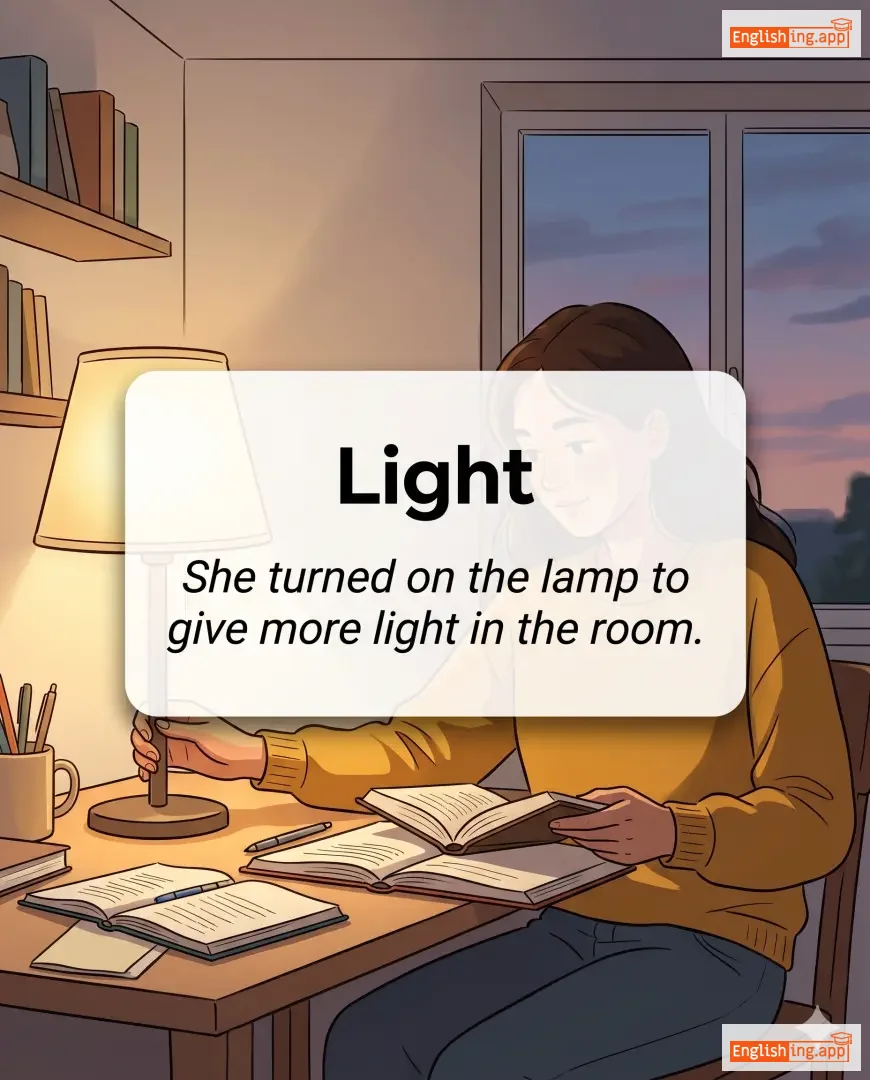
Light definition card — visual illustration of the meaning
noun, verb, adjective
/laɪt/
(guang)

The natural agent that makes things visible; to illuminate or make something start burning.

"She turned on the lamp to give more light in the room."

"她打开灯以提供更多的光线。" (Tā dǎkāi dēng yǐ tígōng gèng duō de guāngxiàn.)
noun
/laɪt bʌlb/
灯泡 (dēngpào)

a glass or plastic container that produces light when electricity passes through it

"The light bulb in the kitchen needs to be replaced."

"厨房里的灯泡需要更换。" (chúfáng lǐ de dēngpào xūyào gēnghuàn)
noun
/laɪt ˈkʌlər/
浅色 (qiǎn sè)

a pale or bright shade of any color

"The walls were painted in light colours to make the room look bigger."

"墙壁被涂上了浅色,使房间看起来更大。" (qiángbì bèi tú shàngle qiǎn sè, shǐ fángjiān kàn qǐlái gèng dà.)
adjective
/laɪt ɡriːn/
浅绿色 (qiǎn lǜsè)

a pale shade of green color; not dark green

"She wore a light green dress to the garden party."

"她穿着一条浅绿色的裙子去参加花园聚会。" (Tā chuānzhuó yītiáo qiǎn lǜsè de qúnzi qù cānjiā huāyuán jùhuì.)
adjective
/laɪt red/
浅红色 (qian hong se)

a pale or diluted shade of red color

"She wore a light red dress to the party."

"她穿着一件浅红色的裙子去参加派对。" (Ta chuanzhuo yi jian qian hong se de qunzi qu canjia paidui.)
adjective
/ˌlaɪtˈhɑːrtɪd/
轻松愉快的 (qīngsōng yúkuài de)

cheerful, carefree, and not serious

"She gave a light-hearted speech at the party."

"她在派对上做了一个轻松愉快的演讲。" (Tā zài pàiduì shàng zuòle yīgè qīngsōng yúkuài de yǎnjiǎng.)
verb
/ˈlaɪtən/
使变亮;缓和 (shi bian liang; huan he)

to make something brighter or less dark; to make something less heavy or serious

"A joke can lighten the mood during a tense meeting."

"一个笑话可以缓和紧张会议的气氛。" (yi ge xiaohua keyi huanhe jinzhang huiyi de qifen)
noun
/ˈlaɪtɪŋ/
照明 (zhaoming)

the arrangement or use of light in a place; the act of providing light

"The lighting in the restaurant created a warm and cozy atmosphere."

"餐厅的灯光创造了温暖而舒适的氛围。" (Canting de dengguang chuangzao le wennuan er shushi de fenwei.)
adverb
/ˈlaɪtli/
轻轻地 (qīngqīng de)

gently or with little force or weight

"She touched the baby’s hand lightly."

"她轻轻地触摸了宝宝的手。" (Tā qīngqīng de chùmōle bǎobǎo de shǒu.)
noun
/ˈlaɪtnɪŋ/
闪电 (shǎndiàn)

a flash of light in the sky caused by electricity during a storm

"The lightning struck a tree near our house."

"闪电击中了我们家附近的一棵树。" (Shǎndiàn jī zhòngle wǒmen jiā fùjìn de yī kē shù.)
adjective
/ˈlɪɡ.ni.əs/
木质的 (mù zhì de)

having the texture or appearance of wood; woody

"The ligneous stem supported the heavy flowers."
"木质的茎支撑着沉重的花朵。" (Mù zhì de jīng zhī chēng zhe chén zhòng de huā duǒ.)
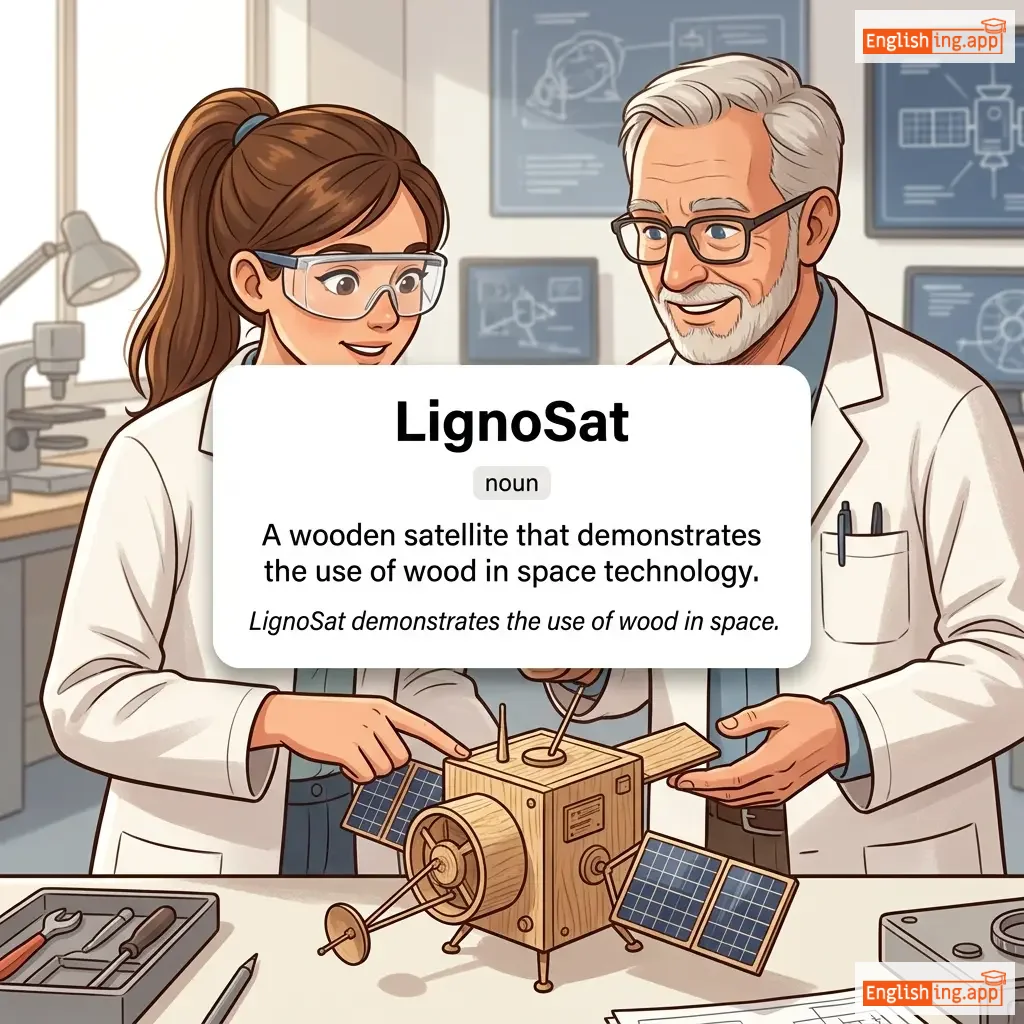
LignoSat definition card — visual illustration of the meaning
noun
ˈlɪɡ.nəʊˌsæt
木卫星 (mu weixing)

A wooden satellite that demonstrates the use of wood in space technology.

"LignoSat demonstrates the use of wood in space."
"LignoSat 展示了木材在太空中的应用。" (LignoSat zhanshi le muci zai taikong zhong de yingyong.)
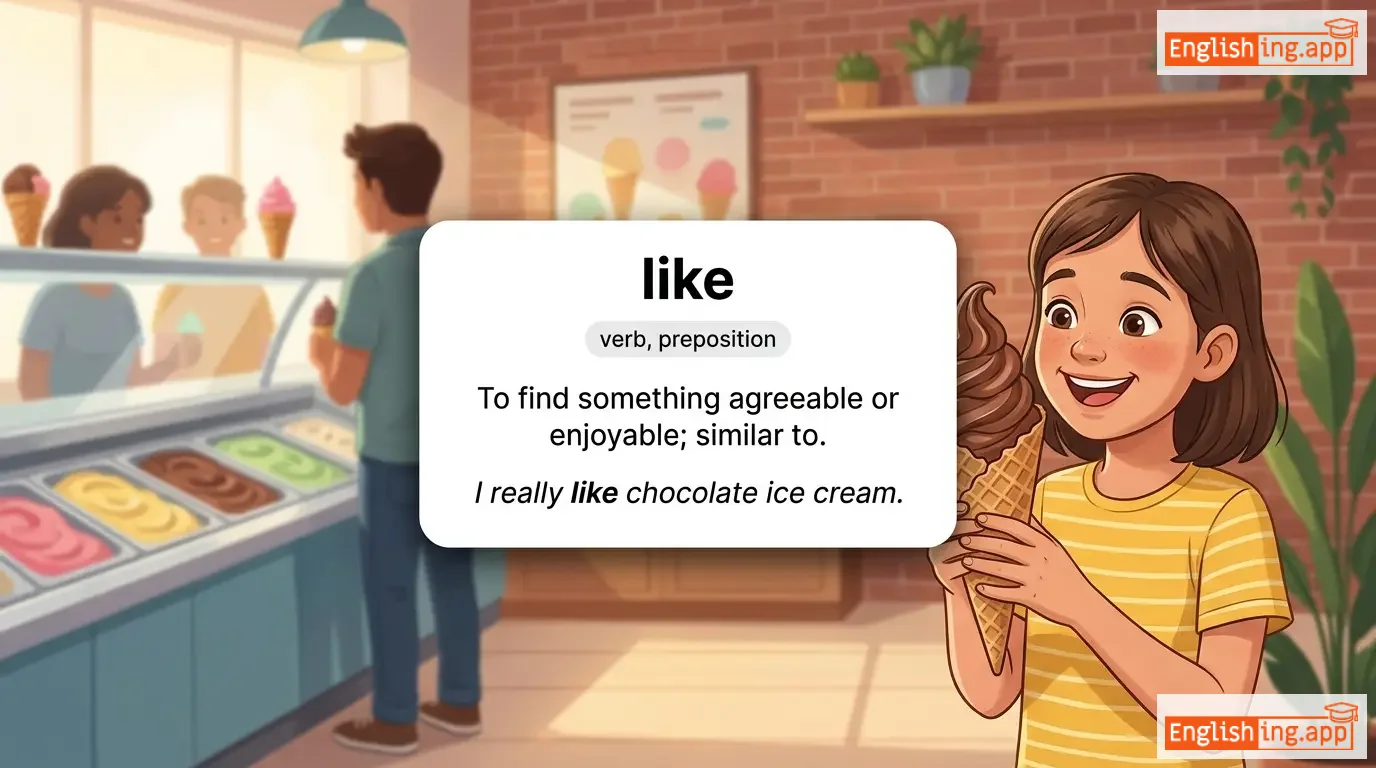
like definition card — visual illustration of the meaning
verb, preposition
/laɪk/
喜欢 (xǐ huān)

To find something agreeable or enjoyable; similar to.

"I really like chocolate ice cream."

"我真的喜欢巧克力冰淇淋。" (Wǒ zhēn de xǐ huān qiǎo kè lì bīng qí lín.)
noun
/ˈlaɪ.kli.hʊd/
可能性 (kenengxing)

the chance or probability of something happening

"There is a strong likelihood of rain tomorrow."

"明天有很大的降雨可能性。" (Mingtian you hendà de jiangyu kenengxing.)
adjective
/ˈlaɪk.li/
可能 (kěnéng)

probable or expected to happen

"It is likely to rain this evening."

"今晚可能会下雨。" (Jīn wǎn kěnéng huì xià yǔ.)
verb
/ˈlaɪ.kən/
比较 (bǐjiào)

to compare one thing to another, often in a figurative way

"He likened her voice to sweet music."

"他把她的声音与甜美的音乐相提并论。" (Tā bǎ tā de shēngyīn yǔ tiánměi de yīnyuè xiāngtíbìnglùn.)
noun
/ˈlaɪk.nəs/
相似; 类似 (likeness)

the fact or quality of being alike; resemblance; a portrait or representation

"The portrait shows a strong likeness to her grandmother."

"这幅肖像与她的祖母有很强的相似之处。" (Zhè fú xiàoxiàng yǔ tā de zǔmǔ yǒu hěn qiáng de xiāngsì zhī chù.)
adverb
/ˈlaɪkˌwaɪz/
同样; 也; 类似地 (tóngyàng; yě; lèisì de)

In the same way; also; similarly.

"She smiled, and he likewise returned the gesture."

"她微笑了,他也回以同样的手势。" (Tā wēixiào le, tā yě huí yǐ tóngyàng de shǒushì.)
noun
/ˈlaɪkɪŋ/
喜好, 偏爱 (xǐhào, piān'ài)

A feeling of fondness or preference for something or someone.

"She has a strong liking for classical music."
"她对古典音乐有很强的喜好。" (Tā duì gǔdiǎn yīnyuè yǒu hěn qiáng de xǐhào.)
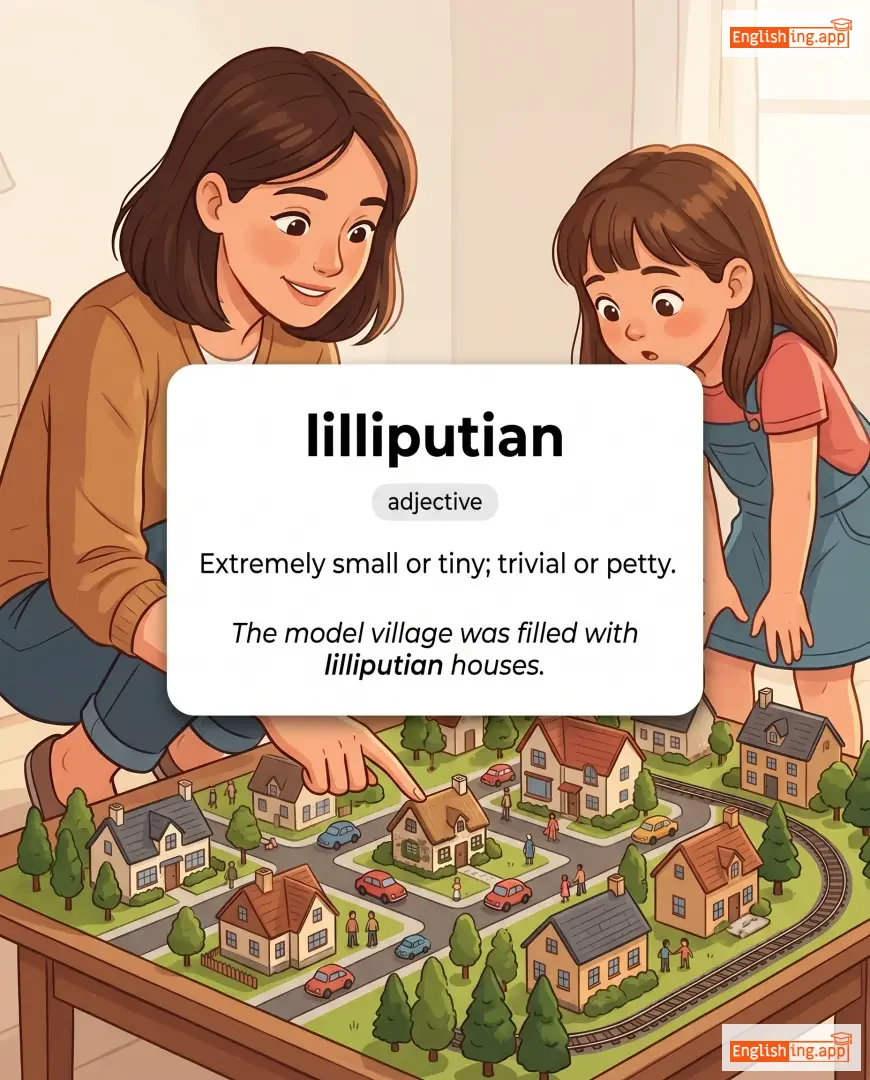
lilliputian definition card — visual illustration of the meaning
adjective
/ˌlɪlɪˈpjuːʃən/
极小的 (jí xiǎo de)

Extremely small or tiny; trivial or petty.

"The model village was filled with lilliputian houses."

"模范村庄里充满了极小的房屋。" (Mófàn cūnzhuāng lǐ chōngmǎnle jí xiǎo de fángwū.)