词汇表

英语词汇词典 | 单词含义、定义和示例

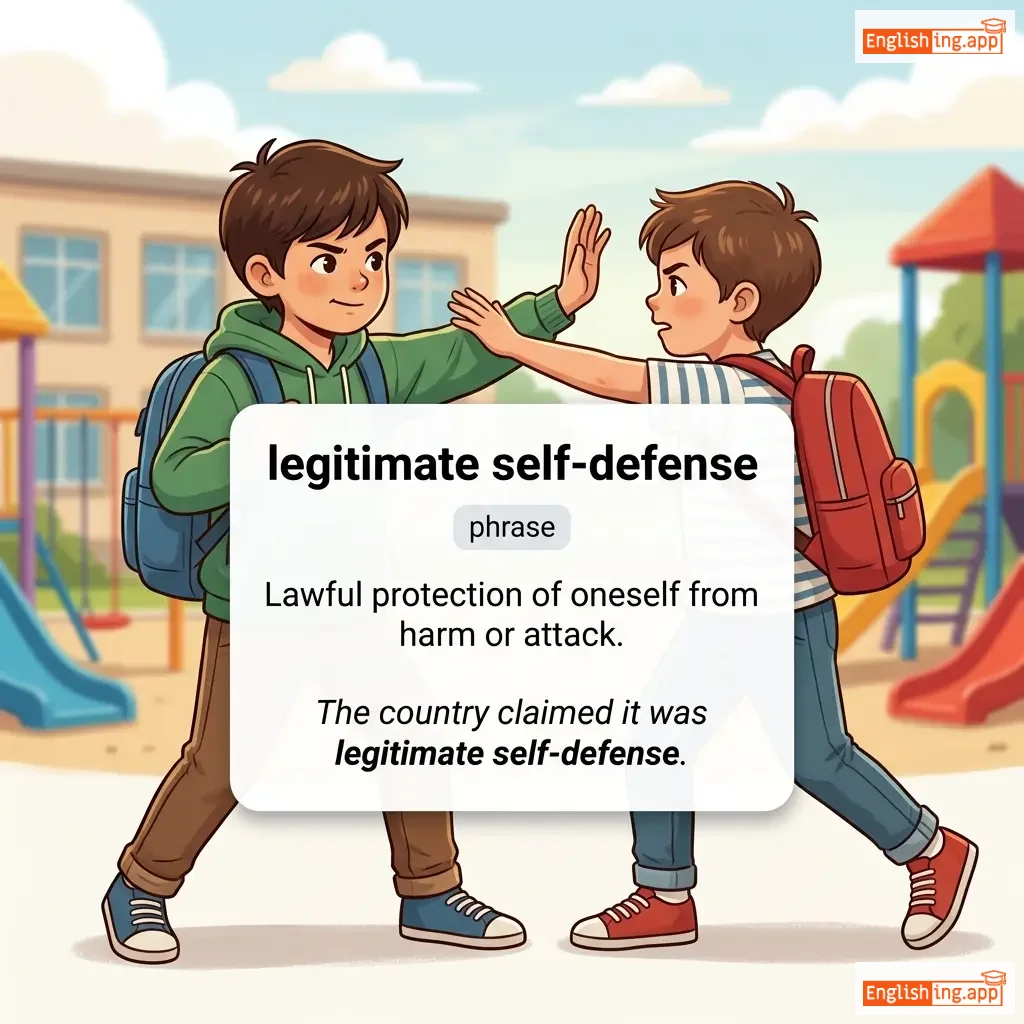
legitimate self-defense definition card — visual illustration of the meaning
phrase
lɪˈdʒɪt.ɪ.mət sɛlf dɪˈfens
合法自卫 (hefa ziwei)

Lawful protection of oneself from harm or attack.

"The country claimed it was legitimate self-defense."

"该国声称这是合法自卫。" (Gai guo shengcheng zhe shi hefa ziwei.)
noun
/ˈliːʒər/ or /ˈlɛʒər/
闲暇 (xianxia)

Free time when one is not working or occupied; time for relaxation.

"She spends her leisure reading novels."

"她用闲暇时间阅读小说。" (Tā yòng xiánxiá shíjiān yuèdú xiǎoshuō.)
noun
/ˈlɛmən/
柠檬 (níngméng)

a yellow citrus fruit with a sour taste

"She added lemon to the tea for extra flavor."

"她在茶里加了柠檬以增加风味。" (Tā zài chá lǐ jiāle níngméng yǐ zēngjiā fēngwèi.)
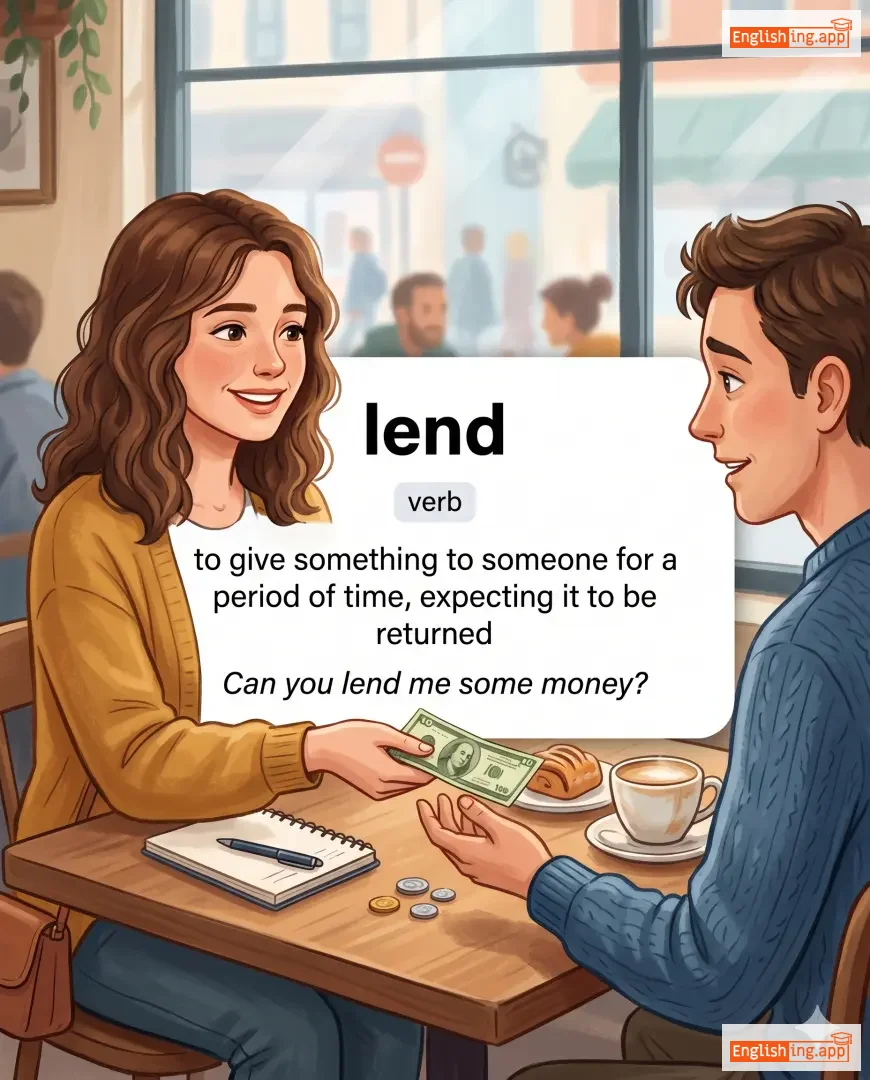
lend definition card — visual illustration of the meaning
verb
/lend/
幸福 (xingfu)

to give something to someone for a period of time, expecting it to be returned

"Can you lend me some money?"

"你可以借我一些钱吗?" (Nǐ kěyǐ jiè wǒ yīxiē qián ma?)
noun
/lɛŋkθ/
长度 (changdu)

The measurement or extent of something from end to end.

"The length of the bridge is two kilometers."

"桥的长度是两公里。" (Qiao de changdu shi liang gongli.)
adverb
/ˈleŋθ.waɪz/
沿长度方向; 沿最长的维度 (yán chángdù fāngxiàng; yán zuì cháng de wéidù)

in the direction of the length; along the longest dimension

"Fold the paper lengthwise to make it easier to carry."

"沿着长度将纸张对折,这样便于携带。" (yánzhe chángdù jiāng zhǐzhāng duìzhé, zhèyàng biàn yú xiédài.)
adjective
/ˈlɛŋθi/
漫长 (man chang)

long in duration or extent

"The meeting was lengthy, lasting over three hours."

"会议很长,持续了三个小时以上。" (Huiyi hen chang, chixu le sange xiaoshi yishang.)
noun
/ˈliːniənsi/
宽容 (kuanrong)

The quality of being more merciful or tolerant than expected.

"The judge showed leniency in his ruling."

"法官在判决中表现出宽容。" (Fǎguān zài pànjué zhōng biǎoxiàn chū kuānróng.)
adjective
/ˈliːniənt/
宽容的 (kuānróng de)

Permissive, merciful, or tolerant.

"Her parents are lenient with her curfew."

"她的父母对她的宵禁很宽容。" (Tā de fùmǔ duì tā de xiāojìn hěn kuānróng.)
noun
/lenz/
镜头 (jingtou)

a curved piece of glass or plastic that makes things look clearer or larger when you look through it

"He cleaned the camera lens before taking the picture."

"他在拍照前清洁了相机镜头。" (Tā zài pāizhào qián qīngjié le xiàngjī jìngtóu.)
noun
/ˈlen.tɪl/
小扁豆 (xiao biandou)

a small round flat seed of a leguminous plant, used as food

"Lentils are a good source of protein for vegetarians."

"扁豆是素食者蛋白质的良好来源。" (biandou shi sushizhě dànbaizhì de liánghǎo láiyuán)
adjective
/ˈliːənaɪn/
像狮子一样的 (xiàng shīzi yīyàng de)

Of or resembling a lion.

"His leonine hair made him stand out in the crowd."

"他那像狮子一样的头发让他在人群中显得与众不同。" (Tā nà xiàng shīzi yīyàng de tóufǎ ràng tā zài rénqún zhōng xiǎndé yǔ zhòng bùtóng.)
noun
/ˈlep.ərd/
美洲豹 (měizhōu bào)

a large wild cat with yellow fur and black spots

"The leopard climbed the tree to rest in the shade."

"美洲豹爬上了树,在阴凉处休息。" (Měizhōu bào pá shàngle shù, zài yīnliáng chù xiūxī.)
noun/adjective
/ˈlɛzbiən/
女同性恋 (nǚ tóngxìngliàn)

a woman who is romantically or sexually attracted to other women

"She is a proud lesbian and advocates for equal rights."

"她是一个自豪的女同性恋,支持平等权利。" (Tā shì yí gè zìháo de nǚ tóngxìngliàn, zhīchí píngděng quánlì.)
noun
/ˈliːʒən/
损伤 (sunshang)

An area of damage or abnormal change in the tissue of an organism, often caused by injury or disease.

"The doctor examined the skin lesion carefully."

"医生仔细检查了皮肤上的损伤。" (Yisheng zixi jiancha le pifu shang de sunshang.)
adjective/adverb
/lɛs/
更少 (gèng shǎo)

A smaller amount; not as much.

"She spends less money than her brother."

"她花的钱比她哥哥少。" (Tā huā de qián bǐ tā gēge shǎo.)
adjective
/ˈlɛsər/
较不重要 (jiào bù zhòng yào)

of lower importance or smaller in degree or amount

"The lesser known facts about the topic were fascinating."

"关于这个主题的较少人知的事实是迷人的。" (Guānyú zhège zhǔtí de jiào shǎo rén zhī de shìshí shì mírén de.)
noun
/ˈlɛsən/
(ke)

A unit of teaching or something learned through experience.

"The teacher explained the lesson clearly."
"老师清楚地解释了这节课。" (Laoshi qingchu de jieshi le zhe jie ke.)
let definition card — visual illustration of the meaning
verb
/lɛt/
(rang)

To allow someone to do something; to permit.

"She let him borrow her book."

"她让他借了她的书。" (Ta rang ta jie le ta de shu.)
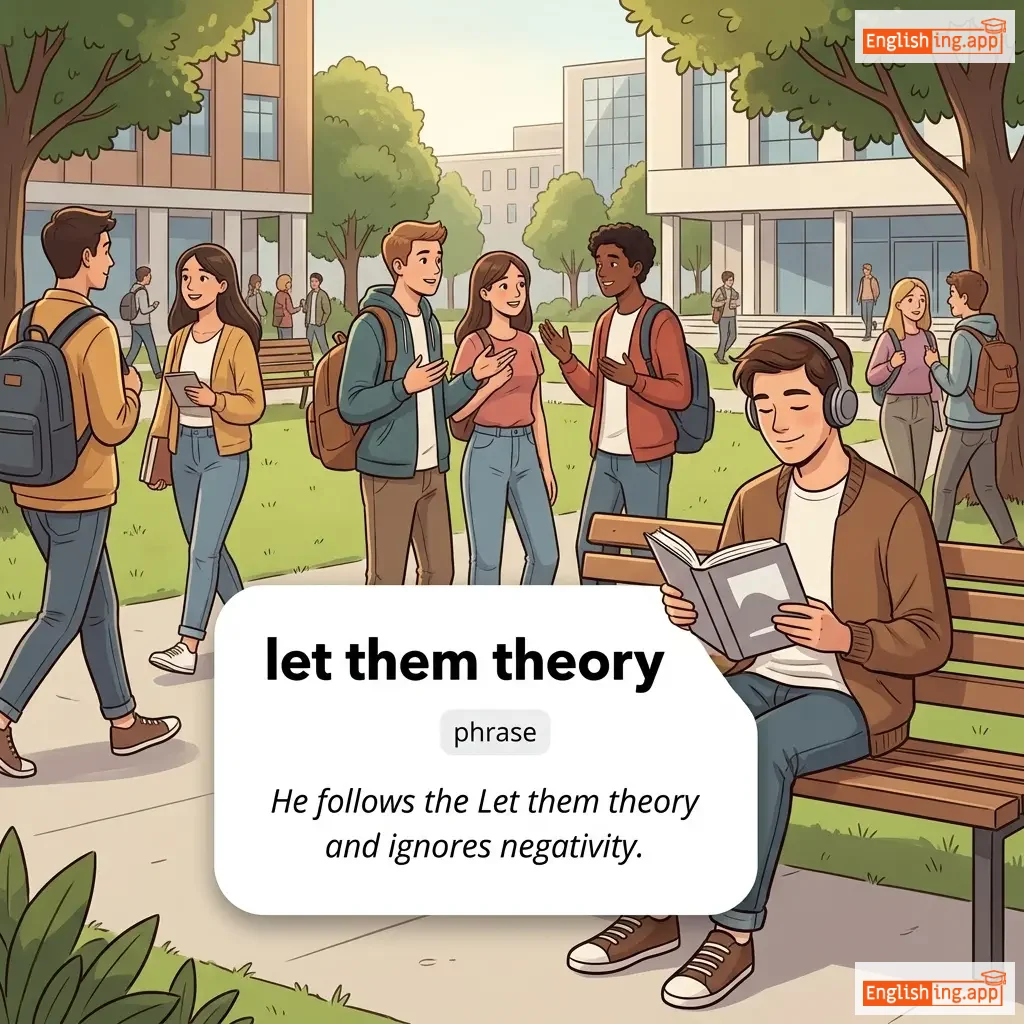
let them theory definition card — visual illustration of the meaning
phrase
/lɛt ðɛm ˈθɪə.ri/
让他们随心所欲的理论 (rang tamen sui xin suo yu de lilun)

A philosophy of not trying to control others' actions or opinions and allowing them to be themselves.

"He follows the Let them theory and ignores negativity."

"他遵循“让他们”理论,并忽视负面情绪。" (Ta zunxun 'rang tamen' lilun, bing hushi fuman qingxu.)
adjective
/ˈliːθəl/
致命的 (zhìmìng de)

Able to cause death; deadly.

"The snake's venom is extremely lethal."

"蛇毒是极其致命的。" (Shé dú shì jíqí zhìmìng de.)
lethargic definition card — visual illustration of the meaning
adjective
/ləˈθɑːrdʒɪk/
嗜睡的 (shishui de)

Feeling sluggish, drowsy, or lacking energy.

"After the long journey, he felt lethargic and went straight to bed."

"长途旅行后,他感到嗜睡,直接上床睡觉。" (Changtu lüxing hou, ta gandao shishui, zhijie shangchuang shuijiao.)
noun
/ˈleθərdʒi/
嗜睡 (shishui)

A state of tiredness, lack of energy, or drowsiness.

"The hot weather caused a feeling of lethargy among the workers."

"炎热的天气导致工人中产生了嗜睡的感觉。" (Yánrè de tiānqì dǎozhì gōngrén zhōng chǎnshēngle shìshuì de gǎnjué.)
noun
/ˈlɛtər/
(xìn)

A written or printed message sent to someone.

"He wrote a letter to his friend."

"他写了一封信给他的朋友。" (Tā xiěle yī fēng xìn gěi tā de péngyǒu.)
noun
/ˈlɛtɪs/
生菜 (shengcai)

a leafy green vegetable commonly used in salads and sandwiches

"She added fresh lettuce to the sandwich."
"她在三明治里加了新鲜的生菜。" (ta zai sanmingzhi li jia le xin xian de shengcai)
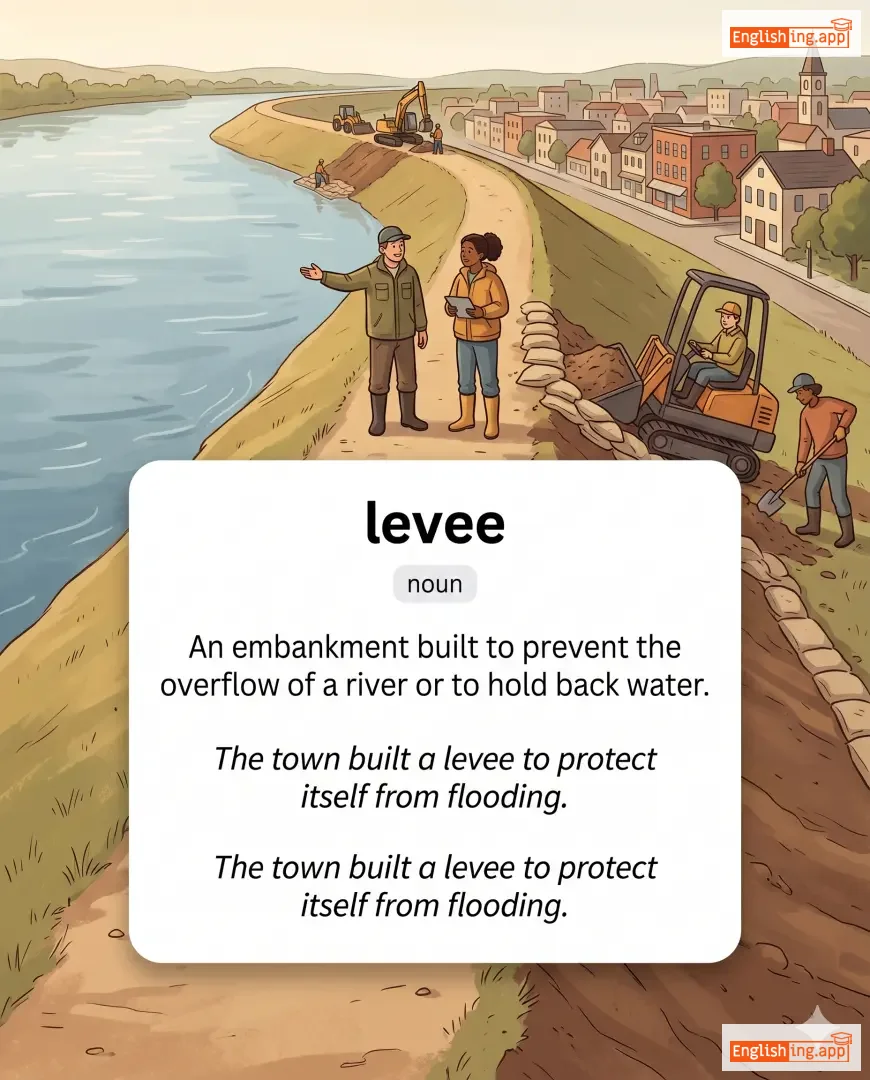
levee definition card — visual illustration of the meaning
noun
/ˈlɛvi/
堤坝 (dī bì)

An embankment built to prevent the overflow of a river or to hold back water.

"The town built a levee to protect itself from flooding."
"该市建造了一座堤坝,以防洪水。" (gāi shì jiànzào le yī zuò dī bì, yǐ fáng hóngshuǐ.)
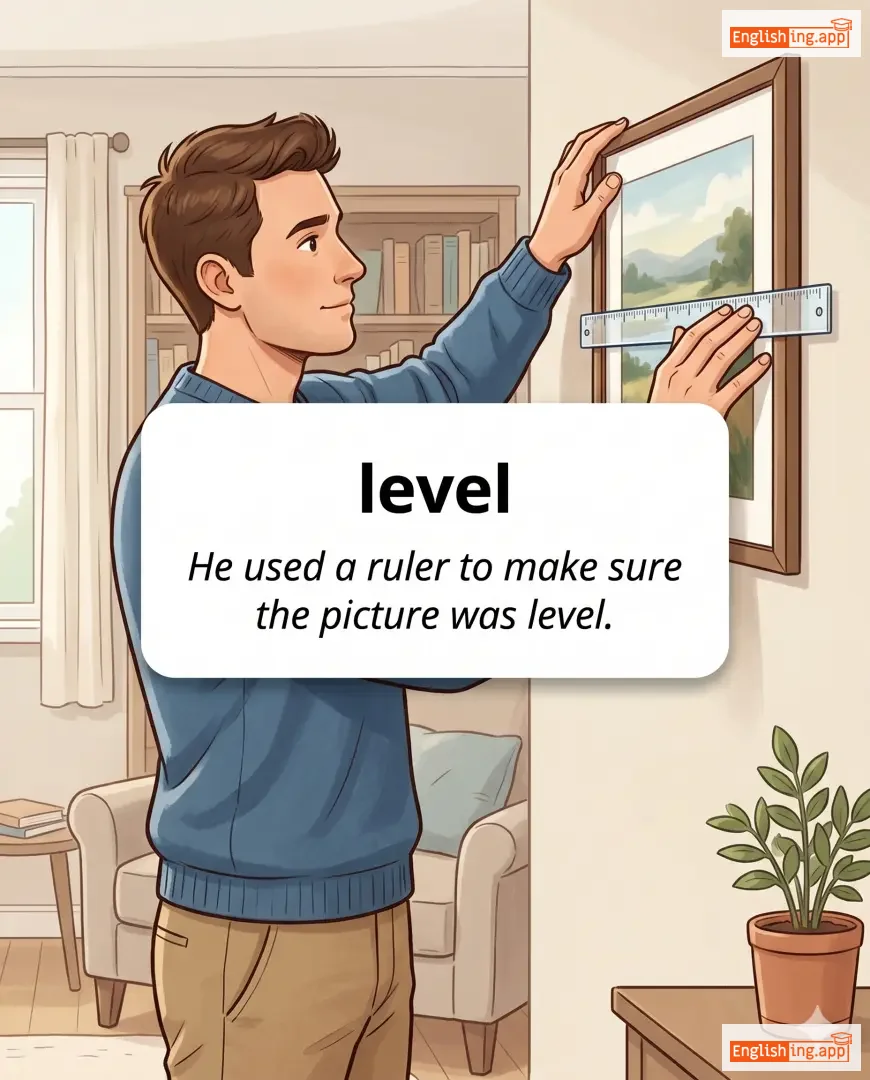
level definition card — visual illustration of the meaning
noun, verb, adjective
/ˈlɛvəl/
水平,阶层 (shuǐpíng, jiēcéng)

a flat or even surface; a stage in scale or rank; to make something flat or equal.

"He used a ruler to make sure the picture was level."

"他用尺子确保图片水平。" (Tā yòng chǐzi quèbǎo túpiàn shuǐpíng.)
adjective
/ˌlɛvəlˈhɛdɪd/
冷静和理智 (lěngjìng hé lǐzhì)

calm and sensible; showing good judgment.

"She remained levelheaded during the crisis."

"她在危机中保持冷静。" (Tā zài wēijī zhōng bǎochí lěngjìng.)
noun, verb
/ˈliːvər/ or /ˈlɛvər/
杠杆,刚性杆 (gànggǎn, gāngxìng gǎn)

a rigid bar used to move or lift heavy objects; to move something using leverage.

"He used a lever to lift the heavy stone."
"他使用了一个杠杆来举起重石。" (Tā shǐyòng le yīgè gànggǎn lái jǔqǐ zhòng shí.)
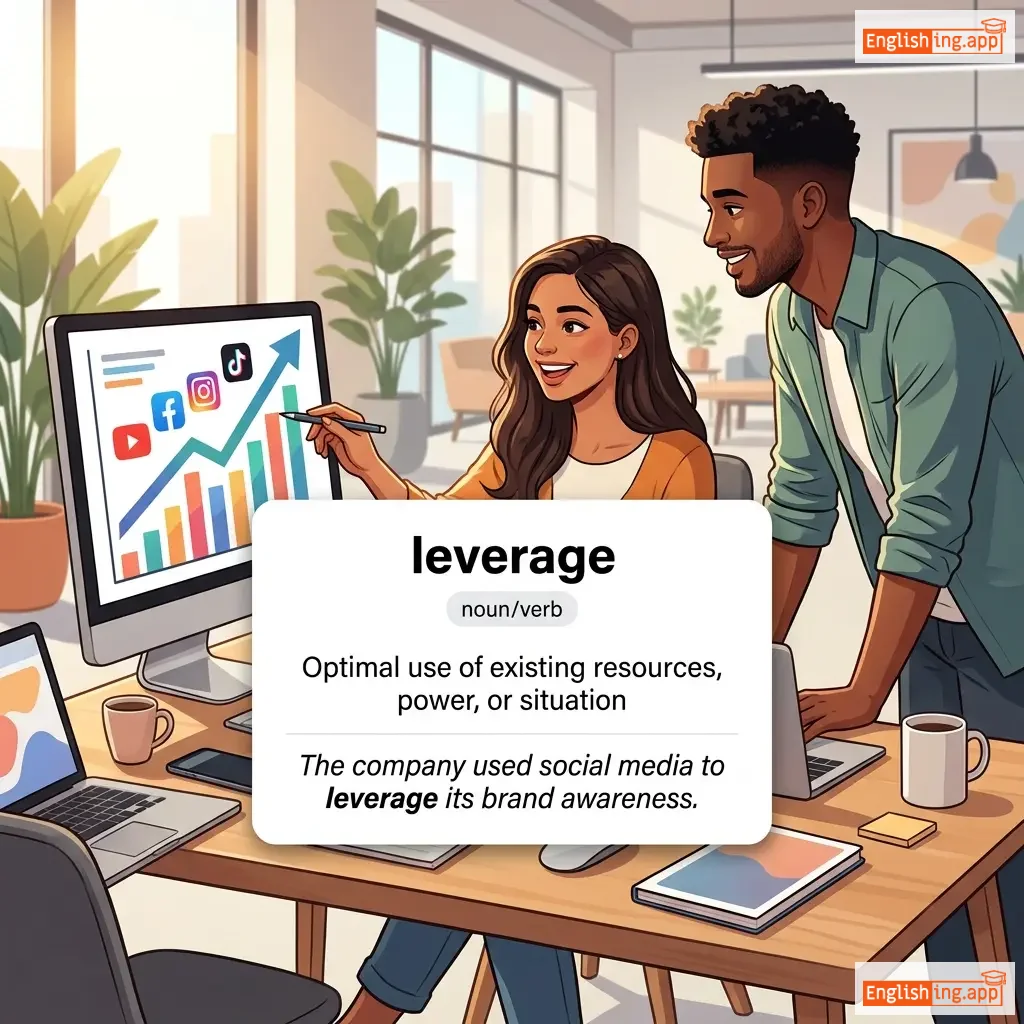
leverage definition card — visual illustration of the meaning
noun/verb
/ˈlɛv.ər.ɪdʒ/
利用 (lì yòng)

Optimal use of existing resources, power, or situation

"The company used social media to leverage its brand awareness."

"公司利用社交媒体提升品牌知名度。" (Gōngsī lì yòng shèjiāo méitǐ tíshēng pǐnpái zhīmíng dù.)
noun
/lɪˈvaɪəθən/
巨大海怪 (jùdà hǎiguài)

a huge sea monster or something very large and powerful.

"The ship looked like a leviathan on the horizon."

"那艘船在地平线上看起来像一只巨大的海怪。" (Nà sōu chuán zài dìpíngxiàn shàng kàn qǐlái xiàng yī zhī jùdà de hǎiguài.)
verb
/ˈlɛvɪteɪt/
悬浮 (xuánfú)

to rise or float in the air, usually without visible support.

"The magician made the table levitate during the show."
"魔术师让桌子在表演中悬浮。" (Móshùshī ràng zhuōzi zài biǎoyǎn zhōng xuánfú.)
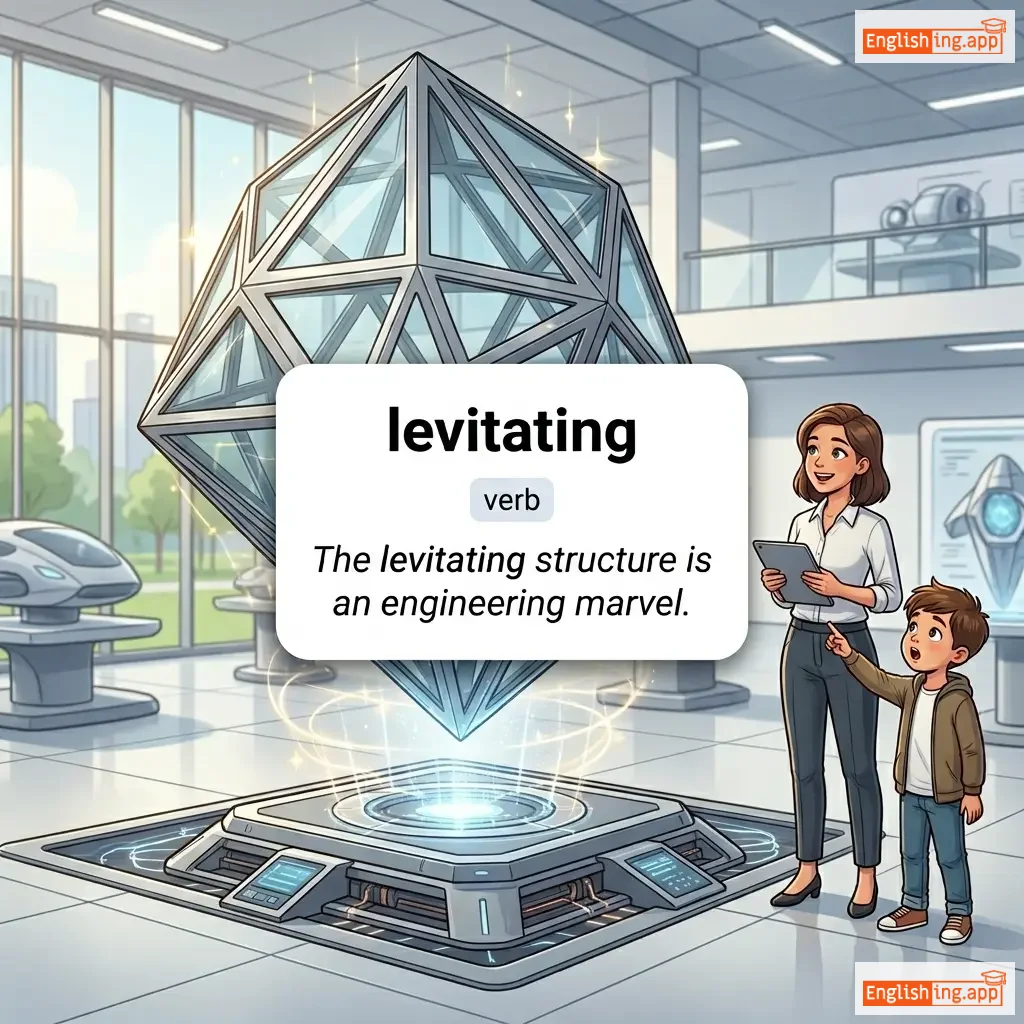
levitating definition card — visual illustration of the meaning
verb
ˈlev.ɪ.teɪ.tɪŋ
悬浮 (xuanfu)

Rising and hovering in the air, especially as a result of supernatural or magical power.

"The levitating structure is an engineering marvel."

"这座悬浮结构是一个工程奇迹。" (Zhe zuo xuanfu jiegou shi yige gongcheng qiji.)
Levity definition card — visual illustration of the meaning
noun
/ˈlɛvɪti/

Lightness of manner or speech, especially when inappropriate; lack of seriousness.

"His attempt to bring levity to the tense meeting was appreciated."

verb
/ˈlɛvi/
征收 (zhēng shōu)

To impose or collect, especially a tax or fine.

"The government decided to levy a new tax on luxury goods."

"政府决定对奢侈品征收新税。" (zhèng fǔ jué dìng duì shē chǐ pǐn zhēng shōu xīn shuì.)
adjective
/luːd/
猥亵 (wěixiè)

Sexually offensive, obscene, or vulgar.

"He was arrested for making lewd remarks in public."

"他因在公共场合发表猥亵言论而被捕。" (Tā yīn zài gōnggòng chǎnghé fābiǎo wěixiè yánlùn ér bèi bǔ.)
noun
/ˌlɛksɪˈkɒɡrəfər/
词典编纂者 (cídiǎn biānzuǎn zhě)

A person who compiles, writes, or edits dictionaries.

"The lexicographer spent years compiling the dictionary."

"词典编纂者花了几年时间编写词典。" (Cídiǎn biānzuǎn zhě huāle jǐ nián shíjiān biānxiě cídiǎn.)
noun
/ˌlɛksɪˈkɒɡrəfi/
词典编纂学 (cidian bianzhuanxue)

The art or practice of compiling dictionaries.

"Lexicography requires both linguistic and cultural knowledge."
"词典编纂学需要语言学和文化知识。" (Cidian bianzhuanxue xuyao yuyanxue he wenhuazhishi.)
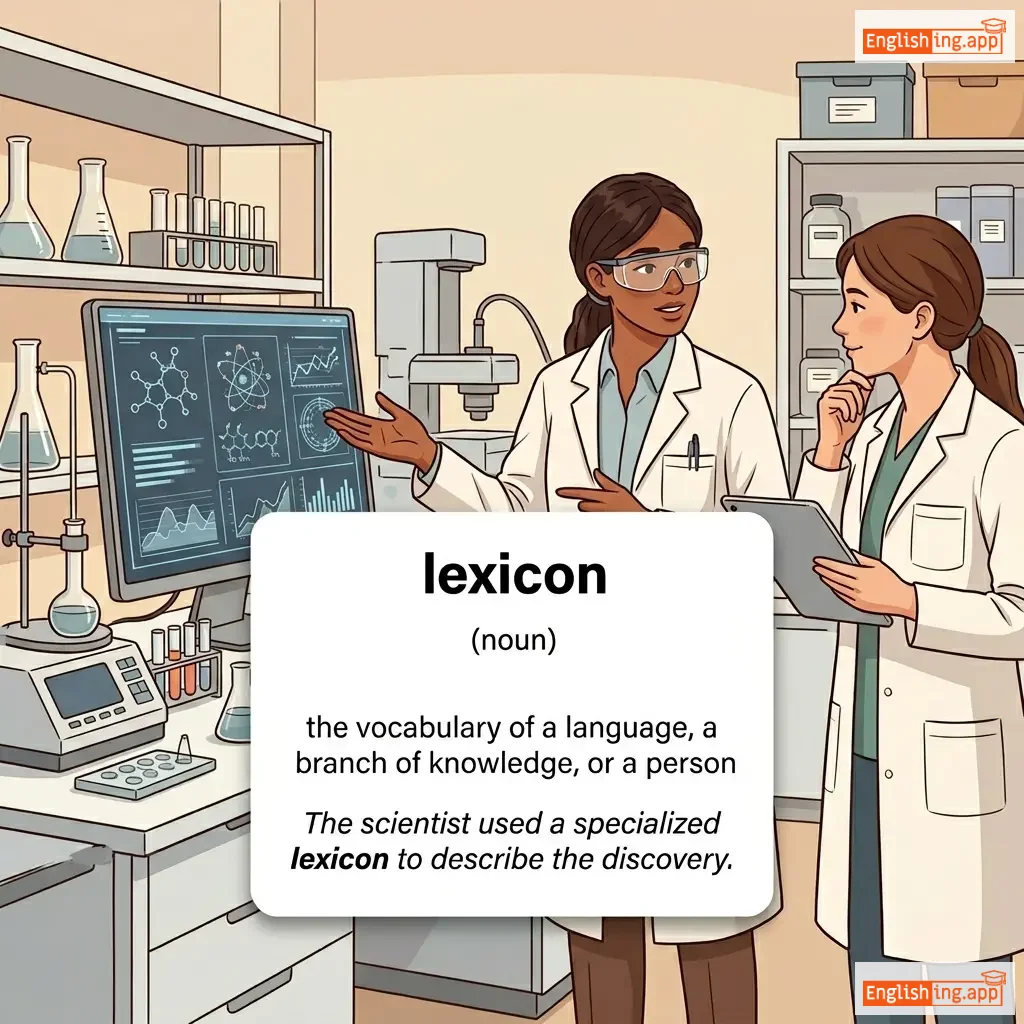
lexicon definition card — visual illustration of the meaning
noun
/ˈlɛksɪkən/
词汇表 (cíhuìbiǎo)

the vocabulary of a language, a branch of knowledge, or a person

"The scientist used a specialized lexicon to describe the discovery."
"科学家使用了专业的词汇表来描述这一发现。" (Kēxuéjiā shǐyòngle zhuānyè de cíhuìbiǎo lái miáoshù zhè yī fāxiàn.)
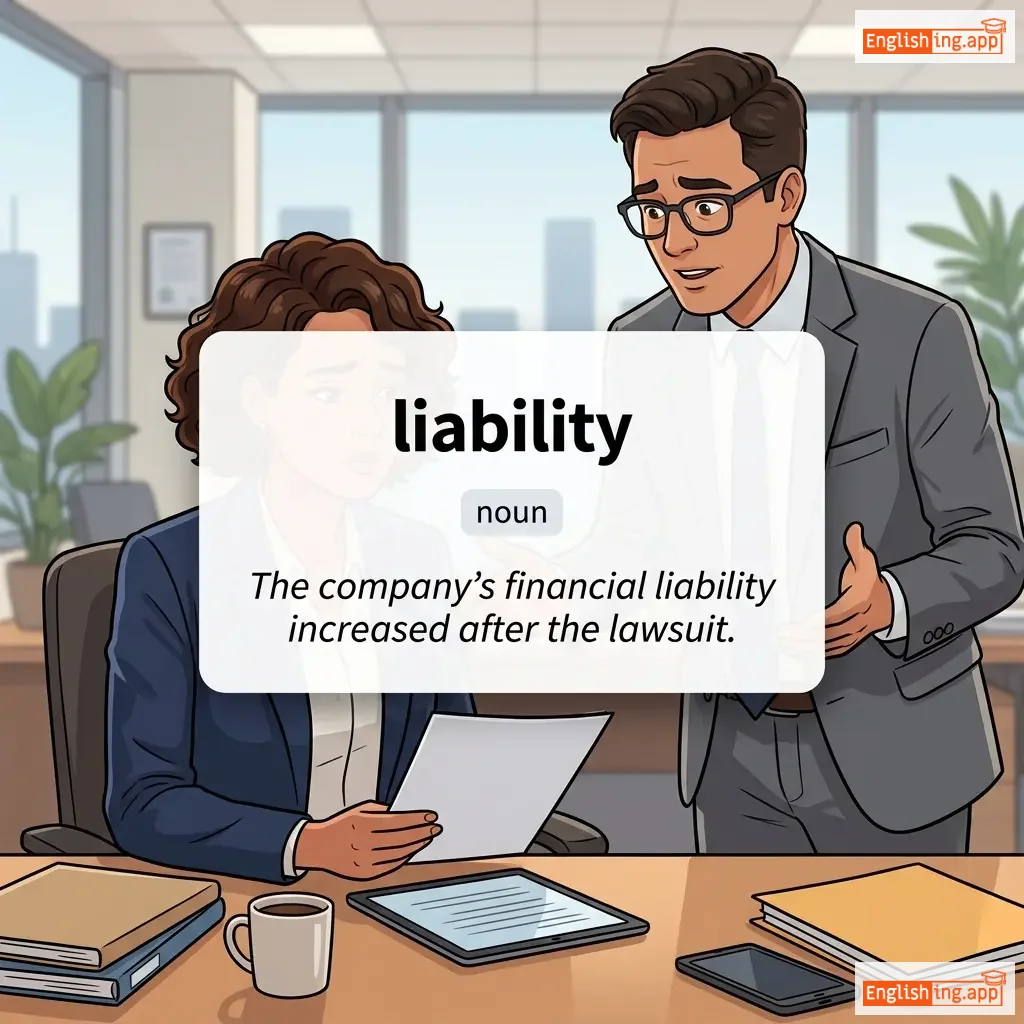
liability definition card — visual illustration of the meaning
noun
/ˌlaɪəˈbɪləti/
责任 (zérèn)

the state of being legally responsible for something; something that acts as a disadvantage

"The company’s financial liability increased after the lawsuit."

"公司在诉讼后增加了财务责任。" (Gōngsī zài sùsòng hòu zēngjiāle cáiwù zérèn.)
adjective
/ˈlaɪəbl/
有责任的 (yǒu zérèn de)

legally responsible or likely to be affected by something

"He is liable to pay damages for the accident."

"他有责任为事故支付赔偿金。" (Tā yǒu zérèn wèi shìgù zhīfù péichángjīn.)
noun
/liˈeɪzɒn/
联络人 (liánluò rén)

communication or cooperation between people or groups for a smooth working relationship

"She works as a liaison between the company and its clients."

"她在公司与客户之间担任联络人。" (Tā zài gōngsī yǔ kèhù zhījiān dānrèn liánluò rén.)
noun
/ˈlaɪ.ər/
骗子 (pianzi)

a person who tells lies; someone who does not tell the truth

"Nobody trusts him because he is a liar."

"没有人相信他,因为他是个骗子。" (Méiyǒu rén xiāngxìn tā, yīnwèi tā shì gè piànzi.)
noun
/ˈlaɪbəl/
诽谤 (feibang)

a published false statement that damages a person's reputation

"The newspaper was sued for libel after publishing false claims."

"报纸因发布虚假声明而被起诉诽谤。" (Baozhi yin fabu xujia shengming er bei qisu feibang.)
adjective
/ˈlaɪbələs/
诽谤的 (feibang de)

containing or constituting a false published statement that damages a person's reputation

"The article was found to be libelous and had to be retracted."
"该文章被认为是诽谤的,必须撤回。" (Gai wenzhang bei renwei shi feibang de, bixu chehui)
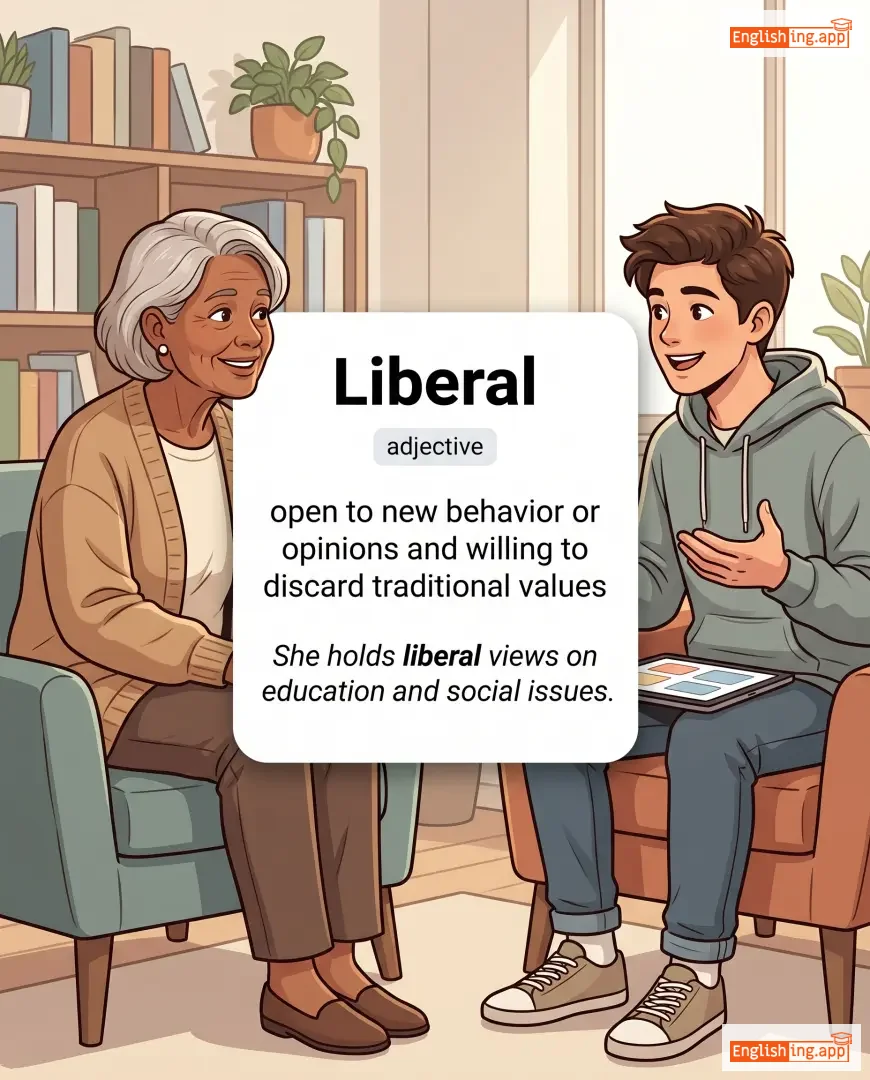
Liberal definition card — visual illustration of the meaning
adjective
/ˈlɪbərəl/
自由主义的 (zìyóu zhǔyì de)

open to new behavior or opinions and willing to discard traditional values

"She holds liberal views on education and social issues."

"她对教育和社会问题持自由主义观点。" (Tā duì jiàoyù hé shèhuì wèntí chí zìyóu zhǔyì guāndiǎn.)
noun
/ˈlɪbərəlɪzəm/
自由主义 (zìyóu zhǔyì)

a political and social philosophy advocating individual freedoms, democracy, and equality

"Liberalism emphasizes freedom of speech and human rights."

"自由主义强调言论自由和人权。" (Zìyóu zhǔyì qiángdiào yánlùn zìyóu hé rénquán.)
noun
/ˈlɪbərəlɪst/
自由主义者 (zìyóu zhǔyì zhě)

a person who supports liberal ideas and principles

"He is a well-known liberalist advocating human rights."
"他是一个著名的自由主义者,提倡人权。" (Tā shì yīgè zhùmíng de zìyóu zhǔyì zhě, tìchàng rénquán.)
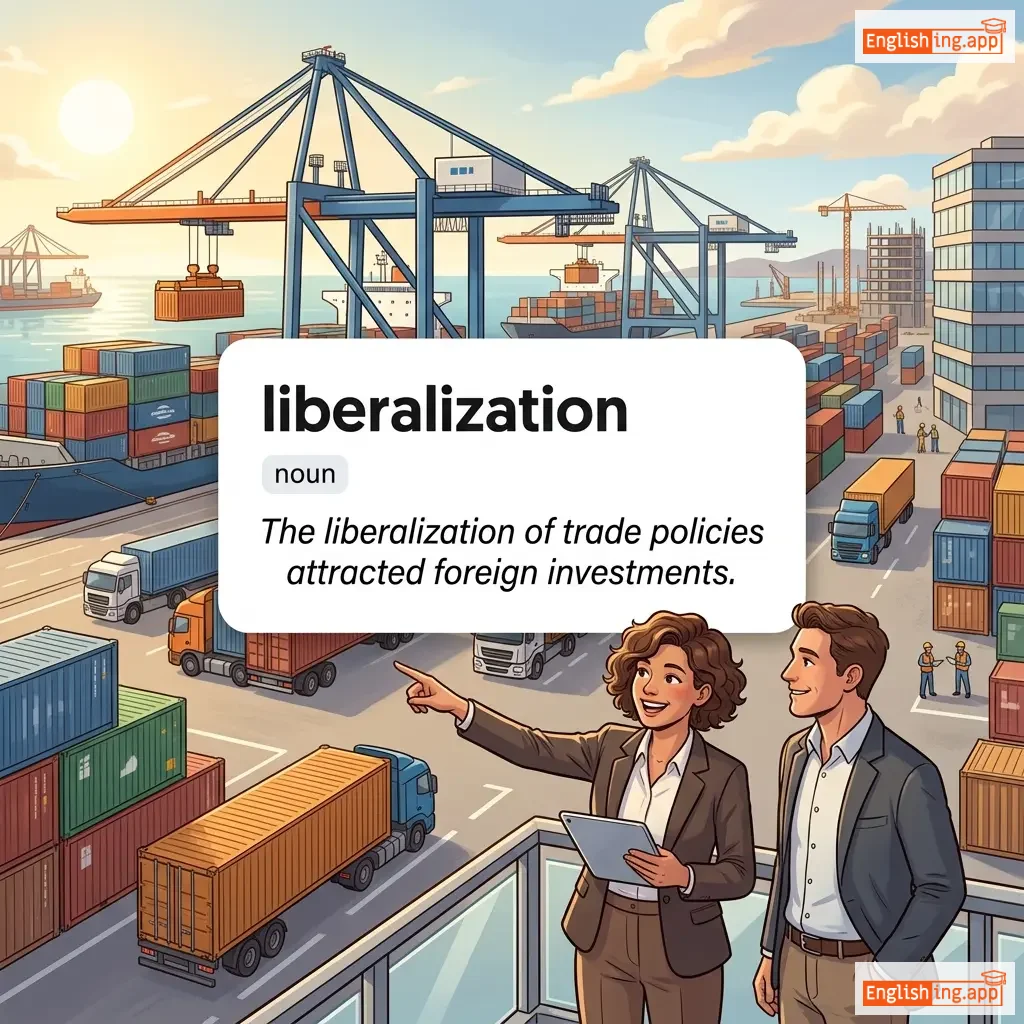
liberalization definition card — visual illustration of the meaning
noun
ˌlɪb.ər.ə.laɪˈzeɪ.ʃən
自由化 (zì yóu huà)

The removal or loosening of restrictions on something, typically an economic or political system.

"The liberalization of trade policies attracted foreign investments."
"贸易政策的自由化吸引了外国投资。" (Màoyì zhèngcè de zìyóuhuà xīyǐnle wàiguó tóuzī.)
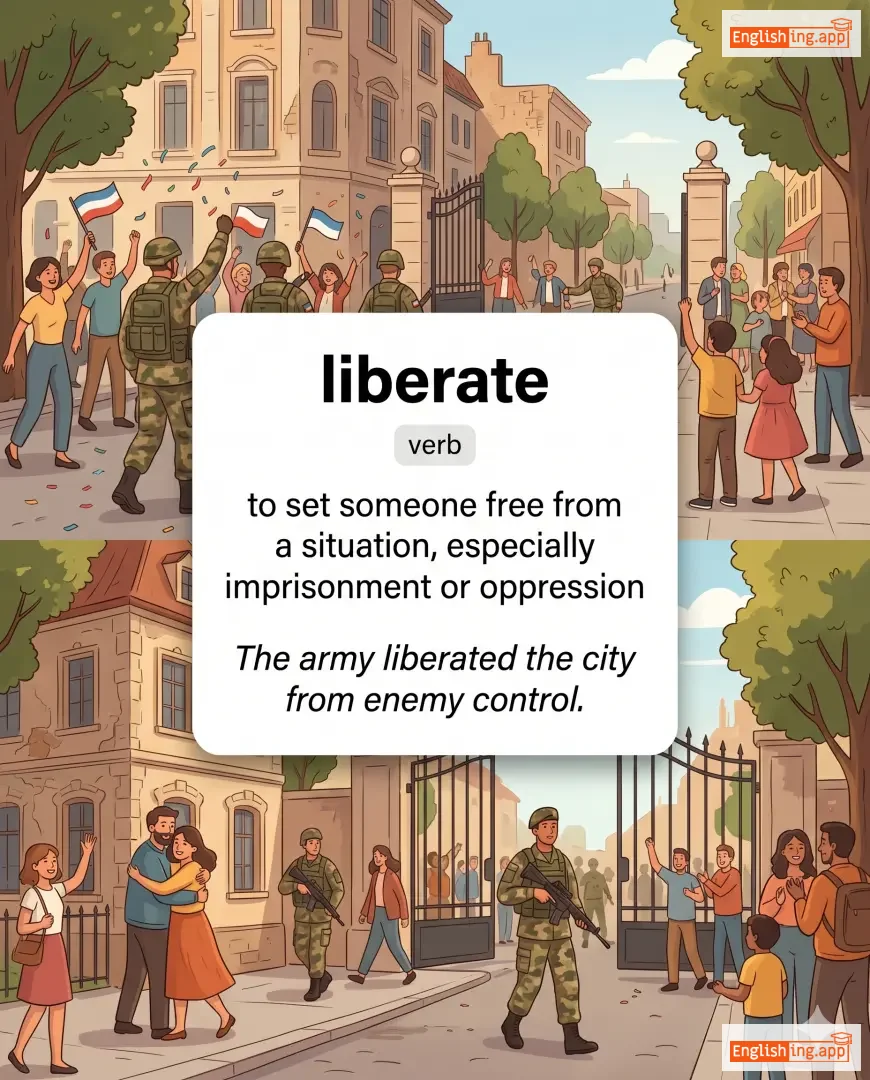
liberate definition card — visual illustration of the meaning
verb
/ˈlɪbəreɪt/
解放 (jiěfàng)

to set someone free from a situation, especially imprisonment or oppression

"The army liberated the city from enemy control."

"军队解放了这座城市,摆脱了敌人的控制。" (Jūnduì jiěfàngle zhèzuò chéngshì, bàituōle dírén de kòngzhì.)