词汇表

英语词汇词典 | 单词含义、定义和示例

noun
/ˈlæn.sɪt/
外科小刀 (waike xiaodao)

a small, sharp, two-edged surgical knife used for making small incisions

"The doctor used a lancet to prick the patient’s finger for a blood test."

"医生用兰塞特刺破病人的手指进行血液检测。" (Yisheng yong lanset cipo bingren de shouzhi jinxing xueye jiancha.)
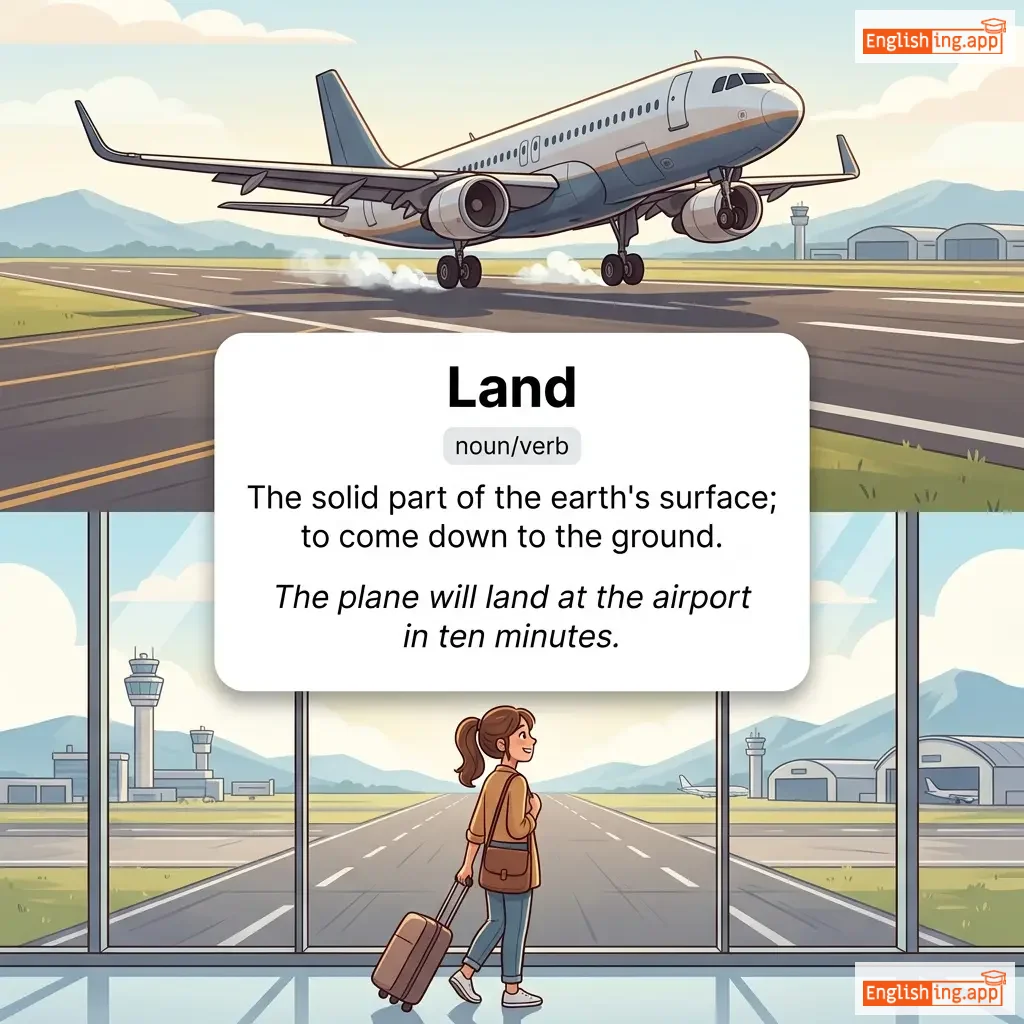
Land definition card — visual illustration of the meaning
noun/verb
/lænd/
土地 / 降落 (tudi / jiangluo)

The solid part of the earth's surface; to come down to the ground.

"The plane will land at the airport in ten minutes."

"飞机将在十分钟内降落在机场。" (Feiji jiang zai shifen zhong nei jiangluo zai jichang.)
noun
/ˈlænd.lɔːrd/
房东 (fángdōng)

a person who owns property and rents it to tenants

"The landlord collected the monthly rent from all tenants."

"房东从所有租户那里收取了每月租金。" (Fángdōng cóng suǒyǒu zūhù nàlǐ shōu qǔ le měi yuè zūjīn.)
noun
/ˈlænd.fɪl/
垃圾填埋场 (laji tianmaichang)

a site where waste material is buried under the ground

"The city built a new landfill to manage its growing waste problem."

"这个城市建造了一个新的垃圾填埋场,以应对日益增长的废物问题。" (Zhege chengshi jianzao le yige xin de laji tianmaichang, yi yingdui riyu zengzhang de feiwu wenti.)
noun
/ˈlændˌhoʊl.dər/
土地所有者 (tǔdì suǒyǒu zhě)

a person who owns land, especially in large amounts

"The landholder leased part of his property to local farmers."

"土地所有者将部分财产租给了当地的农民。" (Tǔdì suǒyǒu zhě jiāng bùfen cáichǎn zū gěi le dāngdì de nóngmín.)
noun
/ˈlændɪŋ/
着陆 (zhuó lù)

the act of coming down to the ground or a surface from the air

"The plane made a smooth landing on the runway."

"飞机顺利地在跑道上着陆。" (fēi jī shùn lì de zài pǎo dào shàng zhuó lù.)
noun
/ˈlænd.leɪ.di/
女房东 (nǚ fángdōng)

a woman who rents out land, a building, or accommodation; a female property owner

"The friendly landlady provided fresh towels and showed us around the apartment."

"友好的女房东提供了新鲜的毛巾,并带我们参观了公寓。" (Yǒuhǎo de nǚ fángdōng tígōngle xīnxiān de máojīn, bìng dài wǒmen cānguānle gōngyù.)
noun
/ˈlændlɔːrd/
房东 (fangdong)

A person who owns and rents out land, buildings, or accommodation.

"The landlord increased the rent for all tenants this year."

"今年房东提高了所有租户的租金。" (Jīnnián fángdōng tígāo le suǒyǒu zūhù de zūjīn.)
landmark definition card — visual illustration of the meaning
noun
/ˈlændmɑːrk/
地标 (dǐbiāo)

A recognizable object or structure that serves as a point of reference, or an event marking an important stage.

"The Eiffel Tower is a famous landmark in Paris."

"埃菲尔铁塔是巴黎的著名地标。" (āi fēi ěr tiě tǎ shì bālí de zhùmíng dìbiāo.)
noun
/ˈlændskeɪp/
风景 (fengjing)

All the visible features of an area of land, often considered in terms of their aesthetic appeal.

"The mountain landscape was breathtaking."

"山区的风景令人叹为观止。" (Shāns hē de fēng jǐng lìng rén tàn wéi guān zhǐ.)
noun
/ˈlænd.slaɪd/
山体滑坡 (shanti huapo)

a collapse of a mass of earth or rock from a mountain or cliff; an overwhelming victory in an election

"Heavy rains triggered a massive landslide that blocked the mountain highway."

"暴雨引发了一场巨大的山体滑坡,堵塞了山路。" (baoyu yinfa le yi chang juda de shanti huapo, dusai le shanlu.)
noun
/leɪn/
小路 (xiaolu)

a narrow road or path, often in the countryside or for specific traffic

"They walked down a quiet country lane."

"他们走在一条安静的乡间小路上。" (Tāmen zǒu zài yītiáo ānjìng de xiāngjiān xiǎolù shàng.)
noun
/læŋ'ɡʊər/
长尾猴 (chang wei hou)

a long-tailed monkey found in Asia, especially India and Southeast Asia

"The langoor was sitting on the tree branch eating fruits."
"那只长尾猴正坐在树枝上吃水果。" (na zhi chang wei hou zheng zuo zai shu zhi shang chi shui guo)
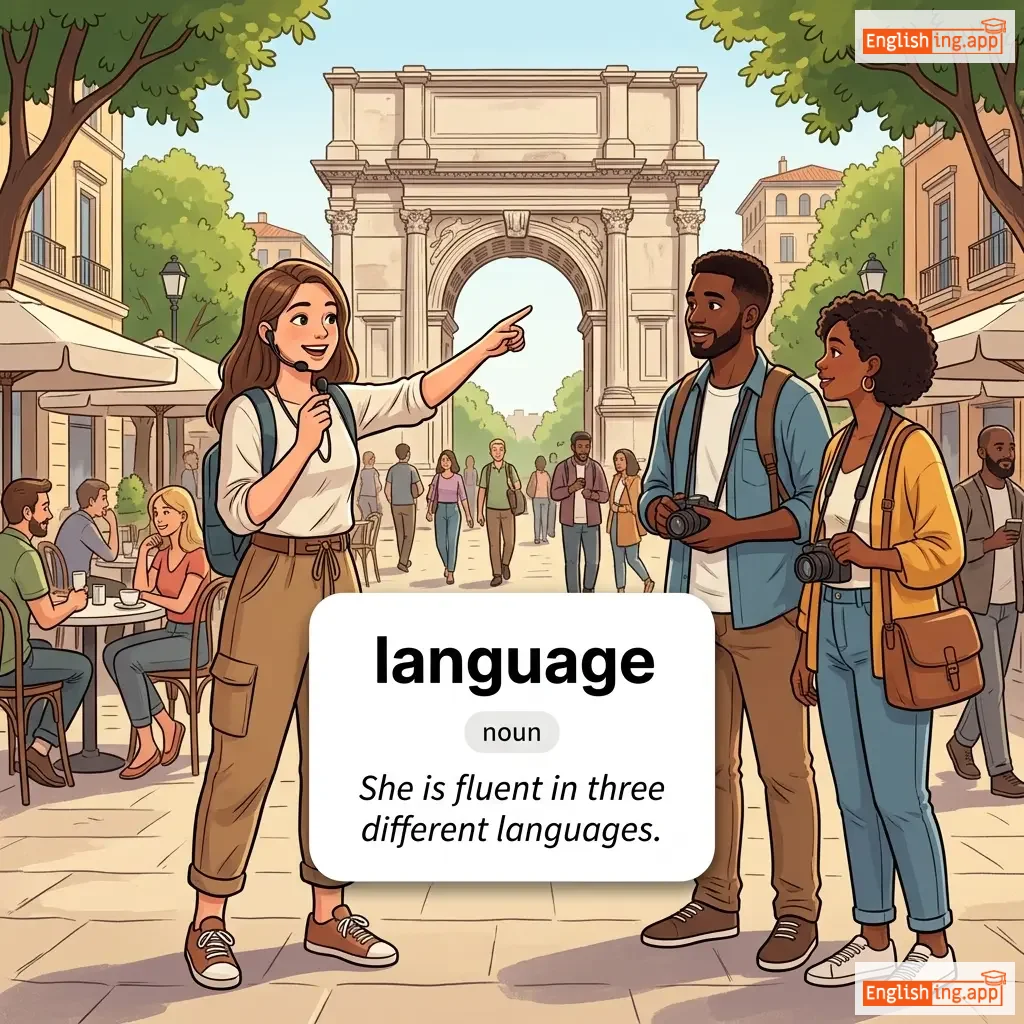
language definition card — visual illustration of the meaning
noun
/ˈlæŋɡwɪdʒ/
语言 (yǔyán)

the system of communication used by a particular community, including spoken and written words

"She is fluent in three different languages."
"她流利地说三种不同的语言。" (Tā liúlì de shuō sān zhǒng bùtóng de yǔyán.)
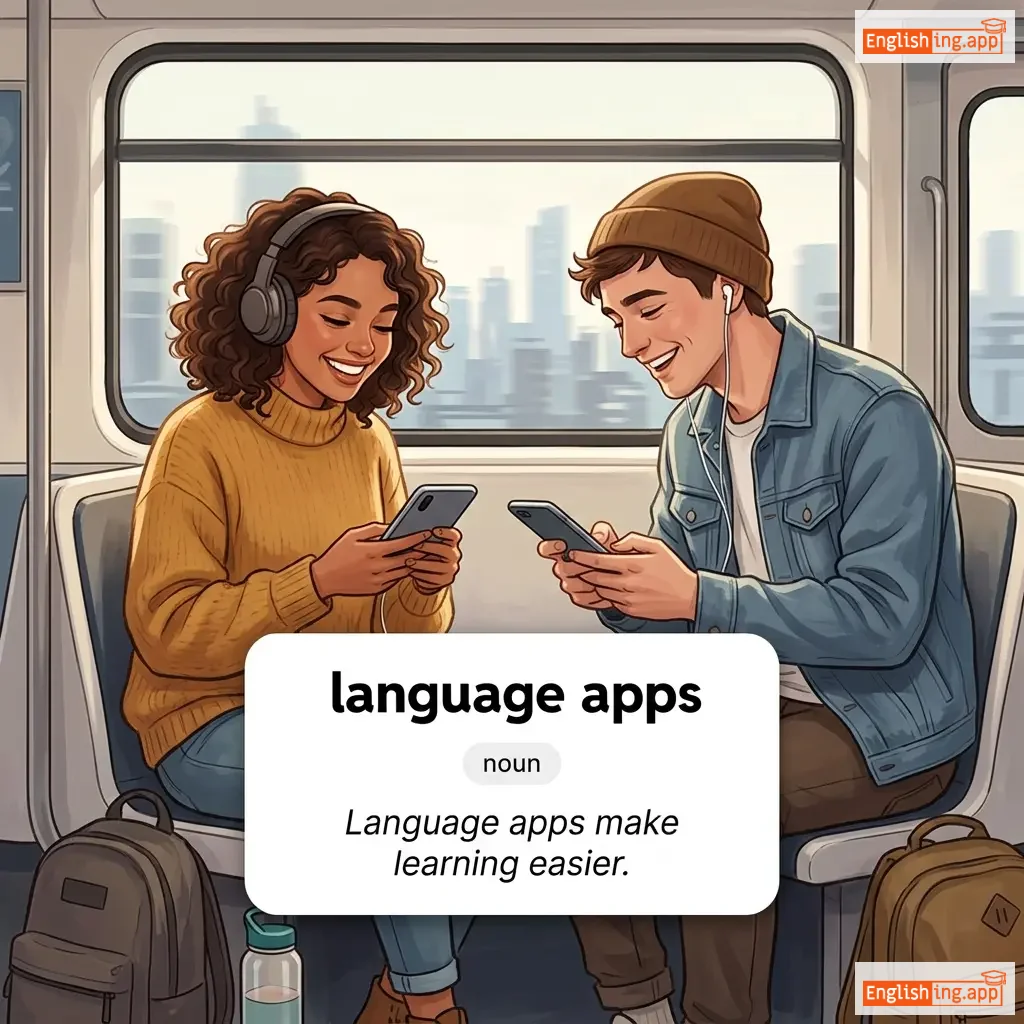
language apps definition card — visual illustration of the meaning
noun
ˈlæŋɡwɪdʒ æps
语言学习应用 (yǔyán xuéxí yìngyòng)

Mobile or computer applications designed to help users learn new languages through interactive lessons and exercises.

"Language apps make learning easier."

"语言应用程序使学习变得更加容易。" (Yǔyán xuéxí yìngyòng chéngxù shǐ xuéxí biàn dé gèngjiā róngyì.)
adjective
/ˈlæŋɡwɪd/
无力 (wúlì)

Displaying or having a disinclination for physical exertion; weak or faint.

"He gave a languid wave before leaving the room."
"他在离开房间前做了一个无力的挥手。" (Tā zài líkāi fángjiān qián zuòle yīgè wúlì de huī shǒu.)
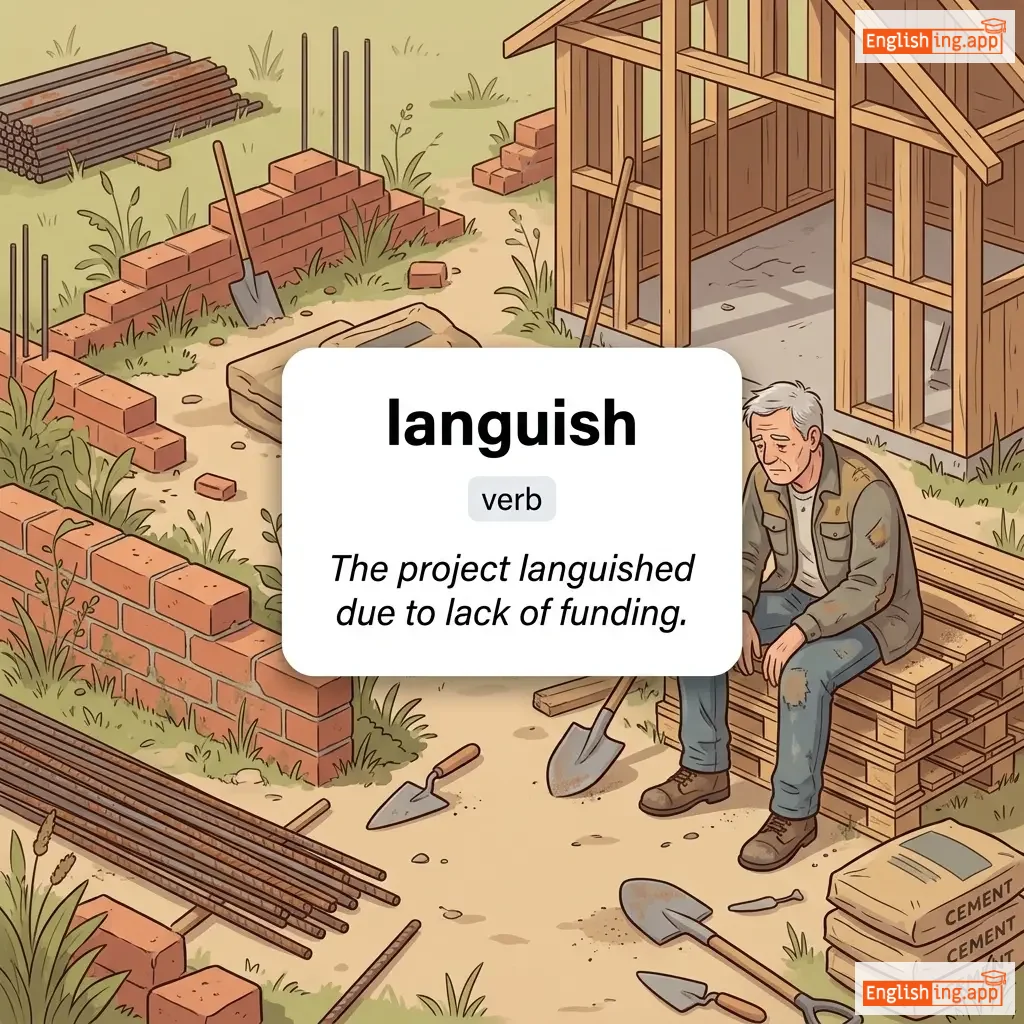
languish definition card — visual illustration of the meaning
verb
/ˈlæŋɡwɪʃ/
虚弱 / 被忽视 (xūruò / bèi hūshì)

To become weak or feeble; to suffer neglect or remain in an unpleasant situation for a long time.

"The project languished due to lack of funding."

"该项目因缺乏资金而停滞不前。" (Gāi xiàngmù yīn quēfá zījīn ér tíngzhì bù qián.)
noun
/ˈlæŋɡər/
倦怠 (juandai)

A state of tiredness, inertia, or dreamy relaxation.

"The hot afternoon filled her with languor."

"炎热的下午让她感到疲倦。" (Yánrè de xiàwǔ ràng tā gǎndào píláo.)
adjective
/læŋk/
高而瘦 (gao er shou)

Tall, thin, and often awkward in appearance.

"The lank teenager towered over his classmates."

"那个高而瘦的少年比他的同班同学高。" (Na ge gao er shou de shaonian bi tade tongban tongxue gao.)
noun
/lænˈtɑː.nə/
兰塔纳 (lantana)

a tropical flowering plant with clusters of small colorful flowers

"The lantana flowers attract butterflies to the garden."

"兰塔纳的花朵吸引蝴蝶到花园。" (Lántǎnà de huāduǒ xīyǐn húdié dào huāyuán.)
noun
/ˈlæn.tərn/
灯笼 (dēnglong)

a portable lamp with a protective covering, often used outdoors

"We carried a lantern during our camping trip."

"我们在露营时带着灯笼。" (Wǒmen zài lùyíng shí dàizhe dēnglong.)
noun/verb
/læp/
幸福 (xìngfú)

As noun: the flat area between the waist and knees of a seated person; As verb: to drink liquid with the tongue.

"The child sat on her mother's lap."

"当她获得奖项时,她无法掩饰自己的幸福。" (Dāng tā huòdé jiǎngxiàng shí, tā wúfǎ yǎnshì zìjǐ de xìngfú.)
noun/adjective
/ˈlæpɪˌdɛri/
宝石雕刻师 (baoshi diaoke shi)

As noun: a person who cuts, polishes, or engraves precious stones; As adjective: relating to such work.

"The museum displayed lapidary tools used in ancient times."

"博物馆展示了古代使用的宝石雕刻工具。" (Bowuguan zhanshi le gudai shiyong de baoshi diaoke gongju.)
noun/verb
/læps/
失误 (shiwu)

As noun: a temporary failure or slip; As verb: to end or fall into disuse.

"She apologized for her lapse in judgment."

"她为判断失误道歉。" (Ta wei panduan shiwu dao-qian.)
noun
/ˈlɑːrsəni/
盗窃 (dàoqiè)

The unlawful taking of personal property with intent to deprive the rightful owner of it.

"He was arrested for committing larceny at the store."

"他因在商店犯盗窃罪被逮捕。" (Tā yīn zài shāngdiàn fàn dàoqiè zuì bèi dàibǔ.)
noun
/ˈlɑːrdər/
储藏室 (chǔcángshì)

A place, such as a pantry, where food is stored.

"The larder was full of fresh bread and cheese."

"储藏室里满是新鲜的面包和奶酪。" (Chǔcángshì lǐ mǎn shì xīnxiān de miànbāo hé nǎilào.)
adjective
/lɑrdʒ/
(da)

big in size, amount, or number

"They live in a large house near the river."

"他们住在河边的一座大房子里。" (Tāmen zhù zài hé biān de yī zuò dà fángzi lǐ.)
adjective
/lɑːrdʒ skeɪl/
大规模 (dà guīmó)

involving a large number or quantity, or covering a large area

"The company is planning a large-scale expansion into international markets."

"该公司计划在国际市场进行大规模扩张。" (Gāi gōngsī jìhuà zài guójì shìchǎng jìnxíng dà guīmó kuòzhāng.)
adverb
/ˈlɑːrdʒli/
主要 (zhǔ yào)

to a great extent; mostly or mainly

"The success of the project was largely due to teamwork."

"这个项目的成功主要归功于团队合作。" (Zhège xiàngmù de chénggōng zhǔ yào guīgōng yú tuánduì hézuò.)
noun
/lɑːrˈʒes/
慷慨 (kangkai)

Generosity in giving gifts or money.

"The foundation survived thanks to the largess of wealthy donors."
"这个基金会得以生存,多亏了富有捐赠者的慷慨。" (Zhège jījīn huì dé yǐ shēngcún, duō kuīle fùyǒu juānzèng zhě de kāngkǎi.)
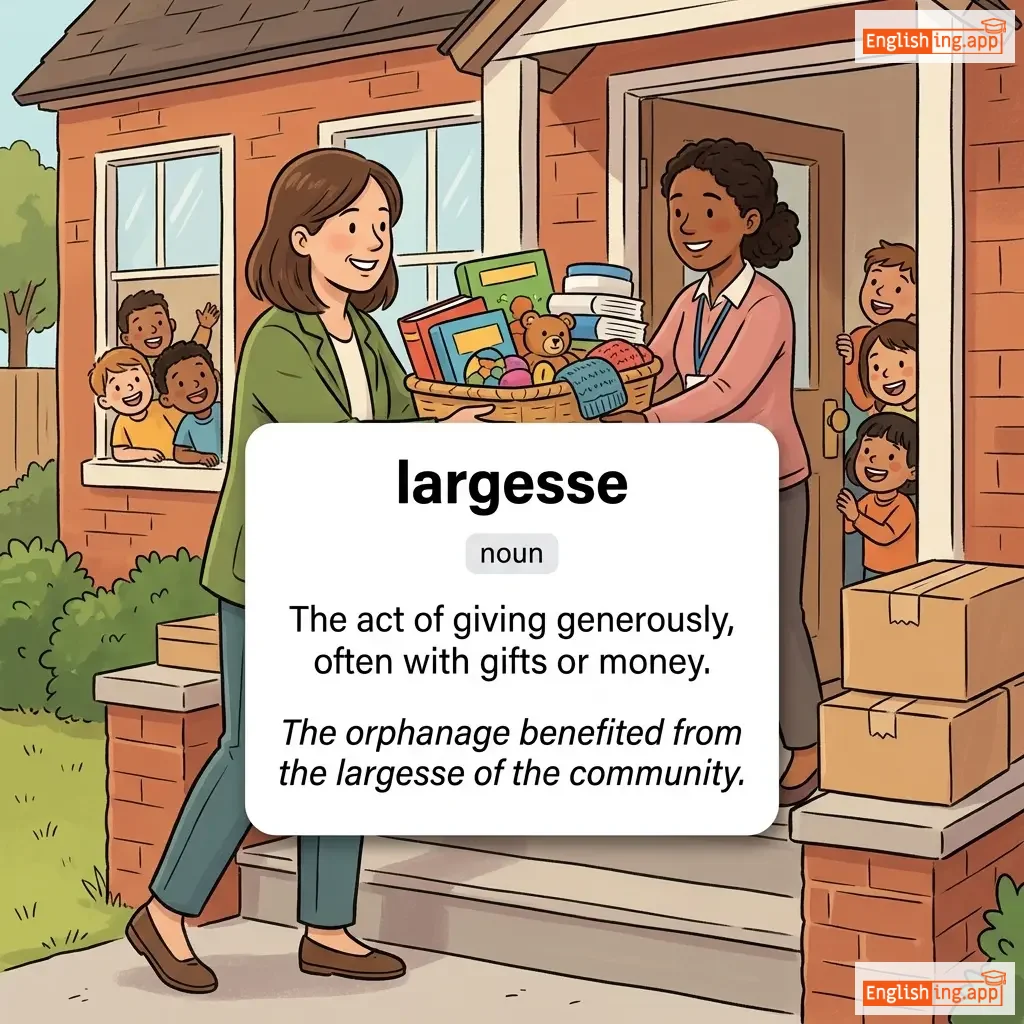
largesse definition card — visual illustration of the meaning
noun
/lɑːrˈʒɛs/
慷慨 (kāngkǎi)

The act of giving generously, often with gifts or money.

"The orphanage benefited from the largesse of the community."

"孤儿院从社区的慷慨中受益。" (Gū'ér yuàn cóng shèqū de kāngkǎi zhōng shòuyì.)
noun
/ˈlæriət/
套索 (taosuo)

A long rope with a noose at one end used to catch animals such as cattle or horses.

"The cowboy threw his lariat to catch the stray horse."

"牛仔投掷了他的套索,捕捉到了迷路的马。" (Niuzai touzhile tade taosuo, buchu daole milu de ma.)
lascivious definition card — visual illustration of the meaning
adjective
/ləˈsɪviəs/
淫荡 (yín dàng)

showing an overt and often offensive sexual desire

"The lascivious remarks made everyone uncomfortable."

"那些淫荡的评论让每个人都感到不舒服。" (Nàxiē yíndàng de pínglùn ràng měi gèrén dōu gǎndào bù shūfú.)
noun
/ˈleɪzər/
激光 (jiguang)

a device that emits a concentrated beam of light

"The doctor used a laser to perform eye surgery."

"医生使用激光进行眼部手术。" (Yīshēng shǐyòng jīguāng jìnxíng yǎnbù shǒushù.)
verb
/læʃ/
抽打/绑紧 (chōudǎ/bǎng jǐn)

to strike with a whip or to fasten tightly

"The sailor lashed the rope to the mast."

"水手把绳子绑到桅杆上。" (Shuǐshǒu bǎ shéngzi bǎng dào wéigǎn shàng.)
noun
/ˈlæsi/
小女孩 (xiao nǚhái)

a young girl (informal, mainly Scottish)

"The old man greeted the little lassie warmly."
"老人热情地迎接了小女孩。" (lǎorén rèqíng de yíngjiēle xiǎo nǚhái.)
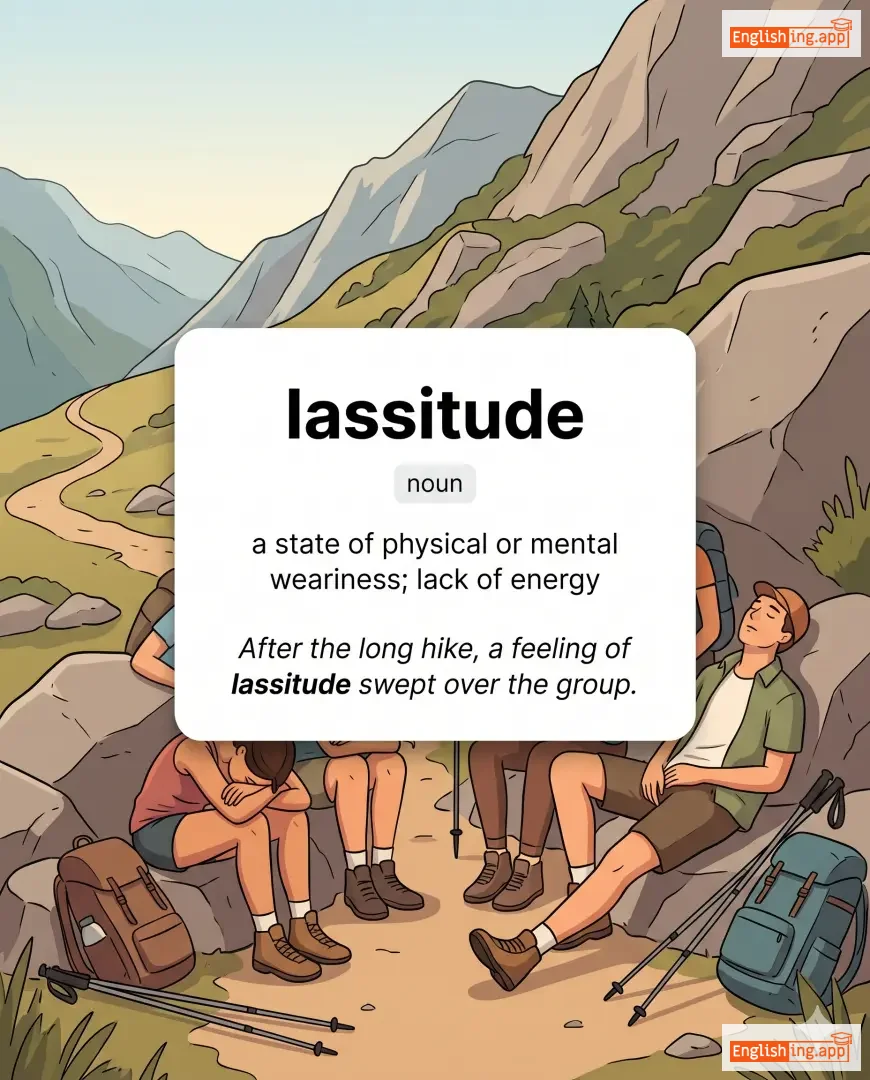
lassitude definition card — visual illustration of the meaning
noun
/ˈlæsɪtjuːd/
疲劳 (píláo)

a state of physical or mental weariness; lack of energy

"After the long hike, a feeling of lassitude swept over the group."

"长时间徒步后,疲劳感笼罩了整个团队。" (Cháng shíjiān túbù hòu, píláo gǎn lǒngzhào le zhěnggè tuánduì.)
noun/verb
/læˈsuː/
套索 (taosuo)

a rope with a loop used to catch animals; to catch with such a rope

"The cowboy lassoed the horse quickly."

"牛仔快速用拉索抓住了马。" (Niúzǎi kuàisù yòng lāsuǒ zhuāzhù le mǎ.)
last definition card — visual illustration of the meaning
verb/adjective/noun
/læst/
持续 / 最后 (chíxù / zuìhòu)

to continue for a period of time; coming after all others

"The meeting lasted for two hours."

"会议持续了两个小时。" (Huiyi chíxùle liǎng gè xiǎoshí.)
adjective
/ˈlæstɪŋ/
持久的; 永久的 (chí jiǔ de; yǒng jiǔ de)

enduring for a long time; permanent; durable

"Their friendship had a lasting impact on both their lives."

"他们的友谊对他们的生活产生了持久的影响。" (Tāmen de yǒuyì duì tāmen de shēnghuó chǎnshēngle chí jiǔ de yǐngxiǎng.)
verb
/lætʃ/
上锁 (shàng suǒ)

to fasten or close something with a latch

"She latched the door before leaving the house."

"她在离开房子之前把门锁上了。" (Tā zài líkāi fángzi zhīqián bǎ mén suǒ shàng le.)
adjective/adverb
/leɪt/
迟到 (chidao)

arriving, happening, or done after the expected time

"He arrived late to the meeting."

"他迟到了会议。" (Tā chídào le huìyì.)
adverb
/ˈleɪtli/
最近 (zuìjìn)

recently; during a period of time not long ago

"I haven’t seen her much lately."

"我最近没怎么见到她。" (Wǒ zuìjìn méi zěnme jiàn dào tā.)
latency definition card — visual illustration of the meaning
noun
/ˈleɪtənsi/
延迟 (yanchi)

The delay before a transfer of data begins following an instruction for its transfer.

"High latency can slow down online gaming experiences."

"高延迟会减慢在线游戏体验。" (Gāo yánchí huì jiǎn màn zàixiàn yóuxì tǐyàn.)
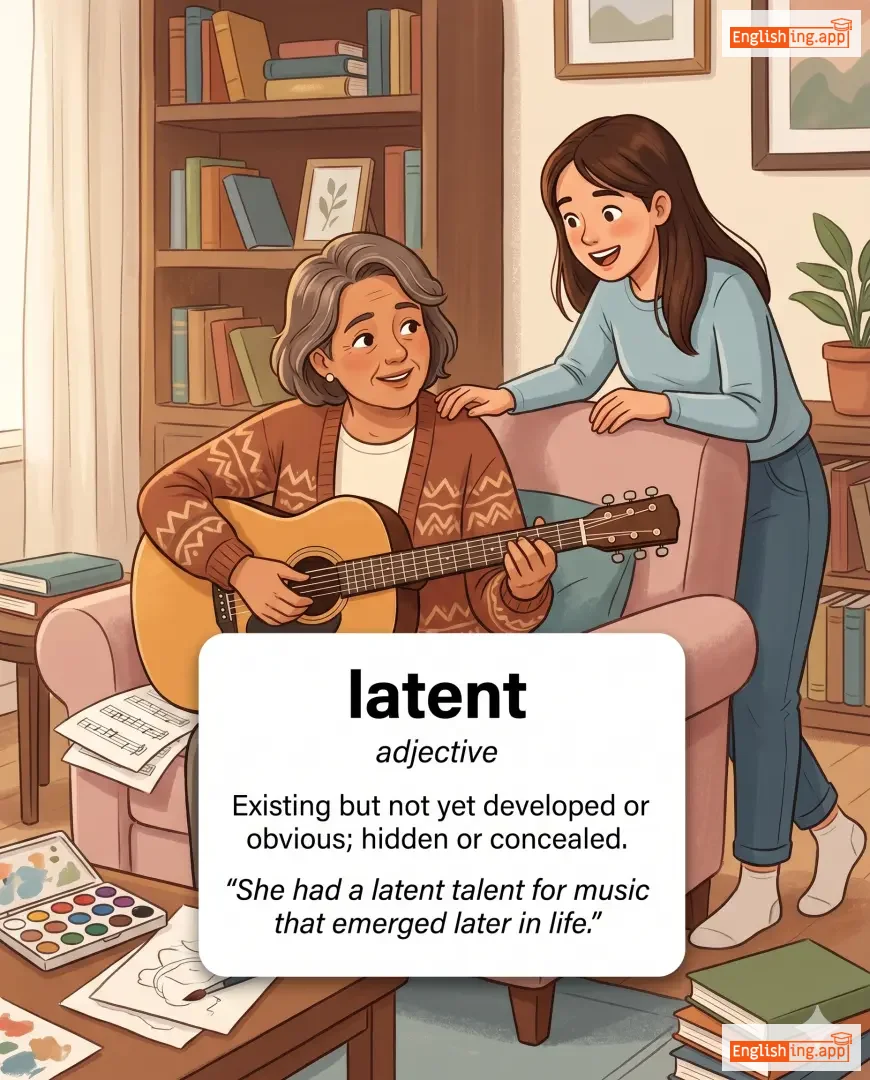
latent definition card — visual illustration of the meaning
adjective
/ˈleɪtənt/

Existing but not yet developed or obvious; hidden or concealed.

"She had a latent talent for music that emerged later in life."

adverb
/ˈleɪtər/
稍后 (shaohou)

At a time subsequent to a reference time; afterwards.

"We will discuss the details later."

"我们稍后讨论细节。" (Women shaohou taolun xijie.)
adjective
/ˈlætərəl/
侧面 (cèmiàn)

Relating to the side or sideways movement.

"The football player made a quick lateral pass."

"足球运动员做了一个快速的侧面传球。" (zúqiú yùndòngyuán zuòle yīgè kuàisù de cèmiàn chuánqiú.)
adjective
/ˈleɪtɪst/
最新的 (zuixin de)

most recent in time; newest available

"She shared the latest updates with the team."

"她与团队分享了最新的更新。" (ta yu tuandui fenxiang le zuixin de gengxin)
noun
/leɪð/
车床 (chēchuáng)

A machine for shaping wood, metal, or other material by rotating it against a cutting tool.

"The carpenter used a lathe to shape the wooden bowl."

"木匠使用车床来塑形木碗。" (Mùjiàng shǐyòng chēchuáng lái sùxíng mùwǎn.)
noun/adjective
/ˈlætɪn/
拉丁语 (ladingyu)

the language of ancient Rome; relating to Latin culture or language

"Many English words are derived from Latin."

"许多英语单词源自拉丁语。" (Xu duo yingyu danci yuanci ladingyu.)