词汇表

英语词汇词典 | 单词含义、定义和示例

noun
/ˌluː.mɪˈnɒs.ɪ.ti/
光度 (guangdu)

The intrinsic brightness of a celestial object; the quality of emitting light.

"The luminosity of the star was measured with advanced instruments."
"星星的光度通过先进的仪器进行了测量。" (Xīngxīng de guāngdù tōngguò xiānjìn de yíqì jìnxíngle cèliàng.)
Luminous definition card — visual illustration of the meaning
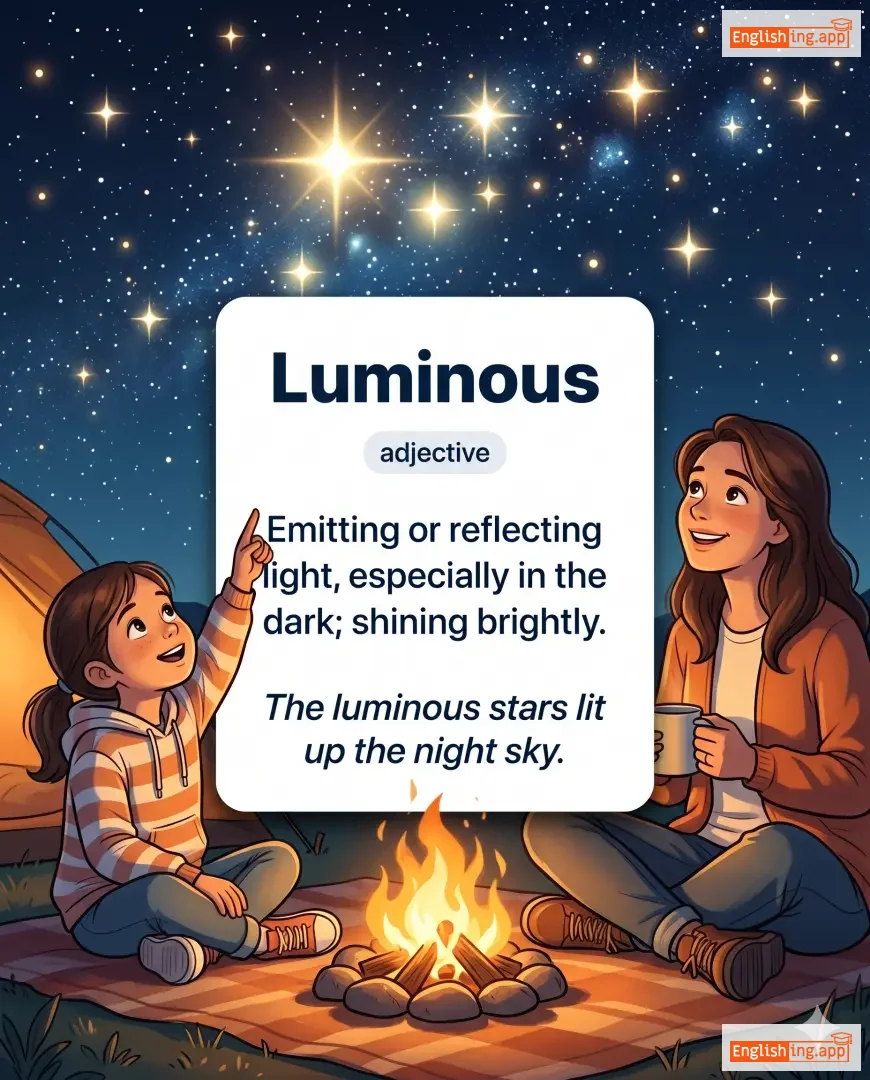
adjective
/ˈluː.mɪ.nəs/
光辉的 (guāng huī de)

Emitting or reflecting light, especially in the dark; shining brightly.

"The luminous stars lit up the night sky."

"光辉的星星照亮了夜空。" (Guāng huī de xīng xīng zhàoliàng le yè kōng.)
noun
/lʌmp/
块; 团; 块状物 (kuai; tuan; kuai zhuang wu)

a compact mass of a substance, especially one without a definite or regular shape

"She found a lump of sugar in the bowl."

"她在碗里发现了一块糖。" (Ta zai wan li faxian le yi kuai tang.)
noun
/ˈluː.nə.si/
疯狂 (fengkuang)

Extreme foolishness or madness; insanity.

"It was sheer lunacy to go hiking in the storm."

"在暴风雨中去远足简直是疯狂。" (Zài bàofēngyǔ zhōng qù yuǎnzú jiǎnzhí shì fēngkuáng.)
adjective
/ˈluː.nər/
月球的 (yuèqiú de)

Relating to the moon.

"The astronauts collected lunar samples during their mission."

"宇航员在任务期间收集了月球样本。" (Yǔhángyuán zài rènwù qījiān shōujíle yuèqiú yàngběn.)
noun
/ˈluːnər ɪˈklɪps/
月全食 (yue quanshi)

an astronomical event when the Earth passes between the Sun and Moon, casting a shadow on the Moon

"We watched the lunar eclipse through telescopes last night."

"我们昨晚通过望远镜观看了月食。" (Women zuowan tongguo wangyuanjing guankanle yueshi)
noun/adjective
/ˈluː.nə.tɪk/
疯子 (fēngzi)

A person who is insane or acting in a foolish or reckless way; also used as an adjective meaning insane.

"The driver was driving like a lunatic on the highway."

"司机在高速公路上像疯子一样开车。" (Sījī zài gāosù gōnglù shàng xiàng fēngzi yīyàng kāichē.)
noun
/lʌntʃ/
午餐 (wucan)

a meal eaten in the middle of the day

"We usually have lunch at 1 p.m."

"我们通常在下午1点吃午餐。" (Women tongchang zai xiawu 1 dian chi wucan.)
noun
/luːn/
新月 (xīnyuè)

A crescent-shaped figure formed by two intersecting arcs; also means 'moon' in French.

"The mathematician studied the properties of the lune."

"数学家研究了新月的特性。" (Shùxuéjiā yánjiūle xīnyuè de tèxìng.)
noun
/lʌŋ/
(fei)

Either of the two organs in the chest that are responsible for breathing and exchanging oxygen and carbon dioxide.

"Smoking can seriously damage your lungs."

"吸烟会严重损害你的肺部。" (Xiyan hui yanzhong sunhai nide feibu.)
noun
/ˈlʊŋ.gi/
伦吉 (lunji)

a traditional garment worn around the waist in South Asia

"He wore a comfortable lungi while relaxing at home."

"他在家里休息时穿着一条舒适的伦吉。" (Tā zài jiālǐ xiūxí shí chuānzhuó yītiáo shūshì de lúnjí.)
🤢

lurch

verb, noun
/lɜːrtʃ/

to make an abrupt, unsteady, or uncontrolled movement; a sudden movement or stagger

"The bus lurched forward as the driver hit the brakes."

verb
/lʊər/
诱惑 (yòuhuò)

to attract or tempt someone, often by offering something appealing

"The advertisement lured customers with promises of discounts."

"广告通过承诺折扣诱使顾客。" (Guǎnggào tōngguò chéngnuò zhékòu yòushǐ gùkè.)
adjective
/ˈljʊərɪd/
令人震惊且生动的轰动性 (lìng rén zhèn jīng qiě shēng dòng de hōng dòng xìng)

shocking or sensational in a vivid way, often involving crime or violence

"The newspaper published a lurid account of the crime."

"报纸发布了一篇令人震惊的犯罪报道。" (Bàozhǐ fābùle yī piān lìng rén zhènjīng de fànzuì bàodào.)
verb
/lɜːrk/
潜伏 (qianfu)

to remain hidden so as to wait for an opportunity to attack or observe

"A stranger lurked in the shadows."

"一个陌生人潜伏在阴影中。" (Yi ge moshengren qianfu zai yinying zhong.)
adjective
/ˈlʌʃəs/
美味的 (meiwei de)

deliciously sweet or rich; highly appealing to the senses

"She served a luscious chocolate cake."

"她端上了一块美味的巧克力蛋糕。" (Ta duan shang le yi kuai meiwei de qiaokeli dangao.)
adjective
/lʌʃ/
富饶,丰盈且奢华,尤其是指植物 (fùráo, fēngyíng qiě shēhuá, yóuqí shì zhǐ zhíwù)

rich, abundant, and luxurious, especially referring to vegetation

"The valley was filled with lush green fields."

"山谷里充满了绿油油的田野。" (shāngǔ lǐ chōngmǎnle lǜ yóu yóu de tiányě.)
noun
/lʌst/
欲望 (yùwàng)

a very strong sexual desire or an intense craving for something

"His mind was clouded by lust for power."

"他的思想被权力的欲望所笼罩。" (tā de sīxiǎng bèi quánlì de yùwàng suǒ lóngzhào.)
noun
/ˈlʌstər/
光泽 (guangze)

a gentle sheen or soft glow, especially from a polished surface

"The diamond had a brilliant luster."

"钻石有着耀眼的光泽。" (zuanshi youzhe yaoyan de guangze.)
lustrous definition card — visual illustration of the meaning
adjective
/ˈlʌstrəs/
光泽 (guāngzé)

having a gentle sheen or soft glow

"Her hair looked smooth and lustrous."

"她的头发看起来光滑而光泽。" (Tā de tóufǎ kàn qǐlái guānghuá ér guāngzé.)
noun
/lʌɡˈʒʊəriəns/
奢华 (shēhuá)

abundant growth, richness, or elegance

"The garden was filled with the luxuriance of tropical plants."

"花园里充满了热带植物的奢华。" (huāyuán lǐ chōngmǎnle rèdài zhíwù de shēhuá.)
adjective
/lʌɡˈʒʊəriənt/
繁茂的 (fánmào de)

abundant in growth or richly abundant

"The luxuriant forest was teeming with life."

"繁茂的森林充满了生命。" (Fánmào de sēnlín chōngmǎnle shēngmìng.)
verb
/lʌɡˈʒʊrieɪt/
沉溺于奢华 (chen ni yu she hua)

to enjoy something in a self-indulgent way; to take pleasure in great comfort

"She luxuriated in the warm bubble bath after a long day."

"她在一个漫长的日子后沉浸在温暖的气泡浴中。" (Ta zai yi ge man chang de ri zi hou chen ni yu wen nuan de qi bao yu zhong.)
adjective
/lʌɡˈʒʊəriəs/
奢华的 (shehua de)

extremely comfortable, elegant, or enjoyable, often involving great expense

"They stayed in a luxurious hotel during their vacation."

"他们在度假期间住进了一家奢华的酒店。" (Tamen zai dujia qijian zhu jin le yijia shehua de jiudian.)
noun
/ˈlʌkʃəri/
奢侈 (shechi)

a state of great comfort or elegance, often involving great expense

"Staying at a five-star hotel is a luxury for most people."

"住在五星级酒店对大多数人来说是奢侈的。" (zhu zai wuxingji jiudian dui daduoshu ren laishuo shi shechi de.)
verb
/ˈlaɪɪŋ/
撒谎 (sā huǎng)

the act of not telling the truth

"He was caught lying about his grades."

"他因撒谎关于他的成绩而被抓住。" (Tā yīn sā huǎng guānyú tā de chéngjī ér bèi zhuā zhù.)
noun
/laɪər/
竖琴 (shùqín)

a stringed musical instrument of ancient Greece

"The musician played a melody on the lyre."

"音乐家在竖琴上演奏了一首旋律。" (Yīnyuè jiā zài shùqín shàng yǎnzòu le yī shǒu xuánlǜ.)
noun
/ˈlɪrɪk/
歌词 (gēcí)

the words of a song or a short poem that expresses personal feelings

"She memorized every lyric of her favorite song."

"她记住了她最喜欢的歌曲的每一首歌词。" (Tā jì zhùle tā zuì xǐhuān de gēqǔ de měi yī shǒu gēcí.)