词汇表

英语词汇词典 | 单词含义、定义和示例

noun
/ˈdʒʌɡləri/
杂技 (zá jì)

The performance of tricks and illusions, especially by sleight of hand.

"The magician's jugglery amazed the audience."

"魔术师的杂技让观众惊讶不已。" (Móshù shī de zájì ràng guānzhòng jīngyà bùyǐ.)
noun
/ˈdʒʌɡjələr/
颈静脉 (jing jingmai)

A large vein in the neck that carries blood from the head back to the heart.

"The doctor checked the patient's jugular vein for signs of pressure."

"医生检查了病人的颈静脉,看是否有压力迹象。" (Yisheng jiankaile bingren de jingjingmai, kan shifou you yali jixiang.)
noun
/dʒuːs/
果汁 (guǒ zhī)

the liquid obtained from fruits, vegetables, or meat; also refers to energy or power in informal use

"She drank a glass of orange juice with breakfast."

"她早餐喝了一杯橙汁。" (Tā zǎocān hēle yī bēi chéng zhī.)
adjective
/ˈdʒuːsi/
多汁 (duō zhī)

Full of juice; succulent; also used to describe something exciting or scandalous.

"The steak was so juicy that it melted in my mouth."
"这块牛排多汁到在我嘴里融化。" (Zhè kuài niúpái duō zhī dào zài wǒ zuǐ lǐ rónghuà.)
noun
/dʒuˈlaɪ/
七月 (qi yue)

the seventh month of the year in the Gregorian calendar

"July is often the hottest month of the year."

"七月通常是一年中最热的月份。" (qi yue tongchang shi yi nian zhong zui re de yuefen)
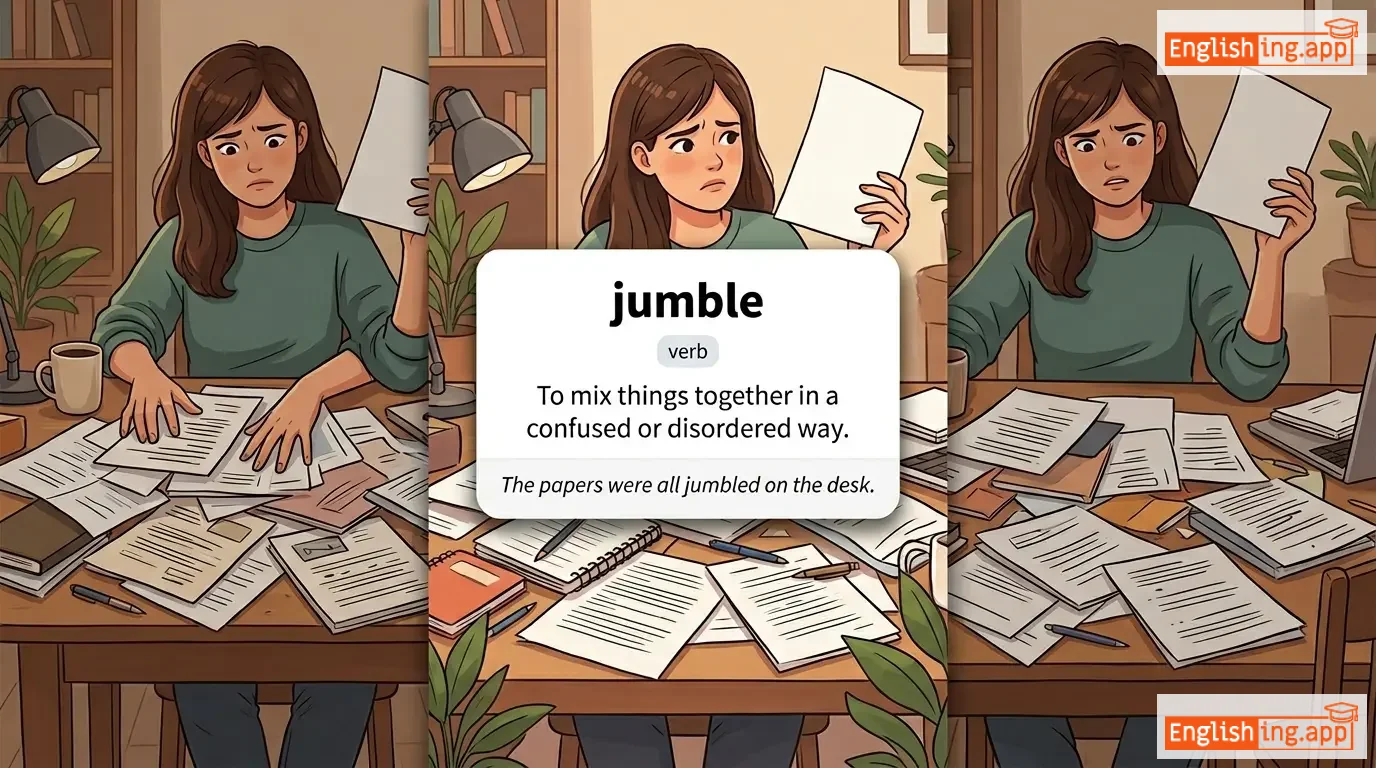
jumble definition card — visual illustration of the meaning
verb
/ˈdʒʌmbəl/
混乱 (hùnluàn)

To mix things together in a confused or disordered way.

"The papers were all jumbled on the desk."

"文件在桌子上杂乱无章。" (Wenjian zai zhuozi shang zaluan wuzhang.)
adjective
/ˈdʒʌm.boʊ/
极其大; 巨大 (jumbo)

exceptionally large; enormous; gigantic

"The jumbo jet was delayed at the airport."

"巨型喷气机在机场延误。" (Juxing penqi ji zai jichang yanwu.)
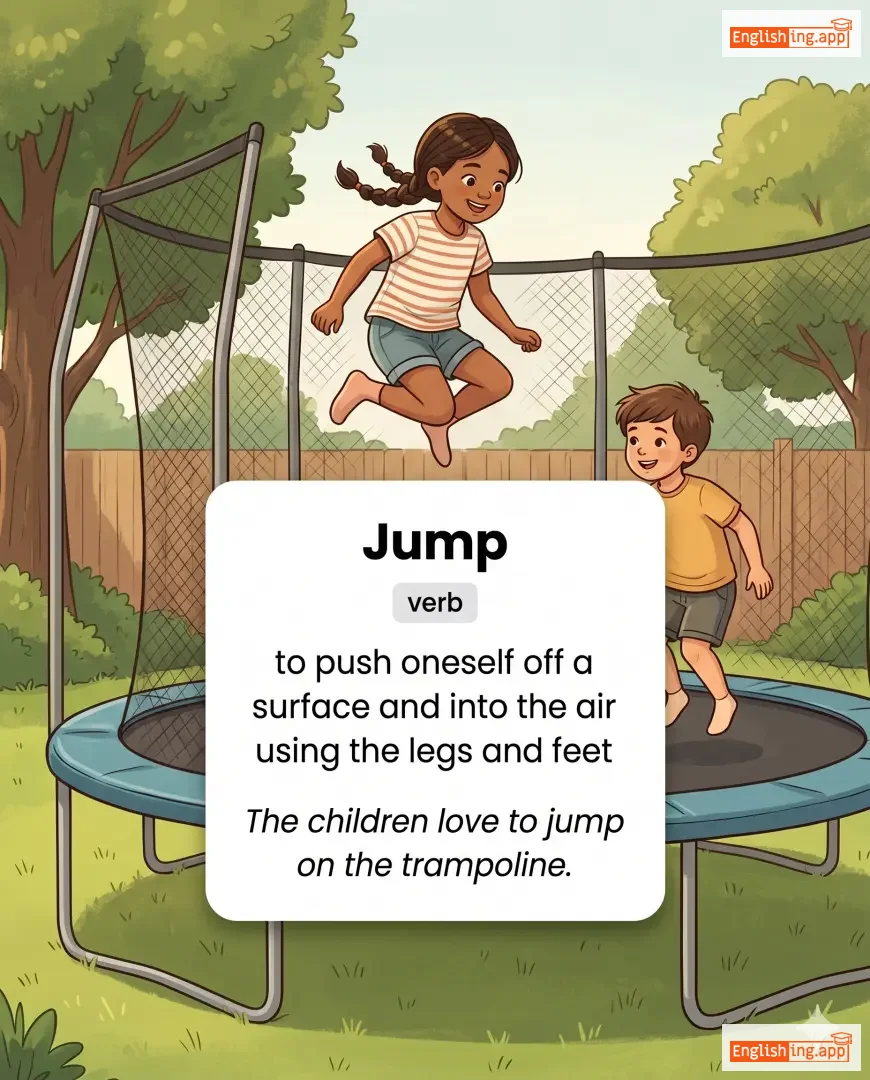
Jump definition card — visual illustration of the meaning
🤾

Jump

verb
/dʒʌmp/

to push oneself off a surface and into the air using the legs and feet

"The children love to jump on the trampoline."

noun
/ˈdʒʌm.pər/
毛衣; (maoyi)

a knitted garment worn on the upper body; a person or animal that jumps

"She wore a warm woolen jumper during the cold winter evening."

"她在寒冷的冬夜穿了一件温暖的羊毛跳绳衣。" (Ta zai hanleng de dongye chuānle yī jiàn wēnnuǎn de yángmáo tiàoshéng yī.)
noun
/ˈdʒʌŋkʃən/
交叉口 (jiaochakou)

A place where two or more roads or things meet or are joined.

"The car stopped at the busy junction."

"汽车在繁忙的交叉口停了下来。" (Qiche zai fanmang de jiaochakou ting le xiala.)
noun
/ˈdʒʌŋktʃər/
关键时刻 (guanji shike)

A particular point in time or a critical moment.

"At this critical juncture, we must make the right decision."

"在这个关键时刻,我们必须做出正确的决定。" (Zai zhege guanji shike, women bixi zuochu zhengque de jueding.)
noun
/dʒuːn/
六月 (liuyue)

the sixth month of the year in the Gregorian calendar

"Schools often close for summer vacation in June."

"学校通常在六月开始放暑假。" (xuexiao tongchang zai liuyue kaishi fang shujia)
noun
/ˈdʒʌŋɡəl/
丛林 (cónglín)

a dense forest, typically in a tropical region, filled with wild plants and animals

"They got lost in the thick jungle during their trip."

"他们在旅行中迷失在密林里。" (Tāmen zài lǚxíng zhōng míshī zài mìlín lǐ.)
adjective, noun
/ˈdʒuːniər/
初级 (chūjí)

younger or lower in rank; also a student in the next-to-last year of high school or college

"He works as a junior officer in the company."

"他在公司担任初级职员。" (Tā zài gōngsī dānrèn chūjí zhíyuán.)
noun
/dʒʌŋk/
垃圾; 废品 (laji, feipin)

old or discarded articles that are considered useless or of little value; things of poor quality

"He cleaned out the garage and threw away all the old junk."

"他清理了车库,扔掉了所有旧的垃圾。" (ta qingli le cheku, reng diao le suoyou jiu de laji.)
noun
/ˈdʒʌŋkɪt/
旅行或庆典 (lüxing huo qingdian)

A trip or celebration, often funded by someone else, usually for pleasure or promotional purposes.

"The company organized a junket for journalists to promote their new resort."
"公司为记者组织了一个旅行,以推广他们的新度假村。" (Gongsi wei jizhe zuzhile yige lüxing, yi tuiguang tamen de xin dujiacun.)
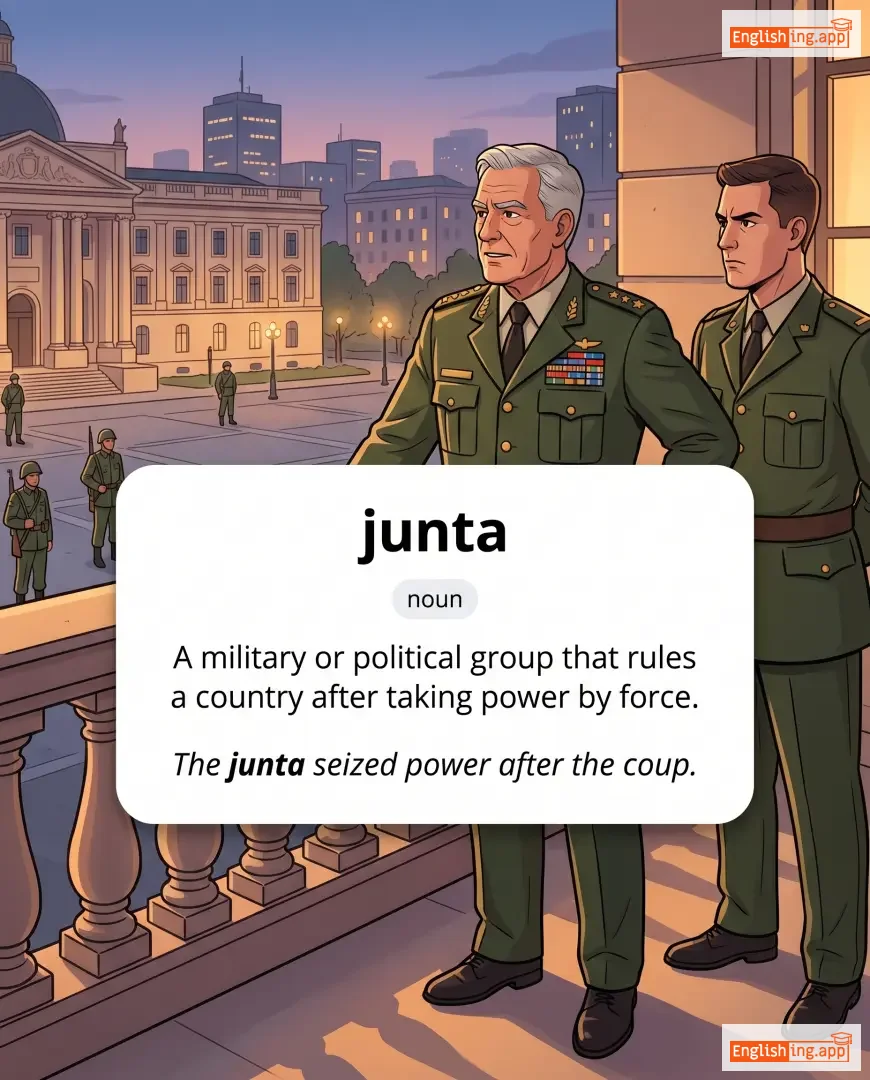
junta definition card — visual illustration of the meaning
noun
/ˈdʒʊntə/
军事政府 (junshi zhengfu)

A military or political group that rules a country after taking power by force.

"The junta seized power after the coup."

"政变后,军事政府掌握了权力。" (Zhengbian hou, junshi zhengfu zhangwo le quanli.)
noun
/ˈdʒuː.pɪ.tər/
木星; 罗马神话中的主神 (mùxīng; luómǎ shénhuà zhōng de zhǔshén)

the largest planet in our solar system; the chief god of Roman mythology

"Jupiter is known for its massive size and distinctive red spot."

"朱庇特因其巨大的体积和独特的红斑而闻名。" (Zhūbìtè yīn qí jùdà de tǐjī hé dútè de hóngbān ér wénmíng.)
adjective
/dʒʊˈrɪdɪkəl/
司法的 (sīfǎ de)

Relating to judicial proceedings or the administration of law.

"The case raised important juridical questions."

"此案件提出了重要的司法问题。" (Cǐ ànjiàn tíchūle zhòngyào de sīfǎ wèntí.)
noun
/ˌdʒʊərɪsˈdɪkʃən/
司法管辖权 (sīfǎ guǎnxiáquán)

The official power to make legal decisions and judgments.

"The court has jurisdiction over criminal cases."

"法院对刑事案件有司法管辖权。" (Fǎyuàn duì xíngshì ànjiàn yǒu sīfǎ guǎnxiáquán.)
noun
/ˌdʒʊərɪsˈpruːdəns/
法学 (faxue)

The theory, philosophy, or science of law.

"She is a professor of jurisprudence at the university."
"她是大学里的法学教授。" (Ta shi daxue li de faxue jiaoshou.)
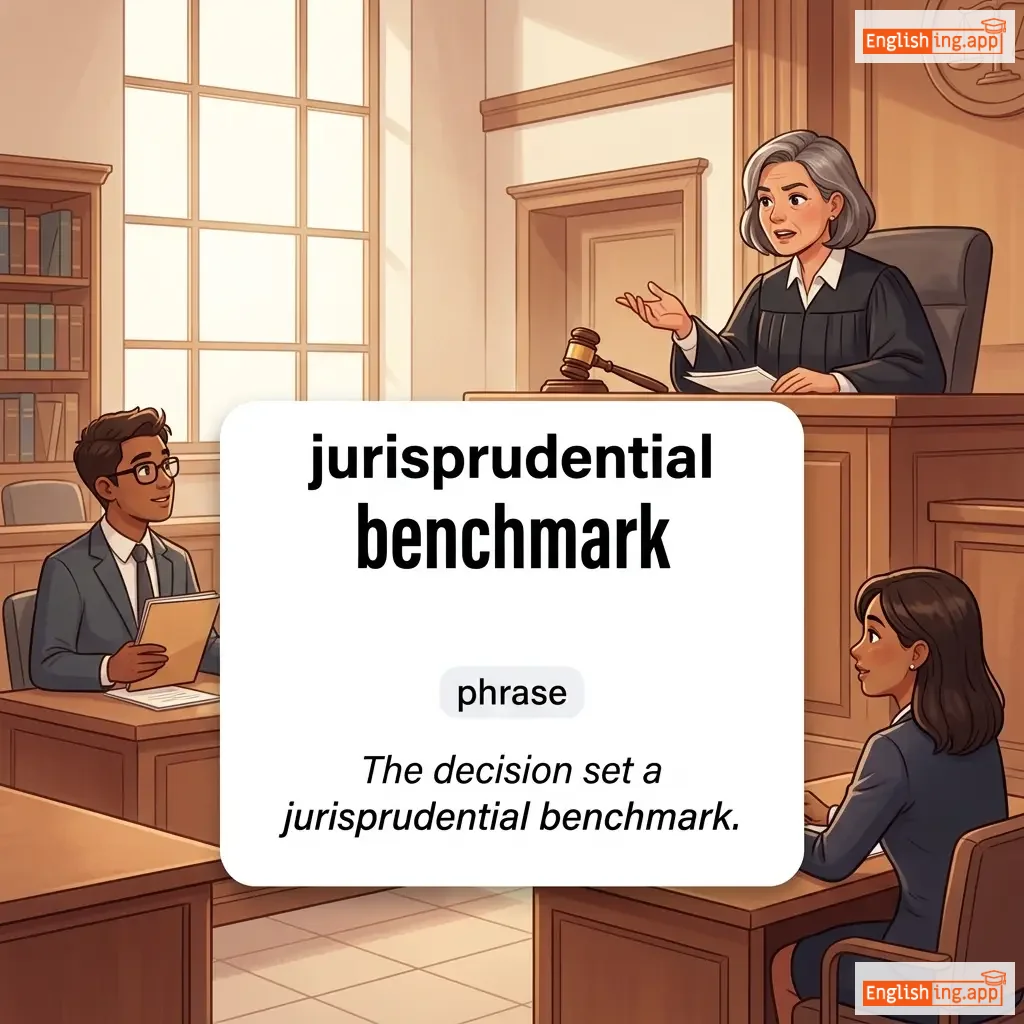
jurisprudential benchmark definition card — visual illustration of the meaning
phrase
ˌdʒʊə.rɪs.pruːˈden.ʃəl ˈbentʃ.mɑːk
法律标准 (falü biao zhun)

A legal standard or precedent that serves as a reference point for future legal decisions.

"The decision set a jurisprudential benchmark."

"这个决定设立了一个法律标准。" (Zhège juédìng shèlìle yīgè fǎlǜ biāozhǔn.)
noun
/ˈdʒʊərər/
陪审员 (peishenyuan)

a member of a jury who is chosen to hear evidence in a legal case and help make a decision

"The juror listened carefully to the witness’s testimony."

"陪审员仔细听取了证人的证词。" (Peishenyuan zixi tingqu le zhengren de zhengci.)
noun
/ˈdʒʊəri/
陪审团 (peishentuan)

a group of people sworn to give a verdict in a legal case based on the evidence

"The jury found him guilty of the crime."

"陪审团裁定他犯有罪行。" (Peishentuan caiding ta fan you zuixing.)
adverb/adjective
/dʒʌst/
正好,仅仅,或公正和道德上正确 (zhèng hǎo, jǐn jǐn, huò gōng zhèng hé dào dé shàng zhèng què)

Exactly, only, or fair and morally right.

"She arrived just in time for the meeting."
"她刚好准时到达会议。" (Tā gānghǎo zhǔnshí dàodá huìyì.)
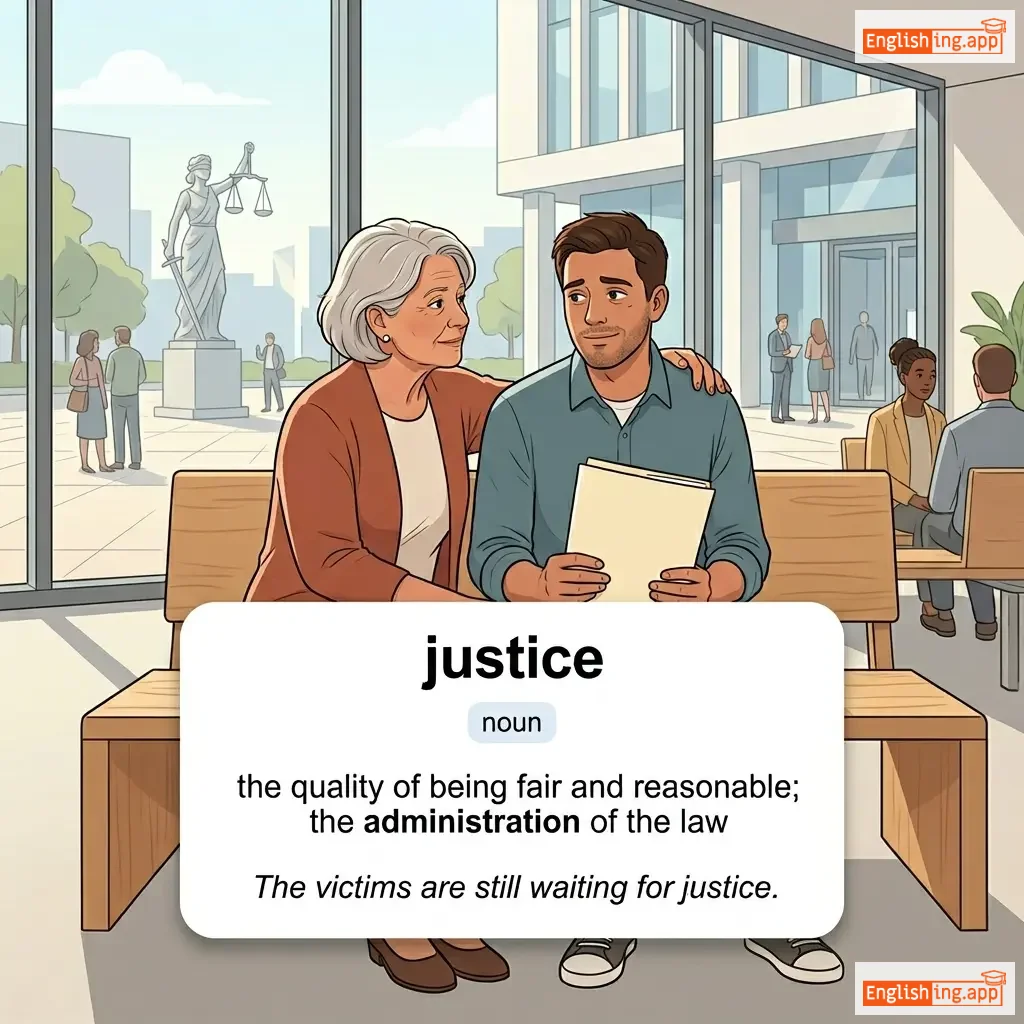
justice definition card — visual illustration of the meaning
noun
/ˈdʒʌstɪs/
正义 (zhèngyì)

the quality of being fair and reasonable; the administration of the law

"The victims are still waiting for justice."

"受害者仍在等待正义。" (Shòuhài zhě réng zài děngdài zhèngyì.)
noun
/ˌdʒʌstɪfɪˈkeɪʃən/
辩解 (biànjiě)

a reason, explanation, or excuse that shows something is right or reasonable

"There is no justification for such rude behavior."

"对这种粗鲁行为没有辩解。" (duì zhè zhǒng cūlǔ xíngwéi méiyǒu biànjiě)
verb
/ˈdʒʌstɪfaɪ/
辩护 (bianhu)

to show or prove that something is right or reasonable

"He tried to justify his decision with logical reasons."

"他试图用逻辑的理由来为他的决定辩护。" (Ta shitu yong luojide liyou lai wei tade jueding bianhu.)
noun
/dʒuːt/
黄麻 (huangma)

a long, soft, shiny plant fiber used to make rope, bags, sacks, and coarse cloth

"Jute is widely used to make eco-friendly bags and ropes."

"黄麻常用于制作环保袋。" (huangma chang yongyu zhizuo huanbao dai)
noun
/dʒuːt liːf/
黄麻叶 (joot leef)

the edible leaves of the jute plant, commonly eaten as a leafy green vegetable

"Jute leaf is rich in vitamins and minerals and is often cooked with lentils in Bengali cuisine."

"黄麻叶富含维生素和矿物质,常在孟加拉美食中与扁豆一起煮。" (huang ma ye fu han wei sheng su he kuang wu zhi zai meng jia la mei shi zhong chang yu bian dou yi qi zhu)
adjective, noun
/ˈdʒuːvənaɪl/
青少年 (qīngshàonián)

relating to young people; childish or immature

"The court sent the case to a juvenile detention center."
"法院将此案送至青少年拘留中心。" (fǎyuàn jiāng cǐ'àn sòng zhì qīngshàonián jūliú zhōngxīn.)
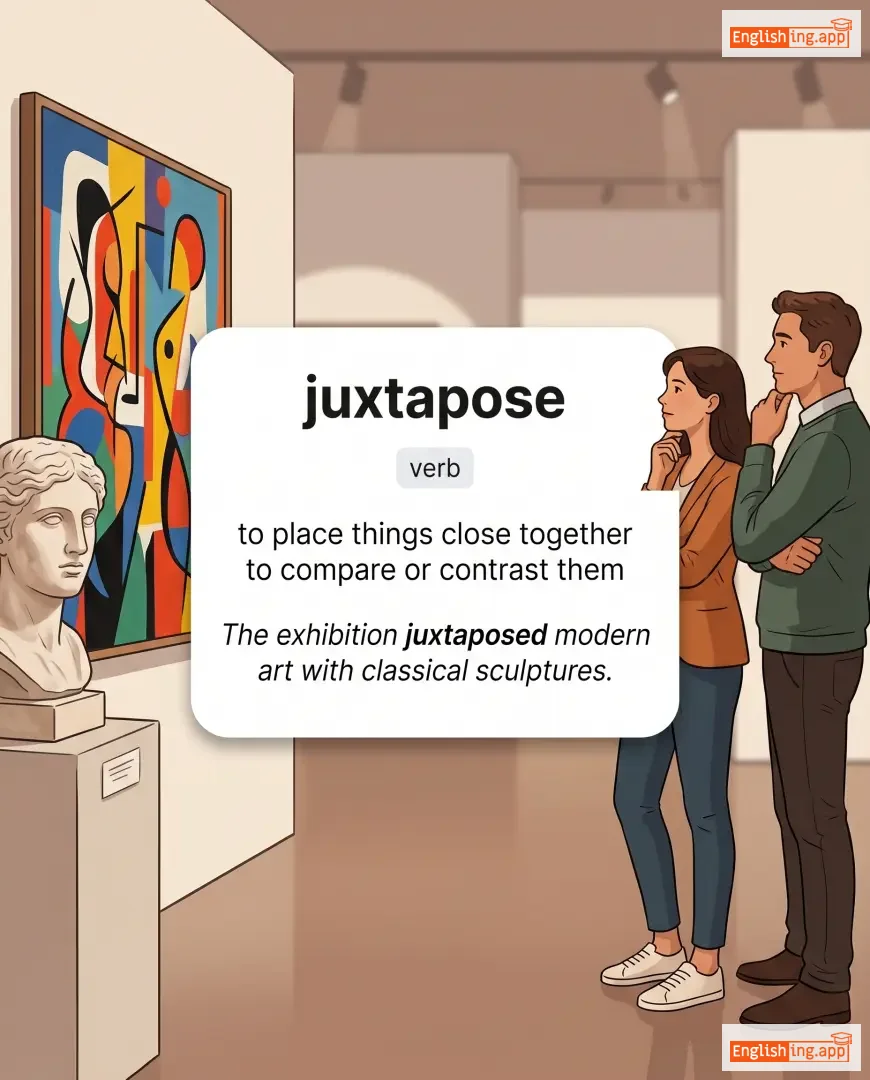
juxtapose definition card — visual illustration of the meaning
verb
/ˈdʒʌkstəˌpoʊz/
将事物放在一起进行比较或对比 (jiang shiwu fang zai yiqi jinxing bijiao huo duibi)

to place things close together to compare or contrast them

"The exhibition juxtaposed modern art with classical sculptures."
"展览将现代艺术与古典雕塑对比展示。" (Zhanlan jiang xiandai yishu yu gudian diaosu duibi zhanshi.)
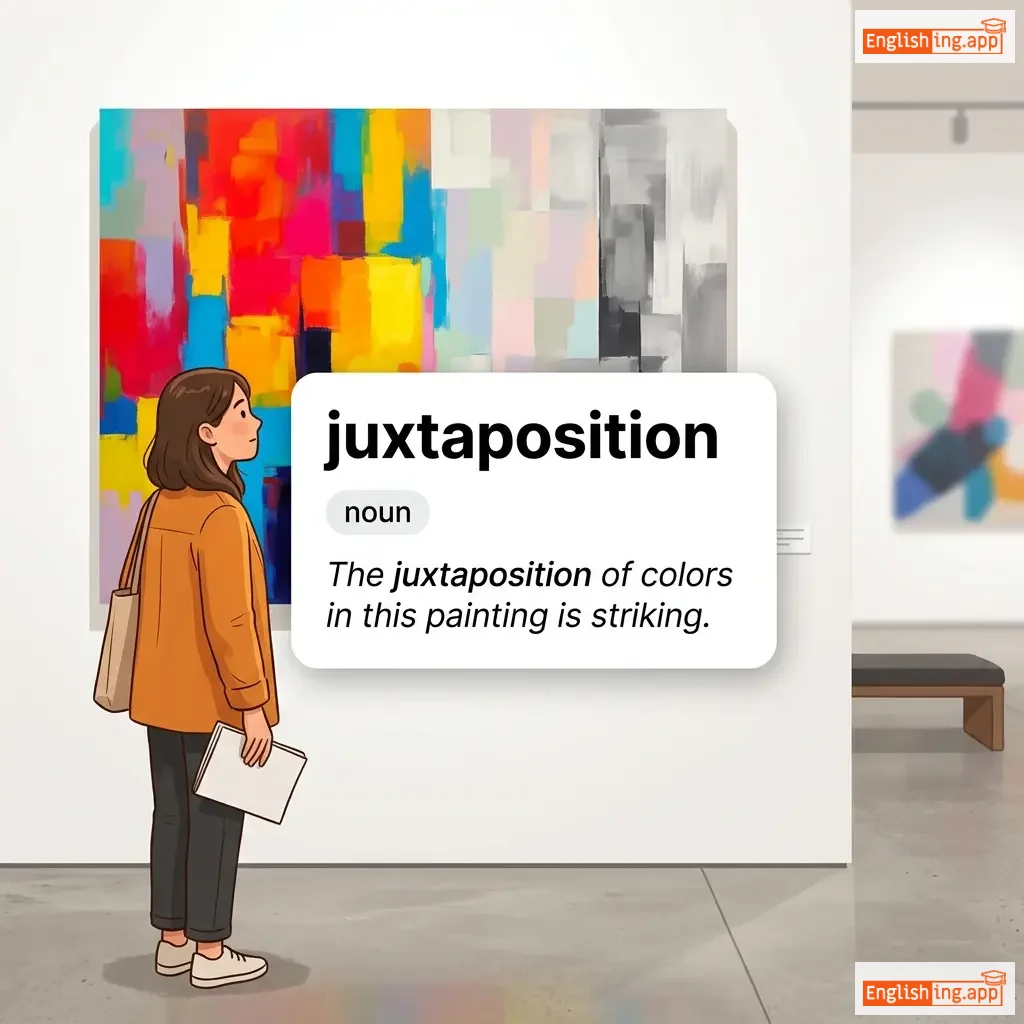
juxtaposition definition card — visual illustration of the meaning
noun
/ˌdʒʌk.stə.pəˈzɪʃ.ən/
并列 (bìngliè)

The fact of two things being seen or placed close together with contrasting effect.

"The juxtaposition of colors in this painting is striking."

"这幅画中的色彩并列效果非常显眼。" (Zhè fú huà zhōng de sècǎi bìngliè xiàoguǒ fēicháng xiǎn yǎn.)