词汇表

英语词汇词典 | 单词含义、定义和示例

jibe definition card — visual illustration of the meaning
verb
/dʒaɪb/
讽刺 / 一致 (fengci / yizhi)

to make an insulting remark; to be in agreement or harmony with

"His actions did not jibe with his words."

"他的行动与他的言辞不符。" (Tā de xíngdòng yǔ tā de yáncí bù fú.)
adjective
/ˈdʒɪg.ərd/
惊讶; 震惊; (jiged)

surprised or astonished; confused or puzzled

"I'll be jiggered if I know what happened here."

"如果我知道这里发生了什么,我会感到惊讶。" (Rúguǒ wǒ zhīdào zhèlǐ fāshēngle shénme, wǒ huì gǎndào jīngyà.)
noun
/ˈdʒɪŋ.ɡəl/
轻微的金属声,通常由金属物体相互碰撞产生;一首短小而吸引人的歌曲 (qīngwéi de jīnshǔ shēng, tōngcháng yóu jīnshǔ wùtǐ xiānghù pèngzhuàng chǎnshēng; yī shǒu duǎnxiǎo ér xīyǐn rén de gēqǔ)

a light ringing sound such as that made by metal objects being shaken together; a short catchy song

"The jingle of keys could be heard as she walked down the hallway."

"当她走过走廊时,钥匙的声音可以听到。" (Dāng tā zǒu guò zǒuláng shí, yàoshi de shēngyīn kěyǐ tīngdào.)
noun
/ˈdʒɪŋɡoʊ/
好战的民族主义者 (hǎo zhàn de mínzú zhǔyì zhě)

a person who strongly supports warlike or aggressive foreign policy; an extreme nationalist

"The leader was criticized as a reckless jingo."

"领导人被批评为鲁莽的好战分子。" (Lǐngdǎo rén bèi pīpíng wéi lǔmǎng de hǎo zhàn fènzǐ.)
noun
/ˈdʒɪŋɡoʊˌɪzəm/
极端民族主义 (jíduān mínzú zhǔyì)

extreme patriotism expressed in aggressive foreign policy

"The politician's speech was filled with jingoism."

"那位政治家的演讲充满了沙文主义。" (Nà wèi zhèngzhì jiā de yǎnjiǎng chōngmǎnle shāwén zhǔyì.)
noun
/ˈdʒɪŋɡoʊɪst/
极端民族主义者 (jíduān mínzú zhǔyì zhě)

a person who supports jingoism; an extreme nationalist with aggressive foreign policies

"He was labeled a jingoist for his extreme views."

"由于他的极端观点,他被贴上了极端民族主义者的标签。" (Yóuyú tā de jíduān guāndiǎn, tā bèi tiē shàng le jíduān mínzú zhǔyì zhě de biāoqiān.)
verb
/ˈdʒɪtər/
颤抖 (chan dian)

to shake or tremble slightly, often from fear, nervousness, or excitement

"He began to jitter nervously before giving his speech."

"他在发表演讲前开始紧张地发抖。" (Ta zai fabiao yanjiang qian kaishi jinzhang de fadou.)
Job definition card — visual illustration of the meaning
noun
/dʒɒb/
工作 (gongzuo)

a paid position of regular employment

"She got a new job at a software company."

"她在一家软件公司找到了一份新工作。" (Ta zai yijia ruanjian gongsi zhǎodàole yī fèn xīn gōngzuò.)
jocose definition card — visual illustration of the meaning
adjective
/dʒoʊˈkoʊs/
幽默的 (youmo de)

playful or humorous in speech or behavior

"The professor’s jocose remarks kept the class entertained."

"教授的幽默评论让班级感到娱乐。" (Jiaoshou de youmo pinglun rang banji gandao yule.)
adjective
/ˈdʒɒkjələr/
爱开玩笑的 (ài kāi wánxiào de)

fond of or characterized by joking; humorous

"His jocular nature made him popular among colleagues."

"他爱开玩笑的性格让他在同事中很受欢迎。" (Tā ài kāi wánxiào de xìnggé ràng tā zài tóngshì zhōng hěn shòu huānyíng.)
adjective
/ˈdʒɒkənd/
愉快 (yukai)

cheerful and lighthearted

"They walked together in a jocund mood after the celebration."

"庆祝后,他们在愉快的心情下一起走着。" (Qìngzhù hòu, tāmen zài yúkuài de xīnqíng xià yīqǐ zǒuzhe.)
verb
/dʒɑːɡ/
慢跑 (man pao)

to run at a slow, steady pace for exercise

"She jogs every morning in the park."

"她每天早上在公园里慢跑。" (ta meitian zaoshang zai gongyuan li manpao)
verb
/ˈdʒɒɡəl/
轻轻摇动 (qingqing yaodong)

to shake slightly; to move or cause to move with quick, small jerks

"He joggled the table and the vase nearly fell."
"他晃动了桌子,花瓶差点掉下来。" (Ta huangdong le zhuozi, huaping chadian diao xia lai.)
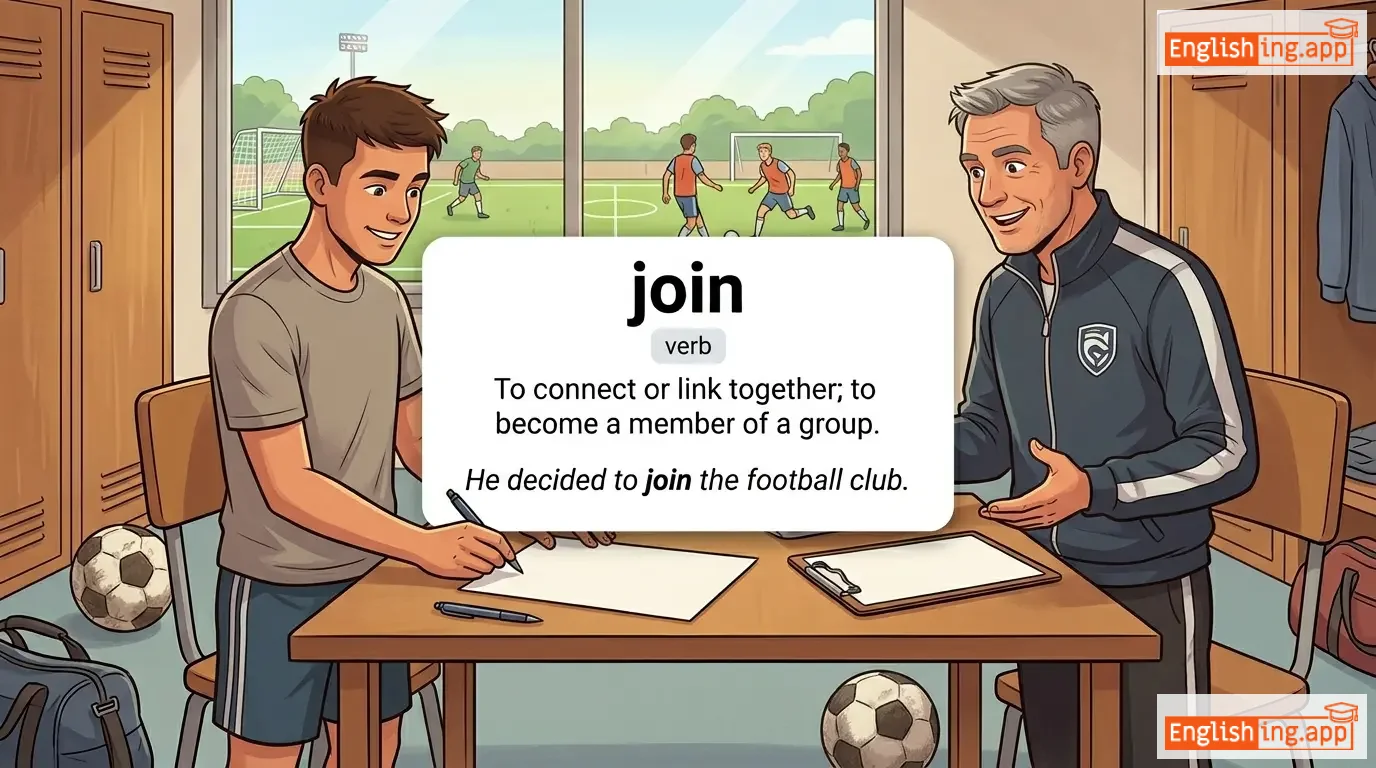
join definition card — visual illustration of the meaning
verb
/dʒɔɪn/
加入 (jiārù)

To connect or link together; to become a member of a group.

"He decided to join the football club."

"他决定加入足球俱乐部。" (Tā juédìng jiārù zúqiú jùlèbù.)
noun
/dʒɔɪnt/
关节 (guānjié)

a place where two parts of something are joined; also a term for a business establishment or a cannabis cigarette

"The knee is a joint that connects the thigh and the leg."

"膝盖是一个连接大腿和小腿的关节。" (xīgài shì yīgè liánjiē dàtuǐ hé xiǎotuǐ de guānjié.)
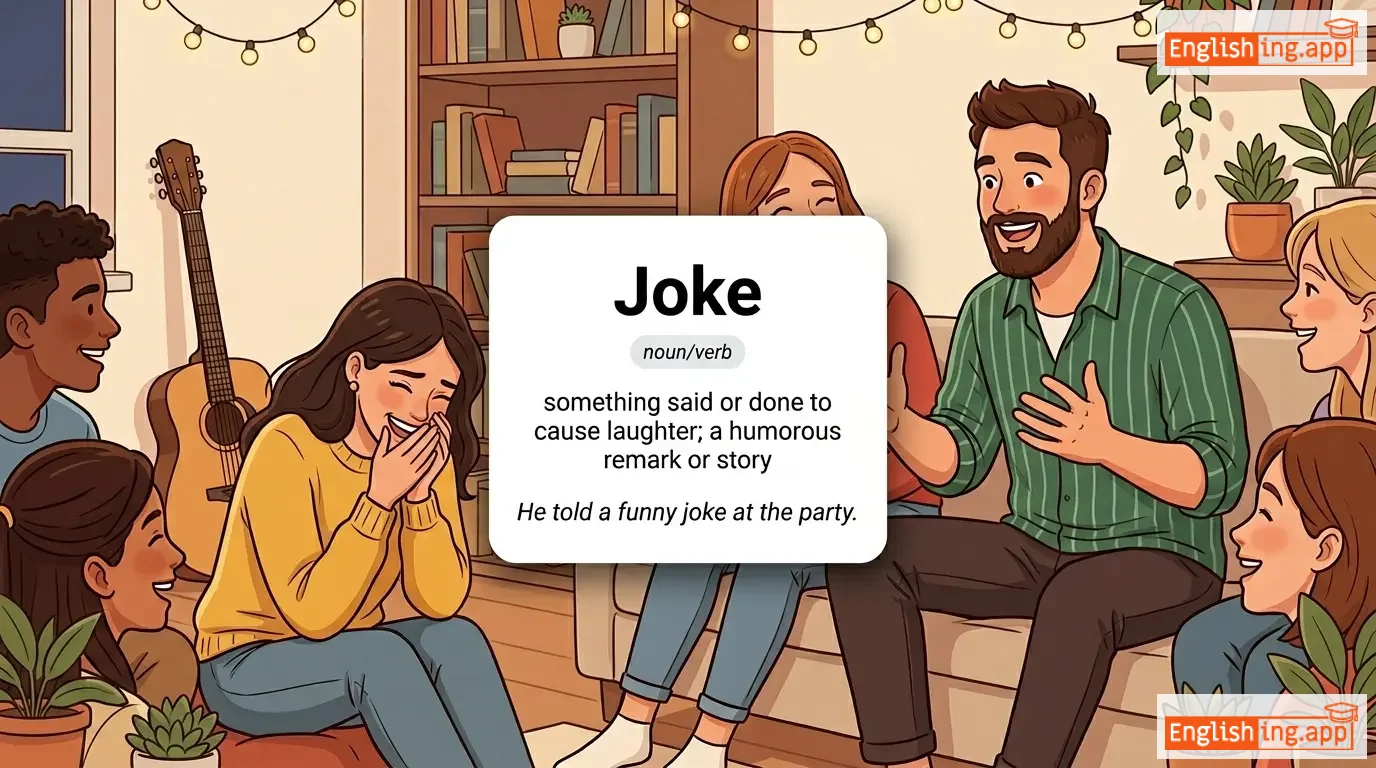
Joke definition card — visual illustration of the meaning
noun/verb
/dʒoʊk/
笑话 (xiaohua)

something said or done to cause laughter; a humorous remark or story

"He told a funny joke at the party."

"他在聚会上讲了一个有趣的笑话。" (Ta zai juhui shang jiang le yi ge youqu de xiaohua.)
noun
/ˈdʒoʊ.kər/
小丑 (xiaochou)

a playing card with a picture of a jester, used as a wild card; a person who is fond of joking

"He used the joker card to complete his winning hand in the poker game."

"他用小丑牌来完成他在扑克游戏中的赢牌。" (ta shi yong xiao chou pai lai wan cheng ta zai pu ke you xi zhong de ying pai)
noun
/ˈdʒɒlɪti/
欢庆 (huanqing)

lively and cheerful activity or celebration

"The wedding was full of jollity and laughter."

"婚礼充满了欢庆和笑声。" (Hunli chongman le huanqing he xiaosheng.)
adjective
/ˈdʒɒli/
愉快 (yú kuài)

Full of good humor and cheerfulness.

"The children were in a jolly mood at the party."

"孩子们在派对上心情愉快。" (Háizimen zài pàiduì shàng xīnqíng yúkuài.)
verb
/dʒəʊlt/
震动 (zhèndòng)

to push or shake someone or something abruptly and roughly

"The sudden stop jolted all the passengers forward."

"突然停车把所有乘客都推到了前面。" (Tūrán tíngchē bǎ suǒyǒu chéngkè dōu tuī dào le qiánmiàn.)
noun
/ˈdʒɒs.stɪk/
香炉棒 (xianglu bang)

a thin stick of incense that is burned for its pleasant smell, especially in religious ceremonies

"She lit a joss-stick in the temple during her prayers."

"她在寺庙里点燃了一根香炉棒,进行祷告。" (Tā zài sìmiào lǐ diǎn rán le yī gēn xiānglú bàng, jìnxíng dǎogào.)
verb
/ˈdʒɒsl/
推挤 (tuiqi)

to push, elbow, or bump against someone roughly, typically in a crowd

"The fans jostled each other to get closer to the stage."

"粉丝们推搡着彼此,以便靠近舞台。" (Fensi men tuiqi zhe bici, yi bian kaojin wutai.)
verb
/dʒɒt/
快速且简洁地写下 (kuai su qie jian jie di xie xia)

to write something quickly and briefly

"She jotted down his phone number on a napkin."

"她在餐巾纸上迅速记下了他的电话号码。" (Ta zai can jin zhi shang xun su ji xia le ta de dian hua hao ma.)
noun
/ˈdʒɒt.ər/
记事本 (jishiben)

a small notebook for writing quick notes or reminders

"The student carried a jotter to write down important points during lectures."

"学生带着记事本,在讲座期间写下重要要点。" (xuesheng daizhe jishiben, zai jiangzuo qijian xiexia zhongyao yaodian.)
noun
/ˈdʒɜːrnəl/
日记 (rìjì)

a daily record of news, events, or personal thoughts

"She writes in her journal every night."

"她每天晚上都写日记。" (Tā měitiān wǎnshàng dōu xiě rìjì.)
journaling definition card — visual illustration of the meaning
noun
/ˈdʒɝː.nə.lɪŋ/
写日记 (xie riji)

The practice of writing down your thoughts, feelings, and experiences regularly.

"Journaling helps in organizing thoughts and reducing stress."

"日记写作有助于整理思绪并减少压力。" (Riji xiezuo youzhu yu zhengli sixu bing jianshao yali.)
noun
/ˈdʒɜːrnəlɪzəm/
新闻学 (xīnwénxué)

the activity or profession of collecting, writing, and publishing news and articles for newspapers, magazines, or broadcast media

"He studied journalism to become a news reporter."

"他学习新闻学成为新闻记者。" (Tā xuéxí xīnwénxué chéngwéi xīnwén jìzhě.)
noun
/ˈdʒɜːrnəlɪst/
记者 (jizhe)

a person who writes news articles or reports for newspapers, magazines, or media

"The journalist covered the political event."

"记者报道了政治事件。" (Jizhe baodao le zhengzhi shijian.)
verb
/ˈdʒɜːrnəlaɪz/
在日记中记录 (zài rìjì zhōng jìlù)

to record daily transactions or events in a journal, especially in accounting

"The accountant will journalize all financial transactions at the end of the day."

"会计员将在一天结束时记录所有财务交易。" (Kuàijì yuán jiāng zài yītiān jiéshù shí jìlù suǒyǒu cáiwù jiāoyì.)
noun
/ˈdʒɜːrni/
旅行 (lüxing)

the act of traveling from one place to another

"Their journey across the desert was difficult."

"他们穿越沙漠的旅行很艰难。" (Tāmen chuānyuè shāmò de lǚxíng hěn jiānnán.)
🤺

joust

verb
/dʒaʊst/

to engage in a medieval contest on horseback with lances; to compete or argue

"The knights prepared to joust in front of the cheering crowd."

adjective
/ˈdʒoʊ.vi.əl/
愉快 (yú kuài)

cheerful and friendly in manner

"He was in a jovial mood during the family gathering."

"他在家庭聚会上心情愉快。" (Tā zài jiātíng jùhuì shàng xīnqíng yú kuài.)
noun
/dʒɔɪ/
喜悦 (xiyue)

A feeling of great happiness and delight.

"The children shouted with joy when they saw the gifts."

"孩子们看到礼物时高兴地喊了起来。" (Háizimen kàn dào lǐwù shí gāoxìng de hǎnle qǐlái.)
adjective
/ˈdʒɔɪfəl/
快乐的 (kuaile de)

full of joy and happiness; causing joy or delight

"She felt joyful when she heard the good news."

"听到好消息时,她感到很快乐。" (tingdao hao xiaoxi shi ta gandao hen kuaile)
adjective
/ˈdʒuː.bɪ.lənt/
欢欣鼓舞 (huānxīn gǔwǔ)

feeling or expressing great happiness and joy

"The team was jubilant after winning the championship."

"球队在赢得冠军后欢欣鼓舞。" (Qiúduì zài yíngdé guànjūn hòu huānxīn gǔwǔ.)
noun
/ˌdʒuː.bɪˈleɪ.ʃən/
庆典 (qingdian)

a feeling or expression of great happiness and triumph

"There was jubilation in the streets after the victory."

"胜利后街上充满了庆典气氛。" (Shènglì hòu jiē shàng chōngmǎnle qìngdiǎn qìfēn.)
noun
/ˈdʒuː.bɪ.liː/
周年纪念; 特别庆典 (jubilee)

a special anniversary celebration, especially the 25th, 50th, or 60th anniversary of an important event

"The school celebrated its golden jubilee with a grand ceremony."

"学校以盛大的仪式庆祝了它的金色周年纪念。" (Xuéxiào yǐ shèngdà de yíshì qìngzhùle tā de jīnsè zhōunián jìniàn.)
noun
/ˈdʒʌŋk.tʃər/
关键时刻 (guānjiàn shíkè)

a particular point in time, especially one of great importance or crisis

"At this critical jucture, the company must decide whether to expand or downsize."
"在这个关键时刻,公司必须决定是扩展还是裁员。" (Zài zhège guānjiàn shíkè, gōngsī bìxū juédìng shì kuòzhǎn háishì cáiyuán.)
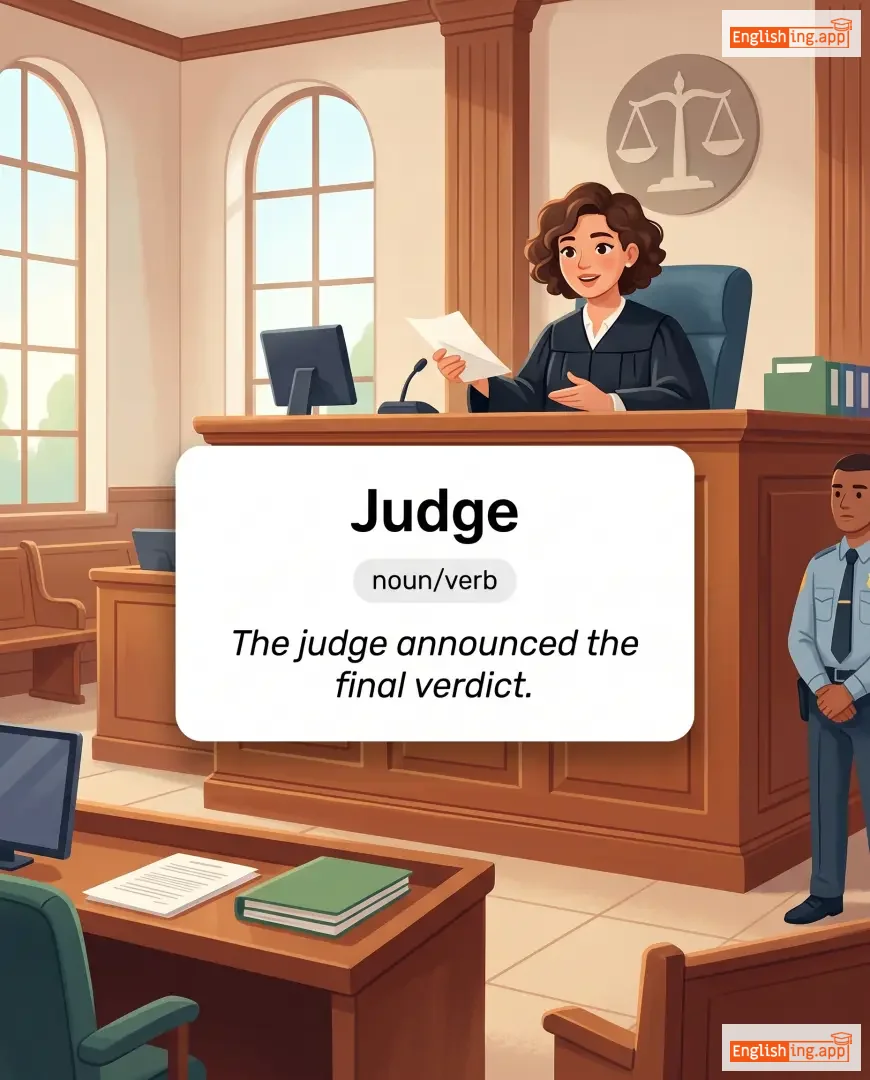
Judge definition card — visual illustration of the meaning
noun/verb
/dʒʌdʒ/
法官 / 判断 (fǎguān / pàn duàn)

a person who makes decisions in a court of law; or to form an opinion about something

"The judge announced the final verdict."

"法官宣布了最终判决。" (Fǎguān xuānbùle zuìzhōng pànjué.)
noun
/ˈdʒʌdʒ.mənt/
判决;决定 (panjue, jueding)

the ability to make considered decisions or form sensible opinions; an official decision made by a judge or court

"The jury's judgement was based on careful consideration of all the facts."

"陪审团的判决基于对所有事实的仔细考虑。" (péi shěn tuán de pàn jué jī yú duì suǒ yǒu shì shí de zǐ xì kǎo lǜ.)
judgment definition card — visual illustration of the meaning
noun
/ˈdʒʌdʒ.mənt/
判断 (pànduàn)

the ability to make considered decisions or come to sensible conclusions

"Her judgment in financial matters is highly respected."

"她在财务事务上的判断受到高度尊重。" (Tā zài cáiwù shìwù shàng de pànduàn shòudào gāodù zūnzhòng.)
noun
/ˈdʒuː.dɪˌkeɪ.tʃər/
司法系统 (sifa xitong)

the administration of justice or the system of courts

"The judicature ensures that laws are fairly applied."

"司法系统确保法律得到公正执行。" (Sifa xitong quebao falu dedao gongzheng zhixing.)
adjective
/dʒuːˈdɪʃ.əl/
司法的 (sī fǎ de)

relating to judges, courts, or the administration of justice

"The new law faced strong judicial review before implementation."
"新法律在实施前接受了严格的司法审查。" (Xīn fǎ lǜ zài shí shī qián jiē shòu le yán gé de sī fǎ shěn chá.)
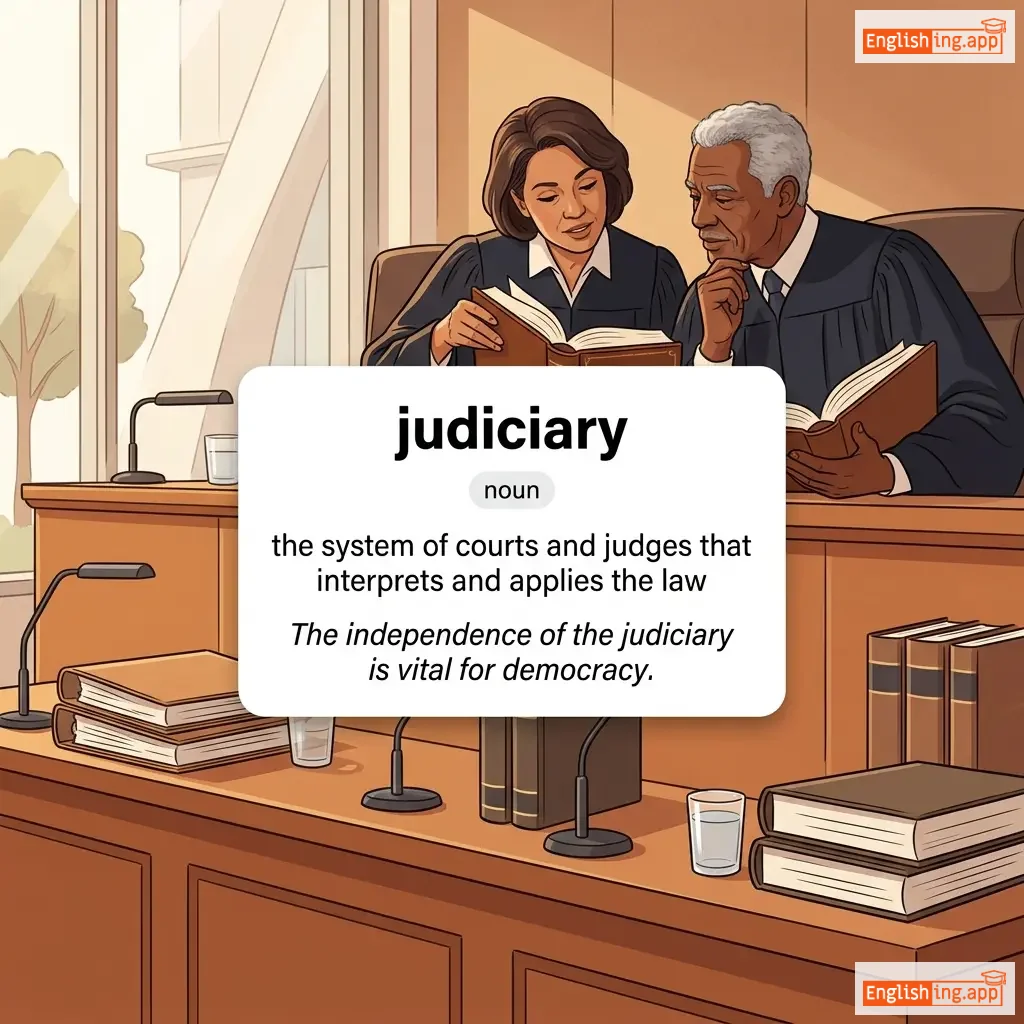
judiciary definition card — visual illustration of the meaning
noun
/dʒuːˈdɪʃ.i.er.i/
司法权 (sīfǎ quán)

the system of courts and judges that interprets and applies the law

"The independence of the judiciary is vital for democracy."

"司法权的独立对民主至关重要。" (sīfǎ quán de dúlì duì mínzhǔ zhìguān zhòngyào.)
judicious definition card — visual illustration of the meaning
adjective
/dʒuːˈdɪʃəs/
明智的 (míngzhì de)

Having or showing good judgment; wise and sensible.

"Her judicious decision saved the company from financial loss."
"她明智的决定挽救了公司免于财务损失。" (Tā míngzhì de juédìng wǎnjiùle gōngsī miǎn yú cáiwù sǔnshī.)
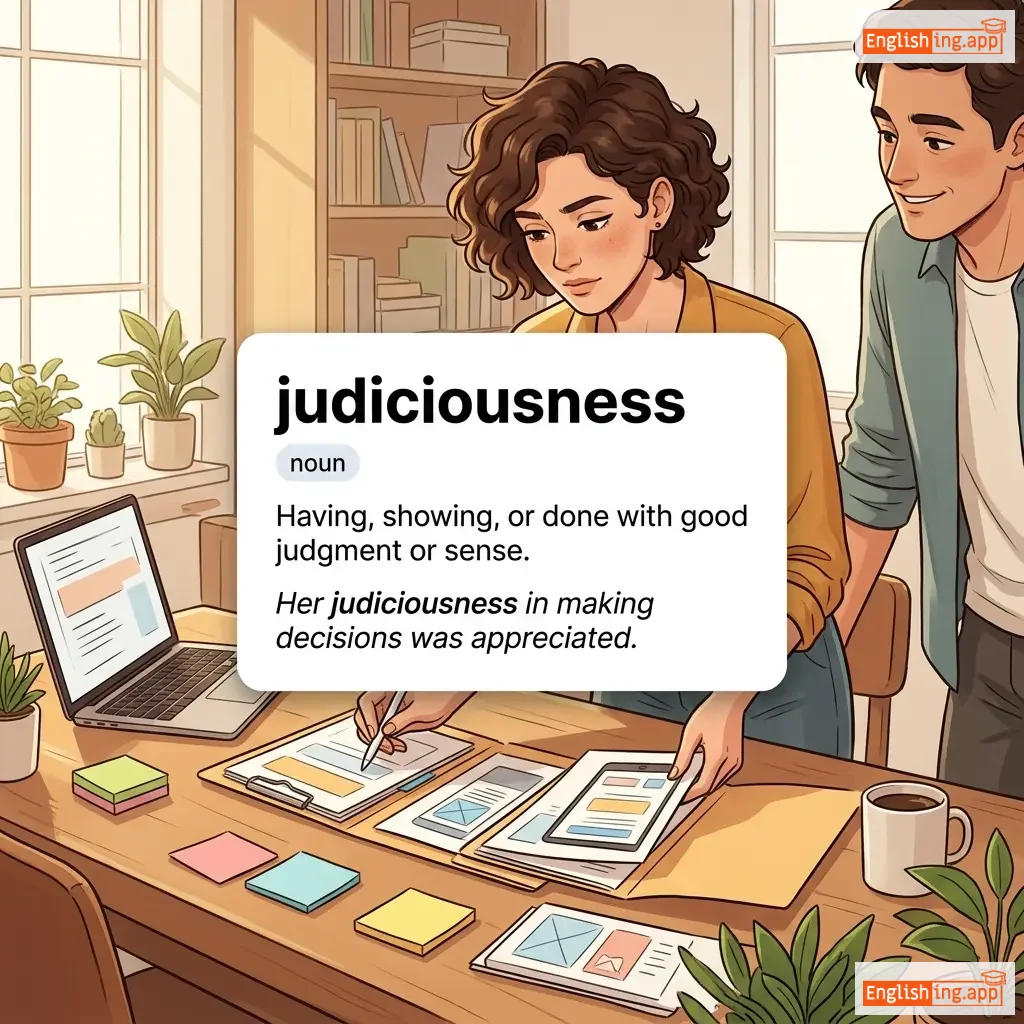
judiciousness definition card — visual illustration of the meaning
noun
dʒʊˈdɪʃəsnɪs
明智,审慎 (míngzhì, shěnshèn)

Having, showing, or done with good judgment or sense.

"Her judiciousness in making decisions was appreciated."

"她在做决定时的明智被赞赏。" (Tā zài zuò juédìng shí de míngzhì bèi zànshǎng.)
noun
/dʒʌɡ/
幸福 (xìng fú)

A large container used for holding and pouring liquids.

"She filled a jug with fresh water from the well."
"当她收到奖项时,她无法掩饰自己的幸福。" (Dāng tā shōudào jiǎngxiàng shí, tā wúfǎ yǎnshì zìjǐ de xìngfú.)
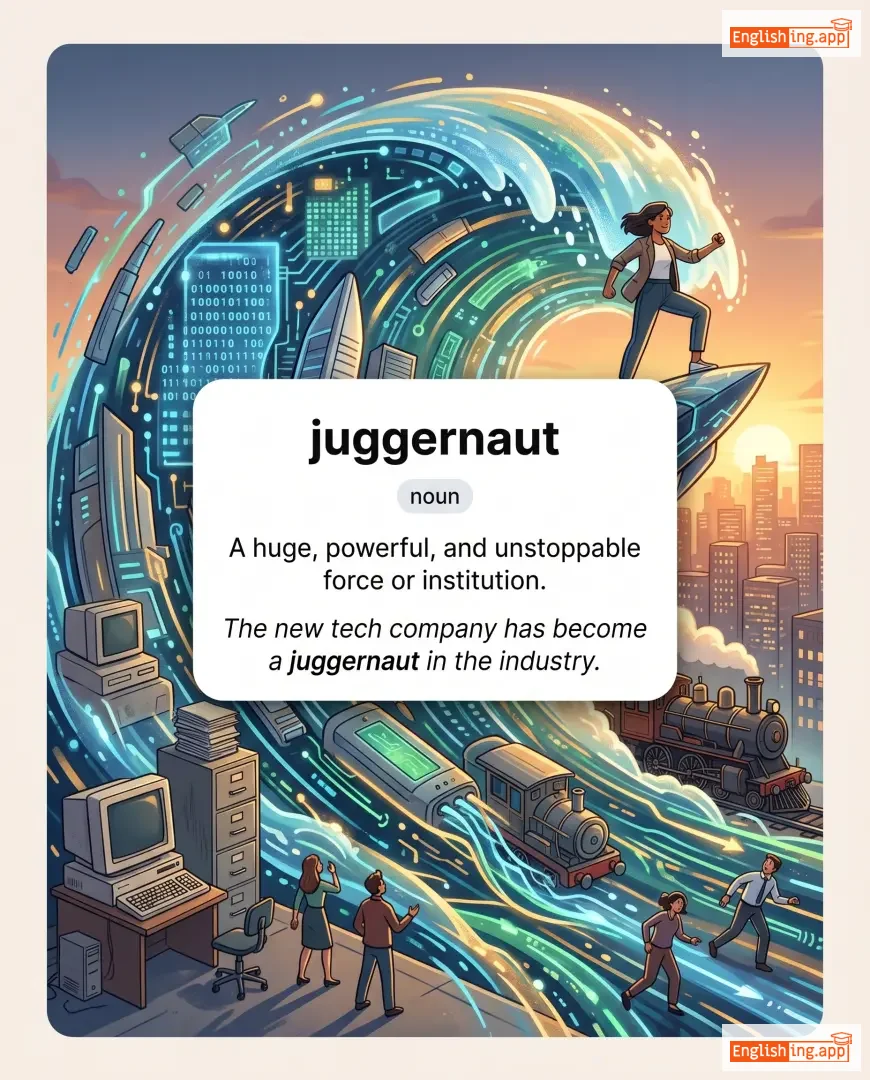
juggernaut definition card — visual illustration of the meaning
noun
/ˈdʒʌɡərˌnɔːt/
不可阻挡的力量 (bù kě zǔ dǎng de lì liàng)

A huge, powerful, and unstoppable force or institution.

"The new tech company has become a juggernaut in the industry."

"这家新技术公司已经成为了这个行业中不可阻挡的力量。" (Zhè jiā xīn jì shù gōng sī yǐ jīng chéng wéi le zhè ge háng yè zhōng bù kě zǔ dǎng de lì liàng.)
verb
/ˈdʒʌɡəl/
杂耍 (záshuǎ)

To continuously toss and catch objects in the air; to manage many tasks at the same time.

"He tried to juggle work, studies, and family responsibilities."

"他试图同时处理工作、学习和家庭责任。" (Tā shìtú tóngshí chǔlǐ gōngzuò, xuéxí hé jiātíng zérèn.)
noun
/ˈdʒʌɡ.lər/
杂技演员 (za ji yan yuan)

a person who skillfully throws and catches objects as entertainment

"The juggler entertained the crowd with his amazing ball tricks."

"那位杂技演员用他惊人的球技娱乐了观众。" (na wei za ji yan yuan yong ta jing ren de qiu ji yu le le guan zhong)