词汇表

英语词汇词典 | 单词含义、定义和示例

adjective
/ɪnˈkɒmp(ə)rəbl/
无可比拟 (wú kě bǐ nǐ)

Without an equal in quality or excellence; matchless.

"The view from the mountain was incomparable."

"山顶的景色无可比拟。" (Shāndǐng de jǐngsè wú kě bǐ nǐ.)
noun
/ˌɪnkəmˌpætəˈbɪlɪti/
不兼容性 (bu jian rong xing)

the state of being unable to exist or work together harmoniously; lack of compatibility

"The project failed because of incompatibility between the two software systems."

"由于两个软件系统之间的不兼容性,项目失败了。" (Youyu liang ge ruanjian xitong zhijian de bu jian rong xing xiangmu shibai le)
adjective
/ˌɪnkəmˈpætəbl/
不兼容 (bù jiānróng)

Not able to exist or work together without conflict.

"Their personalities were completely incompatible."

"他们的个性完全不兼容。" (Tāmen de gèxìng wánquán bù jiānróng.)
noun
/ɪnˈkɒmpɪtəns/
不称职 (bù chēng zhí)

Lack of ability, skill, or effectiveness in doing something.

"The project failed due to the manager’s incompetence."

"由于经理的不称职,项目失败了。" (Yóu yú jīnglǐ de bù chēng zhí, xiàngmù shī bài le.)
adjective
/ɪnˈkɒmpɪtənt/

Lacking the necessary ability or skills to do something successfully.

"He was fired because he was incompetent at his job."

adjective
/ˌɪnkəmˈpliːt/
不完整 (bù wánzhěng)

Not finished, lacking some parts or not whole.

"Her report was incomplete and needed further details."

"她的报告不完整,需要更多细节。" (Tā de bàogào bù wánzhěng, xūyào gèng duō xìjié.)
noun
/ˌɪnkəmˈpliːtnəs/
不完整性 (bu wanzheng xing)

the state of not being complete or whole; lack of necessary parts or fullness

"The incompleteness of the report caused delays in the project."

"报告的不完整性导致了项目延误。" (baogao de bu wanzheng xing daozhi le xiangmu yanwu)
adjective
/ˌɪnkɒmprɪˈhɛnsəbl/
难以理解的 (nanyi lijie de)

Impossible or very difficult to understand.

"The professor’s lecture was so fast it became incomprehensible."

"教授的讲座太快了,以至于变得难以理解。" (Jiaoshou de jiangzuo tai kuai le, yi zhi yu biande nanyi lijie.)
adjective
/ˌɪnkəmˈprɛsəbl/
不可压缩 (bù kě yā suō)

Not able to be pressed or squeezed into a smaller space.

"Liquids are generally considered incompressible."

"液体通常被认为是不可压缩的。" (yètǐ tōng cháng bèi rèn wéi shì bù kě yā suō de.)
adjective
/ˌɪnkənˈsiːvəbl̩/
难以想象 (nanyi xiangxiang)

Impossible to imagine or believe; beyond comprehension.

"It seemed inconceivable that she could finish the marathon after such little training."

"在如此少的训练之后,她能够完成马拉松,这简直难以想象。" (Zai ruci shao de xunlian zhihou, ta nenggou wancheng malasong, zhe jianzhi nanyi xiangxiang.)
adjective
/ˌɪnkənˈkluːsɪv/
不确定的 (bu que ding de)

Not leading to a definite result or decision.

"The investigation remained inconclusive due to a lack of evidence."

"由于缺乏证据,调查仍然是没有结果的。" (Yu wei que fa zheng ju, diao cha reng ran shi mei you jie guo de.)
adjective
/ɪnˈkɒŋɡruənt/
不一致的 (bù yīzhì de)

Not in harmony or keeping with the surroundings or other aspects.

"His casual outfit looked incongruent at the formal dinner."
"他穿的休闲装在正式晚宴上显得不一致。" (Tā chuān de xiūxián zhuāng zài zhèngshì wǎn yàn shàng xiǎndé bù yīzhì.)
incongruity definition card — visual illustration of the meaning
noun
/ˌɪnkənˈɡruːəti/
不一致 (bù yīzhì)

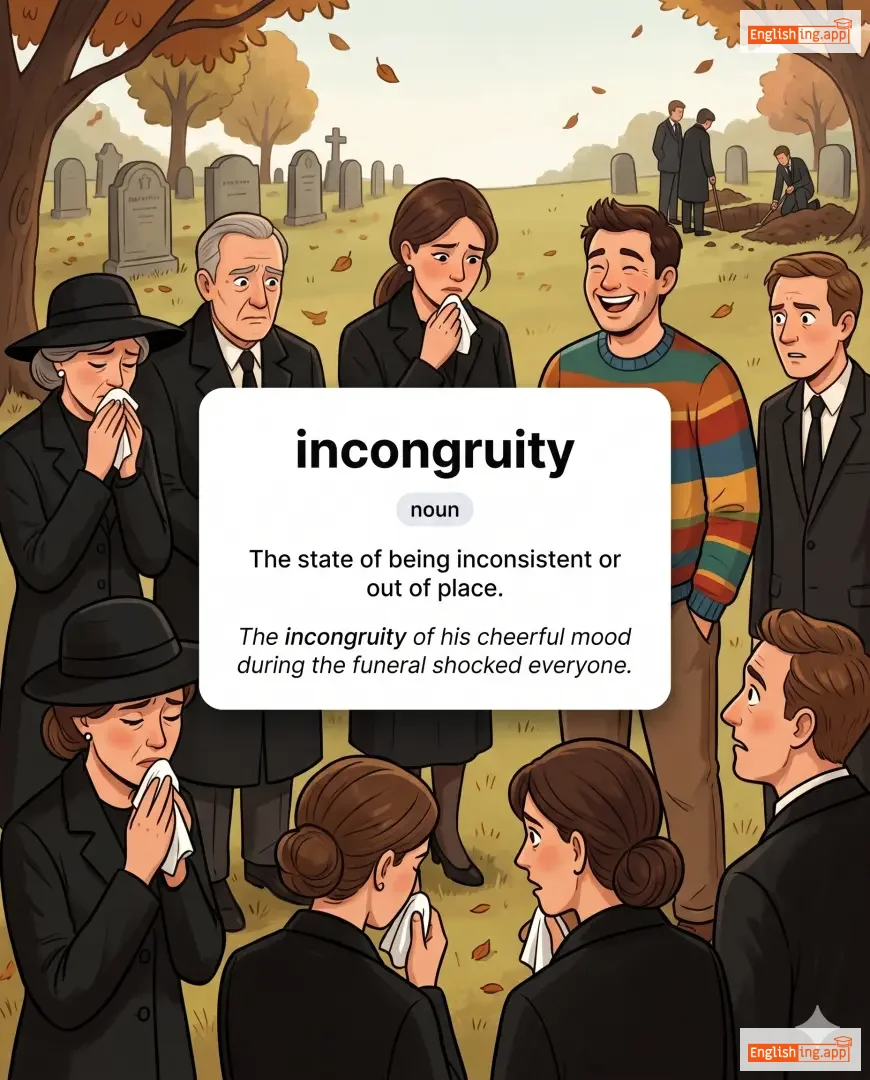
The state of being inconsistent or out of place.

"The incongruity of his cheerful mood during the funeral shocked everyone."

"在葬礼上,他愉快的心情与情境的不一致让所有人都震惊了。" (Zài zànglǐ shàng, tā yúkuài de xīnqíng yǔ qíngjìng de bù yīzhì ràng suǒyǒu rén dōu zhènjīngle.)
adjective
/ɪnˈkɒŋɡruəs/
不一致 (bu yizhi)

Not fitting in with or suitable for the surroundings.

"His jokes were incongruous during the serious meeting."
"他的笑话在严肃的会议中显得不一致。" (Tā de xiàohuà zài yánsù de huìyì zhōng xiǎnde bù yīzhì.)
inconsequential definition card — visual illustration of the meaning
adjective
/ˌɪnˌkɒnsɪˈkwɛnʃəl/
微不足道 (wēi bù zú dào)

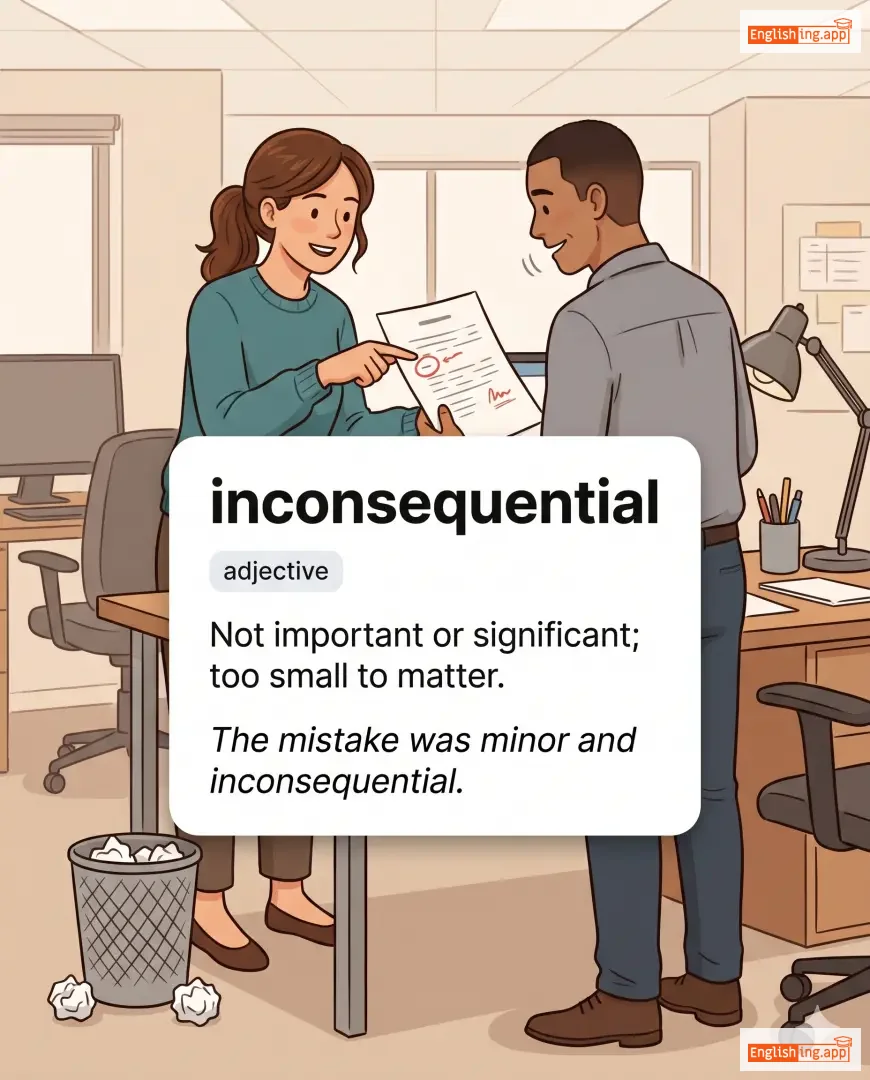
Not important or significant; too small to matter.

"The mistake was minor and inconsequential."

"这个错误是微不足道的。" (Zhège cuòwù shì wēi bù zú dào de.)
adjective
/ˌɪnkənˈsɪdərəbl/
微不足道 (weibu zhu dao)

Too small or unimportant to be worth considering.

"The donation was not inconsiderable, though smaller than expected."

"这笔捐款并不微不足道,尽管比预期的小。" (Zhe bi juan kuan bing bu wei bu zhu dao, jin guan bi yuqi de xiao.)
adjective
/ˌɪnkənˈsɪdərət/
不体贴 (bu tixie)

Thoughtless; showing a lack of concern for others.

"It was inconsiderate of him to play loud music late at night."

"他在深夜播放大声音乐,显得很不体贴。" (Ta zai shenya bofang dasheng yinyue, xiande hen bu tixie.)
noun
/ˌɪnkənˈsɪstənsi/
不一致 (bù yīzhì)

The quality of being contradictory, irregular, or not staying the same.

"There is an inconsistency between his words and actions."

"他的话语和行为之间存在不一致。" (Tā de huàyǔ hé xíngwéi zhījiān cúnzài bù yīzhì.)
adjective
/ˌɪnkənˈsɪstənt/
不一致 (bù yīzhì)

Not staying the same throughout; lacking harmony or regularity.

"His answers were inconsistent and confusing."

"他的回答不一致且令人困惑。" (Tā de huídá bù yīzhì qiě lìng rén kùnhuò.)
noun
/ɪnˈkɒnstənsi/
不稳定性 (bù wěndìng xìng)

The quality of changing frequently or being unreliable.

"The inconstancy of the weather makes planning difficult."

"天气的不稳定性使得规划变得困难。" (Tiānqì de bù wěndìng xìng shǐdé guīhuà biàndé kùnnán.)
adjective
/ɪnˈkɒnstənt/
不稳定的 (bù wěndìng de)

frequently changing; not consistent or dependable

"His inconstant moods made it difficult to work with him."

"他的情绪不稳定使得与他合作变得困难。" (Tā de qíngxù bù wěndìng shǐdé yǔ tā hézuò biàndé kùnnán.)
adjective
/ɪnˈkɒntɪnənt/
失禁 (shī jìn)

lacking control over urination or defecation; lacking self-restraint

"The patient was incontinent after surgery."

"病人在手术后失禁。" (Bìngrén zài shǒushù hòu shī jìn.)
adjective
/ˌɪnkɒntrəˈvɜːtəbl/
不可否认 (bù kě fǒu rèn)

impossible to deny or dispute; unquestionable

"The evidence was incontrovertible and proved his innocence."

"证据是不可否认的,并证明了他的清白。" (Zhèngjù shì bù kě fǒu rèn de, bìng zhèngmíngle tā de qīngbái.)
noun, verb
/ˌɪnkənˈviːniəns/
不便 (bubian)

trouble or difficulty caused to someone; to cause trouble or difficulty to someone

"We apologize for any inconvenience caused by the delay."

"对于延误造成的任何不便,我们深表歉意。" (Duiyu yanwu zaocheng de renhe bubian women shenbiao qianyi)
adjective
/ˌɪnkənˈviːniənt/
不方便 (bù fāngbiàn)

causing trouble, difficulties, or discomfort

"It was inconvenient for her to travel during the storm."

"暴风雨期间,她旅行不方便。" (bàofēngyǔ qījiān, tā lǚxíng bù fāngbiàn.)
incorporate definition card — visual illustration of the meaning
verb
/ɪnˈkɔːpəreɪt/
融入 (rongru)

to include something as part of a whole; to form a legal corporation

"The teacher incorporated new technology into her lessons."

"老师将新技术融入到她的课程中。" (Laoshi jiang xin jishu rongru dao ta de kecheng zhong.)
adjective
/ˌɪnkɔːrˈpɔːriəl/
无形的 (wuxing de)

lacking a physical body; not composed of matter; intangible

"Ghosts are often described as incorporeal beings."

"鬼魂常被描述为无形的存在。" (Guǐhún cháng bèi miáoshù wéi wúxíng de cúnzài.)
adjective
/ɪnkəˈrɛkt/
不正确 (bù zhèngquè)

not correct or accurate

"The information you provided was incorrect."

"您提供的信息是错误的。" (Nín tígōng de xìnxī shì cuòwù de.)
adjective
/ɪnˈkɒrɪdʒəbəl/
无法纠正的 (wúfǎ jiūzhèng de)

incapable of being corrected, improved, or reformed

"He is an incorrigible optimist who never loses hope."

"他是一个无法纠正的乐观主义者,从不放弃希望。" (Tā shì yīgè wúfǎ jiūzhèng de lèguān zhǔyì zhě, cóng bù fàngqì xīwàng.)
increase definition card — visual illustration of the meaning
verb
/ɪnˈkriːs/
增加 (zēngjiā)

to make something larger in size, number, or amount

"The company plans to increase its workforce next year."

"公司计划明年增加劳动力。" (Gōngsī jìhuà míngnián zēngjiā láodònglì.)
verb
/ɪnˈkriːst/
增加的 (zēngjiā de)

became greater in size, amount, or degree

"The company's revenue increased last year."
"公司去年收入增加了。" (Gōngsī qùnián shōurù zēngjiā le.)
increasing definition card — visual illustration of the meaning
verb
/ɪnˈkriːsɪŋ/
增加 (zengjia)

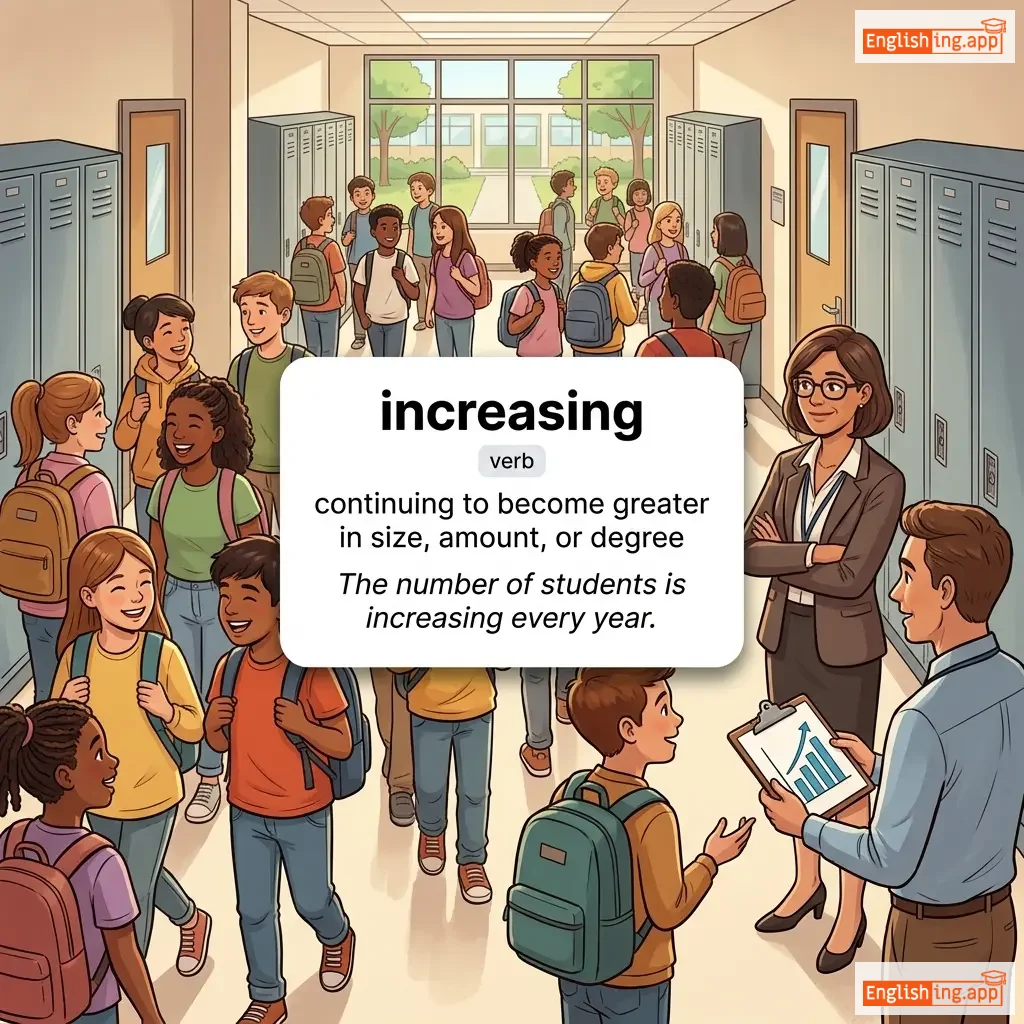
continuing to become greater in size, amount, or degree

"The number of students is increasing every year."

"学生人数每年都在增加。" (Xuesheng renshu meinian dou zai zengjia.)
adverb
/ɪnˈkriːsɪŋli/
越来越多 (yuè lái yuè duō)

more and more over time

"People are increasingly concerned about climate change."

"人们对气候变化的关注越来越多。" (Rénmen duì qìhòu biànhuà de guānzhù yuè lái yuè duō.)
adjective
/ɪnˈkrɛdəbl/
难以置信的 (nán yǐ zhì xìn de)

so extraordinary that it is hard to believe; amazing

"The view from the mountain was incredible."

"从山顶看到的景色难以置信。" (Cóng shāndǐng kàn dào de jǐngsè nán yǐ zhì xìn.)
adverb
/ɪnˈkrɛdɪbli/
难以置信地 (nán yǐ zhì xìn de)

to a great degree; extremely or unbelievably

"The view from the top of the mountain was incredibly beautiful."

"从山顶看到的景色是难以置信地美丽。" (Cóng shāndǐng kàn dào de jǐngsè shì nán yǐ zhì xìn de měilì.)
noun
/ˌɪnkrɪˈdjuːləti/
怀疑 (huaiyi)

the state of being unwilling or unable to believe something

"She looked at him with incredulity after hearing the strange story."

"在听到那个奇怪的故事后,她带着怀疑看着他。" (Zai tingdao nage qiguai de gushi hou, ta daizhe huaiyi kanzhe ta.)
adjective
/ɪnˈkrɛdjələs/

unwilling or unable to believe something

"He gave her an incredulous look when she claimed she could fly."

noun
/ˈɪŋkrɪmənt/
增量 (zengliang)

an increase or addition, especially one of a series on a fixed scale

"Employees received an annual salary increment."

"员工们收到了年度薪资增量。" (Yuángōngmen shōudàole niándù xīn zī zēngliàng.)
incremental definition card — visual illustration of the meaning
adjective
/ˌɪŋ.krɪˈmen.təl/
逐步的 (zhú bù de)

Increasing gradually in small amounts or steps.

"The company made incremental improvements to the software."

"公司在软件上进行了逐步改进。" (Gōngsī zài ruǎnjiàn shàng jìnxíngle zhúbù gǎijìn.)
verb
/ɪnˈkrɪmɪˌneɪt/
使犯罪 (shǐ fànzuì)

to make someone appear guilty of a crime or wrongdoing

"The new evidence could incriminate the suspect in the robbery case."

"新证据可能会让嫌疑犯在抢劫案件中使犯罪。" (Xīn zhèngjù kěnéng huì ràng xiányí fàn zài qiǎngjié ànjiàn zhōng shǐ fànzuì.)
noun
/ˌɪnkrʌˈsteɪʃən/
外壳 (wai ke)

a crust or hard coating formed on the surface of something

"The old pipes were blocked due to heavy incrustation of minerals."

"由于矿物质的重积附,旧管道被堵塞了。" (Youyu kuangwuzhi de zhong jifu, jiu guandao bei dushile.)
verb
/ˈɪnkjʊˌbeɪt/
孵化 (fuhua)

to keep eggs, cells, or organisms at the right conditions for development

"The hen will incubate the eggs until they hatch."

"母鸡会孵化蛋直到它们孵化。" (Mǔ jī huì fūhuà dàn zhídào tāmen fūhuà.)
noun
/ˌɪnkjʊˈbeɪʃən/
将蛋、细胞或生物置于适宜的环境条件中以促进其发展的过程 (jiang dan, xibao huo shengwu zhi yu shiyi de huanjing tiaojian zhong yi cujin qi fazhan de guocheng)

the process of keeping eggs, cells, or organisms in the right conditions for development

"The incubation of the eggs lasted for three weeks."

"蛋的孵化持续了三周。" (Dan de fuhua chixu le san zhou.)
noun
/ˈɪnkjʊˌbeɪtər/
恒温箱 (hengwenxiang)

a device or environment that provides suitable conditions for eggs, cells, or infants to develop

"The premature baby was placed in an incubator for care."

"早产儿被放入恒温箱接受护理。" (Zǎo chǎn ér bèi fàng rù héng wēn xiāng jiē shòu hùlǐ.)
noun
/ˈɪŋkjʊbəs/
恶梦般的负担 (èmèng bān de fùdān)

An oppressive or nightmarish burden; in folklore, an evil spirit that lies upon sleeping people.

"Debt became an incubus that weighed heavily on the family."

"债务成了一个恶梦般的负担,沉重地压在这个家庭上。" (Zhàiwù chéngle yī gè è mèng bān de fù dān, chénzhòng de yā zài zhège jiātíng shàng.)
inculcate definition card — visual illustration of the meaning
verb
/ˈɪŋkʌlkeɪt/
灌输 (guànshū)

To teach or instill an idea, attitude, or habit persistently.

"Parents try to inculcate good manners in their children."

"父母尝试在孩子们身上灌输良好的行为举止。" (Fùmǔ chángshì zài háizimen shēnshang guànshū liánghǎo de xíngwéi jǔzhǐ.)
verb
/ˈɪŋkʌlpeɪt/
指责 (zhǐzé)

To blame or accuse someone of wrongdoing.

"The evidence seemed to inculpate the suspect in the crime."
"证据似乎将嫌疑犯牵连到这起犯罪中。" (Zhèngjù shìhū jiāng xiányí fàn qiānlián dào zhè qǐ fànzuì zhōng.)
incumbent definition card — visual illustration of the meaning
adjective
/ɪnˈkʌmbənt/
在职的 (zaizhi de)

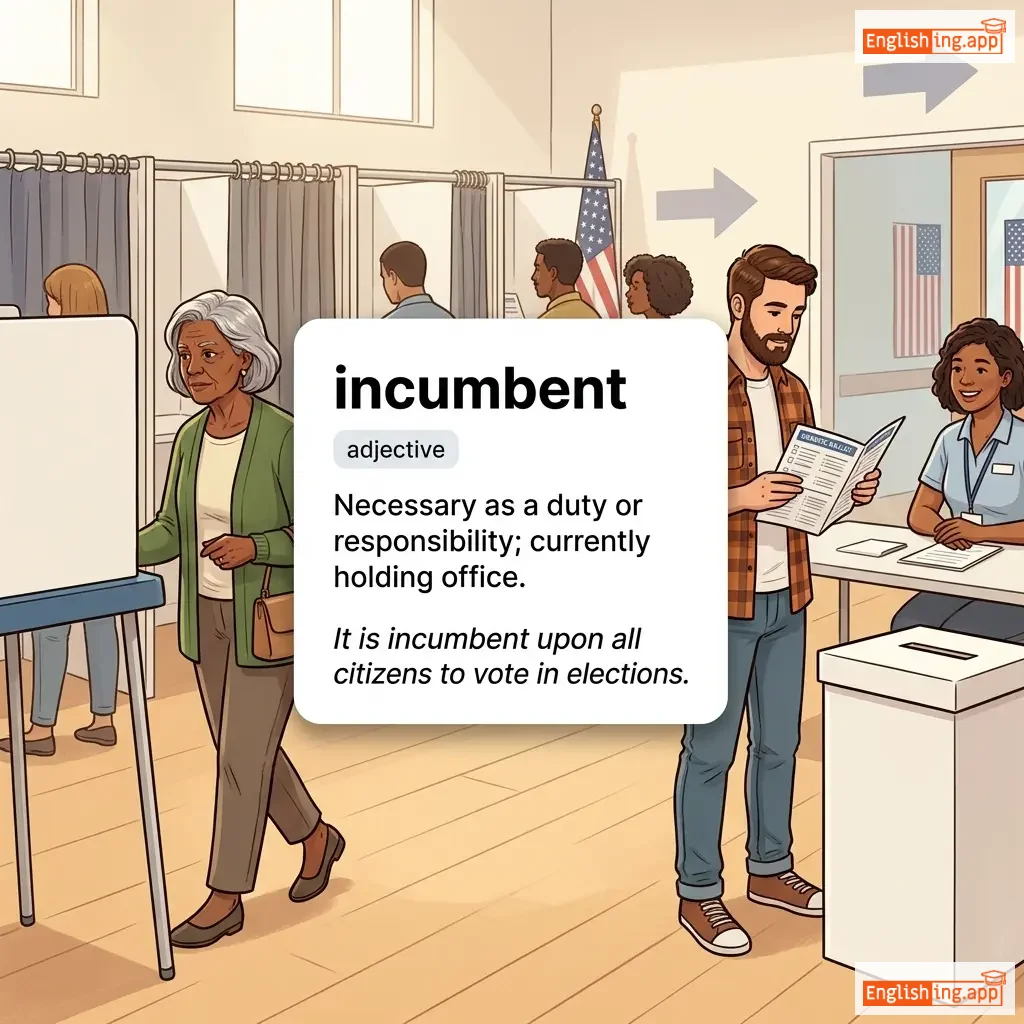
Necessary as a duty or responsibility; currently holding office.

"It is incumbent upon all citizens to vote in elections."

"所有公民有责任在选举中投票。" (Suǒyǒu gōngmín yǒu zérèn zài xuǎnjǔ zhōng tóupiào.)
verb
/ɪnˈkɜːr/
遭受 (zāoshòu)

To bring upon oneself something undesirable, usually as a result of actions.

"He incurred a fine for parking in the wrong place."
"他因在错误的地方停车而被罚款。" (Tā yīn zài cuòwù de dìfāng tíngchē ér bèi fákuǎn.)
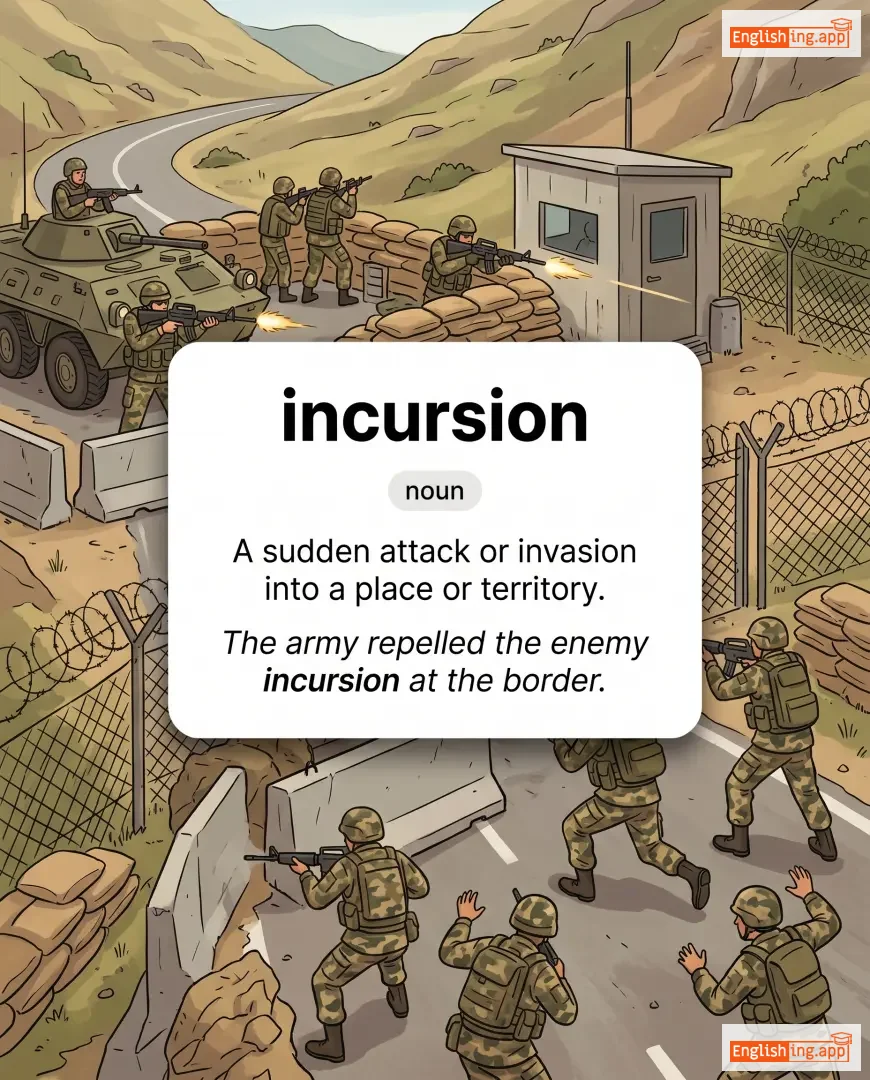
incursion definition card — visual illustration of the meaning
noun
/ɪnˈkɜːrʒən/
入侵 (rùqīn)

A sudden attack or invasion into a place or territory.

"The army repelled the enemy incursion at the border."

"军队在边境击退了敌人的入侵。" (Jūnduì zài biānjìng jītuìle dírén de rùqīn.)