词汇表

英语词汇词典 | 单词含义、定义和示例

noun
/ˌɪnkænˈdɛsəns/
白炽光 (baichi guang)

the emission of light from a hot object; brilliance

"The incandescence of the candle filled the dark room."

"蜡烛的白炽光填满了黑暗的房间。" (Làzhú de báichì guāng tiánmǎnle hēi'àn de fángjiān.)
adjective
/ˌɪnkænˈdɛsənt/
白炽的 (baichi de)

emitting light as a result of being heated; extremely bright or passionate

"The incandescent lamp lit up the entire hall."

"白炽灯照亮了整个大厅。" (Baichi deng zhaoliang le zhengge dating.)
noun
/ˌɪnkænˈteɪʃən/
咒语 (zhòuyǔ)

a series of words used as a magic spell or charm

"The wizard chanted an incantation to summon the spirits."

"巫师念了一段咒语来召唤灵魂。" (Wūshī niànle yī duàn zhòuyǔ lái zhàohuàn línghún.)
noun
/ˌɪnˌkeɪpəˈbɪləti/
无能力 (wu nengli)

lack of ability or power to do something; inability or incompetence

"His incapability to manage the team led to serious problems."

"他管理团队的无能力导致了严重的问题。" (ta guanli tuandui de wu nengli daozhile yanzhong de wenti)
adjective
/ɪnˈkeɪpəbəl/
无能的 (wu neng de)

lacking the ability, skill, or capacity to do something

"He is incapable of understanding complex instructions."

"他无法理解复杂的指令。" (ta wu fa li jie fu za de zhi ling)
verb
/ˌɪnkəˈpæsɪteɪt/
使无法运作 (shi wu fa yun zuo)

to deprive someone or something of the ability or strength to function

"The severe injury incapacitated the player for the rest of the season."

"重伤使球员在赛季剩余的时间内无法参赛。" (Zhong shang shi qiu yuan zai sai ji sheng yu de shi jian nei wu fa can sai.)
noun
/ˌɪnkəˈpæsəti/
无能 (wú néng)

the lack of ability, power, or fitness to do something

"His mental incapacity prevented him from making important decisions."

"他的心理无能使他无法做出重要决策。" (Tā de xīnlǐ wú néng shǐ tā wú fǎ zuò chū zhòng yào jué cè.)
verb
/ɪnˈkɑːrsəreɪt/
监禁 (jianjin)

to imprison or confine someone

"The authorities incarcerated the criminal after the trial."

"当局在审判后将罪犯监禁。" (Dangju zai shenpan hou jiang zuifan jianjin.)
noun
/ɪnˌkɑːsəˈreɪʃən/
监禁 (jianjin)

the state of being imprisoned or confined

"The criminal faced years of incarceration for his crimes."

"罪犯因其罪行被监禁多年。" (Zuifan yin qi zuixing bei jianjin duonian.)
adjective/noun
/ɪnˈkɑːrnədiːn/
深红色 (shen hong se)

a bright crimson or pinkish-red color

"The sky turned incarnadine at sunset."
"夕阳下天空变成了深红色。" (Xiyangxia tiānkōng biàn chéngle shēn hóng sè.)
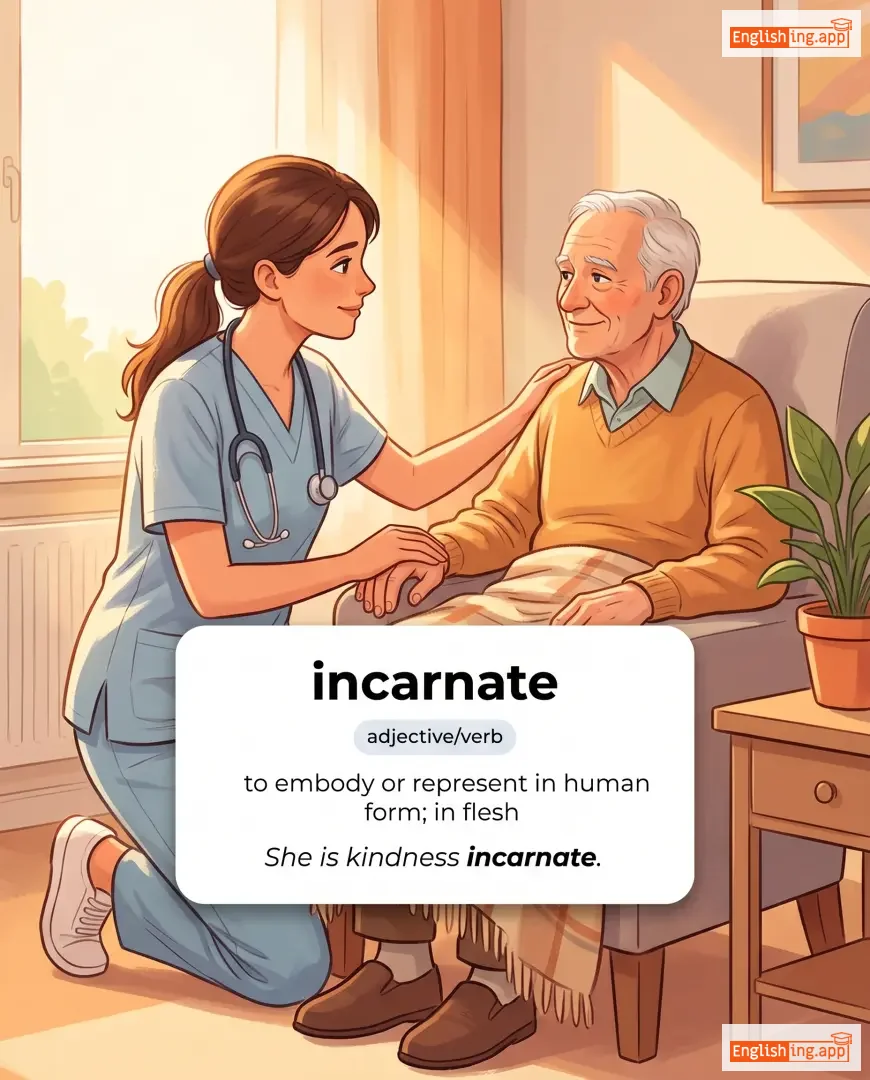
incarnate definition card — visual illustration of the meaning
adjective/verb
/ɪnˈkɑːrneɪt/
化身 (huàshēn)

to embody or represent in human form; in flesh

"She is kindness incarnate."

"她是善良的化身。" (Tā shì shànliáng de huàshēn.)
noun
/ˌɪnkɑːrˈneɪʃən/
化身 (huàshēn)

the embodiment of a deity, spirit, or quality in a physical form

"The monk was considered the incarnation of compassion."

"这位僧侣被认为是慈悲的化身。" (Zhè wèi sēnglǚ bèi rènwéi shì cíbēi de huàshēn.)
adjective
/ɪnˈsɛndiˌɛri/
煽动性的 / 挑衅的 (shāndòng xìng de / tiǎoxìn de)

designed to cause fires or stir up conflict

"The politician’s incendiary remarks angered the crowd."

"政治家的挑衅性言论激怒了人群。" (Zhèngzhìjiā de tiǎoxìn xìng yánlùn jī nù le rénqún.)
noun/verb
/ˈɪnsɛns/
香火 / 激怒 (xiang huo / ji nu)

a substance burned for its sweet smell (noun); to make very angry (verb)

"The smell of incense filled the temple, but his rude words incensed her."

"香火的气味充满了寺庙,但他粗鲁的话让她非常生气。" (Xiang huo de qi wei chong man le si miao, dan ta cu lu de hua rang ta fei chang sheng qi.)
noun
/ɪnˈsɛntɪv/
激励 (jili)

a thing that motivates or encourages someone to do something

"The company offers bonuses as an incentive to increase productivity."

"公司提供奖金作为激励,促进生产力提高。" (Gōngsī tígōng jiǎngjīn zuòwéi jīlì, cùjìn shēngchǎnlì tígāo.)
incentives definition card — visual illustration of the meaning
noun
ɪnˈsɛntɪvz
激励 (jīlì)

Things that motivate or encourage one to do something.

"Tax incentives are used to encourage investment in renewable energy."
"税收激励用于鼓励对可再生能源的投资。" (Shuìshōu jīlì yòng yú gǔlì duì kě zàishēng néngyuán de tóuzī.)
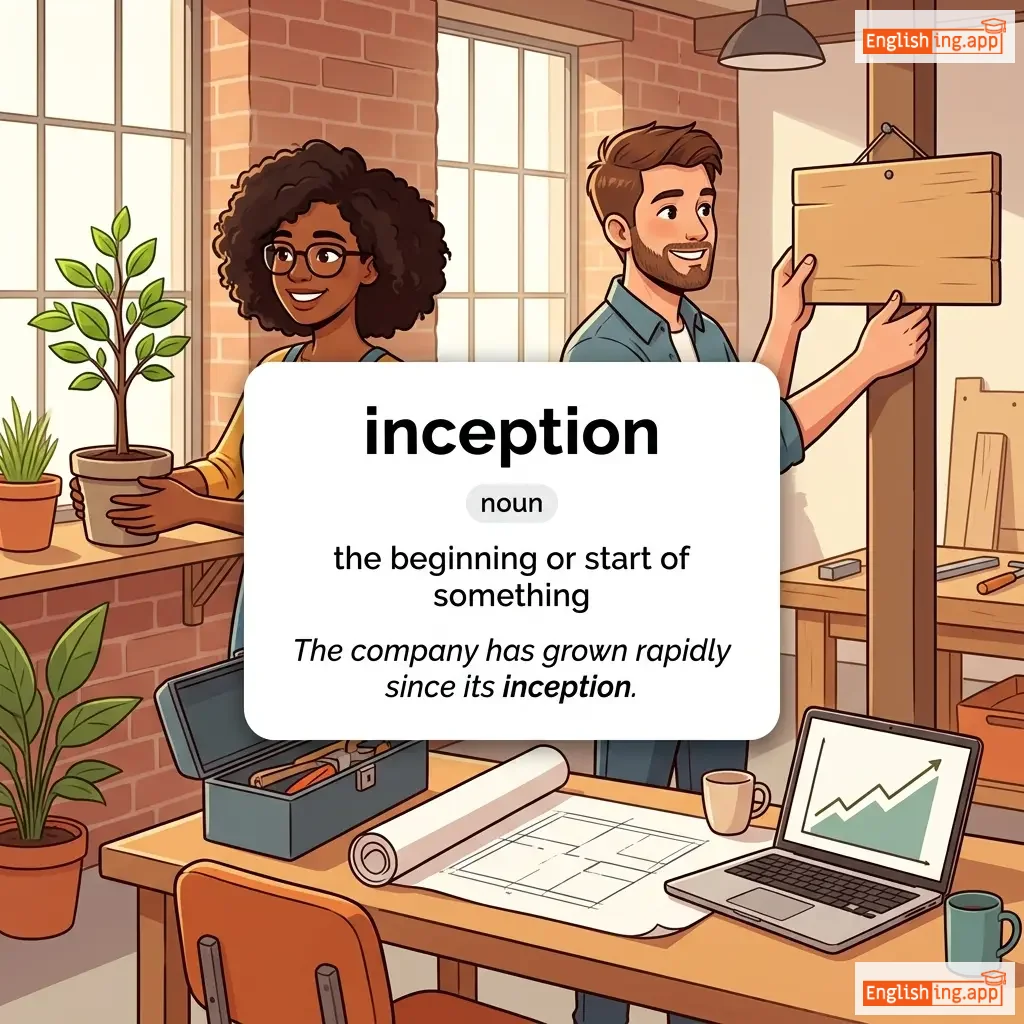
inception definition card — visual illustration of the meaning
noun
/ɪnˈsɛpʃən/
开始 (kaishi)

the beginning or start of something

"The company has grown rapidly since its inception."

"公司自创立以来发展迅速。" (Gongsi zi chuangli yilai fazhan xunsu.)
adjective
/ɪnˈsɛptɪv/
初始 (chushi)

Relating to or marking the beginning or initial stage of something.

"The inceptive phase of the project was marked by enthusiastic planning."
"项目的初始阶段是通过充满热情的规划来标志的。" (Xiangmu de chushi jieduan shi tongguo chongman reqing de guihua lai biaozhi de.)
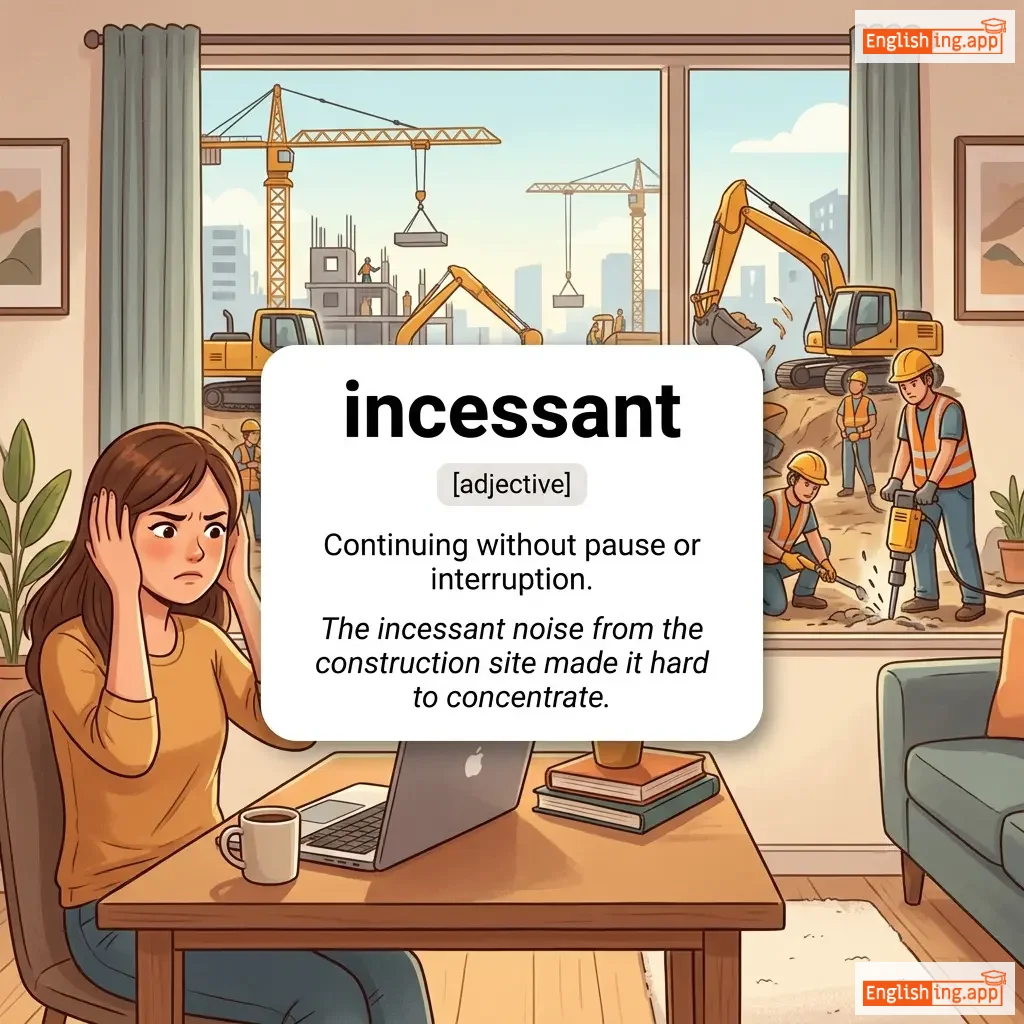
incessant definition card — visual illustration of the meaning
adjective
/ɪnˈsɛsənt/
不断 (bùduàn)

Continuing without pause or interruption.

"The incessant noise from the construction site made it hard to concentrate."

"建筑工地不断的噪音让人很难集中注意力。" (Jiànzhú gōngdì bùduàn de zàoyīn ràng rén hěn nán jízhōng zhùyìlì.)
noun, verb
/ɪntʃ/
英寸 / 缓慢移动 (yingcun / huanman yidong)

A unit of length equal to 2.54 centimeters; or to move slowly and carefully in small amounts.

"She inched closer to the edge of the stage."

"她慢慢靠近舞台的边缘。" (Ta manman kaojin wutai de bianyuan.)
adverb
/ˈɪntʃmiːl/
逐渐 (zhújiàn)

Gradually, little by little.

"The old castle fell inchmeal into ruin."

"那座古老的城堡逐渐变成废墟。" (Nà zuò gǔlǎo de chéngbǎo zhújiàn biàn chéng fèixū.)
inchoate definition card — visual illustration of the meaning
adjective
/ɪnˈkoʊ.ɪt/ or /ɪnˈkoʊ.eɪt/
未完成的 (wei wancheng de)

Just begun and not fully formed; rudimentary.

"His inchoate ideas needed more research to be developed."

"他的未完成的想法需要更多的研究才能发展。" (Tā de wèi wánchéng de xiǎngfǎ xūyào gèng duō de yánjiū cáinéng fāzhǎn.)
adjective
/ɪnˈkoʊətɪv/
初步的 (chubude)

relating to the beginning of something; in an initial stage

"The poet used inchoative expressions to depict the dawn of creation."

"诗人使用了初步的表达方式来描绘创世之初。" (Shiren shiyongle chubude de biaodafangshi lai miaohui chuangshi zhi chu.)
noun
/ˈɪnsɪdəns/
事件发生率 (shìjiàn fāshēng lǜ)

the occurrence, rate, or frequency of something

"The incidence of road accidents has decreased this year."

"今年道路事故的发生率有所下降。" (Jīnnián dàolù shìgù de fāshēng lǜ yǒu suǒ xiàjiàng.)
noun
/ˈɪnsɪdənt/
事件 (shìjiàn)

an event or occurrence, often unpleasant or unusual

"The police quickly responded to the incident in the park."

"警方迅速回应了公园内的事件。" (jǐngfāng xùnsù huíyīngle gōngyuán nèi de shìjiàn.)
adjective
/ˌɪnsɪˈdɛntəl/
附带的 (fudai de)

happening as a minor part or in connection with something else

"Incidental expenses like snacks and tips were included in the bill."

"像零食和小费这样的附带费用被包含在账单中。" (Xiàng língshí hé xiǎofèi zhèyàng de fùdài fèiyòng bèi bāokuò zài zhàngdān zhōng.)
adverb
/ˌɪnsɪˈdɛntəli/
顺便 (shun bian)

by the way; used to introduce a remark not directly related to the main subject

"Incidentally, did you know that she studied in Paris?"

"顺便问一下,你知道她曾经在巴黎学习吗?" (Shun bian wen yi xia, ni zhi dao ta ceng jing zai Ba Li xue xi ma?)
verb
/ɪnˈsɪnəˌreɪt/
焚烧 (fén shāo)

to burn something completely until it is reduced to ashes

"The city decided to incinerate the medical waste for safety."

"城市决定为安全起见销毁医疗废物。" (Chéngshì juédìng wèi ānquán qǐjiàn xiāohuǐ yīliáo fèiwù.)
noun
/ɪnˈsɪpiəns/
开始 (kaishi)

the beginning or initial stage of something

"The project was still in its incipience when funding was approved."

"当资金获得批准时,项目仍处于其开始阶段。" (Dang zijin huode pizhun shi, xiangmu reng chu yu qi kaishi jieduan.)
adjective
/ɪnˈsɪpiənt/
初期的 (chūqī de)

in an initial stage; beginning to develop

"The incipient storm made the sky turn dark and heavy."

"初期的风暴使天空变得阴暗而沉重。" (Chūqī de fēngbào shǐ tiānkōng biàn dé yīn'àn ér chénzhòng.)
incisive definition card — visual illustration of the meaning
adjective
/ɪnˈsaɪsɪv/
尖锐 (jianrui)

clear, sharp, and direct in thought, speech, or style

"Her incisive analysis revealed the flaws in the plan."

"她尖锐的分析揭示了计划中的缺陷。" (Tā jiānruì de fēnxī jiēshìle jìhuà zhōng de quēxiàn.)
noun
/ɪnˈsaɪzər/
切牙 (qie ya)

a narrow-edged tooth at the front of the mouth, adapted for cutting

"The dentist noted that his upper left incisor was chipped."
"牙医注意到他的上左切牙裂开了。" (Ya yi zhuyi dao ta de shang zuo qie ya lie kai le.)
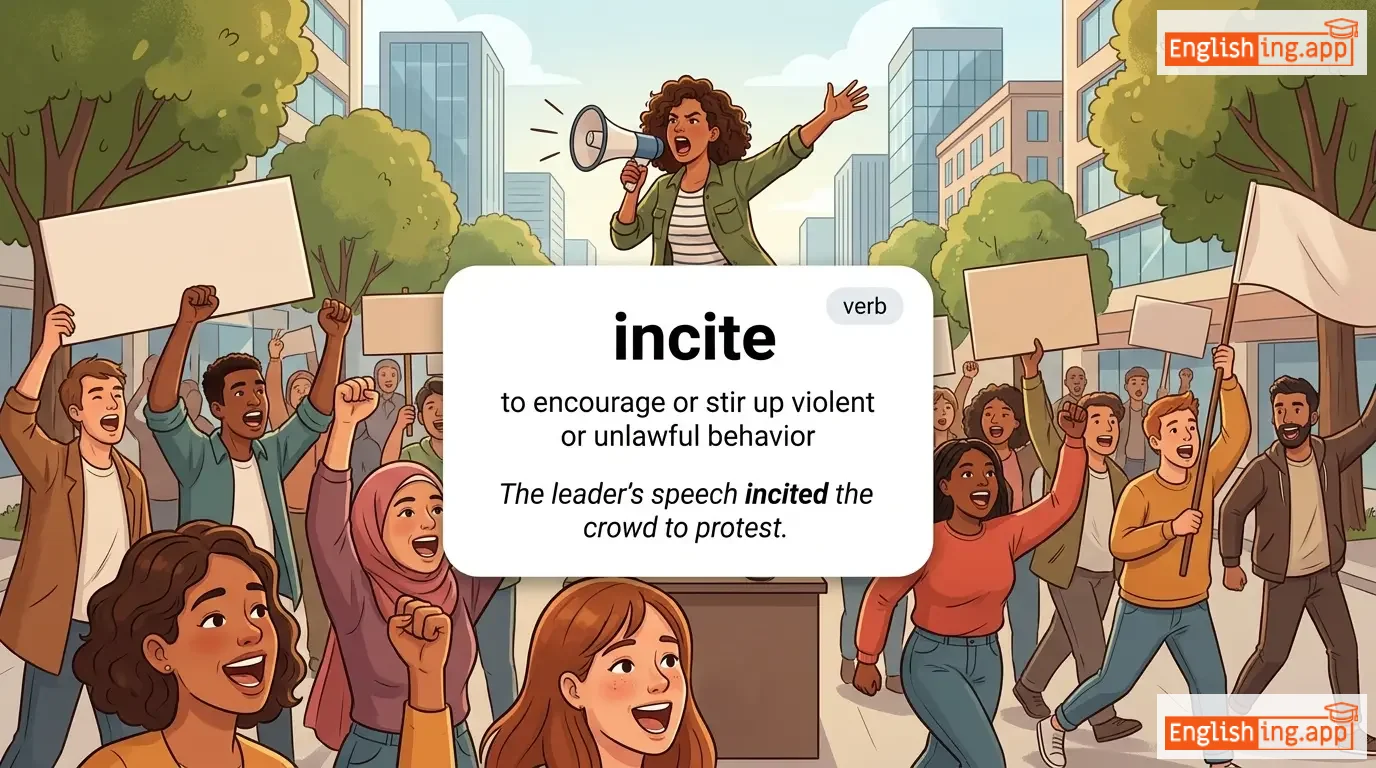
incite definition card — visual illustration of the meaning
verb
/ɪnˈsaɪt/
煽动 (shandong)

to encourage or stir up violent or unlawful behavior

"The leader's speech incited the crowd to protest."

"领导人的演讲煽动了人群进行抗议。" (Lingdaoren de yanjiang shandong le renqun jinxing kangyi.)
noun
/ɪnˈsaɪtmənt/
煽动 (shāndòng)

the action of provoking unlawful or violent behavior

"He was arrested for incitement to riot."

"他因煽动暴乱被逮捕。" (Tā yīn shāndòng bàoluàn bèi dàibǔ.)
adjective
/ɪnˈklɛmɛnt/
恶劣天气 (è liè tiān qì)

unpleasantly cold, wet, or stormy (usually weather)

"The match was canceled due to inclement weather."

"比赛因恶劣天气被取消了。" (Bǐ sài yīn è liè tiān qì bèi qǔ xiāo le.)
noun
/ˌɪnklɪˈneɪʃən/
倾向 (qīngxiàng)

A natural tendency or urge to act or feel in a particular way.

"She has an inclination towards helping others."

"她有帮助他人的倾向。" (Tā yǒu bāngzhù tārén de qīngxiàng.)
verb
/ɪnˈklaɪn/
倾向 (qīngxiàng)

to feel willing or favorably disposed toward something; to bend or tilt

"She is inclined to agree with the proposal."

"她倾向于同意这个提议。" (Tā qīngxiàng yú tóngyì zhège tíyì.)
adjective
/ɪnˈklaɪnd/
倾向的 (qingxiang de)

having a tendency or disposition toward something

"He is inclined to help those in need."

"他倾向于帮助有需要的人。" (Tā qīngxiàng yú bāngzhù yǒu xūyào de rén.)
include definition card — visual illustration of the meaning
verb
/ɪnˈkluːd/
包括 (bāo kuò)

to make something part of a whole or group

"The package includes free breakfast."

"该套餐包括免费早餐。" (gāi tàocān bāokuò miǎnfèi zǎocān.)
preposition
/ɪnˈkluːdɪŋ/
包括 (bao kuo)

used to show that someone or something is part of a larger group

"Many people attended the event, including students and teachers."

"许多人参加了这个活动,包括学生和教师。" (Xǔduō rén cānjiāle zhège huódòng, bāokuò xuéshēng hé jiàoshī.)
noun
/ɪnˈkluːʒən/
包容 (baorong)

the action or state of including or being included within a group or structure

"Diversity and inclusion are key values in modern workplaces."
"多样性和包容性是现代工作场所的关键价值观。" (Duōyàngxì hé bāoróng xì shì xiàndài gōngzuò chǎngsuǒ de guānjiàn jiàzhíguān.)
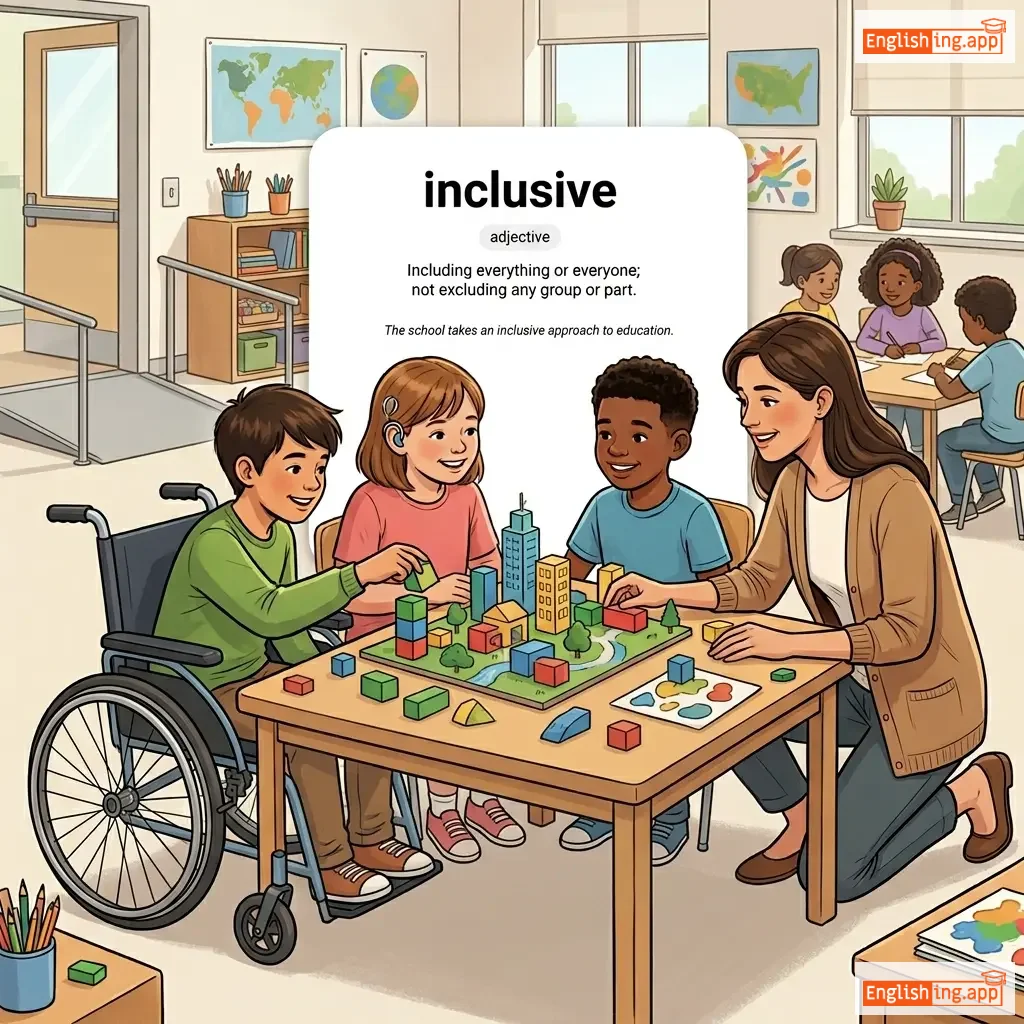
inclusive definition card — visual illustration of the meaning
adjective
/ɪnˈkluːsɪv/
包容的 (baorong de)

Including everything or everyone; not excluding any group or part.

"The school takes an inclusive approach to education."

"学校采用包容的教育方法。" (Xuexiao caiyong baorong de jiaoyu fangfa.)
adjective
/ˌɪnkoʊˈɜːrsəbl̩/
无法强迫的 (wúfǎ qiángpò de)

Not capable of being forced, compelled, or restrained.

"Her incoercible spirit inspired others to fight for justice."

"她那无法强迫的精神激励了其他人争取正义。" (Tā nà wúfǎ qiángpò de jīngshén jīlì le qítārén zhēngqǔ zhèngyì.)
adjective
/ɪnˈkɑːdʒɪtənt/
缺乏思考 (quē fá sī kǎo)

Lacking thought; inconsiderate or thoughtless.

"It was incogitant of him to make such a rude comment."

"他做出如此粗鲁的评论是缺乏思考的。" (Tā zuòchū rúcǐ cūlǔ de pínglùn shì quē fá sī kǎo de.)
adverb, adjective
/ˌɪnkɑːɡˈniːtoʊ/
匿名 (nìmíng)

In disguise or with one's identity concealed.

"The celebrity traveled incognito to avoid the paparazzi."

"名人为了避免狗仔队,匿名旅行。" (Míngrén wèile bìmiǎn gǒuzǎiduì, nìmíng lǚxíng.)
noun
/ˌɪnkoʊˈhɪrəns/
不一致 (bù yī zhì)

The quality of being unclear, confused, or lacking logical connection.

"His speech was full of incoherence and difficult to follow."

"他的演讲充满了不一致,难以跟随。" (Tā de yǎnjiǎng chōngmǎnle bù yīzhì, nán yǐ gēnsuí.)
adjective
/ˌɪnkəʊˈhɪərənt/
不连贯 (bu lianguan)

Not clear or easy to understand; lacking logical connection.

"His explanation was so incoherent that nobody could follow it."

"他的解释如此不连贯,以至于没有人能理解。" (Ta de jieshi ruci bu lianguan, yi zhi yu meiyou ren neng lijie.)
adjective
/ˌɪnkəmˈbʌstəbl/
不燃烧 (bu ranshao)

Not capable of catching fire or burning.

"This material is incombustible and safe for construction."

"这种材料是防火的,适合建筑使用。" (Zhè zhǒng cáiliào shì fánghuǒ de, shìhé jiànzhú shǐyòng.)
noun
/ˈɪnkʌm/
收入 (shōurù)

money received for work or through investments

"His monthly income is enough to support his family."

"他的月收入足以养家糊口。" (Tā de yuè shōurù zúyǐ yǎngjiā húkǒu.)
adjective
/ˌɪnkəˈməʊdiəs/
不舒服的 (bù shū fú de)

Uncomfortably small, cramped, or inconvenient.

"We had to stay in an incommodious room during the trip."

"我们在旅行期间不得不住在一个不舒服的房间里。" (Wǒmen zài lǚxíng qījiān bùdébù zhù zài yīgè bù shūfú de fángjiān lǐ.)