词汇表

英语词汇词典 | 单词含义、定义和示例

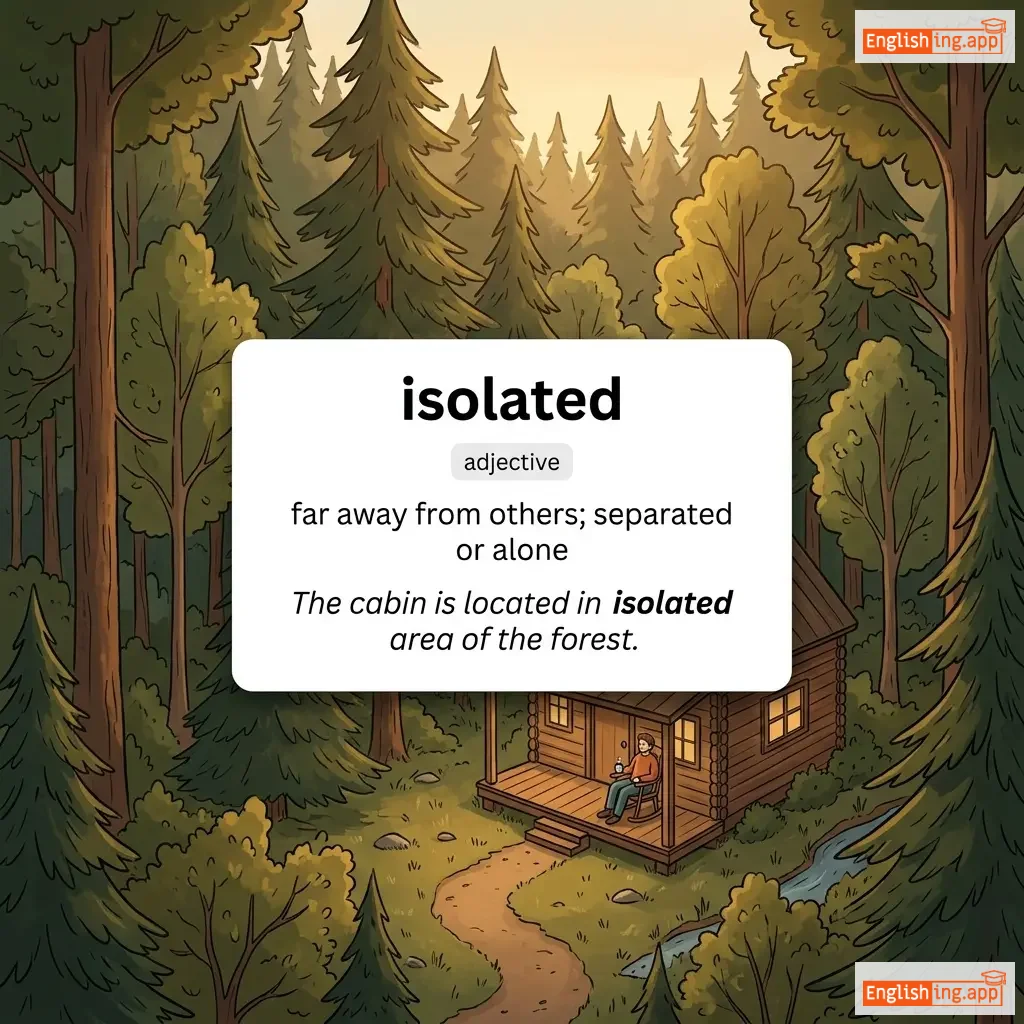
isolated definition card — visual illustration of the meaning
adjective
/ˈaɪsəleɪtɪd/
孤立的 / 隔离的 (gūlì de / gélí de)

far away from others; separated or alone

"The cabin is located in an isolated area of the forest."

"小屋位于森林的一个偏远区域。" (Xiǎo wū wèi yú sēnlín de yīgè piānyuǎn qūyù.)
noun
/ˌaɪsəˈleɪʃən/
隔离 (gelí)

the state of being separated from others; solitude or detachment

"He lived in complete isolation after his retirement."

"他在退休后生活在完全的隔离中。" (Tā zài tuìxiū hòu shēnghuó zài wánquán de gélí zhōng.)
adjective
/ˌaɪsəʊˈθɜːrməl/
等温 (deng wen)

Having or maintaining equal or constant temperature.

"The experiment was conducted under isothermal conditions."

"实验在等温条件下进行。" (Shiyan zai deng wen tiaojian xia jinxing.)
noun
/ˈaɪsətəʊp/
同位素 (tongwei su)

Atoms of the same element with equal number of protons but different numbers of neutrons.

"Carbon-14 is a radioactive isotope used in dating fossils."

"碳-14 是一种放射性同位素,用于化石的年代测定。" (Tàn-14 shì yī zhǒng fàngshèxìng tóngwèisù, yòng yú huàshí de niándài cèdìng.)
adjective, noun
/ɪzˈreɪli/
以色列的 (yǐsèliè de)

relating to Israel or its people; a person from Israel

"She works for an Israeli company."

"她在一家以色列公司工作。" (Tā zài yījiā yǐsèliè gōngsī gōngzuò.)
noun, verb
/ˈɪʃuː/
问题, 出版, 分发 (wenti, chuban, fenfa)

A problem, topic, or the act of supplying or distributing something.

"The magazine will issue a new edition next week."
"杂志将在下周发布新版本。" (Zazhi jiang zai xia zhou fabu xin banben.)
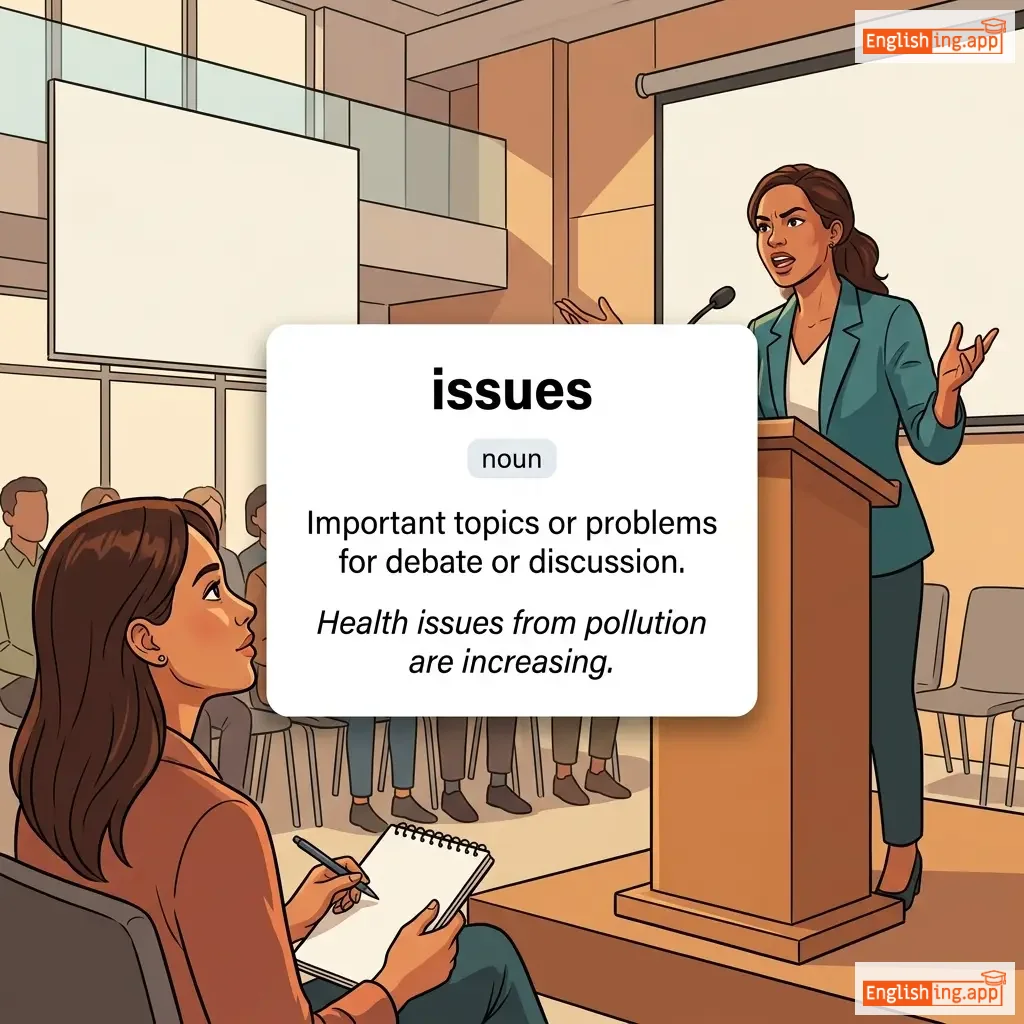
issues definition card — visual illustration of the meaning
noun
/ˈɪʃ.uːz/
问题 (wenti)

Important topics or problems for debate or discussion.

"Health issues from pollution are increasing."

"污染带来的健康问题在增加。" (Wūrǎn dàilái de jiànkāng wèntí zài zēngjiā.)
noun
/ˈɪsməs/ or /ˈɪsθməs/
地峡 (dixiá)

A narrow strip of land connecting two larger land areas, often with water on either side.

"The Panama Canal cuts through the Isthmus of Panama."

"巴拿马运河穿过巴拿马地峡。" (Bānámǎ yùnhé chuānguò bānámǎ dìxiá.)
pronoun
/ɪt/
(ta)

used to refer to a thing, animal, or idea previously mentioned or easily identified

"It is raining outside."

"外面在下雨。" (Wàimiàn zài xià yǔ.)
adjective, noun
/ɪˈtæliən/
幸福 (xìngfú)

relating to Italy, its people, or its language; a person from Italy

"She loves Italian food."

"她收到奖项时无法隐藏自己的快乐。" (Tā shōu dào jiǎngxiàng shí wúfǎ yǐncáng zìjǐ de kuàilè.)
verb
/ɪtʃ/
瘙痒 (sàoyǎng)

to feel an urge to scratch; to have a restless desire

"My skin itches from the mosquito bites."

"我的皮肤因蚊子叮咬而发痒。" (Wǒ de pífū yīn wénzi dīngyǎo ér fā yǎng.)
itchiness definition card — visual illustration of the meaning
noun
/ˈɪtʃ.i.nəs/
(yang)

The quality or condition of feeling an irritating sensation on the skin that causes a desire to scratch.

"Eye itchiness often leads to rubbing."

"眼睛的痒感常常导致揉搓。" (Yǎnjīng de yǎng gǎn chángcháng dǎozhì róucuō.)
noun
/ˈaɪtəm/
项目 (xiangmu)

A single thing, object, or unit, often part of a list or collection.

"Each item on the list must be checked carefully."

"列表中的每个项目必须仔细检查。" (Liebiao zhong de mei ge xiangmu bixu zixi jiancha.)
verb
/ˈɪtəreɪt/
迭代 (diedai)

To repeat a process or statement, often to improve or refine.

"The software team will iterate the design until it meets user needs."
"软件团队将反复迭代设计,直到满足用户需求。" (Ruǎnjiàn tuánduì jiāng fǎnfù diédài shèjì, zhídào mǎnzú yònghù xūqiú.)
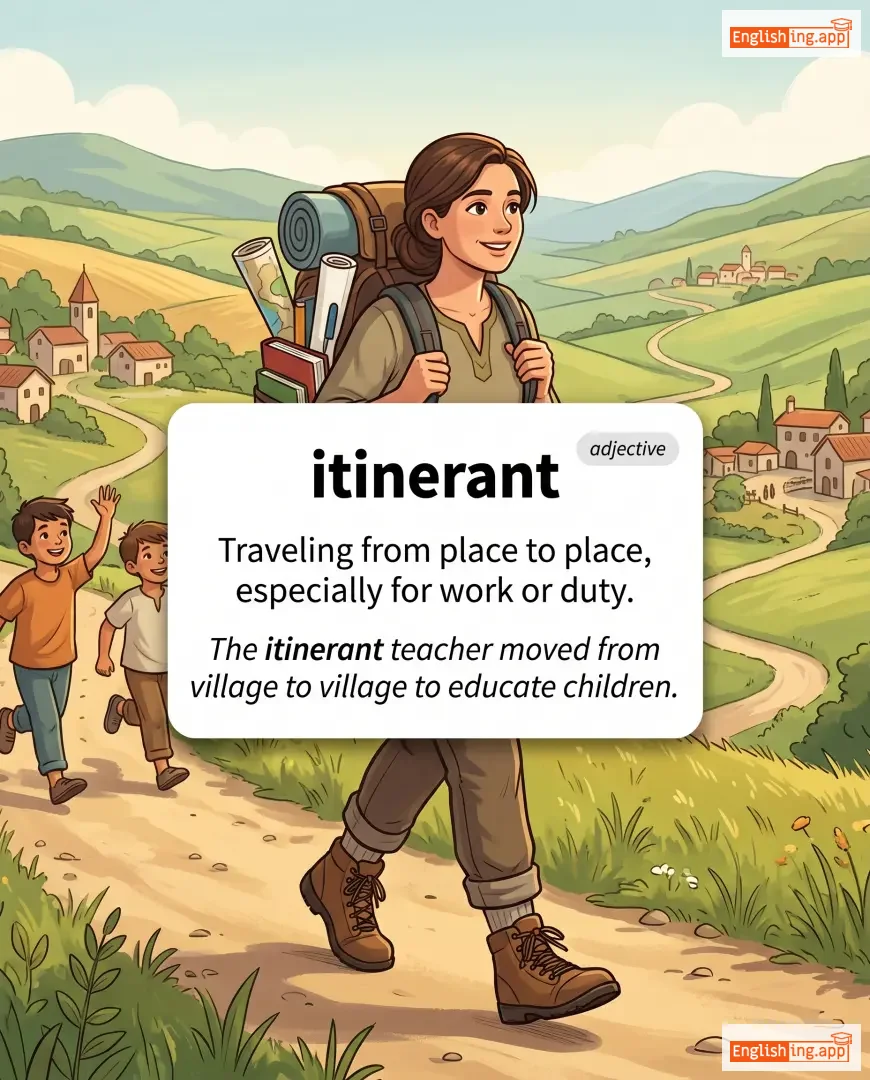
itinerant definition card — visual illustration of the meaning
adjective
/aɪˈtɪnərənt/
流动的 (liúdòng de)

Traveling from place to place, especially for work or duty.

"The itinerant teacher moved from village to village to educate children."

"这位流动的教师从一个村庄到另一个村庄,教育孩子们。" (Zhè wèi liúdòng de jiàoshī cóng yīgè cūnzhuāng dào lìng yīgè cūnzhuāng, jiàoyù háizimen.)
itinerary definition card — visual illustration of the meaning
noun
/aɪˈtɪnərɛri/
行程安排 (xíngchéng ānpái)

A planned route or schedule of a journey or trip.

"The travel agent gave us a detailed itinerary for our vacation."

"旅行社为我们的假期提供了详细的行程安排。" (Lǚxíng shè wèi wǒmen de jiàqī tígōngle xiángxì de xíngchéng ānpái.)
verb
/aɪˈtɪnəˌreɪt/
旅行 (lǚxíng)

To travel from place to place, usually for the purpose of work or preaching.

"The missionary itinerated throughout the region to spread the message."

"传教士到处旅行传播信息。" (Chuánjiàoshì dàochù lǚxíng chuánbò xìnxī.)
pronoun
/ɪts/
它的 (tā de)

Belonging to or associated with a thing previously mentioned.

"The company changed its logo last year."

"公司去年更改了它的标志。" (Gōngsī qùnián gēnggǎi le tā de biāozhì.)
pronoun
/ɪtˈsɛlf/
自己 (zìjǐ)

Used to emphasize the thing just mentioned; by its own power or effort.

"The cat cleaned itself after eating."

"猫在吃完饭后自己清理了自己。" (māo zài chī wán fàn hòu zìjǐ qīnglǐ le zìjǐ.)
noun
/ɪkˈsɔːr.ə/
伊克索拉 (yiksuola)

a tropical flowering shrub with clusters of small bright red, orange, or yellow flowers

"The bright red ixora bushes lined the pathway to the tropical garden."

"亮红色的伊克索拉灌木排成行,沿着通往热带花园的小径。" (Liàng hóngsè de yī kè suǒ lā guànmù pái chéng háng, yánzhe tōngwǎng rèdài huāyuán de xiǎo jìng.)