词汇表

英语词汇词典 | 单词含义、定义和示例

noun
/ɪˈreɪdiəns/
辐射度 (fusha du)

the quality of shining brightly; the intensity of light falling on a surface

"The irradiance of the sun at noon was overwhelming."

"中午太阳的辐射度是压倒性的。" (Zhongwu taiyang de fushadu shi yadao xing de.)
verb
/ɪˈreɪdieɪt/
辐照 (fú zhào)

to shine light on something; to expose to radiation; to illuminate or brighten

"The scientist used a lamp to irradiate the sample."

"科学家用灯泡辐照了样本。" (Kēxuéjiā yòng dēngpào fú zhào le yàngběn.)
adjective
/ɪˈrædɪkəbəl/
不可根除的 (bùkě gēnchú de)

not able to be eradicated; impossible to destroy or remove completely

"The love of a mother for her child is irradicable."

"母亲对孩子的爱是不可根除的。" (Mǔqīn duì háizi de ài shì bùkě gēnchú de.)
adjective
/ɪˈræʃənəl/
非理性 (fei li xing)

not logical or reasonable; lacking clear thought

"His fear of the dark was completely irrational."

"他对黑暗的恐惧完全是非理性的。" (Ta dui hei'an de kongju wanquan shi fei lixing de.)
irrationality definition card — visual illustration of the meaning
noun
ɪˌræʃ.ənˈæl.ɪ.ti
非理性, 不合理, 荒谬 (fei-lixing, bu-he-li, huang-miu)

The quality of being illogical or unreasonable; lack of rational thought.

"His decision was driven by complete irrationality."

"他的决定完全是基于非理性。" (Ta de jue ding wanquan shi jiyu fei lixing.)
adjective
/ˌɪrɪˈkɒnsɪləbl/
不可调和的 (bù kě tiáo hé de)

impossible to make compatible or bring into harmony; unable to resolve differences

"The couple separated due to irreconcilable differences."

"这对夫妇因不可调和的分歧而分开。" (zhè duì fūfù yīn bù kě tiáo hé de fēn qí ér fēn kāi.)
adjective
/ˌɪrɪˈdjuːsəbl/
不可约的 (bù kě yuē de)

impossible to reduce or simplify further

"The fraction 3/7 is irreducible."

"分数 3/7 是不可约的。" (Fēnshù 3/7 shì bù kě yuē de.)
adjective
/ɪˈrɛfrəɡəbəl/
不可辩驳 (bù kě biàn bó)

Impossible to refute, deny, or break

"The lawyer presented irrefragable evidence that proved his client’s innocence."

"律师提供了不可辩驳的证据,证明了他客户的无辜。" (Lǜshī tígōngle bù kě biàn bó de zhèngjù, zhèngmíngle tā kèhù de wúgū.)
adjective
/ˌɪrɪˈfrændʒɪbəl/
不可侵犯的 (bù kě qīn fàn de)

Not to be broken, violated, or infringed

"The constitution guarantees certain irrefrangible rights to every citizen."

"宪法保证每个公民享有某些不可侵犯的权利。" (Xiànfǎ bǎozhèng měi gè gōngmín xiǎng yǒu mǒu xiē bù kě qīn fàn de quánlì.)
adjective
/ˌɪrɪˈfjuːtəbəl/
不可辩驳 (bù kě biàn bó)

Impossible to deny or disprove

"The scientist provided irrefutable proof of the theory."

"科学家提供了无法反驳的理论证据。" (Kēxuéjiā tígōngle wúfǎ fǎnbó de lǐlùn zhèngjù.)
adjective
/ɪˈreɡjələr/
不规则的 (bu guize de)

not even or consistent in shape, pattern, time, or behavior; not following normal rules

"His attendance at work has been irregular this month."

"他这个月上班出勤不规则。" (ta zhe ge yue shangban chuqin bu guize)
noun
/ɪˌreɡjəˈlærɪti/
不规则性 (bu guize xing)

lack of regularity or consistency; a deviation from what is normal, expected, or orderly

"The audit revealed several financial irregularities in the company’s records."

"审计发现该公司的记录中存在多项财务不规则性。" (Shenji faxian gai gongsi de jilu zhong cunzai duoxiang caiwu bu guize xing)
noun
/ɪˈreləvəns/
无关性 (wuguanxing)

the quality of not being connected to or important for a particular matter; lack of significance

"His long explanation only highlighted the irrelevance of the details to the main issue."

"他冗长的解释只凸显了这些细节与主要问题的无关性。" (ta rongchang de jieshi zhi tuchu le zhexie xijie yu zhuyao wenti de wuguanxing)
noun
/ɪˈrɛlɪvənsi/
无关性 (wuguanxing)

the state of being unrelated or unimportant to the matter at hand

"The judge dismissed the argument because of its irrelevancy to the case."

"法官因该论点与案件无关而将其驳回。" (faguan yin gai lundian yu anjian wuguan er jiang qi bohui)
adjective
/ɪˈrɛləvənt/
不相关的 (bù xiāngguān de)

Not connected with or related to the matter at hand

"His comment was completely irrelevant to the discussion."

"他的评论与讨论完全无关。" (Tā de pínglùn yǔ tǎolùn wánquán wúguān.)
adjective
/ˌɪrɪˈlɪdʒəs/
不信教的 (bù xìn jiào de)

Indifferent or hostile to religion

"Some people in the community consider him irreligious because he never attends religious services."

"社区中的一些人认为他不信教,因为他从不参加宗教服务。" (shèqū zhōng de yīxiē rén rènwéi tā bù xìn jiào, yīnwèi tā cóng bù cānjiā zōngjiào fúwù.)
adjective
/ˌɪrɪˈmiːdiəbl̩/
无法修复的 (wúfǎ xiūfù de)

Impossible to cure, repair, or remedy.

"The damage to the ancient manuscript was irremediable."

"古老手稿的损坏是无法修复的。" (gǔlǎo shǒugǎo de sǔnhuài shì wúfǎ xiūfù de.)
adjective
/ɪˈrɛpərəbl̩/
无法修复 (wúfǎ xiūfù)

Too severe to be corrected or repaired.

"The earthquake caused irreparable damage to the village."

"地震对村庄造成了无法修复的损害。" (Dìzhèn duì cūnzhuāng zàochéngle wúfǎ xiūfù de sǔnhài.)
adjective
/ˌɪrɪˈprɛsəbl̩/
不可抑制的 (bù kě yì zhì de)

Impossible to control or restrain.

"She had an irrepressible urge to laugh during the speech."

"她在演讲中无法掩饰自己无法抑制的笑意。" (Tā zài yǎnjiǎng zhōng wú fǎ yǎnshì zìjǐ wú fǎ yì zhì de xiàoyì.)
adjective
/ˌɪrɪˈprəʊtʃəbl̩/
无可指责 (wú kě zhǐzé)

Beyond criticism; faultless.

"The judge was known for his irreproachable integrity."

"法官因其无可指责的正直而闻名。" (fǎguān yīn qí wú kě zhǐzé de zhèngzhí ér wénmíng.)
adjective
/ˌɪrɪˈzɪstəbl̩/
不可抗拒的 (bù kě kàng jù de)

Too attractive, powerful, or appealing to be resisted.

"The aroma of freshly baked bread was irresistible."
"新鲜烤面包的香气是不可抗拒的。" (Xīnxiān kǎo miànbāo de xiāngqì shì bù kě kàng jù de.)
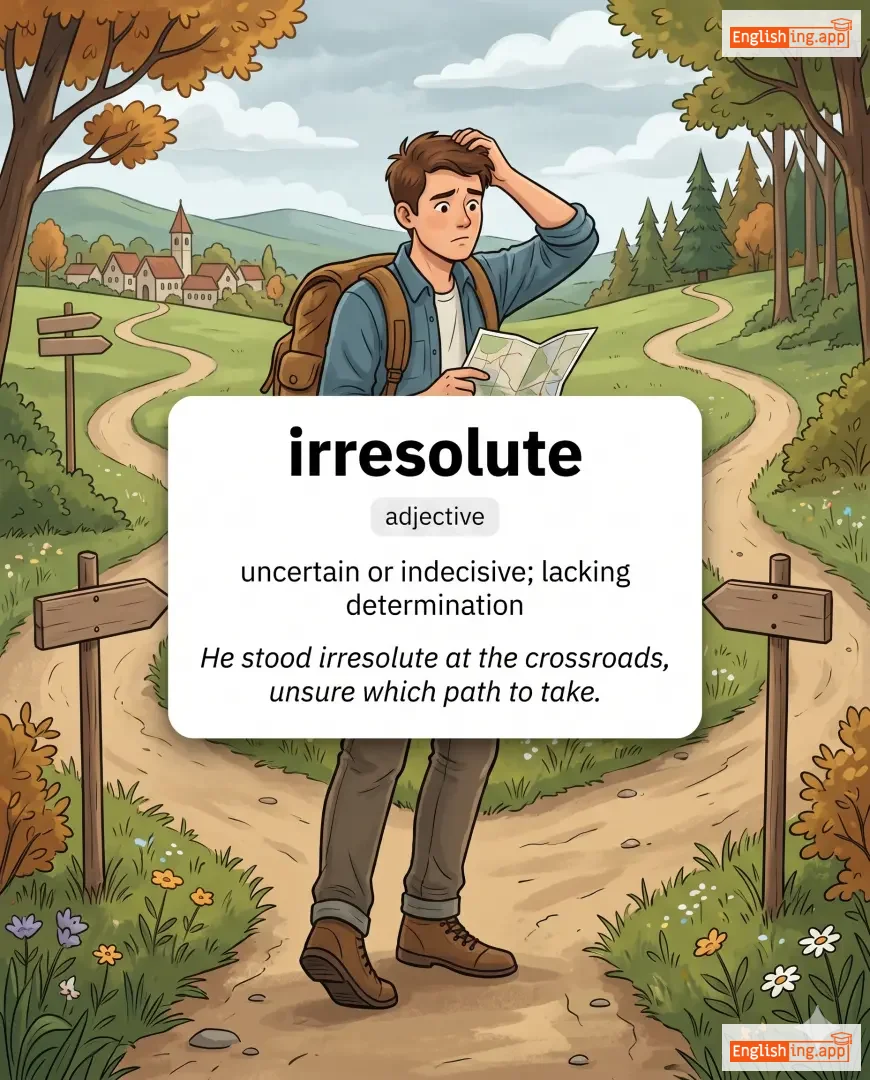
irresolute definition card — visual illustration of the meaning
adjective
/ɪˈrɛzəluːt/
优柔寡断 (yōuróu guǎduàn)

uncertain or indecisive; lacking determination

"He stood irresolute at the crossroads, unsure which path to take."

"他在十字路口犹豫不决,不知道走哪条路。" (Tā zài shízì lùkǒu yóuyù bù jué, bù zhīdào zǒu nǎ tiáo lù.)
adjective
/ˌɪrɪˈspɛktɪv/
无论如何; 不考虑 (wúlùn rúhé; bù kǎolǜ)

without taking something into account; regardless of

"All students will be treated equally, irrespective of their background."

"所有学生都会平等对待,无论他们的背景如何。" (suǒyǒu xuéshēng dōu huì píngděng duìdài, wúlùn tāmen de bèijǐng rúhé.)
noun
/ˌɪrɪˌspɒnsəˈbɪləti/
不负责任 (bu fu zeren)

lack of responsibility or accountability; failure to act in a reliable or sensible way

"The accident was caused by his irresponsibility at work."

"事故是由于他在工作中的不负责任造成的。" (Shigu shi youyu ta zai gongzuo zhong de bu fu zeren zaocheng de)
adjective
/ˌɪrɪˈspɒnsəbl/
不负责任 (bù fù zérèn)

not showing proper sense of responsibility

"It was irresponsible of him to leave the children alone."

"让孩子们独自待着是他不负责任的表现。" (Ràng háizimen dúzì dàizhe shì tā bù fù zérèn de biǎoxiàn.)
adjective
/ˌɪrɪˈtriːvəbl/
不可恢复 (bù kě huī fù)

impossible to recover or regain

"The documents were lost in an irretrievable way after the fire."

"文件在火灾后以不可恢复的方式丢失。" (Wénjiàn zài huǒzāi hòu yǐ bù kě huī fù de fāngshì diūshī.)
noun
/ɪˈrɛvərəns/
不敬 (bù jìng)

a lack of respect for people or things that are generally taken seriously

"His jokes about religion showed irreverence to the sacred traditions."

"他关于宗教的笑话表现了对神圣传统的不敬。" (Tā guānyú zōngjiào de xiàohuà biǎoxiànle duì shénshèng chuántǒng de bù jìng.)
adjective
/ɪˈrɛvərənt/
不敬的 (bù jìng de)

showing a lack of respect for people or things that are usually respected

"The comedian’s irreverent jokes offended some of the audience."

"那位喜剧演员的不敬笑话冒犯了一些观众。" (Nà wèi xǐjù yǎnyuán de bù jìng xiàohuà màofànle yīxiē guānzhòng.)
adjective
/ˌɪrɛvəˈrɛnʃəl/
不敬的 (bù jìng de)

Showing a lack of respect for things that are generally taken seriously.

"His irreverential humor often shocked traditional audiences."

"他的不敬幽默常常让传统观众感到震惊。" (Tā de bù jìng yōumò chángcháng ràng chuántǒng guānzhòng gǎndào zhènjīng.)
adjective
/ˌɪrɪˈvɜːrsəbl/
不可逆的 (bù kě nì de)

Not able to be undone, changed, or reversed.

"The damage caused by the fire was irreversible."
"火灾造成的损失是不可逆的。" (Huǒ zāi zào chéng de sǔn shī shì bù kě nì de.)
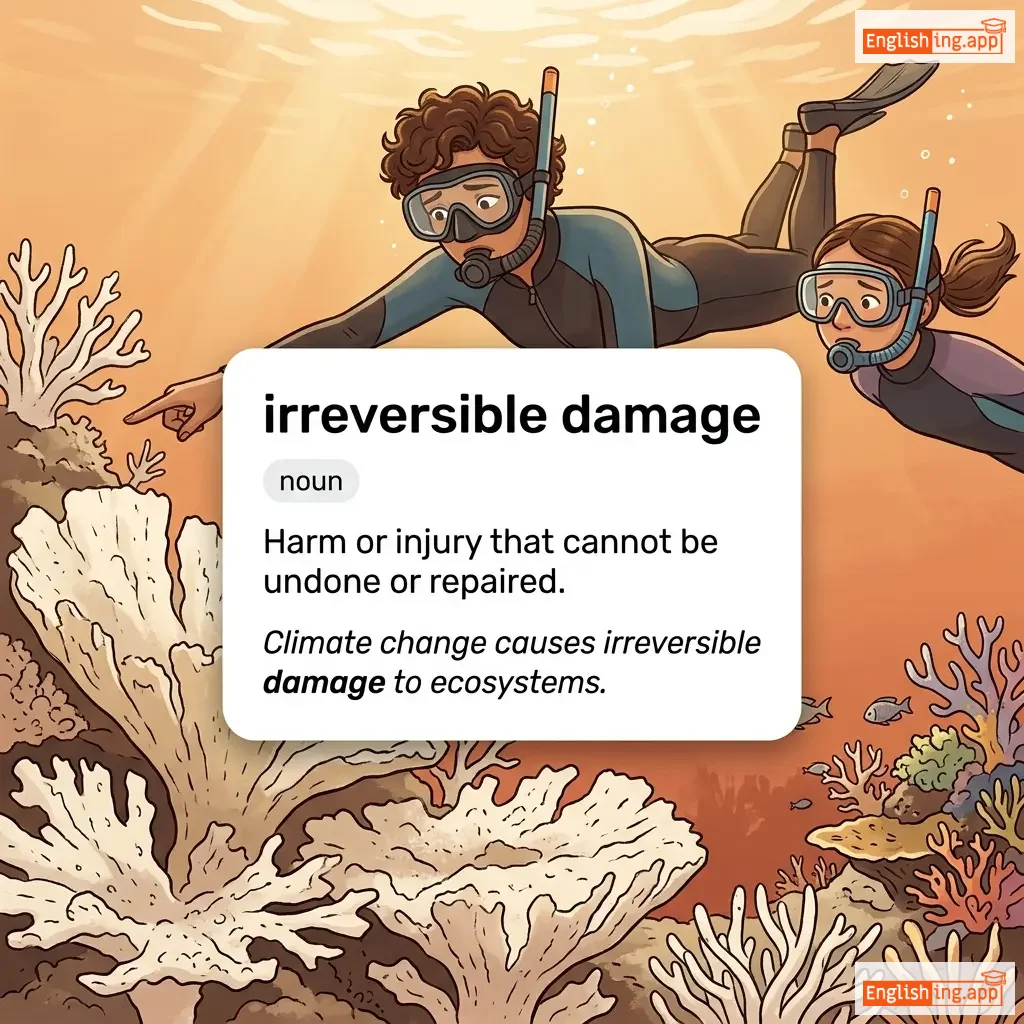
irreversible damage definition card — visual illustration of the meaning
noun
ˌɪrɪˈvɜːrsəbl ˈdæmɪdʒ
不可逆的损害 (bù kě nì sǔn hài)

Harm or injury that cannot be undone or repaired.

"Climate change causes irreversible damage to ecosystems."

"气候变化对生态系统造成了不可逆的损害。" (Qìhòu biànhuà duì shēngtài xìtǒng zàochéngle bù kě nì de sǔnhài.)
adjective
/ɪˈrɛvəkəbl/
不可撤销 (bù kě chè xiāo)

Not able to be revoked, changed, or undone.

"She made an irrevocable decision to leave the company."

"她做出了一个不可撤销的决定离开公司。" (Tā zuò chū le yī gè bù kě chè xiāo de jué dìng lí kāi gōng sī.)
noun
/ˈɪrɪɡənt/
灌溉液体 (guàngài yètǐ)

A liquid used for irrigation, especially in medical or agricultural contexts.

"The doctor used a sterile irrigant during the procedure."
"医生在手术中使用了无菌灌溉液。" (Yīshēng zài shǒushù zhōng shǐyòngle wújùn guàngài yètǐ.)
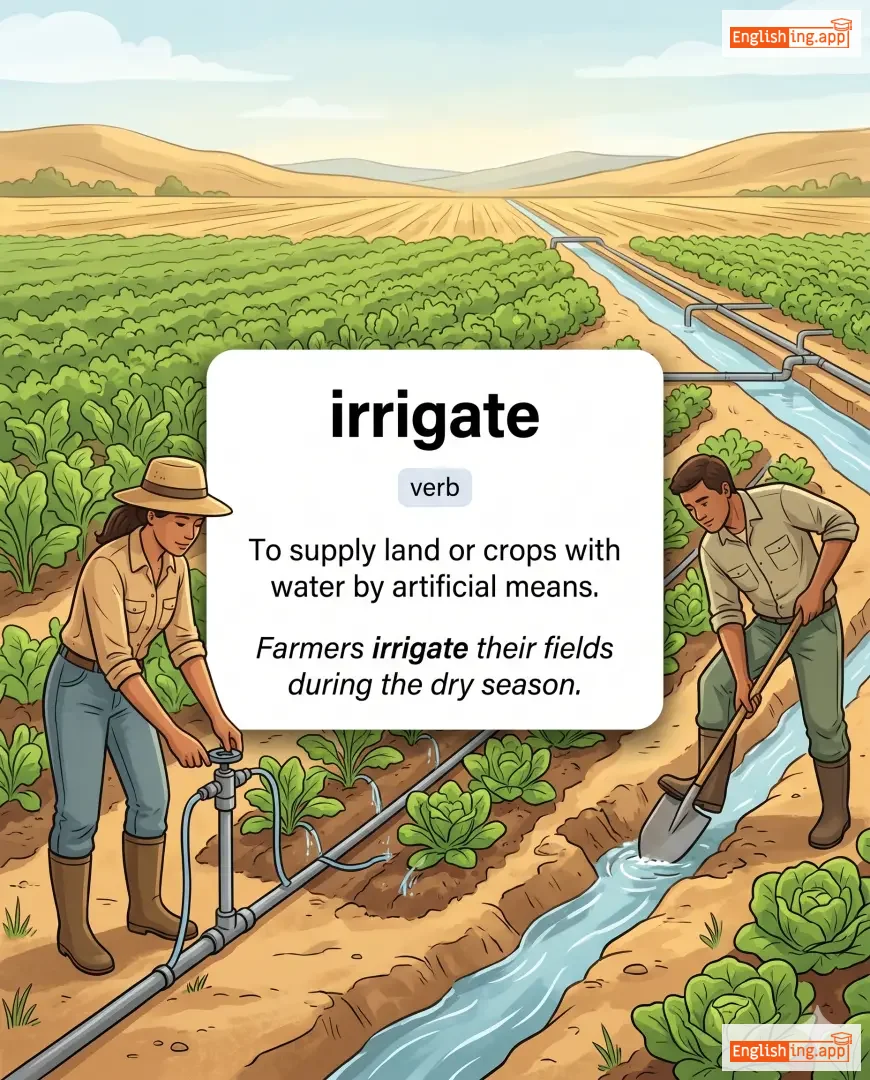
irrigate definition card — visual illustration of the meaning
verb
/ˈɪrɪɡeɪt/
灌溉 (guàngài)

To supply land or crops with water by artificial means.

"Farmers irrigate their fields during the dry season."
"农民在干旱季节灌溉他们的田地。" (Nóngmín zài gānhàn jìjié guàngài tāmen de tiándì.)
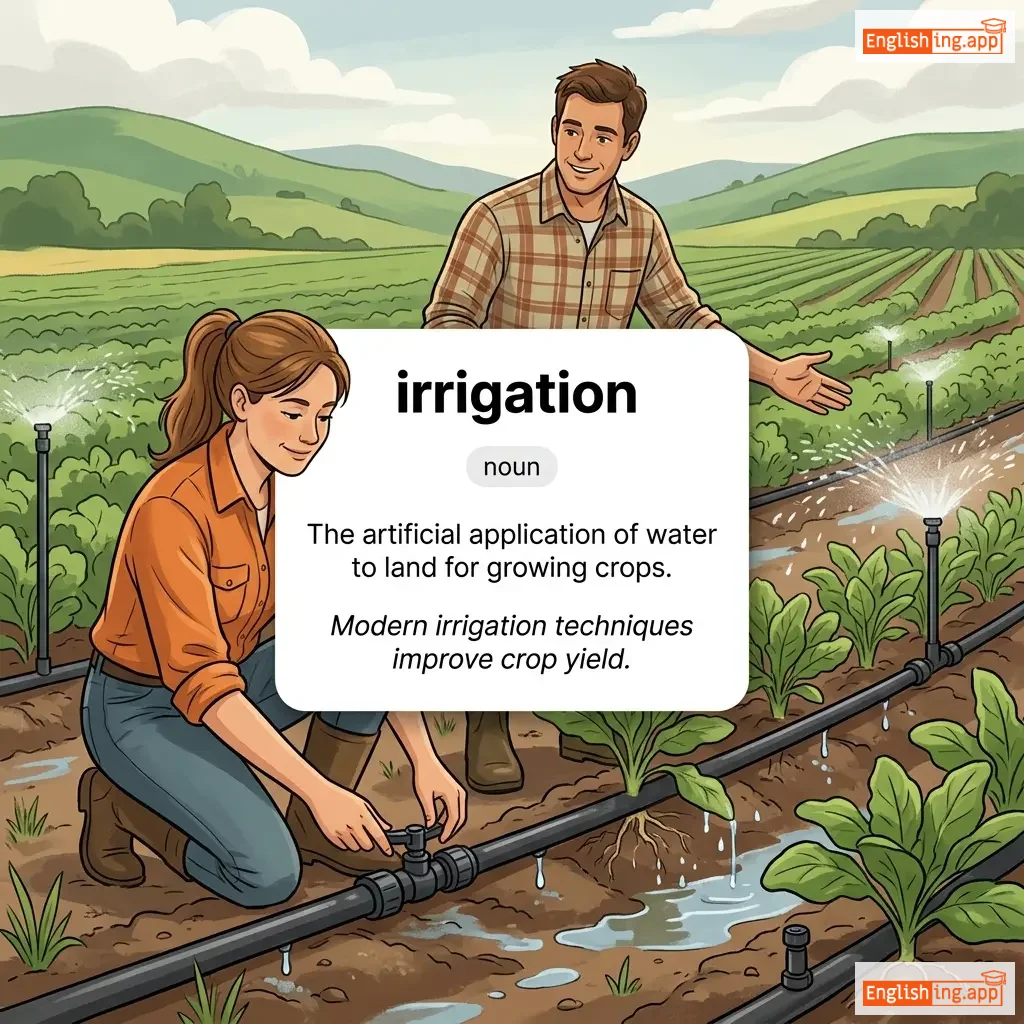
irrigation definition card — visual illustration of the meaning
noun
ˌɪr.ɪˈɡeɪ.ʃən
灌溉 (guàngài)

The artificial application of water to land for growing crops.

"Modern irrigation techniques improve crop yield."

"现代灌溉技术提高了作物产量。" (Xiàndài guàngài jìshù tígāo le zuòwù chǎnliàng.)
adjective
/ˈɪrɪtəbl/

easily annoyed or made angry

"She became irritable after working long hours without rest."

noun
/ˈɪrɪtənsi/
恼怒 (naonu)

the quality or state of causing irritation; legal or formal invalidation

"The constant noise became an irritancy to the neighbors."

"持续的噪音成为邻居的恼怒源。" (Chixu de zaoyin chengwei linju de naonu yuan.)
noun
/ˈɪrɪtənt/
刺激物 (cijiwu)

something that causes irritation or discomfort

"Dust is a common irritant for people with allergies."
"灰尘是过敏者常见的刺激物。" (Huichen shi guominzhe changjian de cijiwu.)
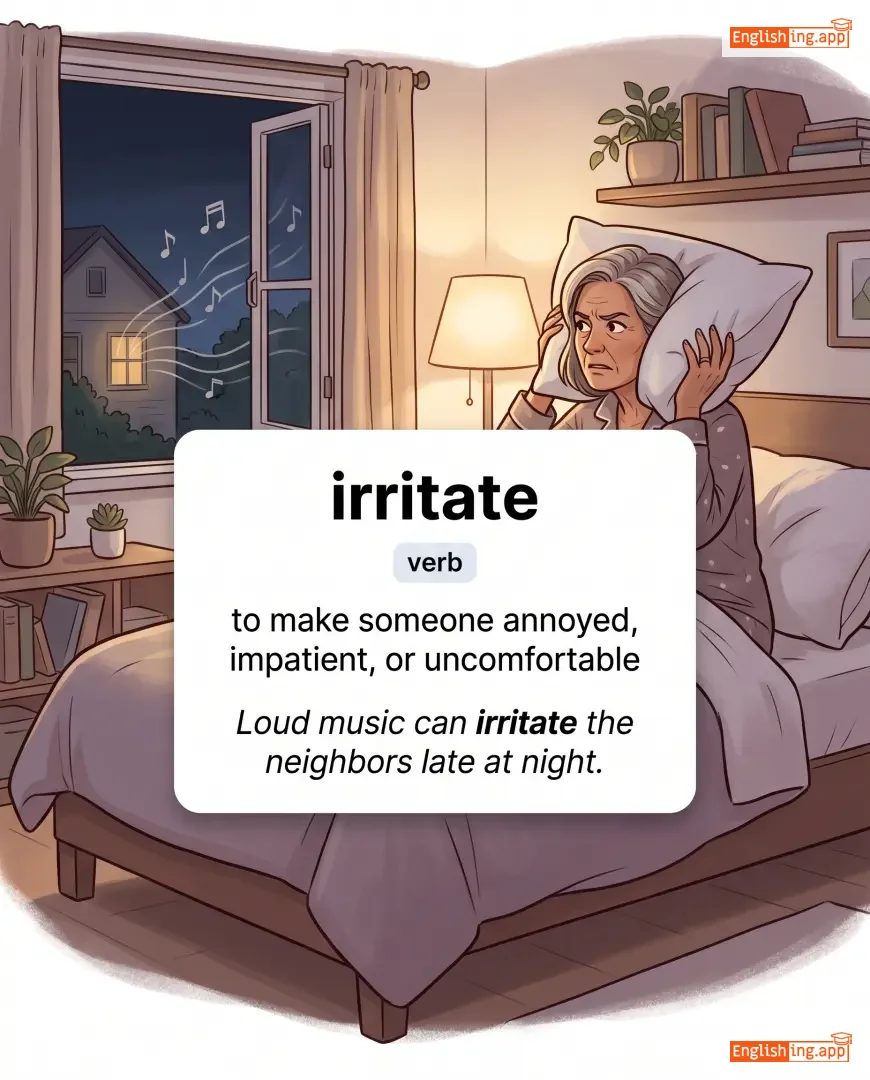
irritate definition card — visual illustration of the meaning
verb
/ˈɪrɪteɪt/
激怒 (jī nù)

to make someone annoyed, impatient, or uncomfortable

"Loud music can irritate the neighbors late at night."

"大声的音乐可能会在深夜刺激邻居。" (Dà shēng de yīnyuè kěnéng huì zài shēn yè cìjī línjū.)
adjective
/ˈɪrɪteɪtɪd/
恼火的 (naohuo de)

feeling annoyed or impatient; having inflamed or sore physical condition

"She felt irritated by the constant noise outside her window."

"窗外持续的噪音让她感到恼火。" (Chuangwai chixu de zaoyin rang ta gandao naohuo)
adjective
/ˈɪrɪteɪtɪŋ/
烦人的 (fanren de)

causing annoyance, impatience, or mild anger

"The constant noise from the street is extremely irritating."

"街道上传来的持续噪音非常烦人。" (Jiedao shang chuanlai de chixu zaoyin feichang fanren)
noun
/ɪˈrʌpʃən/
突发袭击 (tūfā xíjī)

a sudden and violent entry or invasion

"The irruption of protesters surprised the authorities."

"抗议者的突发袭击让当局感到震惊。" (Kàngyì zhě de tūfā xíjī ràng dāngjú gǎndào zhènjīng.)
noun
/ɪsˈlɑːm/
伊斯兰教 (Yīsīlán jiào)

the religion founded by the Prophet Muhammad, based on belief in one God (Allah)

"Islam emphasizes peace, justice, and compassion."

"伊斯兰教强调和平、公正与慈悲。" (Yīsīlán jiào qiángdiào hépíng, gōngzhèng yǔ cíbēi.)
adjective
/ɪsˈlɑːmɪk/
伊斯兰的 (yīsīlán de)

relating to Islam, its followers, or its teachings

"The city has many Islamic cultural centers."

"这座城市有许多伊斯兰文化中心。" (Zhè zuò chéngshì yǒu xǔduō yīsīlán wénhuà zhōngxīn.)
noun
/ˈaɪ.lənd/
岛屿 (daoyǔ)

a piece of land surrounded by water

"They spent their vacation on a tropical island."

"他们在一个热带岛屿上度过了假期。" (Tāmen zài yīgè rèdài dǎoyǔ shàng dùguòle jiàqī.)
noun
/aɪl/
小岛 (xiao dao)

A small island or peninsula, often poetic or literary.

"They spent their honeymoon on a beautiful tropical isle."

"他们在一个美丽的热带小岛上度过了他们的蜜月。" (tamen zai yi ge mei li de re dai xiao dao shang du guo le tamen de mi yue.)
noun
/ˈaɪ.lət/
小岛 (xiao dao)

A very small island.

"The fishermen rested on a tiny islet before continuing their journey."

"渔民们在继续他们的旅程之前,在一个小岛上休息。" (Yumin men zai jixu tamen de lücheng zhīqian, zai yi ge xiao dao shang xiuxi.)
noun
/ˈaɪ.səˌbɑːr/
等压线 (děngyāxiàn)

A line on a weather map connecting points of equal atmospheric pressure.

"The meteorologist explained how isobars indicate wind speed and direction."

"气象学家解释了等压线如何指示风速和风向。" (Qìxiàng xuéjiā jiěshìle děngyāxiàn rúhé zhǐshì fēngsù hé fēngxiàng.)
adjective
/aɪˈsɒ.krə.nəs/
等时间间隔发生 (deng shijian jian ge fasheng)

Occurring at equal time intervals; in unison or synchrony.

"The pendulum swings are isochronous, repeating at equal intervals."

"摆锤的摆动是等时性的,在相等的时间间隔重复。" (Bǎichuí de bǎidòng shì děng shíxìng de, zài xiāngděng de shíjiān jiàngé chóngfù.)
verb
/ˈaɪ.sə.leɪt/
孤立 (gūlì)

To separate something or someone from others.

"Doctors tried to isolate the patient to prevent the spread of infection."

"医生试图将病人隔离,以防止感染传播。" (Yīshēng shìtú jiāng bìngrén gélí, yǐ fángzhǐ gǎnrǎn chuánbò.)