词汇表

英语词汇词典 | 单词含义、定义和示例

adjective
/ˌɪnˈvɜːrs/
反向 (fanxiang)

Opposite in position, direction, order, or effect.

"There is an inverse relationship between price and demand."

"价格和需求之间存在反向关系。" (Jiage he xuqiu zhijian cunzai fanxiang guanxi.)
adverb
/ɪnˈvɜːrs.li/
反向地; 相反地 (fǎnxiàng de; xiāngfǎn de)

in a way that is opposite or contrary; in reverse order or manner

"The price of goods is inversely related to their availability in the market."

"商品的价格与其在市场上的可得性成反比。" (shāngpǐn de jiàgé yǔ qí zài shìchǎng shàng de kědéxìng chéng fǎnbǐ.)
noun
/ɪnˈvɜːrʒən/
倒置 (daozhi)

A reversal of the normal order, position, or relationship.

"In poetry, inversion is often used to create emphasis."

"在诗歌中,倒置常用来创造强调。" (Zài shīgē zhōng, dào zhì cháng yòng lái chuàng zào qiángdiào.)
verb
/ɪnˈvɜːrt/
翻转 (fanzhuan)

To turn something upside down or in the opposite position, order, or direction.

"He inverted the glass to let the water drain out."

"他翻转了玻璃杯,让水流出来。" (Ta fanzhuan le bolibei, rang shui liu chulai.)
invest definition card — visual illustration of the meaning
verb
/ɪnˈvɛst/
投资 (tóu zī)

to put money, time, or effort into something with the expectation of achieving a benefit

"He decided to invest in real estate to secure his future."

"他决定投资房地产,以确保他的未来。" (Tā juédìng tóu zī fáng dì chǎn, yǐ què bǎo tā de wèi lái.)
verb
/ɪnˈvɛs.tɪ.ɡeɪt/
调查 (diàochá)

to carry out a systematic inquiry to discover facts or information

"The police will investigate the incident thoroughly."

"警方将彻底调查此事件。" (jǐngfāng jiāng chèdǐ diàochá cǐ shìjiàn.)
noun
/ɪnˌvɛs.tɪˈɡeɪ.ʃən/
调查 (diaocha)

the process of inquiring into or examining something carefully to find the truth

"The investigation revealed new evidence about the fraud."

"调查揭示了有关欺诈的新证据。" (Diaocha jieshi le youguan qizha de xin zhengju.)
noun
/ɪnˈvɛstɪˌɡeɪtər/
幸福 (xìngfú)

a person who carries out a formal inquiry or investigation

"The investigator gathered evidence from the crime scene."

"当她获得奖项时,她无法掩饰自己的幸福。" (Dāng tā huò dé jiǎngxiàng shí, tā wúfǎ yǎnshì zìjǐ de xìngfú.)
investing definition card — visual illustration of the meaning
verb
ɪnˈvɛst.ɪŋ
投资 (tóu zī)

The act of putting money into financial schemes, shares, property, or a commercial venture with the expectation of achieving a profit.

"Investing in stocks can generate long-term wealth."

"投资股票可以产生长期财富。" (Tóu zī gǔ piào kě yǐ chǎn shēng cháng qī cáifù.)
noun
/ɪnˈvɛstɪtʃər/
授职仪式 (shòu zhí yí shì)

the formal ceremony of conferring authority, rank, or office

"The king held an investiture ceremony for the new knight."

"国王为新骑士举行了授职仪式。" (guówáng wèi xīn qíshì jǔxíngle shòu zhí yí shì)
investment definition card — visual illustration of the meaning
noun
/ɪnˈvɛst.mənt/
投资 (tóu zī)

the action or process of putting money, time, or resources into something for future benefit

"Her investment in technology startups has paid off well."

"她对科技创业公司的投资获得了不错的回报。" (Tā duì kējì chuàngyè gōngsī de tóuzī huòqǔle bùcuò de huíbào.)
noun
/ɪnˈvɛstər/
投资者 (tóu zī zhě)

a person or organization that puts money into financial schemes, property, or business ventures with the expectation of achieving a profit

"The investor funded the startup with a large sum of money."

"投资者用一大笔钱资助了这家初创公司。" (Tóu zī zhě yòng yī dà bǐ qián zīzhù le zhè jiā chūchuàng gōngsī.)
inveterate definition card — visual illustration of the meaning
adjective
/ɪnˈvɛtərət/
根深蒂固 (gēn shēn dì gù)

having a long-established habit, activity, or interest that is unlikely to change

"He is an inveterate reader who spends hours in the library every day."

"他是一个根深蒂固的读者,每天在图书馆度过几个小时。" (Tā shì yīgè gēn shēn dì gù de dúzhě, měitiān zài túshūguǎn dùguò jǐ gè xiǎoshí.)
invidious definition card — visual illustration of the meaning
adjective
/ɪnˈvɪdiəs/
引起嫉妒的 (yǐnqǐ jídù de)

likely to arouse resentment, envy, or anger in others

"The manager's invidious remarks created tension among the employees."
"经理的嫉妒言论在员工中间造成了紧张气氛。" (Jīnglǐ de jídù yánlùn zài yuángōng zhōngjiān zàochéngle jǐnzhāng qìfēn.)
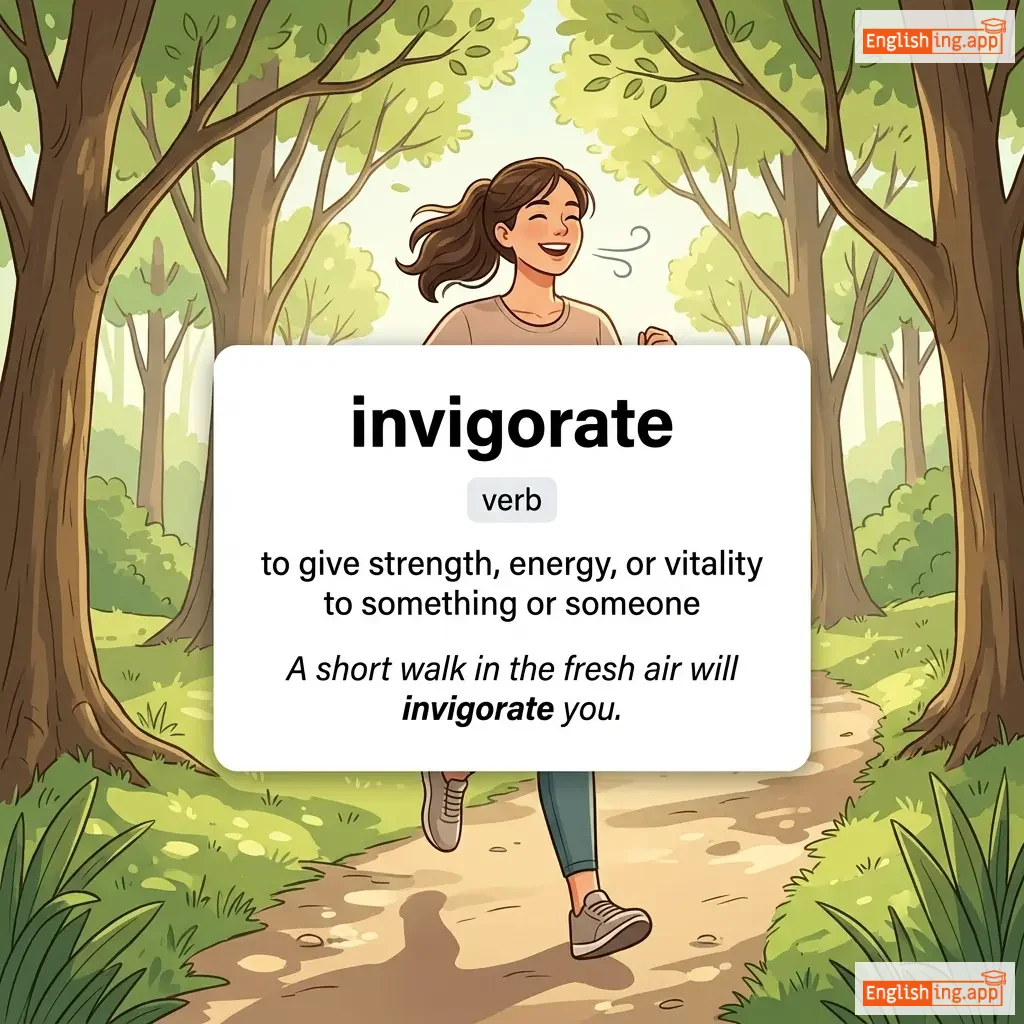
invigorate definition card — visual illustration of the meaning
verb
/ɪnˈvɪɡəreɪt/
振奋 (zhenfen)

to give strength, energy, or vitality to something or someone

"A short walk in the fresh air will invigorate you."

"在新鲜空气中散步会让你充满活力。" (Zai xinxian kongqi zhong sanbu hui rang ni chongman huoli.)
adjective
/ɪnˈvɪnsəbl/
不可战胜 (bù kě zhàn shèng)

too powerful to be defeated or overcome

"The team seemed invincible after winning ten matches in a row."

"这支队伍在连续赢得十场比赛后,看起来不可战胜。" (zhè zhī duìwǔ zài liánxù yíngdé shí chǎng bǐsài hòu, kàn qǐlái bù kě zhàn shèng.)
adjective
/ɪnˈvaɪələbl/
不可侵犯的 (bùkě qīnfàn de)

never to be broken, dishonored, or violated

"Human rights are considered inviolable in modern democracies."

"在人权被视为不可侵犯的现代民主国家。" (Zài rénquán bèi shì wéi bùkě qīnfàn de xiàndài mínzhǔ guójiā.)
adjective
/ɪnˈvaɪələt/
神圣不可侵犯 (shèngshèng bù kě qīn fàn)

free from violation, injury, or desecration; kept safe and untouched

"The ancient temple remained inviolate for centuries."

"古老的寺庙几百年来一直保持着神圣不可侵犯。" (Gǔlǎo de sìmiào jǐ bǎi nián lái yīzhí bǎochí zhe shèngshèng bù kě qīn fàn.)
adjective
/ɪnˈvɪzɪbəl/
看不见的 (kàn bù jiàn de)

unable to be seen; not visible to the eye

"The stars became invisible as the sun rose."

"当太阳升起时,星星变得看不见了。" (Dāng tàiyáng shēng qǐ shí, xīngxīng biàn dé kàn bù jiàn le.)
noun
/ˌɪnvɪˈteɪʃən/
幸福 (xìngfú)

a written or spoken request to attend an event or to participate in something

"She sent me an invitation to her wedding."

"当她收到奖项时,她无法掩饰自己的幸福。" (Dāng tā shōu dào jiǎngxiàng shí, tā wúfǎ yǎnshì zìjǐ de xìngfú.)
verb
/ɪnˈvaɪt/
邀请 (yāoqǐng)

to ask someone to come to a place or event

"She invited her friends to the party."

"她邀请了她的朋友参加派对。" (Tā yāoqǐngle tā de péngyǒu cānjiā pàiduì.)
verb
/ɪnˈvaɪtɪd/
被邀请的 (bei yaoqing de)

asked someone formally or politely to go somewhere or do something

"She was invited to the party."

"她被邀请参加聚会。" (ta bei yaoqing canjia juhui)
noun
/ɪnˈvaɪtər/
邀请者 (yaoqingzhe)

a person who invites someone to an event, meeting, or place

"The invitor greeted all the guests warmly at the entrance."

"邀请者在入口处热情地欢迎了客人。" (Yaoqingzhe zai rukouchu reqing di huanyingle keren)
noun
/ˌɪnvəˈkeɪʃən/
祈求 (qiqiu)

the act of calling upon a higher power for help, blessing, or inspiration

"The ceremony began with an invocation to the gods."

"仪式以对神的祈求开始。" (Yíshì yǐ duì shén de qíqiú kāishǐ.)
noun
/ˈɪnvɔɪs/
发票 (fapiao)

a list of goods sent or services provided, with the amount due for payment

"The company sent an invoice for the delivered products."

"公司已发送已交付产品的发票。" (Gongsi yi fasong yi jiaofu chanpin de fapiao.)
verb
/ɪnˈvoʊk/
呼叫 (hūjiào)

to call upon a higher power, authority, or principle for help, support, or justification

"The lawyer invoked the constitution to defend his client."

"律师援引宪法来为他的客户辩护。" (Lǜshī yuányǐn xiànfǎ lái wéi tā de kèhù biànhù.)
adjective
/ɪnˈvɑːlənˌtɛri/
不由自主 (buyouzizhu)

done without will or conscious control

"He gave an involuntary shiver when he heard the loud noise."

"他听到响亮的声音时不由自主地打了个寒战。" (Tā tīng dào xiǎngliàng de shēngyīn shí bù yóu zìzhǔ de dǎle gè hánzhàn.)
noun
/ˌɪnvəˈluːʃən/
内卷 (neijuan)

a complicated or intricate form or state; in biology, the shrinking of an organ after its function has finished

"The story was full of involution, making it hard to follow."

"这个故事充满了内卷,使得跟随它变得很难。" (Zhege gushi chongman le neijuan, shidedo genzui ta biande hen nan.)
verb
/ɪnˈvɑːlv/
涉及 (shèjí)

to include as a necessary part, or to engage someone in an activity

"The project will involve several departments working together."

"这个项目将涉及多个部门共同合作。" (Zhège xiàngmù jiāng shèjí duō gè bùmén gòngtóng hézuò.)
adjective
/ɪnˈvɑːlvd/
卷入的 (juǎn rù de)

complicated or engaged in something

"She was deeply involved in community service."

"她深深地卷入了社区服务。" (Tā shēn shēn de juǎn rù le shè qū fú wù.)
noun
/ɪnˈvɒlvmənt/
参与 (canyu)

the act of taking part in something

"His involvement in the project was crucial."

"他对项目的参与至关重要。" (Ta dui xiangmu de canyu zhiguan zhongyao.)
adjective
/ɪnˈvʌlnərəbl/
无敌 (wudi)

Impossible to harm, damage, or defeat.

"The fortress was thought to be invulnerable to attack."

"堡垒被认为无法受到攻击。" (Baolei bei renwei wu fa shoudao gongji.)
adverb
/ˈɪnwərdli/
内心 (neixin)

In the mind or spirit; not outwardly visible.

"She smiled outwardly but inwardly she was worried."

"她外表微笑,但内心却感到担忧。" (Tā wàibiǎo wēixiào, dàn nèixīn què gǎndào dānyōu.)
noun
/aɪˈoʊtə/
极小的数量 (ji xiao de shu liang)

An extremely small amount.

"He did not show an iota of fear."

"他一点儿恐惧都没表现出来。" (Ta yi dian er kongju dou mei biaoxian chu lai.)
adjective/noun
/ɪˈrɑːki/
伊拉克的 (yīlākè de)

relating to Iraq or its people

"The Iraqi culture is rich and diverse."

"伊拉克的文化丰富多样。" (Yīlākè de wénhuà fēngfù duōyàng.)
irascible definition card — visual illustration of the meaning
adjective
/ɪˈræsɪbl/
易怒的 (yì nù de)

Easily angered; quick-tempered.

"His irascible nature often got him into trouble."

"他易怒的性格常常使他陷入麻烦。" (Tā yì nù de xìnggé chángcháng shǐ tā xiànrù máfan.)
adjective
/aɪˈreɪt/
愤怒的 (fèn nù de)

Extremely angry.

"The customer became irate after waiting for hours."

"顾客在等待了几个小时后变得愤怒。" (Gùkè zài děngdài le jǐ gè xiǎoshí hòu biàn dé fèn nù.)
noun
/aɪər/
愤怒, 激怒 (fènnù, jīnù)

intense anger or rage

"The new policy provoked the ire of the employees."

"新政策激怒了员工。" (Xīn zhèngcè jīnùle yuángōng.)
noun
/ˌɪrɪˈdɛsəns/
虹彩光泽 (hongcai guangze)

a play of lustrous, changing colors like those of a rainbow

"The butterfly's wings shimmered with iridescence."

"蝴蝶的翅膀闪耀着虹彩光泽。" (Hudie de chi bang shanyao zhe hongcai guangze.)
adjective
/ˌɪrɪˈdɛsənt/
彩虹色 (cǎihóng sè)

showing luminous colors that seem to change when seen from different angles

"She wore an iridescent dress that sparkled in the light."

"她穿了一件在光线下闪闪发光的彩虹色裙子。" (Tā chuānle yī jiàn zài guāngxiàn xià shǎnshǎn fāguāng de cǎihóng sè qúnzi.)
adjective/noun
/ˈaɪrɪʃ/
幸福 (xingfu)

relating to Ireland, its people, or its language

"The Irish countryside is very beautiful."

"当她收到奖项时,她无法隐藏自己的幸福。" (Dāng tā shōudào jiǎngxiàng shí, tā wúfǎ yǐncáng zìjǐ de xìngfú.)
verb
/ɜːrk/
激怒 (jīnù)

to annoy or irritate someone

"It irks me when people are late without calling."

"当人们没有打电话就迟到时,我感到很生气。" (Dāng rénmen méiyǒu dǎ diànhuà jiù chídào shí, wǒ gǎndào hěn shēngqì.)
adjective
/ˈɜːrksəm/
恼人的 (nao ren de)

annoying or irritating

"Waiting in a long line is one of the most irksome tasks."

"在长队中等待是最让人恼火的任务之一。" (Zai chang dui zhong dengdai shi zui rang ren naohuo de renwu zhi yi.)
noun/verb
/ˈaɪən/ or /ˈaɪərn/
铁 / 熨斗 (tiě / yùndǒu)

a strong, hard metal used in construction; also to press clothes with heat

"He used an iron to smooth his shirt."

"他用熨斗把衬衫弄平。" (Tā yòng yùndǒu bǎ chènshān nòng píng.)
adjective
/ˈaɪərnˌklæd/
铁定的 (tieding de)

impossible to change, break, or dispute; very strong and firm

"The company had an ironclad contract with its suppliers."

"公司与其供应商签订了铁定合同。" (Gōngsī yǔ qí gōngyìng shāng qiāndìngle tiědìng hé​tóng.)
adjective
/aɪˈrɒnɪk/
讽刺的,讽刺性的 (fěngcì de, fěngcì xìng de)

happening in the opposite way to what is expected, often amusing or sarcastic

"It is ironic that the fire station burned down."

"消防站着火了,真讽刺。" (Xiāofáng zhàn zhuóhuǒ le, zhēn fěngcì.)
adjective
/aɪˈrɒnɪkəl/
讽刺的 (fengcide)

expressing irony; having the nature of irony

"Her ironical tone made everyone uncomfortable."

"她的讽刺语气让每个人都感到不舒服。" (Tā de fěngcì yǔqì ràng měi gè rén dōu gǎndào bù shūfú.)
adverb
/aɪˈrɒnɪkli/
具有讽刺意味地 (jùyǒu fěngcì yìwèi de)

in a way that is contrary to what is expected or intended

"Ironically, the fire station burned down."

"具有讽刺意味地,消防站着火了。" (Jùyǒu fěngcì yìwèi de, xiāofáng zhàn zháohuǒle.)
noun
/ˈaɪ.ərn.wʊd/
铁木 (tie mu)

a hard, dense wood from various trees; also the tree itself that produces small flowers

"The ironwood tree blooms with tiny white flowers."

"铁木树开着小白花。" (Tie mu shu kaizhe xiao baihua.)
noun
/ˈaɪrəni/
讽刺 (fengci)

a situation that is strange or amusing because it is the opposite of what is expected; the use of words to convey the opposite meaning

"The irony of the situation was that the winner forgot his own prize."

"这件事的讽刺在于,获胜者忘记了自己的奖品。" (Zhè jiàn shì de fèngcì zài yú, huòshèng zhě wàngjìle zìjǐ de jiǎngpǐn.)