词汇表

英语词汇词典 | 单词含义、定义和示例

adjective
/ɪnˈtɒlərənt/
不宽容 (bù kuānróng)

unwilling to accept or respect beliefs or behavior different from one's own

"He is intolerant of any opinion that differs from his own."

"他不能容忍与自己意见不同的任何观点。" (Tā bùnéng róngrěn yǔ zìjǐ yìjiàn bùtóng de rènhé guāndiǎn.)
intonation definition card — visual illustration of the meaning
noun
ˌɪn.toʊˈneɪ.ʃən
语调 (yǔdiào)

The rise and fall of voice pitch when speaking that expresses meaning or emotion

"Proper intonation can make a speech more persuasive."

"适当的语调可以使演讲更具说服力。" (Shìdàng de yǔdiào kěyǐ shǐ yǎnjiǎng gèng jù shuōfúlì.)
noun
/ɪnˈtɒksɪkənt/
醉品 (zuì pǐn)

a substance, especially alcohol or a drug, that causes intoxication

"Alcohol is the most commonly used intoxicant in many cultures."

"酒精是许多文化中最常用的醉品。" (Jiǔjīng shì xǔduō wénhuà zhōng zuì chángyòng de zuì pǐn.)
verb
/ɪnˈtɒksɪkeɪt/
幸福 (xìngfú)

to make someone lose control of their faculties or behavior due to alcohol or drugs

"The strong drink quickly intoxicated him."

"当她收到奖项时,她无法掩饰自己的幸福。" (Dāng tā shōudào jiǎngxiàng shí, tā wúfǎ yǎnshì zìjǐ de xìngfú.)
adjective
/ˌɪn.trəˈsɛl.jʊ.lər/
细胞内 (xibao nei)

Located or occurring within a cell.

"The drug works by targeting intracellular bacteria."

"药物通过靶向细胞内的细菌发挥作用。" (Yaowu tongguo bahuang xibao nei de xijun fāhuī zuoyong.)
intractable definition card — visual illustration of the meaning
adjective
/ɪnˈtræk.tə.bəl/
无法控制 (wúfǎ kòngzhì)

Difficult or impossible to manage, control, or solve.

"The conflict has become an intractable problem."

"冲突已经成为一个无法控制的问题。" (Chōngtú yǐjīng chéngwéi yīgè wúfǎ kòngzhì de wèntí.)
adjective
/ˌɪn.trəˈmjʊə.rəl/
校内 (xiaonai)

Occurring within the walls of a single institution, especially a school or college.

"The college organizes intramural sports competitions every semester."
"大学每学期组织校内体育比赛。" (Daxue mei xueqi zuzhi xiaonai tiyu bisai.)
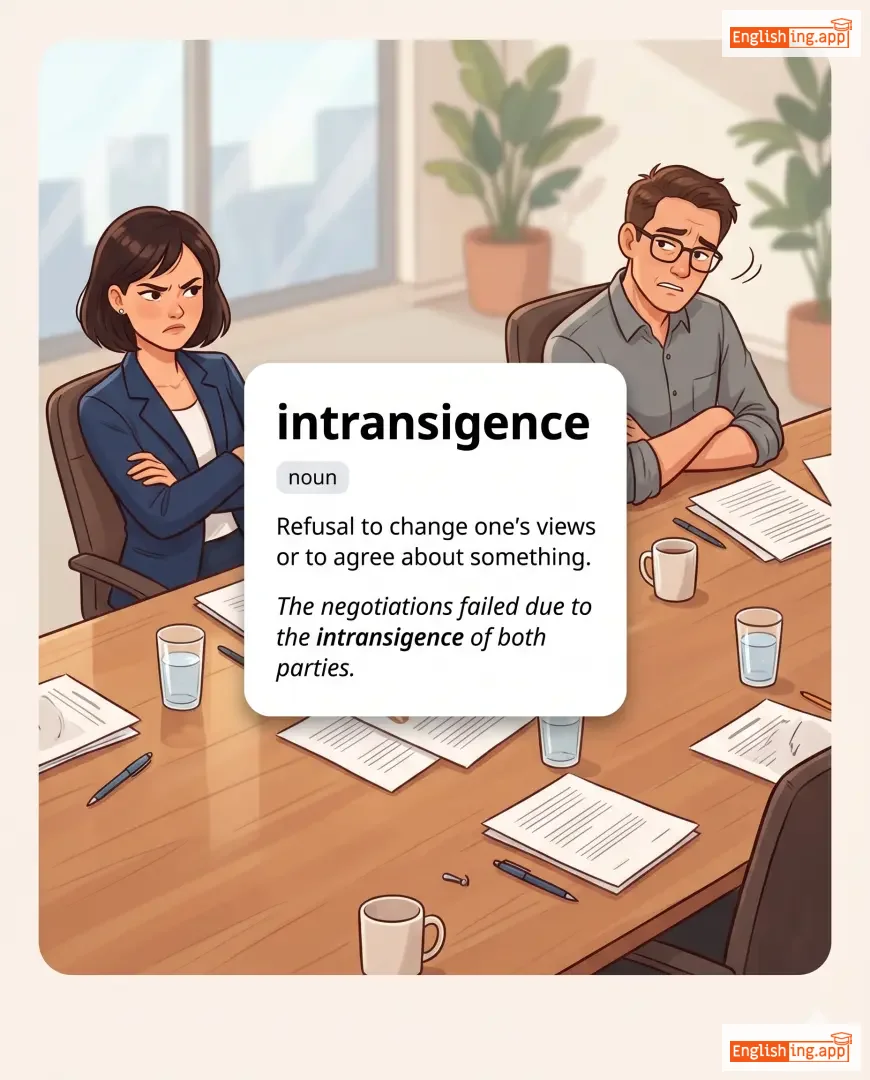
intransigence definition card — visual illustration of the meaning
noun
/ɪnˈtræn.sɪ.dʒəns/
固执 (gùzhí)

Refusal to change one's views or to agree about something.

"The negotiations failed due to the intransigence of both parties."
"由于双方的固执,谈判失败了。" (Yóuyú shuāngfāng de gùzhí, tánpàn shībài le.)
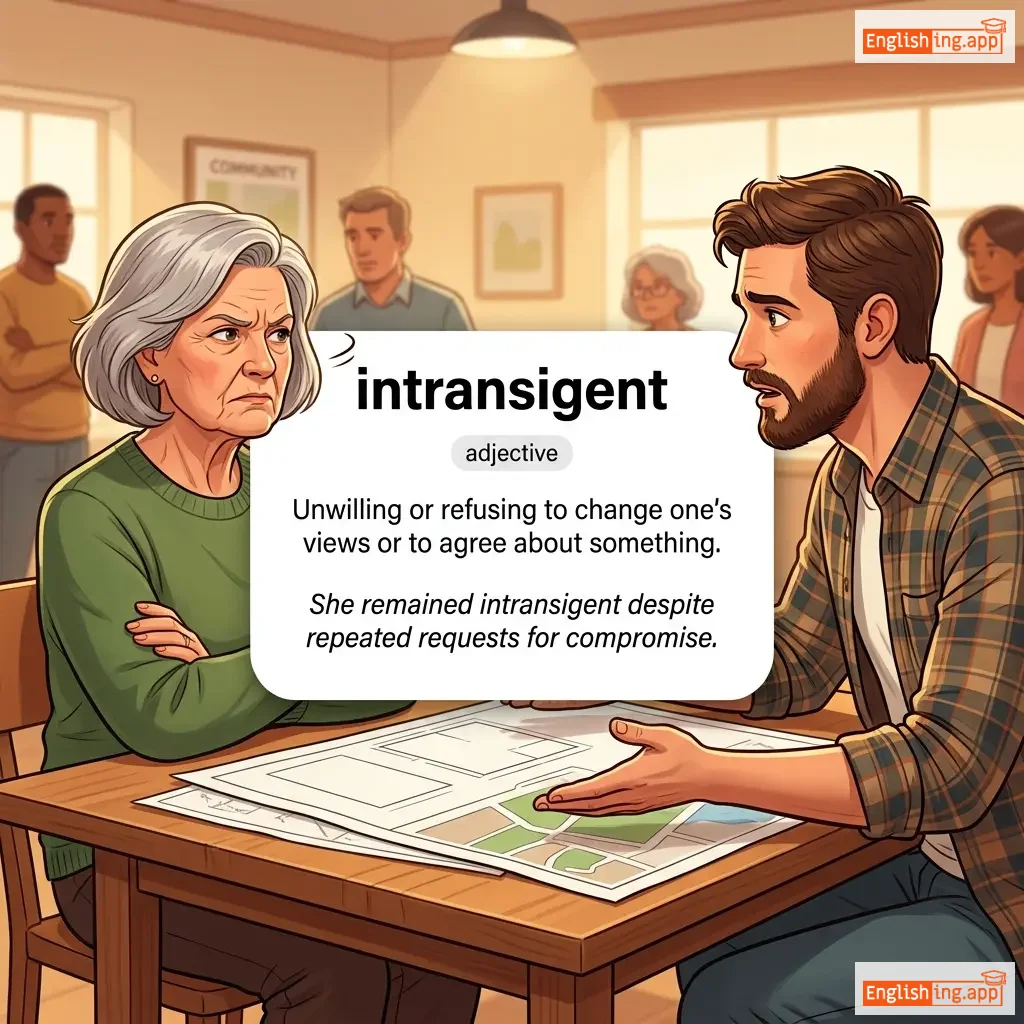
intransigent definition card — visual illustration of the meaning
adjective
/ɪnˈtræn.sɪ.dʒənt/
固执 (gù zhí)

Unwilling or refusing to change one's views or to agree about something.

"She remained intransigent despite repeated requests for compromise."

"尽管反复请求妥协,她依然固执。" (Jǐnguǎn fǎnfù qǐngqiú tuǒxié, tā yīrán gùzhí.)
adjective
/ɪnˈtrɛpɪd/
无畏 (wú wèi)

fearless and adventurous, often used humorously

"The intrepid traveler explored the jungle alone."

"那个无畏的旅行者独自探险了丛林。" (Nà ge wú wèi de lǚxíng zhě dú zì tànxiǎn le cónglín.)
noun
/ˈɪntrɪkəsi/
复杂性 (fuzaixing)

the quality of being very detailed or complicated

"The intricacy of the design impressed everyone."

"设计的复杂性给每个人留下了深刻印象。" (Sheji de fuzaxing gei meigeren liuxiaole shenke yinxiang.)
adjective
/ˈɪntrɪkət/
复杂 (fùzá)

very detailed, complex, and difficult to understand

"The artist created an intricate pattern on the wall."

"艺术家在墙上创造了一个复杂的图案。" (Yìshùjiā zài qiáng shàng chuàngzàole yīgè fùzá de tú'àn.)
verb
/ɪnˈtriːɡ/
引起兴趣 (yǐnqǐ xìngqù)

to arouse curiosity or interest; to make someone fascinated

"The mystery novel will intrigue any reader."

"神秘小说将引起任何读者的兴趣。" (Shénmì xiǎoshuō jiāng yǐnqǐ rènhé dúzhě de xìngqù.)
adjective
/ɪnˈtriːɡɪŋ/
非常有趣和不寻常;激发好奇心 (feichang youqu he bu xunchang; jifa haoqixin)

very interesting and unusual; arousing curiosity

"The movie has an intriguing plot that keeps the audience hooked."

"这部电影有一个引人入胜的情节,吸引着观众。" (Zhe bu dianying you yige yinrenrusheng de qingjie, xiyi zhe guanzhong.)
intrinsic definition card — visual illustration of the meaning
adjective
/ɪnˈtrɪnzɪk/
内在的 (nèizài de)

belonging naturally; essential or inherent

"Honesty is an intrinsic part of good leadership."

"诚实是良好领导力的内在部分。" (Chéngshí shì liánghǎo lǐngdǎo lì de nèizài bùfen.)
intrinsically definition card — visual illustration of the meaning
adverb
ɪnˈtrɪn.zɪ.kli
内在地 (nèi zài de)

In a way that is naturally or inherently part of something's essential nature.

"Some people are intrinsically motivated to learn."

"有些人内在地受到学习的激励。" (Yǒuxiē rén nèi zài de shòudào xuéxí de jīlì.)
introduce definition card — visual illustration of the meaning
verb
/ˌɪntrəˈduːs/
引入 (yinru)

to present someone or something to another person or group

"He will introduce his new idea at the meeting."

"他将在会议中介绍他的想法。" (Ta jiang zai huiyi zhong jieshao tade xiangfa.)
noun
/ˌɪn.trəˈdʌk.ʃən/
引言 (yǐnyán)

the action of introducing something or someone; an opening or beginning part

"The professor gave a brief introduction before starting the lecture."

"教授在开始讲座之前做了简短的引言。" (Jiàoshòu zài kāishǐ jiǎngzuò zhīqián zuòle jiǎnduǎn de yǐnyán.)
adjective
/ˌɪn.trəˈdʌk.tər.i/
介绍性 (jièshào xìng)

Serving as an introduction; preliminary or preparatory.

"The professor gave an introductory lecture on economics."

"教授做了关于经济学的介绍性讲座。" (Jiàoshòu zuòle guānyú jīngjìxué de jièshào xìng jiǎngzuò.)
noun
/ˌɪn.trəˈɡreʃ.ən/
基因引入 (jīyīn yǐnrù)

The transfer of genetic information from one species to another through repeated backcrossing.

"Introgression plays a significant role in plant breeding."

"基因引入在植物育种中起着重要作用。" (Jīyīn yǐnrù zài zhíwù yùzhǒng zhōng qǐzhe zhòngyào zuòyòng.)
verb
/ˌɪn.trəˈmɪt/
引入 (yinru)

To insert or introduce something into a place or body.

"The doctor carefully intromitted the instrument into the wound."

"医生小心地将仪器引入伤口。" (Yisheng xiaoxin de jiang yiqi yinru shankou.)
verb
/ˌɪn.trəˈspekt/
自我反省 (zì wǒ fǎn xǐng)

To examine one's own thoughts, feelings, or mental state.

"He often introspects before making important decisions."
"他常常在做重要决策之前 introspect" (Tā chángcháng zài zuò zhòngyào juécè zhīqián introspect)
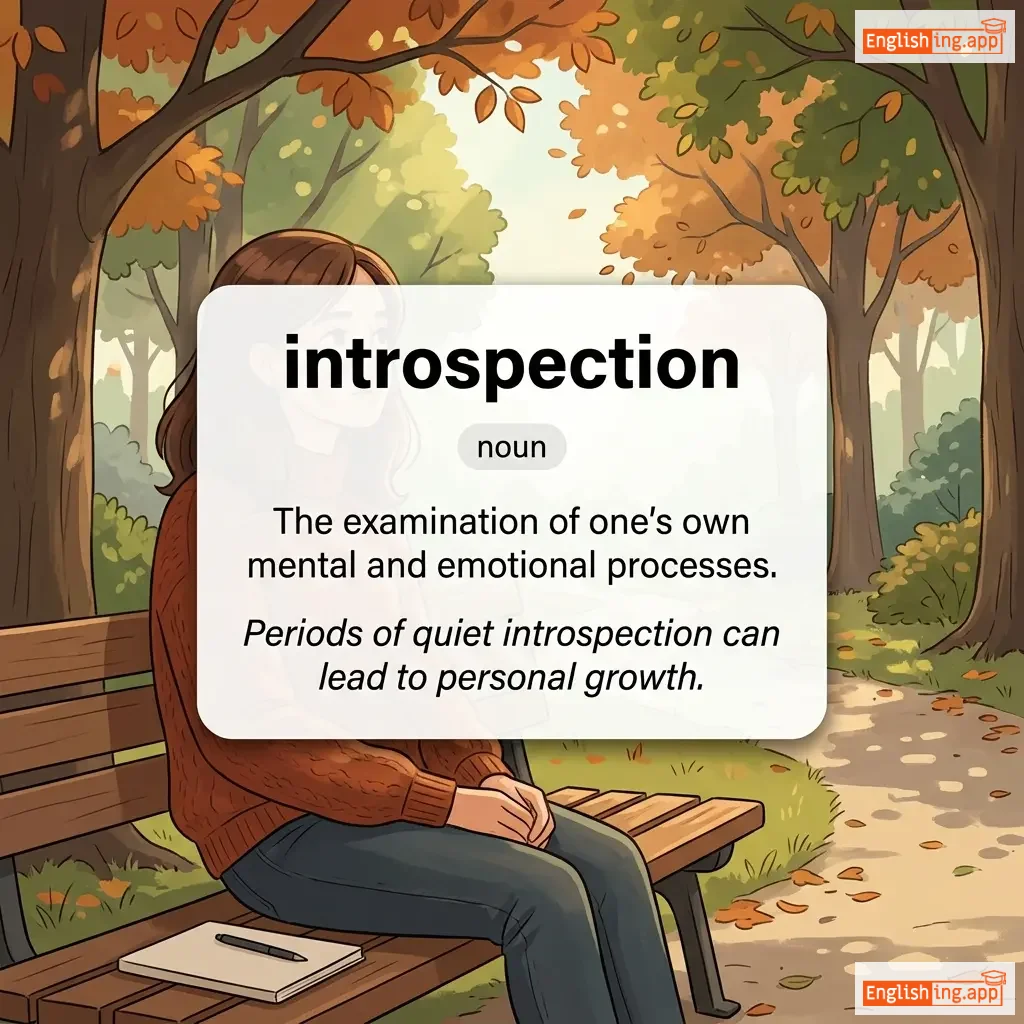
introspection definition card — visual illustration of the meaning
noun
/ˌɪn.trəˈspek.ʃən/
内省 (neixing)

The examination of one's own mental and emotional processes.

"Periods of quiet introspection can lead to personal growth."

"安静的内省时刻可以带来个人成长。" (Ānjìng de nèixǐng shíkè kěyǐ dàilái gèrén chéngzhǎng.)
introspective definition card — visual illustration of the meaning
adjective
/ˌɪn.trəˈspɛk.tɪv/
内省的 (neixingde)

Thoughtful and reflective, examining one's own thoughts and feelings.

"She became more introspective after moving to a new city."

"她搬到新城市后变得更加内省。" (Tā bān dào xīn chéngshì hòu biàn dé gèng jiā nèixǐng.)
noun
/ˌɪn.trəˈvɜːr.ʒən/
内向 (neixiang)

The tendency to be inward-looking and shy, preferring solitary activities.

"Her introversion made it difficult for her to enjoy large parties."

"她的内向让她很难享受大型聚会。" (Tā de nèixiàng ràng tā hěn nán xiǎngshòu dàxíng jùhuì.)
noun
/ˈɪn.trə.vɜːrt/
内向 (nèi xiàng)

A person who tends to be shy and prefers spending time alone rather than in groups.

"As an introvert, he preferred reading over attending parties."

"作为一个内向的人,他更喜欢读书而不是参加派对。" (Zuòwéi yīgè nèixiàng de rén, tā gèng xǐhuān dúshū ér bùshì cānjiā pàiduì.)
verb
/ɪnˈtruːd/
侵入 (qīnrù)

To enter a place or situation where one is not wanted or not invited.

"He felt embarrassed to intrude on their private conversation."
"他感到很尴尬,打扰了他们的私人谈话。" (Tā gǎndào hěn gāngà, dǎrǎo le tāmen de sīrén tánhuà.)
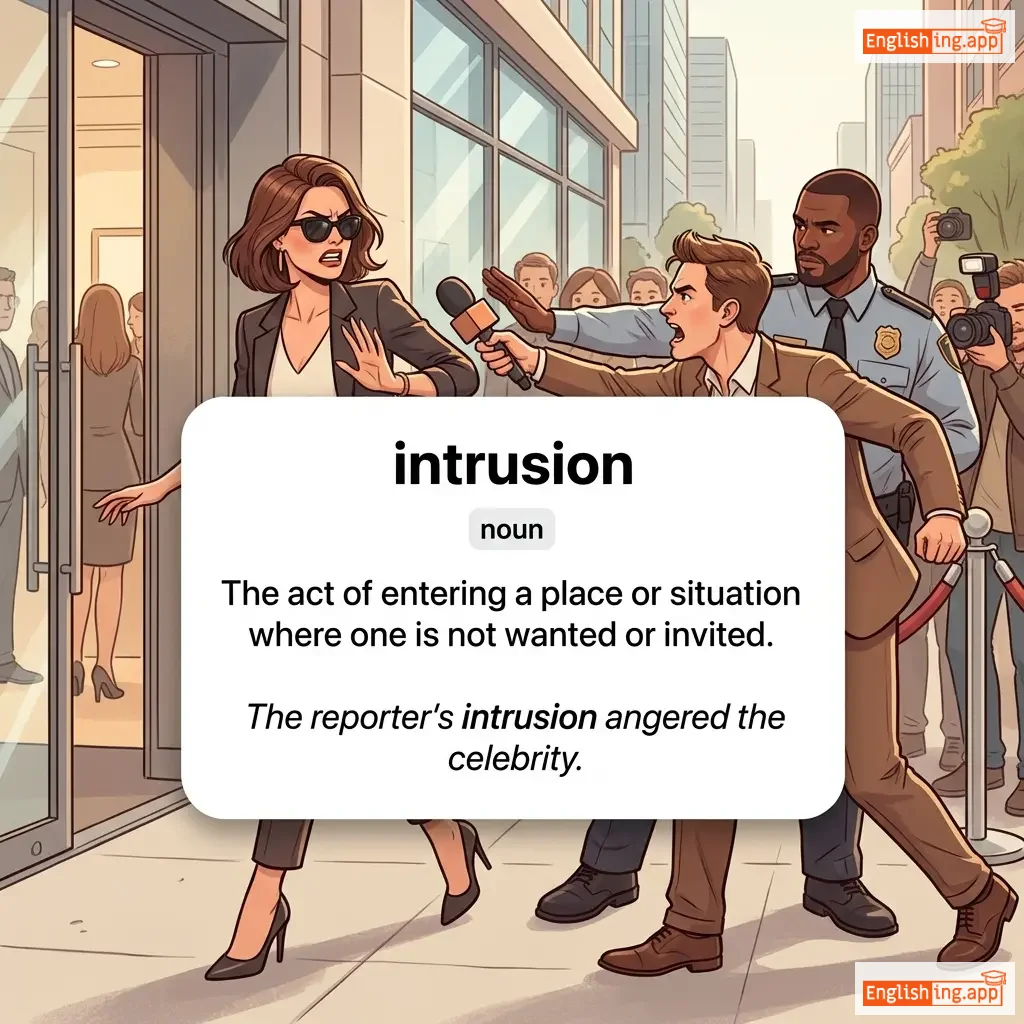
intrusion definition card — visual illustration of the meaning
noun
/ɪnˈtruː.ʒən/
不受欢迎的入侵 (bù shòu huānyíng de rùqīn)

The act of entering a place or situation where one is not wanted or invited.

"The reporter's intrusion angered the celebrity."

"记者的入侵激怒了名人。" (Jìzhě de rùqīn jī nùle míngrén.)
intuition definition card — visual illustration of the meaning
noun
/ˌɪn.tjuˈɪʃ.ən/
直觉 (zhijue)

The ability to understand or know something immediately, without conscious reasoning.

"Her intuition told her that something was wrong."

"她的直觉告诉她有些事情不对劲。" (Ta de zhijue gaosu ta youxie shiqing bu duijin.)
adjective
/ɪnˈtjuː.ɪ.tɪv/
直觉的 (zhíjué de)

Based on instinctive understanding rather than reasoning.

"The software has an intuitive design that makes it easy to use."

"该软件具有直观的设计,使其易于使用。" (gāi ruǎnjiàn jùyǒu zhíguān de shèjì, shǐ qí yìyú shǐyòng.)
inundate definition card — visual illustration of the meaning
verb
/ˈɪn.ʌn.deɪt/
淹没 / 充满 (yānmò / chōngmǎn)

To flood or overwhelm with a large quantity of things.

"The company was inundated with job applications."

"公司被大量工作申请淹没。" (Gōngsī bèi dàliàng gōngzuò shēnqǐng yānmò.)
noun
/ˌɪn.ʌnˈdeɪ.ʃən/
洪水 (hong shui)

The act of flooding or overwhelming with water or things.

"The town suffered from a severe inundation after the heavy rains."

"该市在暴雨后遭受了严重的洪水。" (Gāi shì zài bàoyǔ hòu zāoshòu le yánzhòng de hóngshuǐ.)
verb
/ɪˈnjʊər/
习惯 (xiguan)

To become accustomed to something, especially something unpleasant.

"Soldiers quickly became inured to the harsh conditions."

"士兵们迅速适应了严酷的条件。" (Shibingmen xunsu shiying le yanku de tiaojian.)
inured definition card — visual illustration of the meaning
adjective
/ɪˈnjʊərd/
习惯于 (xíguàn yú)

Accustomed to something, especially something unpleasant.

"After years of hardship, she was inured to suffering."

"经过多年的困苦,她已经习惯于痛苦了。" (Jīngguò duōnián de kùnkǔ, tā yǐjīng xíguàn yú tòngkǔ le.)
verb
/ɪnˈveɪd/
入侵 (rùqīn)

to enter a place or country forcefully, especially as an enemy

"The army invaded the neighboring country."

"军队入侵了邻国。" (Jūnduì rùqīnle lín guó.)
adjective, noun
/ˈɪnvəlɪd/ (adjective), /ɪnˈvælɪd/ (noun)
无效的 (wuxiao de)

Not valid; having no force or effect. Also refers to a person too weak or ill to care for themselves.

"The court declared the contract invalid."

"法院宣布合同无效。" (Fayuan xuanbu hetong wuxiao.)
verb
/ɪnˈvælɪdeɪt/
使无效 (shǐ wúxiào)

To make something not valid or legally acceptable.

"The new evidence may invalidate the previous ruling."

"新证据可能使之前的裁决无效。" (Xīn zhèngjù kěnéng shǐ zhīqián de cáijué wúxiào.)
noun
/ˌɪnvəˈlɪdɪti/
无效性 (wuxiaoxing)

the state of being invalid, legally void, or lacking force or validity

"The court ruled that the contract suffered from invalidity."

"法院裁定该合同存在无效性。" (fayuan caiding gai hetong cunzai wuxiaoxing)
adjective
/ɪnˈvæljʊəbl/
无价 (wújià)

Extremely useful or indispensable.

"Her advice proved invaluable to my success."

"她的建议对我的成功起到了无可估量的作用。" (Tā de jiànyì duì wǒ de chénggōng qǐdàole wú kě gūliàng de zuòyòng.)
adjective
/ɪnˈvɛəriəbl/
不变的 (bù biàn de)

Not changing; constant and unchanging.

"His invariable kindness won him many friends."

"他那不变的善良为他赢得了许多朋友。" (Tā nà bù biàn de shànliáng wèi tā yíngdéle xǔduō péngyǒu.)
noun
/ɪnˈveɪʒən/
入侵 (ruqin)

An instance of invading a country, region, or personal space with armed force or unwelcome presence.

"The army prepared for the possibility of an invasion."

"军队为可能的入侵做了准备。" (Jundui wei keneng de ruqin zuole zhunbei.)
adjective
/ɪnˈveɪsɪv/
侵入性的 (qīnrùxìng de)

Tending to spread harmfully, intruding aggressively, or encroaching beyond proper boundaries.

"The doctor explained that the procedure was minimally invasive."

"医生解释说,该程序是最小的侵入性。" (Yīshēng jiěshì shuō, gāi chéngxù shì zuìxiǎo de qīnrùxìng de.)
invective definition card — visual illustration of the meaning
noun
/ɪnˈvɛktɪv/
侮辱性语言 (wǔrǔ xìng yǔyán)

Insulting, abusive, or highly critical language.

"The politician’s speech was filled with invective against his opponents."

"政治家的演讲充满了对对手的侮辱性语言。" (Zhèngzhì jiā de yǎnjiǎng chōngmǎnle duì duìshǒu de wǔrǔ xìng yǔyán.)
verb
/ɪnˈveɪ/
严厉批评 (yanli pīpíng)

To speak or write about something with great hostility and criticism.

"He inveighed against the corruption in government."

"他严厉批评了政府中的腐败。" (Tā yánlì pīpíngle zhèngfǔ zhōng de fǔbài.)
inveigle definition card — visual illustration of the meaning
verb
/ɪnˈveɪɡəl/
诱骗 (yòupiàn)

To persuade someone to do something by deception or flattery.

"She inveigled him into signing the contract."

"她劝他签署了合同。" (Tā quàn tā qiānshǔle hétóng.)
verb
/ɪnˈvɛnt/
发明 (faming)

to create or design something that has not existed before

"Thomas Edison invented the electric bulb."
"托马斯·爱迪生发明了电灯泡。" (Tuo ma si · ai di sheng fa ming le dian deng pao.)
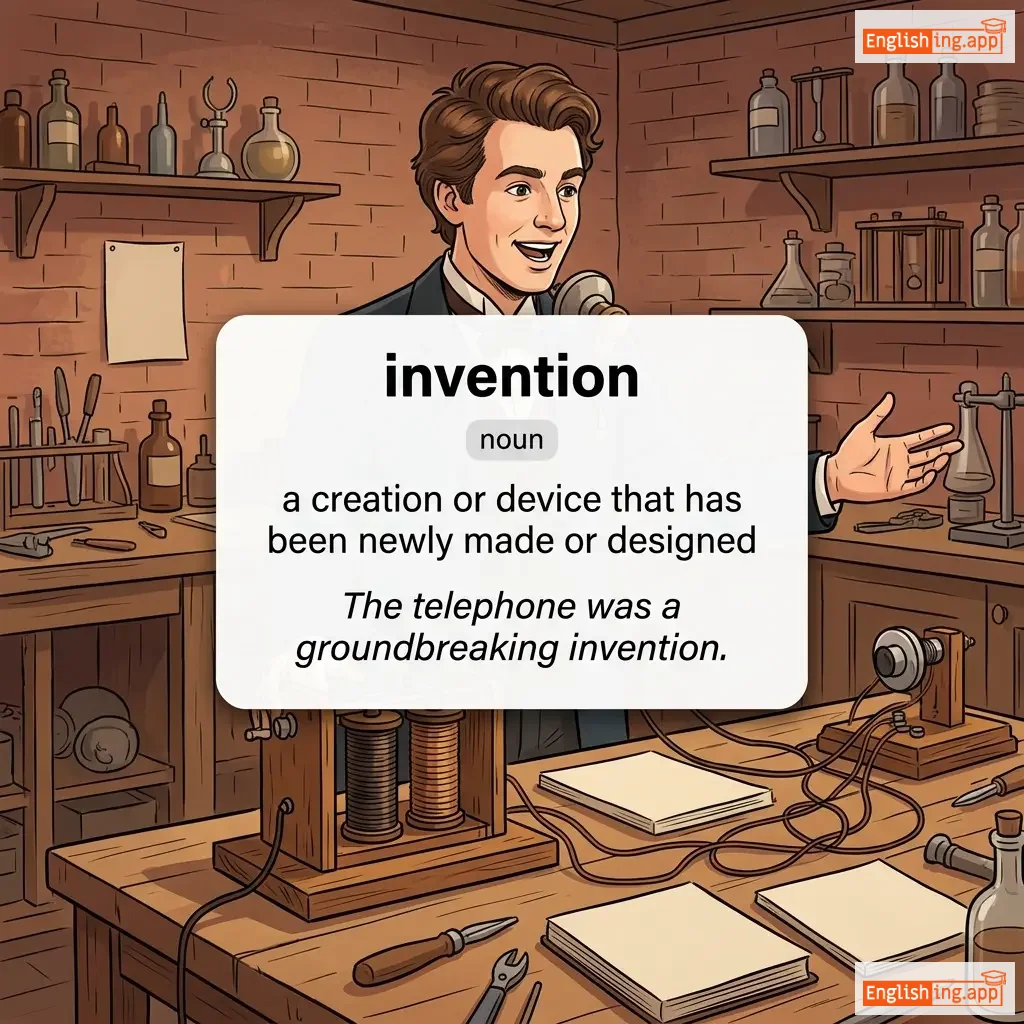
invention definition card — visual illustration of the meaning
noun
/ɪnˈvɛnʃən/
发明 (fāmíng)

a creation or device that has been newly made or designed

"The telephone was a groundbreaking invention."

"电话是一次革命性的发明。" (Diànhuà shì yīcì gémìngxìng de fāmíng.)
adjective
/ɪnˈvɛntɪv/
富有创意的 (fù yǒu chuàng yì de)

Having the ability to create or design new things or to think originally.

"The inventor was known for his inventive solutions to everyday problems."

"发明家以其富有创意的解决方案而闻名。" (Fāmíng jiā yǐ qí fù yǒu chuàng yì de jiě jué fāng àn ér wén míng.)
noun
/ɪnˈventər/
发明家 (famingjia)

a person who creates or designs something new, especially a device, method, or process

"The inventor patented her new medical device."

"这位发明家为她的新医疗设备申请了专利。" (Zhe wei famingjia wei ta de xin yiliao shebei shenqing le zhuanli)
noun
/ˈɪnvənˌtɔːri/
清单 (qingdan)

A complete list of items, such as goods in stock or property.

"The shopkeeper checked the inventory before opening the store."

"店主在开店前检查了清单。" (Dianzhu zai kaidian qian jiancha le qingdan.)