
词汇表

英语词汇词典 | 单词含义、定义和示例

integrative diplomacy definition card — visual illustration of the meaning
noun
/ˈɪn.tɪ.ɡreɪ.tɪv dɪˈpləʊ.mə.si/
综合外交 (zonghe waijiao)

A diplomatic approach that seeks to combine or coordinate different elements, interests, or parties into a unified whole.

"Integrative diplomacy strengthens alliances."

"综合外交增强了联盟。" (Zonghe waijiao zengqiang le lianmeng.)
integrity definition card — visual illustration of the meaning
noun
/ɪnˈtɛɡrɪti/
诚信 (chéngxìn)

The quality of being honest and having strong moral principles.

"She is admired for her honesty and integrity."

"她因诚实和正直而受到钦佩。" (Tā yīn chéngshí hé zhèngzhí ér shòudào qīnpèi.)
noun
/ɪnˈtɛɡ.jʊ.mənt/
外部覆盖物 (waibu fufeiwu)

A natural outer covering, such as skin, shell, or rind.

"The snake sheds its integument as it grows."

"蛇在生长过程中脱掉外部覆盖物。" (She zai shengchang guocheng zhong tuodiao waibu fufeiceng.)
noun
/ˈɪn.tə.lekt/
智力 (zhìlì)

The ability to think, reason, and understand objectively.

"Her intellect is admired by all her colleagues."

"她的智力受到所有同事的赞赏。" (Tā de zhìlì shòudào suǒyǒu tóngshì de zànshǎng.)
adjective, noun
/ˌɪn.təlˈɛk.tʃu.əl/
智力的 (zhìlì de)

Relating to the intellect; a person who engages in critical thinking and study.

"She enjoys intellectual discussions about philosophy."

"她喜欢关于哲学的智力讨论。" (Tā xǐhuān guānyú zhéxué de zhìlì tǎolùn.)
intellectuals definition card — visual illustration of the meaning
noun
ˌɪntəˈlektʃuəlz
知识分子 (zhī shí fèn zǐ)

People possessing a highly developed intellect; scholars or academics.

"Intellectuals protested against the dominance."

"知识分子反对霸权。" (Zhī shí fèn zǐ fǎnduì bàquán.)
intelligence definition card — visual illustration of the meaning
noun
/ɪnˈtɛl.ɪ.dʒəns/
智能 (zhì néng)

The ability to acquire and apply knowledge and skills.

"Artificial intelligence is transforming industries worldwide."

"人工智能正在全球范围内改变行业。" (rén gōng zhì néng zhèng zài quán qiú fàn wéi nèi gǎi biàn háng yè.)
adjective
/ɪnˈtɛlɪdʒənt/
聪明的 (cōngmíng de)

Having or showing high mental capacity, quick to learn and understand.

"She is one of the most intelligent students in the class."

"她是班上最聪明的学生之一。" (Tā shì bān shàng zuì cōngmíng de xuéshēng zhī yī.)
noun
/ɪnˌtɛl.ɪˈdʒɛntsi.ə/
知识分子阶层 (zhīshi fènzǐ jiēcéng)

The group of people engaged in intellectual and cultural pursuits in a society.

"The intelligentsia played a key role in shaping public opinion."

"知识分子阶层在塑造公众舆论方面发挥了重要作用。" (Zhīshi fènzǐ jiēcéng zài sùzào gōngzhòng yúlùn fāhuīle zhòngyào zuòyòng.)
adjective
/ɪnˈtɛlɪdʒəbl/

Able to be understood; clear enough to be comprehended.

"Her speech was barely intelligible over the noise."

noun
/ɪnˈtɛmpərəns/
放纵 (fàngzòng)

Lack of moderation or self-control, especially with drinking or eating.

"His intemperance in drinking ruined his health."

"他的饮酒放纵毁了他的健康。" (tā de yǐnjiǔ fàngzòng huǐle tā de jiànkāng.)
adjective
/ɪnˈtɛmpərət/
失控的 (shikong de)

Lacking self-control; immoderate, especially in indulgence.

"The politician's intemperate remarks caused controversy."

"政治家的失控言论引发了争议。" (Zhengzhijia de shikong yanlun yinfa le zhengyi.)
intend definition card — visual illustration of the meaning
verb
/ɪnˈtɛnd/
打算 (dǎsuàn)

To have a plan or purpose in mind; to aim to do something.

"I intend to finish my work before dinner."

"我打算在晚餐前完成我的工作。" (Wǒ dǎsuàn zài wǎncān qián wánchéng wǒ de gōngzuò.)
adjective
/ɪnˈtɛns/
强烈 (qianglie)

Of extreme force, degree, or strength.

"She felt intense pain after the accident."
"她在事故后感到剧烈的疼痛。" (Tā zài shìgù hòu gǎndào jùliè de téngtòng.)
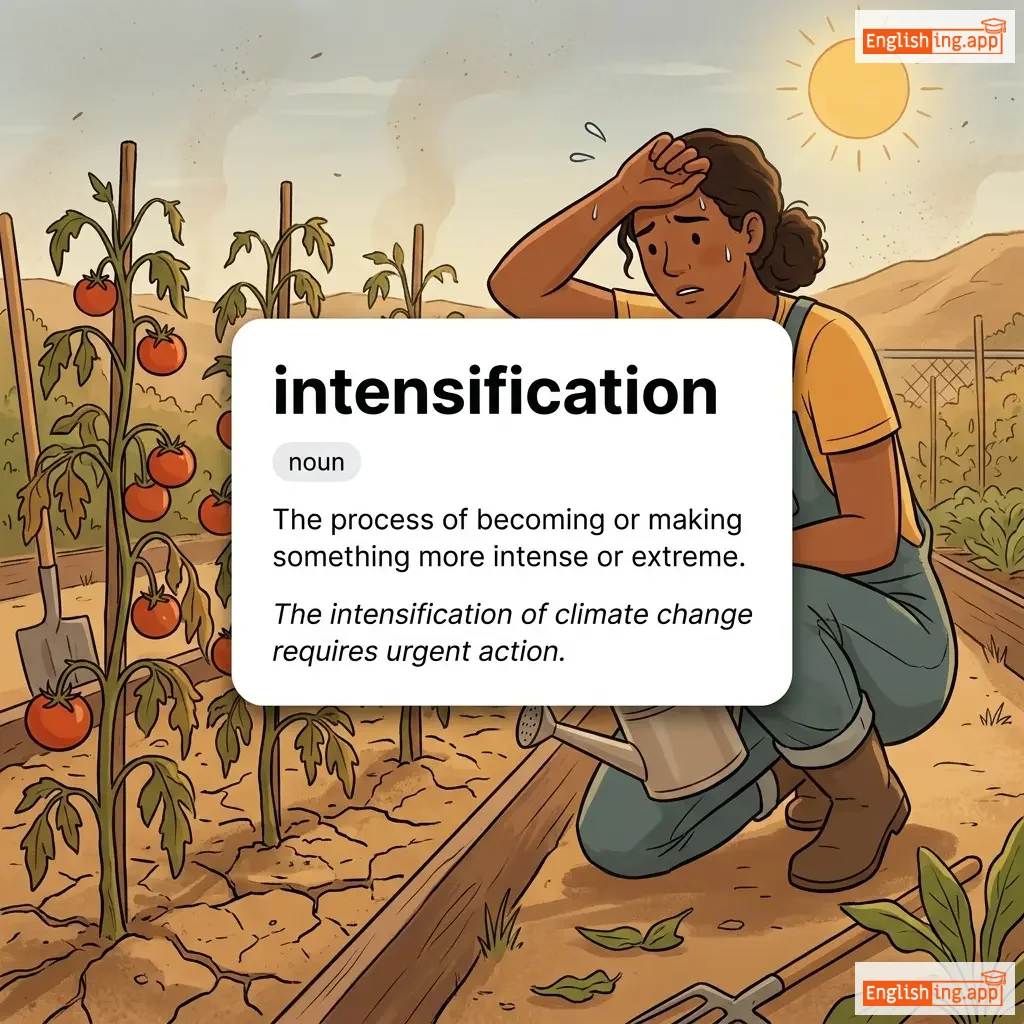
intensification definition card — visual illustration of the meaning
noun
ɪnˌten.sɪ.fɪˈkeɪ.ʃən
强化 (qianghua)

The process of becoming or making something more intense or extreme.

"The intensification of climate change requires urgent action."

"气候变化的强化需要紧急行动。" (Qihou bianhua de qianghua xuyao jinji xingdong.)
verb
/ɪnˈtɛnsɪfaɪ/
加强 (jiāqiáng)

To make something stronger, more extreme, or more forceful.

"The storm is expected to intensify overnight."

"预计风暴将在一夜之间加剧。" (yùjì fēngbào jiāng zài yīyè zhījiān jiājù.)
noun
/ɪnˈtɛnʃən/
内涵 (neihan)

The internal content of a concept; the set of attributes implied by a word or phrase.

"The intension of the word 'dog' includes being a mammal and domesticated."

"'狗'这个词的内涵包括是哺乳动物和被驯养。" ('gou' zhe ge ci de neihan baokuo shi buru dongwu he bei xunyang.)
noun
/ɪnˈtɛnsəti/
强度 (qiangdu)

The quality of being extreme, strong, or forceful in degree.

"The intensity of the storm frightened the villagers."

"风暴的强度吓坏了村民。" (Fengbao de qiangdu xiahuai le cunmin.)
adjective
/ɪnˈtɛnsɪv/
强化 (qiánghuà)

Involving a lot of effort, energy, or concentration in a short period of time.

"She attended an intensive English course before moving abroad."

"她在出国之前参加了一个强化的英语课程。" (Tā zài chūguó zhīqián cānjiāle yīgè qiánghuà de yīngyǔ kèchéng.)
noun
/ɪnˈtɛnt/
意图 (yìtú)

the purpose or reason behind an action; a strong determination to do something

"Her intent was to improve the quality of education in the community."

"她的意图是提高社区的教育质量。" (Tā de yìtú shì tígāo shèqū de jiàoyù zhìliàng.)
noun
/ɪnˈtɛnʃən/
意图 (yìtú)

A plan, aim, or purpose behind an action.

"Her intention was to finish the project before the deadline."

"她的意图是在截止日期之前完成项目。" (Tā de yìtú shì zài jiézhǐ rìqī zhīqián wánchéng xiàngmù.)
verb
/ɪnˈtɜːr/
埋葬 (mái zàng)

To bury a dead body in the ground.

"They decided to inter the soldier with full honors."
"他们决定以完全的荣誉埋葬那位士兵。" (Tāmen juédìng yǐ wánquán de róngyù máizàng nà wèi shìbīng.)
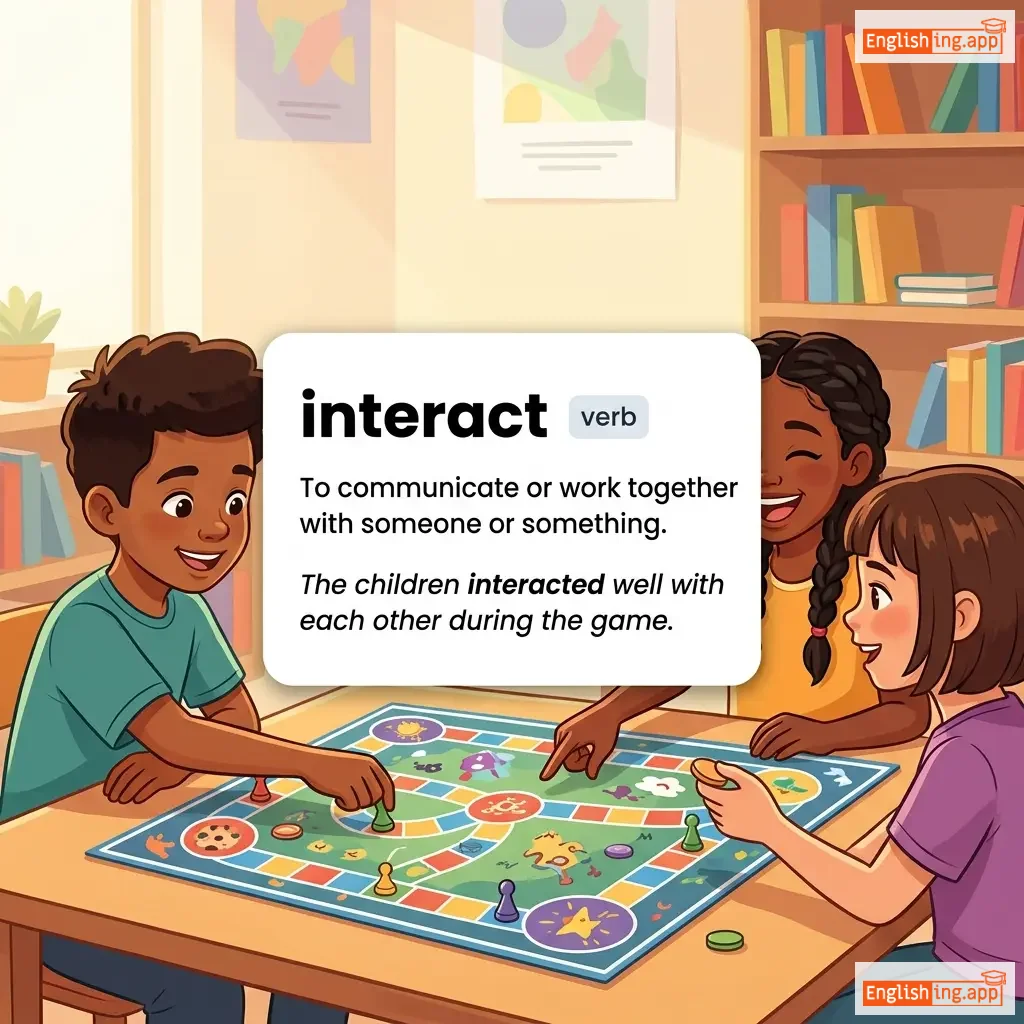
interact definition card — visual illustration of the meaning
verb
/ˌɪntərˈækt/
互动 (hudong)

To communicate or work together with someone or something.

"The children interacted well with each other during the game."

"孩子们在游戏中很好地互动。" (Háizimen zài yóuxì zhōng hěn hǎo de hudong.)
noun
/ˌɪntərˈækʃən/
相互作用 (xianghu zuoyong)

The process of people or things acting upon or influencing each other.

"The teacher encouraged more interaction between students."
"老师鼓励学生之间更多的互动。" (Laoshi guli xuesheng zhijian gengduo de hudong.)
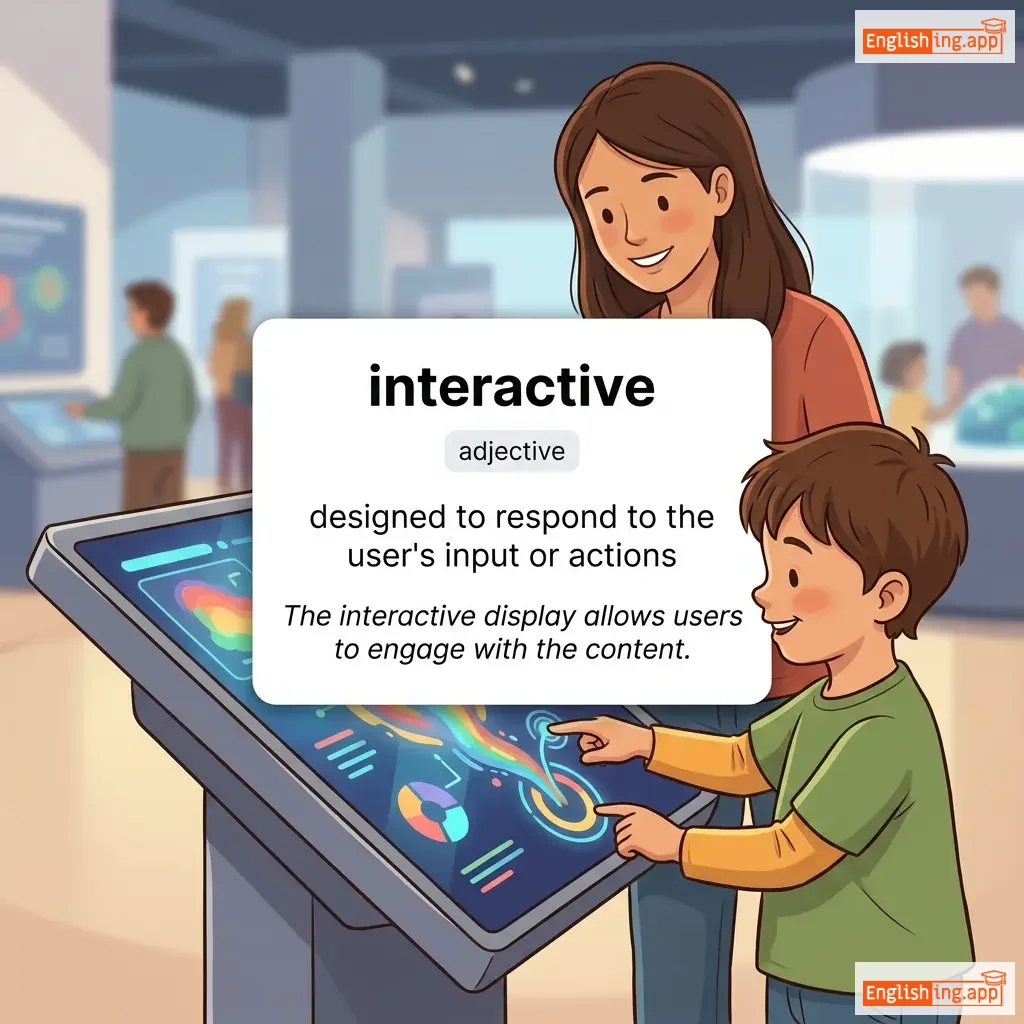
interactive definition card — visual illustration of the meaning
adjective
/ɪnˈtærɪktɪv/

designed to respond to the user's input or actions

"The interactive display allows users to engage with the content."

🕊️

intercede

verb
/ˌɪntərˈsiːd/

to act or plead on behalf of someone in difficulty or trouble; to intervene between parties to help resolve a dispute

"She interceded with the teacher to give her brother another chance."

verb
/ˌɪntərˈsɛpt/

to stop, catch, or seize something on its way from one place to another

"The police intercepted the stolen car before it crossed the border."

noun
/ˌɪntərˈsɛʃən/
代祷 (dàidǎo)

the act of intervening or pleading on behalf of another person

"The prisoner was released due to the intercession of influential leaders."

"由于有影响力的领导人的代祷,囚犯被释放了。" (Yóuyú yǒu yǐngxiǎnglì de lǐngdǎo rén de dàidǎo, qiúfàn bèi shìfàng le.)
noun
/ˌɪntərˈsɛsər/
调解人 (tiaojieren)

a person who intervenes or pleads on behalf of another

"He acted as an intercessor to resolve the conflict between the two families."

"他作为调解人解决了两个家庭之间的冲突。" (Tā zuòwéi tiaojieren jiějuéle liǎng gè jiātíng zhī jiān de chōngtū.)
adjective
/ˌɪntərˈtʃeɪndʒəbl/
可互换的 (ke hùhuàn de)

able to be exchanged with each other without difference or loss of function

"These machine parts are interchangeable, so they can be replaced easily."

"这些机器部件是可互换的,所以它们可以轻松地被替换。" (zhèxiē jīqì bùjiàn shì kě hùhuàn de, suǒyǐ tāmen kěyǐ qīngsōng de bèi tìhuàn.)
interconnectivity definition card — visual illustration of the meaning
noun
/ˌɪntəkəˈnɛktɪvɪti/
互联互通 (hulianhutong)

The state of being interconnected or the degree of connectivity between components

"The rise of interconnectivity has transformed global communication."
"互联互通的兴起已经改变了全球通信。" (Hulianhutong de xingqi yijing gaibian le quanqiu tongxin.)
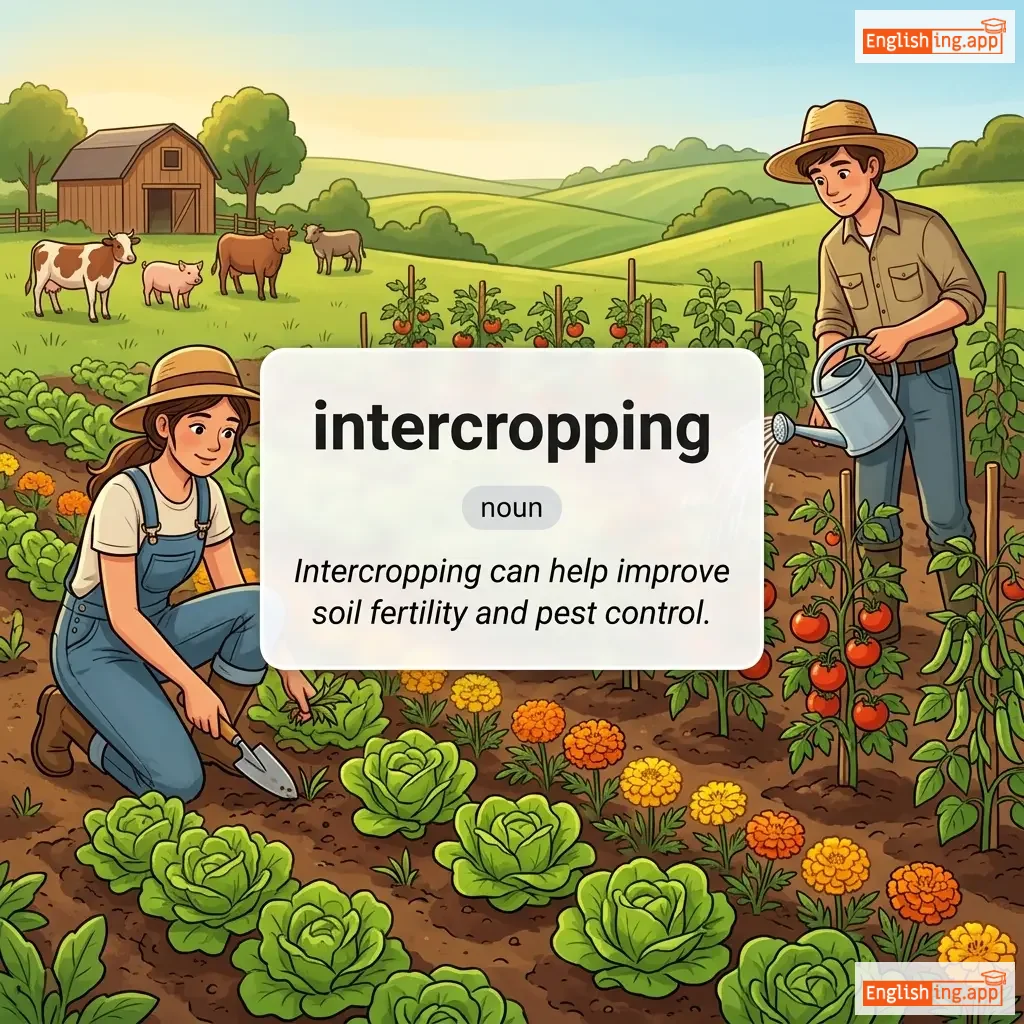
intercropping definition card — visual illustration of the meaning
noun
/ˈɪntəˌkrɒpɪŋ/
间作农业 (jianzuo nongye)

The agricultural practice of cultivating two or more crops simultaneously in the same field to maximize land use efficiency and improve soil health.

"Intercropping can help improve soil fertility and pest control."
"间作农业有助于改善土壤肥力和害虫控制。" (Jianzuo nongye you zhu yu gaishan turan feili he haichong kongzhi.)
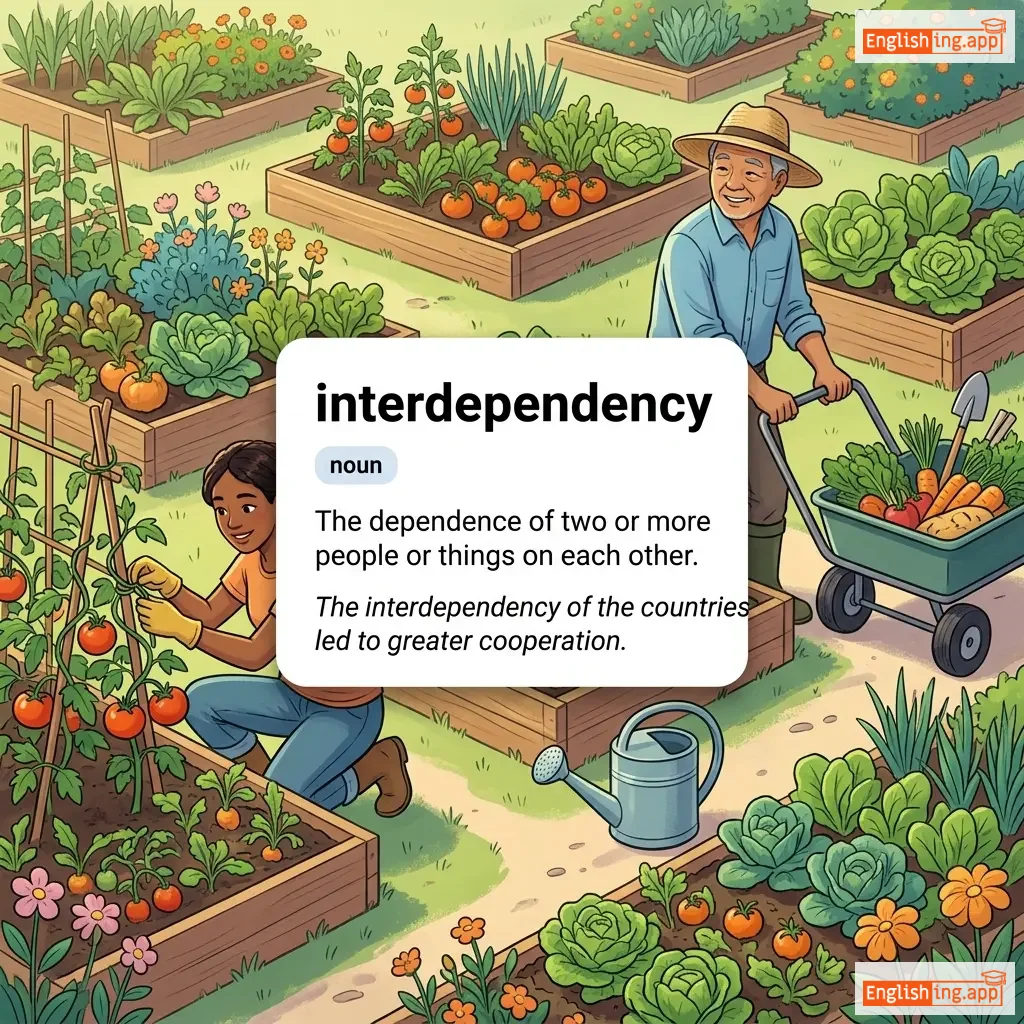
interdependency definition card — visual illustration of the meaning
noun
ˌɪntədɪˈpɛndənsi
相互依存 (xiāng hù yī cún)

The dependence of two or more people or things on each other.

"The interdependency of the countries led to greater cooperation."
"各国之间的相互依存促进了更大的合作。" (Gèguó zhījiān de xiānghù yīcún cùjìnle gèngdà de hézuò.)
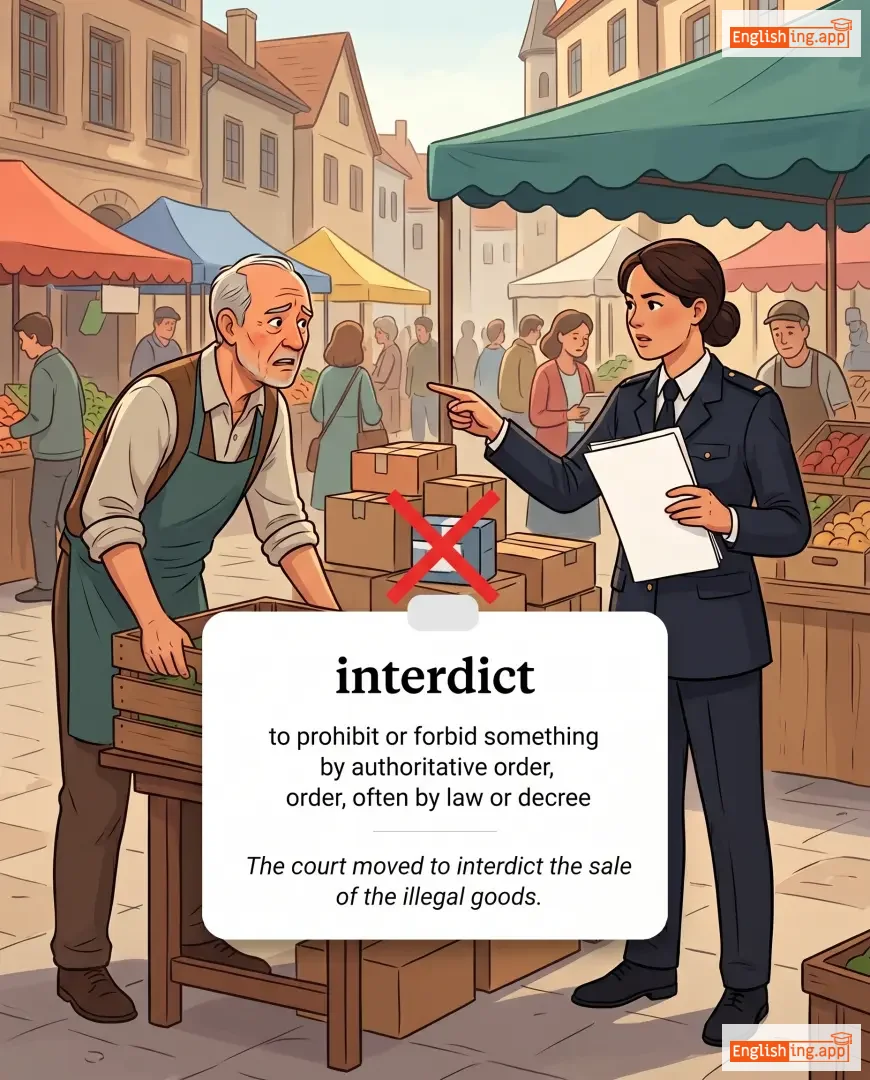
interdict definition card — visual illustration of the meaning
verb
/ˈɪntərˌdɪkt/
禁止 (jinzhi)

to prohibit or forbid something by authoritative order, often by law or decree

"The court moved to interdict the sale of the illegal goods."
"法院决定禁止销售非法商品。" (Fayuan jueding jinzhi xiaoshou feifa shangpin.)
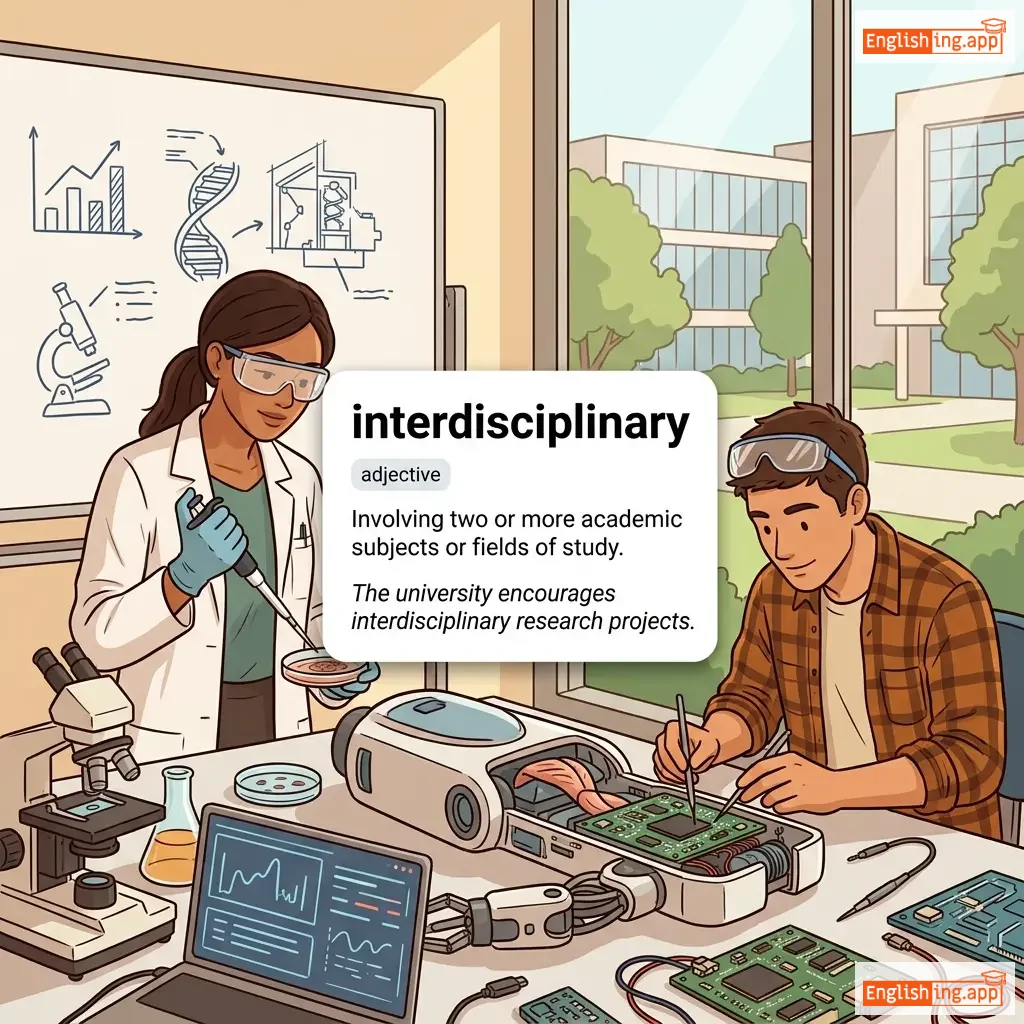
interdisciplinary definition card — visual illustration of the meaning
adjective
/ˌɪntərˈdɪsəplɪˌnɛri/
跨学科 (kuà xuékē)

Involving two or more academic subjects or fields of study.

"The university encourages interdisciplinary research projects."

"大学鼓励跨学科的研究项目。" (Dàxué gǔlì kuà xuékē de yánjiū xiàngmù.)
noun/verb
/ˈɪntrəst/ or /ˈɪntəˌrɛst/
兴趣 / 利息 (xìngqù / lìxī)

A feeling of curiosity or concern about something; or money paid for the use of borrowed money.

"He showed great interest in learning new languages."

"他对学习新语言表现出极大的兴趣。" (Tā duì xuéxí xīn yǔyán biǎoxiàn chū jí dà de xìngqù.)
adjective
/ˈɪntrəstɪd/
感兴趣 (gǎn xìngqù)

Showing curiosity or concern about something.

"She is very interested in learning new languages."

"她对学习新语言非常感兴趣。" (Tā duì xuéxí xīn yǔyán fēicháng gǎn xìngqù.)
adjective
/ˈɪntrəstɪŋ/ or /ˈɪntəˌrɛstɪŋ/
有趣的 (yǒu qù de)

Arousing curiosity or attention; holding one’s interest.

"The documentary about space was very interesting."

"关于太空的纪录片非常有趣。" (Guānyú tàikōng de jìlùpiàn fēicháng yǒuqù.)
noun
/ˈɪntərfeɪs/
界面 (jiemian)

a point where two systems, subjects, or organizations meet and interact

"The user interface is designed to be intuitive and user-friendly."

"用户界面被设计为直观且用户友好。" (Yonghu jiemian bei sheji wei zhuiguang qie yonghu youhao.)
verb
/ˌɪntərˈfɪər/
幸福 (xingfu)

to become involved in something that is not your concern; to hinder or obstruct

"Parents should not interfere in their children’s personal choices."

"她收到奖项时无法掩饰自己的幸福感。" (Tā shōu dào jiǎngxiàng shí wúfǎ yǎnshì zìjǐ de xìngfú gǎn.)
noun
/ˌɪntərˈfɪərəns/
干扰 (ganrao)

the action of interfering with something

"The radio signal was disrupted due to interference from nearby electronics."
"由于附近电子设备的干扰,无线电信号受到了干扰。" (Youyu fujin dianzi shebei de ganrao, wuxiandian xinhao shoudao le ganrao.)
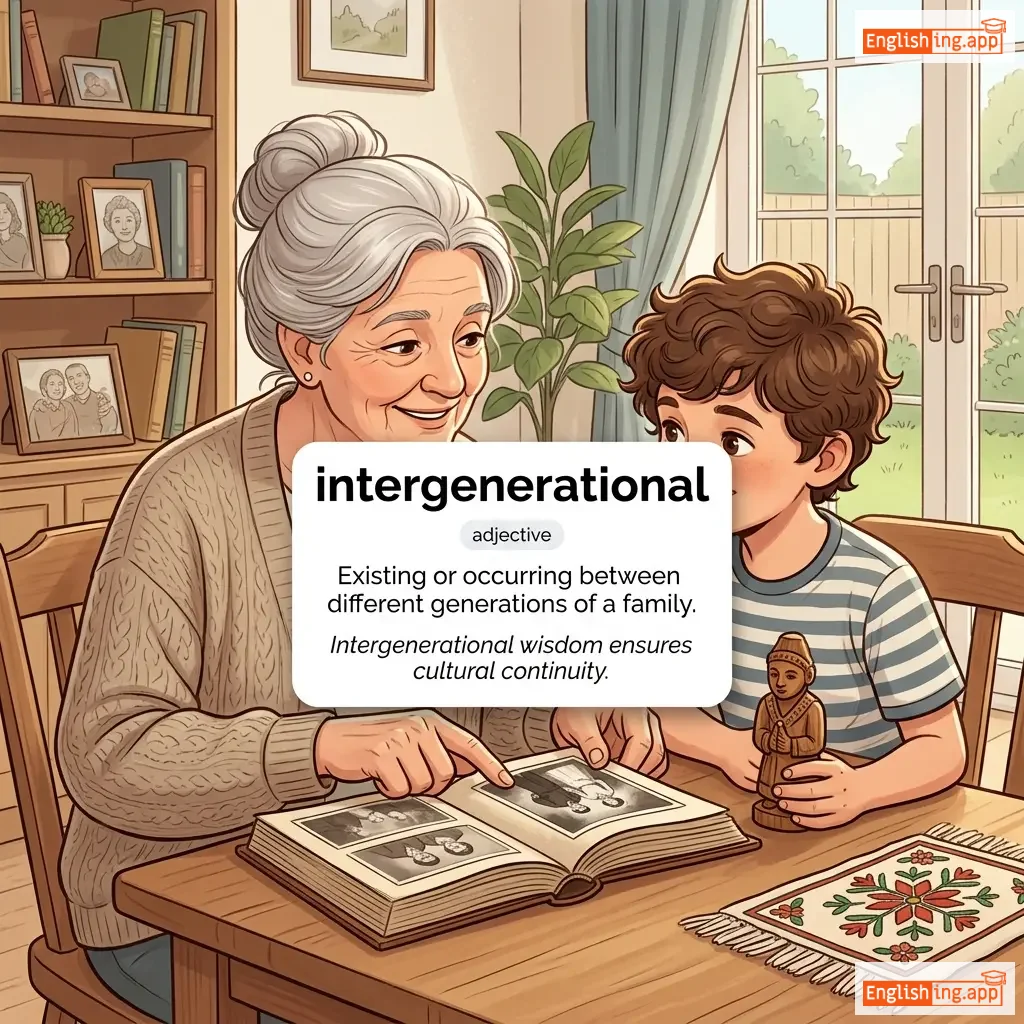
intergenerational definition card — visual illustration of the meaning
adjective
ˌɪn.tə.dʒen.əˈreɪ.ʃən.əl
代际的,存在于不同代际之间 (dàijì de, cúnzài yú bùtóng dàijì zhī jiān)

Existing or occurring between different generations of a family.

"Intergenerational wisdom ensures cultural continuity."

"代际智慧确保文化的延续。" (Dàijì zhìhuì quèbǎo wénhuà de yánxù.)
interim definition card — visual illustration of the meaning
noun
/ˈɪntərɪm/
临时 (linshi)

a temporary or provisional period before something permanent is established

"She was appointed as the interim manager until a permanent replacement was found."

"她被任命为临时经理,直到找到一个永久的替代者。" (Ta bei renming wei linshi jingli, zhidao zhao dao yige yongjiu de tidaizhe.)
noun
/ɪnˈtɪəriər/
内部 (neibu)

the inside part of something; inner area of a place or object

"The interior of the hotel was beautifully decorated."

"酒店的内部装饰非常美丽。" (Jiudian de neibu zhuangshi feichang meili.)
noun
/ˌɪntərˈdʒɛkʃən/
感叹词 (gǎntàn cí)

a word or phrase used to express sudden emotion or reaction, often standing alone

"Words like 'wow' and 'ouch' are common interjections in English."

"像 '哇' 和 '哎呀' 这样的词是英语中常见的感叹词。" (Xiàng 'wā' hé 'āiyā' zhèyàng de cí shì yīngyǔ zhōng chángjiàn de gǎntàn cí.)
verb
/ˌɪntərˈlɒk/
互锁 (hùsuǒ)

to fit or connect together securely so that two or more things are joined

"The gears interlock to ensure smooth movement of the machine."

"齿轮相互啮合,确保机器的平稳运行。" (Chǐlún xiānghù nièhé, quèbǎo jīqì de píngwěn yùnxíng.)
noun
/ˌɪntərˈlɒkjətər/
对话者 (duìhuà zhě)

a person who takes part in a conversation or dialogue

"She was a skilled interlocutor during the debate."

"她在辩论中是一个熟练的对话者。" (tā zài biànlùn zhōng shì yīgè shúliàn de duìhuà zhě.)
adjective
/ˌɪntərˈlɒkjətəri/
临时的 (linshide)

Given during the course of a legal action, not final but temporary or provisional.

"The judge issued an interlocutory order to maintain the status quo until the hearing."

"法官发布了临时命令,以保持听证会之前的现状。" (Faguan fabu le linshi mingling, yi baochi tingzhenghui zhiqian de xianzhuang.)
noun
/ˈɪntərˌloʊpər/
闯入者 (chuǎngrù zhě)

A person who becomes involved in a situation or place where they are not wanted.

"He felt like an interloper at the private family gathering."

"他在私人家庭聚会中感到像一个闯入者。" (Tā zài sīrén jiātíng jùhuì zhōng gǎndào xiàng yīgè chuǎngrù zhě.)
noun
/ˈɪntərˌluːd/
插曲 (chāqǔ)

A short period of time that comes between two events; an interval.

"There was a brief musical interlude between the two acts of the play."

"在剧本的两个场景之间有一个简短的音乐插曲。" (Zài jùběn de liǎng gè chǎngjǐng zhījiān yǒu yīgè jiǎnduǎn de yīnyuè chāqǔ.)