词汇表

英语词汇词典 | 单词含义、定义和示例

adjective
/ˌɪnhɒˈspɪtəbl/
不适宜居住的 (bù shì yí jū zhù de)

Harsh and difficult to live in; unfriendly or unwelcoming to guests.

"The desert is an inhospitable environment for most plants."

"沙漠是大多数植物无法生存的环境。" (Shāmò shì dà duōshù zhíwù wúfǎ shēngcún de huánjìng.)
adjective
/ɪnˈhjuːmən/
不人道 (bù rén dào)

lacking human qualities of compassion and mercy; cruel or barbaric

"The prisoners were kept in inhuman conditions."

"囚犯被关押在不人道的条件下。" (qiú fàn bèi guān yā zài bù rén dào de tiáo jiàn xià.)
verb
/ɪnˈhjuːm/
埋葬 (mái zàng)

to bury a dead body in the ground

"They inhumed the warrior with full honors."

"他们用全部荣誉埋葬了战士。" (Tāmen yòng quánbù róngyù máizàngle zhànshì.)
adjective
/ɪˈnɪmɪkəl/
敌对的 / 不利的 (dítuì de / bùlì de)

tending to obstruct or harm; unfriendly or hostile

"The policy was inimical to the country's economic growth."

"该政策对该国的经济增长不利。" (Gāi zhèngcè duì gāi guó de jīngjì zēngzhǎng bùlì.)
inimitable definition card — visual illustration of the meaning
adjective
/ɪˈnɪmɪtəbəl/
无与伦比 (wú yǔ lún bǐ)

so good or unusual as to be impossible to copy; unique

"Her inimitable style made her stand out in the fashion industry."

"她那无与伦比的风格使她在时尚行业中脱颖而出。" (Tā nà wú yǔ lún bǐ de fēnggé shǐ tā zài shíshàng hángyè zhōng tuō yǐng ér chū.)
adjective
/ɪˈnɪkwɪtəs/
不公正 (bugongzheng)

grossly unfair and morally wrong

"Slavery was one of the most iniquitous practices in history."

"奴隶制是历史上最不公正的实践之一。" (Nuli zhi shi lishi shang zui bugongzheng de shijian zhi yi.)
noun
/ɪˈnɪkwɪti/
不公 (bugong)

Immoral or grossly unfair behavior.

"The dictator's regime was marked by corruption and iniquity."

"独裁者的政权因腐败和不公而闻名。" (Dúcáizhě de zhèngquán yīn fǔbài hé bùgōng ér wénmíng.)
adjective
/ɪˈnɪʃəl/
初步的 (chūbù de)

Existing or occurring at the beginning.

"Her initial reaction was one of surprise."

"她的初步反应是惊讶。" (Tā de chūbù fǎnyìng shì jīngyà.)
adverb
/ɪˈnɪʃəli/
一开始 (yī kāishǐ)

At the beginning; at first.

"Initially, he refused the offer but later accepted it."

"一开始,他拒绝了这个提议,但后来接受了。" (Yī kāishǐ, tā jùjuéle zhège tíyì, dàn hòulái jiēshòule.)
initiate definition card — visual illustration of the meaning
verb
/ɪˈnɪʃieɪt/
启动 (qǐdòng)

To cause something to begin; to start.

"The company plans to initiate a new training program next month."
"公司计划下个月启动一个新的培训项目。" (Gōngsī jìhuà xià gè yuè qǐdòng yīgè xīn de péixùn xiàngmù.)
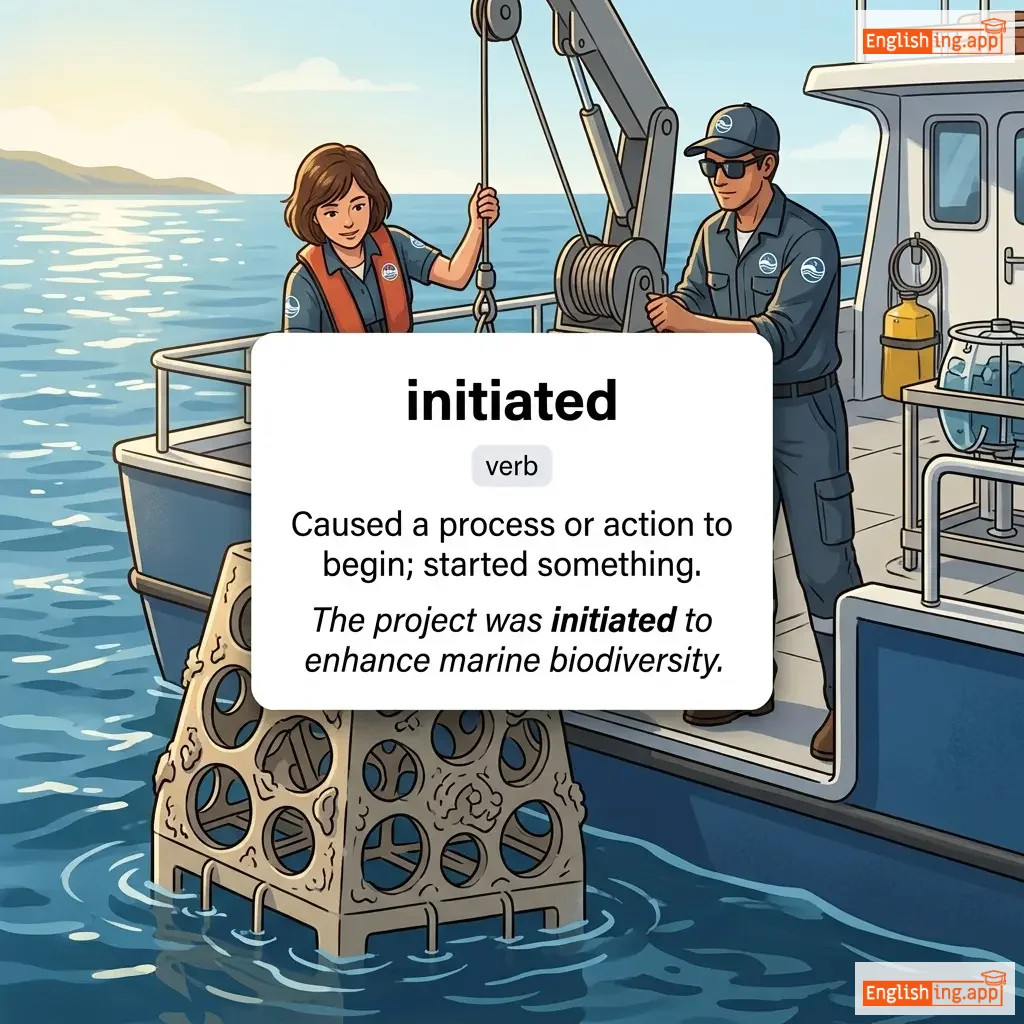
initiated definition card — visual illustration of the meaning
verb
ɪˈnɪʃɪeɪtɪd
启动 (qǐdòng)

Caused a process or action to begin; started something.

"The project was initiated to enhance marine biodiversity."

"该项目已启动以促进海洋生物多样性。" (Gāi xiàngmù yǐ qǐdòng yǐ cùjìn hǎiyáng shēngwù duōyàngxìng.)
initiative definition card — visual illustration of the meaning
noun
/ɪˈnɪʃətɪv/
倡议 (changyi)

The ability to assess and start things independently; a new plan or action.

"The government launched a new initiative to support small businesses."
"政府启动了一个新的倡议,以支持小型企业。" (Zhengfu qidongle yige xin de changyi, yi zhichi xiaoxing qiye.)
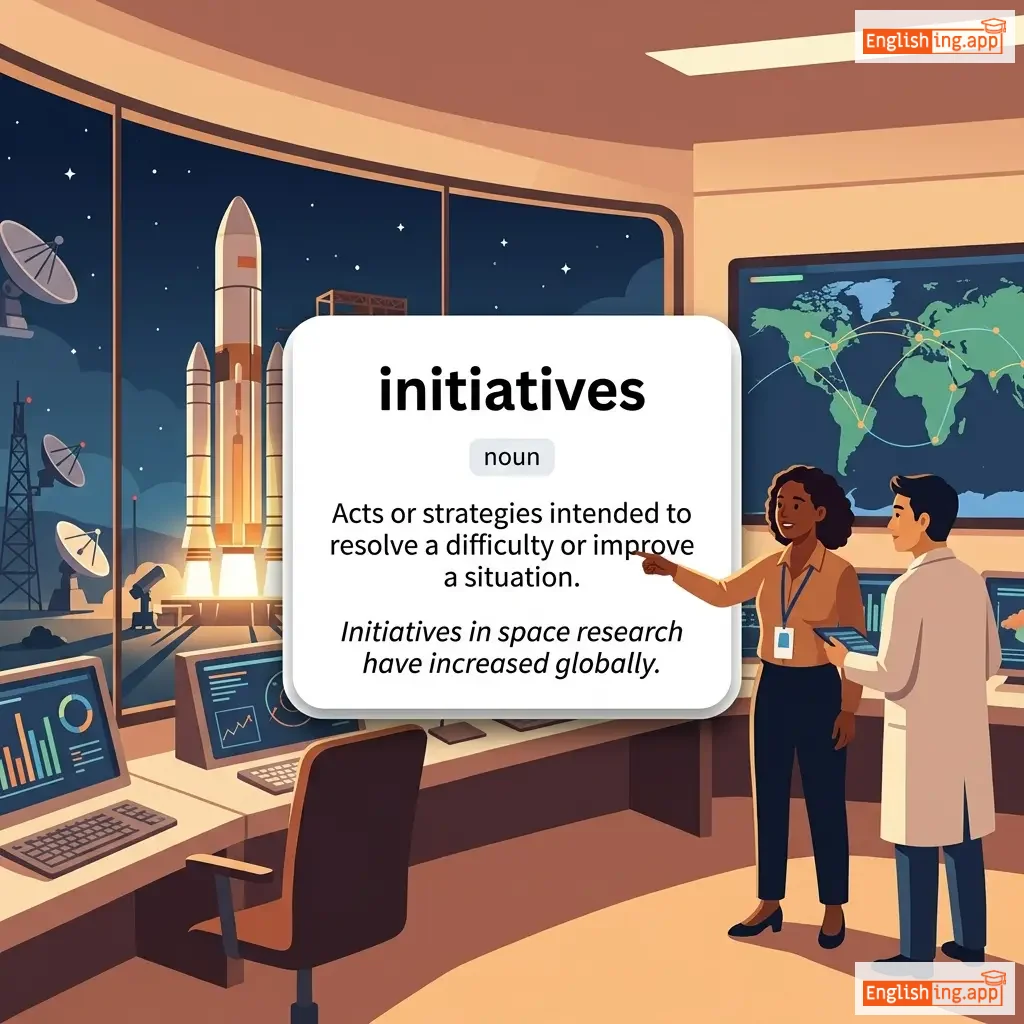
initiatives definition card — visual illustration of the meaning
noun
/ɪˈnɪʃ.ə.tɪvz/
倡议 (changyi)

Acts or strategies intended to resolve a difficulty or improve a situation.

"Initiatives in space research have increased globally."

"太空研究中的倡议在全球范围内增加了。" (Taikong yanjiu zhong de changyi zai quanqiu fanwei nei zengjia le.)
verb
/ɪnˈdʒɛkt/
注射 (zhù shè)

To introduce a substance, especially a drug, into the body using a needle.

"The nurse will inject the vaccine into the patient's arm."

"护士将疫苗注射到病人的手臂中。" (hùshi jiāng yìmiáo zhùshè dào bìngrén de shǒubì zhōng.)
noun
/ɪnˈdʒɛkʃən/

the act of introducing a substance into the body through a needle

"The nurse gave me an injection to prevent the infection."

noun
/ɪnˈdʒʌŋkʃən/
禁令 (jinling)

A judicial order restraining a person from an action or compelling a certain act.

"The court issued an injunction to stop the company from polluting the river."

"法院发布了一项禁令,阻止公司污染河流。" (Fayuan fabu le yi xiang jinling, zuzhi gongsi wuran heliu.)
verb
/ˈɪndʒər/
伤害 (shānghài)

to cause physical harm or damage to someone or something

"He injured his leg while playing football."

"他踢足球时伤了腿。" (Tā tī zúqiú shí shāngle tuǐ.)
adjective
/ɪnˈdʒʊəriəs/
有害的 (youhai de)

Causing or likely to cause harm or damage.

"Smoking is injurious to health."

"吸烟对健康有害。" (Xiyan dui jiankang youhai.)
noun
/ˈɪndʒəri/
伤害 (shanghai)

Harm or damage to a person’s body caused by an accident or attack.

"He suffered a serious injury during the football match."
"他在足球比赛中受了重伤。" (Ta zai zuqiu bisai zhong shou le zhong shang.)
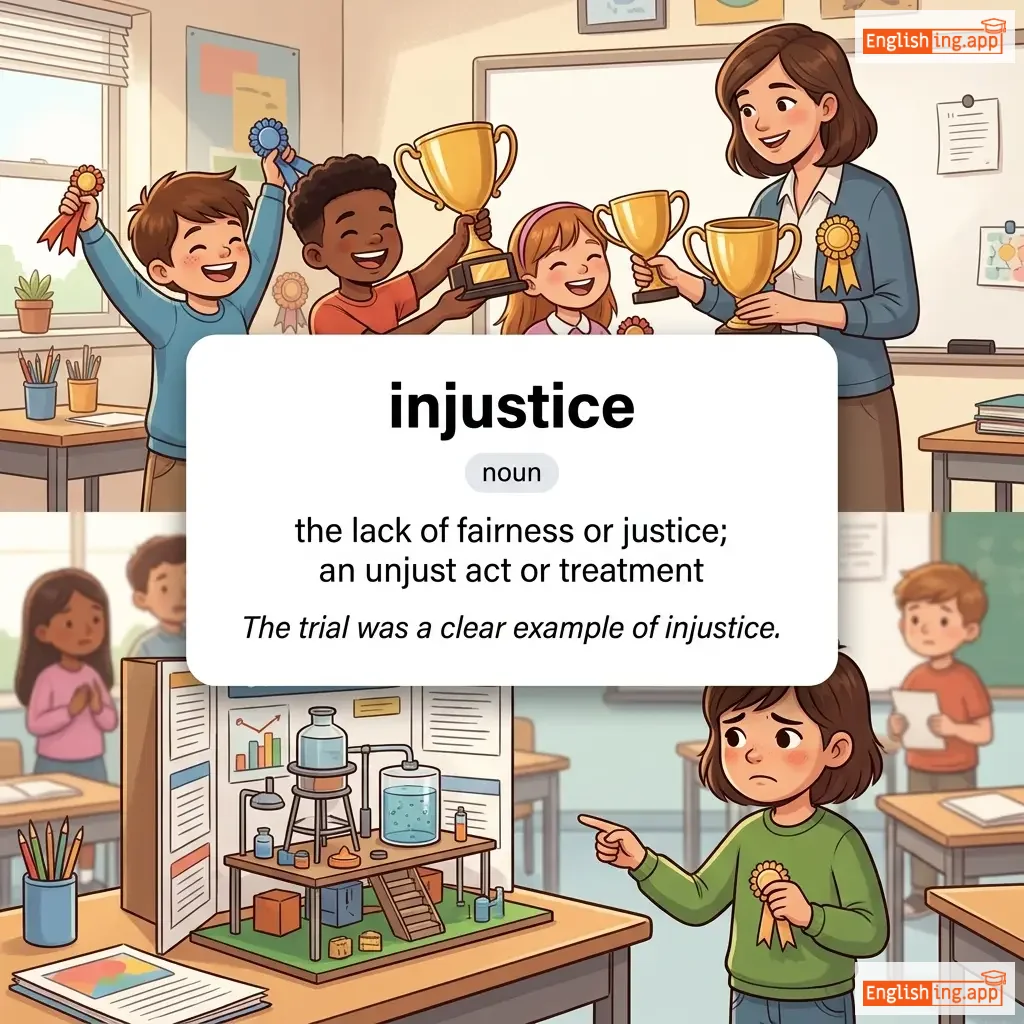
injustice definition card — visual illustration of the meaning
noun
/ɪnˈdʒʌstɪs/
不公正 (bugongzheng)

the lack of fairness or justice; an unjust act or treatment

"The trial was a clear example of injustice."

"这个审判是一个明显的不公正例子。" (Zhège shěnpàn shì yīgè míngxiǎn de bù gōngzhèng lìzi.)
🖋️

Ink (ink)

noun
/ɪŋk/
墨水 (mòshuǐ)

a colored liquid used for writing, printing, or drawing

"The ink in my pen ran out during the exam."

"我的钢笔墨水在考试时用完了。" (Wǒ de gāngbǐ mòshuǐ zài kǎoshì shí yòng wánle.)
noun
/ˈɪŋklɪŋ/
预感 (yùgǎn)

A slight idea, hint, or suspicion about something.

"She had an inkling that he was planning a surprise."
"她有一个预感,他正在计划一个惊喜。" (Tā yǒu yī gè yùgǎn, tā zhèngzài jìhuà yī gè jīngxǐ.)
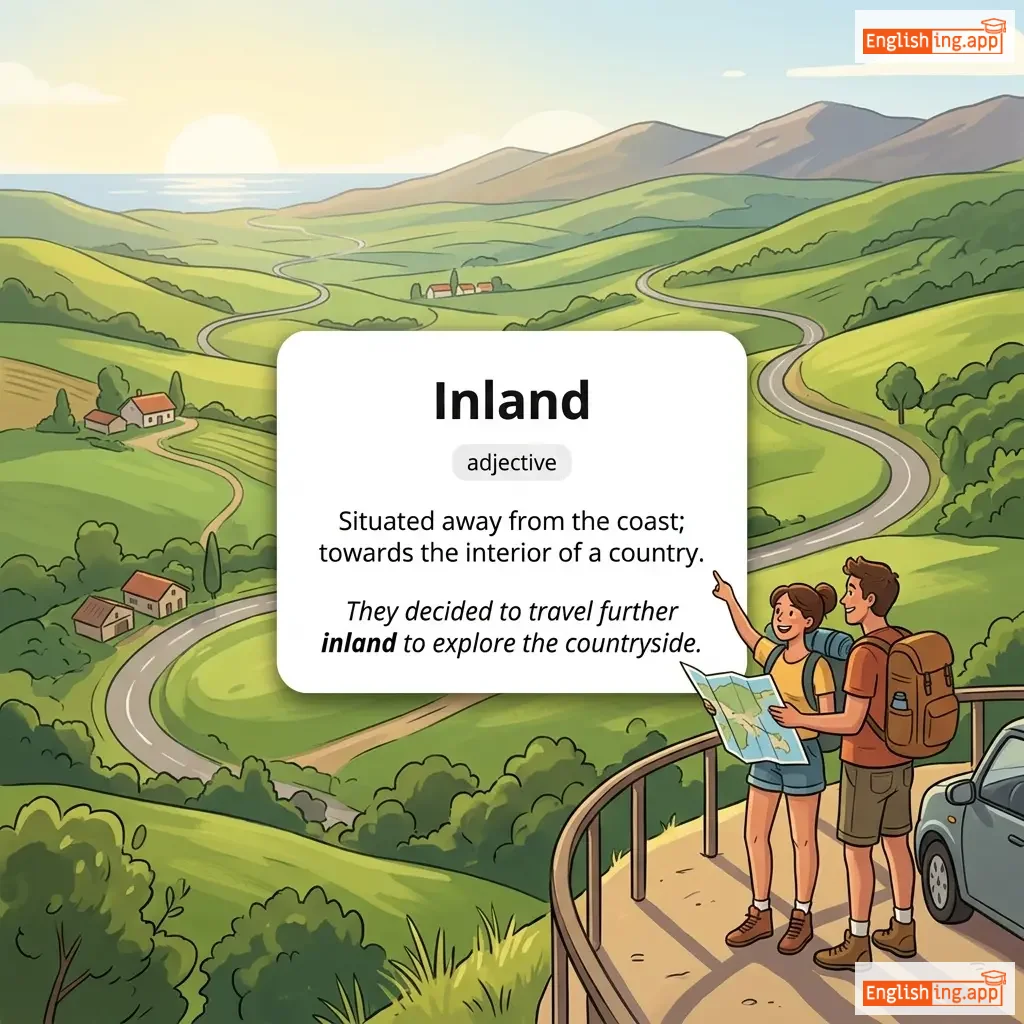
Inland definition card — visual illustration of the meaning
adjective
/ˈɪnlənd/
内陆 (neilu)

Situated away from the coast; towards the interior of a country.

"They decided to travel further inland to explore the countryside."

"他们决定更深入内陆,探索乡村。" (Tamen jueding geng shenru neilu, tansuo xiangcun.)
noun
/ˈɪnlɛt/
水道口 (shuǐdàokǒu)

A small arm of the sea, a lake, or a river; an opening or passage for entry.

"The boat entered a narrow inlet along the coast."

"船只进入了沿海的一条狭窄的水道口。" (Chuánzhī jìnrùle yán hǎi de yītiáo xiázhǎi de shuǐdàokǒu.)
noun
/ˈɪnˌmeɪt/
囚犯 (qiufan)

a person confined to an institution such as a prison or hospital

"The prison has over a thousand inmates."

"监狱里有超过一千名囚犯。" (Jianyu li you chao guo yi qian ming qiufen.)
adjective
/ˈɪnmoʊst/
最深的 (zui shen de)

Situated at the very heart or deepest part; most private or secret.

"She revealed her inmost thoughts to her closest friend."
"她向她最亲密的朋友透露了她最深的想法。" (Ta xiang ta zui qinmi de pengyou toulu le ta zui shen de xiangfa.)
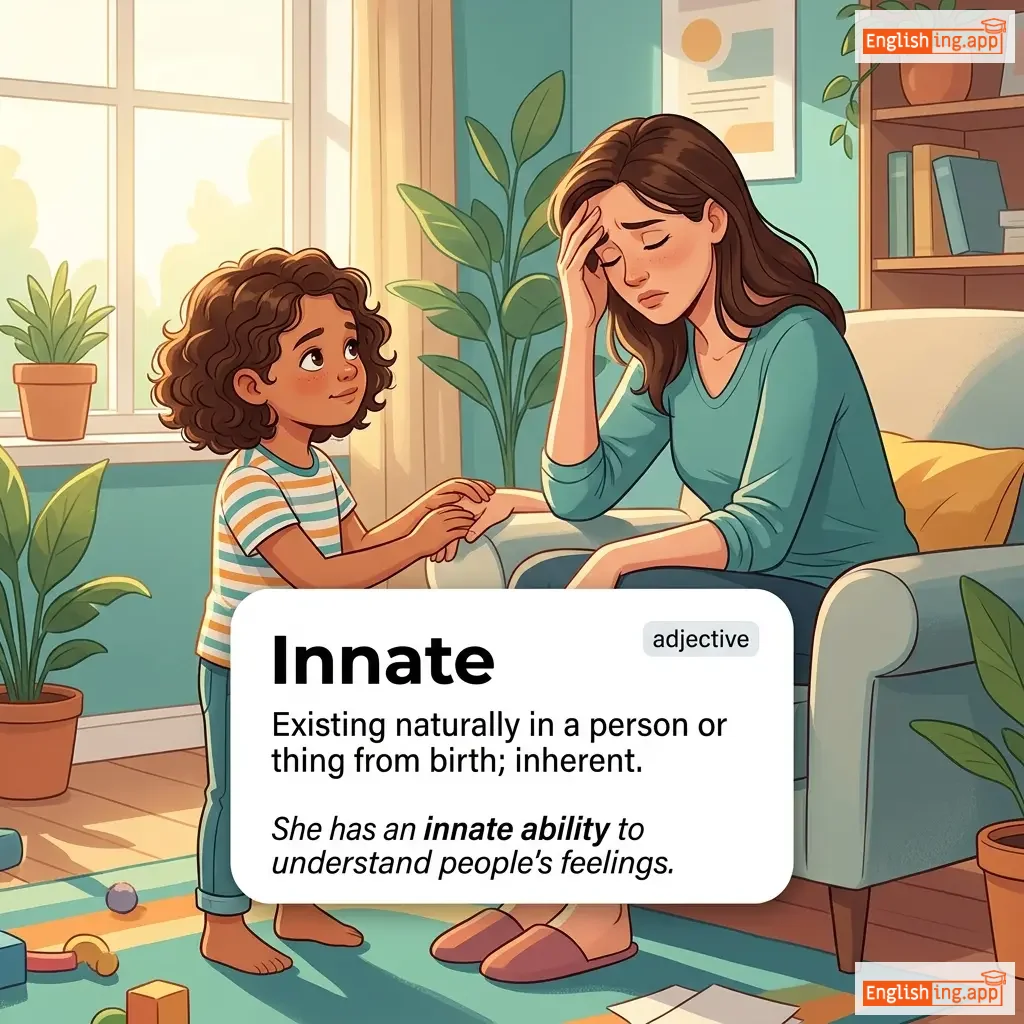
Innate definition card — visual illustration of the meaning
adjective
/ɪˈneɪt/
天生的 (tiānshēng de)

Existing naturally in a person or thing from birth; inherent.

"She has an innate ability to understand people's feelings."

"她有与生俱来的理解他人感受的能力。" (Tā yǒu yǔ shēng jù lái de lǐjiě tārén gǎnshòu de nénglì.)
adjective
/ˈɪnər/
内在的 (nèi zài de)

Located inside or closer to the center; relating to one’s thoughts or feelings.

"She shared her inner thoughts with her best friend."
"她与她最好的朋友分享了她的内心想法。" (tā yǔ tā zuì hǎo de péngyǒu fēnxiǎngle tā de nèixīn xiǎngfǎ.)
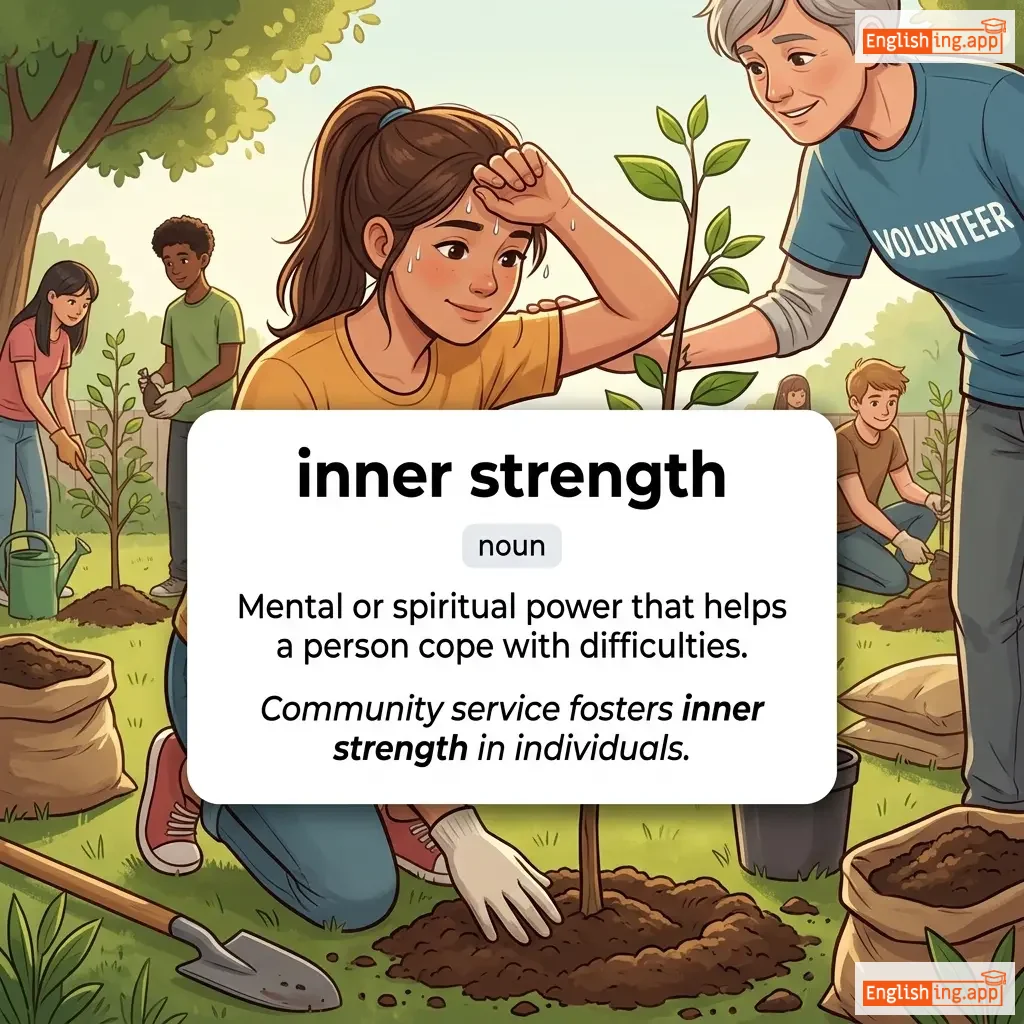
inner strength definition card — visual illustration of the meaning
noun
ˈɪnər strɛŋkθ
内在力量 (nèi zài lì liàng)

Mental or spiritual power that helps a person cope with difficulties.

"Community service fosters inner strength in individuals."

"社区服务促进了个人的内在力量。" (Shèqū fúwù cùjìnle gèrén de nèi zài lìliàng.)
adjective
/ˈɪnərmoʊst/
最深的; 最个人的 (zui shen de; zui ge ren de)

most private and secret; deepest; most personal

"She shared her innermost feelings with her closest friend."

"她与最亲密的朋友分享了她最深的感受。" (Tā yǔ zuì qīnmì de péngyǒu fēnxiǎngle tā zuì shēn de gǎnshòu.)
adjective
/ˈɪnəsənt/
无辜 (wugu)

not guilty of a crime or wrongdoing; harmless

"The court found him innocent of all charges."
"法院裁定他无罪,所有指控被撤销。" (fayuan caiding ta wuze, suoyou zhikong bei chexiao.)
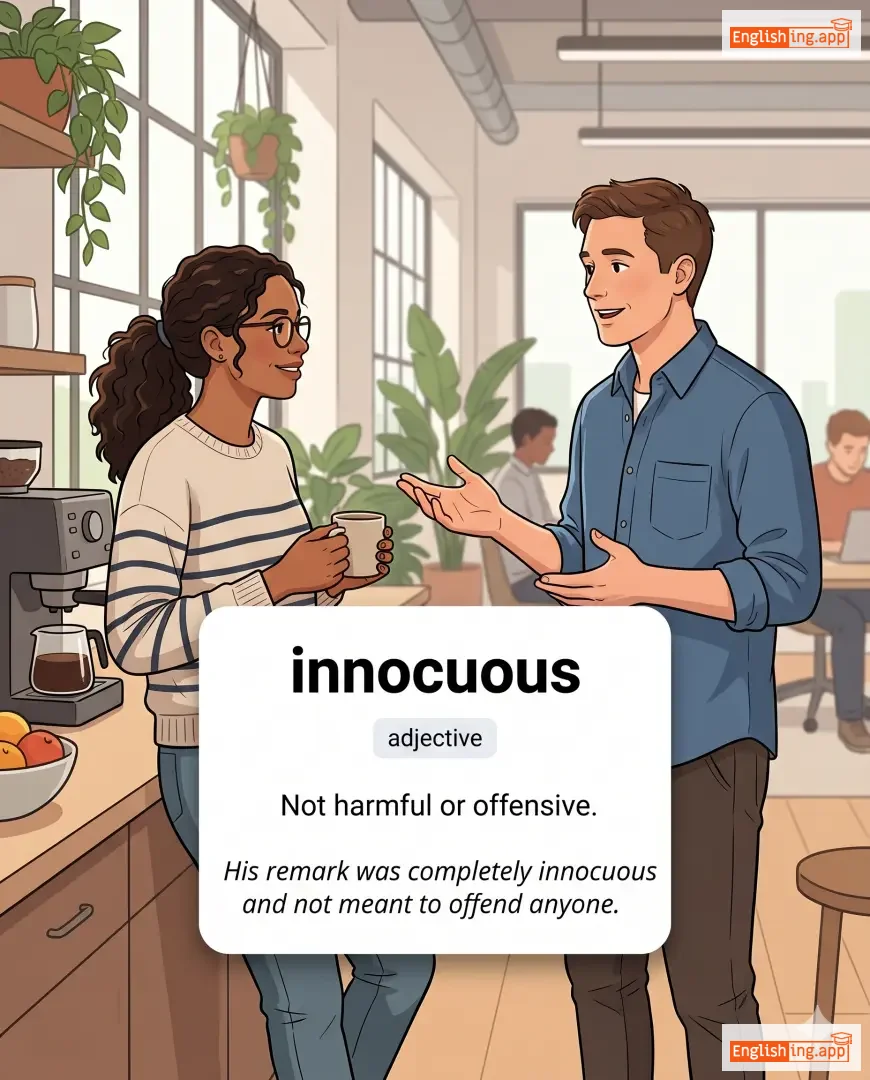
innocuous definition card — visual illustration of the meaning
adjective
/ɪˈnɒkjuəs/
无害的 (wúhài de)

Not harmful or offensive.

"His remark was completely innocuous and not meant to offend anyone."

"他的评论完全无害,并且没有冒犯任何人的意思。" (Tā de pínglùn wánquán wúhài, bìngqiě méiyǒu màofàn rènhé rén de yìsi.)
verb
/ˈɪnəveɪt/
创新 (chuàngxīn)

To introduce new methods, ideas, or products.

"The company must innovate to stay ahead of its competitors."

"公司必须创新,以保持领先于竞争对手。" (Gōngsī bìxū chuàngxīn, yǐ bǎochí lǐngxiān yú jìngzhēng duìshǒu.)
innovation definition card — visual illustration of the meaning
noun
/ˌɪnəˈveɪʃən/
创新 (chuangxin)

The introduction of something new, such as an idea, method, or device.

"Innovation is key to the success of technology companies."

"创新是科技公司成功的关键。" (Chuangxin shi keji gongsi chenggong de guanjian.)
innovative definition card — visual illustration of the meaning
adjective
/ˈɪnəˌveɪtɪv/
创新的 (chuàngxīn de)

introducing new ideas, methods, or products; creative and original

"The company is known for its innovative solutions."

"这家公司以其创新的解决方案而闻名。" (Zhè jiā gōngsī yǐ qí chuàngxīn de jiějuéfāng'àn ér wénmíng.)
innovative tools definition card — visual illustration of the meaning
noun
ˈɪnəveɪtɪv tuːlz
创新工具 (chuàngxīn gōngjù)

Creative devices or advanced technologies that introduce new methods or approaches to accomplish tasks.

"Teachers use innovative tools to enhance classroom learning."
"教师使用创新工具来提高课堂学习。" (Jiàoshī shǐyòng chuàngxīn gōngjù lái tígāo kètáng xuéxí.)
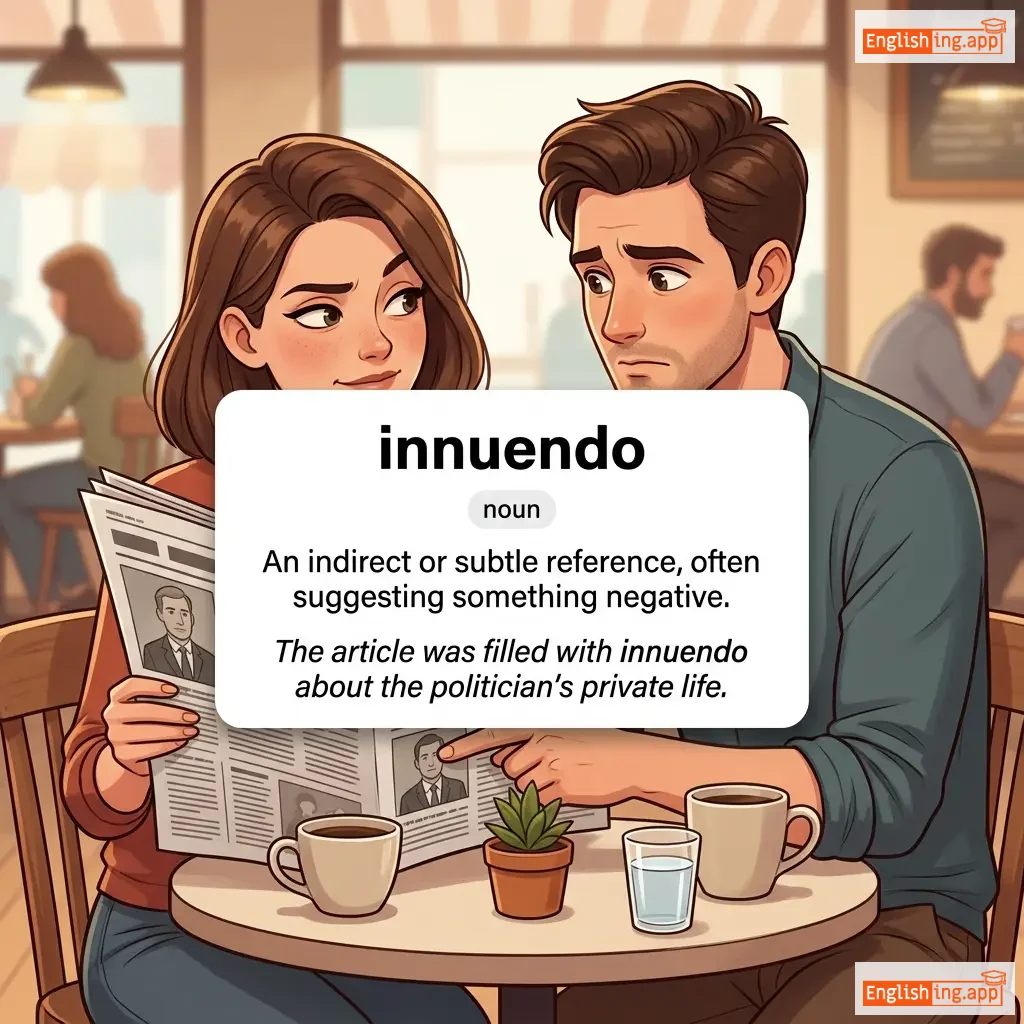
innuendo definition card — visual illustration of the meaning
noun
/ˌɪnjuˈɛndoʊ/
暗示 (anshi)

An indirect or subtle reference, often suggesting something negative.

"The article was filled with innuendo about the politician's private life."

"这篇文章充满了关于政治人物私人生活的暗示。" (Zhè piān wénzhāng chōngmǎnle guānyú zhèngzhì rénwù sīrén shēnghuó de ànshì.)
adjective
/ɪˈnuːm(ə)rəbəl/
无数的 (wú shù de)

Too many to be counted.

"She has innumerable memories of her childhood."

"她有无数的童年回忆。" (Tā yǒu wú shù de tóngnián huíyì.)
adjective
/ˌɪnəˈfɛnsɪv/
无害的 (wúhài de)

Not likely to offend or provoke; harmless.

"His inoffensive remarks kept the conversation friendly."

"他的无害评论让谈话保持友好。" (Tā de wúhài pínglùn ràng tánhuà bǎochí yǒuhǎo.)
adjective
/ˌɪnˌɑːpərˈtuːn/
不合时宜的时刻 (bù hé shí yí de shí kè)

Happening at a bad or inconvenient time.

"His call came at the most inopportune moment."

"他的电话在最不合时宜的时刻打来。" (tā de diànhuà zài zuì bù hé shí yí de shí kè dǎ lái.)
adjective
/ɪˈnɔːrdənət/
过度的 (guò dù de)

Excessive or unusually large in degree.

"She spent an inordinate amount of time on her phone."

"她在手机上花费了过多的时间。" (Tā zài shǒujī shàng huāfèi le guò duō de shíjiān.)
adjective
/ˌɪnɔːrˈɡænɪk/
无机的 (wuji de)

relating to substances that are not derived from living organisms; lacking organic structure or growth

"Inorganic compounds are commonly studied in chemistry labs."

"无机化合物是化学的重要部分。" (wuji hewuwu shi huaxue de zhongyao bufeng)
noun
/ˈɪnpʊt/
输入,提供的信息 (shuru, tigong de xinxi)

information, advice, or data that is put into a system, device, or process

"The manager asked for everyone's input on the new project."

"经理要求大家对新项目提供意见。" (Jingli yaoqiu dajia dui xin xiangmu tigong yijian.)
noun
/ˈɪnkwest/
调查 (diaocha)

A legal or official inquiry, especially into the cause of a death.

"The inquest revealed the cause of the accident."

"调查揭示了事故的原因。" (Diàochá jiēshìle shìgù de yuányīn.)
inquire definition card — visual illustration of the meaning
verb
/ɪnˈkwaɪər/
询问 (xunwen)

To ask for information; to investigate.

"She inquired about the details of the job."

"她询问了工作的细节。" (Ta xunwenle gongzuo de xijie.)
noun
/ɪnˈkwaɪəri/ or /ˈɪnkwəri/
调查 / 查询 (diàochá / cháxún)

An act of asking for information; an investigation into something.

"The committee launched an inquiry into the financial irregularities."

"委员会启动了对金融不规范行为的调查。" (Wěiyuánhuì qǐdòngle duì jīnróng bù guīfàn xíngwéi de diàochá.)
noun
/ˌɪnkwɪˈzɪʃən/
宗教裁判 (zōngjiào cáipàn)

A prolonged and intense questioning or investigation, often harsh in nature.

"The journalist faced an inquisition from the panel about his sources."

"记者面对小组对他消息来源的严厉质询。" (Jìzhě miànduì xiǎozǔ duì tā xiāoxī láiyuán de yánlì zhìxún.)
adjective
/ɪnˈkwɪzɪtɪv/
好奇的 (haoqi de)

Curious or eager to learn and ask questions.

"The inquisitive child asked endless questions about the stars."

"那个好奇的孩子问了关于星星无数的问题。" (Nàgè hàoqí de háizi wènle guānyú xīngxīng wúshù de wèntí.)
noun
/ɪnˈkwɪzɪtər/
审问者 (shěnwèn zhě)

A person who asks many questions, often in an official or harsh manner.

"The inquisitor demanded detailed answers from the witness."

"审问者要求证人提供详细的答案。" (Shěnwèn zhě yāoqiú zhèngrén tígōng xiángxì de dá'àn.)
noun
/ˈɪnroʊd/
进展 (jinzhan)

An advance or significant progress, often at the expense of something else.

"The company made significant inroads into the mobile market."

"该公司在移动市场取得了显著进展。" (Gai gongsi zai yidong shichang qude le xian zhu jin zhan.)