词汇表

英语词汇词典 | 单词含义、定义和示例

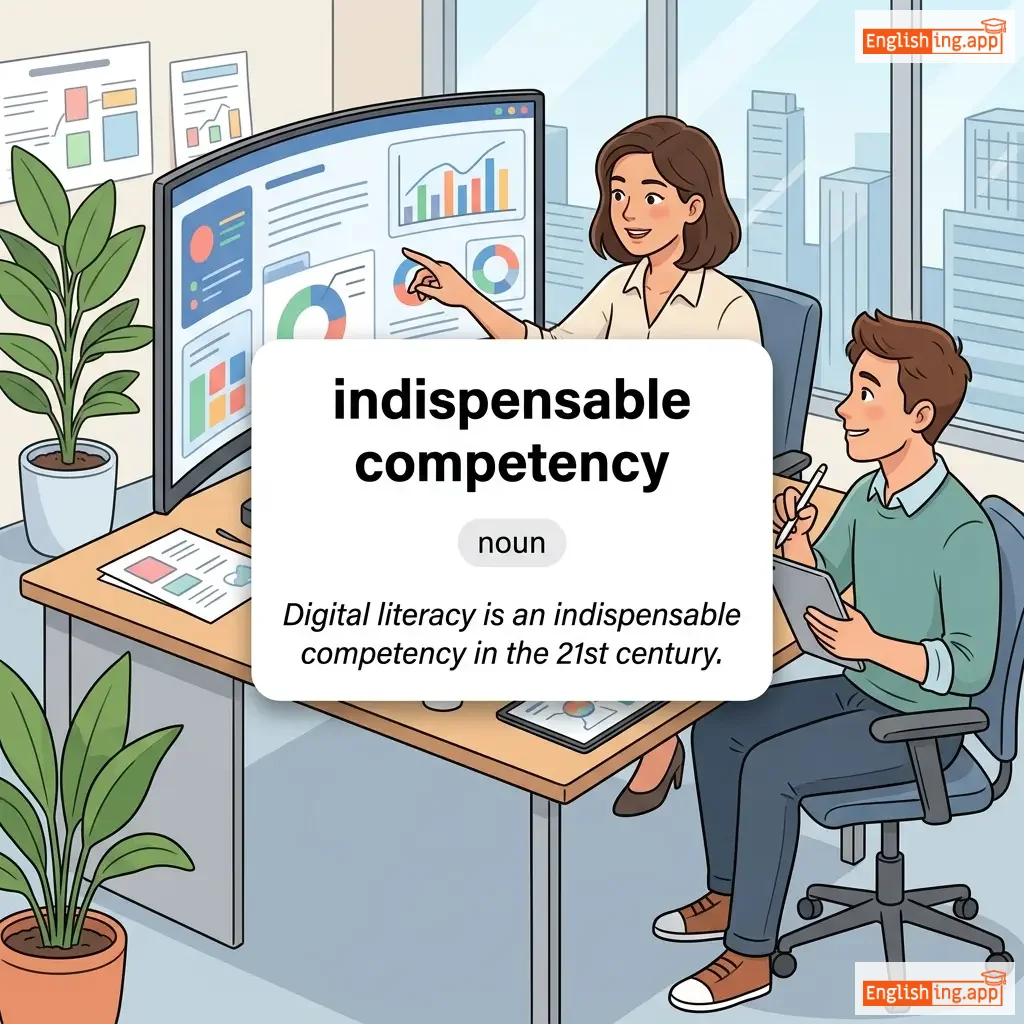
indispensable competency definition card — visual illustration of the meaning
noun
ˌɪndɪˈspensəbl̩ ˈkɒmpɪtənsi
不可或缺的能力 (bùkě huòquē de nénglì)

Essential skill or ability that cannot be done without; a crucial capability that is absolutely necessary.

"Digital literacy is an indispensable competency in the 21st century."

"数字素养是21世纪不可或缺的能力。" (Shùzì sùyǎng shì 21 shìjì bùkě huòquē de nénglì.)
indispensable support definition card — visual illustration of the meaning
noun
ˌɪndɪˈspensəbl səˈpɔːrt
不可或缺的支持 (bù kě huò quē de zhīchí)

Essential assistance that cannot be done without; absolutely necessary help.

"Volunteers provide indispensable support to communities."

"志愿者为社区提供不可或缺的支持。" (Zhìyuànzhě wèi shèqū tígōng bù kě huò quē de zhīchí.)
adjective
/ˌɪndɪˈspjuːtəbl/
不可辩驳的 (bù kě biàn bó de)

Impossible to doubt or question; certain.

"It is an indisputable fact that the earth orbits the sun."

"地球围绕太阳转动是一个不可辩驳的事实。" (Dìqiú wéirào tàiyáng zhuǎndòng shì yīgè bù kě biàn bó de shìshí.)
adjective
/ˌɪndɪˈsɒljʊbl/
不可分割的 (Bù kě fēngē de)

Unable to be destroyed, broken, or dissolved.

"Marriage was once considered an indissoluble bond."

"婚姻曾被视为不可分割的纽带。" (Hūnyīn céng bèi shì wéi bù kě fēngē de niǔdài.)
adjective
/ˌɪndɪˈstɪŋkt/
模糊的 (móhú de)

Not clear or sharply defined; vague or blurred.

"The sound of voices was indistinct in the distance."

"远处的声音是模糊的。" (Yuǎnchù de shēngyīn shì móhú de.)
verb
/ɪnˈdaɪt/
创作 (chuangzuo)

To write or compose (literary or formal works).

"The poet indited a heartfelt sonnet."

"诗人创作了一首真挚的十四行诗。" (Shiren chuangzuo le yishou zhenzhi de shishixing shi.)
adjective
/ˌɪndɪˈvɜːrtɪbəl/

Not able to be turned aside or diverted.

"The judge's indivertible attention was on the case."

noun/adjective
/ˌɪndɪˈvɪdʒuəl/
个体 (gètǐ)

A single human being as distinct from a group; relating to one person.

"Each individual has the right to freedom of speech."

"每个个体都有言论自由的权利。" (Měi gè gètǐ dōu yǒu yánlùn zìyóu de quánlì.)
adjective
/ˌɪndɪˈvɪzəbl/

Not able to be divided or separated.

"The country's unity was indivisible despite differences."

verb
/ɪnˈdɒktrɪˌneɪt/
灌输 (guànshū)

To teach someone to fully accept a set of beliefs or ideas without question.

"The regime tried to indoctrinate the youth with propaganda."

"该政权试图通过宣传对年轻人进行洗脑。" (Gāi zhèngquán shìtú tōngguò xuānchuán duì niánqīng rén jìnxíng xǐnǎo.)
noun
/ˈɪndələns/
懒惰 (lǎn duò)

Avoidance of activity or exertion; laziness.

"His indolence kept him from finishing the project on time."

"他的懒惰使他无法按时完成项目。" (tā de lǎn duò shǐ tā wúfǎ àn shí wánchéng xiàngmù.)
indolent definition card — visual illustration of the meaning
adjective
/ˈɪndələnt/
懒惰 (landuo)

Wanting to avoid activity or exertion; lazy.

"The indolent cat slept in the sun all afternoon."
"懒惰的猫整天躺在阳光下睡觉。" (Landuo de mao zheng tian tang zai yangguang xia shuijiao.)
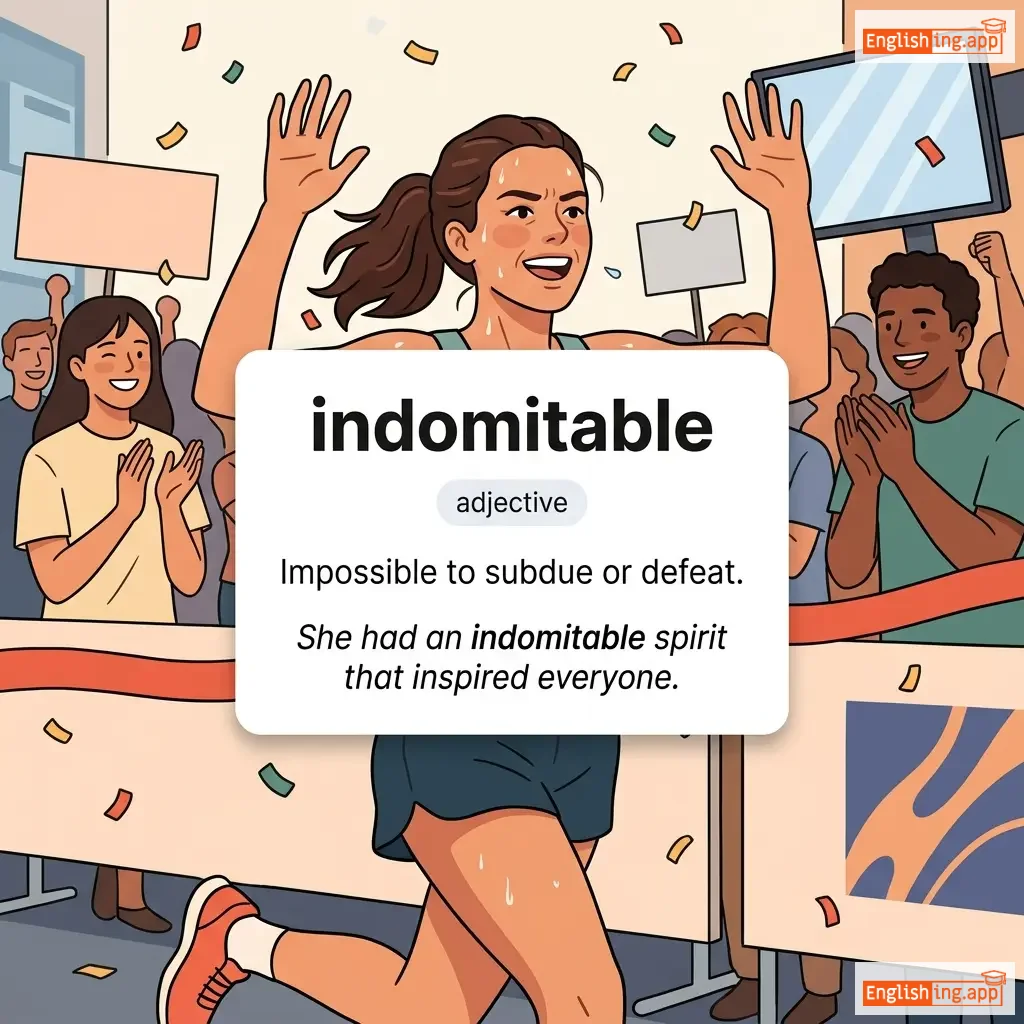
indomitable definition card — visual illustration of the meaning
adjective
/ɪnˈdɒmɪtəbl/
不可征服的 (bù kě zhēng fú de)

Impossible to subdue or defeat.

"She had an indomitable spirit that inspired everyone."

"她有一种不可征服的精神,激励了每个人。" (Tā yǒu yī zhǒng bù kě zhēng fú de jīngshén, jīlìle měi gèrén.)
adjective
/ˈɪn.dɔːr/
室内的 (shi nei de)

situated, occurring, or used inside a building

"Indoor plants can improve air quality at home."

"室内植物可以改善家里的空气质量。" (shi nei zhi wu ke yi gai shan jia li de kong qi zhi liang)
adverb
/ˌɪnˈdɔːrz/
在室内 (zai shinei)

inside a building; within an enclosed space

"Because of the rain, everyone stayed indoors."

"因为下雨,大家都待在室内。" (yinwei xiayu, dajia dou dai zai shinei)
adjective
/ɪnˈdjuːbɪtəbl/
无可置疑 (wú kě zhì yí)

Impossible to doubt; unquestionable.

"It is indubitable that hard work leads to success."

"毫无疑问,努力工作会带来成功。" (Háo wú yíwèn, nǔlì gōngzuò huì dàilái chénggōng.)
adverb
/ɪnˈdjuːbɪtəbli/
无疑 (wú yí)

Without a doubt; certainly.

"She is indubitably the best candidate for the job."

"她无疑是这份工作的最佳候选人。" (Tā wú yí shì zhè fèn gōngzuò de zuì jiā hòuxuǎn rén.)
verb
/ɪnˈdjuːs/
引起 (yǐnqǐ)

to cause or persuade someone to do something; to bring about a result

"The doctor induced sleep with a mild sedative."

"医生用轻度镇静剂引起了睡眠。" (Yīshēng yòng qīngdù zhènjìng jì yǐnqǐle shuìmián.)
noun
/ɪnˈdjuːsmənt/
诱因 (yòuyīn)

something that persuades or encourages someone to do something

"The company offered a bonus as an inducement to employees."

"公司提供了奖金作为员工的诱因。" (Gōngsī tígōngle jiǎngjīn zuòwéi yuángōng de yòuyīn.)
verb
/ɪnˈdʌkt/

to formally admit someone into a position, organization, or office

"She was inducted into the university's honor society."

adjective
/ɪnˈdʌktɪv/
归纳的 (guī nà de)

characterized by the inference of general laws from particular instances; reasoning from specific cases to general principles

"The scientist used inductive reasoning to form a hypothesis."

"科学家使用归纳推理来形成假设。" (Ke xue jia shi yong gui na tui li lai xing cheng jia she.)
verb
/ɪnˈdʌldʒ/
纵容 (zong rong)

to allow oneself to enjoy something enjoyable, often excessively

"He indulged in a piece of chocolate cake after dinner."

"他在晚餐后沉浸在一块巧克力蛋糕中。" (Ta zai wancan hou chenjin zai yi kuai qiaokeli dangao zhong.)
indulgence definition card — visual illustration of the meaning
noun
/ɪnˈdʌldʒəns/
享乐 (xiǎnglè)

The act of allowing oneself or others to enjoy pleasure, often excessively.

"Her favorite indulgence is eating chocolate late at night."

"她最喜欢的享乐是晚上吃巧克力。" (Tā zuì xǐhuān de xiǎnglè shì wǎnshàng chī qiǎokèlì.)
adjective
/ɪnˈdʌldʒənt/
宽容的 (kuanrong de)

Having a tendency to be overly generous or lenient with someone.

"The indulgent mother allowed her child to stay up late."

"宽容的母亲让孩子晚点才睡。" (kuanrong de mǔqīn ràng háizi wǎn diǎn cái shuì.)
verb
/ˈɪndjʊˌreɪt/
使坚硬 (shǐ jiānyìng)

To harden or make something physically or emotionally tough.

"Years of hardship indurated his spirit."
"多年的艰辛使他的精神变得坚韧。" (duō nián de jiānxīn shǐ tā de jīngshén biàn dé jiānrèn.)
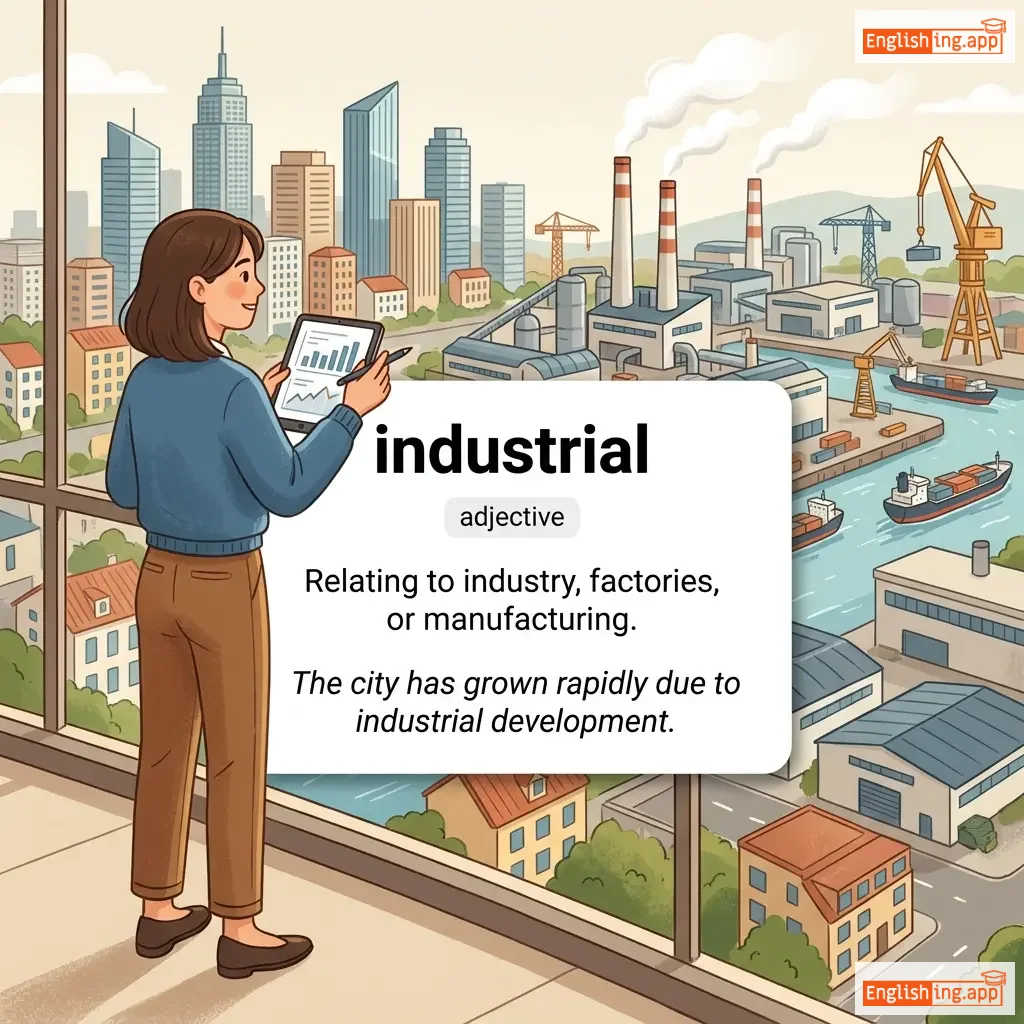
industrial definition card — visual illustration of the meaning
adjective
/ɪnˈdʌstriəl/
工业的 (gongye de)

Relating to industry, factories, or manufacturing.

"The city has grown rapidly due to industrial development."
"这座城市因工业发展而快速增长。" (Zhe zuo chengshi yin gongye fazhan er kuaisu zengzhang.)
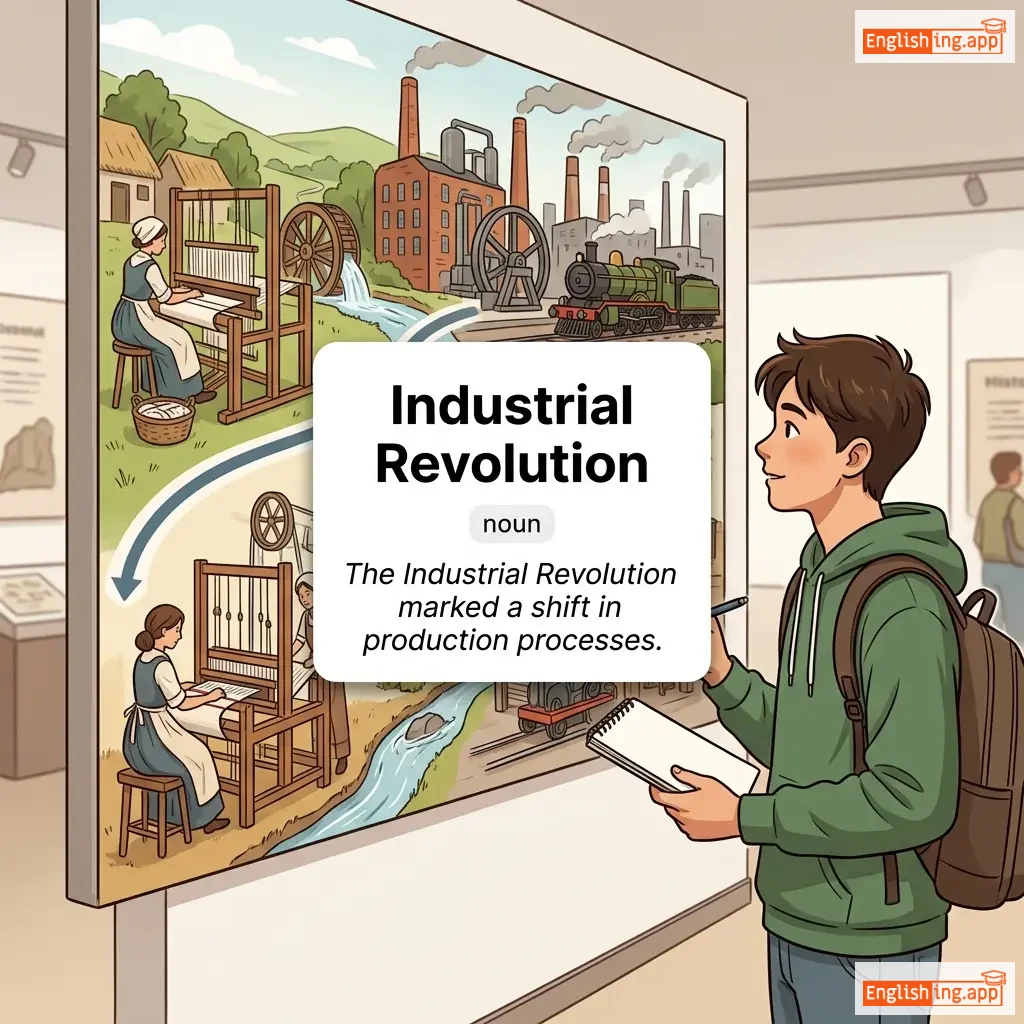
Industrial Revolution definition card — visual illustration of the meaning
noun
/ɪnˈdʌstriəl ˌrɛvəˈluːʃən/
工业革命 (gongye geming)

The rapid development of industry that occurred in Britain in the late 18th and 19th centuries, brought about by the introduction of machinery and characterized by the use of steam power and the growth of factories.

"The Industrial Revolution marked a shift in production processes."
"工业革命标志着生产过程的变革。" (Gongye geming biaozhizhe shengchan guocheng de biange.)
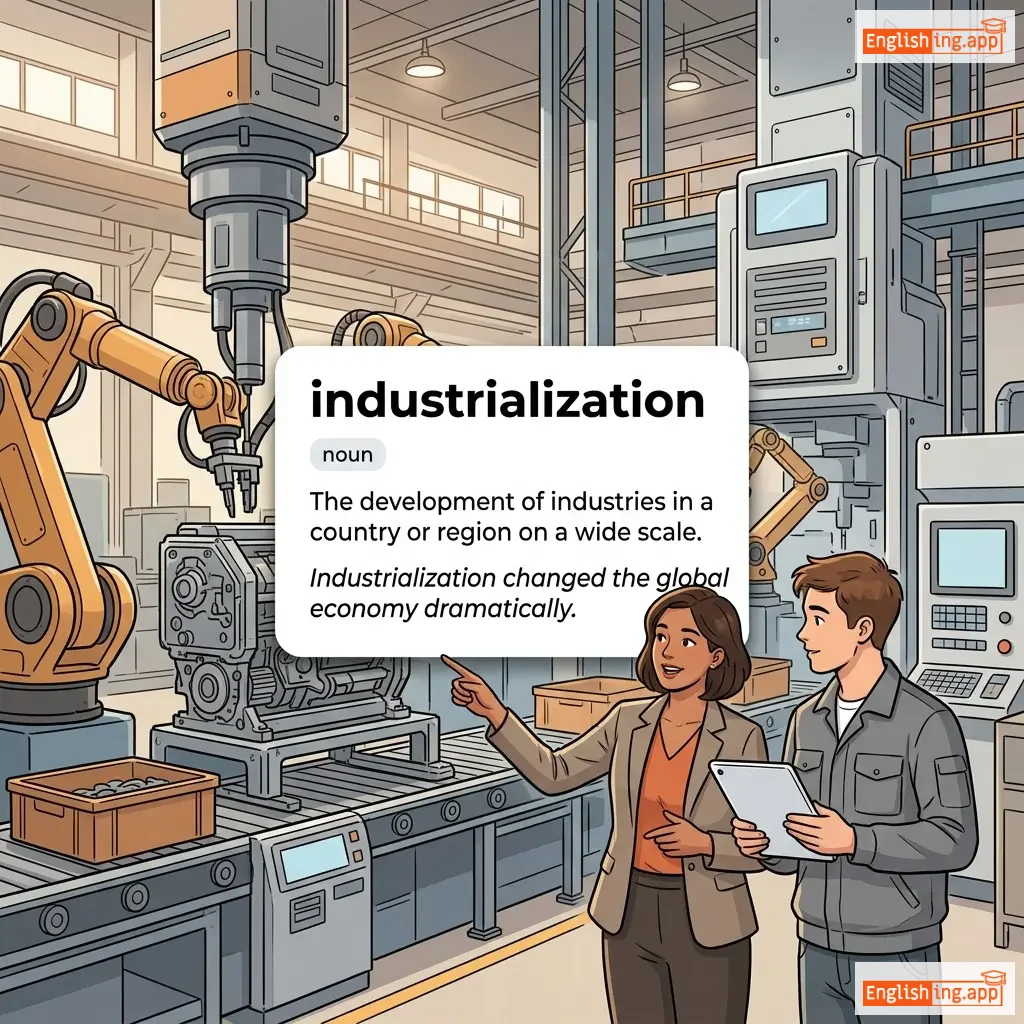
industrialization definition card — visual illustration of the meaning
noun
ɪnˌdʌstrɪəlaɪˈzeɪʃən
工业化 (gongyehua)

The development of industries in a country or region on a wide scale.

"Industrialization changed the global economy dramatically."

"工业化显著改变了全球经济。" (Gōngyèhuà xiǎnzhù gǎibiànle quánqiú jīngjì.)
adjective
/ɪnˈdʌstriəs/
勤奋的 (qínfèn de)

Hardworking and diligent in one's duties.

"She is an industrious student who always completes her assignments on time."

"她是一个勤奋的学生,总是按时完成她的作业。" (Tā shì yīgè qínfèn de xuéshēng, zǒng shì ànshí wánchéng tā de zuòyè.)
noun
/ɪnˈdʌstriəsnəs/
勤奋 (qinfen)

The quality of being hardworking and diligent.

"His industriousness earned him a promotion at work."

"他的勤奋为他在工作中赢得了晋升。" (Tā de qínfèn wèi tā zài gōngzuò zhōng yíngdéle jìnshēng.)
industry definition card — visual illustration of the meaning
noun
/ˈɪndəstri/
工业 (gongye)

The production of goods or services within an economy.

"The textile industry employs thousands of workers in the region."

"纺织工业在该地区雇用了成千上万的工人。" (Fangzhi gongye zai gai diqu guyongle chengqian shangwan de gongren.)
verb
/ɪˈniː.bri.eɪt/

to intoxicate; to make someone drunk

"The strong wine was enough to inebriate even the most experienced drinker."

adjective
/ɪˈniː.bri.eɪ.tɪd/
醉酒 (zuìjiǔ)

under the influence of alcohol; drunk

"He stumbled into the room completely inebriated."

"他完全醉了,踉跄地走进了房间。" (Tā wánquán zuì le, liàngqiāng de zǒu jìnle fángjiān.)
noun
/ˌɪn.ɪˈbraɪ.ə.ti/
醉酒 (zuìjiǔ)

the state of being drunk or intoxicated

"His frequent inebriety led to the loss of his job."

"他的频繁醉酒导致了他失去工作。" (Tā de pínfán zuìjiǔ dǎozhìle tā shīqù gōngzuò.)
🚫🍽️

Inedible

adjective
/ɪˈnɛd.ə.bəl/

not fit to be eaten

"The spoiled food was inedible."

ineffable definition card — visual illustration of the meaning
adjective
/ɪˈnɛf.ə.bəl/
难以言喻 (nán yǐ yán yù)

too great, extreme, or beautiful to be expressed in words

"The beauty of the sunset was ineffable."
"日落的美丽是难以言喻的。" (rì luò de měi lì shì nán yǐ yán yù de.)
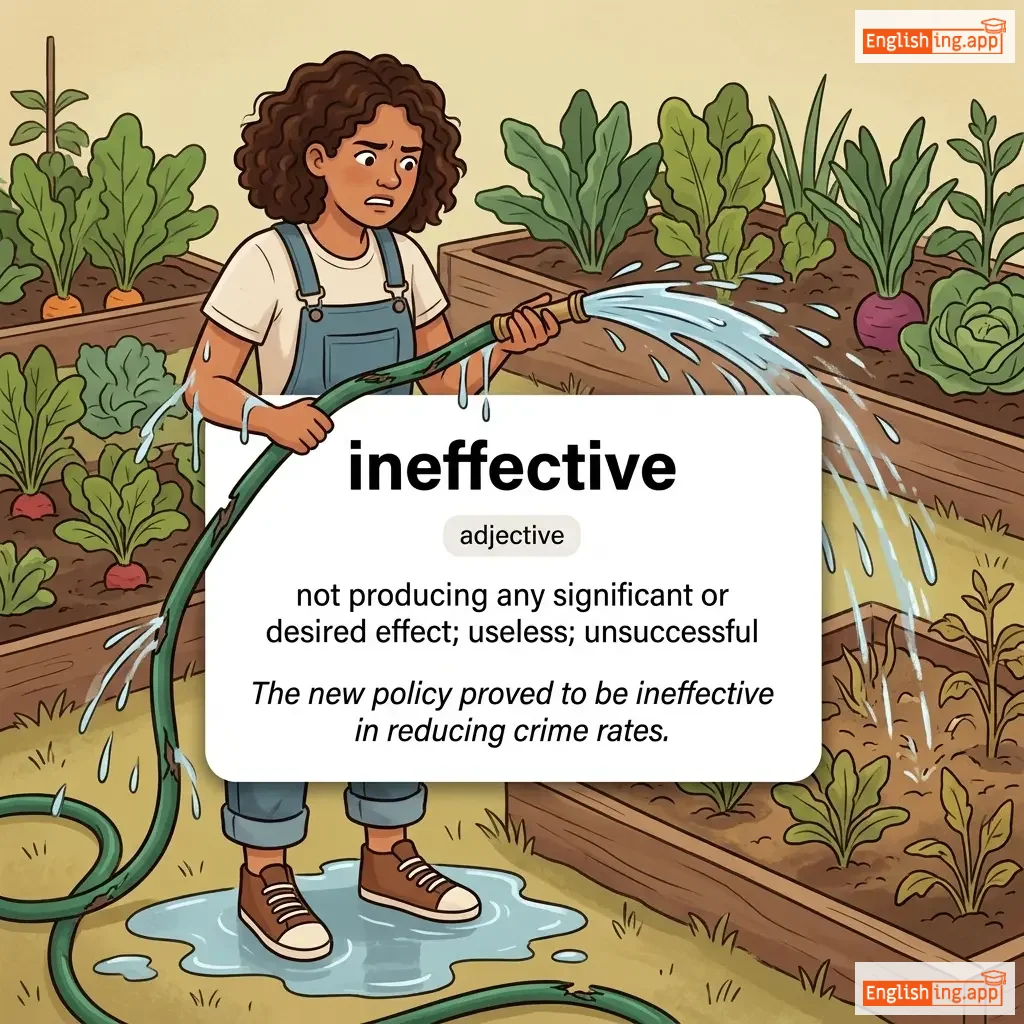
ineffective definition card — visual illustration of the meaning
adjective
/ˌɪnɪˈfɛktɪv/
无效的; 无用的; 失败的 (wúxiàode; wúyòngde; shībàide)

not producing any significant or desired effect; useless; unsuccessful

"The new policy proved to be ineffective in reducing crime rates."

"新的政策证明在减少犯罪率方面无效。" (xīn de zhèngcè zhèngmíng zài jiǎnshǎo fànzuì lǜ fāngmiàn wúxiào.)
adjective
/ˌɪn.ɪˈfɛk.tʃu.əl/
无效 (wuxiao)

Not producing any or the desired effect; lacking the ability or qualities to achieve a purpose.

"The manager’s ineffectual leadership caused the team to lose motivation."

"经理无效的领导导致团队失去了动力。" (Jingli wuxiao de lingdao daozhi tuandui shiqule dongli.)
inefficacious definition card — visual illustration of the meaning
adjective
ˌɪn.ɪ.fɪˈkeɪ.ʃəs
无效 (wuxiao)

Not producing any or the desired effect; ineffective.

"The treatment was inefficacious in curing the disease."
"该治疗对治愈疾病无效。" (Gai zhiliao dui zhiyu jibing wuxiao.)
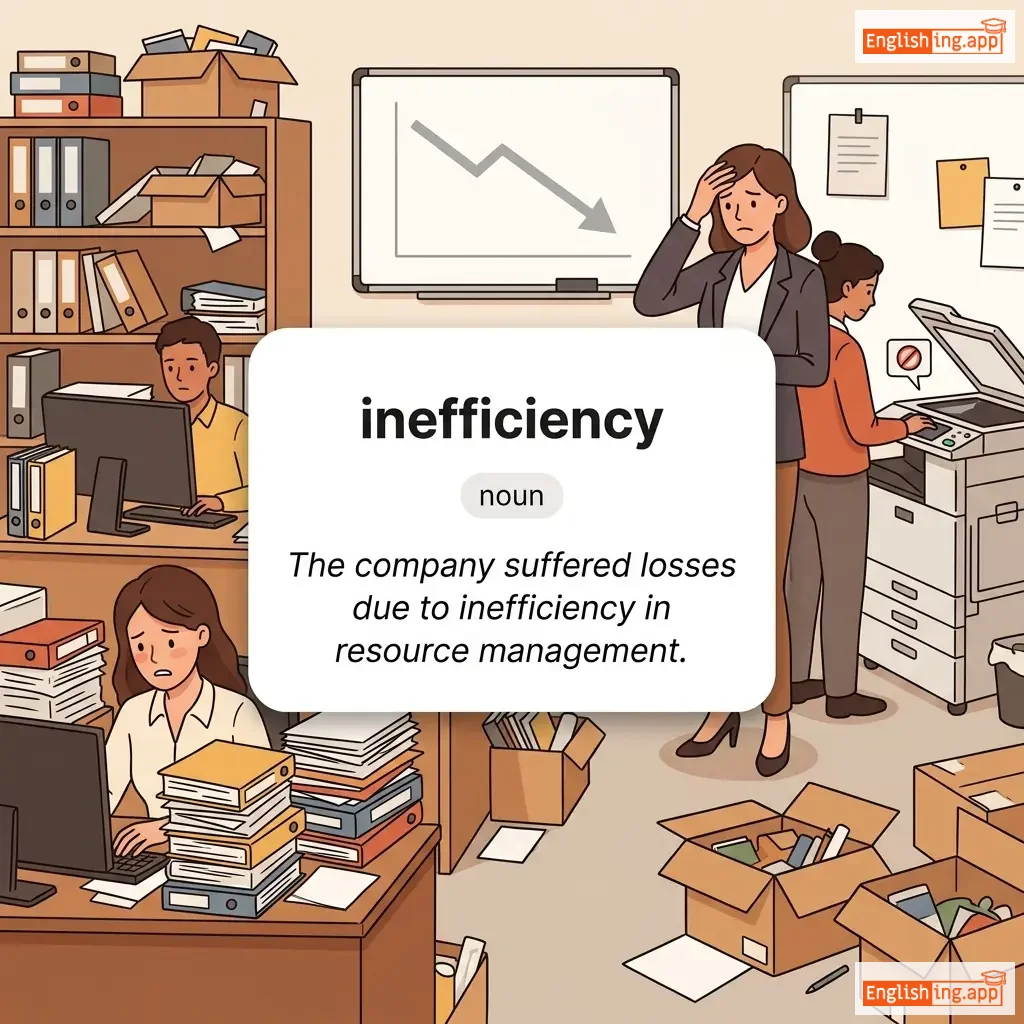
inefficiency definition card — visual illustration of the meaning
noun
/ˌɪn.ɪˈfɪʃ.ən.si/
低效 (dīxiào)

The state of not achieving maximum productivity; wastefulness or lack of competence.

"The company suffered losses due to inefficiency in resource management."

"由于资源管理中的低效,公司遭受了损失。" (Yóuyú zīyuán guǎnlǐ zhōng de dīxiào, gōngsī zāoshòu le sǔnshī.)
adjective
/ˌɪn.ɪˈfɪʃ.ənt/
低效 (dīxiào)

Not achieving maximum productivity; wasting resources or effort.

"The machine is old and inefficient compared to modern equipment."

"这台机器老旧且低效,相比于现代设备。" (Zhè tái jīqì lǎojiù qiě dīxiào, xiāngbǐ yú xiàndài shèbèi.)
adjective
/ɪnˈɛl.ɪ.dʒə.bəl/
不合格 (bu he ge)

Not qualified or permitted to do something or to receive something.

"He was ineligible to apply for the scholarship because of his age."

"由于年龄问题,他没有资格申请奖学金。" (Youyu nianling wenti, ta meiyou zige shenqing jiangxuejin.)
ineluctable definition card — visual illustration of the meaning
adjective
/ˌɪn.ɪˈlʌk.tə.bəl/

Impossible to avoid or escape; inevitable.

"Death is an ineluctable part of human existence."

adjective
/ɪˈnɛpt/
无能 (wú néng)

lacking skill or ability; clumsy or incompetent

"His inept handling of the situation made it worse."
"他无能的处理使情况变得更糟。" (tā wú néng de chǔ lǐ shǐ qíng kuàng biàn dé gèng zāo.)
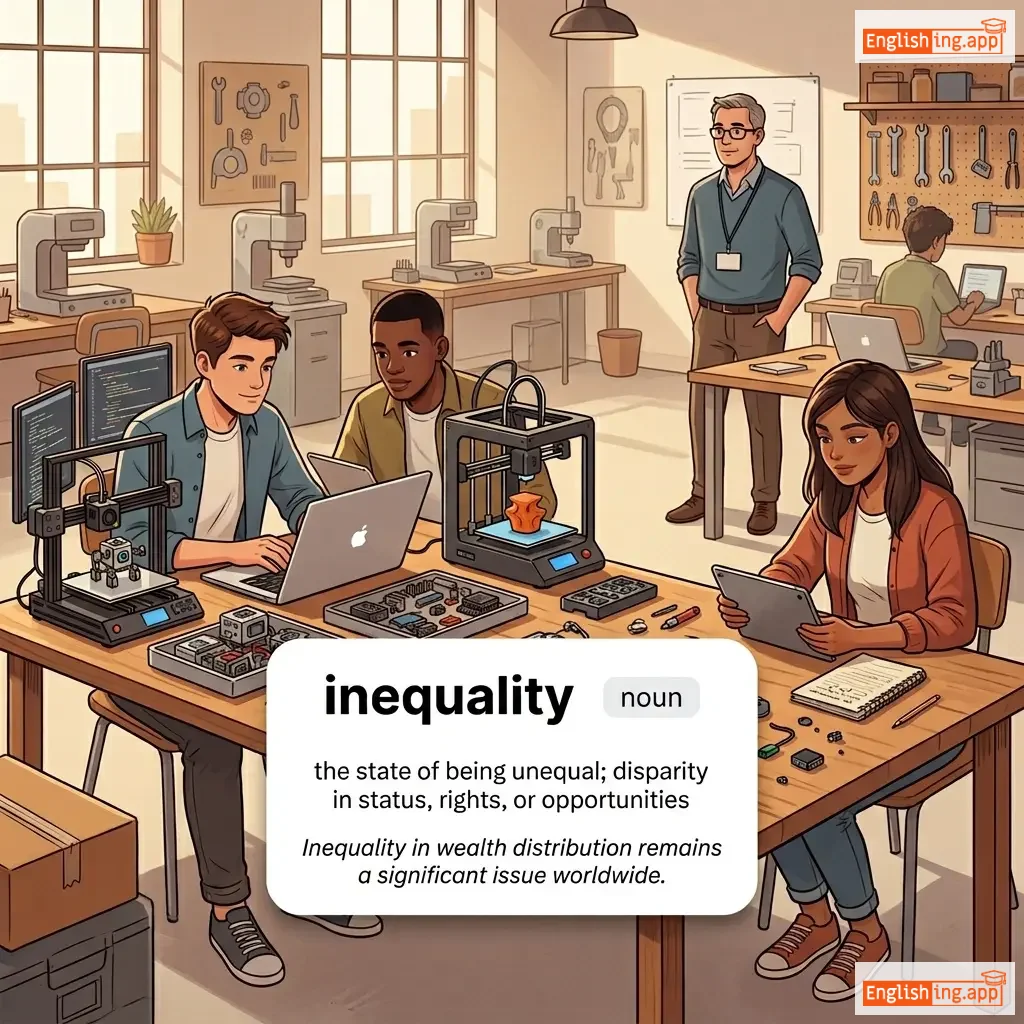
inequality definition card — visual illustration of the meaning
noun
/ˌɪnɪˈkwɒləti/
不平等 (bupingdeng)

the state of being unequal; disparity in status, rights, or opportunities

"Inequality in wealth distribution remains a significant issue worldwide."
"财富分配中的不平等依然是一个全球性的重大问题。" (Caiwu fenpei zhong de bupingdeng yiran shi yige quanqiuxing de zhongda wenti.)
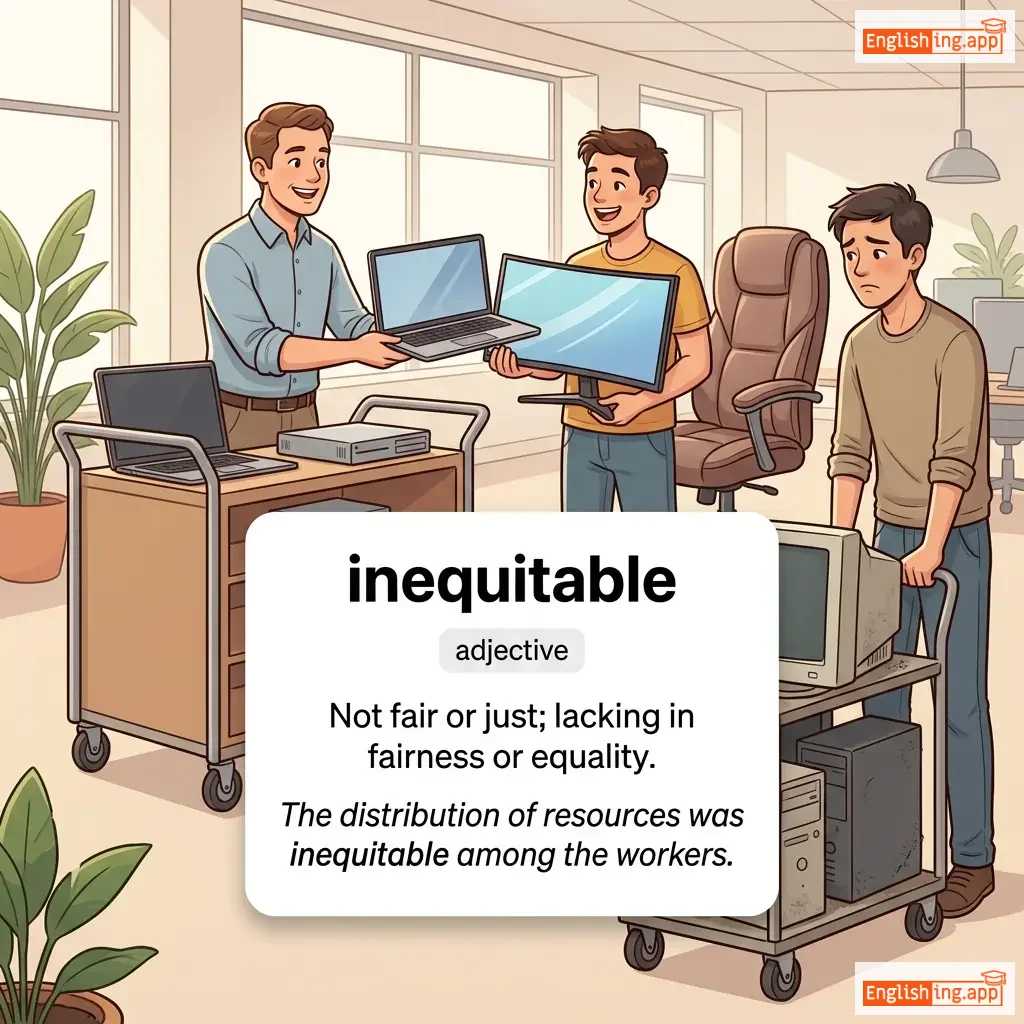
inequitable definition card — visual illustration of the meaning
adjective
/ɪnˈɛk.wɪ.tə.bəl/
不公平 (bù gōngpíng)

Not fair or just; lacking in fairness or equality.

"The distribution of resources was inequitable among the workers."
"资源的分配在工人之间是不公平的。" (Zīyuán de fēnpèi zài gōngrén zhījiān shì bù gōngpíng de.)
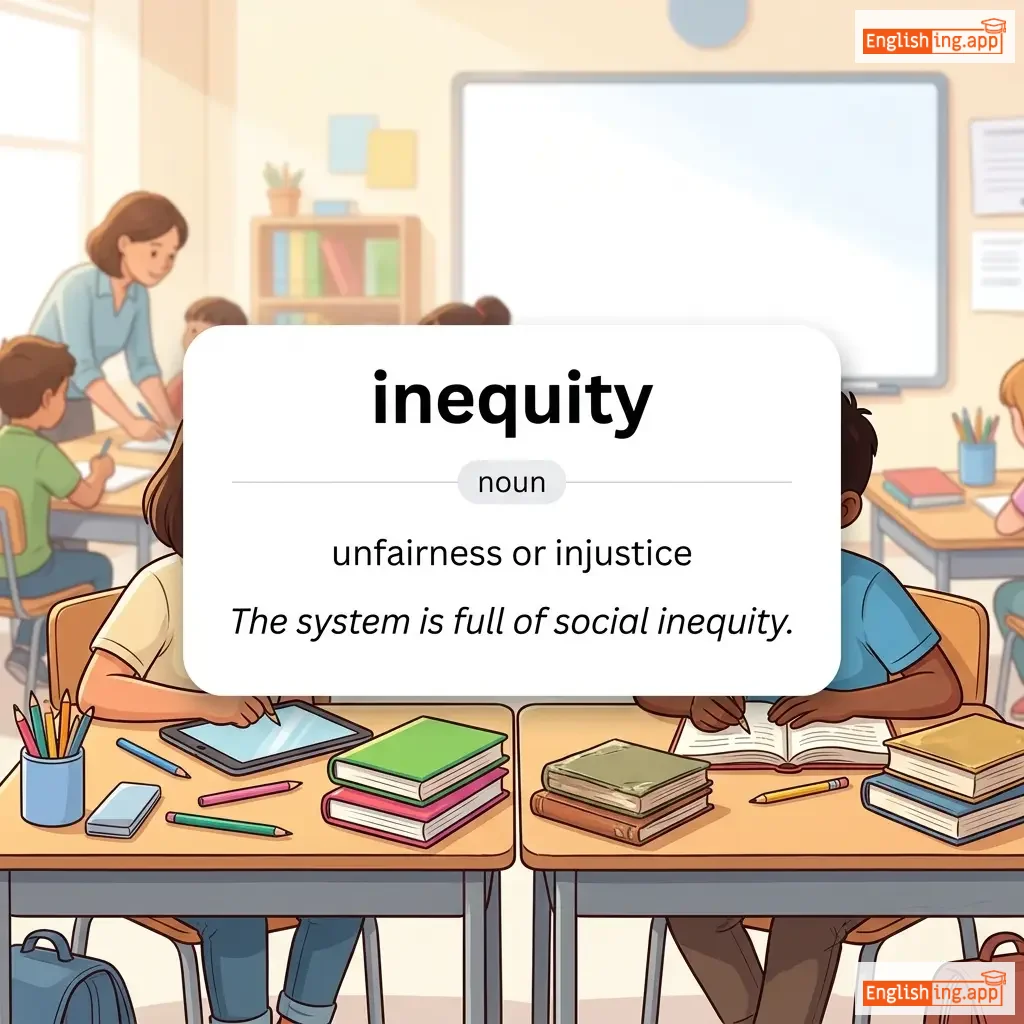
inequity definition card — visual illustration of the meaning
noun
/ɪnˈɛkwɪti/
不公正 (bugongzheng)

unfairness or injustice

"The system is full of social inequity."

"这个系统充满了社会不公正。" (zhège xìtǒng chōngmǎnle shèhuì bù gōngzhèng.)
noun
/ɪnˈɛrənsi/
无误性 (wú wù xìng)

the belief or quality of being free from error; absolute correctness

"Some religious groups strongly affirm the inerrancy of their sacred texts."

"一些宗教团体强烈坚持他们圣经的无误性。" (Yīxiē zōngjiào tuántǐ qiángliè jiānchí tāmen shèngjīng de wú wù xìng.)
inert definition card — visual illustration of the meaning
adjective
/ɪˈnɜːrt/
惰性 (duoxing)

lacking the ability or strength to move or act; chemically inactive

"The patient remained inert on the bed."

"病人躺在床上保持不动。" (bingren tang zai chuang shang baochi budong.)
⚖️

Inertia

noun
/ɪˈnɜːrʃə/

A tendency to remain unchanged or continue in the same state of motion unless acted upon.

"The project failed due to the inertia of outdated systems."