词汇表

英语词汇词典 | 单词含义、定义和示例

noun
/ˈhɛksəˌɡɒn/
六边形 (liùbiānxíng)

A six-sided polygon.

"A honeycomb cell is shaped like a hexagon."

"蜂巢的单元是六边形的。" (fēngcháo de dānyuán shì liùbiānxíng de.)
adjective
/hɛkˈsæŋɡjələr/
六角形的 (liùjiǎoxíng de)

Having six angles or corners.

"The artist designed a hexangular frame for the mirror."

"艺术家为镜子设计了一个六角形的框架。" (Yìshùjiā wèi jìngzi shèjì le yīgè liùjiǎoxíng de kuàngjià.)
noun
/ˈhɛksəˌpɒd/
六足动物 (liù zú dòng wù)

An insect or other organism with six legs.

"The scientist observed a hexapod crawling on the leaf."

"科学家观察到一个六足动物在叶子上爬行。" (Kēxuéjiā guānchá dào yīgè liù zú dòng wù zài yèzi shàng páxíng.)
interjection
/heɪ/
(hei)

used to attract attention, express surprise, or greet someone

"Hey, how are you doing today?"

"嘿,你今天怎么样?" (Hēi, nǐ jīntiān zěnme yàng?)
noun
/ˈheɪ.deɪ/
黄金时期; 最辉煌的时刻; 顶峰时期 (huángjīn shíqī; zuì huīhuáng de shíkè; dǐngfēng shíqī)

the period of a person's or thing's greatest success, popularity, or vigor; prime time

"During her heyday as a singer, she performed in sold-out concerts around the world."

"在她作为歌手的黄金时期,她在全球的售罄音乐会上表演。" (Zài tā zuòwéi gēshǒu de huángjīn shíqī, tā zài quánqiú de shòu qìng yīnyuè huì shàng biǎoyǎn.)
noun
/ˈheɪˌdeɪ/
黄金时期 (huángjīn shíqī)

The period of greatest success, popularity, or power.

"In its heyday, the company dominated the market."

"在黄金时期,公司主导了市场。" (Zai huangjin shiqi, gongsi zhudao le shichang.)
interjection
/haɪ/
(hai)

a friendly greeting used when meeting someone

"Hi, it's nice to meet you!"

"嗨,很高兴见到你!" (Hāi, hěn gāoxìng jiàn dào nǐ!)
noun
/haɪˈeɪtəs/
间歇 (jianxie)

A pause or break in continuity of a process or activity.

"The show returned after a long hiatus."

"节目在长时间的间歇后重新开始。" (Jiémù zài cháng shíjiān de jiànxiē hòu chóngxīn kāishǐ.)
❄️

hibernal

adjective
/haɪˈbɜːrnəl/

Relating to or occurring in winter.

"The hibernal season is often harsh in the mountains."

verb
/ˈhaɪbərˌneɪt/
冬眠 (dongmian)

To spend the winter in a dormant state, as some animals do.

"Bears hibernate in caves during the winter."

"熊在冬天在洞穴中冬眠。" (Xiong zai dongtian zai dongxue zhong dongmian.)
adjective/noun
/haɪˈbɜːrniən/
爱尔兰的 (aierland de)

Relating to Ireland or the Irish.

"He enjoyed reading about Hibernian culture and history."

"他喜欢阅读关于爱尔兰文化和历史的书籍。" (Ta xihuan yuedu guanyu Aierland wenhua he lishi de shujing.)
adjective
/hɪk/
乡巴佬; 农民 (xiangba lao; nongmin)

unsophisticated person from a rural area; country bumpkin

"He had a hick accent from growing up in a small town."

"他有着乡巴佬的口音,因为他在一个小镇长大。" (Ta youzhe xiangba lao de kouxin, yinwei ta zai yige xiaozhen zhǎngdà.)
🕵️‍♂️

Hidden (hɪdən)

adjective
/ˈhɪdən/
隐藏的 (yǐn cáng de)

kept out of sight; concealed.

"The treasure was hidden under the old tree."

"宝藏隐藏在老树下。" (Bǎozàng yǐn cáng zài lǎo shù xià.)
hide definition card — visual illustration of the meaning
verb
/haɪd/
隐藏 (yǐn cáng)

to put something or oneself out of sight; to conceal

"She tried to hide the letter under the pillow."

"她试图把信藏在枕头下。" (Tā shìtú bǎ xìn cáng zài zhěntóu xià.)
noun
/ˈhaɪdəweɪ/
藏身处 (cángshēnchù)

A place used as a retreat or a place to hide.

"The cabin in the woods was their secret hideaway."

"树林中的小屋是他们的秘密藏身之地。" (Shùlín zhōng de xiǎowū shì tāmen de mìmì cángshēn zhī dì.)
adjective
/ˈhaɪd.baʊnd/

unwilling or unable to change because of tradition or convention

"He is too hidebound to accept new ideas."

adjective
/ˈhɪd.i.əs/
可怕的 (kěpà de)

extremely ugly or unpleasant

"The crime was so hideous that it shocked the whole town."

"罪行如此可怕,以至于震惊了整个城市。" (Zuìxíng rúcǐ kěpà, yǐzhì yú zhènjīng le zhěnggè chéngshì.)
verb
/haɪ/
赶快去 (gankuai qu)

to go quickly; hasten

"He hied to the station to catch the train."

"他赶快去车站赶火车。" (Ta gankuai qu chezhan gan huoche.)
adjective
/ˌhaɪəˈrɑː.kɪ.kəl/
等级的 (děngjí de)

arranged in order of rank or authority

"The company has a strict hierarchical structure."

"该公司有一个严格的等级结构。" (Gāi gōngsī yǒu yīgè yángé de děngjí jiégòu.)
noun
/ˈhaɪəˌrɑːrki/
等级制度 (deng ji zhi du)

A system in which people or things are arranged in levels of importance or authority.

"The corporate hierarchy determines who makes the final decision."

"企业等级制度决定了谁作出最终决定。" (Qi ye deng ji zhi du jue ding le shui zuo chu zui zhong jue ding.)
noun
/ˈhaɪərəˌɡlɪf/
象形文字 (xiangxing wenzi)

A picture or symbol used in ancient writing systems, especially Egyptian writing.

"The walls of the temple were covered in hieroglyphs."

"寺庙的墙壁上覆盖着象形文字。" (Simiào de qiángbì shàng fùgài zhe xiàngxíng wénzì.)
adjective/noun
/ˌhaɪərəˈɡlɪfɪk/
象形文字的 (xiangxing wenzi de)

Relating to or written in hieroglyphs; symbols or writing that is difficult to understand.

"The archaeologists studied the hieroglyphic inscriptions carefully."
"考古学家仔细研究了象形文字铭文。" (Kaoguxuejia zixi yanjiu le xiangxing wenzi mingwen.)
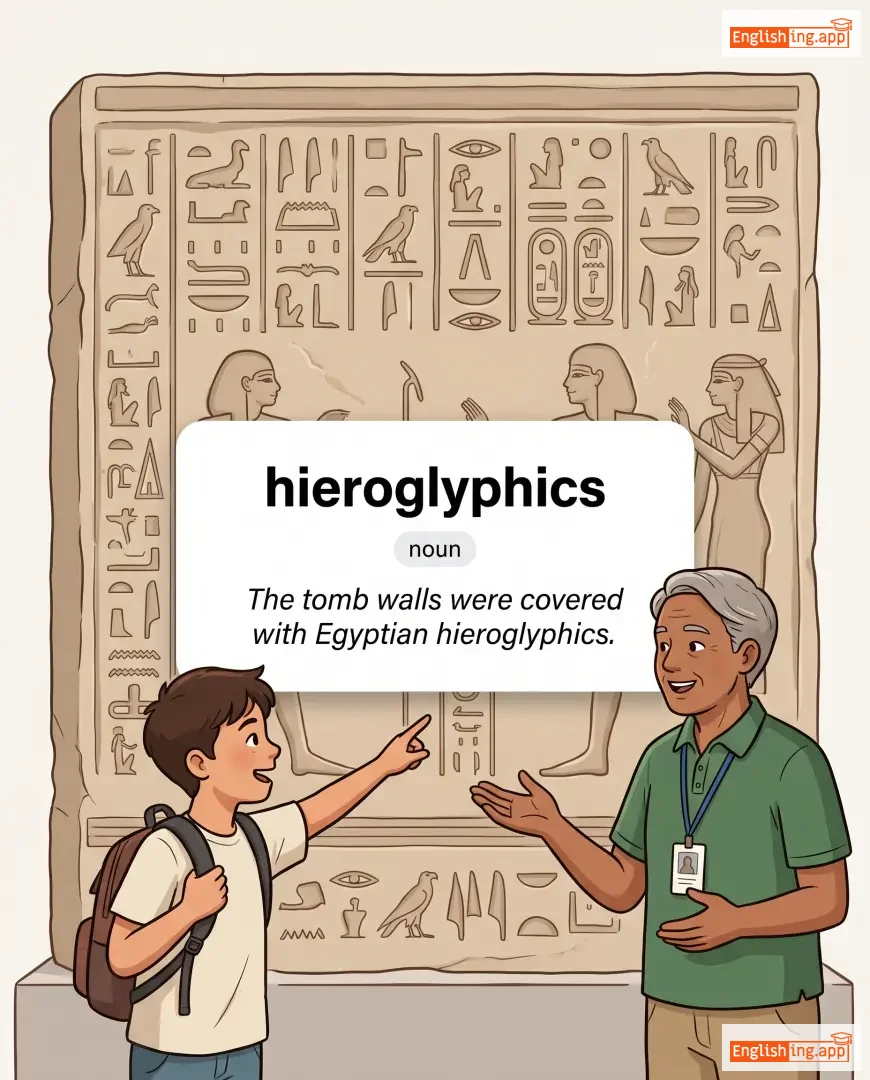
hieroglyphics definition card — visual illustration of the meaning
noun
/ˌhaɪ.roʊˈɡlɪf.ɪks/
象形文字 (xiangxing wenzi)

a system of writing using pictures or symbols, used especially by ancient Egyptians

"The tomb walls were covered with Egyptian hieroglyphics."

"坟墓的墙壁上刻有埃及的象形文字。" (Fenmu de qiangbi shang ke you aigedi de xiangxing wenzi.)
adjective
/haɪ/
(gao)

At or to a great height; greater than normal in amount, degree, or intensity.

"The mountain peak is very high."

"山顶非常高。" (Shanding feichang gao.)
adjective
/ˌhaɪ ˈfloʊn/
夸张的 (kuāzhāng de)

Using fancy or pretentious language; lofty in style but often overblown.

"The politician gave a high-flown speech full of promises."

"那位政治家发表了一篇充满承诺的夸张演讲。" (Nà wèi zhèngzhìjiā fābiǎo le yī piān chōngmǎn chéngnuò de kuāzhāng yǎnjiǎng.)
adjective
/ˈhaɪˌprəʊfaɪl/
高端 (gao duan)

having a lot of attention or public notice

"The CEO attended a high-profile conference in New York."

"首席执行官参加了纽约的一场高端会议。" (Shǒuxí zhíxíng guān cānjiā le Niǔyuē de yī chǎng gāo duān huìyì.)
adjective
/ˌhaɪ ˈtɛk/
高科技 (gao ke ji)

using or involving advanced technology.

"The company produces high-tech medical devices."

"该公司生产高科技医疗设备。" (Gai gongsi shengchan gao ke ji yiliao shebei.)
adjective
/ˈhaɪˌbraʊ/
知识分子 (zhīshi fēnzǐ)

intellectually superior or cultured; often describing art, literature, or activities appealing to intellectual tastes

"The museum is known for its highbrow exhibitions."

"该博物馆以其知识分子展览而闻名。" (Gāi bówùguǎn yǐ qí zhīshi fēnzǐ zhǎnlǎn ér wénmíng.)
verb
/ˈhaɪˌlaɪt/
突出 (tuchu)

to emphasize or make something stand out

"The teacher highlighted the most important points in the text."

"老师在文本中强调了最重要的要点。" (Lǎoshī zài wénběn zhōng qiángdiào le zuì zhòngyào de yàodiǎn.)
adverb
/ˈhaɪli/
高度 (gaodu)

to a great degree; very

"She is highly respected in her field."

"她在她的领域中受到高度尊敬。" (Tā zài tā de lǐngyù zhōng shòudào gāodù zūnjìng.)
noun
/ˈhaɪ.nəs/
陛下; 王室头衔 (bì xià, wáng shì tóu xián)

a title given to a person of royal rank; the quality or state of being high or elevated

"Your Highness, the royal carriage is ready to take you to the state banquet this evening."

"陛下,皇家马车已准备好将您带到今晚的国宴。" (Bì xià, huángjiā mǎchē yǐ zhǔnbèi hǎo jiāng nín dàodào jīnwǎn de guó yàn.)
noun
/ˈhaɪ.weɪ/
高速公路 (gaosu gonglu)

A main road, especially one connecting major towns or cities.

"The highway was blocked due to an accident."

"由于事故,高速公路被封锁了。" (Yóuyú shìgù, gāosù gōnglù bèi fēngsuǒ le.)
hijack definition card — visual illustration of the meaning
verb
/ˈhaɪdʒæk/
劫机 (jie ji)

to take control of a vehicle or situation illegally or by force

"The criminals attempted to hijack the airplane."

"罪犯试图劫持飞机。" (Zuìfàn shìtú jié chì fēijī.)
🥾

hike

verb/noun
/haɪk/

To take a long walk in the countryside or mountains; also to increase suddenly (prices, rates, etc.).

"We decided to hike in the hills this weekend."

adjective
/hɪˈlɛəriəs/
极其有趣 (jiqi youqu)

Extremely funny or amusing.

"The comedian told a hilarious story that had everyone laughing."

"那位喜剧演员讲了一个极其有趣的故事,让每个人都笑了。" (Na wei xiju yanyuan jiangle yi ge jiqi youqu de gushi, rang meigeren dou xiaole.)
noun
/hɪˈlærɪti/
爆笑 (baoxiao)

Extreme amusement, especially when expressed by laughter.

"The movie caused great hilarity among the audience."

"这部电影在观众中引起了极大的爆笑。" (Zhè bù diànyǐng zài guānzhòng zhōng yǐnqǐle jí dà de bàoxiào.)
noun
/hɪl/
小山 (xiaoshan)

A naturally raised area of land, smaller than a mountain.

"We climbed the hill to see the sunset."

"我们爬上小山去看日落。" (Women pa shang xiaoshan qu kan riluo.)
noun
/ˈhɪlək/
小丘 (xiao qiu)

A small hill or mound.

"The children climbed up the grassy hillock to watch the sunset."

"孩子们爬上了草地上的小丘去看日落。" (Haizimen pa shang le caodi shang de xiao qiu qu kan riluo.)
adjective
/ˈhɪli/
多丘陵的 (duo qiuling de)

having many hills; characterized by hills or slopes

"The village is located in a beautiful hilly region."

"这个村庄位于一个美丽的多丘陵地区。" (Zhege cunzhuang weiyu yi ge meili de duo qiuling diqu)
noun
/ˈhɪl.sə fɪʃ/
Hilsa鱼 (Hilsa yú)

a popular fish species found in South Asian rivers, especially prized in Bengali cuisine

"Hilsa fish is considered a delicacy in Bengali culture."

"Hilsa鱼在孟加拉文化中被视为美味佳肴。" (Hilsa yú zài mèngjiālā wénhuà zhōng bèi shì wéi měiwèi jiāyáo.)
pronoun
/hɪm/
(ta)

Used to refer to a male person or animal already mentioned.

"I saw him at the park yesterday."

"我昨天在公园看见了他。" (Wǒ zuótiān zài gōngyuán kànjiànle tā.)
pronoun
/hɪmˈself/
他自己 (tā zìjǐ)

Used to emphasize that a male person does something by his own effort.

"He fixed the car himself."

"他自己修好了车。" (Tā zìjǐ xiū hǎo le chē.)
🦌♀️

Hind (haind)

noun
/haɪnd/
母鹿 (mu lu)

a female deer, especially a red deer

"The hind protected her fawn from predators."
"母鹿保护了她的小鹿免受捕食者的伤害。" (Mu lu baohu le ta de xiao lu mian shou bushizhe de shanghai.)
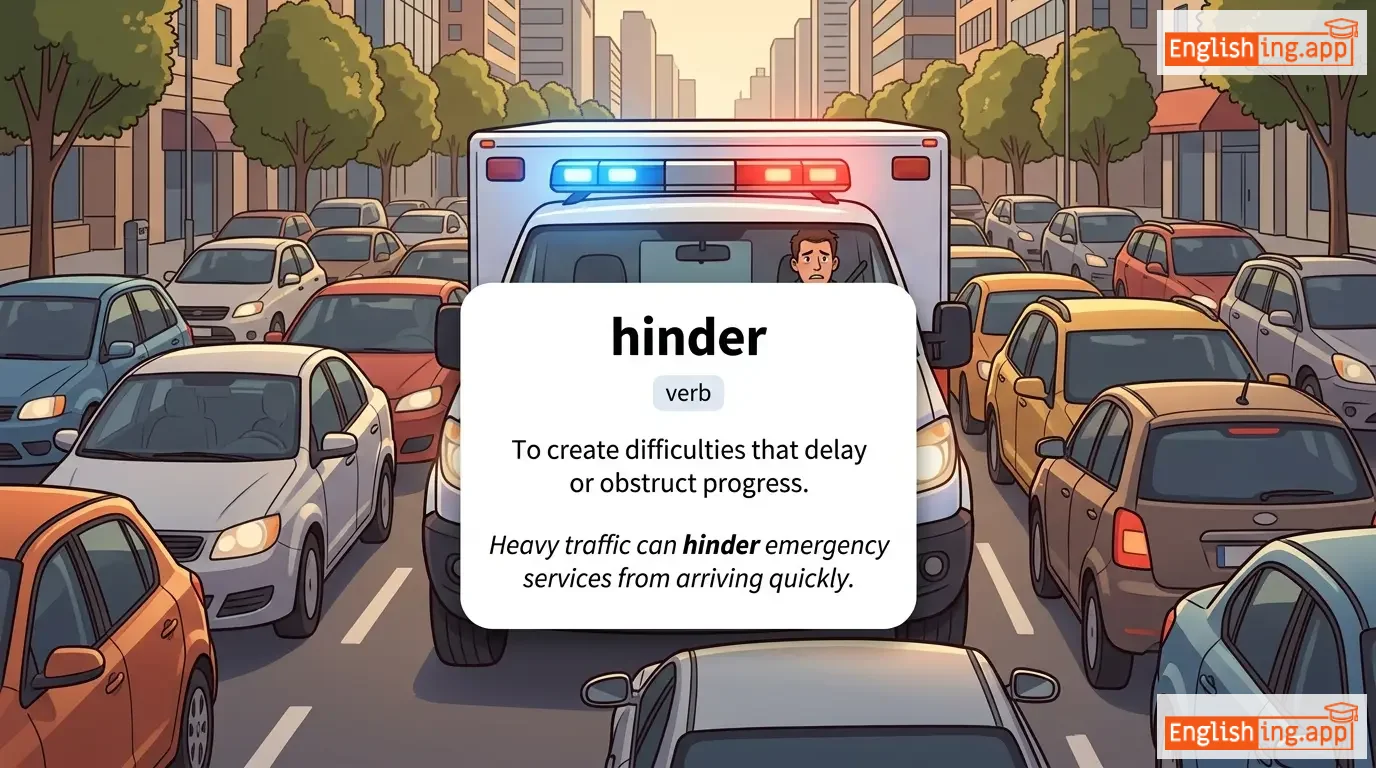
hinder definition card — visual illustration of the meaning
verb
/ˈhɪndər/
妨碍 (fang'ai)

To create difficulties that delay or obstruct progress.

"Heavy traffic can hinder emergency services from arriving quickly."

"交通拥堵可能会妨碍紧急服务迅速到达。" (Jiaotong yongdu ke neng hui fang'ai jiji fuwu xunxu daoda.)
adjective
/ˈhaɪndmoʊst/
最远的 (zuì yuǎn de)

Farthest back; last in position.

"The hindmost car in the convoy broke down first."

"车队中最远的车先坏了。" (Chēduì zhōng zuì yuǎn de chē xiān huài le.)
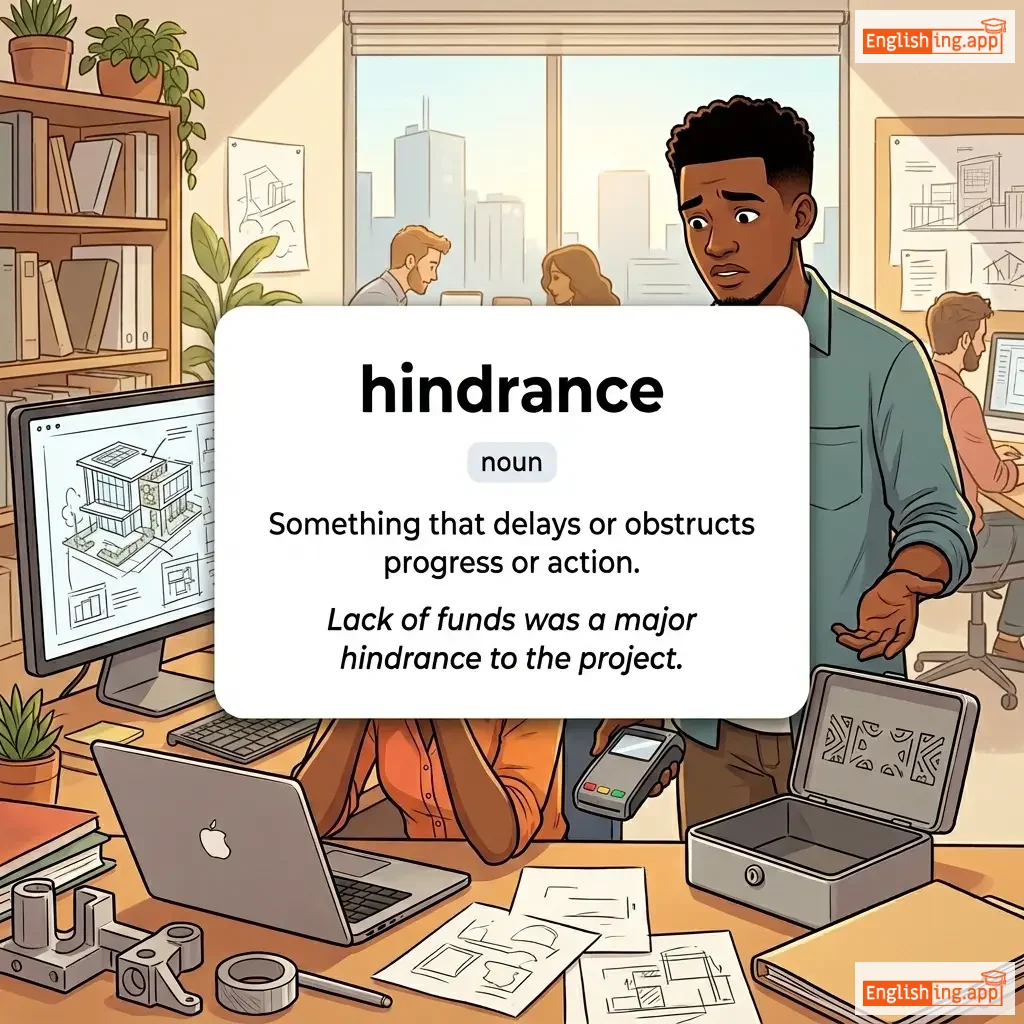
hindrance definition card — visual illustration of the meaning
noun
/ˈhɪndrəns/

Something that delays or obstructs progress or action.

"Lack of funds was a major hindrance to the project."

noun
/ˈhaɪndsaɪt/
事后诸葛亮 (shì hòu zhū gě liàng)

Understanding of a situation only after it has happened.

"With the benefit of hindsight, we realized the decision was a mistake."

"在事后我们意识到这个决定是个错误。" (zài shìhòu wǒmen yìshí dào zhège juédìng shì ge cuòwù.)
noun/verb
/hɪnt/
提示 (tíshì)

a small piece of advice or suggestion; to suggest something indirectly

"She gave me a hint about the surprise party."

"她给了我一个关于惊喜派对的提示。" (Tā gěile wǒ yīgè guānyú jīngxǐ pàiduì de tíshì.)
noun
/ˈhɪntərlænd/
内陆地区 (neilu diqu)

The remote or less developed areas away from the coast or a city.

"The farmers came from the rural hinterland to sell their produce in the city."

"农民们从乡村的内陆地区来到城市销售他们的产品。" (Nongmin men cong xiangcun de neilu diqu lai dao chengshi xiaoshou tamen de chanpin.)
noun (plural)
/ˈhɪntərlændz/
偏远地区 (pianyuan diqu)

Plural of hinterland; remote or less developed regions.

"Explorers traveled deep into the hinterlands of the country."

"探险者深入到该国的偏远地区。" (Tanxianzhe shenru dao gai guo de pianyuan diqu.)