词汇表

英语词汇词典 | 单词含义、定义和示例

verb
/ˈhɑːrpɪŋ/
不断抱怨 (bùduàn bàoyuàn)

continuously talking or complaining about something in a tiresome way

"She kept harping on about the mistakes I made."

"她不断抱怨我做的错事。" (Tā bùduàn bàoyuàn wǒ zuò de cuòshì.)
adjective
/ˈhæriːd/
感到压力或忙碌 (gǎndào yālì huò mánglù)

feeling strained or stressed due to being overworked or constantly bothered

"The harried teacher struggled to calm the noisy classroom."

"感到压力的老师努力让嘈杂的教室安静下来。" (Gǎndào yālì de lǎoshī nǔlì ràng cáozá de jiàoshì ānjìng xiàlái.)
verb
/ˈhæroʊ/
折磨 / 耙 (zhemo / ba)

to cause distress or torment; also to break up and smooth soil with a farm tool

"The tragic news harrowed the entire family."
"悲惨的消息让全家人都痛苦不堪。" (Beican de xiaoxi rang quanjia ren dou tongku bikan.)
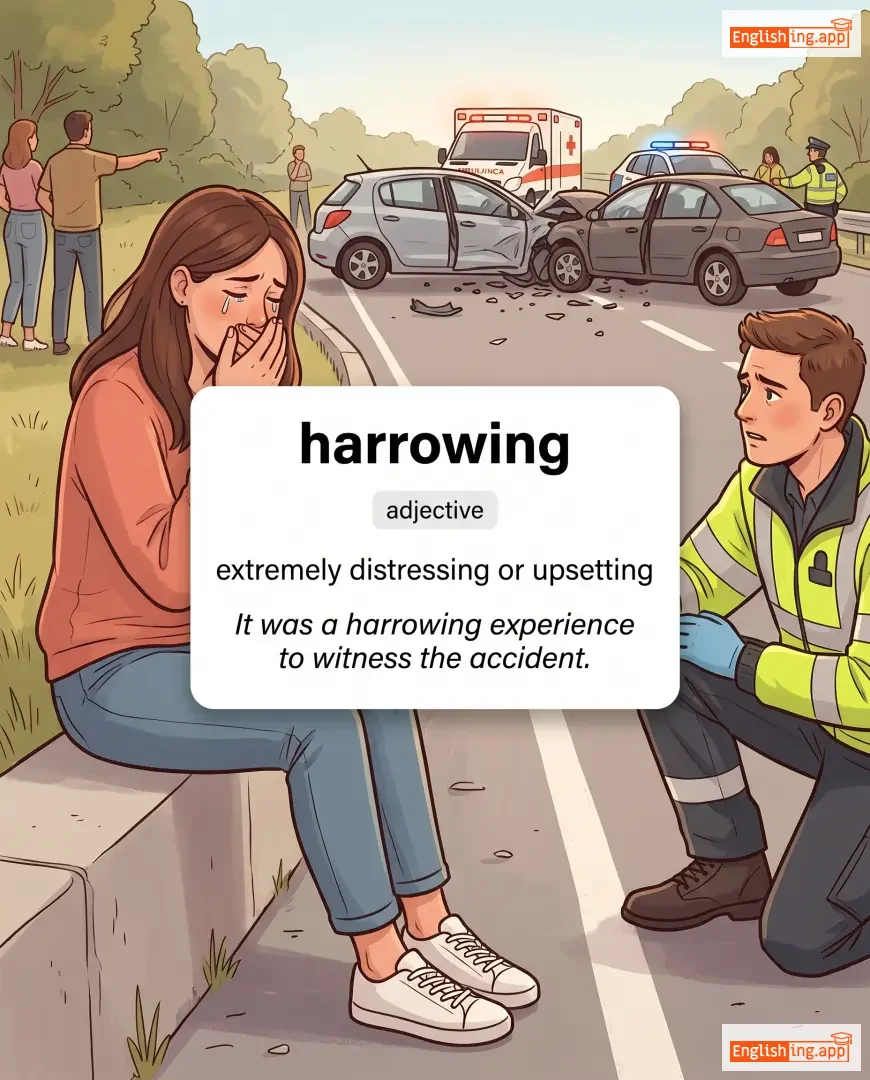
harrowing definition card — visual illustration of the meaning
adjective
/ˈhær.oʊ.ɪŋ/
令人痛苦的和可怕的 (lìng rén tòngkǔ de hé kěpà de)

extremely distressing or upsetting

"It was a harrowing experience to witness the accident."

"目睹事故是一次令人痛苦的经历。" (Mùdǔ shìgù shì yīcì lìng rén tòngkǔ de jīnglì.)
verb
/ˈhæri/
骚扰, 追扰 (saorao, zhuirao)

to constantly attack, harass, or annoy

"The army harried the enemy with sudden raids."

"军队通过突袭不断攻击敌人。" (Jundui tongguo tuxi buduan gongji diren.)
adjective
/hɑːrʃ/
严厉 (yanli)

Unpleasantly rough or severe in sound, taste, conditions, or treatment.

"The teacher's harsh tone frightened the students."

"老师严厉的语气吓到了学生。" (Laoshi yanli de yuqi xiadao le xuesheng.)
noun
/ˈhɑːrvɪst/
收获 (shōuhuò)

the process or period of gathering crops

"Farmers are busy during the rice harvest season."
"农民在稻谷收获季节非常忙碌。" (Nóngmín zài dàogǔ shōuhuò jìjié fēicháng mánglù.)
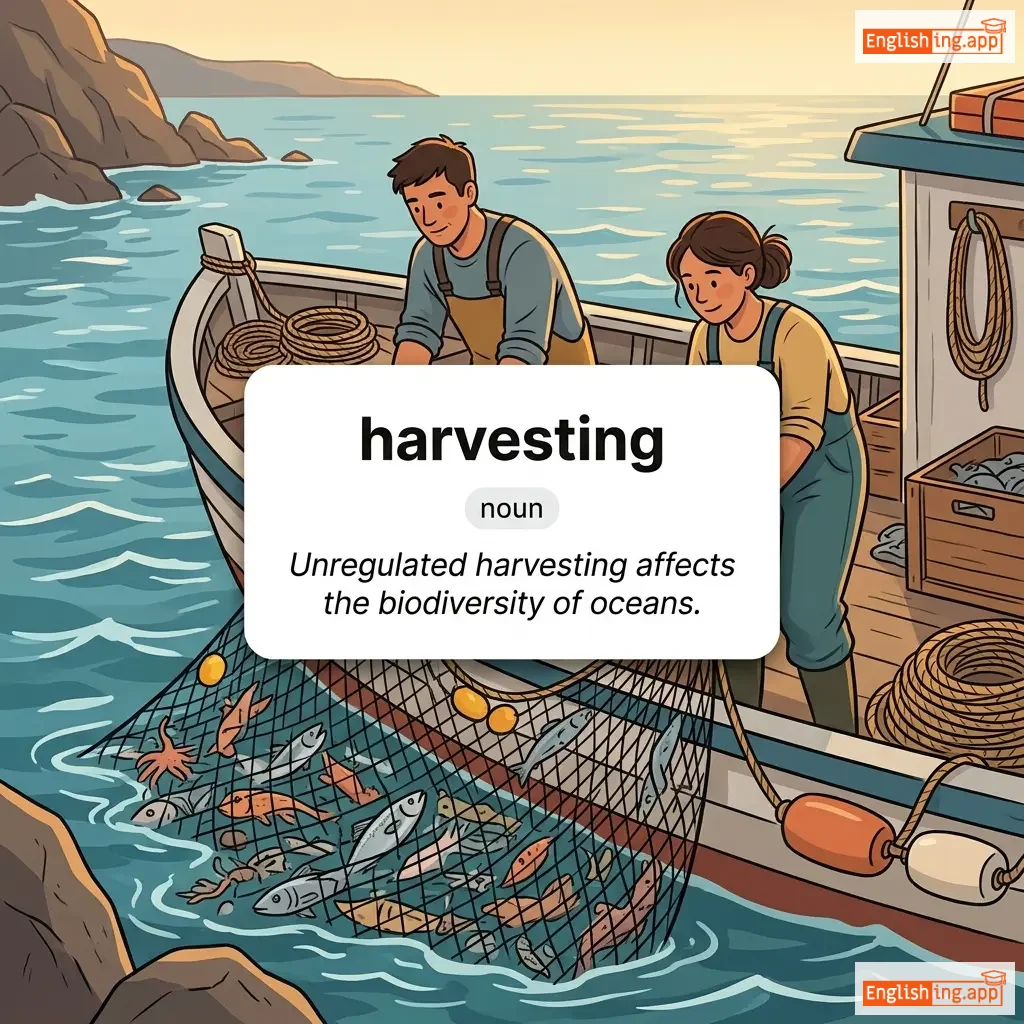
harvesting definition card — visual illustration of the meaning
noun
ˈhɑːrvɪstɪŋ
收获 (shōuhuò)

The process of gathering a ripe crop from the fields or collecting natural resources.

"Unregulated harvesting affects the biodiversity of oceans."

"不受监管的收获影响着海洋的生物多样性。" (Bù shòu jiānguǎn de shōuhuò yǐngxiǎngzhe hǎiyáng de shēngwù duōyàngxìng.)
noun
/hæˈʃiːʃ/
哈希什 (haxishi)

a drug made from the resin of the cannabis plant

"The police arrested him for possessing hashish."

"警方因持有哈希什逮捕了他。" (Jǐngfāng yīn chíyǒu hāxīshí dàibǔle tā.)
noun
/ˈhæs.əl/
麻烦; 不便; 困难 (mafan, bian, kunnan)

irritating inconvenience; trouble or difficulty; a situation causing problems

"Booking tickets online can save you the hassle of waiting in long queues at the theater."

"在线预订门票可以帮你省去在剧院排长队的麻烦。" (Zai xian yuding menpiao keyi bang ni shengqu zai juyuan pai changdui de mafan.)
noun
/heɪst/
匆忙; 急切 (cōngmáng, jíqiè)

swiftness of motion; urgent need of quick action; excessive speed or urgency

"In his haste to catch the train, he forgot to take his wallet from the table."

"因为急于赶上火车,他忘了从桌子上拿走钱包。" (Yīnwèi jíyú gǎn shàng huǒchē, tā wàngle cóng zhuōzi shàng názǒu qiánbāo.)
verb
/ˈheɪsən/
加速 (jiasu)

To move or act quickly; to cause something to happen sooner.

"He hastened to finish his work before the deadline."

"他急忙在截止日期前完成工作。" (Ta jimang zai jiezhiriqi qian wancheng gongzuo.)
adverb
/ˈheɪs.tɪ.li/
匆忙地 (cōngmáng de)

in a hurried or rushed manner; quickly and carelessly

"She hastily packed her bags before leaving for the airport."

"她匆忙地收拾行李,赶去机场。" (Tā cōngmáng de shōushi xínglǐ, gǎn qù jīchǎng.)
adjective
/ˈheɪsti/
匆忙的 (cōngmáng de)

Done with excessive speed or urgency, often without careful thought.

"She made a hasty decision without considering the consequences."

"她做出了匆忙的决定,没有考虑后果。" (Tā zuòchūle cōngmáng de juédìng, méiyǒu kǎolǜ hòuguǒ.)
noun
/hæt/
帽子 (màozi)

a shaped covering for the head, often with a brim

"He wore a black hat to the party."

"他戴着一顶黑色的帽子去参加聚会。" (Tā dàizhe yī dǐng hēisè de màozi qù cānjiā jùhuì.)
verb
/hætʃ/
孵化 / 计划 (fūhuà / jìhuà)

To cause a young animal to emerge from an egg; to plan secretly.

"The chicks hatched early in the morning."

"小鸡早上很早就孵化出来了。" (Xiǎo jī zǎo shàng hěn zǎo jiù fūhuà chūlái le.)
hate definition card — visual illustration of the meaning
💔

hate

verb
/heɪt/

to dislike intensely or have a strong aversion to

"She hates waking up early in the morning."

adjective
/ˈheɪt.fəl/
可憎的 (kězēng de)

causing or deserving hatred; extremely unpleasant or offensive

"His hateful comments hurt everyone's feelings."

"他那些充满仇恨的评论伤害了每个人的感情。" (Tā nàxiē chōngmǎn chóuhèn de pínglùn shānghài le měi gè rén de gǎnqíng.)
noun
/ˈheɪtrɪd/
仇恨 (chóuhèn)

intense dislike or ill will

"His hatred for the enemy was evident in his actions."

"他对敌人的仇恨在他的行动中显而易见。" (Tā duì dírén de chóuhèn zài tā de xíngdòng zhōng xiǎn ér yìjiàn.)
noun
/ˈhɔːtɪnəs/
傲慢 (aoman)

The appearance or quality of being arrogantly superior and disdainful.

"His haughtiness made him unpopular among his peers."

"他的傲慢使他在同事中不受欢迎。" (Tā de àomàn shǐ tā zài tóngshì zhōng bù shòu huānyíng.)
adjective
/ˈhɔːti/
傲慢 (àomàn)

arrogantly superior and disdainful

"She gave him a haughty look and walked away."

"她给了他一个傲慢的眼神,然后走了。" (Tā gěi tā yī gè àomàn de yǎnzhī, ránhòu zǒu diào le.)
verb
/hɔːl/
拖拉 (tuōlā)

to pull or drag something heavy with effort

"The workers hauled the boxes into the truck."

"工人们把箱子拖上了卡车。" (Gōngrénmen bǎ xiāngzi tuō shàngle kǎchē.)
haunt definition card — visual illustration of the meaning
👻

haunt

verb
/hɔːnt/

to appear frequently in or fill the mind of someone; to visit a place regularly

"The old memories still haunt him."

noun
/oʊˈtɜːr/
傲慢 (àomàn)

disdainful pride; arrogance

"His hauteur made it difficult for others to approach him."

"他的傲慢使别人很难接近他。" (Tā de àomàn shǐ biérén hěn nán jiējìn tā.)
verb
/hæv/
拥有 (yǒngyǒu)

to possess, own, or hold

"They have three children."

"他们有三个孩子。" (Tāmen yǒu sān gè háizi.)
noun
/ˈheɪvən/
避风港 (bì fēng gǎng)

a safe place or shelter

"The library became a haven for students during exams."

"图书馆在考试期间成为了学生们的避风港。" (Túshūguǎn zài kǎoshì qījiān chéngwéile xuéshēngmen de bì fēng gǎng.)
noun
/ˈhævək/
浩劫 (haojie)

widespread destruction or disorder

"The storm caused havoc in the coastal villages."

"风暴在沿海村庄造成了浩劫。" (Fengbao zai yanhai cunzhuang zaocheng le haojie.)
noun
/hɔːk/
(yīng)

A bird of prey with keen eyesight and sharp talons; also refers to a person who strongly supports aggressive or warlike policies.

"The hawk soared high above the valley."

"鹰飞得很高,飞过了山谷。" (Yīng fēi dé hěn gāo, fēiguòle shāngǔ.)
noun
/ˈhɔː.kər/
小贩 (xiaofan)

a person who travels about selling goods, typically from door to door or on the street

"The hawker sold fresh fruits from his cart."

"小贩从他的推车里卖出了新鲜的水果。" (xiaofan cong tade tuiche li maichu le xinxian de shuiguo.)
noun
/ˈhɔːzər/
用于系船或拖船的粗绳 (yòng yú xì chuán huò tuō chuán de cū shéng)

A thick rope or cable used in mooring or towing a ship.

"The sailors secured the ship to the dock with a heavy hawser."

"水手们用一根重的豪泽把船固定在码头。" (Shuǐshǒu men yòng yī gēn zhòng de háo zé bǎ chuán gùdìng zài mǎtóu.)
noun
/ˈhɔːθɔːrn/
有刺灌木 (yǒu cì guànmù)

A thorny shrub or small tree with white or pink flowers, often used for hedges.

"The garden was lined with blooming hawthorn bushes."

"花园里种满了盛开的山楂灌木。" (Huāyuán lǐ zhòng mǎnle shèngkāi de shānzhā guànmù.)
noun
/heɪ/
干草 (gāncǎo)

grass that has been cut, dried, and stored for use as animal feed

"The cows were eating hay in the barn."

"牛在谷仓里吃干草。" (Niú zài gǔcāng lǐ chī gāncǎo.)
noun
/ˈhæzərd/
危险 (wei xian)

A danger or risk.

"Wet floors are a common hazard in the workplace."
"湿滑的地板是工作场所常见的危险。" (Shi hua de diban shi gongzuo changsuo changjian de weixian.)
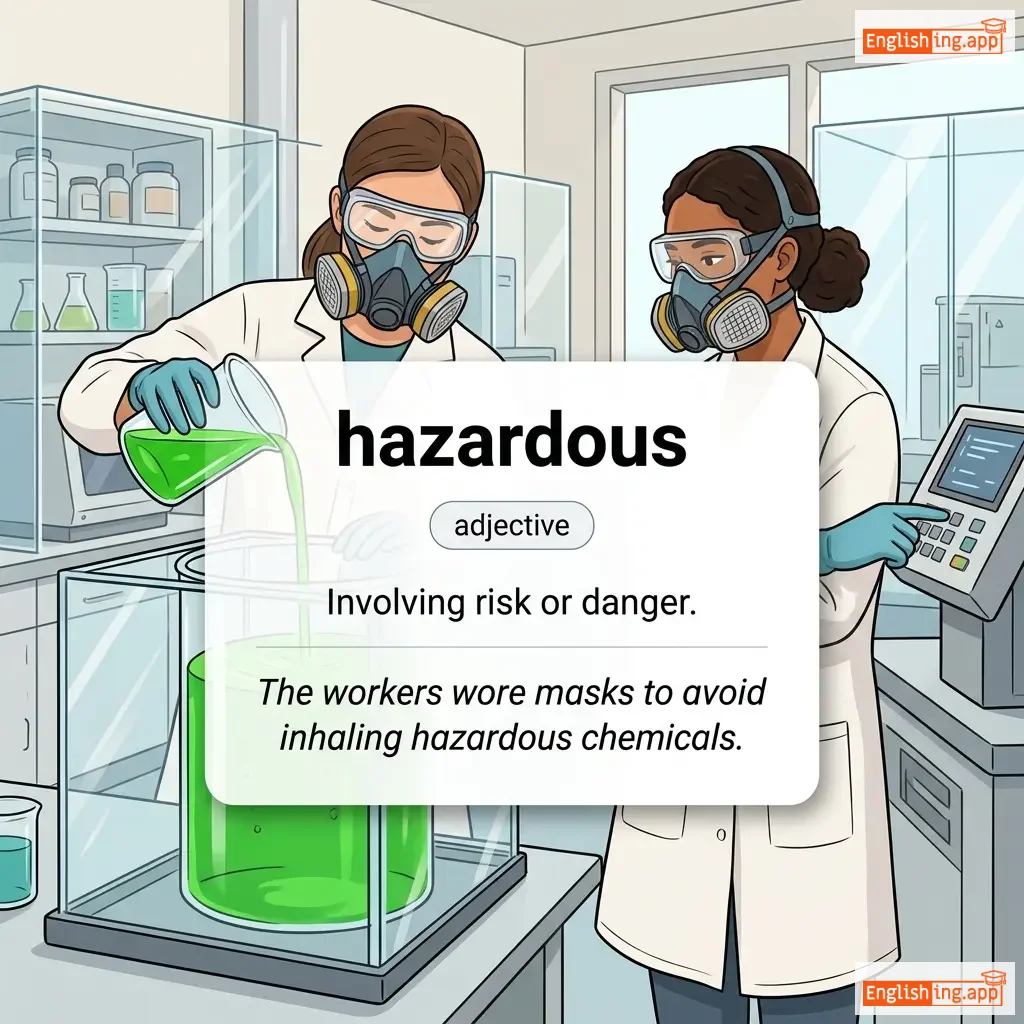
hazardous definition card — visual illustration of the meaning
adjective
/ˈhæzərdəs/
危险的 (wei xian de)

Involving risk or danger.

"The workers wore masks to avoid inhaling hazardous chemicals."

"工人戴上了口罩,以避免吸入危险化学品。" (Gongren daishangle koushao, yi bimi xi ru weixian huaxuepin.)
noun
/heɪz/
雾霾 (wùmái)

a slight obscuration of the lower atmosphere, typically caused by fine suspended particles; confusion

"The morning haze lifted gradually as the sun rose higher in the sky."

"早晨的雾霾逐渐消散,随着太阳在空中升得更高。" (Zǎochén de wùmái zhújiàn xiāosàn, suízhe tàiyáng zài kōngzhōng shēng de gèng gāo.)
adjective
/ˈheɪzi/
模糊 (mohu)

Unclear, misty, or not easy to see; also vague or uncertain.

"The mountains looked hazy in the morning light."

"山脉在早晨的光线下看起来模糊不清。" (Shānmài zài zǎochén de guāngxiàn xià kàn qǐlái móhu bù qīng.)
pronoun
/hiː/
他 (男性) (ta (nanxing))

used to refer to a male person or animal already mentioned or easily identified

"He is my best friend."

"他是我最好的朋友。" (Tā shì wǒ zuì hǎo de péngyǒu.)
noun, verb
/hɛd/
头 / 领导 (tou / lingdao)

The upper part of the human body or to lead or be in charge of something.

"She turned her head to look out the window."

"她转动头来向窗外看。" (ta zhuandong tou lai xiang chuangwai kan.)
adverb
/ˈhed ɑn/
正面 (zhèngmiàn)

directly facing; in direct confrontation or collision

"The two cars collided head-on at the intersection."

"两辆车在交叉口发生了正面碰撞。" (Liǎng liàng chē zài jiāochākǒu fāshēngle zhèngmiàn péngzhuàng.)
noun
/ˈhɛdeɪk/
头痛 (tóutòng)

a continuous pain in the head; something that causes worry or difficulty

"Too much screen time can give you a terrible headache."

"过多的屏幕时间可能会导致你出现严重的头痛。" (guòduō de píngmù shíjiān kěnéng huì dǎozhì nǐ chūxiàn yánzhòng de tóutòng.)
adverb
/ˌhɛdˈfɜrst/
头朝前 (tou chao qian)

With the head leading; in a reckless or hasty manner.

"He dived headfirst into the pool."

"他头朝前跳入游泳池。" (Ta tou chao qian tiao ru youyongchi.)
heading definition card — visual illustration of the meaning
noun
/ˈhed.ɪŋ/
标题 (biaoti)

a title at the head of a page or section of a book; the direction or course being followed

"The newspaper article had a bold heading that immediately caught the reader's attention."

"这篇报纸文章有一个粗体标题,立刻吸引了读者的注意。" (Zhe pian baozhi wen zhang you yi ge cu ti biao ti, li ke xi yin le du zhe de zhu yi.)
noun
/ˈhɛdˌlaɪn/
头条新闻 (tóutiáo xīnwén)

The title of a newspaper article printed in large letters.

"The scandal made front-page headlines."

"丑闻成为了头条新闻。" (Chǒuwén chéngwéi le tóutiáo xīnwén.)
adverb
/ˈhɛdˌlɔŋ/
全速前进 (quán sù qián jìn)

With the head leading; in a rush or without thinking.

"She rushed headlong into the new project."

"她全速前进地投入了新的项目。" (Tā quán sù qián jìn de tóu rù le xīn de xiàng mù.)
noun
/ˈhɛdˌkwɔːrtərz/
总部 (zǒngbù)

The main office or center of operations of an organization.

"The company’s headquarters is located in New York."

"公司的总部位于纽约。" (Gōngsī de zǒngbù wèiyú niǔyuē.)
adjective
/ˈhɛdˌstrɔŋ/
固执 (gùzhí)

Determined to do what one wants, even if it is not sensible.

"The headstrong child refused to listen to anyone."

"固执的孩子拒绝听任何人的话。" (Gùzhí de háizi jùjué tīng rènhé rén de huà.)
noun
/ˈhed.weɪ/
进展; 进步; 向前迈进 (jinzhan, jinbu, xiangqian maijin)

forward movement or progress, especially when this is slow or difficult

"Despite the challenges, the research team made significant headway in developing the new vaccine."

"尽管面临挑战,研究团队在开发新疫苗方面取得了显著的进展。" (Jinguan mianlin tiaozhan, yanjiu tuandui zai kaifa xin yimiao fangmian qudelao xianzhu de jinzhan.)
adjective
/ˈhɛdi/
陶醉的 (táozuì de)

Exciting or intoxicating; having a strong or exhilarating effect.

"The heady aroma of the flowers filled the room."

"花朵的迷人香气充满了整个房间。" (Huāduǒ de mírén xiāngqì chōngmǎnle zhěnggè fángjiān.)
heal definition card — visual illustration of the meaning
verb
/hiːl/
治愈 (zhìyù)

to make or become healthy again after an injury or illness

"Time helps to heal both physical and emotional wounds."

"时间有助于治愈身体和情感上的创伤。" (Shíjiān yǒu zhù yú zhìyù shēntǐ hé qínggǎn shàng de chuāngshāng.)
noun
/hɛlθ/
健康 (jiànkāng)

The state of being free from illness or injury.

"Exercise is important for good health."

"锻炼对保持良好的健康很重要。" (duànliàn duì bǎochí liánghǎo de jiànkāng hěn zhòngyào.)