词汇表

英语词汇词典 | 单词含义、定义和示例

noun
/ˈhænd ˌrɪŋɪŋ/
过度担忧 (guòdù dānyōu)

excessive worry or concern expressed in a visible or dramatic way.

"There was much hand-wringing over the political crisis."

"关于政治危机有很多戏剧性的担忧。" (Guānyú zhèngzhì wēijī yǒu hěn duō xìjùxìng de dānyōu.)
noun
/ˈhænd.fʊl/
一把 (yī bǎ)

the amount of something that can be held in one hand; a small number

"She took a handful of nuts."

"她拿了一把坚果。" (tā nále yī bǎ jiānguǒ.)
noun
/ˈhæn.di.krɑːft/
手工艺 (shougongyi)

an activity involving the making of decorative domestic or other objects with the hands; handmade artistic work

"The local market featured beautiful handicrafts made by skilled artisans from the region."

"当地市场展示了由该地区熟练工匠制作的美丽手工艺品。" (Dangdi shichang zhanshi le you gai diqu shulian gongjiang zhizu de mei li shougongyipin.)
noun
/ˈhæŋ.kər.tʃɪf/
手帕 (shoupa)

a small piece of cloth used for wiping the nose or face

"She always carries a clean handkerchief in her purse."

"她总是在包里带一条干净的手帕。" (Ta zong shi zai bao li dai yi tiao ganjing de shoupa.)
Handle definition card — visual illustration of the meaning
noun, verb
/ˈhændl̩/
把手 / 处理 (bǎ shǒu / chǔ lǐ)

the part of an object designed to be held in the hand; to deal with or manage a situation

"He could not handle the pressure of the job."

"他无法处理工作的压力。" (Tā wúfǎ chǔlǐ gōngzuò de yālì.)
noun
/ˈhændlɪŋ/
处理 (chuli)

the act of managing or dealing with something or someone

"His handling of the situation was impressive."

"他对情况的处理令人印象深刻。" (Tā duì qíngkuàng de chùlǐ lìng rén yìnxiàng shēnkè.)
adjective
/ˈhæn.səm/

attractive in appearance, usually referring to men; also can mean generous or impressive in size.

"He looked very handsome in his new suit."

noun
/ˈhændˌraɪ.tɪŋ/
手写字 (shǒuxiězì)

the style or manner of writing by hand.

"Her handwriting is very neat and easy to read."

"她的手写字非常整齐,容易阅读。" (Tā de shǒuxiězì fēicháng zhěngqí, róngyì yuèdú.)
adjective
/ˈhændi/
易于使用 (yi yu shiyong)

convenient to use or easily accessible; skillful with the hands

"This pocket knife is very handy when you go camping."

"这把口袋刀在露营时非常有用。" (Zhe ba kou dai dao zai lu ying shi feichang youyong.)
hang definition card — visual illustration of the meaning
🖼️

hang

verb
/hæŋ/

to suspend or attach something from above so that it moves freely or is supported

"She decided to hang the painting on the living room wall."

noun
/ˈhæŋ.ər/
飞机库 (feiji ku)

a large building with extensive floor area, typically for housing aircraft; an aircraft shelter

"The airplane was stored safely in the hangar during the severe thunderstorm."

"飞机在强烈雷暴中安全地停放在飞机库中。" (Feiji zai qianglie leibao zhong anquan de tingfang zai feiji ku zhong.)
adjective
/ˈhæŋ.dɔːɡ/
尴尬 (gāngà)

looking or feeling ashamed, guilty, or defeated.

"He gave me a hangdog look after being caught lying."

"他在被抓到撒谎后,给了我一个尴尬的表情。" (Tā zài bèi zhuā dào sāhuǎng hòu, gěile wǒ yīgè gāngà de biǎoqíng.)
noun
/ˈhæŋ.ər/
衣架 (yī jià)

a shaped piece of wood, plastic, or metal with a hook at the top, used to hang up clothes

"She hung her dress on a wooden hanger to prevent it from getting wrinkled."

"她把裙子挂在一个木衣架上,以防止它起皱。" (Tā bǎ qún zi guà zài yī gè mù yī jià shàng, yǐ fáng zhǐ tā qǐ zhòu.)
noun
/ˌhæŋ.ər ˈɒn/
跟班 (genban)

a person who spends time with a powerful or famous person to gain benefits.

"The celebrity was always surrounded by hangers-on."

"这位名人总是被跟班围绕着。" (zhè wèi míngrén zǒng shì bèi gēnbān wéirào zhe.)
noun
/ˈhæŋ.kər/
渴望, 欲望 (kewang, yuwang)

a feeling of yearning or craving; a strong desire for something

"After years abroad, she developed a deep hanker for her homeland's traditional cuisine."

"在国外多年后,她产生了对家乡传统美食的深深渴望。" (Zai guowai duonian hou, ta chansheng le dui jiaxiang chuantong meishi de shenshen kewang.)
noun
/ˈhæŋ.kər.ɪŋ/
渴望 (kewang)

a strong desire or craving for something.

"She had a hankering for chocolate late at night."

"她深夜时对巧克力有了强烈的渴望。" (Tā shēn yè shí duì qiǎokèlì yǒule qiángliè de kewàng.)
noun
/ˌhæŋ.ki ˈpæŋ.ki/
欺诈; 可疑活动; 不道德行为; 欺骗 (qizha; keyi huodong; budaode xingwei; qipian)

dishonest or suspicious activity; unethical behavior; trickery or deception

"The audit revealed some hanky-panky in the company's financial records."

"审计揭示了公司财务记录中的一些欺诈行为。" (shenji jieshi le gongsi caiwu jilu zhong de yixie qizha xingwei.)
noun
/hæp/
运气,幸运,偶然 (yunqi, xingyun, ouran)

luck, fortune, or chance occurrence

"By sheer hap, he discovered the old letter hidden in the drawer."

"凭借运气,他发现了藏在抽屉里的旧信。" (Pingjie yunqi, ta faxianle cang zai chouzi li de jiu xin.)
adjective
/hæpˈhæzərd/
混乱的, 随机的 (hùnluàn de, suíjī de)

lacking any obvious order or organization; random

"The books were stacked in a haphazard way on the table."

"书本以混乱的方式堆放在桌子上。" (Shūběn yǐ hùnluàn de fāngshì duīfàng zài zhuōzi shàng.)
adjective
/ˈhæpləs/
不幸的, 值得同情的 (bù xìng de, zhí dé tóng qíng de)

unfortunate, unlucky, deserving pity

"The hapless traveler lost his passport on the very first day."

"那个不幸的旅行者在第一天就丢失了护照。" (Nàgè bù xìng de lǚxíng zhě zài dì yī tiān jiù diūshī le hùzhào.)
verb
/ˈhæpən/
发生 (fāshēng)

to take place or occur, usually by chance

"Accidents can happen at any time."

"事故随时可能发生。" (Shìgù suíshí kěnéng fāshēng.)
adverb
/ˈhæpɪli/
幸福地 (xìngfú de)

in a happy manner; with pleasure or satisfaction

"The children played happily in the garden."
"孩子们在花园里幸福地玩耍。" (Háizimen zài huāyuán lǐ xìngfú de wánshuǎ.)
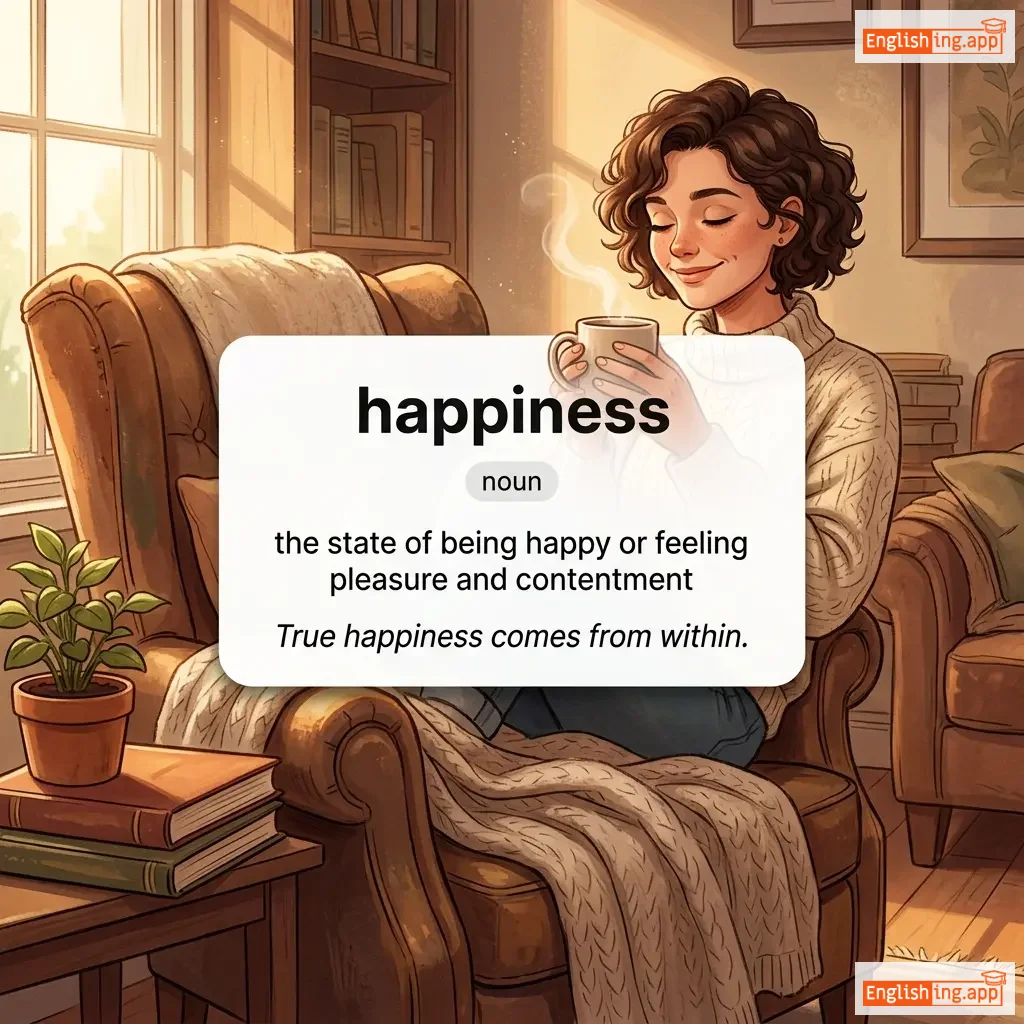
happiness definition card — visual illustration of the meaning
noun
/ˈhæpinəs/
幸福 (xìngfú)

the state of being happy or feeling pleasure and contentment

"True happiness comes from within."

"真正的幸福来自内心。" (Zhēnzhèng de xìngfú láizì nèixīn.)
adjective
/ˈhæpi/
快乐 (kuàilè)

feeling or showing pleasure, contentment, or joy

"She was very happy to receive the gift."

"她收到礼物时非常高兴。" (Tā shōudào lǐwù shí fēicháng gāoxìng.)
adjective
/ˌhæpi ɡoʊ ˈlʌki/
无忧无虑的,轻松的,无忧的 (wú yōu wú lǜ de, qīngsōng de, wú yōu de)

cheerfully unconcerned about the future; carefree

"She has a happy-go-lucky attitude and never worries about tomorrow."
"她有着无忧无虑的态度,从不担心明天。" (Tā yǒuzhe wú yōu wú lǜ de tàidù, cóng bù dānxīn míngtiān.)
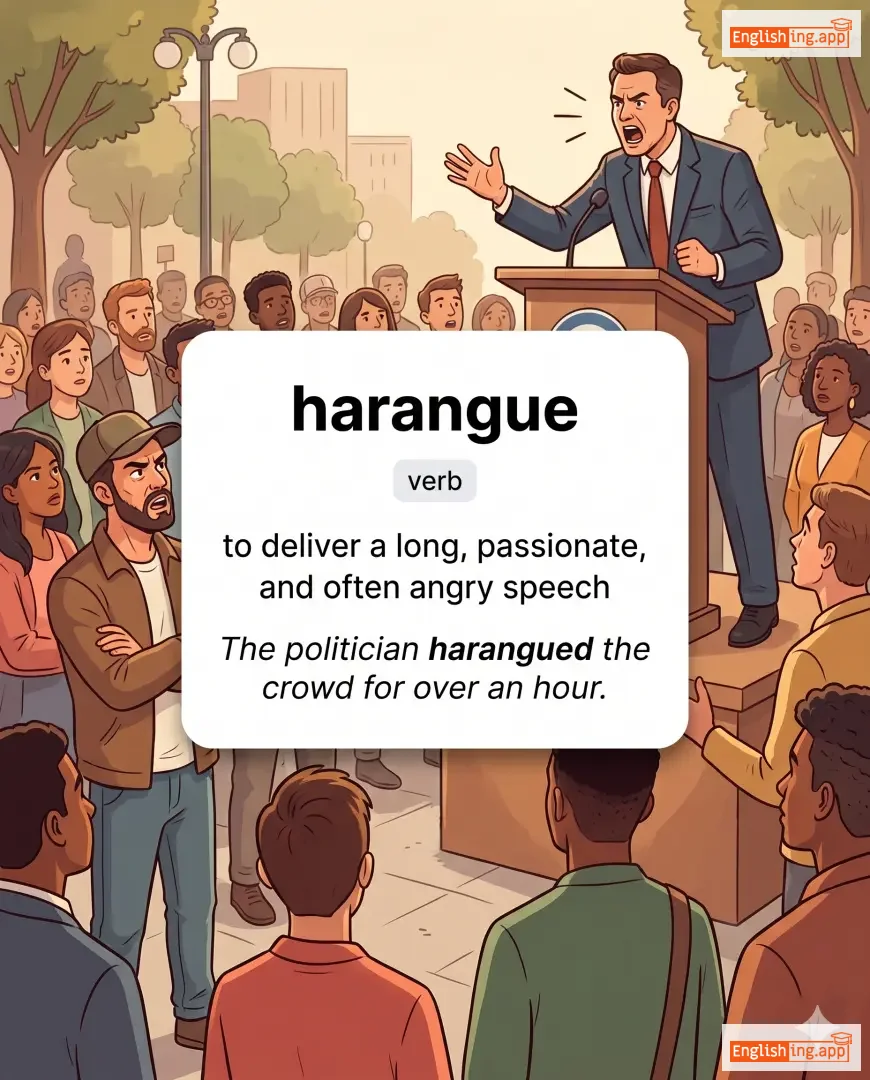
harangue definition card — visual illustration of the meaning
verb
/həˈræŋ/
进行冗长而愤怒的演讲 (jìnxíng rǒngcháng ér fènnù de yǎnjiǎng)

to deliver a long, passionate, and often angry speech

"The politician harangued the crowd for over an hour."

"政治家对人群进行了超过一小时的演讲。" (Zhèngzhìjiā duì rénqún jìnxíngle chāoguò yī gè xiǎoshí de yǎnjiǎng.)
verb
/həˈræs/

to annoy or trouble someone repeatedly in an aggressive or persistent way

"The journalist claimed she was being harassed online."

noun
/həˈræsmənt/
骚扰 (saorao)

aggressive pressure or intimidation; unwanted and repeated behavior causing discomfort

"The company has a strict policy against workplace harassment."

"公司对职场骚扰有严格的政策。" (Gōngsī duì zhíchǎng sāorǎo yǒu yángé de zhèngcè.)
noun
/ˈhɑːrbɪndʒər/
先兆 (xiānzhào)

a person or thing that announces or signals the approach of another

"The sudden drop in temperature was a harbinger of winter."
"温度的突然下降是冬天的先兆。" (Wēndù de túrán xiàjiàng shì dōngtiān de xiānzhào.)
noun, verb
/ˈhɑːrbər/

noun: a place on the coast where ships may find shelter; verb: to keep (a thought or feeling, often negative) in one's mind

"He continued to harbor resentment towards his former boss."

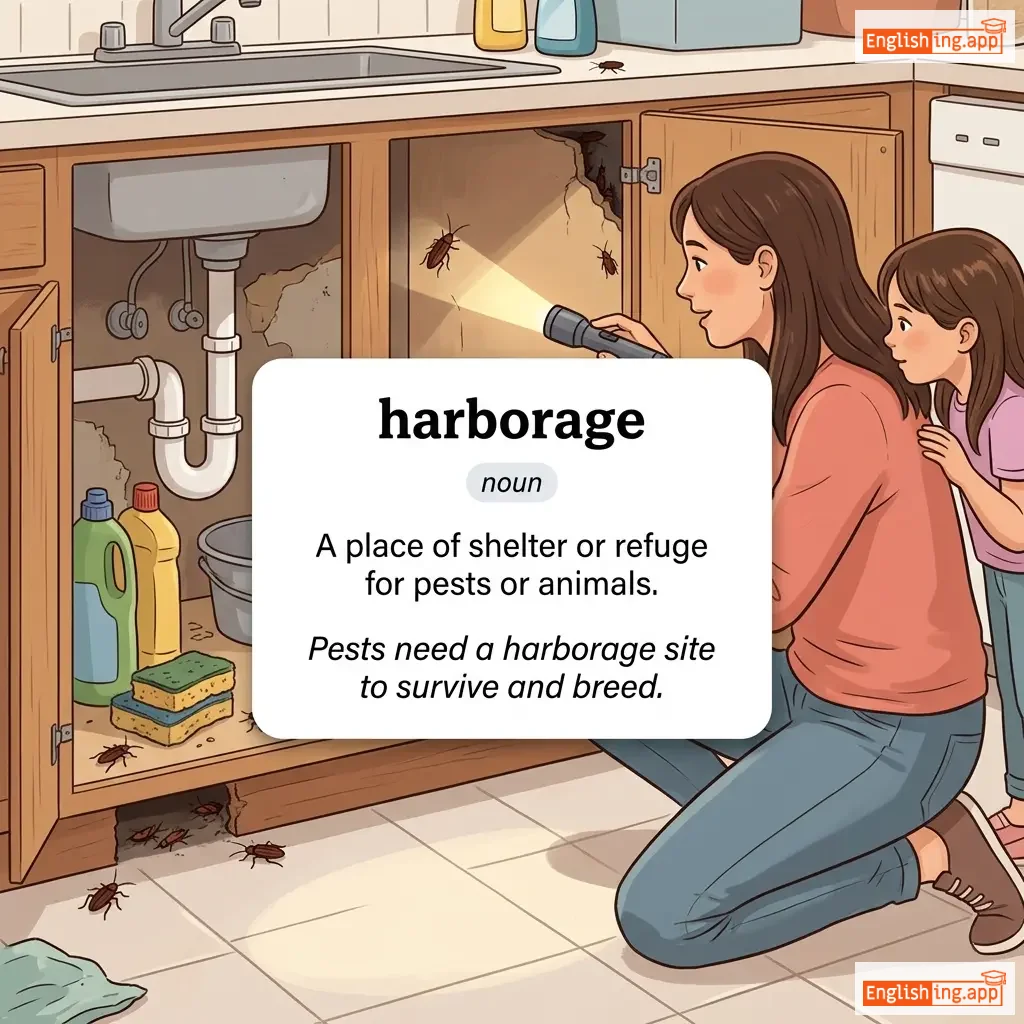
harborage definition card — visual illustration of the meaning
noun
ˈhɑːrbərɪdʒ
藏身处 (cángshēn chù)

A place of shelter or refuge for pests or animals.

"Pests need a harborage site to survive and breed."

"害虫需要一个藏身处来生存和繁殖。" (hàichóng xūyào yīgè cángshēn chù lái shēngcún hé fánzhí.)
noun
/ˈhɑːr.bər/
港口 (gangkou)

a place on the coast where vessels may find shelter; a place of safety or refuge

"The fishing boats returned safely to the harbour before the storm hit the coastline."

"渔船在风暴袭击海岸之前安全地回到了港口。" (Yúchuán zài fēngbào xíjī hǎi'àn zhīqián ānquán de huídào le gǎngkǒu.)
adjective
/hɑːrd/
困难 (kunnan)

solid, firm, or difficult to do or endure

"The exam was very hard for most students."

"对大多数学生来说,考试非常困难。" (Dui dashu xuesheng laishuo, kao shi feichang kunnan.)
adjective
/ˌhɑːrdˈbɪtn̩/
坚韧且经验丰富 (jiān rèn qiě jīng yàn fēng fù)

tough and experienced, not easily affected by emotions or hardship

"The hard-bitten detective showed no sign of surprise at the crime scene."

"那个经验丰富的侦探在犯罪现场毫无惊讶之情。" (Na ge jing yan feng fu de zhen tan zai fan zui xian chang hao wu jing ya zhi qing.)
adjective
/ˌhɑːrdˈhɑːrtɪd/
冷酷无情 (lěngkù wúqíng)

showing no kindness or sympathy; cruel

"The landlord was hard-hearted and refused to help the poor family."

"房东是个冷酷无情的人,拒绝帮助贫困家庭。" (Fángdōng shì gè lěngkù wúqíng de rén, jùjué bāngzhù pínkùn jiātíng.)
noun
/ˈhɑːdɪhʊd/
勇气,胆量 (yǒngqì, dǎnliàng)

Courage, boldness, or daring behavior; also physical robustness.

"The mountaineer's hardihood impressed the entire team."

"登山者的硬气打动了整个团队。" (Dēngshān zhě de yìngqì dǎdòngle zhěnggè tuánduì.)
adverb
/ˈhɑːrdli/
几乎不 (jīhū bù)

almost not; scarcely

"She could hardly believe her eyes."

"她几乎不敢相信自己的眼睛。" (Tā jīhū bù gǎn xiāngxìn zìjǐ de yǎnjīng.)
noun
/ˈhɑːrd.ʃɪp/
困境,痛苦 (kùnjìng, tòngkǔ)

severe suffering or privation; difficulty or distress

"Despite facing many hardships during the war, the family remained united and hopeful."

"尽管在战争期间经历了许多困难,家庭依然保持团结和希望。" (Jǐnguǎn zài zhànzhēng qījiān jīnglì le xǔduō kùnnán, jiātíng yīrán bǎochí tuánjié hé xīwàng.)
noun
/ˈhɑːrdˌwɛr/
硬件 (yingjiane)

the physical parts of a computer or electronic system, such as the monitor, keyboard, and processor

"The company upgraded its computer hardware to improve performance."

"公司升级了计算机硬件以提高性能。" (gongsi shengji le jisuanji yingjiane yi tigao xingneng.)
adjective
/ˈhɑːrdi/
坚韧,强健 (jianren, qiangjian)

Strong, robust, and capable of enduring difficult conditions.

"Hardy plants can survive the harsh winter."

"坚韧的植物能在严寒的冬季生存。" (Jianren de zhiwu neng zai yankan de dongji shengcun.)
noun
/heə(r)/
野兔 (yětù)

a fast-running long-eared mammal that resembles a large rabbit

"The hare quickly ran across the field."

"这只野兔快速地跑过田野。" (Zhè zhī yětù kuàisù de pǎo guò tiányě)
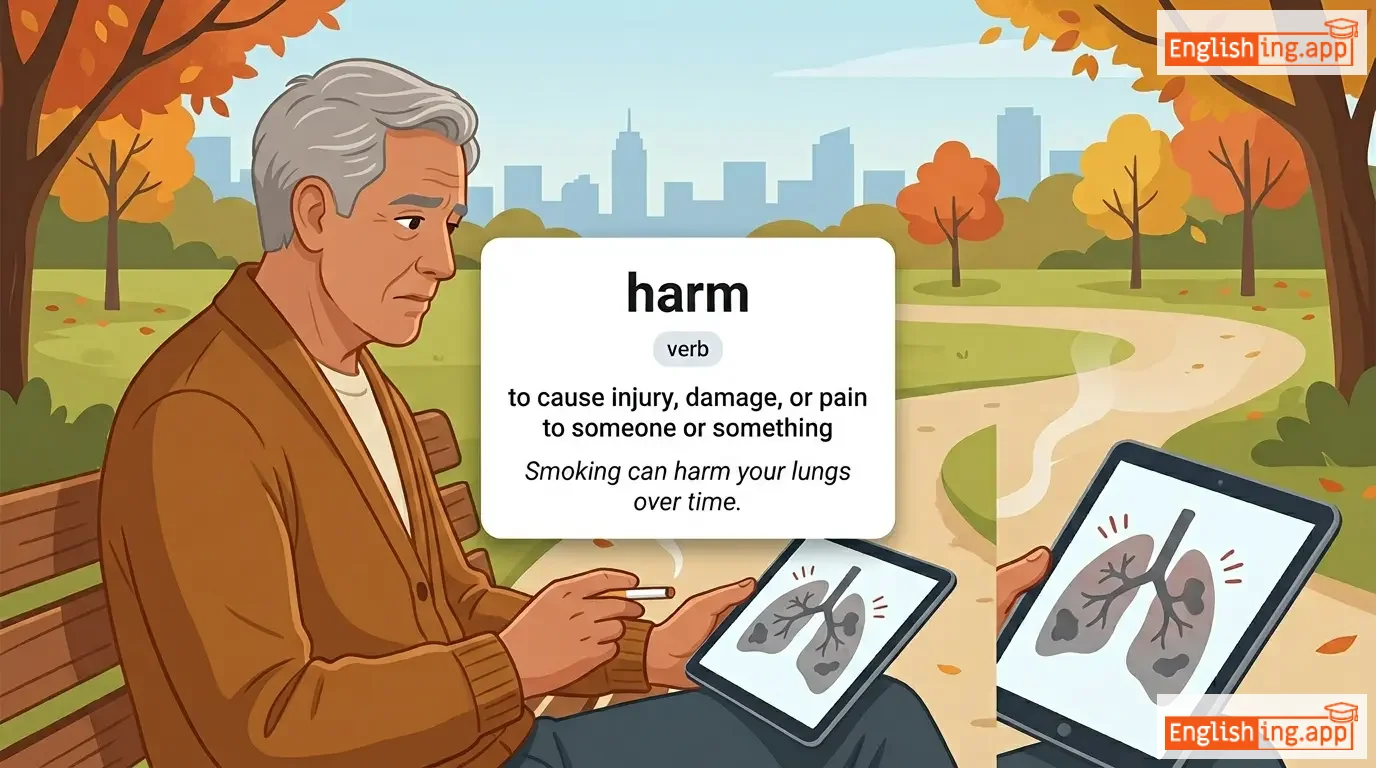
harm definition card — visual illustration of the meaning
verb
/hɑːrm/
伤害 (shanghai)

to cause injury, damage, or pain to someone or something

"Smoking can harm your lungs over time."

"吸烟会随着时间对你的肺部造成伤害。" (Xiyan hui suizhe shijian dui nide feibu zaocheng shanghai.)
adjective
/ˈhɑːrmfəl/
有害的 (yǒuhài de)

causing or likely to cause harm; damaging

"Smoking is harmful to your health."

"吸烟对健康有害。" (Xīyān duì jiànkāng yǒuhài.)
adjective
/ˈhɑːrmləs/
无害的; 无辜的; 安全的 (wúhài de; wúgū de; ānquán de)

not able or likely to cause harm; innocent; safe

"The snake looks dangerous but it's actually harmless."
"蛇看起来很危险,但它实际上是无害的。" (Shé kàn qǐlái hěn wēixiǎn, dàn tā shíjì shang shì wúhài de.)
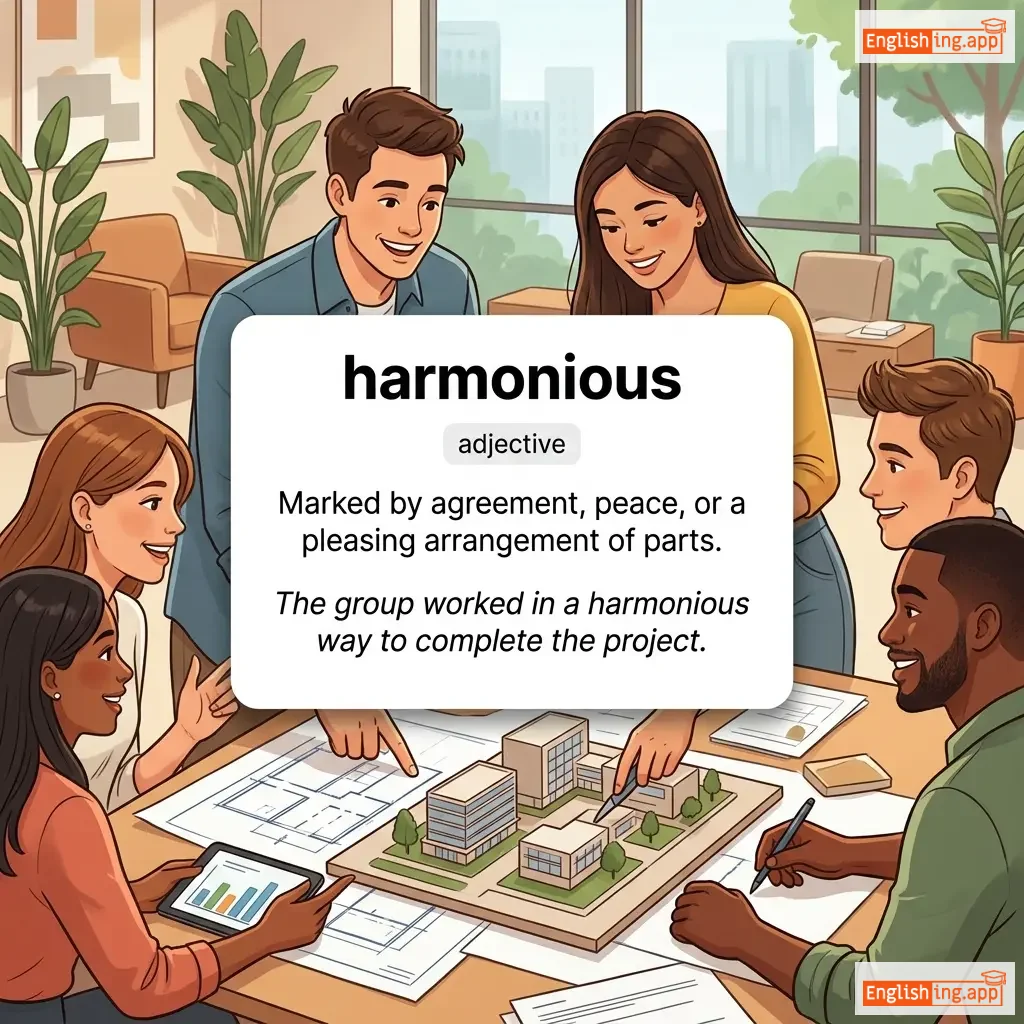
harmonious definition card — visual illustration of the meaning
adjective
/hɑːrˈmoʊniəs/
和谐的, 和谐 (hexie de, hexie)

Marked by agreement, peace, or a pleasing arrangement of parts.

"The group worked in a harmonious way to complete the project."

"小组以和谐的方式工作,以完成项目。" (Xiaozu yi hexie de fangshi gongzuo, yi wancheng xiangmu.)
noun
/hɑrˈmoʊniəm/
风琴 (harmonium)

a keyboard musical instrument similar to an organ, using air to produce sound

"She played devotional songs on the harmonium at the temple."

"她在寺庙用风琴演奏虔诚的颂歌。" (ta zai si miao yong fengqin yan zou qian cheng de song ge)
harmonization definition card — visual illustration of the meaning
noun
/ˌhɑːmənaɪˈzeɪʃən/
协调,调和 (xie tiao, tiao he)

The process of making things compatible or consistent with one another.

"The harmonization of different policies ensures consistent results."
"不同政策的协调确保了一致的结果。" (Bu tong zheng ce de xie tiao que bao le yi zhi de jie guo.)
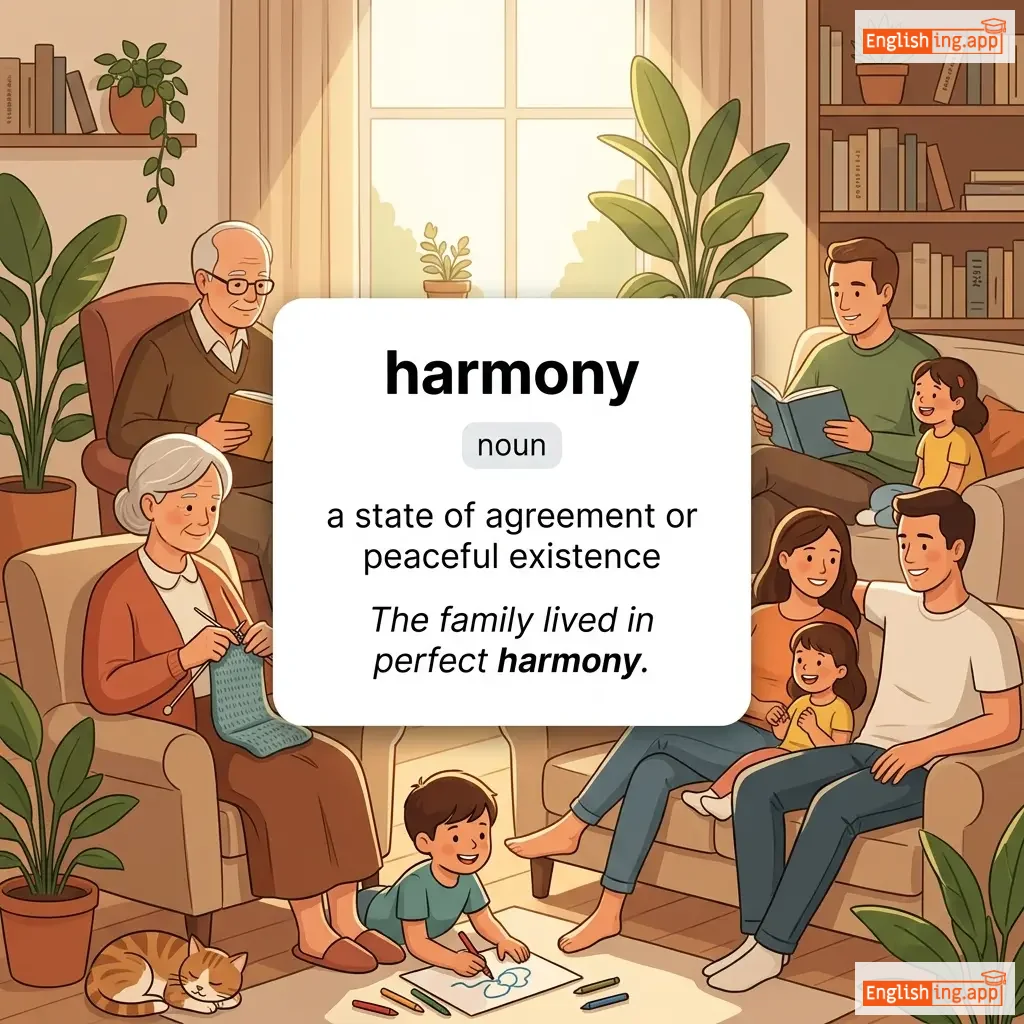
harmony definition card — visual illustration of the meaning
noun
/ˈhɑːrməni/
和谐 (hexie)

a state of agreement or peaceful existence

"The family lived in perfect harmony."

"这个家庭生活在完全和谐中。" (Zhège jiātíng shēnghuó zài wánquán héxié zhōng.)
verb
/ˈhɑːrnɪs/

To control and make use of natural resources, especially energy.

"Scientists are working to harness solar power effectively."

verb
/hɑːrp/
反复抱怨,唠叨 (fǎn fù bào yuàn, lāo dāo)

To dwell on or complain about something persistently.

"He kept harping on the same mistake over and over."

"他一直在反复抱怨同一个错误。" (Tā yī zhí zài fǎn fù bào yuàn tóng yī gè cuò wù.)