英语词汇词典 | 单词含义、定义和示例
The practice or act of inducing hypnosis.
"He studied hypnotism as part of his psychology degree."
to put someone into a state of hypnosis; to influence someone's mind deeply
"The magician tried to hypnotize the audience."
a person who is excessively worried about having a serious illness
"She is a hypochondriac who visits the doctor every week."
the practice of claiming to have moral standards or beliefs but behaving in a way that contradicts them
"His speech against corruption was full of hypocrisy."
a person who pretends to have moral standards or beliefs but acts against them
"People called him a hypocrite for lying about his actions."
behaving in a way that suggests you have higher standards than you actually do
"It was hypocritical of him to complain about dishonesty."
relating to the region immediately beneath the skin; also refers to a type of needle or syringe used to inject drugs beneath the skin.
"The doctor used a hypodermic needle to administer the vaccine."
the longest side of a right-angled triangle, opposite the right angle.
"In a right triangle, the hypotenuse is always longer than the other two sides."
to pledge something, such as property, as security for a debt without giving up possession of it.
"The company hypothecated its assets to secure the loan."
a proposed explanation made on the basis of limited evidence as a starting point for further investigation.
"The scientist tested her hypothesis through multiple experiments."
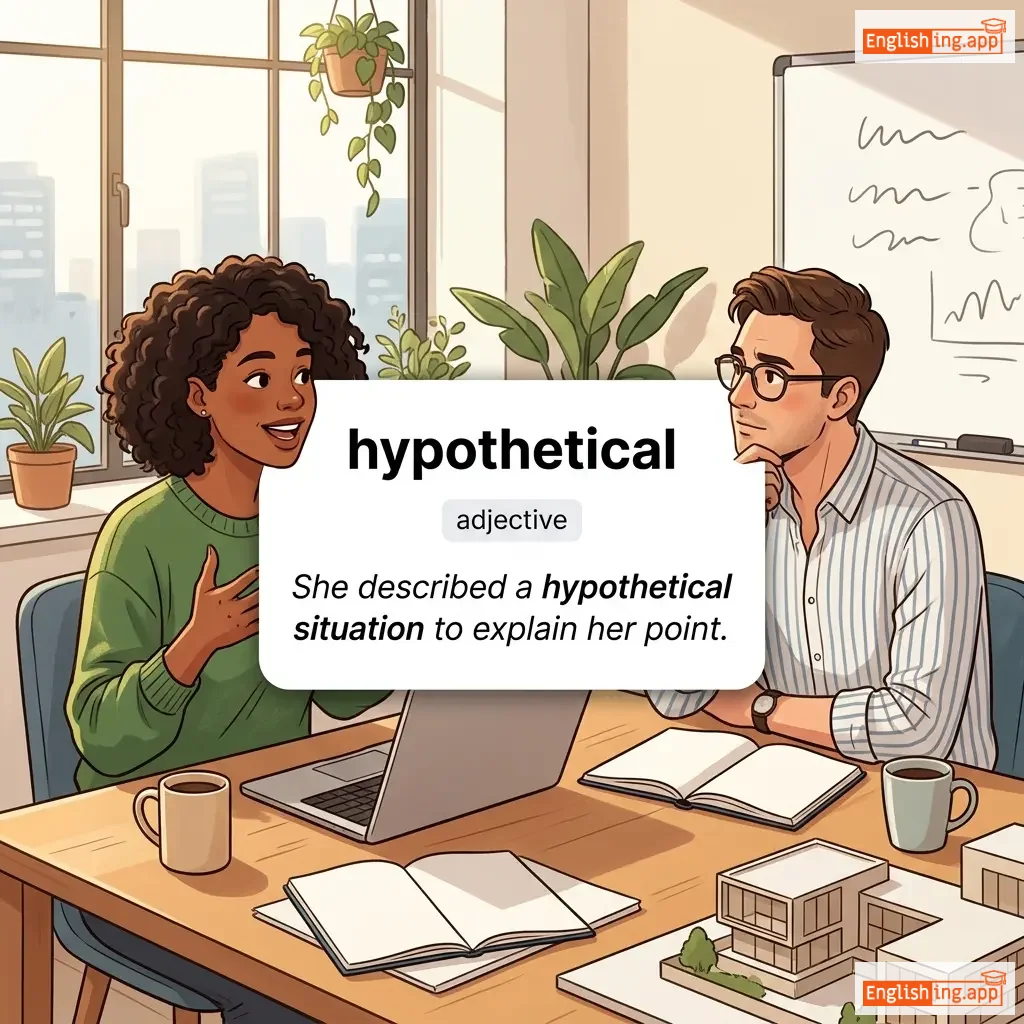
based on or serving as a hypothesis; imagined or supposed for the sake of discussion.
"She described a hypothetical situation to explain her point."
Extremely funny or uncontrollably emotional.
"The comedian's jokes were absolutely hysterical."

