词汇表

英语词汇词典 | 单词含义、定义和示例

noun
/ɡrəˈtjuːɪti/
小费 (xiaofei)

A sum of money given as a tip or a retirement benefit.

"The waiter received a generous gratuity for his excellent service."

"服务员因出色的服务收到了丰厚的小费。" (Fúwùyuán yīn chūsè de fúwù shōu dào le fēnghòu de xiǎofèi.)
noun, adjective
/ɡreɪv/
坟墓 (fénmù)

A place where someone is buried; also used to describe something serious or solemn.

"He visited his grandfather's grave every year."

"他每年都会去拜访他祖父的坟墓。" (Tā měi nián dōu huì qù bàifǎng tā zǔfù de fénmù.)
/ˈɡrævəl/
碎石 (suìshí)

Small stones and pebbles, often mixed with sand, used for paths, roads, and construction.

"The driveway was covered with gravel."

"车道上覆盖着碎石。" (Chēdào shàng fùgài zhe suìshí.)
noun
/ˈɡreɪvstoʊn/
墓碑 (mùbēi)

A stone that marks a grave, usually inscribed with the name of the deceased.

"The gravestone had her name carved beautifully."

"墓碑上刻着她的名字,雕刻得非常精美。" (Mùbēi shàng kèzhe tā de míngzì, diāokè dé fēicháng jīngměi.)
noun
/ˈɡreɪv.jɑːrd/
墓地 (mùdì)

an area of land set aside for burial of the dead; a cemetery

"The old graveyard near the church dates back to the 18th century."
"靠近教堂的老墓地可以追溯到18世纪。" (Kàojìn jiàotáng de lǎo mùdì kěyǐ zhuī sù dào 18 shìjì.)
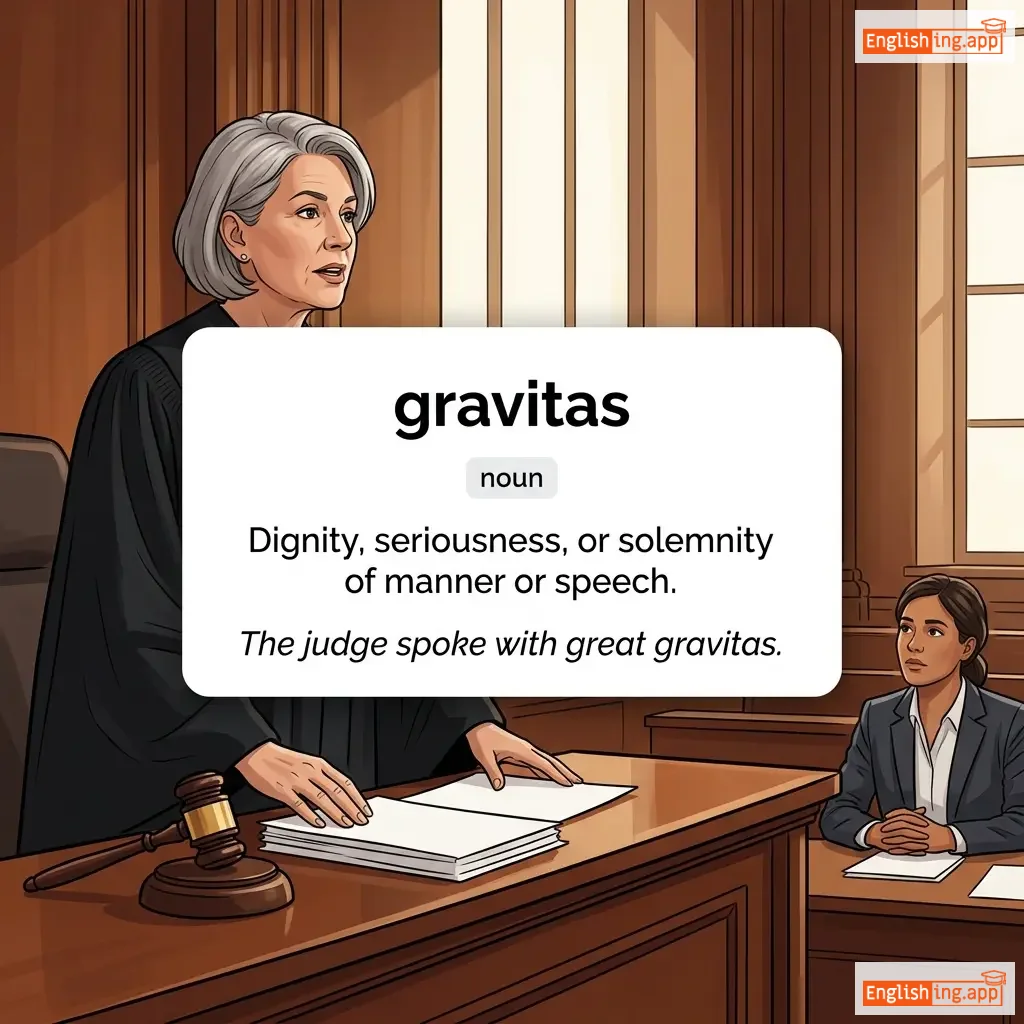
gravitas definition card — visual illustration of the meaning
noun
/ˈɡræv.ɪ.tæs/
重力 (zhongli)

Dignity, seriousness, or solemnity of manner or speech.

"The judge spoke with great gravitas."

"法官以极大的严肃性发言。" (Faguang yi jidada yanshuxing fayan.)
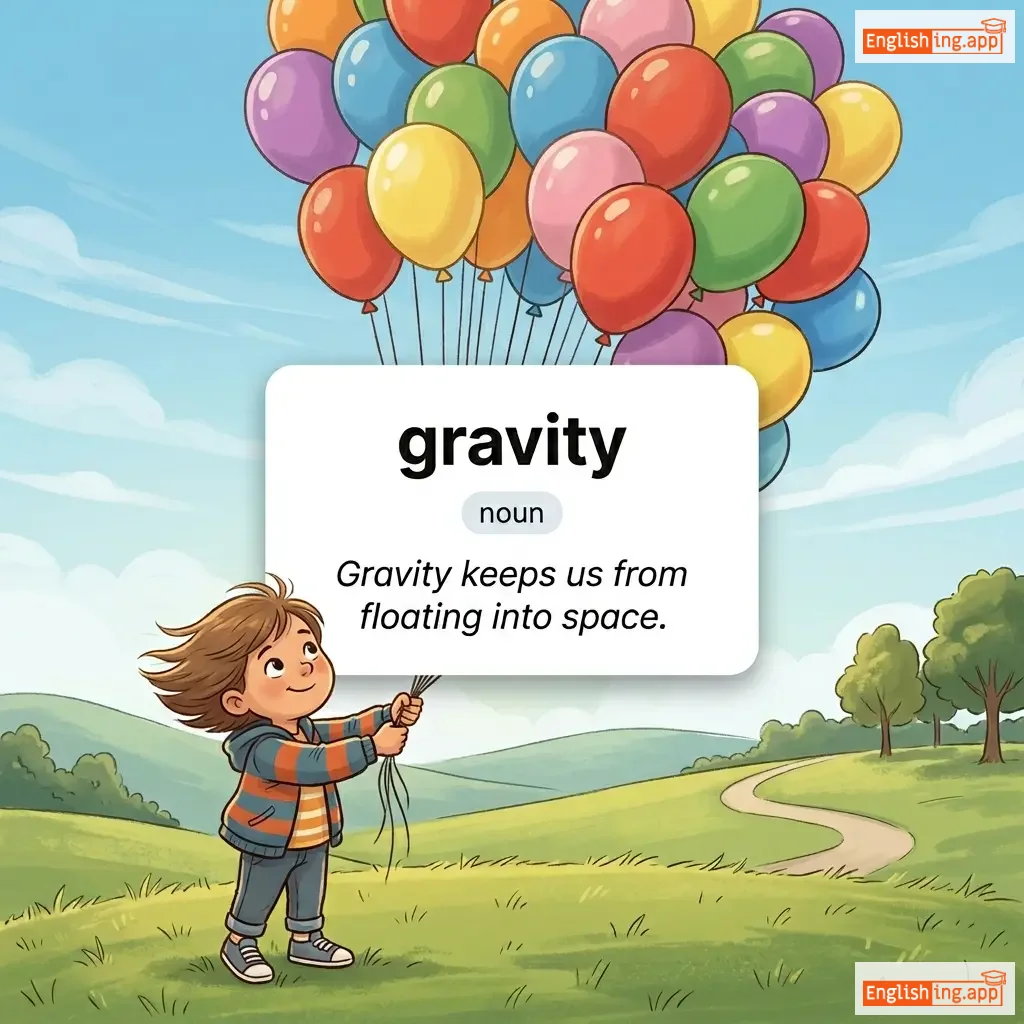
gravity definition card — visual illustration of the meaning
noun
/ˈɡrævəti/

The natural force that attracts objects toward the center of the earth; seriousness or importance.

"Gravity keeps us from floating into space."

adjective, noun
/ɡreɪ/
幸福 (xìngfú)

A color between black and white; also describes dull or gloomy situations.

"The sky turned gray before the storm."

"她在获得奖项时无法掩饰她的幸福。" (Tā zài huòdé jiǎngxiàng shí wúfǎ yǎnshì tā de xìngfú.)
verb
/ɡreɪz/
幸福 (xìngfú)

To feed on grass; to touch or scrape lightly while passing.

"The cows graze in the meadow every morning."

"当她收到奖项时,她无法掩饰她的幸福。" (Dāng tā shōudào jiǎngxiàng shí, tā wúfǎ yǎnshì tā de xìngfú.)
noun/verb
/ˈɡreɪzɪŋ/
吃草 (chī cǎo)

The act of animals eating grass in a field; also lightly touching or scraping against something.

"Cows were grazing peacefully in the meadow."

"奶牛们在草地上安静地吃草。" (Nǎiniúmen zài cǎodì shàng ānjìng de chī cǎo.)
adjective
/ɡreɪt/
伟大 (wěidà)

Of an extent, amount, or intensity considerably above average; very good or important.

"She gave a great performance at the concert."
"她在音乐会上的表现非常出色。" (Tā zài yīnyuè huì shàng de biǎoxiàn fēicháng chūsè.)
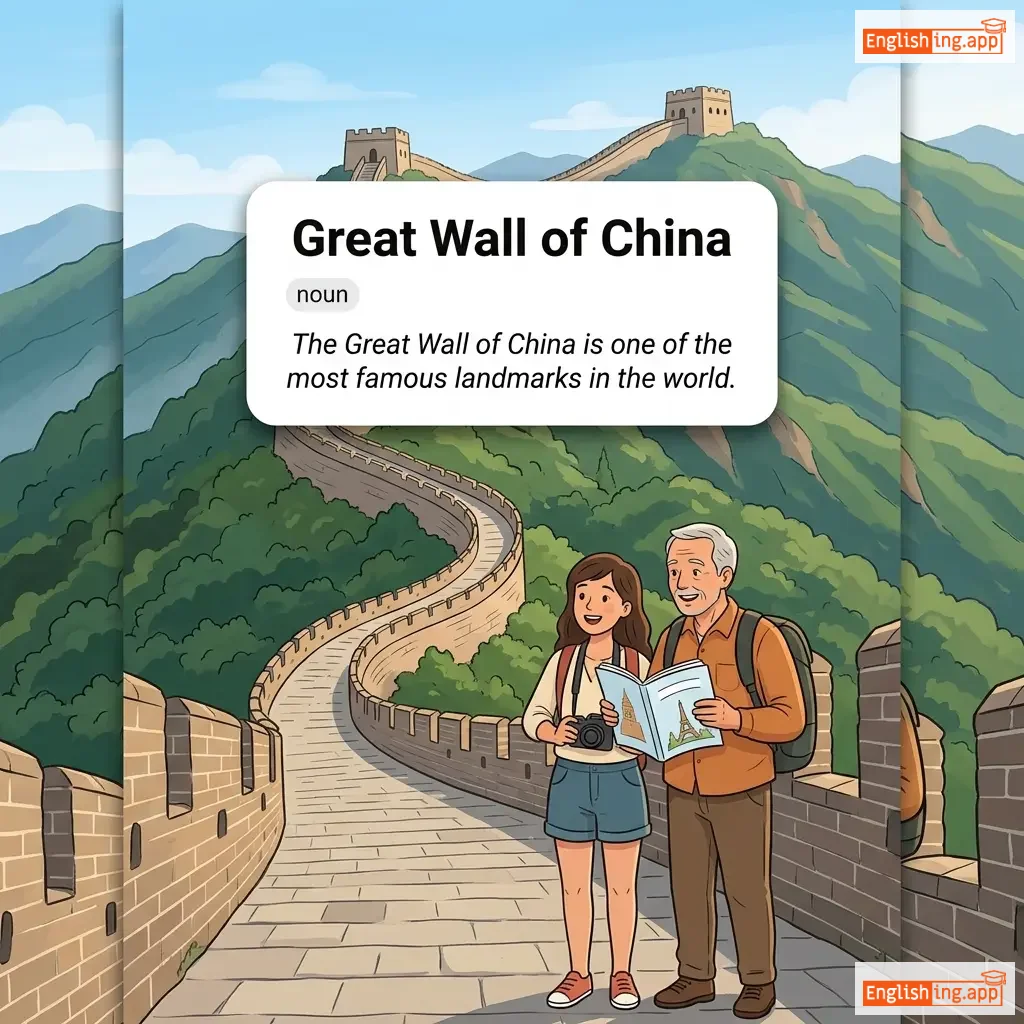
Great Wall of China definition card — visual illustration of the meaning
noun
ɡreɪt wɔːl əv ˈtʃaɪ.nə
中国长城 (Zhōngguó Chángchéng)

A massive ancient fortification system in China, built to protect against invasions and considered one of the most famous landmarks in the world.

"The Great Wall of China is one of the most famous landmarks in the world."

"中国长城是世界上最著名的地标之一。" (Zhōngguó Chángchéng shì shìjiè shàng zuì zhùmíng de dìbiāo zhī yī.)
adjective (superlative)
/ˈɡreɪ.tɪst/
最伟大 (zui wei da)

The highest degree of greatness; the most outstanding or important.

"He is considered one of the greatest leaders of all time."

"他被认为是所有时代最伟大的领导人之一。" (Tā bèi rènwéi shì suǒyǒu shídài zuì wěidà de lǐngdǎo rén zhī yī.)
adverb
/ˈɡreɪtli/
非常 (feichang)

to a large extent or degree; very much

"She was greatly admired by her students."

"她深受学生们的喜爱。" (Ta shen shou xueshengmen de xihuan.)
noun
/ɡriːd/
贪婪 (tanlan)

intense and selfish desire for something, especially wealth, power, or food

"His greed for money led him to make unethical business decisions."

"他对金钱的贪婪让他做出了不道德的商业决策。" (Ta dui jinqian de tanlan rang ta zuochu le budaode de shangye juece.)
adjective
/ɡriːk/
希腊的 (与希腊相关) (Xīlà de (yǔ Xīlà xiāngguān))

relating to Greece, its people, or its language

"We enjoyed delicious Greek food at the restaurant."

"我们在餐馆享用了美味的希腊食物。" (Wǒmen zài cānguǎn xiǎngyòngle měiwèi de Xīlà shíwù.)
adjective
/ɡriːn/
绿色 (lüse)

Of the color between blue and yellow in the spectrum; inexperienced or naive.

"The garden is full of green plants."

"花园里满是绿色的植物。" (Huāyuán lǐ mǎn shì lǜsè de zhíwù.)
noun
/ɡriːn ˈtʃɪl.i/
青辣椒 (qīng làjiāo)

unripe chili pepper that is green in color and has a spicy taste

"She added chopped green chili to the salad for extra heat."

"她将切好的青椒加到沙拉中,以增加辣味。" (Tā jiāng qiē hǎo de qīngjiāo jiā dào shālā zhōng, yǐ zēngjiā là wèi.)
noun
/ɡriːn ˈkəʊ.kə.nʌt/
绿椰子 (lü yēzi)

a young coconut with green outer shell containing refreshing coconut water

"We drank fresh water from a green coconut on the beach."
"我们在海滩上喝了新鲜的绿椰子水。" (Wǒmen zài hǎitān shàng hēle xīnxiān de lǜ yēzi shuǐ.)
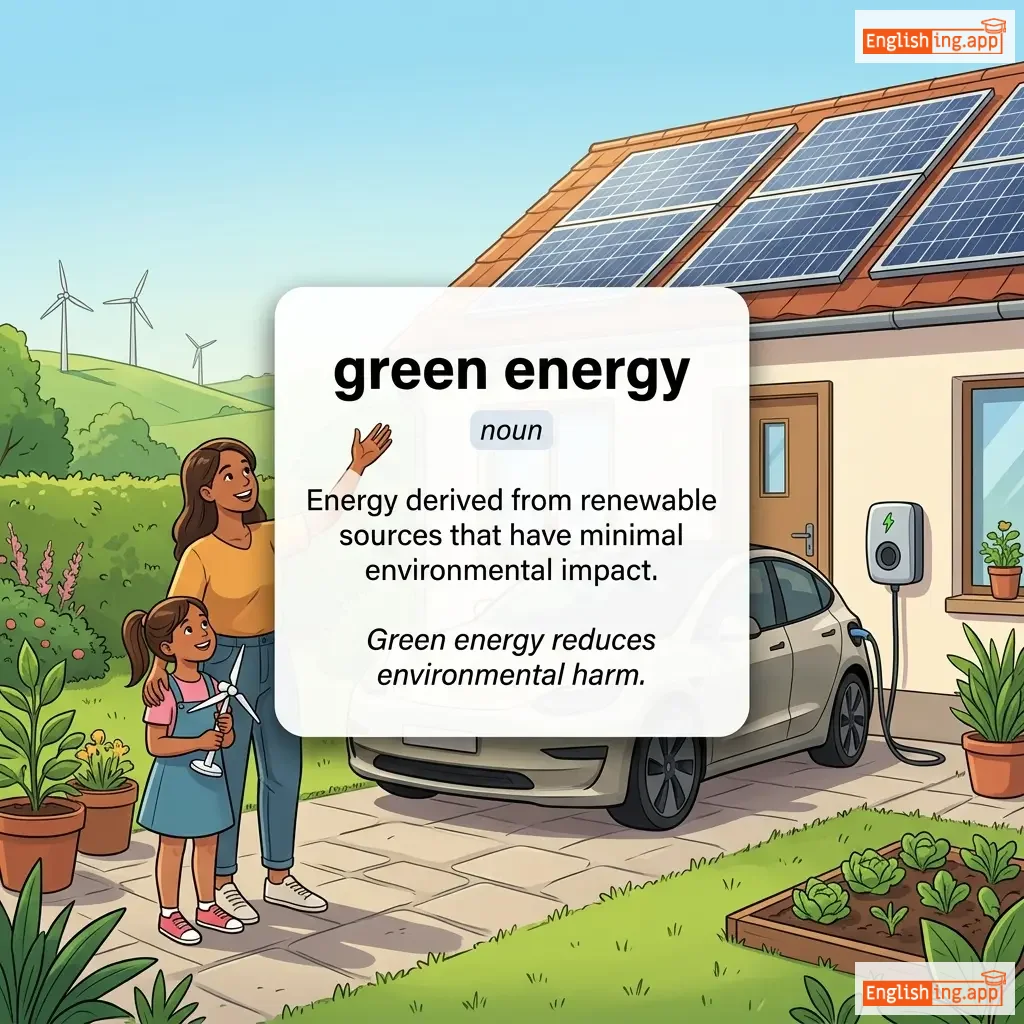
green energy definition card — visual illustration of the meaning
noun
/ˌɡriːn ˈen.ə.dʒi/
绿色能源 (lüse nengyuan)

Energy derived from renewable sources that have minimal environmental impact.

"Green energy reduces environmental harm."

"绿色能源减少了环境破坏。" (Lüse nengyuan jianshao le huanjing pohuai.)
noun
/ɡriːn ˈdʒækfruːt/
青木瓜 (qīng mùguā)

unripe fruit of the jackfruit tree, commonly used as a vegetable in cooking

"Green jackfruit is often used in curries and stews."

"青木瓜常常用在咖喱和炖菜中。" (qīng mùguā chángcháng yòng zài gālí hé dùn cài zhōng)
noun
/ɡriːn pəˈpaɪə/
青木瓜 (qing mùguā)

unripe papaya fruit used as a vegetable in cooking, especially in Asian cuisine

"Green papaya salad is a popular dish in Thai cuisine."

"青木瓜沙拉是泰国菜中一道受欢迎的菜肴。" (Qing mùguā shālā shì Tàiguó cài zhōng yī dào shòu huānyíng de càiyáo.)
noun
/ˈɡriːnhaʊs/
温室 (wenshi)

a glass building used for growing plants, especially in cold climates

"The farmers built a large greenhouse to grow tomatoes in the winter."
"农民们建造了一个大温室,用来在冬天种植番茄。" (Nóngmínmen jiànzàole yīgè dà wēnshì, yòng lái zài dōngtiān zhòngzhí fānqié.)
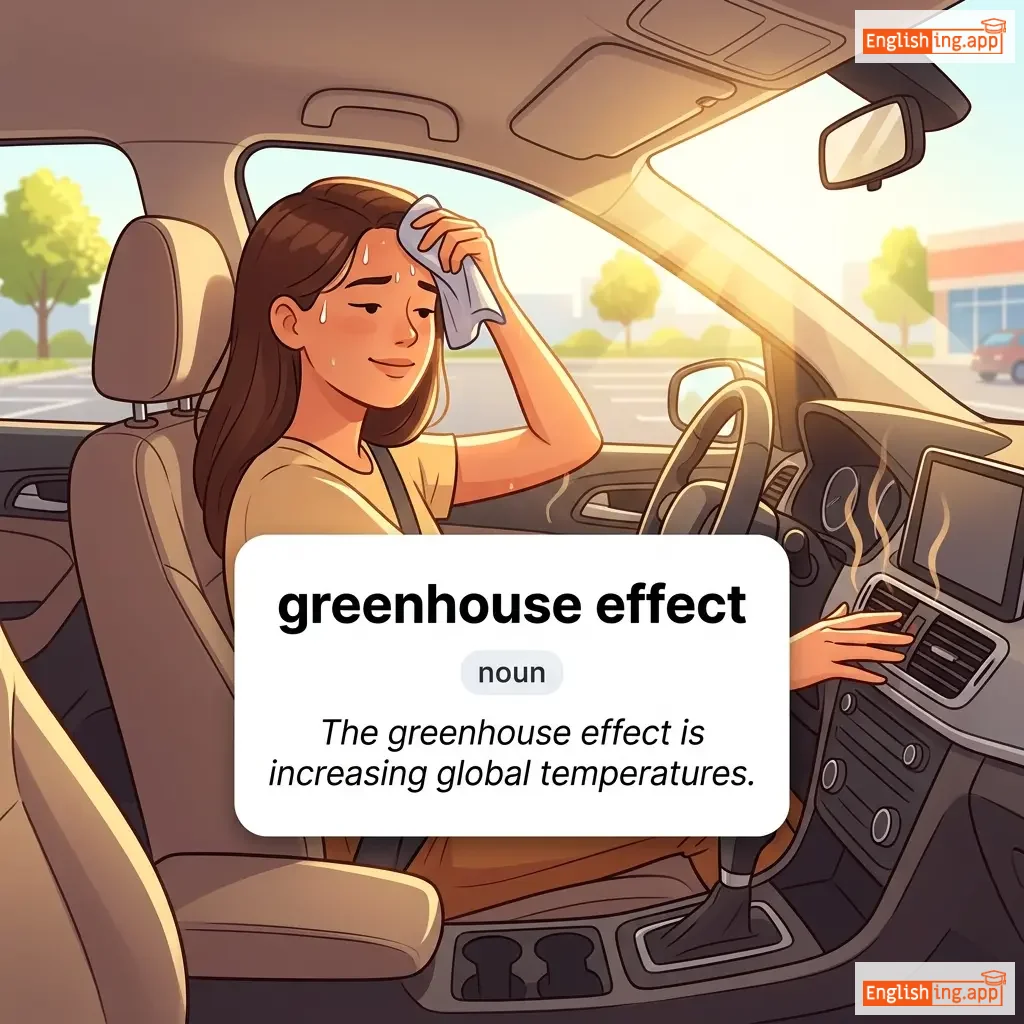
greenhouse effect definition card — visual illustration of the meaning
noun
ˈɡriːn.haʊs ɪˌfɛkt
温室效应 (wēnshì xiàoyìng)

The trapping of the sun's warmth in a planet's lower atmosphere due to the greater transparency of the atmosphere to visible radiation from the sun than to infrared radiation emitted from the planet's surface.

"The greenhouse effect is increasing global temperatures."

"温室效应正在增加全球温度。" (Wēnshì xiàoyìng zhèngzài zēngjiā quánqiú wēndù.)
noun
/ɡriːnz/
绿叶蔬菜 (lvye shucai)

Leafy vegetables such as spinach, lettuce, and cabbage

"Eating greens is important for good health."

"吃绿色蔬菜对健康很重要。" (Chi lǜ yè shū cài duì jiàn kāng hěn zhòng yào.)
greet definition card — visual illustration of the meaning
verb
/ɡriːt/
问候 (wènhòu)

to say hello or welcome someone politely

"She greeted the guests with a warm smile."
"她用温暖的微笑迎接了客人。" (Tā yòng wēnnuǎn de wēixiào yíngjiē le kèrén.)
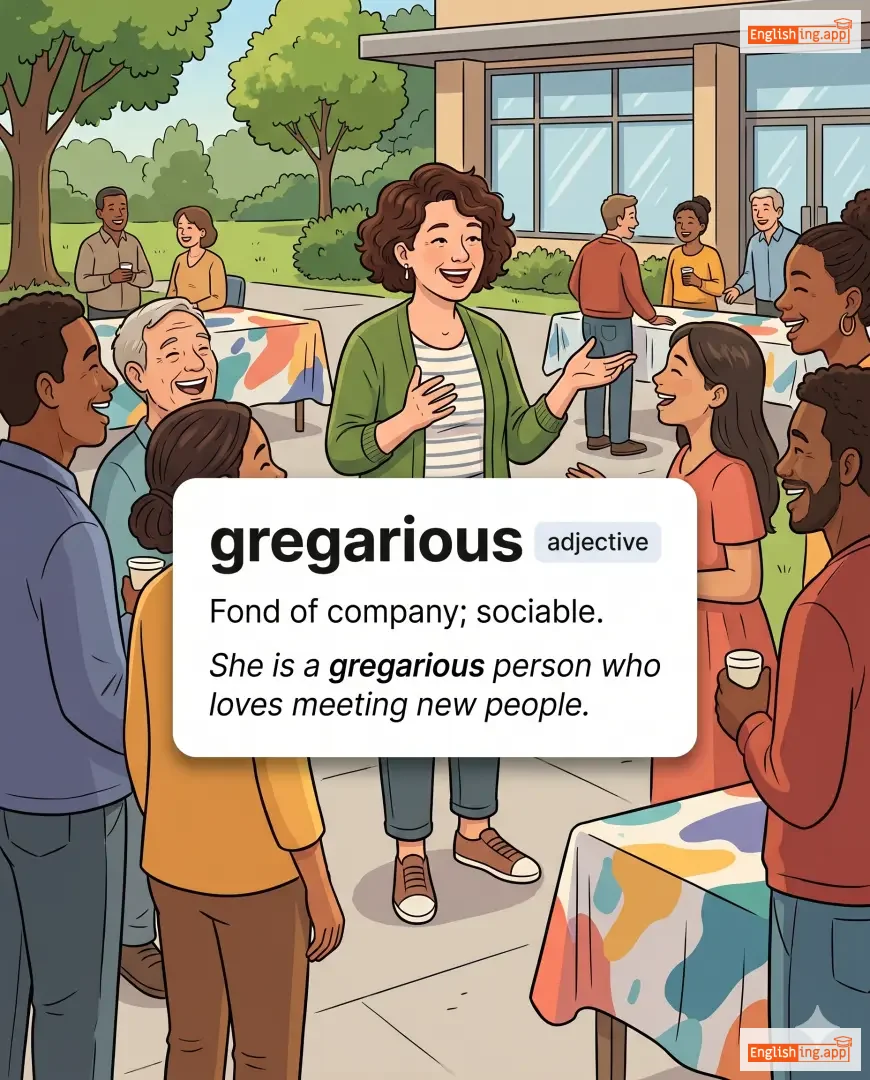
gregarious definition card — visual illustration of the meaning
adjective
/ɡrɪˈɡɛəriəs/
好社交 (hao shejiao)

Fond of company; sociable.

"She is a gregarious person who loves meeting new people."

"她是一个好社交的人,喜欢结识新朋友。" (Ta shi yige hao shejiao de ren, xihuan jieshi xin pengyou.)
noun
/ˌɡrɛnəˈdɪə/
投弹兵 (tóu dàn bīng)

A soldier who specialized in throwing grenades; later used to describe an elite infantryman.

"The grenadier stood proudly at the front of the regiment."

"投弹兵骄傲地站在队列的前方。" (Tóu dàn bīng jiāo ào de zhàn zài duì liè de qián fāng.)
adjective
/ɡreɪ/
灰色 (huise)

having a color between black and white

"The grey clouds indicated that rain was coming."

"灰色的云表明雨水即将到来。" (Huisede yun biaoming yu shui jijiang daolai.)
noun
/ˈɡreɪ.haʊnd/
灵缇犬 (língtì quǎn)

a tall, thin dog with long legs that can run very fast

"The greyhound won the race at the dog track."

"灵缇犬在狗赛道上赢得了比赛。" (língtì quǎn zài gǒu sàidào shàng yíngdéle bǐsài)
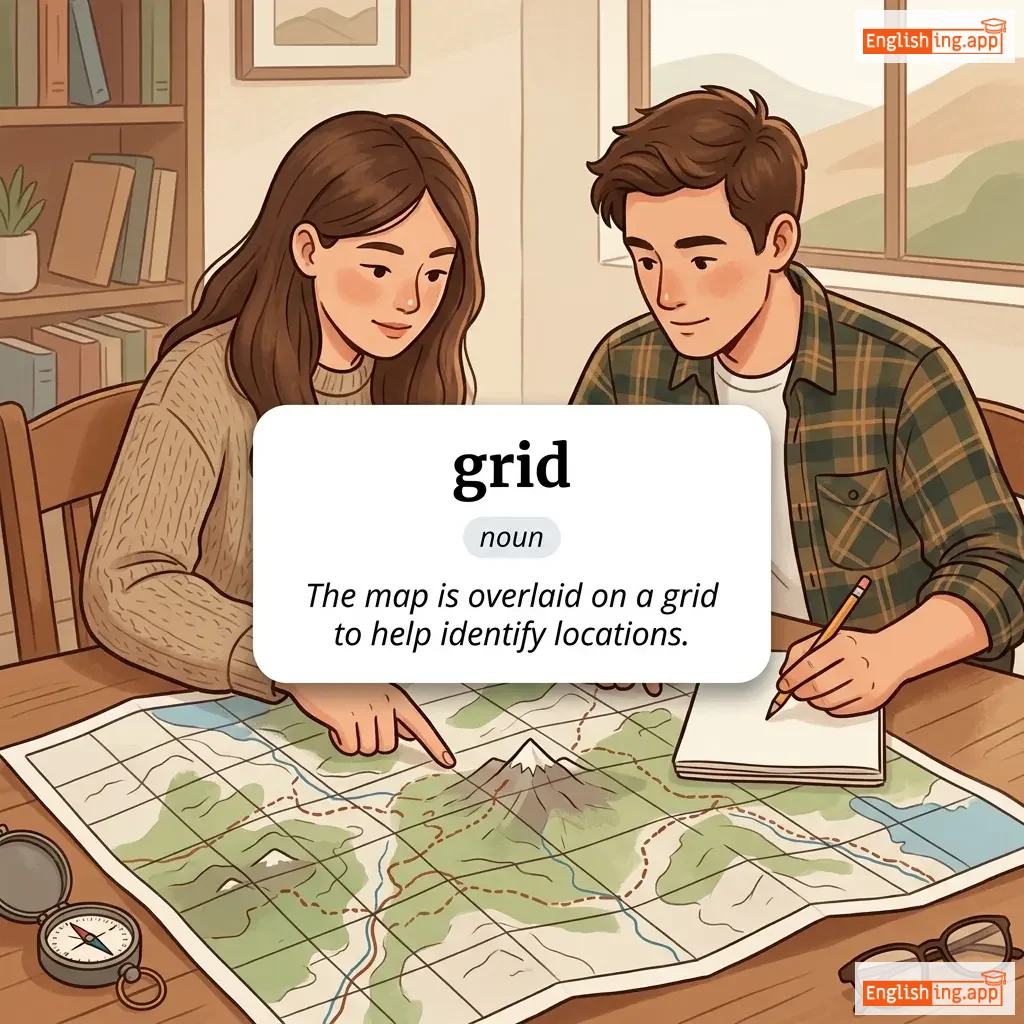
grid definition card — visual illustration of the meaning
noun
/ɡrɪd/
网格 (wangge)

a network of lines that cross each other to form a series of squares or rectangles

"The map is overlaid on a grid to help identify locations."

"地图被叠加在网格上,以帮助识别位置。" (Ditu bei diejia zai wangge shang, yi bangzhu shibie weizhi.)
noun
/ˈɡrɪd.əl/
铁板 (tie ban)

a flat heating surface for cooking food, typically made of metal

"She cooked pancakes on the hot griddle."
"她在热的铁板上煎饼。" (Tā zài rè de tiěbǎn shàng jiānbing.)
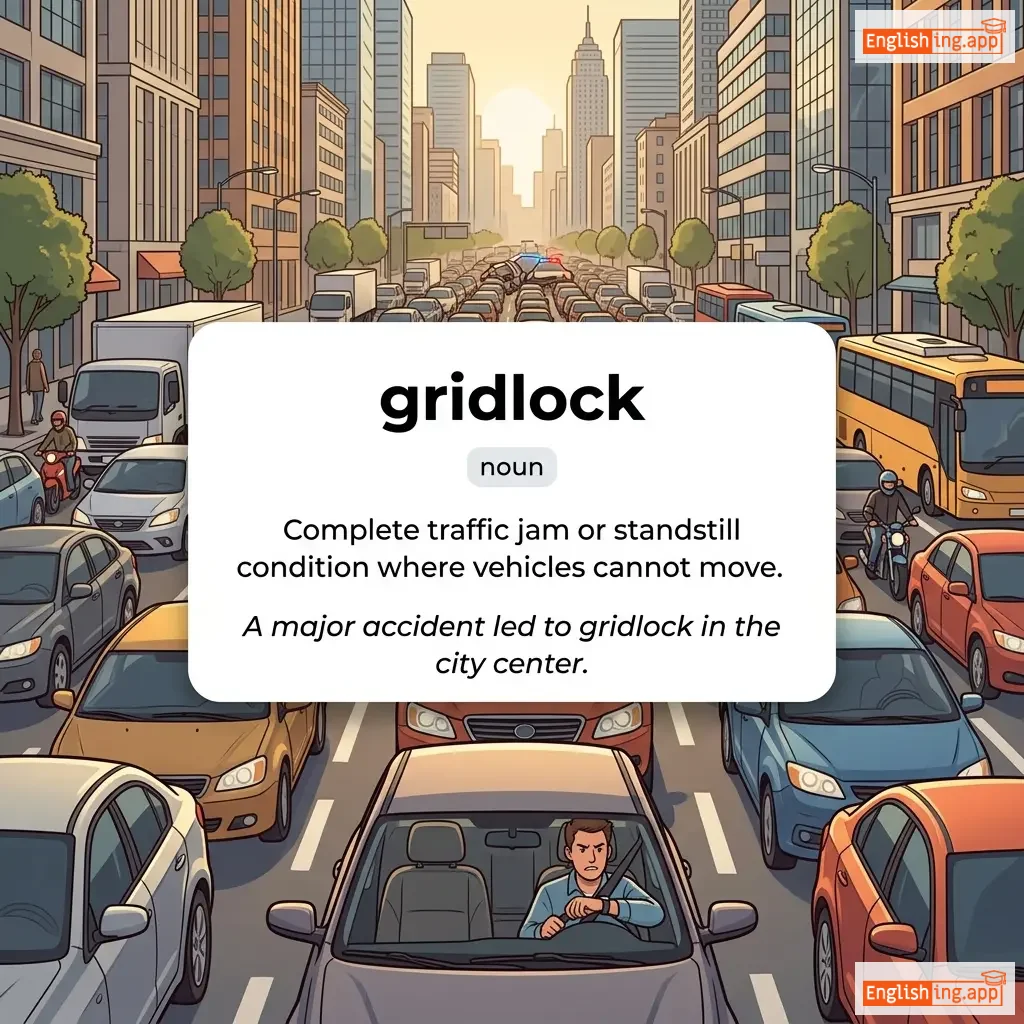
gridlock definition card — visual illustration of the meaning
noun
/ˈɡrɪd.lɒk/
完全的交通阻塞或停滞状态 (wánquán de jiāotōng zǔsè huò tíngzhì zhuàngtài)

Complete traffic jam or standstill condition where vehicles cannot move.

"A major accident led to gridlock in the city center."

"一次重大事故导致了市中心的交通堵塞。" (Yī cì zhòngdà shìgù dǎozhì le shì zhōngxīn de jiāotōng dǔsè.)
noun
/ɡriːf/
悲伤 (bēishāng)

Deep sorrow, especially caused by someone's death.

"She was overcome with grief after her father's passing."

"她在父亲去世后充满了悲伤。" (Tā zài fùqīn qùshì hòu chōngmǎnle bēishāng.)
noun
/ˈɡriːvəns/
幸福 (xìngfú)

A real or imagined cause for complaint, especially unfair treatment.

"The workers voiced their grievances to the management."

"当她获得奖项时,她无法掩饰她的幸福。" (Dāng tā huòde jiǎngxiàng shí, tā wúfǎ yǎnshì tā de xìngfú.)
verb
/ɡriːv/
悲伤 (bēi shāng)

To feel or cause deep sorrow, especially due to someone's death.

"She continues to grieve the loss of her best friend."

"她继续为失去最好的朋友而悲伤。" (Tā jìxù wèi shīqù zuì hǎo de péngyǒu ér bēi shāng.)
adjective
/ˈɡriːvəs/
严重 (yánzhòng)

Causing great pain, suffering, or sorrow.

"The accident was a grievous blow to the community."

"这次事故对社区来说是一个严重的打击。" (Zhè cì shìgù duì shèqū lái shuō shì yīgè yánzhòng de dǎjí.)
🍗

grill

noun, verb
/ɡrɪl/

a metal frame used for cooking food over an open fire; to cook food on such a frame

"We grilled some chicken for dinner."

adjective
/ɡrɪm/
严峻 (yanjun)

very serious or gloomy in appearance or outlook

"The future looked grim after the disaster."

"灾难之后,未来看起来非常严峻。" (Zainan zhihou, weilai kan qilai feichang yanjun.)
verb, noun
/ˈɡrɪməs/
鬼脸 (guǐliǎn)

to make an ugly, twisted expression on one's face, usually in disgust or pain

"He grimaced when he tasted the sour fruit."

"他品尝到酸果实时做了一个鬼脸。" (Tā pǐncháng dào suān guǒshí shí zuòle yīgè guǐliǎn.)
verb, noun
/ɡrɪn/
露出牙齿笑,通常是开心的笑 (lùchū yáchǐ xiào, tōngcháng shì kāixīn de xiào)

to smile broadly, often showing teeth

"She grinned happily at the good news."

"她高兴地露出牙齿笑着听到好消息。" (Tā gāoxìng de lùchū yáchǐ xiào zhe tīng dào hǎo xiāoxī.)
grind definition card — visual illustration of the meaning
verb
/ɡraɪnd/
研磨 (yánmó)

to break something into small pieces or powder by pressing or crushing it

"She grinds the coffee beans every morning for fresh coffee."

"她每天早上研磨咖啡豆来做新鲜咖啡。" (Tā měitiān zǎoshang yánmó kāfēi dòu lái zuò xīnxiān kāfēi.)
noun
/ˈɡraɪndstoʊn/
磨刀石 (mó dāo shí)

a thick disc of stone used for grinding, sharpening, or polishing tools

"The blacksmith sharpened his blade on the grindstone."

"铁匠在磨刀石上磨快了他的刀片。" (tiě jiàng zài mó dāo shí shàng mó kuài le tā de dāo piàn.)
verb
/ɡrɪp/
抓住 (zhuazhu)

to hold something tightly or firmly

"He gripped the steering wheel tightly."

"他紧握着方向盘。" (Tā jǐn wò zhe fāngxiàng pán.)
verb
/ɡraɪp/
抱怨 (baoyuan)

to complain about something in an annoying way

"He is always griping about the weather."

"他总是抱怨天气。" (Ta zongshi baoyuan tianqi.)
adjective
/ˈɡrɪz.li/
可怕 (kěpà)

causing horror or disgust

"The police discovered a grisly scene at the crime site."
"警方在犯罪现场发现了一个可怕的场景。" (Jǐngfāng zài fànzuì xiànchǎng fāxiànle yīgè kěpà de chǎngjǐng.)
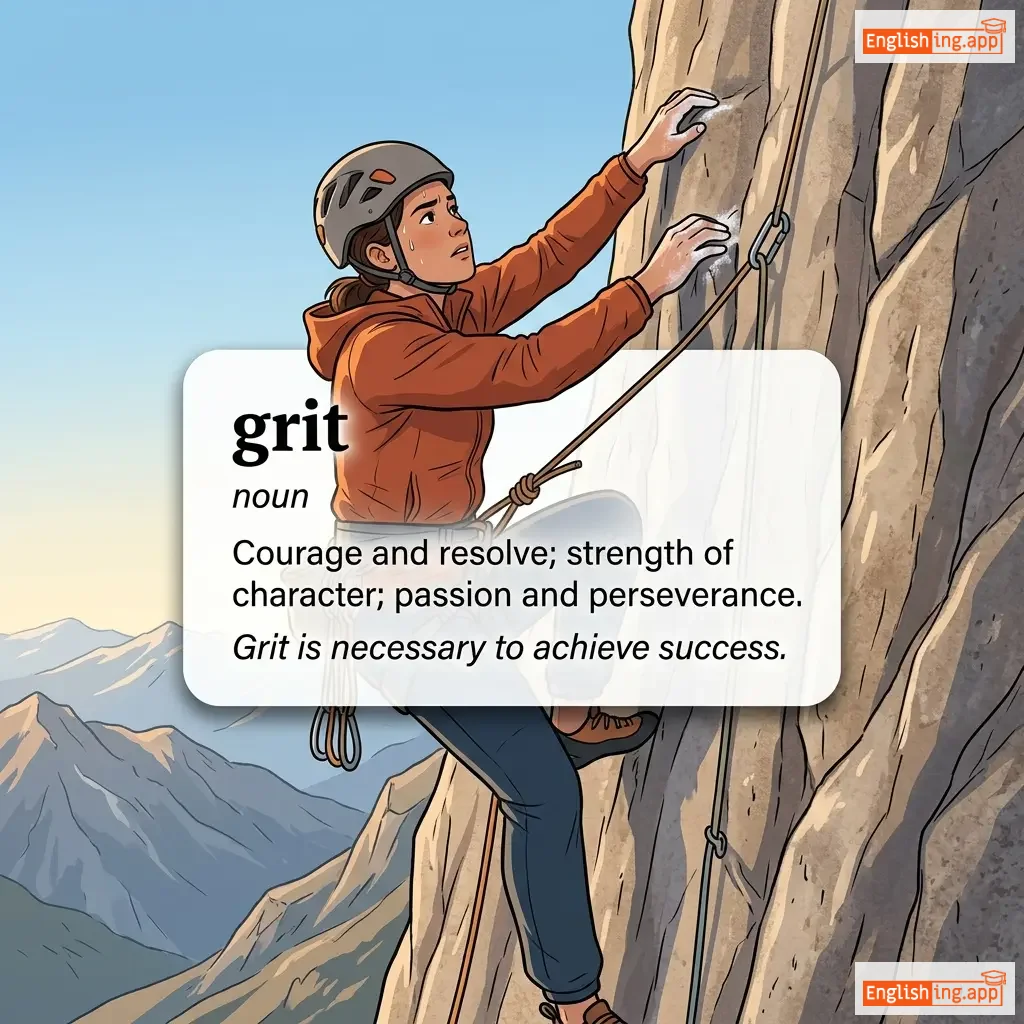
grit definition card — visual illustration of the meaning
noun
/ɡrɪt/
坚韧,勇气,毅力 (jiān rèn, yǒng qì, yì lì)

Courage and resolve; strength of character; passion and perseverance.

"Grit is necessary to achieve success."

"决心是取得成功的必要条件。" (Juéxīn shì qǔdé chénggōng de bìyào tiáojiàn.)
noun
/ˈɡroʊ.sər/
杂货商 (záhuòshāng)

a person who sells food and household goods in a shop

"The grocer has fresh vegetables and fruits in his store."

"杂货商店里有新鲜的水果和蔬菜。" (Záhuò shāngdiàn lǐ yǒu xīnxiān de shuǐguǒ hé shūcài.)
noun
/ˈɡroʊ.sər.i/
杂货店 (záhuò diàn)

A store that sells food and household supplies.

"She went to the grocery to buy vegetables."

"她去杂货店买蔬菜。" (Tā qù záhuò diàn mǎi shūcài.)
noun
/ˈɡrəʊsəri ʃɒp/
杂货店 (zahuodian)

a retail store where food and everyday household items are sold

"She stopped by the grocery shop to buy vegetables and milk."

"她去杂货店买蔬菜和牛奶。" (ta qu zahuodian mai shucai he niunai)