词汇表

英语词汇词典 | 单词含义、定义和示例

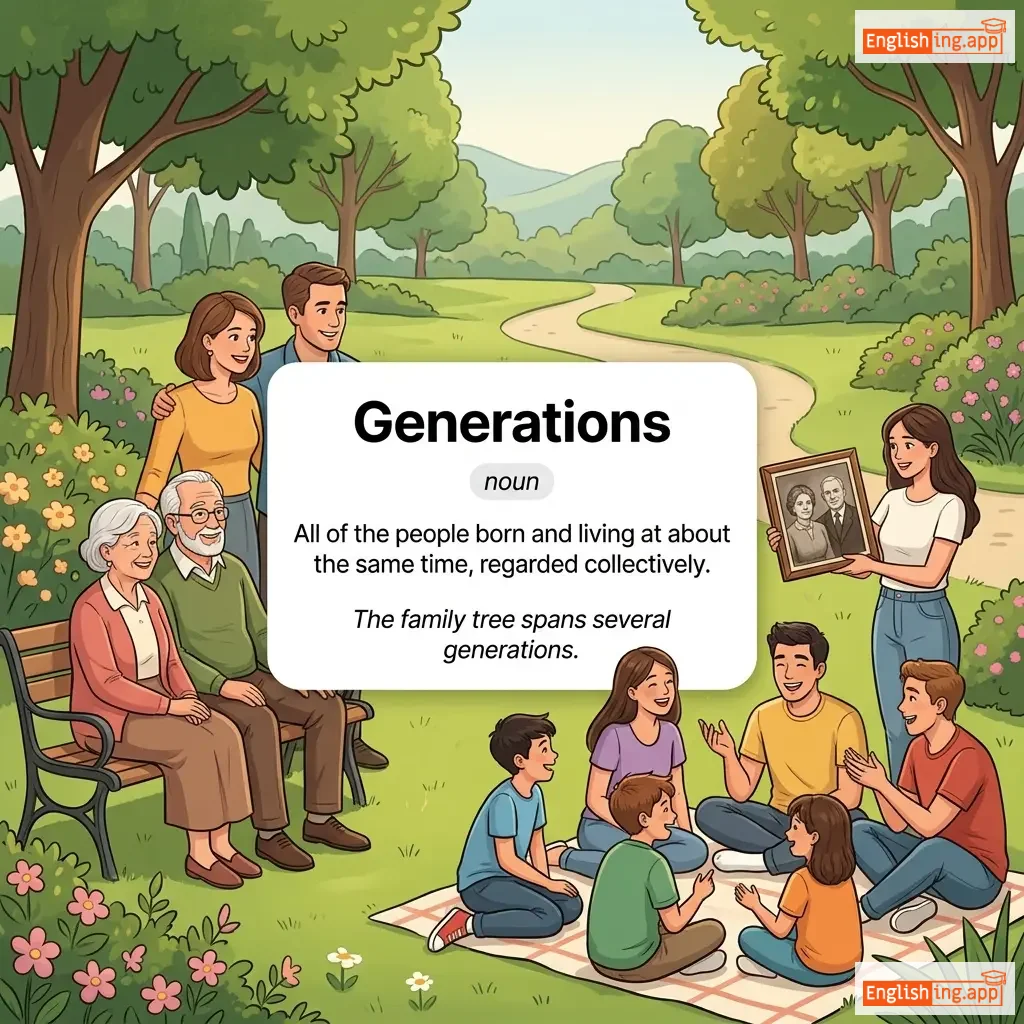
Generations definition card — visual illustration of the meaning
noun
ˌdʒɛnəˈreɪʃənz
几代人 (jǐ dài rén)

All of the people born and living at about the same time, regarded collectively.

"The family tree spans several generations."

"家族树跨越了好几代。" (Jiāzú shù kuàyuè le hǎo jǐ dài.)
adjective
/dʒəˈnɛrɪk/
通用 (tōngyòng)

characteristic of or relating to a whole group or class; not specific

"This medicine is available in generic form."

"这种药物以通用形式提供。" (Zhè zhǒng yàowù yǐ tōngyòng xíngshì tígōng.)
noun
/ˌdʒɛnəˈrɒsəti/
慷慨 (kanggai)

the quality of being kind and willing to give more than necessary

"Her generosity impressed everyone at the event."

"她的慷慨在活动中给所有人留下了深刻印象。" (Ta de kanggai zai huodong zhong gei suoyouren liuxia le shenke yinxiang.)
adjective
/ˈdʒɛnərəs/
慷慨 (kangkai)

willing to give or share more than is necessary; kind and giving

"She is very generous with her time and money."

"她在时间和金钱上非常慷慨。" (Ta zai shijian he jinqian shang feichang kangkai.)
adverb
/ˈdʒenərəsli/
慷慨地 (kangai de)

in a kind, giving, or unselfish manner; in a plentiful or abundant way

"She generously donated money to help the poor."

"她慷慨地捐钱帮助穷人。" (ta kangai de juan qian bangzhu qiongren)
genesis definition card — visual illustration of the meaning
noun
/ˈdʒɛnəsɪs/
起源 (qiyuan)

the origin or beginning of something

"The book explores the genesis of modern technology."
"这本书探讨了现代科技的起源。" (Zhe ben shu tantao le xiandai keji de qiyuan.)
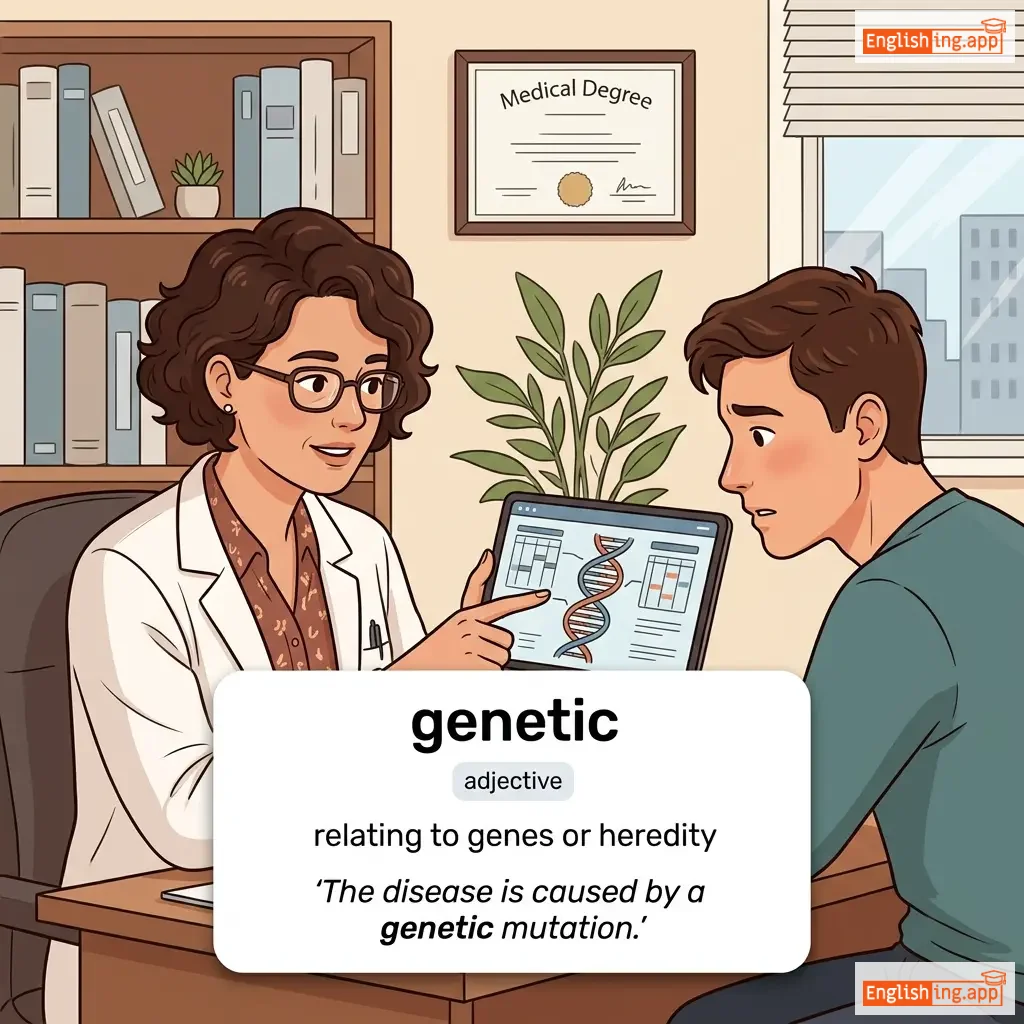
genetic definition card — visual illustration of the meaning
adjective
/dʒəˈnɛtɪk/
遗传的 (yíchuán de)

relating to genes or heredity

"The disease is caused by a genetic mutation."
"这种疾病是由基因突变引起的。" (zhè zhǒng jí bìng shì yóu jī yīn tū biàn yǐn qǐ de.)
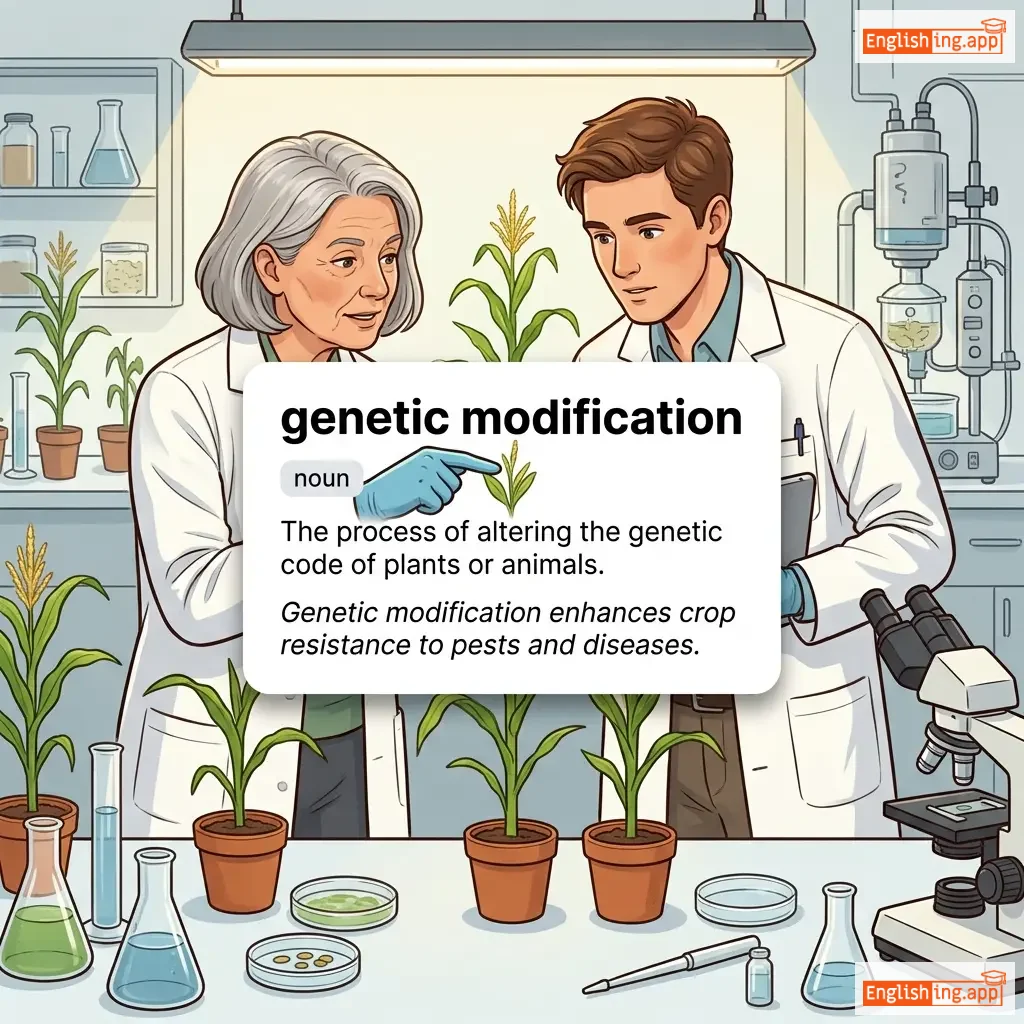
genetic modification definition card — visual illustration of the meaning
noun
dʒəˈnɛt.ɪk ˌmɒd.ɪ.fɪˈkeɪ.ʃən
基因修改 (jīyīn xiūgǎi)

The process of altering the genetic code of plants or animals.

"Genetic modification enhances crop resistance to pests and diseases."
"基因修改提高作物对害虫和疾病的抗性。" (Jīyīn xiūgǎi tígāo zuòwù duì hàichóng hé jíbìng de kàngxìng.)
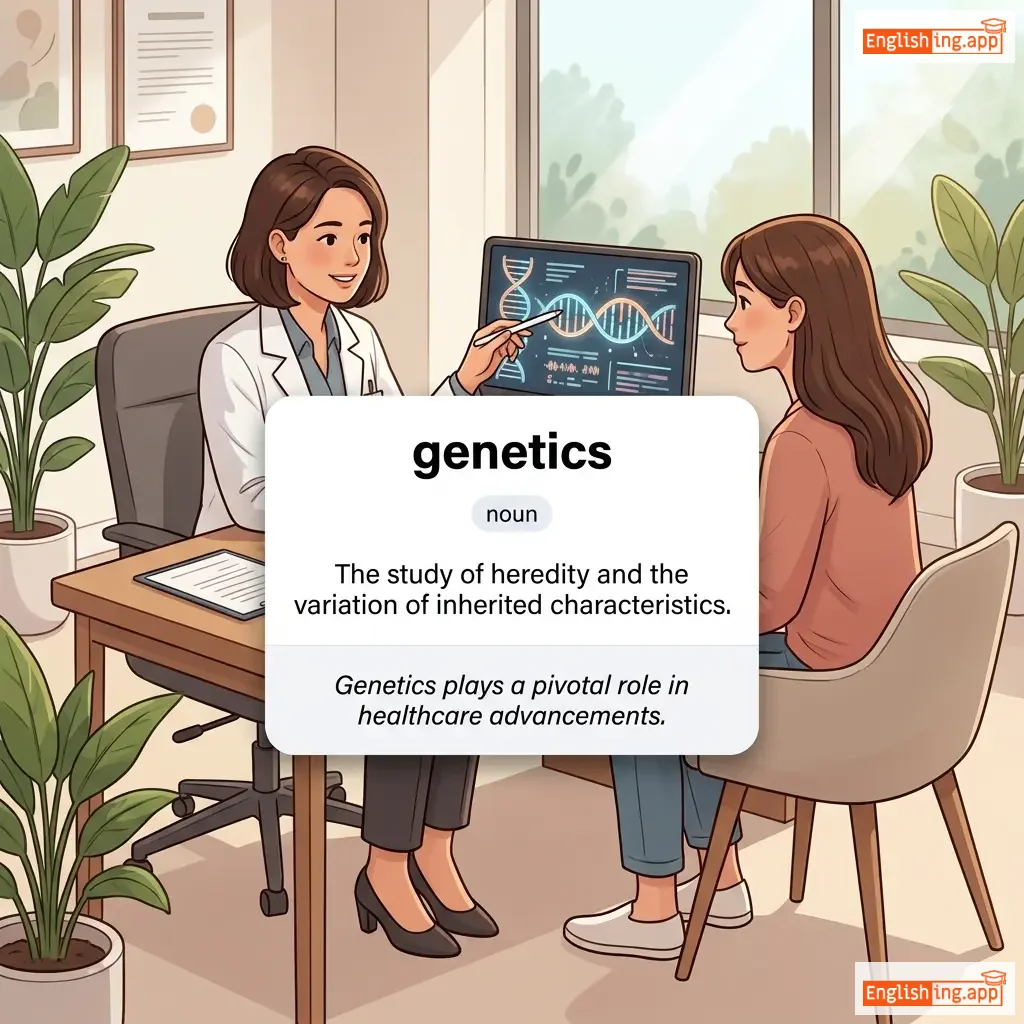
genetics definition card — visual illustration of the meaning
noun
dʒəˈnet.ɪks
遗传学 (yíchuánxué)

The study of heredity and the variation of inherited characteristics.

"Genetics plays a pivotal role in healthcare advancements."

"遗传学在医疗保健进步中起着至关重要的作用。" (Yíchuánxué zài yīliáo bǎojiàn jìnbù zhōng qǐzhuó zhìguān zhòngyào de zuòyòng.)
adjective
/ˈdʒiː.ni.əl/
亲切 (qīnqiè)

friendly, cheerful, and pleasant

"She greeted us with a genial smile."
"她带着一个亲切的微笑迎接我们。" (Tā dàizhe yīgè qīnqiè de wēixiào yíngjiē wǒmen.)
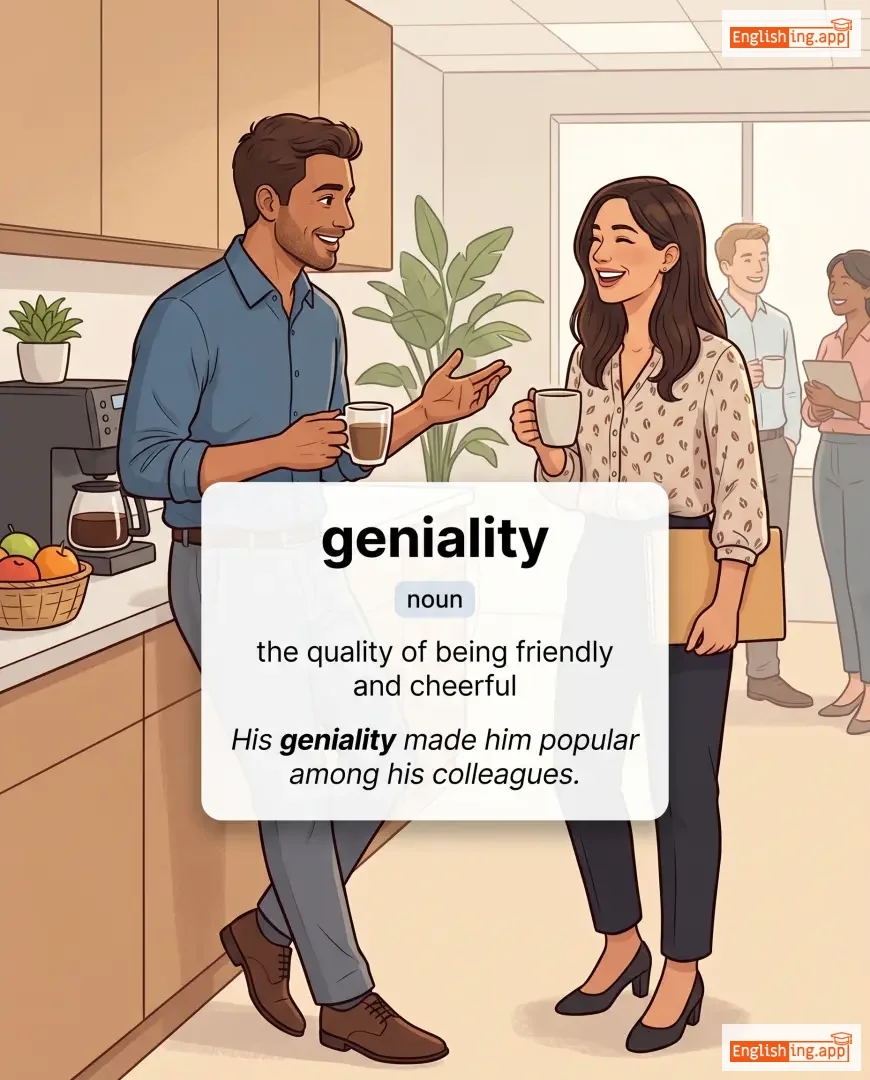
geniality definition card — visual illustration of the meaning
noun
/ˌdʒiː.niˈæl.ə.ti/
友好 (youhao)

the quality of being friendly and cheerful

"His geniality made him popular among his colleagues."

"他的友好使他在同事中很受欢迎。" (Tade youhao shi ta zai tongshi zhong hen shou huanying.)
adjective
/ˈdʒen.ɪ.təl/
与生殖器官相关 (yu shēngzhí qìguān xiāngguān)

relating to the reproductive organs

"The doctor explained the importance of genital hygiene."

"医生解释了生殖器卫生的重要性。" (Yīshēng jiěshìle shēngzhí qì wèi shēngzhí yǐngxiǎng.)
adjective
/ˈdʒen.ɪ.tɪv/
所有格 (suǒyǒugé)

relating to or denoting a case of nouns and pronouns indicating possession

"In English, the genitive case is often shown with an apostrophe and 's'."

"在英语中,所有格通常通过撇号和's'来表示。" (Zài yīngyǔ zhōng, suǒyǒugé tōngcháng tōngguò piěhào hé 's' lái biǎoshì.)
noun
/ˈdʒiːniəs/
天才 (tiāncái)

a person with exceptional intellectual or creative ability

"Einstein was a scientific genius."
"爱因斯坦是一个科学天才。" (Ài yīn sī tǎn shì yīgè kēxué tiāncái.)
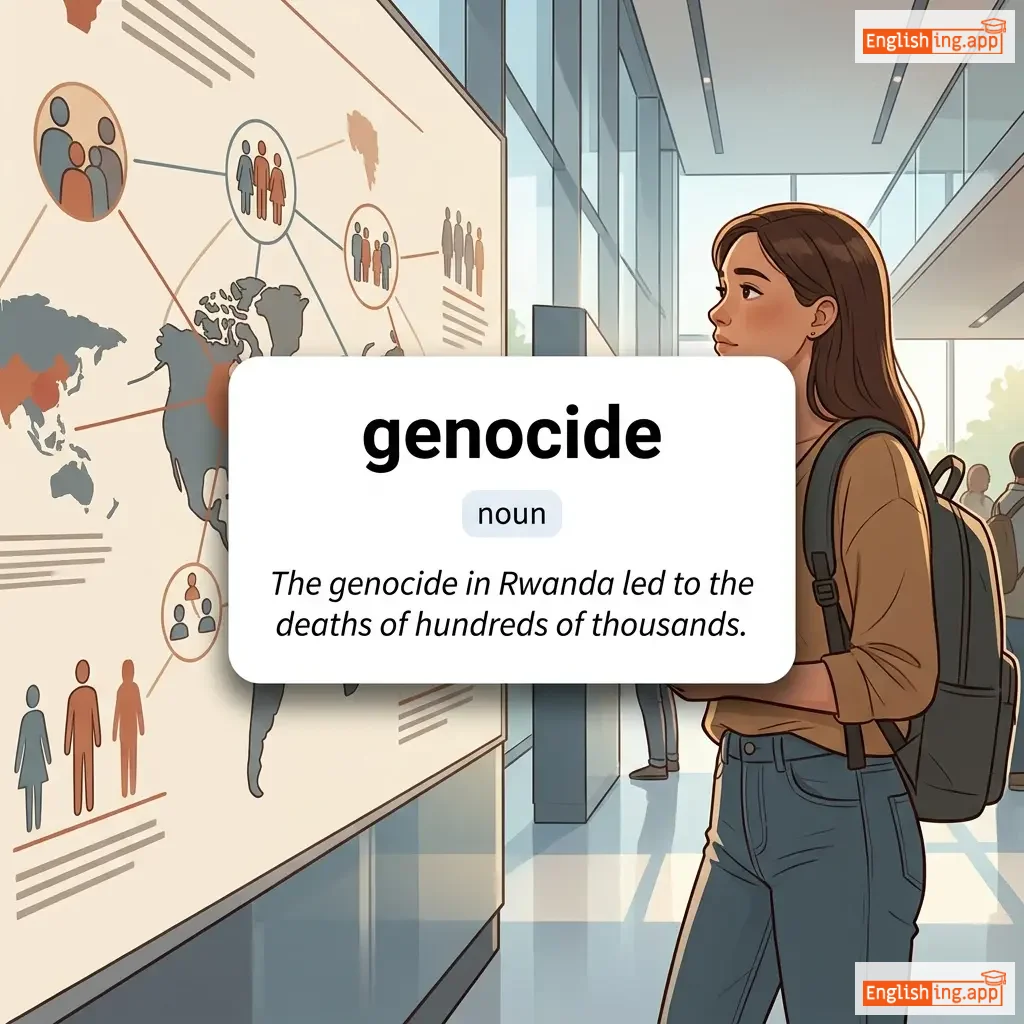
genocide definition card — visual illustration of the meaning
noun
/ˈdʒɛnəˌsaɪd/
种族灭绝 (zhǒngzú mièjué)

the deliberate killing of a large number of people from a particular nation or ethnic group with the aim of destroying that nation or group

"The genocide in Rwanda led to the deaths of hundreds of thousands."

"卢旺达的种族灭绝导致了数十万人死亡。" (Lúwàngdá de zhǒngzú mièjué dǎozhìle shù shí wàn rén sǐwáng.)
noun
/ˈʒɑːn.rə/
类型 (leixing)

a style or category of art, music, or literature

"Romance is her favorite genre of movies."

"浪漫是她最喜欢的电影类型。" (Langman shi ta zui xihuan de dianying leixing.)
adjective
/dʒɛnˈtiːl/
文雅 (wenya)

Polite, refined, or respectable, often in an affected or exaggerated way

"She spoke in a genteel manner that impressed the guests."

"她以一种文雅的方式说话,给客人留下了深刻的印象。" (Ta yi yizhong wenya de fangshi shuohua, gei keren liuxiala shenke de yinxiang.)
noun
/ˈdʒɛntaɪl/
外邦人 (waibangren)

A person who is not Jewish

"The synagogue welcomed both Jews and Gentiles."

"犹太会堂欢迎犹太人和外邦人。" (Yóutài huìtáng huānyíng yóutàirén hé wàibāngrén.)
noun
/dʒɛnˈtɪlɪti/
优雅 (youya)

Social superiority demonstrated by polite manners, refinement, or respectability

"His speech revealed an air of gentility."

"他的演讲透露了一种优雅的气质。" (Tā de yǎnjiǎng tòulùle yī zhǒng yōuyǎ de qìzhì.)
adjective
/ˈdʒɛntəl/
温柔 (wenrou)

Kind, mild, or tender in nature or behavior

"He was always gentle with children."

"他总是对孩子们很温柔。" (Tā zǒng shì duì háizimen hěn wēnróu.)
noun
/ˈdʒɛntəlmən/
绅士 (shēnshì)

a man who is polite, courteous, and honorable

"He opened the door for her like a true gentleman."

"他像一个真正的绅士一样为她开了门。" (tā xiàng yī gè zhēnzhèng de shēnshì yīyàng wèi tā kāi le mén.)
adverb
/ˈdʒɛntli/
温柔地 (wēnróu de)

in a kind, careful, or soft way

"She gently placed the baby in the crib."

"她温柔地把宝宝放在摇篮里。" (Tā wēnróu de bǎ bǎobǎo fàng zài yáolán lǐ.)
noun
/ˈdʒɛntri/
贵族阶层 (guìzú jiēcéng)

People of good social position, usually of high birth or wealthy landowners

"The gentry of the town gathered for the annual ball."

"城市的贵族阶层聚集在一起参加年度舞会。" (Chéngshì de guìzú jiēcéng jùjí zài yīqǐ cānjiā niándù wǔhuì.)
verb
/ˈdʒɛn.juˌflɛkt/

to bend one or both knees as a sign of reverence or worship

"The worshippers genuflect before the altar."

adjective
/ˈdʒɛnjʊɪn/
真正的 (zhenzheng de)

real and authentic; not fake or artificial

"This is a genuine leather bag."

"这是一个真正的皮革包。" (Zhe shi yige zhenzheng de pigua bao.)
adverb
/ˈdʒɛnjʊɪnli/
真心 (zhēn xīn)

in a truthful and sincere way

"She genuinely cares about the environment."

"她真心关心环境。" (Tā zhēn xīn guān xīn huán jìng.)
noun
/ˈdʒiː.nəs/
(shu)

a category in biological classification ranking above species and below family

"The tiger belongs to the genus Panthera."

"老虎属于豹属 Panthera。" (Laohu shuyu baoshu Panthera.)
adjective
/ˌdʒiːəˈɡræfɪkəl/
地理的 (dili de)

relating to geography; connected with the physical features, location, or characteristics of the Earth or a particular area

"The country’s geographical position makes it an important trading hub."

"这个国家的地理位置使它成为重要的贸易中心。" (zhege guojia de dili weizhi shi ta chengwei zhongyao de maoyi zhongxin)
noun
/dʒiˈɒɡrəfi/
地理 (dili)

the study of the Earth’s physical features, climates, populations, and the relationships between people and their environments

"She studies geography to understand how landscapes and human societies interact."
"她学习地理来理解世界。" (ta xuexi dili lai lijie shijie)
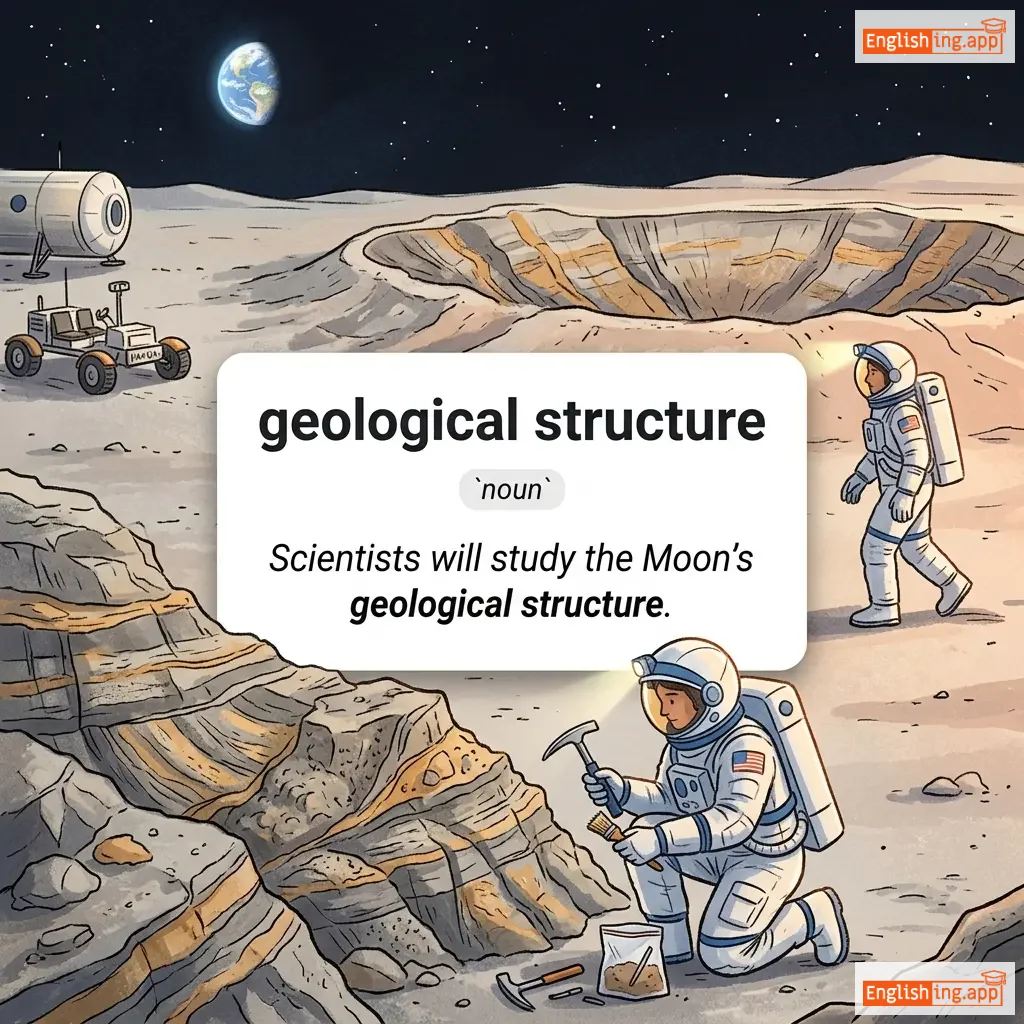
geological structure definition card — visual illustration of the meaning
noun
ˌdʒiːəˈlɒdʒɪkəl ˈstrʌktʃər
地质结构 (dizhi jie gou)

The arrangement and composition of rocks, minerals, and landforms in the Earth's crust.

"Scientists will study the Moon's geological structure."

"科学家将研究月球的地质结构。" (Kexuejia jiang yanjiu yueqiu de dizhi jie gou.)
noun
/dʒiˈɒl.ə.dʒi/
地质学 (dìzhìxué)

the science that deals with the Earth's physical structure and substances

"She studied geology to understand earthquakes."
"她学习地质学以了解地震。" (Tā xuéxí dìzhìxué yǐ liǎojiě dìzhèn.)
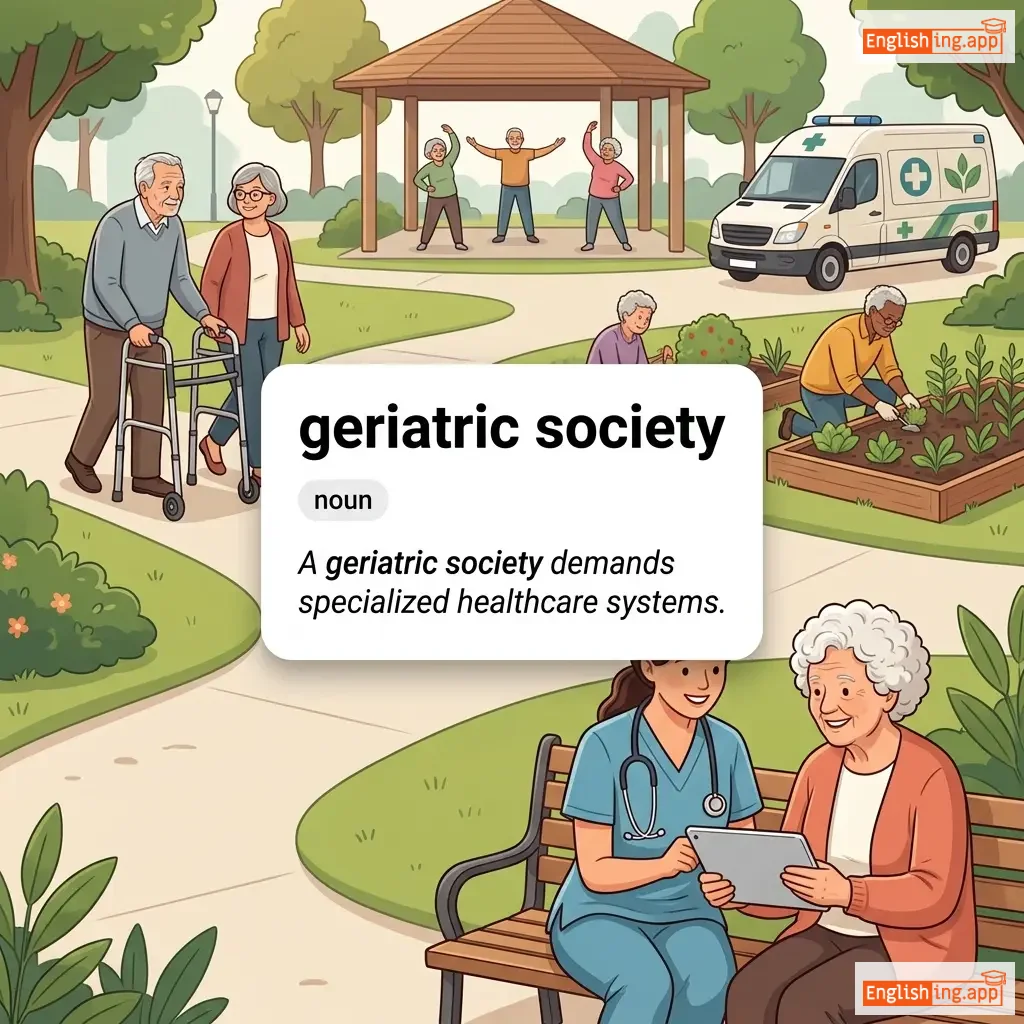
geriatric society definition card — visual illustration of the meaning
noun
ˌdʒɛriˈætrɪk səˈsaɪəti
老年人社会 (laonianren shehui)

A society or community where elderly people make up a large proportion of the population

"A geriatric society demands specialized healthcare systems."

"老年人社会需要专业的医疗保健系统。" (Laonianren shehui xuyao zhuanye de yiliao baojian xitong.)
noun
/ˌdʒɛr.iˈætrɪks/
老年病学 (lǎonián bìngxué)

the branch of medicine dealing with the health and care of old people

"He specialized in geriatrics to care for the elderly."

"他专门研究老年病学,以照顾老年人。" (Tā zhuānmén yánjiū lǎonián bìngxué, yǐ zhàogù lǎoniánrén.)
noun
/dʒɜːm/
细菌 (xijun)

a microscopic organism, especially one that causes disease

"Washing your hands helps prevent the spread of germs."

"洗手有助于防止细菌传播。" (Xǐshǒu yǒuzhù yú fángzhǐ xìjūn chuánbò.)
noun/adjective
/ˈdʒɜːrmən/
德语 (dé yǔ)

relating to Germany, its people, or its language

"She is learning German to study abroad."

"她正在学习德语以便出国留学。" (tā zhèngzài xuéxí déyǔ yǐbiàn chūguó liúxué.)
adjective
/dʒərˈmeɪn/
相关的 (xiāngguān de)

Relevant and appropriate to the subject being considered.

"Her comments were not germane to the discussion."

"她的评论与讨论无关。" (Tā de pínglùn yǔ tǎolùn wúguān.)
adjective
/ˈdʒɜːrmɪnəl/
萌芽的 (méngyá de)

Relating to the earliest stage of development.

"The idea was still in its germinal stage."

"这个想法仍然处于它的萌芽阶段。" (Zhège xiǎngfǎ réngrán chǔyú tā de méngyá jiēduàn.)
verb
/ˈdʒɜːrmɪneɪt/
幸福 (xìngfú)

To begin to grow or develop, especially referring to a seed.

"The seeds germinate quickly in moist soil."

"她无法掩饰自己收到奖项时的幸福。" (Tā wúfǎ yǎnshì zìjǐ shōu dào jiǎngxiàng shí de xìngfú.)
noun
/ˌdʒerənˈtɑːkrəsi/
老年统治 (lǎonián tǒngzhì)

A system of government or control by old people.

"The country was seen as a gerontocracy, dominated by elderly leaders."

"这个国家被视为一个老年统治的国家,由年长的领导人主导。" (Zhège guójiā bèi shì wéi yīgè lǎonián tǒngzhì de guójiā, yóu nián zhǎng de lǐngdǎo rén zhǔdǎo.)
noun
/ˌdʒerənˈtɑːlədʒi/
老年学 (laonianxue)

The scientific study of old age and the process of aging.

"She chose to specialize in gerontology after completing medical school."

"她在完成医学课程后决定专攻老年学。" (Ta zai wancheng yixue kecheng hou jueding zhuan gong laonianxue.)
gerrymander definition card — visual illustration of the meaning
verb
/ˈdʒɛriˌmændər/
操控选区边界 (caokong xuanqu bianjie)

to manipulate the boundaries of an electoral constituency to favor one party or class

"The ruling party was accused of trying to gerrymander the districts to secure more seats."

"执政党被指控试图操控选区,以确保更多的席位。" (Zhi zheng dang bei zhikong shitu caokong xuanqu, yi quebao geng duo de xiwai.)
verb
/ˈdʒɛsteɪt/
怀孕 (huáiyùn)

to carry and develop in the womb during pregnancy; to develop an idea over a period of time

"The mother whale gestates her calf for over a year."

"母鲸怀孕并发展她的小鲸鱼超过一年。" (Mǔ jīng huáiyùn bìng fāzhǎn tā de xiǎo jīng yú chāoguò yī nián.)
noun
/dʒɛˈsteɪʃən/
妊娠 (rènshēn)

the process of carrying or being carried in the womb between conception and birth; the development of an idea or plan

"The gestation period of an elephant is nearly two years."

"大象的怀孕期将近两年。" (Dà xiàng de huáiyùnqī jiāng jìn liǎng nián.)
verb
/dʒɛˈstɪkjʊleɪt/
手势表达 (shǒushì biǎodá)

to use gestures, especially dramatic ones, instead of speaking or to emphasize one's words

"He gesticulated wildly to get their attention."

"他疯狂地做着手势,以引起他们的注意。" (Tā fēngkuáng de zuòzhe shǒushì, yǐ yǐnqǐ tāmen de zhùyì.)
noun
/dʒɛˌstɪkjʊˈleɪʃən/
手势 (shou shi)

a gesture, especially a dramatic one, used instead of speaking or to emphasize speech

"His speech was full of passionate gesticulations."
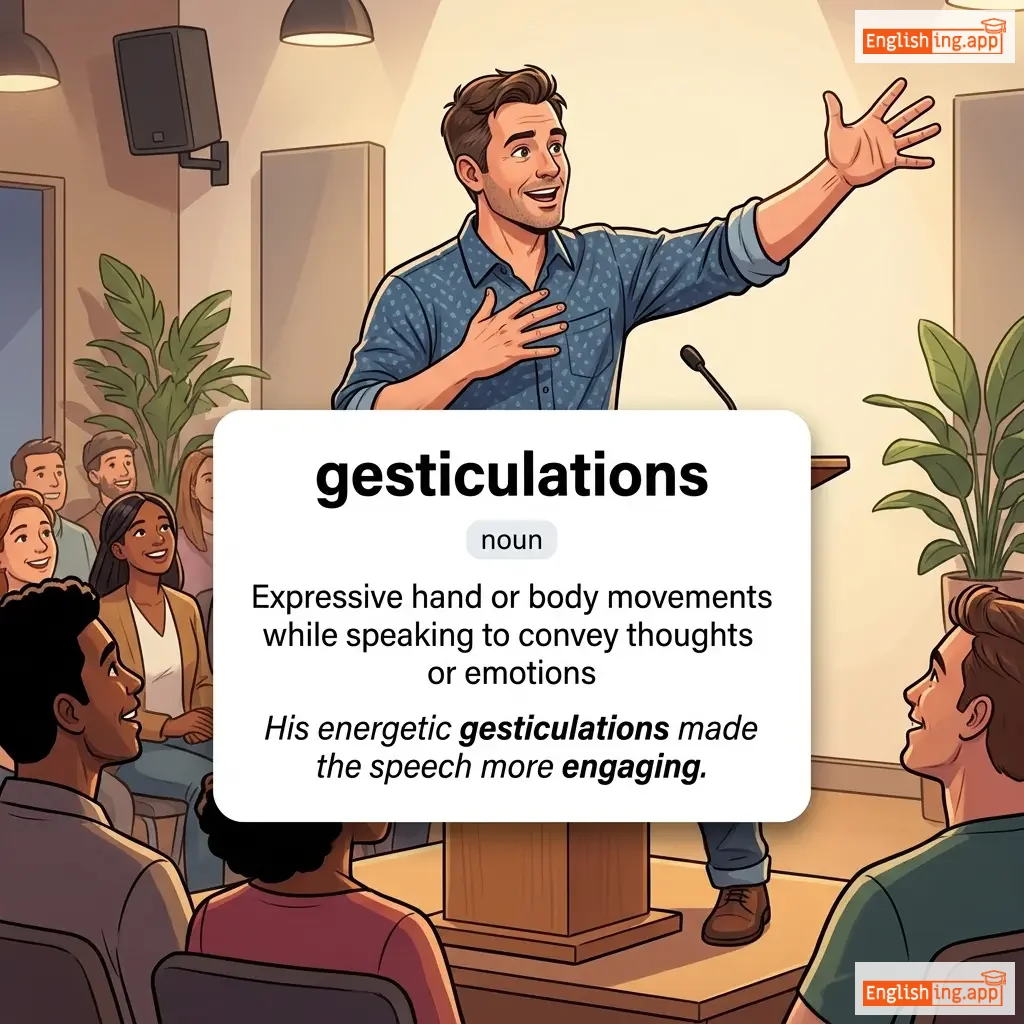
"他的演讲充满了激情的手势。" (tade yanjiang chongmanle jiqing de shoushi.)
gesticulations definition card — visual illustration of the meaning
noun
dʒɛsˌtɪk.jʊˈleɪ.ʃənz
手势 (shou shi)

Expressive hand or body movements while speaking to convey thoughts or emotions

"His energetic gesticulations made the speech more engaging."

"他的充满活力的手势使演讲更加引人入胜。" (Tā de chōngmǎn huólì de shǒushì shǐ yǎnjiǎng gèngjiā yǐnrén rùshèng.)
noun
/ˈdʒɛs.tʃər/
手势 (shǒushì)

A movement of part of the body, especially the hands or head, to express an idea or meaning.

"She made a friendly gesture to welcome the guests."
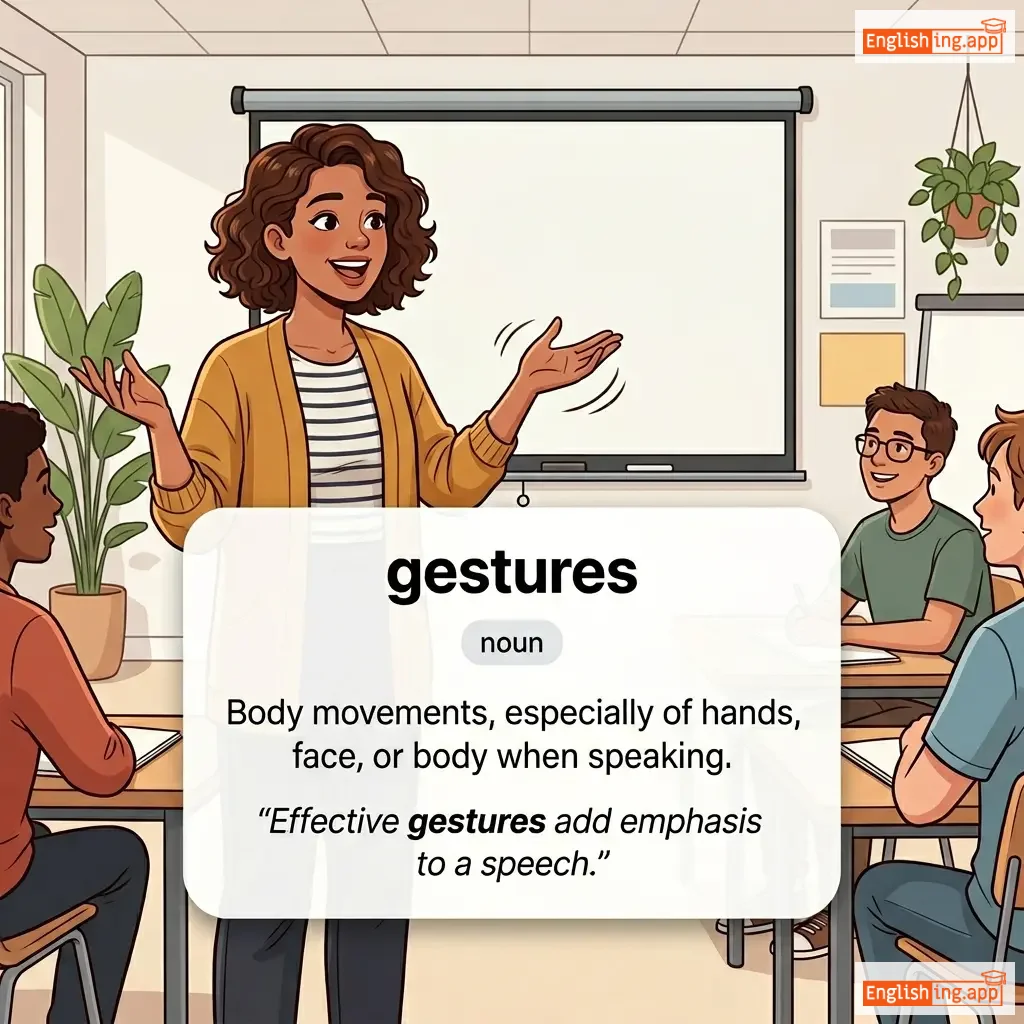
"她做了一个友好的手势,欢迎客人。" (Tā zuòle yīgè yǒuhǎo de shǒushì, huānyíng kèrén.)
gestures definition card — visual illustration of the meaning
noun
ˈdʒes.tʃərz
手势 (shǒushì)

Body movements, especially of hands, face, or body when speaking.

"Effective gestures add emphasis to a speech."

"有效的手势为演讲增添了强调。" (Yǒuxiào de shǒushì wèi yǎnjiǎng zēngtiān le qiángdiào.)
get definition card — visual illustration of the meaning
verb
/ɡɛt/
得到 (dedao)

to obtain, receive, or come to have something

"I need to get a new phone before my old one stops working."

"我需要在我的旧手机停止工作之前,得到一部新手机。" (Wo xuyao zai wode jiu shouji tingzhi gongzuo zhijian, dedao yi bu xin shouji.)
noun
/ˈɡaɪ.zər/
间歇泉 (jiànxièquán)

A natural hot spring that intermittently ejects a column of water and steam into the air.

"The geyser erupted, shooting water high into the sky."

"这个喷泉喷发,水柱冲向天空。" (Zhège pēnquán pēnfā, shuǐzhù chōngxiàng tiānkōng.)