词汇表

英语词汇词典 | 单词含义、定义和示例

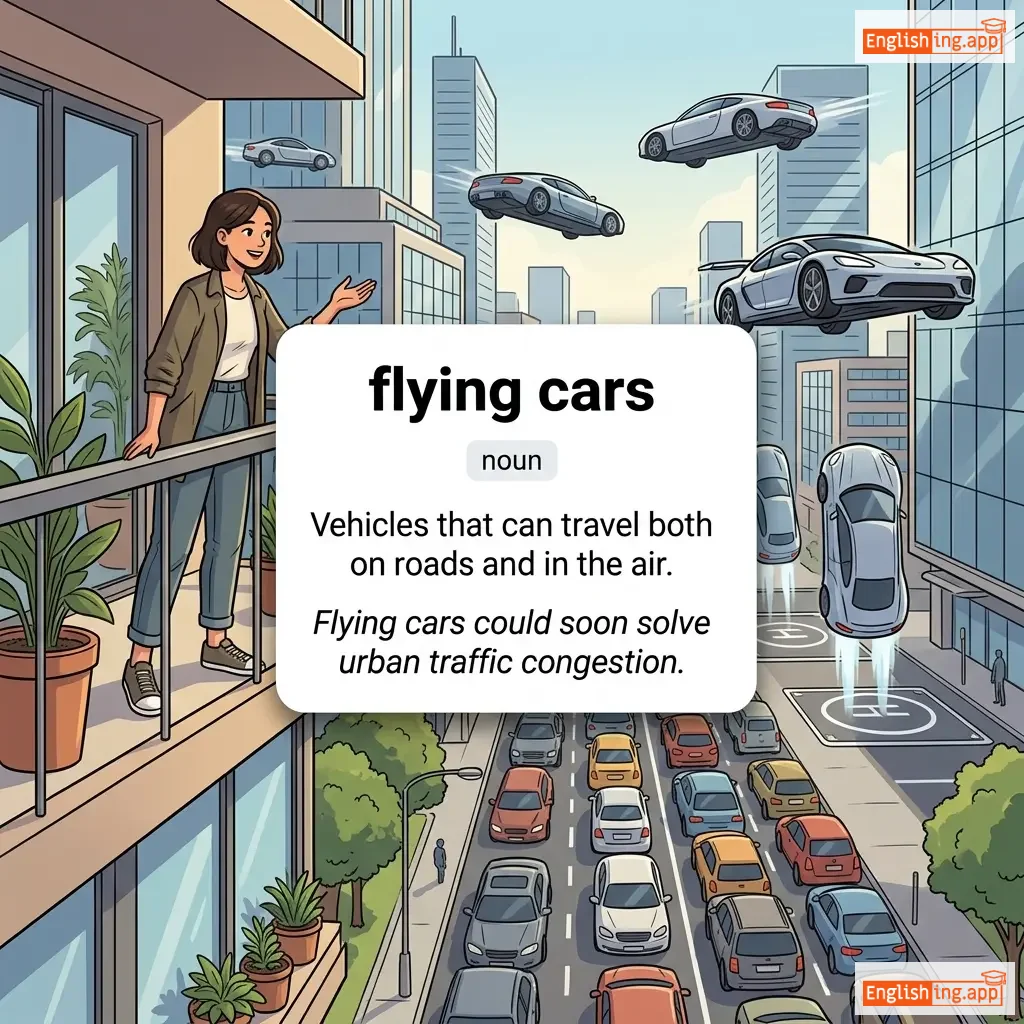
flying cars definition card — visual illustration of the meaning
noun
ˈflaɪ.ɪŋ kɑːrz
飞行汽车 (feixing qiche)

Vehicles that can travel both on roads and in the air.

"Flying cars could soon solve urban traffic congestion."

"飞行汽车很快就能解决城市交通拥堵问题。" (Feixing qiche hen kuai jiu neng jiejue chengshi jiaotong yongdu wenti.)
noun
/ˈflaɪ.ɪŋ ˈkriː.tʃər/
会飞的生物 (hui fei de shengwu)

any animal that has the ability to fly through the air

"Birds, bats, and insects are all examples of flying creatures."

"鸟类、蝙蝠和昆虫是会飞的生物的例子。" (niao lei, bianfu he kunchong shi hui fei de shengwu de lizi.)
noun
/foʊl fʊt/
马蹄花 (mǎtí huā)

a yellow flowering plant with leaves shaped like a horse's hoof, also known as coltsfoot

"The foal-foot plant grows wild in many meadows and is often the first flower to bloom in spring."

"马蹄花在许多草地上野生生长,通常是春天最早开花的花。" (Mǎtí huā zài xǔduō cǎodì shàng yěshēng shēngzhǎng, tōngcháng shì chūntiān zuì zǎo kāihuā de huā.)
noun
/foʊm/
泡沫 (paomo)

a mass of small bubbles formed on or in liquid; frothy white mass

"The waves crashed against the rocks, creating white foam on the shore."

"波浪撞击岩石,形成了岸边的白色泡沫。" (Bolang zhuangji yanshi, xingcheng le anbian de baise paomo.)
focus definition card — visual illustration of the meaning
verb
/ˈfoʊ.kəs/
专注 (zhuanzhu)

to direct attention or effort on something specific

"She needs to focus on her studies."
"她需要专注于她的学习。" (Tā xūyào zhuānzhù yú tā de xuéxí.)
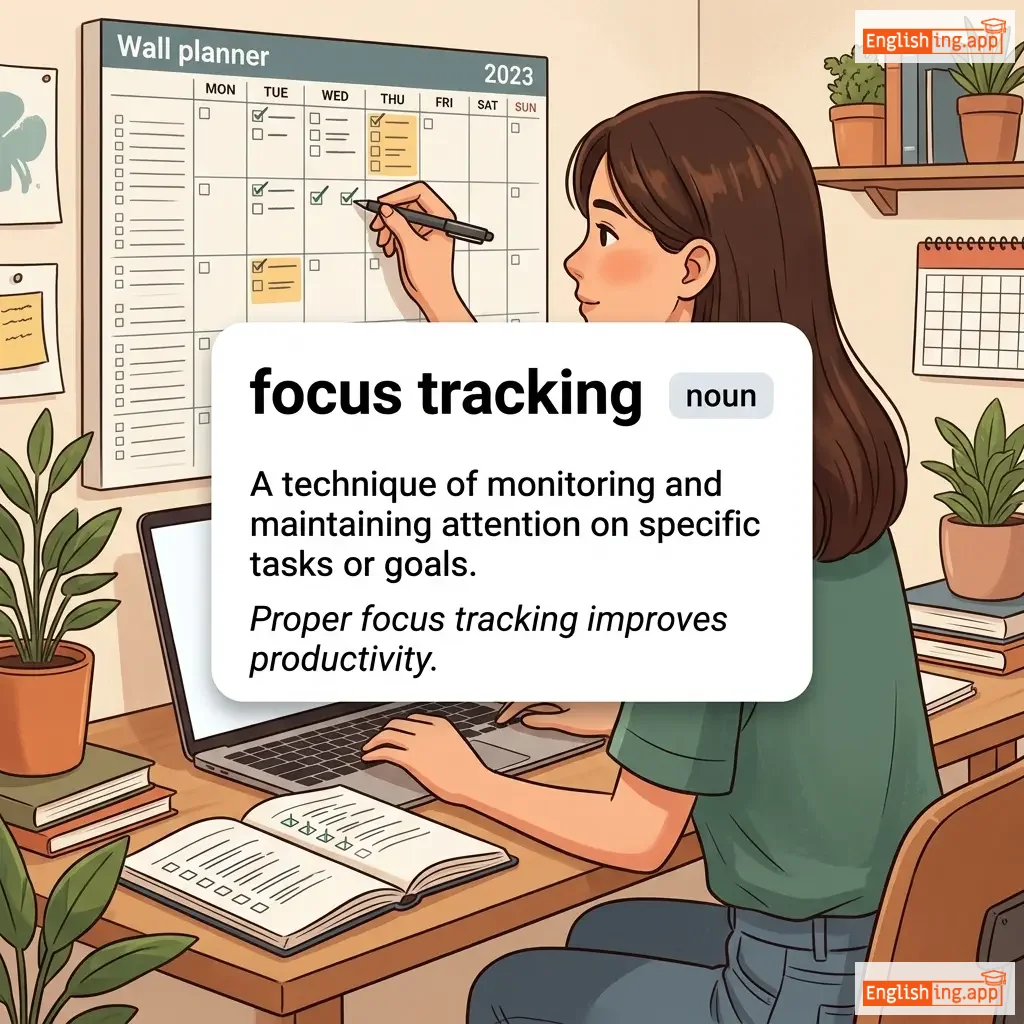
focus tracking definition card — visual illustration of the meaning
noun
/ˈfoʊ.kəs ˈtræk.ɪŋ/
聚焦追踪 (jùjiāo zhuīzōng)

A technique of monitoring and maintaining attention on specific tasks or goals.

"Proper focus tracking improves productivity."

"适当的聚焦追踪可以提高生产力。" (Shìdàng de jùjiāo zhuīzōng kěyǐ tígāo shēngchǎnlì.)
focused definition card — visual illustration of the meaning
adjective
/ˈfəʊkəst/
专注 (zhuānzhù)

Directing a great deal of attention or effort toward a particular activity, situation, or person.

"Staying focused during work hours enhances productivity."

"在工作时间保持专注提高了生产力。" (Zài gōngzuò shíjiān bǎochí zhuānzhù tígāo le shēngchǎnlì.)
noun
/ˈfɒdər/
饲料 (sìliào)

food for livestock such as cattle, horses, or sheep; also something considered of little value but used to supply a demand

"The farmer stored enough fodder for the cattle to last through winter."

"农民储存了足够的饲料,以便牲畜能度过冬天。" (Nóngmín chǔcúnle zúgòu de sìliào, yǐbiàn shēngchù néng dùguò dōngtiān.)
noun
/foʊ/
敌人 (dírén)

an enemy or opponent

"The knight fought bravely against his foe."

"骑士勇敢地与他的敌人作战。" (Qíshì yǒnggǎn de yǔ tā de dírén zuòzhàn.)
adjective
/ˈfiːtɪd/
恶臭的 (èchòu de)

having an offensive, unpleasant smell

"The foetid smell from the garbage made it hard to breathe."

"垃圾散发出的恶臭使得呼吸变得困难。" (Lājī sànfā chū de èchòu shǐdé hūxī biàn dé kùnnán.)
🌫️

Fog (fog)

noun
/fɒɡ/
(wu)

a thick cloud of tiny water droplets suspended in the air near the ground that reduces visibility

"The airplane was delayed due to heavy fog."

"由于浓雾,飞机延误了。" (Youyu nong wu, feiji yanwu le.)
adjective
/ˈfɒɡi/
有雾的 (yǒu wù de)

Full of or covered with fog; unclear or hazy.

"The mountain road was dangerous on the foggy morning."

"山区的道路在这个雾蒙蒙的早晨非常危险。" (Shānqū de dào lù zài zhège wù méng méng de zǎo chén fēicháng wéixiǎn.)
noun
/ˈfɔɪbəl/
小缺点 (xiao quedian)

A minor weakness or eccentricity in someone's character.

"She loved him despite his little foibles."

"尽管有一些小缺点,她依然爱他。" (Jingguan you yixie xiao quedian, ta yiran ai ta.)
verb
/fɔɪl/
挫败 (cuobai)

To prevent something (especially a plan) from succeeding.

"The police foiled the robbery attempt."

"警方挫败了抢劫企图。" (Jingfang cuobai le qiangjie qitu.)
verb
/fɔɪst/
强加 (qiángjiā)

To impose something unwelcome or unnecessary on someone.

"He tried to foist his old books onto his friends."

"他试图把他的旧书强加给朋友们。" (Tā shìtú bǎ tā de jiù shū qiángjiā gěi péngyǒu men.)
📄

fold

verb
/fəʊld/

to bend something, especially paper or cloth, so that one part covers another

"She folded the letter neatly before placing it in the envelope."

noun
/ˈfoʊldər/
文件夹 (wenjianjia)

a container or directory used to store and organize papers or digital files

"I saved all the photos in a separate folder."

"我把所有照片保存在一个单独的文件夹里。" (wo ba suoyou zhaopian baocun zai yi ge dandu de wenjianjia li)
noun
/ˈfoʊliɪdʒ/
树叶 (shu ye)

The leaves of a plant, collectively.

"The autumn foliage looked stunning in the park."

"秋天的树叶在公园里看起来很惊艳。" (Qiutian de shu ye zai gongyuan li kàn qǐlái hěn jīngyàn.)
noun
/ˈfoʊ.li.oʊ/
大书或手稿 (da shu huo shougao)

A sheet of paper folded once to form two leaves (four pages) of a book; also a term for a large book or manuscript.

"The library houses an ancient Shakespeare folio."

"图书馆里有一本古老的莎士比亚大书。" (Tushuguan li you yi ben gulao de Shashibiya da shu.)
👨‍👩‍👧‍👦

folk (福尔克)

noun
/foʊk/
人们 (renmen)

people in general, often referring to a group or community

"Country folk often live a simple life."

"乡村人通常过着简单的生活。" (Xiangcun ren tongchang guo zhe jiandan de shenghuo.)
noun
/ˈfoʊk.lɔːr/
民间传说 (mínjiān chuánshuō)

The traditional beliefs, customs, stories, songs, and practices of a community, passed down through generations.

"Bangladeshi folk-lore is rich with myths and legends."

"中国的民间传说充满了神话和传说。" (Zhōngguó de mínjiān chuánshuō chōngmǎnle shénhuà hé chuánshuō.)
verb
/ˈfɒloʊ/
跟随 (gēnsuí)

to move behind someone or something; to go after or come after

"The children followed their teacher into the classroom."

"孩子们跟着老师进了教室。" (Háizimen gēnzhe lǎoshī jìnle jiàoshì.)
noun
/ˈfɑː.loʊ.ɪŋ/
追随者 (zhuīsuízhě)

a group of supporters or people who admire something or someone

"The singer has a large following around the world."

"这位歌手在全世界有很多追随者。" (Zhè wèi gēshǒu zài quán shìjiè yǒu hěn duō zhuīsuízhě.)
foment definition card — visual illustration of the meaning
verb
/foʊˈmɛnt/
煽动 (shāndòng)

To instigate or stir up (an undesirable or violent sentiment or course of action).

"The rebel leader tried to foment unrest among the people."

"叛乱领袖试图在人民中煽动骚乱。" (Pànluàn lǐngxiù shìtú zài rénmín zhōng shāndòng sāoluàn.)
noun
/ˌfoʊ.mənˈteɪ.ʃən/
煽动,激起 (shāndòng, jīqǐ)

The action of instigating or stirring up; also the application of warm substances to the body to ease pain.

"His speech led to the fomentation of violence in the region."

"他的演讲导致了该地区暴力的激化。" (Tā de yǎnjiǎng dǎozhìle gāi dìqū bàolì de jīhuà.)
adjective
/fɒnd/
喜爱 (xiai)

having a strong liking or affection for something or someone

"She is fond of painting and spends hours in front of her canvas."

"她非常喜爱画画,并且在画布前面花费了几个小时。" (Ta feichang xiai huahua, bingqie zai huabu qianmian huafei le jige xiaoshi.)
verb
/ˈfɒn.dəl/
抚摸 (fumo)

To stroke or caress lovingly or gently.

"She fondled the kitten gently in her lap."

"她轻柔地抚摸着她膝盖上的小猫。" (Tā qīngróu de fǔmō zhe tā xīgài shàng de xiǎo māo.)
noun
/fuːd/
食物 (shiwu)

any nutritious substance that people or animals eat or drink to maintain life and growth

"Rice is a common food in Asia."

"米饭是亚洲常见的食物。" (Mifan shi Yazhou changjian de shiwu.)
noun, verb
/fuːl/
傻瓜 (shagua)

a silly or stupid person; to trick someone

"He felt like a fool after believing the prank."

"他在相信恶作剧之后觉得自己像个傻瓜。" (Ta zai xiangxin ezuoju zhihou juede ziji xiang ge shagua.)
noun
/ˈfuːləri/
愚蠢 (yúchǔn)

Silly or foolish behavior or actions.

"His constant foolery made the meeting hard to take seriously."

"他不断的愚蠢让会议变得难以认真对待。" (Tā bùduàn de yúchǔn ràng huìyì biàn dé nán yǐ rènzhēn duìdài.)
adjective
/ˈfuːlˌhɑːrdi/
轻率的 (qīng shuài de)

Recklessly bold or rash; taking foolish risks.

"It was foolhardy of him to climb the mountain without proper gear."

"他在没有适当装备的情况下攀登山峰,真是轻率的行为。" (Tā zài méiyǒu shìdàng zhuāngbèi de qíngkuàng xià pāndēng shānfēng, zhēnshi qīng shuài de xíngwéi.)
adjective
/ˈfuːlɪʃ/
愚蠢的 (yúchǔn de)

showing a lack of good sense or judgment

"It was foolish to go out without an umbrella in the storm."

"在暴风雨中没有伞出去是愚蠢的。" (Zài bàofēng yǔ zhōng méiyǒu sǎn chūqù shì yúchǔn de.)
adjective
/ˈfuːlpruːf/
万无一失 (wan wu yi shi)

Designed to be very easy to use or understand, leaving no possibility of failure or error.

"The new software has a foolproof installation process."

"这款新软件具有万无一失的安装过程。" (Zhe kuan xin ruanjian juxu wan wu yi shi de anzhuang guocheng.)
noun
/fʊt/
(jiao)

The lower extremity of the leg below the ankle, used for standing and walking.

"He injured his foot while playing basketball."

"他在打篮球时伤了脚。" (Tā zài dǎ lánqiú shí shāngle jiǎo.)
noun
/ˈfʊtˌnoʊt/
脚注 (jiao zhu)

A note of reference, explanation, or comment placed at the bottom of a page.

"The author included a foot-note to explain the historical context."

"作者加入了一个脚注,以解释历史背景。" (zuozhe jiaru le yige jiao zhu, yi jieshi lishi beijing.)
noun
/ˈfʊtɪdʒ/
视频录制 (shipin luzhi)

a recorded film or video, especially one that is used for news or documentaries

"The footage of the protest was shown on television all day."

"抗议的录像整天在电视上播放。" (Kangyi de luxiang zhengtian zai dianshi shang bofang.)
noun
/ˈfʊtˌbɔːl/
足球 (zuqiu)

A team sport played with a ball that is kicked or carried to score points.

"They watched a football match on TV."

"他们在电视上观看了一场足球比赛。" (Tamen zai dianshi shang guankan le yichang zuqiu bisai.)
adjective
/ˈfʊtˌluːs/
自由自在 (ziyou zizai)

Free to go anywhere or do anything; not tied down by responsibilities.

"After graduating, he felt footloose and ready to explore the world."

"毕业后,他感到自由自在,准备探索这个世界。" (Biyue hou, ta gandao ziyou zizai, zhunbei tansuo zhege shijie.)
noun
/ˈfɒpəri/
浮夸 (fú kuā)

Foolish or excessive concern with one's appearance or manners; pretentious behavior.

"His obsession with fashion was dismissed as mere foppery."

"他对时尚的痴迷被当作浮夸。" (Ta dui shishang de chimi bei dangzuo fukuā.)
adjective
/ˈfɒpɪʃ/
过分关注衣物和外貌,以愚蠢或虚荣的方式 (guo fen guan zhu yi wu he wai mao, yi yu chun huo xu rong de fang shi)

Excessively concerned with clothes and appearance in a vain or foolish way.

"He looked rather foppish in his brightly colored suit."
"他在那件鲜艳的衣服中看起来有些过于装腔作势。" (Ta zai na jian xian yan de yi fu zhong kan qi lai you xie guo yu zhuang qiang zuo shi.)
preposition
/fɔːr/
(wèi)

used to indicate purpose, destination, or recipient

"This gift is for you."

"这个礼物是给你的。" (Zhège lǐwù shì gěi nǐ de.)
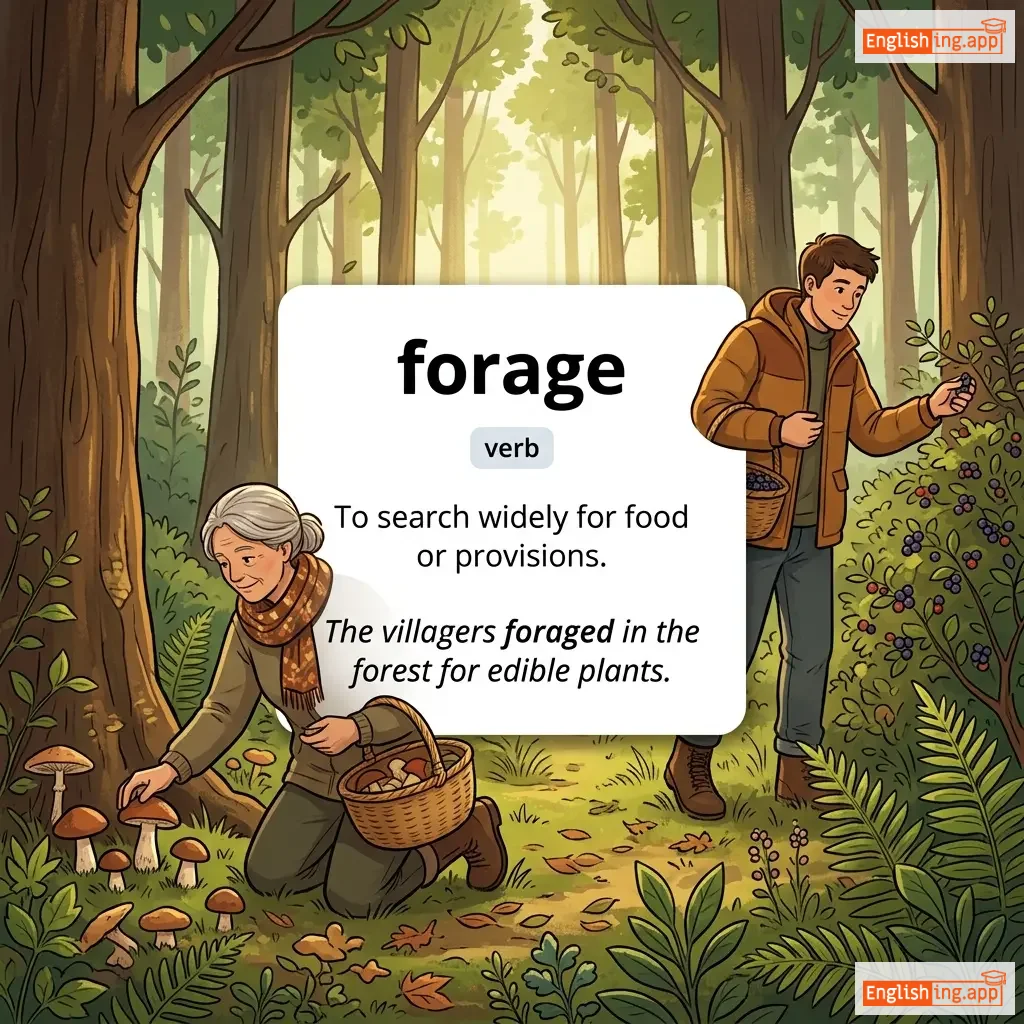
forage definition card — visual illustration of the meaning
verb
/ˈfɒrɪdʒ/
寻找食物 (xunzhao shiwù)

To search widely for food or provisions.

"The villagers foraged in the forest for edible plants."

"村民在森林中寻找可食用的植物。" (Cunmin zai senlin zhong xunzhao keshiyong de zhizhi.)
noun
/ˈfɔːreɪ/
突袭 / 初步尝试 (tuxi / chubu changshi)

A sudden short attack or attempt, especially into new activity or territory.

"The company made its first foray into the international market."

"公司首次进军国际市场。" (gongsi shouci jinjun guoji shichang.)
verb
/fɔːˈbɛər/
克制 (ke zhi)

To refrain from doing something; to show patience or self-control.

"She forbore from commenting on his mistake."

"她克制了对他错误的评论。" (Ta ke zhi le dui ta cuo wu de ping lun.)
forbearance definition card — visual illustration of the meaning
noun
/fɔːrˈbɛrəns/
宽容 (kuānróng)

Patient self-control; restraint and tolerance, especially in difficult situations.

"She showed remarkable forbearance during the heated argument."

"她在激烈的争论中表现出了非凡的宽容。" (Tā zài jīliè de zhēnglùn zhōng biǎoxiàn chūle fēifán de kuānróng.)
verb
/fərˈbɪd/
禁止 (jìnzhǐ)

to order someone not to do something

"The school forbids smoking on campus."

"学校禁止在校园内吸烟。" (Xuéxiào jìnzhǐ zài xiàoyuán nèi xīyān.)
adjective
/fəˈbɪd.ən/
禁止的; 非法的 (jìnzhǐ de; fēifǎ de)

not allowed; prohibited; banned

"Smoking is strictly forbidden in this building."

"在这座建筑物内,吸烟是严格禁止的。" (Zài zhè zuò jiànzhúwù nèi, xīyān shì yángé jìnzhǐ de.)
adverb
/ˈfɔːrbi/
此外 (cǐwài)

In addition; besides (archaic Scottish/English word).

"He is kind and generous, and wise forby."
"他是仁慈和慷慨的,并且此外还是智慧的。" (Tā shì réncí hé kāngkǎi de, bìngqiě cǐwài hái shì zhìhuì de.)
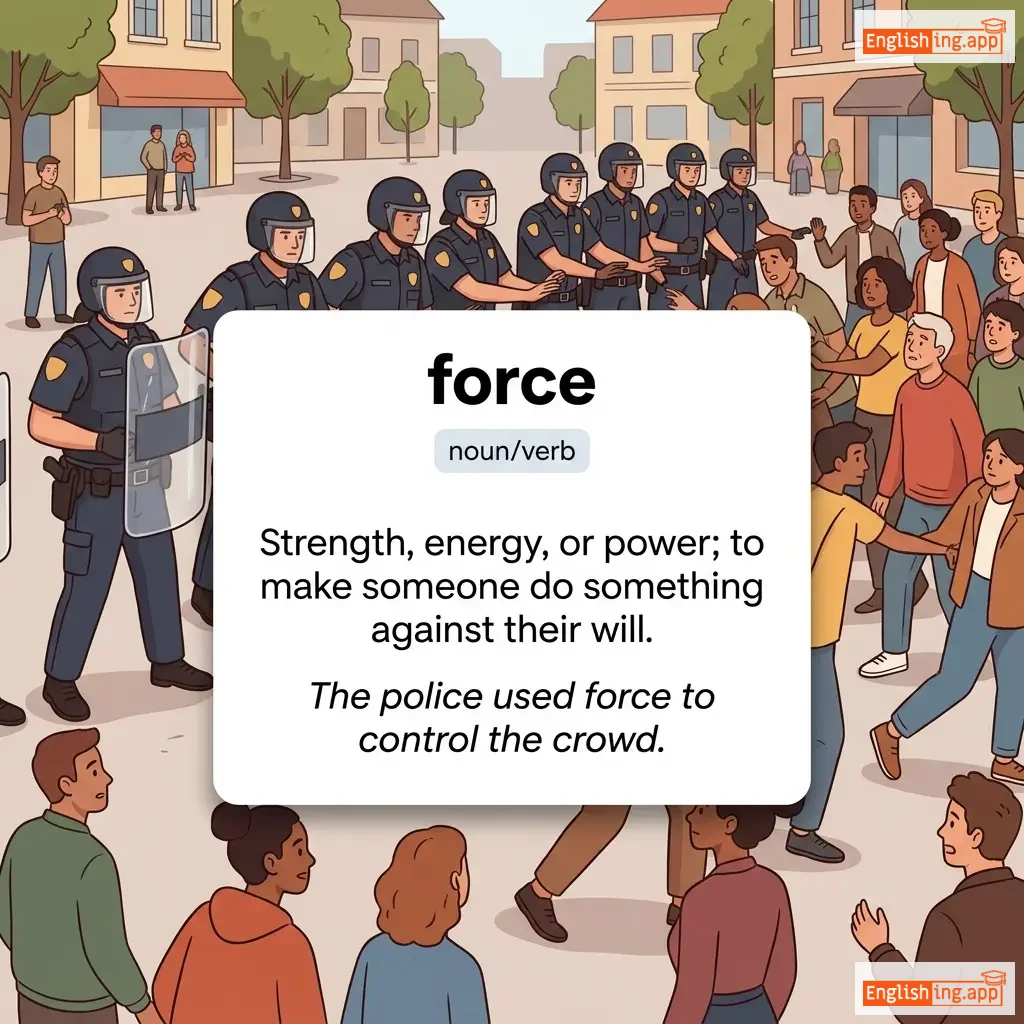
force definition card — visual illustration of the meaning
noun/verb
/fɔːrs/
力量 / 强度 (lìliàng / qiángdù)

Strength, energy, or power; to make someone do something against their will.

"The police used force to control the crowd."

"警察使用了暴力来控制人群。" (Jǐngchá shǐyòngle bàolì lái kòngzhì rénqún.)
adjective
/ˈfɔːrsəbl/
强行 (qiángxíng)

Done by force; using physical strength or power.

"The police made a forcible entry into the house."

"警方强行进入了房屋。" (Jǐngfāng qiángxíng jìnrùle fángwū.)