词汇表

英语词汇词典 | 单词含义、定义和示例

adjective
/ˈfjuːzəbl/
可熔化的 (kě róng huà de)

Capable of being melted or fused.

"The engineer used a fusible alloy in the experiment."

"工程师在实验中使用了可熔化的合金。" (Gōngchéngshī zài shíyàn zhōng shǐyòngle kě rónghuà de héjīn.)
noun
/ˌfjuːzɪˈleɪd/
齐射 (qí shè)

A series of shots fired or missiles thrown all at the same time or in quick succession.

"The soldiers advanced under a fusillade of bullets."
"士兵们在一阵齐射下前进。" (Shìbīngmen zài yī zhèn qí shè xià qiánjìn.)
fusion definition card — visual illustration of the meaning
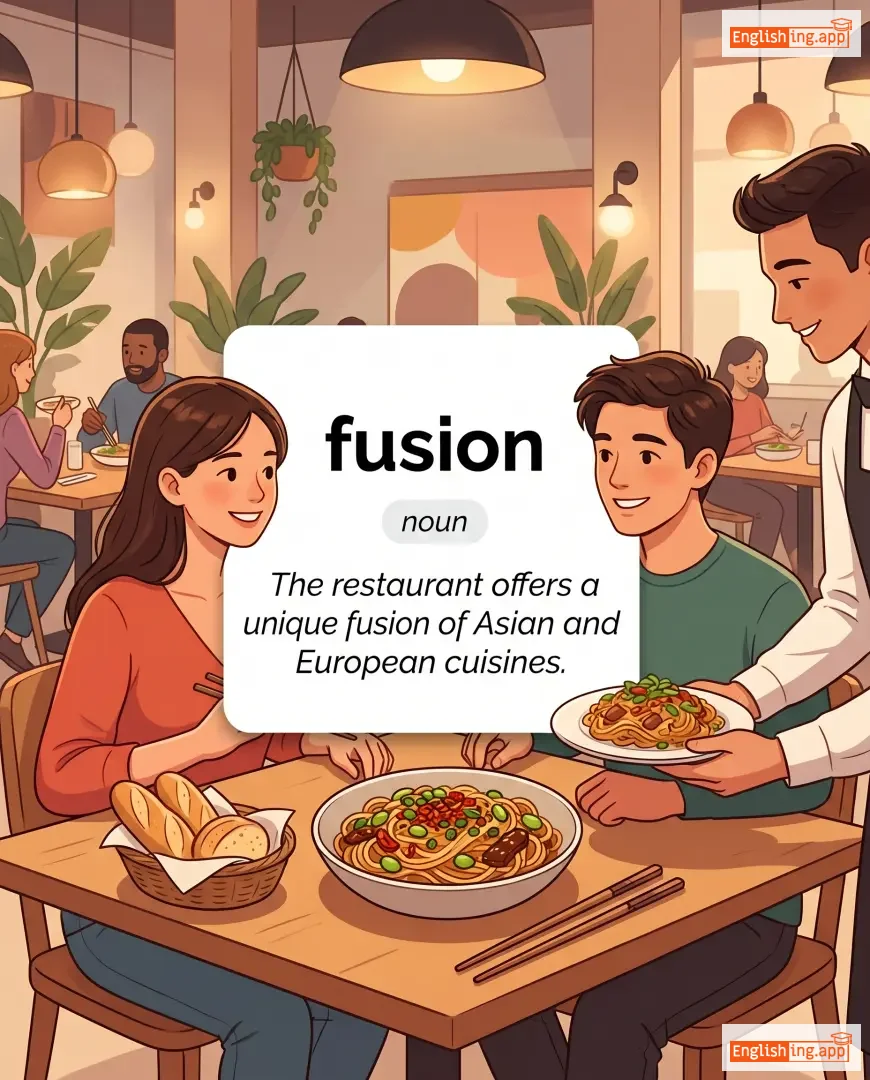
noun
/ˈfjuːʒən/
融合 (ronghe)

the process or result of joining two or more things together to form a single entity

"The restaurant offers a unique fusion of Asian and European cuisines."

"餐厅提供独特的亚洲和欧洲美食融合。" (Cāntīng tígōng dútè de yàzhōu hé ōuzhōu měishí rónghé.)
noun
/fʌs/
大惊小怪 (da jing xiao guai)

a display of unnecessary or excessive concern about something

"She made a fuss about the delay in service."

"她因为服务延迟而大惊小怪。" (Ta yinwei fuwu yanchi er da jing xiao guai.)
adjective
/ˈfʌsi/
挑剔 (tiāo tì)

hard to please; very concerned with details

"The child is very fussy about what she eats."

"这个孩子对她吃的东西非常挑剔。" (Zhège háizi duì tā chī de dōngxī fēicháng tiāo tì.)
noun
/ˈfʌstɪən/
浮夸的演讲 (fúkuā de yǎnjiǎng)

pompous or pretentious speech or writing; originally a type of thick cloth

"The politician's speech was filled with fustian and empty promises."

"政治家的演讲充满了浮夸和空洞的承诺。" (Zhèngzhìjiā de yǎnjiǎng chōngmǎnle fúkuā hé kōngdòng de chéngnuò.)
adjective
/ˈfʌsti/
陈腐的,霉臭的 (chen fu de, mei chou de)

smelling stale, damp, or stuffy; old-fashioned

"The room smelled fusty after being closed for months."
"房间在关了几个月后有了陈腐的味道。" (Fángjiān zài guānle jǐ gè yuè hòu yǒule chénfǔ de wèidào.)
futile definition card — visual illustration of the meaning
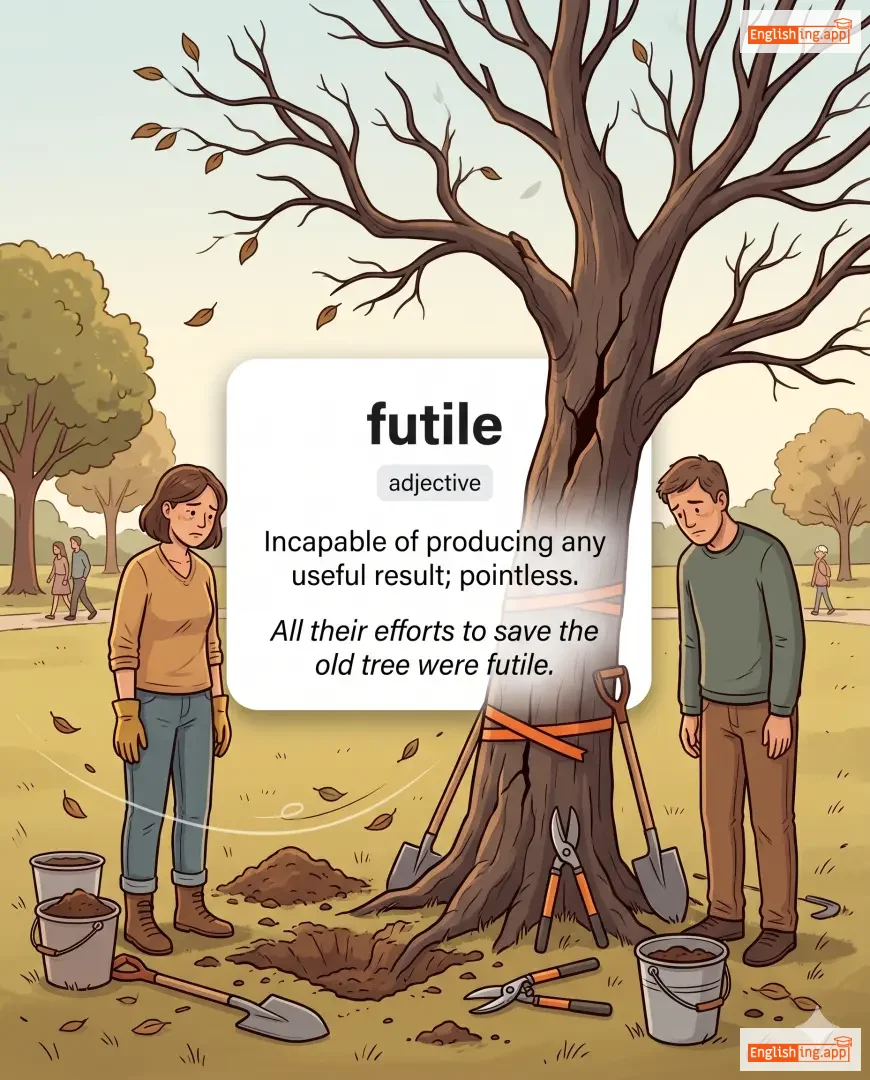
adjective
/ˈfjuː.taɪl/
徒劳 (túláo)

Incapable of producing any useful result; pointless.

"All their efforts to save the old tree were futile."
"他们所有拯救老树的努力都是徒劳的。" (Tāmen suǒyǒu zhěngjiù lǎo shù de nǔlì dōu shì túláo de.)
future definition card — visual illustration of the meaning
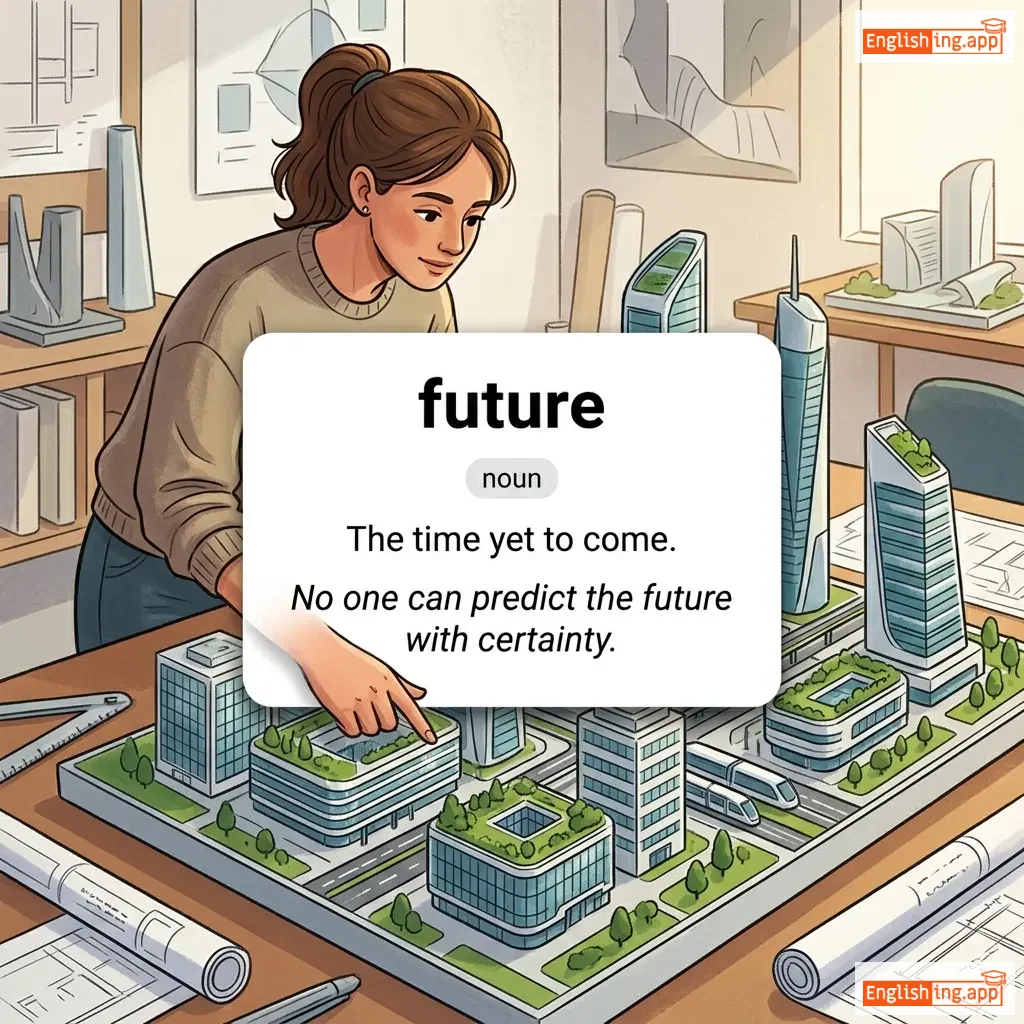
noun
/ˈfjuːtʃər/
未来 (wei lai)

The time yet to come.

"No one can predict the future with certainty."
"没有人可以准确预测未来。" (Meiyou ren keyi zhunque yuce weilai.)
future generations definition card — visual illustration of the meaning
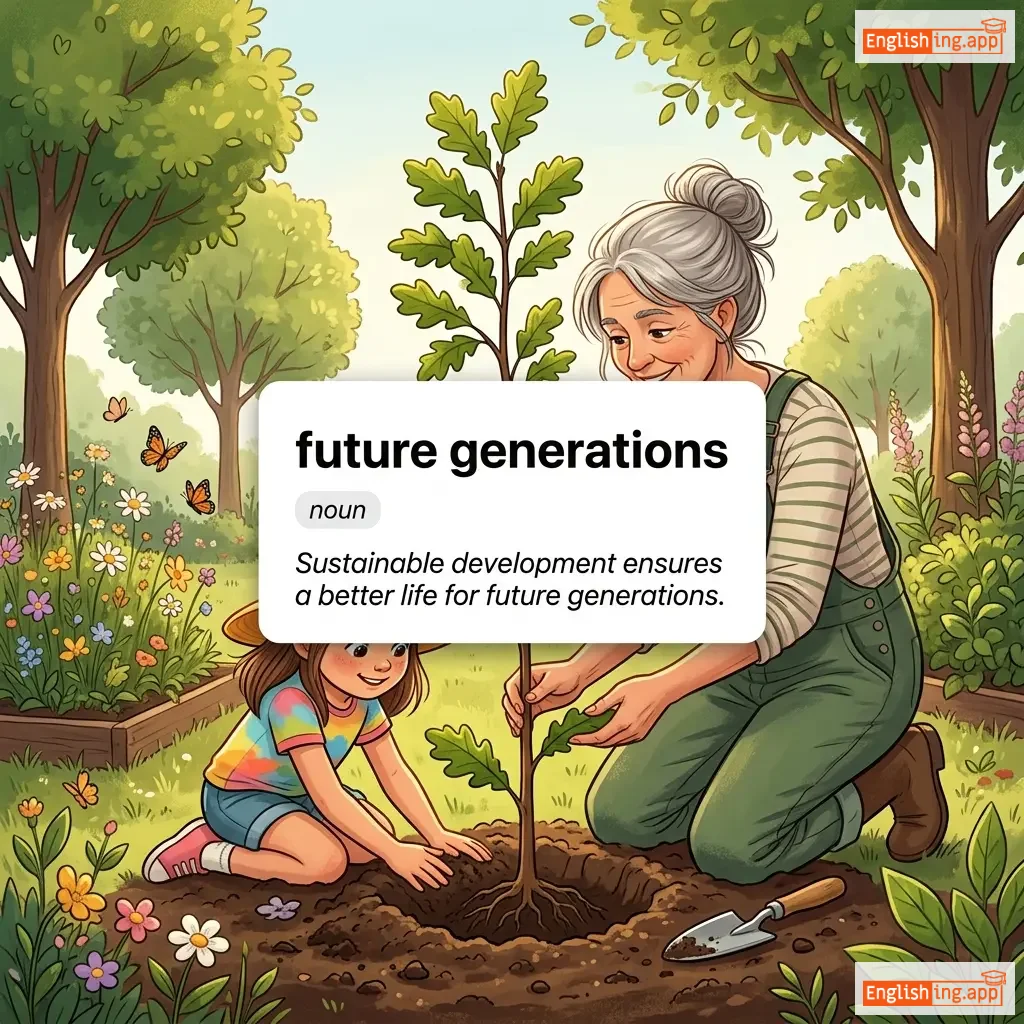
noun
ˈfjuː.tʃɚ ˌdʒen.əˈreɪ.ʃənz
未来几代人 (weilai jidairen)

People who have not yet been born, considered in terms of the environment or society they will inherit.

"Sustainable development ensures a better life for future generations."

"可持续发展确保未来几代人更好的生活。" (Keshi xing fazhan quebao weilai jidairen geng hao de shenghuo.)
noun
/ˈfjuː.tʃə.rɪst/
未来主义者 (weilaizhuizhizhe)

A person who studies or predicts the future, especially trends in science, technology, or society.

"The futurist predicted major changes in transportation within the next decade."
"未来主义者预测了下一个十年交通运输的重大变化。" (Weilaizhuizhizhe yuce le xiage yige shinian jiaotong yunshu de zhongda bianhua.)
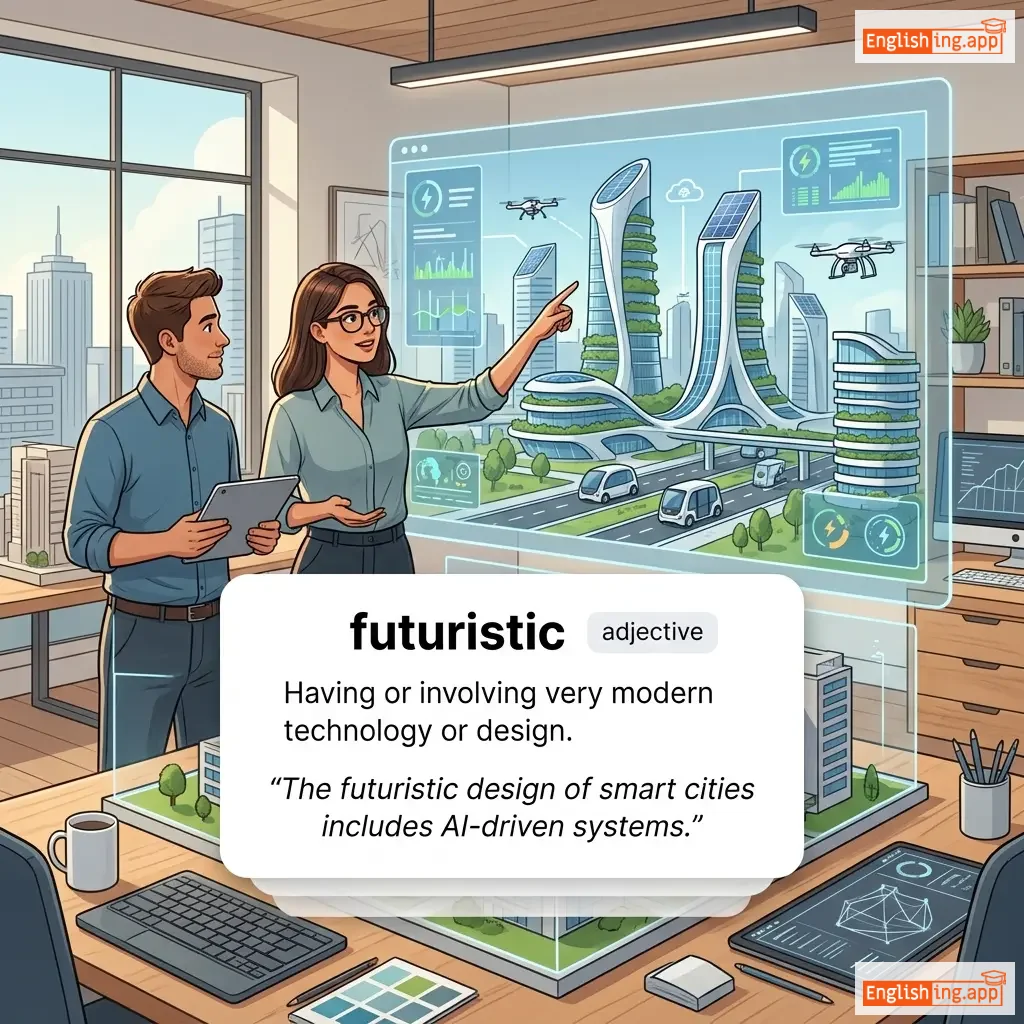
futuristic definition card — visual illustration of the meaning
adjective
ˌfjuː.tʃəˈrɪs.tɪk
未来主义的,与先进技术相关 (weilai zhuyi de, yu xianjin jishu xiangguan)

Having or involving very modern technology or design.

"The futuristic design of smart cities includes AI-driven systems."

"智能城市的未来主义设计包括由人工智能驱动的系统。" (Zhinen chengshi de weilai zhuyi sheji baokuo you rengong zhine yingdong de xitong.)