词汇表

英语词汇词典 | 单词含义、定义和示例

adjective
/fjuːˈɡeɪʃəs/
短暂的 (duǎn zàn de)

Lasting only a short time; fleeting or ephemeral.

"Youth is beautiful but fugacious."

"青春是美丽的,但它是短暂的。" (Qīngchūn shì měilì de, dàn tā shì duǎn zàn de.)
noun
/ˈfjuːdʒətɪv/
逃犯 (taofan)

A person who has escaped from captivity or is in hiding, usually to avoid arrest.

"The police captured the fugitive after a long chase."

"警察在长时间追逐后捕获了逃犯。" (Jingcha zai chang shijian zhui zhu hou buhuo le taofan.)
noun
/ˈfʊl.krəm/
支点 (zhīdiǎn)

The point or support on which a lever pivots; a central or essential point of activity or support.

"The teacher became the fulcrum of change in the school."

"老师成为了学校变革的支点。" (Lǎoshī chéngwéile xuéxiào biàngé de zhīdiǎn.)
verb
/fʊlˈfɪl/
实现 (shixian)

to complete or achieve something that was expected or promised; to satisfy a requirement or desire

"She worked hard to fulfil her dream of becoming a doctor."

"她努力工作以实现成为医生的梦想。" (Ta nuli gongzuo yi shixian chengwei yisheng de mengxiang)
verb
/fʊlˈfɪl/
实现 (shíxiàn)

to complete or accomplish something, especially a task or promise

"He worked hard to fulfill his dreams."

"他努力工作以实现自己的梦想。" (Tā nǔlì gōngzuò yǐ shíxiàn zìjǐ de mèngxiǎng.)
adjective
/ˈfʊl.dʒənt/
闪耀 (shǎnyào)

Shining brightly; dazzling.

"The fulgent stars lit up the night sky."

"闪耀的星星照亮了夜空。" (Shǎnyào de xīngxīng zhàoliàngle yèkōng.)
adjective
/fʊl/
(man)

Containing as much or as many as possible; complete.

"The glass is full of water."

"杯子里满是水。" (Beizi li man shi shui.)
adjective
/ˌfʊl ˈbɒd.id/
口感浓烈 (kǒugǎn nóngliè)

Having a strong, rich, and robust quality, especially of wine, coffee, or voice.

"He prefers a full-bodied red wine with his dinner."

"他喜欢与晚餐搭配的口感浓烈的红酒。" (Tā xǐhuān yǔ wǎncān dāpèi de kǒugǎn nóngliè de hóngjiǔ.)
adjective, adverb
/ˈfʊl taɪm/
全职 (quán zhí)

working or studying for the whole standard period of time

"She works full-time as a teacher."

"她作为老师全职工作。" (Tā zuòwéi lǎoshī quánzhí gōngzuò.)
adverb
/ˈfʊli/
完全 (wanquan)

completely or entirely; to the fullest extent

"She is fully aware of the risks."
"她完全意识到这些风险。" (Ta wanquan yishi dao zhexie fengxian.)
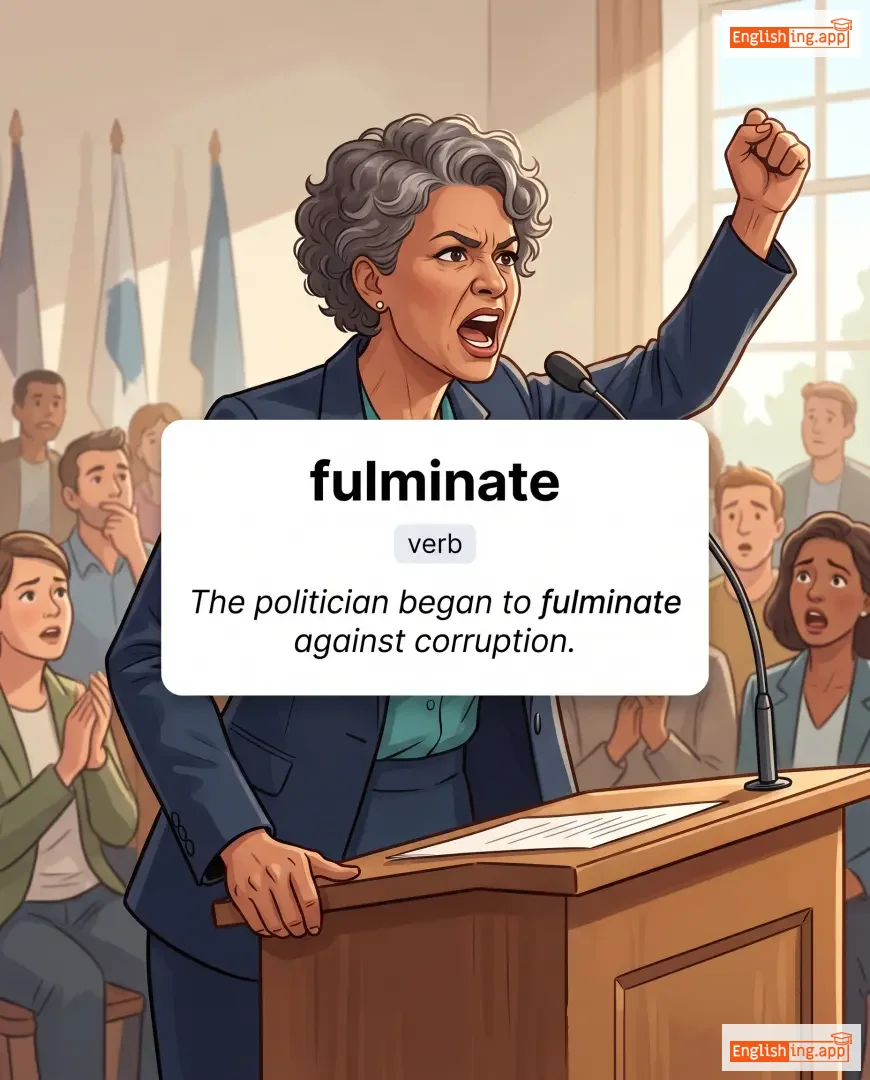
fulminate definition card — visual illustration of the meaning
verb
/ˈfʊl.mɪ.neɪt/
猛烈抗议 (měngliè kàngyì)

To express strong protest or criticism loudly and forcefully; to explode violently.

"The politician began to fulminate against corruption."

"政治家开始猛烈反对腐败。" (Zhèngzhìjiā kāishǐ měngliè fǎnduì fǔbài.)
fulsome definition card — visual illustration of the meaning
adjective
/ˈfʊl.səm/
过度的赞美 (guòdù de zànměi)

Excessively flattering or insincere; abundant or generous in amount.

"He offered fulsome praise to his boss."

"他给老板提供了过度的赞美。" (Tā gěi lǎobǎn tígōngle guòdù de zànměi.)
verb
/ˈfʌmbəl/
搞乱 (gǎo luàn)

to handle something clumsily or to make mistakes while doing something

"He fumbled with the keys and dropped them on the floor."

"他搞乱了钥匙,把它们掉在地板上。" (Tā gǎo luàn le yàoshi, bǎ tāmen diào zài dìbǎn shàng.)
verb
/ˈfjuːmɪˌɡeɪt/
熏蒸 (xunzheng)

to disinfect or purify an area by using chemical fumes

"They fumigated the warehouse to kill the insects."
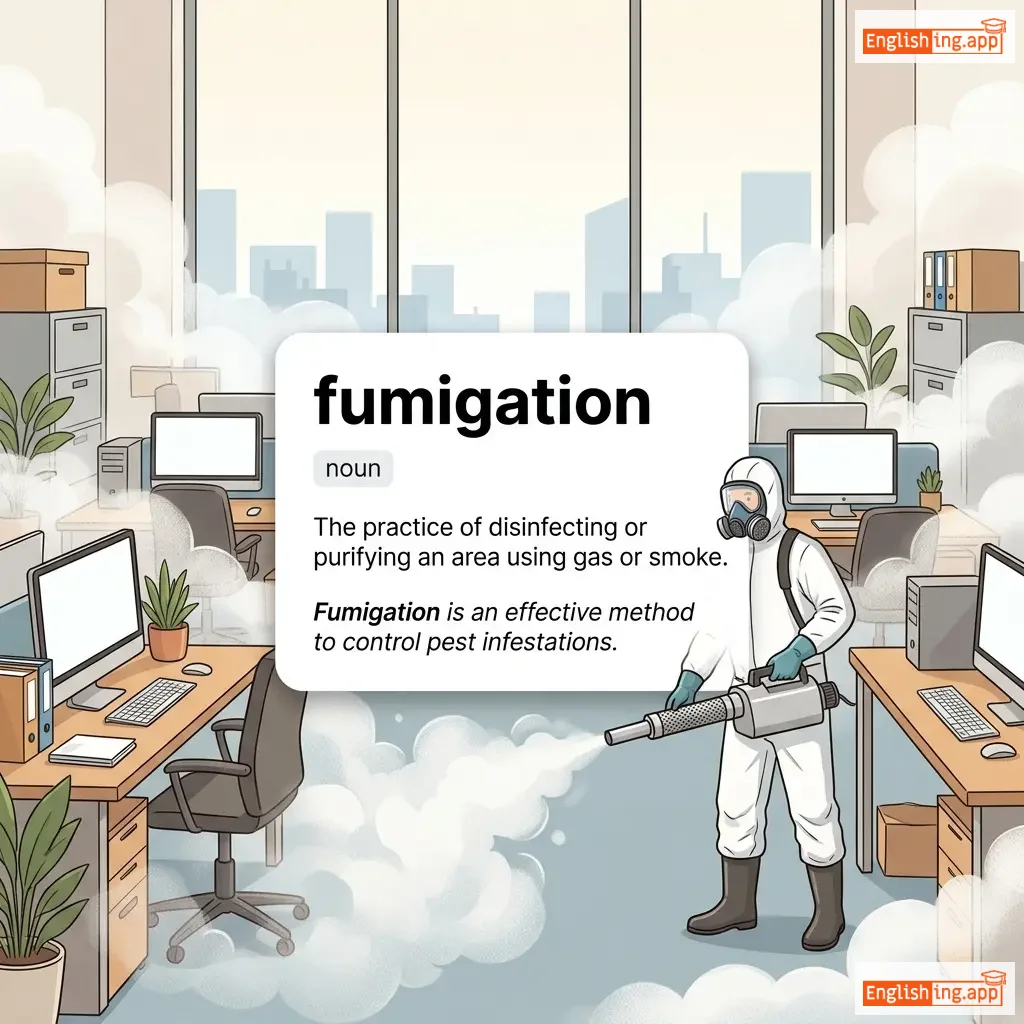
"他们对仓库进行了熏蒸处理,以消灭昆虫。" (Tāmen duì cāngkù jìnxíngle xūnzhēng chǔlǐ, yǐ xiāomiè kūnchóng.)
fumigation definition card — visual illustration of the meaning
noun
ˌfjuːmɪˈɡeɪʃən
熏蒸 (xunzheng)

The practice of disinfecting or purifying an area using gas or smoke.

"Fumigation is an effective method to control pest infestations."

"熏蒸是一种有效的控制害虫侵扰的方法。" (Xunzheng shi yizhong youxiao de kongzhi haichong qinrào de fangfa.)
noun
/fʌn/
乐趣 (lequ)

enjoyment, amusement, or light-hearted pleasure

"We had a lot of fun at the party."

"我们在聚会上玩得很开心。" (Wǒmen zài jùhuì shàng wán de hěn kāixīn.)
noun
/ˈfʌŋkʃən/
功能 (gongneng)

An activity or purpose natural to or intended for a person or thing.

"The main function of the heart is to pump blood."

"心脏的主要功能是泵送血液。" (Xīnzàng de zhǔyào gōngnéng shì bèngsòng xuèyè.)
adjective
/ˈfʌŋkʃənl/
功能性 (gōngnéngxìng)

designed to be practical and useful, rather than just decorative

"The design of the chair is simple but highly functional."

"椅子的设计简单,但非常实用。" (Yǐzi de shèjì jiǎndān, dàn fēicháng shíyòng.)
functionality definition card — visual illustration of the meaning
noun
ˌfʌŋk.ʃəˈnæl.ə.ti
功能性 (gōngnéng xìng)

The quality of being functional; the ability to work or operate as intended.

"The new refrigerator has improved functionality."

"新冰箱提高了功能性。" (Xīn bīngxiāng tígāo le gōngnéng xìng.)
noun
/ˈfʌŋkʃəˌnɛri/
职员 (zhíyuán)

a person who has official duties in an organization, especially one with little authority

"The minor functionary was responsible for filing reports."

"次要的职员负责提交报告。" (Cìyào de zhíyuán fùzé tíjiāo bàogào.)
fund definition card — visual illustration of the meaning
noun/verb
/fʌnd/
基金 (jījīn)

a sum of money saved or made available for a particular purpose; to provide money for

"The government created a fund for education."

"政府为教育创建了一个基金。" (Zhèngfǔ wèi jiàoyù chuàngjiànle yīgè jījīn.)
adjective
/ˌfʌndəˈmɛntl/

forming a necessary base or core; of central importance

"Honesty is a fundamental principle of good leadership."

adverb
/ˌfʌndəˈmɛntəli/
从根本上 (cóng gēnběn shàng)

in a basic and important way; at the core

"The two theories are fundamentally different."

"这两个理论从根本上不同。" (Zhè liǎng gè lǐlùn cóng gēnběn shàng bùtóng.)
noun
/ˈfʌndɪŋ/
资金 (zijin)

financial support for a project or organization

"The startup is seeking funding from investors."

"初创公司正在寻求投资者的资金支持。" (Chuchuang gongsi zhengzai xunqiu touzizhe de zijin zhichi.)
noun
/ˈfʌndˌreɪzɪŋ/
筹款活动 (choukuan huodong)

the process of collecting money for a cause or project

"The organization is organizing a fundraising event."

"该组织正在组织一个筹款活动。" (Gai zuzhi zhengzai zuzhi yige choukuan huodong.)
noun
/ˈfjuːnərəl/
葬礼 (zànglǐ)

a ceremony held to honor and bury or cremate someone who has died

"The family attended the funeral of their grandfather."

"家人参加了祖父的葬礼。" (Jiārén cānjiāle zǔfù de zànglǐ.)
adjective
/fjuːˈnɪəriəl/
葬礼的 (zànglǐ de)

having the mournful, somber character of a funeral

"The room was filled with a funereal silence after the announcement."

"宣布后,房间里充满了葬礼般的沉默。" (Xuānbù hòu, fángjiān lǐ chōngmǎnle zànglǐ bān de chénmò.)
noun (plural of fungus)
/ˈfʌndʒaɪ/
真菌 (zhenjun)

a group of spore-producing organisms such as mushrooms, molds, and yeasts

"Fungi play an important role in breaking down organic matter in nature."

"真菌在自然界中在分解有机物质方面发挥着重要作用。" (Zhenjun zai ziranjie zhong zai fenjie youji wuzhi fangmian fahui zhe zhongyao zuoyong.)
adjective
/ˈfʌndʒəbl/
可替代的 (ke tìdài de)

interchangeable; able to replace or be replaced by another identical item

"In finance, money is considered a fungible asset."

"在金融领域,钱被视为一种可替代资产。" (Zài jīnróng lǐngyù, qián bèi shìwéi yī zhǒng kě tìdài zīchǎn.)
adjective
/ˈfʌŋɡəs/
像真菌一样 (xiàng zhēnjūn yīyàng)

relating to or resembling a fungus

"The damp basement had a fungous smell."

"潮湿的地下室有一种像真菌一样的气味。" (Cháoshī de dìxiàshì yǒu yī zhǒng xiàng zhēnjūn yīyàng de qìwèi.)
noun
/ˈfʌŋɡəs/
真菌 (zhēnjūn)

a spore-producing organism feeding on organic matter, including molds, yeast, and mushrooms

"A strange fungus was growing on the old tree."

"一种奇怪的真菌在老树上生长。" (Yī zhǒng qíguài de zhēnjūn zài lǎo shù shàng shēngzhǎng.)
adjective
/ˈfʌni/
有趣 (youqu)

Causing laughter or amusement; humorous.

"The comedian told a very funny joke."

"喜剧演员讲了一个非常有趣的笑话。" (Xiju yan yuan jiang le yi ge feichang youqu de xiaohua.)
noun
/fɜːr/
皮毛 (pimao)

the thick hair covering the skin of certain animals

"The cat’s fur is soft and shiny."

"猫的皮毛柔软光滑。" (Mao de pimao rouruan guanghua.)
verb
/ˈfɜːrbɪʃ/
抛光 (pāoguāng)

to polish, renovate, or give a fresh look to something

"The workers furbished the old sword until it gleamed like new."

"工人们把旧剑抛光,直到它像新的一样闪闪发光。" (Gōngrénmen bǎ jiù jiàn pāoguāng, zhídào tā xiàng xīn de yīyàng shǎnshǎn fāguāng.)
adjective
/ˈfjʊəriəs/
愤怒 (fen nu)

Extremely angry.

"She was furious when she heard the bad news."

"她听到坏消息时非常愤怒。" (Ta tingdao huai xiaoxi shi feichang fennu.)
noun
/ˈfɜːrlɔːŋ/
距离单位(220码或大约201米) (juli dānwèi (220 mǐ huò dàyuē 201 mǐ))

a unit of distance equal to 220 yards or about 201 meters

"The horse ran a furlong before slowing down."

"马跑了一个弗隆后才减速。" (Mǎ pǎo le yīgè fú lóng hòu cái jiǎnsù.)
noun, verb
/ˈfɜːrloʊ/
临时休假 (linshi xiujia)

temporary leave of absence from work, especially that granted to an employee or soldier

"Many workers were placed on furlough during the crisis."

"许多工人在危机期间被放置在休假状态。" (Xu duo gongren zai weiji qi jian bei fangzhi zai xiujia zhuangtai.)
noun
/ˈfɜːrneɪs/
炉子 (lúzi)

an enclosed structure in which heat is produced for a building or for melting metal

"The factory's furnace melted the metal quickly."

"工厂的炉子迅速融化了金属。" (Gōngchǎng de lúzi xùnsù rónghuà le jīnshǔ.)
verb
/ˈfɜːrnɪʃ/
布置, 提供 (buzhi, tigong)

to provide or supply with furniture or equipment

"They furnished the new house with modern furniture."

"他们用现代家具布置了新房。" (Tamen yong xiandai jiaju buzhi le xin fang.)
noun
/ˈfɜːrnɪtʃər/
家具 (jiaju)

Objects such as chairs, tables, beds, or cupboards used to make a room suitable for living or working.

"The living room was filled with beautiful wooden furniture."

"客厅里摆满了美丽的木制家具。" (Kètīng lǐ bǎi mǎnle měilì de mùzhì jiājù.)
noun
/ˈfjʊərɔːr/
骚动 (saodong)

An outbreak of public anger or excitement.

"The politician's remarks created a furor in the media."

"政治家的言论在媒体上引发了一场轰动。" (Zhengzhijia de yanlun zai meiti shang yinfa le yi chang hongdong.)
noun
/ˈfʌriər/
毛皮商人 (máopí shāngrén)

A person who prepares or deals in furs.

"The furrier displayed fine coats in his shop."

"毛皮商人在他的店里展示了精美的大衣。" (Máopí shāngrén zài tā de diàn lǐ zhǎnshì le jīngměi de dàyī.)
noun/verb
/ˈfʌrəʊ/

A long narrow trench made in the ground by a plow; to make wrinkles or grooves.

"The farmer plowed furrows in the field."

adverb/adjective/verb
/ˈfɜːrðər/
促进 (cùjìn)

At a greater distance; to advance or promote something.

"She studied hard to further her career."

"她努力学习以推动自己的职业发展。" (Tā nǔlì xuéxí yǐ tuīdòng zìjǐ de zhíyè fāzhǎn.)
noun
/ˈfɜːrðərəns/
促进 (cujin)

The advancement or promotion of something.

"The new policy was introduced in furtherance of social justice."

"新政策是为了促进社会公正而引入的。" (Xin zhengce shi wei le cujin shehui gongzheng er yinru de.)
adverb
/ˌfɜːrðərˈmɔːr/
此外 (ciwai)

Used to introduce an additional point or idea; in addition.

"The plan is simple and, furthermore, it is affordable."

"这个计划很简单,此外,它也很实惠。" (Zhège jìhuà hěn jiǎndān, cǐwài, tā yě hěn shíhuì.)
adjective
/ˈfɜːrtɪv/
秘密的 (mìmì de)

Attempting to avoid notice or attention, typically because of guilt or a belief that discovery would lead to trouble.

"He cast a furtive glance at the door before leaving."

"他在离开前悄悄地看了一眼门。" (Tā zài líkāi qián qiāoqiāo de kànle yī yǎn mén.)
noun
/ˈfjʊr.ʌŋ.kəl/
脓肿; 坑; (nóngzhǒng, kēng)

a painful pus-filled bump under the skin caused by infected, inflamed hair follicles

"The doctor prescribed antibiotics to treat the painful furuncle on his neck."

"医生开了抗生素来治疗他脖子上疼痛的脓肿。" (Yīshēng kāile kàngshēngsù lái zhìliáo tā bózi shàng téngtòng de nóngzhǒng.)
noun
/ˈfjʊri/
愤怒 (fennu)

Wild or violent anger; extreme rage.

"She was trembling with fury after the insult."

"她在侮辱后因愤怒而颤抖。" (Tā zài wǔrǔ hòu yīn fènnù ér zhàndǒu.)
verb
/fjuːz/
熔合 (rónghé)

To join or blend two or more things together into one.

"The two metals fused under high heat."

"这两种金属在高温下融合。" (Zhè liǎng zhǒng jīnshǔ zài gāo wēn xià rónghé.)