词汇表

英语词汇词典 | 单词含义、定义和示例

noun
/frɪdʒ/
冰箱 (bingxiang)

a household appliance used to keep food and drinks cold to preserve freshness

"I put the milk back in the fridge after breakfast."

"早餐后我把牛奶放进了冰箱。" (zaocan hou wo ba niunai fang jin le bingxiang)
noun
/fraɪd raɪs/
炒饭 (chǎofàn)

a dish of cooked rice that has been stir-fried in a wok or frying pan

"We ordered chicken fried rice from the Chinese restaurant."

"我们从中国餐馆订了鸡肉炒饭。" (wǒmen cóng zhōngguó cānguǎn dìng le jīròu chǎofàn.)
noun
/frɛnd/
朋友 (péng yǒu)

a person with whom one has a bond of mutual affection

"He is my best friend."

"他是我最好的朋友。" (Tā shì wǒ zuì hǎo de péng yǒu.)
adjective
/ˈfrɛndli/
幸福 (xingfu)

Kind and pleasant; showing goodwill and affection.

"The shop owner is very friendly to new customers."

"她收到奖项时无法掩饰自己的幸福。" (Ta shoudao jiangxiang shi wu fa yanshi ziji de xingfu.)
noun
/ˈfrɛndʃɪp/
友谊 (yǒuyì)

A close and trusting relationship between two or more people.

"Their friendship has lasted since childhood."
"他们的友谊从小就开始了。" (Tāmen de yǒuyì cóng xiǎo jiù kāishǐ le.)
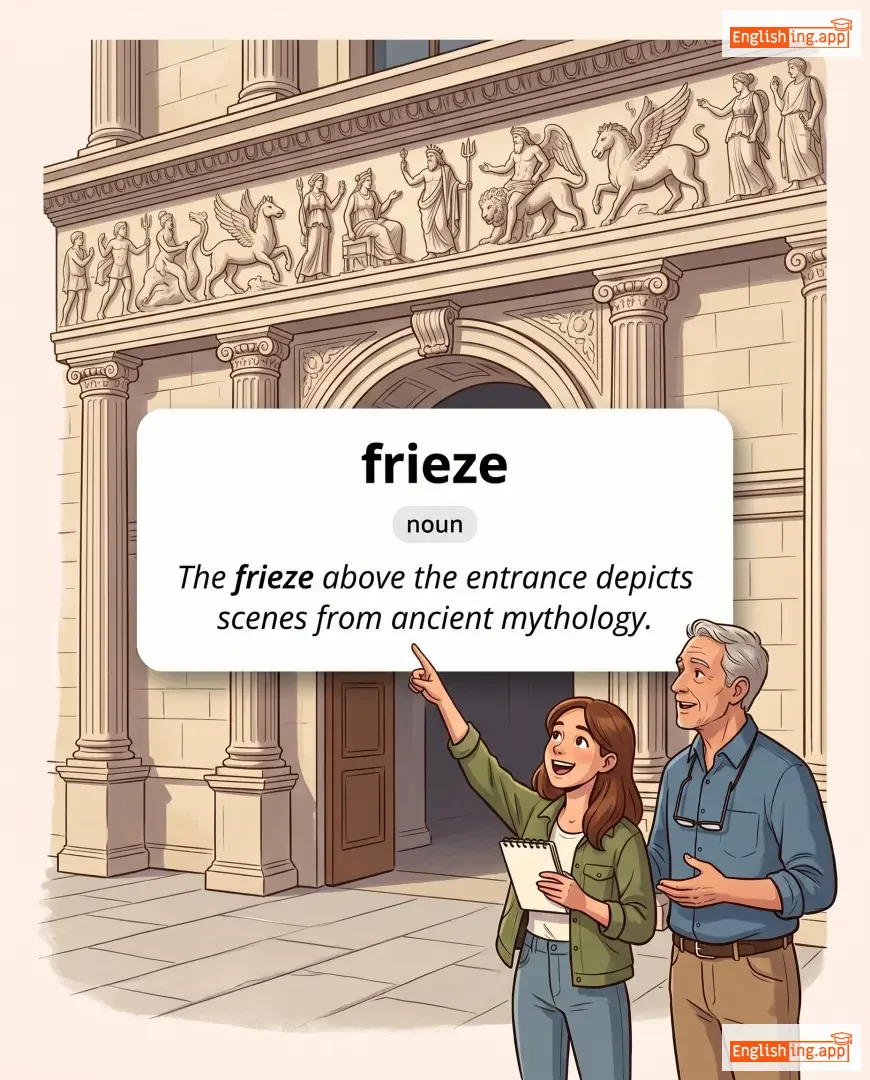
frieze definition card — visual illustration of the meaning
noun
/friːz/
浮雕带 (fúdiāo dài)

a decorative horizontal band, often sculpted or painted, usually on a wall near the ceiling

"The frieze above the entrance depicts scenes from ancient mythology."

"入口上方的浮雕带描绘了古代神话中的场景。" (rùkǒu shàngfāng de fúdiāo dài miáohuìle gǔdài shénhuà zhōng de chǎngjǐng)
noun
/fraɪt/
恐惧; 惊恐; 吓 (kongju, jingkong, xia)

a sudden intense feeling of fear; a shock or surprise that causes fear

"The loud thunder gave her such a fright that she dropped her coffee cup."

"那声雷鸣让她吓得掉了咖啡杯。" (Na sheng leiming rang ta xiade diao le kafei bei.)
verb
/ˈfraɪtən/
吓唬 (xiahu)

to cause fear or alarm in someone

"The loud noise frightened the child."

"巨大的噪音吓到了孩子。" (judade zaoyin xia dao le haizi)
adjective
/ˈfraɪtənd/
害怕的 (haipa de)

feeling fear or anxiety; scared

"The child was frightened by the loud noise."

"孩子被巨大的噪音吓到了。" (haizi bei judade zaoyin xia dao le)
adjective
/ˈfraɪtfəl/
可怕的 (kěpà de)

causing fear or horror; very unpleasant

"The hikers faced frightful weather conditions on the mountain."

"登山者面临着山中可怕的天气条件。" (Dēngshān zhě miànlín zhuó shānzhōng kěpà de tiānqì tiáojiàn.)
adjective
/ˈfrɪdʒɪd/
极冷的 (ji leng de)

extremely cold in temperature; lacking warmth or friendliness

"The explorers endured frigid conditions in the Arctic."

"探险者在北极忍受了极冷的环境。" (Tanxianzhe zai Beiji ren shou le ji leng de huanjing.)
noun
/ˌfrɪdʒɪˈdɛːriəm/
冷水池 (leng shui chi)

a large cold pool in ancient Roman baths used for cooling off after hot baths

"The ruins of the Roman frigidarium are still visible today."

"罗马的冷水池遗址今天仍可见。" (luoma de leng shui chi yizhi jintian reng ke jian.)
noun
/frɪndʒ/
装饰边缘 / 边界 (zhuangshi bianyuan / bianjie)

A decorative border of threads; the outer edge or margin of something.

"The festival had a fringe of small independent performances."

"节日有一条小型独立表演的边缘。" (Jieri you yi tiao xiaoxing duli biaoyan de bianyuan.)
verb
/frɪsk/
搜查 (sōuchá)

To search a person by patting their clothing to check for concealed items.

"The security guard frisked the man at the entrance."

"安保人员在入口处搜查了那名男子。" (Ānbǎo rényuán zài rùkǒu chù sōuchále nà míng nánzǐ.)
adjective
/ˈfrɪski/
活泼的; 精力充沛的; 爱玩的; 淘气的 (frisky)

lively; energetic; playful; mischievous

"The frisky puppy ran around the garden playfully."

"那只活泼的小狗在花园里欢快地奔跑。" (Na zhi huopo de xiao gou zai huayuan li huankuai de benpao.)
verb
/ˈfrɪtər/
浪费 (langfei)

To waste time, money, or energy on trivial matters.

"He frittered away his savings on unnecessary gadgets."

"他把储蓄浪费在了不必要的电子产品上。" (Ta ba chuxu langfei zai le bu bixu de dianzi chanpin shang.)
noun
/frɪˈvɒləti/
轻浮 (qīng fú)

Lack of seriousness; silly or trivial behavior.

"The teacher discouraged frivolity during the exam."

"老师在考试期间阻止了轻浮行为。" (Lǎoshī zài kǎoshì qījiān zǔzhǐle qīngfú xíngwéi.)
adjective
/ˈfrɪvələs/
轻浮 (qīngfú)

Not having any serious purpose or value; silly or unimportant.

"She dismissed the frivolous complaint quickly."

"她迅速驳回了这个轻浮的投诉。" (Tā xùnsù bóhuíle zhège qīngfú de tóusù.)
💇‍♀️

frizz

verb
/frɪz/

to form into small, tight curls or cause hair to become fuzzy and tangled

"The humid weather caused her hair to frizz."

verb
/ˈfrɪzəl/
将食物炸至变脆并卷曲 (jiang shíwù zhá zhì biàn cuì bìng juǎn qū)

to fry something until it becomes crisp and curled, or to make a sizzling noise

"The bacon began to frizzle in the pan."

"培根在锅中开始发出滋滋声。" (Peigeng zai guo zhong kaishi fachu zizi sheng.)
noun
/frɒk/
女性或女孩的裙子; 一种宽松的外衣 (nǚxìng huò nǚhái de qúnzi; yī zhǒng kuānsōng de wàiyī)

a woman's or girl's dress; a loose outer garment

"She wore a beautiful frock to the party."

"她穿了一件漂亮的裙子去参加派对。" (Tā chuānle yī jiàn piàoliang de qúnzi qù cānjiā pàiduì.)
noun
/frɒɡ/
青蛙 (qīngwā)

a tailless amphibian with a short squat body, moist smooth skin, and very long hind legs for leaping

"The frog jumped into the pond with a splash."

"这只青蛙跳进了池塘,水花四溅。" (Zhè zhī qīngwā tiàojìnle chítáng, shuǐhuā sìjiàn.)
verb
/ˈfrɒlɪk/
欢快地玩耍 (huān kuài de wán shuǎ)

to play and move about cheerfully, energetically, or playfully

"The children frolicked in the garden all afternoon."

"孩子们整个下午在花园里欢快地玩耍。" (Háizimen zhěnggè xiàwǔ zài huāyuán lǐ huān kuài de wán shuǎ.)
adjective
/ˈfrɒlɪksəm/
嬉戏的 (xīxì de)

full of playful spirit; lively and fun-loving

"The frolicsome puppy kept everyone entertained."

"那只嬉戏的小狗让每个人都很开心。" (Nà zhī xīxì de xiǎo gǒu ràng měi gèrén dōu hěn kāixīn.)
preposition
/frəm/ or /frʌm/
(cong)

Used to indicate the starting point of a journey, action, or source.

"She came from Dhaka to visit her family."

"她从达卡来探望她的家人。" (Tā cóng Dákǎ lái tànwàng tā de jiārén.)
noun
/frɒnd/
叶子 (yezi)

A large, divided leaf of a fern, palm, or similar plant.

"The fern's frond stretched gracefully over the garden path."

"蕨类植物的叶片优雅地伸展在花园小路上。" (Jue lei zhiwu de ye pian youya di shenchang zai huayuan xiaolu shang.)
noun
/frʌnt/
前面 (qianmian)

the forward-facing part of something

"The house has a garden in front."
"房子前面有一个花园。" (Fángzi qiánmiàn yǒu yīgè huāyuán.)
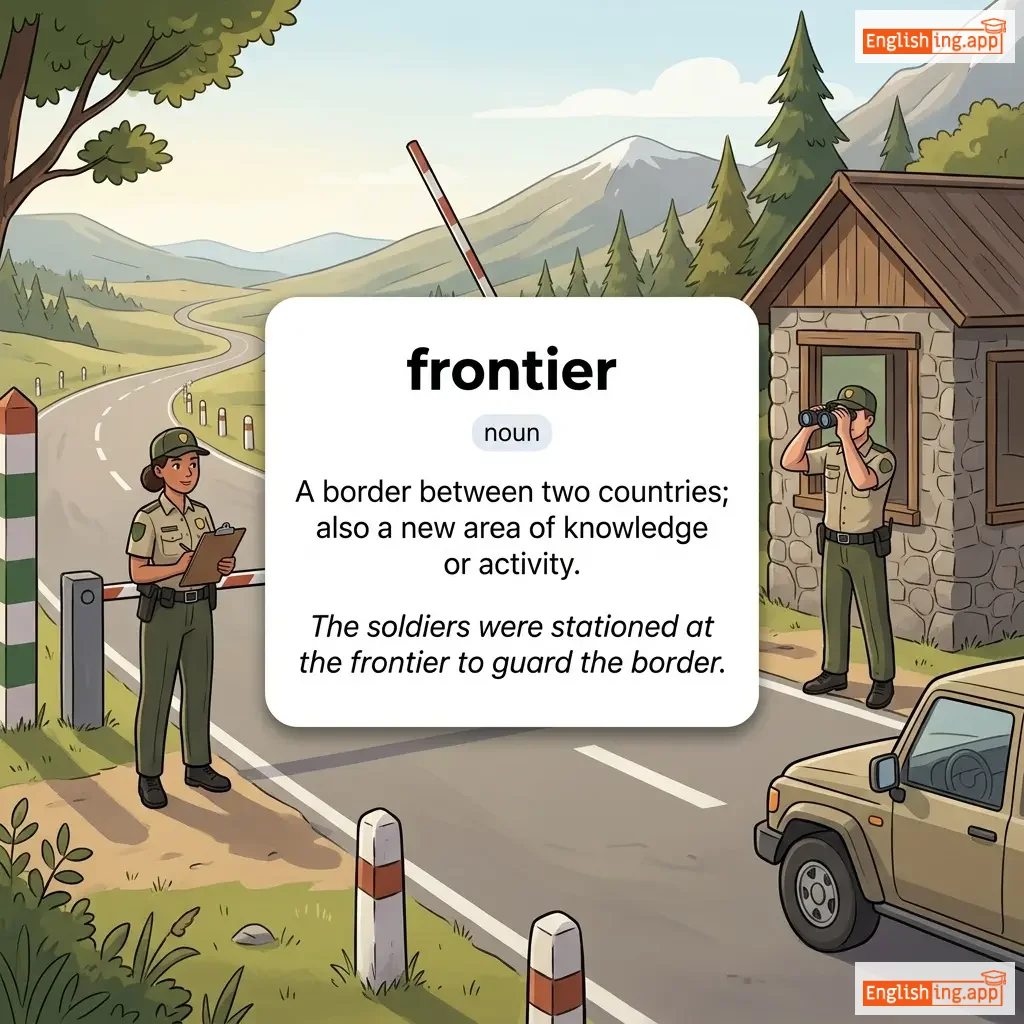
frontier definition card — visual illustration of the meaning
noun
/ˈfrʌntɪə(r)/
边界 (bianjie)

A border between two countries; also a new area of knowledge or activity.

"The soldiers were stationed at the frontier to guard the border."
"士兵们驻扎在边界以守卫边境。" (Shi bing men zhu zha zai bian jie yi shou wei bian jing.)
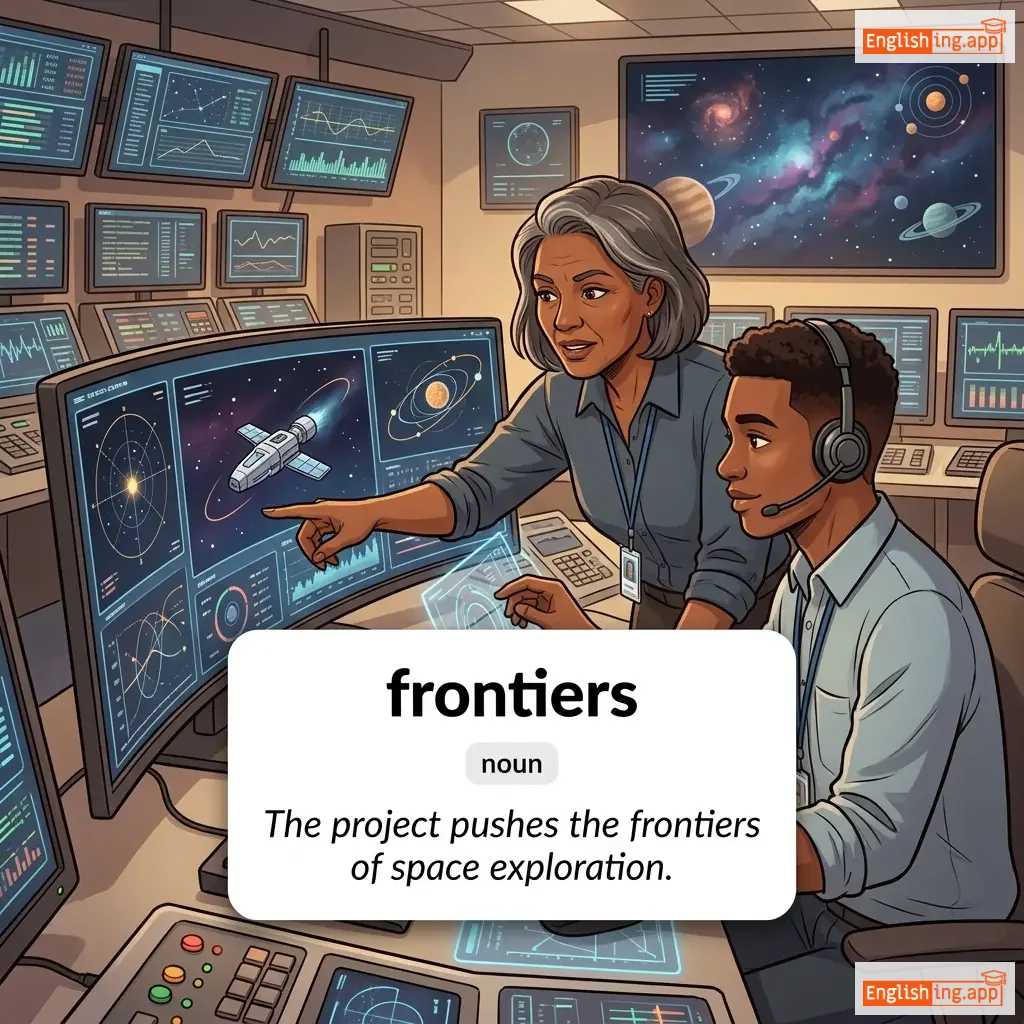
frontiers definition card — visual illustration of the meaning
noun
ˈfrʌn.tɪərz
边界 (bianjie)

The extreme limit of settled land beyond which lies wilderness; the limits of knowledge or achievement in a particular field.

"The project pushes the frontiers of space exploration."

"这个项目推动了太空探索的边界。" (Zhège xiàngmù tuīdòngle tàikōng tànshuǒ de biānjiè.)
adjective
/ˈfrɒθi/
泡沫丰富 (pàomò fēngfù)

Full of or covered with small bubbles; light and insubstantial.

"She ordered a cup of frothy cappuccino."

"她点了一杯泡沫丰富的卡布奇诺。" (Tā diǎnle yī bēi pàomò fēngfù de kǎbùqínuō.)
froward definition card — visual illustration of the meaning
adjective
/ˈfrəʊərd/
固执的 (guzhi de)

Difficult to deal with; contrary and disobedient.

"The teacher found the froward child hard to manage."
"老师发现固执的孩子很难管理。" (Laoshi faxian guzhide haizi hen nan guanli.)
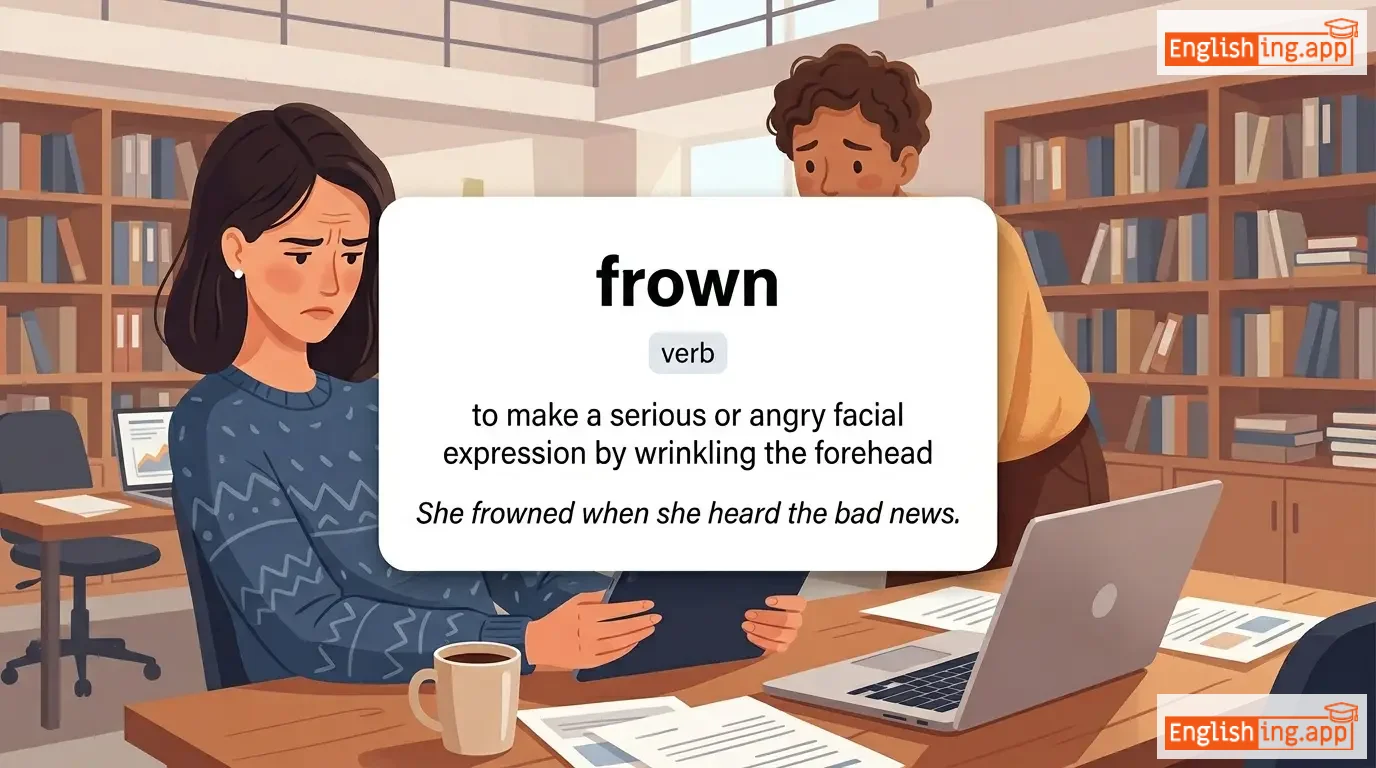
frown definition card — visual illustration of the meaning
verb
/fraʊn/
皱眉 (zhou mei)

to make a serious or angry facial expression by wrinkling the forehead

"She frowned when she heard the bad news."

"她听到坏消息时皱起了眉头。" (Ta tingdao huai xiaoxi shi zhou qi le meitou.)
adjective
/ˈfraʊzi/
邋遢 (lātā)

Scruffy and neglected in appearance; musty or stale in smell.

"He wore a frowsy old jacket that smelled of damp."

"他穿着一件邋遢的旧夹克,散发着潮湿的气味。" (Tā chuānzhuó yī jiàn lātā de jiù jiákè, sànfā zhe cháoshī de qìwèi.)
adjective
/ˈfraʊzi/
邋遢 (lata)

Unkempt, messy, or having a musty, unpleasant smell.

"He entered the room with a frowzy appearance after sleeping on the couch."

"他在沙发上睡觉后,以邋遢的外貌走进了房间。" (Ta zai shafa shang shuijiao hou, yi lata de waimao zoujin le fangjian.)
adjective
/ˈfroʊzən/
冻结的 (dongjie de)

preserved by being made extremely cold; turned into ice

"The lake was completely frozen during winter."

"湖泊在冬季完全冻结。" (Hupo zai dongji wanquan dongjie.)
verb
/ˈfrʌktɪˌfaɪ/
使…成果丰硕 (shǐ… chéngguǒ fēngshuò)

To make fruitful or productive; to bear fruit.

"The new policies will help fructify the economic potential of the region."

"新的政策将有助于使该地区的经济潜力丰产。" (Xīn de zhèngcè jiāng yǒu zhù yú shǐ gāi dìqū de jīngjì qiánlì fēngshuò.)
adjective
/ˈfruːɡəl/
节俭的 (jiéjiǎn de)

Economical in use or expenditure; avoiding waste.

"She is very frugal and always saves a portion of her income."
"她非常节俭,总是储蓄她收入的一部分。" (Tā fēicháng jiéjiǎn, zǒng shì chǔxù tā shōurù de yī bùfèn.)
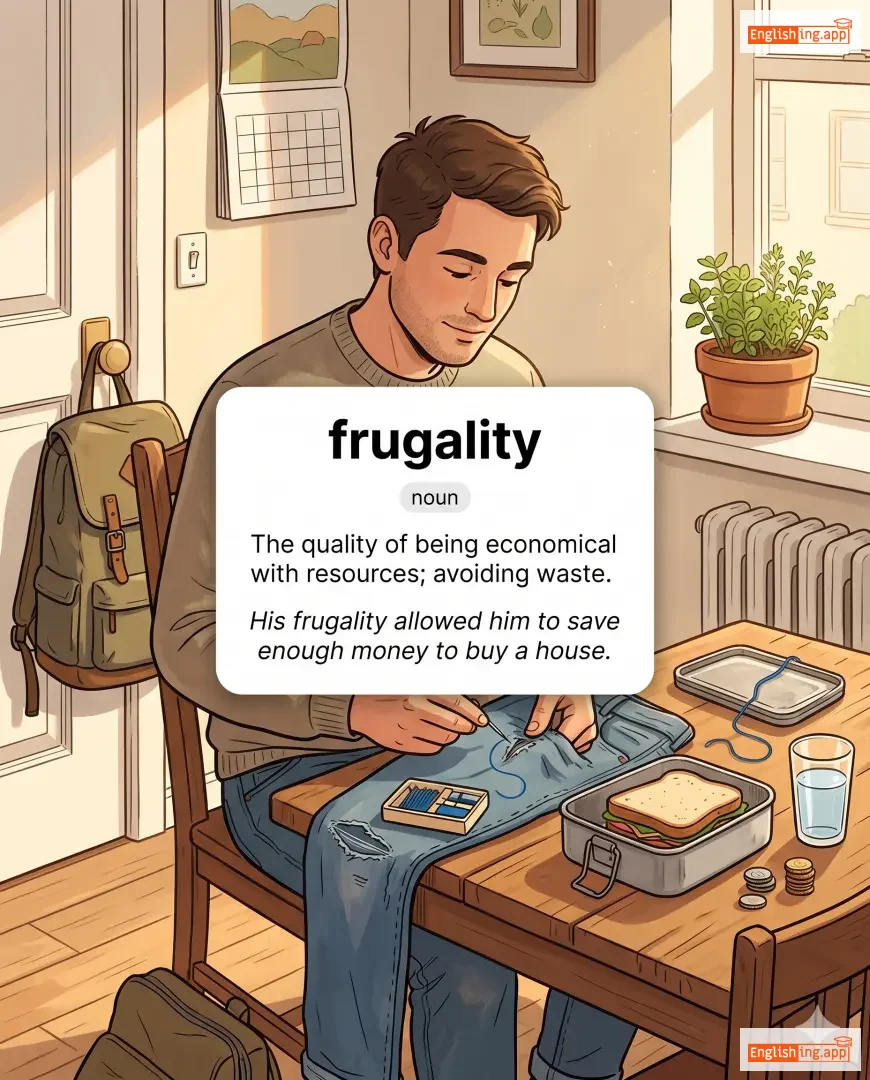
frugality definition card — visual illustration of the meaning
noun
/fruːˈɡæləti/
节俭 (jie jian)

The quality of being economical with resources; avoiding waste.

"His frugality allowed him to save enough money to buy a house."

"他的节俭使他能够存够足够的钱买房子。" (Ta de jie jian shi ta neng gou cun gou zu gou de qian mai fang zi.)
noun
/fruːt/
水果 (shuǐguǒ)

The sweet and fleshy product of a plant that contains seeds.

"Mango is my favorite fruit."

"芒果是我最喜欢的水果。" (Mángguǒ shì wǒ zuì xǐhuān de shuǐguǒ.)
adjective
/ˈfruːtfəl/
富有成效的 (fùyǒu chéngxiào de)

Producing good results or being productive.

"Their meeting was fruitful and led to many new ideas."

"他们的会议富有成效,带来了许多新想法。" (Tāmen de huìyì fùyǒu chéngxiào, dàilái le xǔduō xīn xiǎngfǎ.)
noun
/fruˈɪʃən/
实现 (shixian)

The realization or fulfillment of a plan, project, or desire.

"Her dream of becoming a doctor finally came to fruition."

"她成为医生的梦想终于实现了。" (Ta chengwei yisheng de mimang zhongyu shixian le.)
adjective
/ˈfruːt.ləs/
徒劳的; 无用的; 无效的; (tuláo de; wúyòng de; wúxiào de)

unsuccessful; futile; pointless;

"After hours of searching, their efforts proved fruitless."

"经过数小时的搜索,他们的努力证明是徒劳的。" (Jīngguò shù xiǎoshí de sōusuǒ, tāmen de nǔlì zhèngmíng shì tuláo de.)
verb
/ˈfrʌstreɪt/

To prevent someone from accomplishing something; to cause feelings of annoyance or disappointment.

"The constant delays frustrated the team."

adjective
/ˈfrʌstreɪtɪd/
沮丧 (jǔsàng)

feeling annoyed or upset because of inability to achieve something

"She felt frustrated after failing the exam."

"她在考试失败后感到沮丧。" (Tā zài kǎoshì shībài hòu gǎndào jǔsàng.)
adjective
/ˈfrʌstreɪtɪŋ/
令人沮丧 (lìng rén jǔsàng)

causing annoyance or dissatisfaction

"The slow internet connection was really frustrating."

"缓慢的互联网连接真的令人沮丧。" (Huǎnmàn de hùliánwǎng liánjiē zhēn de lìng rén jǔsàng.)
noun
/frʌˈstreɪʃən/
挫折 (cuòzhé)

The feeling of being upset or annoyed due to inability to achieve something.

"He felt deep frustration when his plans failed."

"当他的计划失败时,他感到深深的挫折。" (Dāng tā de jìhuà shībài shí, tā gǎndào shēnshēn de cuòzhé.)
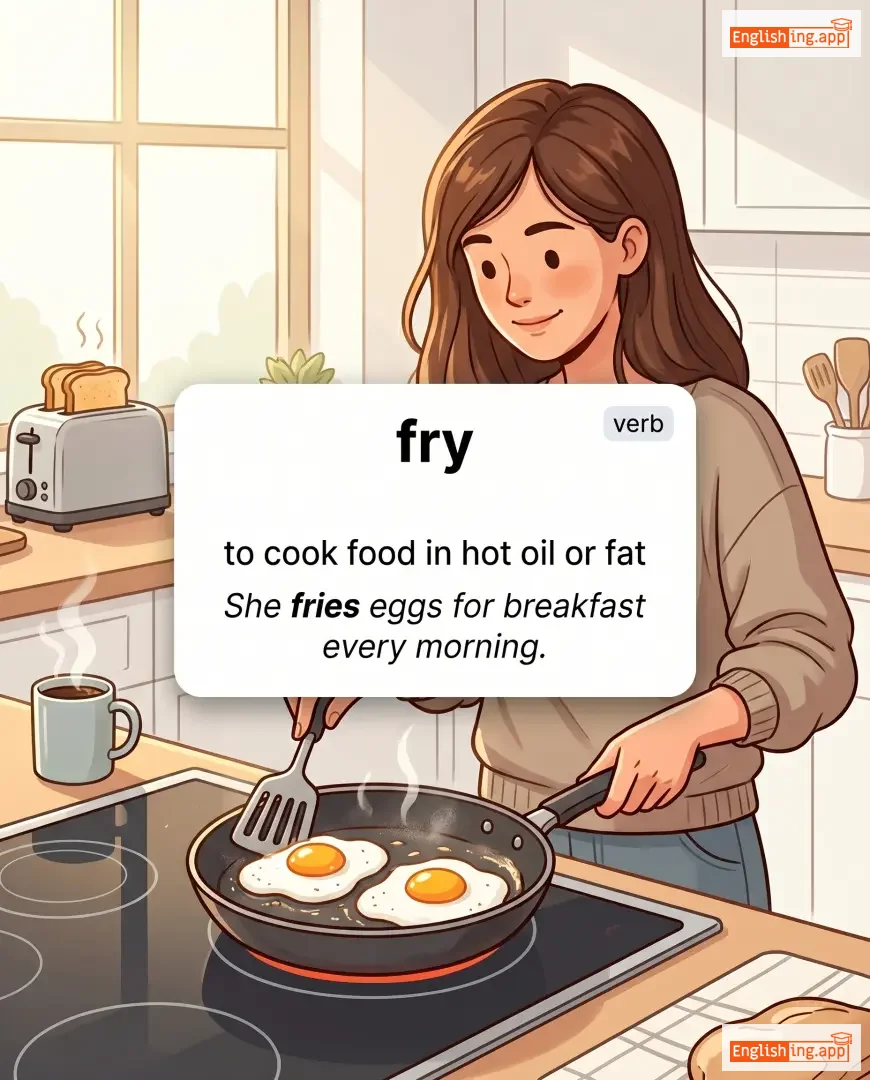
fry definition card — visual illustration of the meaning
noun
/fraɪ/
鱼苗 (yumiao)

young fish; small fish; to cook food in hot fat or oil

"The fisherman caught many small fry in his net."

"渔夫在网里抓到了许多小鱼苗。" (yufu zai wang li zhua dao le xuduo xiao yumiao)
adjective, adverb (informal, vulgar)
/ˈfʌkɪŋ/
他妈的 (粗俗词语用于强调) (tā mā de (cū sú cí yǔ yòng yú qiáng diào))

used for emphasis, often expressing anger or frustration (vulgar slang)

"It was a fucking disaster!"

"这真是个他妈的灾难!" (Zhè zhēn shì gè tā mā de zāi nàn!)
verb
/ˈfʌdəl/
使困惑 (shǐ kùnhuò)

To confuse or stupefy, especially with alcohol or overwhelming information.

"The complicated instructions fuddled the new employees."

"复杂的指令使新员工感到困惑。" (Fùzá de zhǐlìng shǐ xīn yuángōng gǎndào kùnhuò.)

Fuel

noun/verb
/ˈfjuːəl/

A material such as coal, gas, or oil that is burned to produce energy; also to supply with energy or power.

"The car needs fuel to run efficiently."