词汇表

英语词汇词典 | 单词含义、定义和示例

adjective
/ˈfræʤaɪl/
脆弱 (cuìruò)

Easily broken or damaged; delicate.

"Be careful with that vase, it's very fragile."
"小心那个花瓶,它很脆弱。" (Xiǎoxīn nàgè huāpíng, tā hěn cuìruò.)
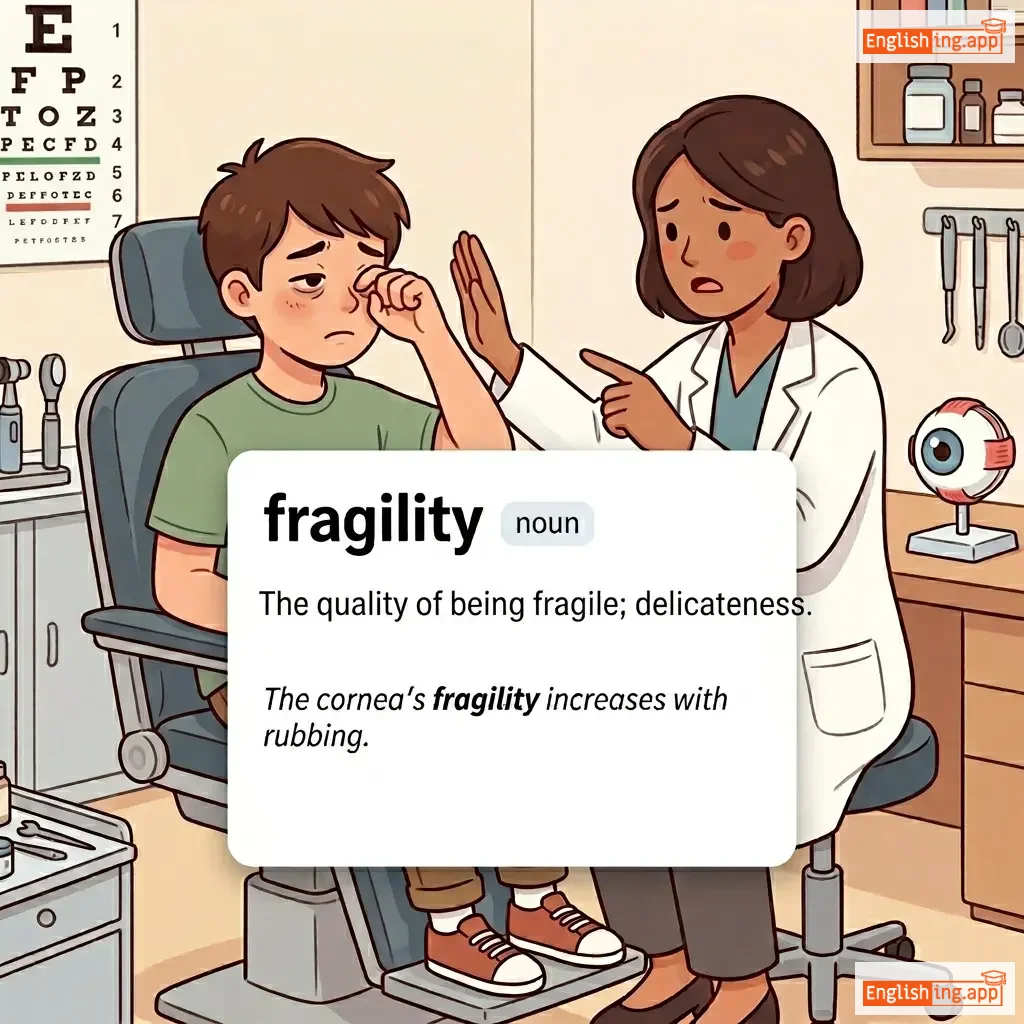
fragility definition card — visual illustration of the meaning
noun
/frəˈdʒɪl.ɪ.ti/
脆弱性 (cui ruo xing)

The quality of being fragile; delicateness.

"The cornea's fragility increases with rubbing."

"角膜的脆弱性随着摩擦而增加。" (jiao mo de cui ruo xing sui zhe mo ca er zeng jia)
noun
/ˈfræɡmənt/
碎片 (suìpiàn)

a small piece broken off something larger

"He found a fragment of ancient pottery near the river."
"他在河边找到了一个古老陶器的碎片。" (Tā zài hé biān zhǎodào le yīgè gǔlǎo táoqì de suìpiàn.)
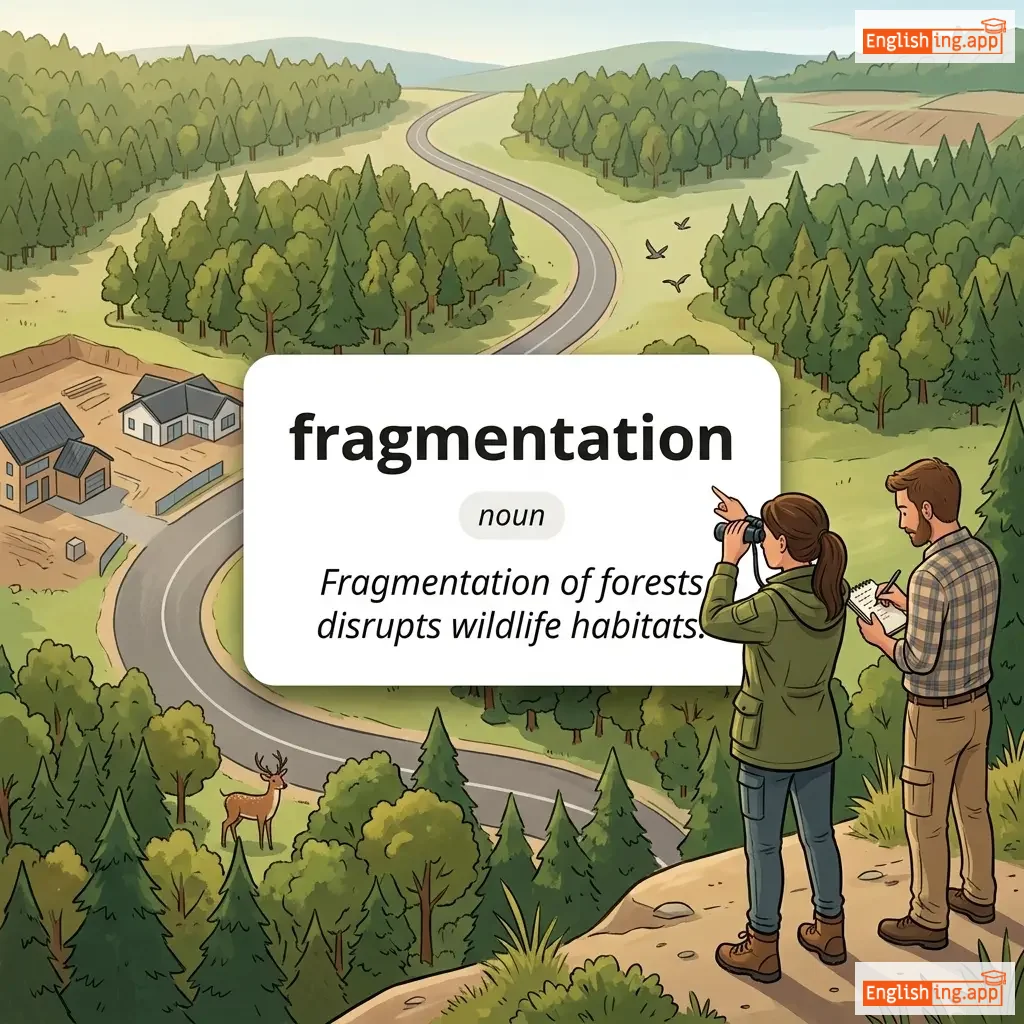
fragmentation definition card — visual illustration of the meaning
noun
/ˌfræɡ.mənˈteɪ.ʃən/
碎片化 (suìpiàn huà)

The process of breaking into fragments; division of habitat into isolated patches.

"Fragmentation of forests disrupts wildlife habitats."
"森林的碎片化破坏了野生动物的栖息地。" (Sēnlín de suìpiàn huà pòhuài le yěshēng dòngwù de qīxī dìdì.)
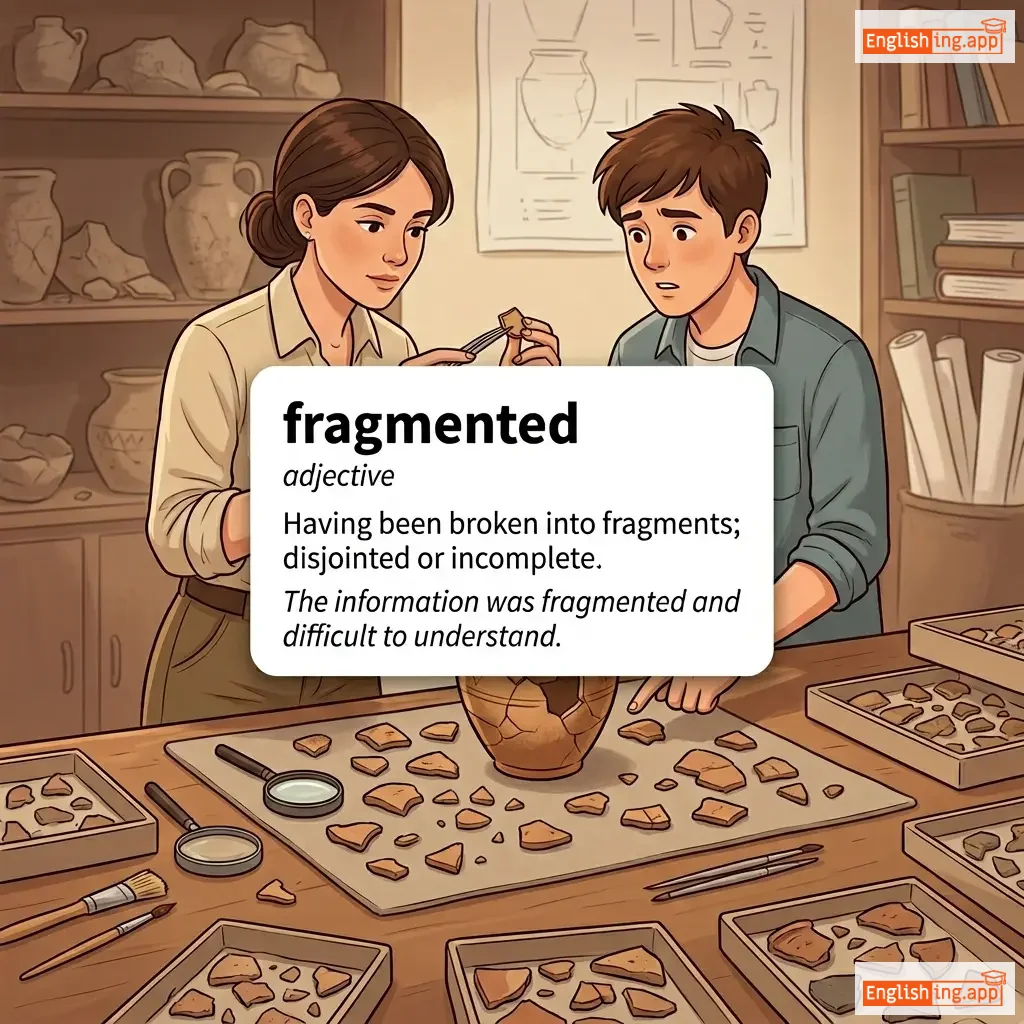
fragmented definition card — visual illustration of the meaning
adjective
/ˈfræɡməntɪd/
碎片化, 分割, 不完整 (suipianhua, fenge, bu wanzheng)

Having been broken into fragments; disjointed or incomplete.

"The information was fragmented and difficult to understand."

"信息被碎片化了,难以理解。" (Xìnxī bèi suìpiànhuàle, nányǐ lǐjiě.)
noun
/ˈfreɪɡrəns/
香气 (xiangqi)

A pleasant, sweet smell.

"The fragrance of fresh flowers filled the room."

"新鲜花朵的香气充满了房间。" (Xīnxiān huāduǒ de xiāngqì chōngmǎn le fángjiān.)
adjective
/freɪl/
脆弱 (cuì ruò)

Physically weak and delicate.

"The old man was too frail to walk without help."

"这位老年人太虚弱,无法在没有帮助的情况下走路。" (Zhè wèi lǎo nián rén tài xū ruò, wú fǎ zài méi yǒu bāng zhù de qíng kuàng xià zǒu lù.)
noun
/ˈfreɪlti/
脆弱 (cuìruò)

The condition of being weak, delicate, or easily broken.

"Old age often comes with physical frailty."
"衰老通常伴随着身体的脆弱。" (Shuāilǎo tōngcháng bànsuízhe shēntǐ de cuìruò.)
Frame definition card — visual illustration of the meaning
🖼️

Frame

noun/verb
/freɪm/

A rigid structure that surrounds or encloses something; to construct or formulate.

"They hung the painting in a golden frame."

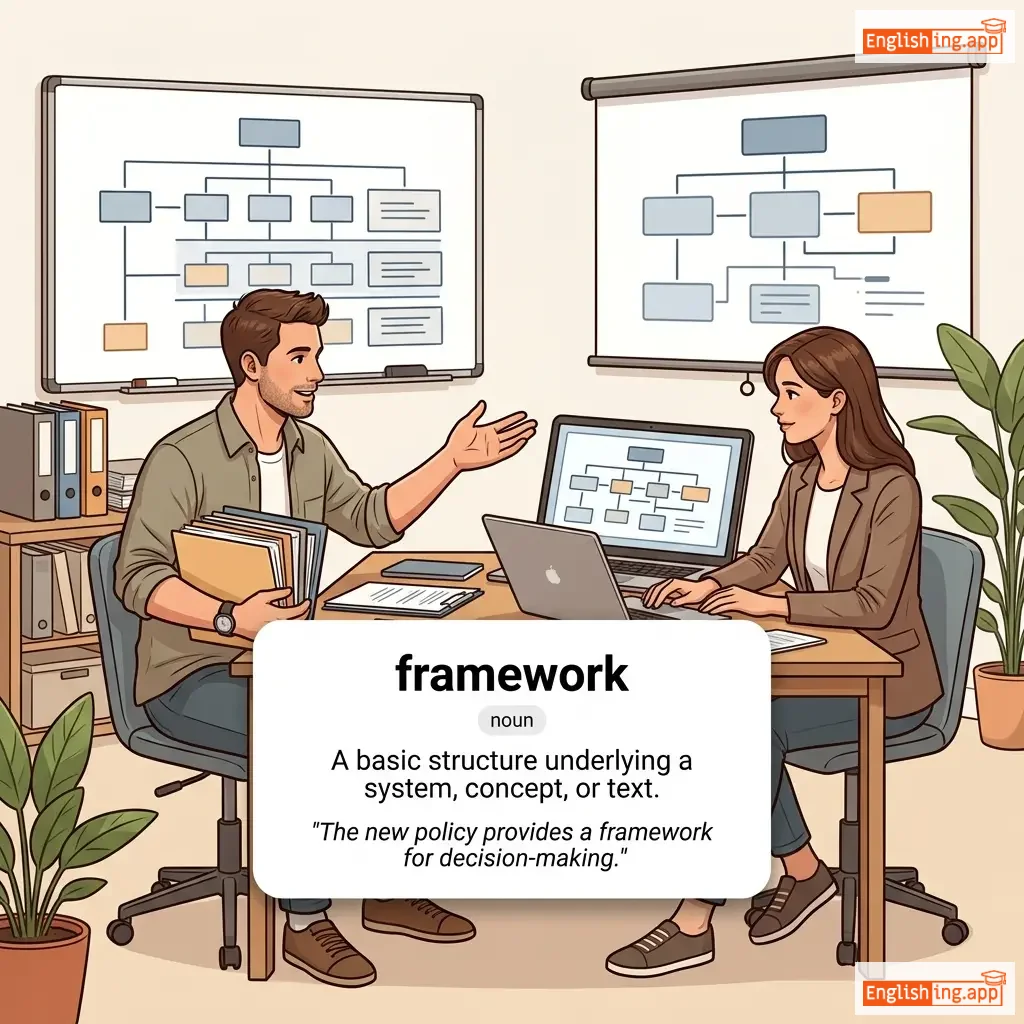
framework definition card — visual illustration of the meaning
noun
/ˈfreɪmˌwɜːrk/
框架 (kuàngjià)

A basic structure underlying a system, concept, or text.

"The new policy provides a framework for decision-making."

"新政策为决策提供了框架。" (Xīn zhèngcè wèi juécè tígōngle kuàngjià.)
frameworks definition card — visual illustration of the meaning
noun
ˈfreɪm.wɜːks
框架 (kuàngjià)

Basic structures underlying systems, concepts, or texts

"Frameworks guide AI implementation."

"框架指导AI的实施。" (Kuàngjià zhǐdǎo AI de shíshī.)
noun, verb
/ˈfrænʧaɪz/
特许经营 (tè xǔ jīng yíng)

A legal right to sell or distribute goods or services in a specific area; to grant such a right.

"He opened a new fast-food franchise in the city."

"他在城市里开设了一家新的快餐特许经营店。" (Tā zài chéngshì lǐ kāishè le yījiā xīn de kuàicān tèxǔ jīngyíng diàn.)
adjective
/fræŋk/
坦率 (tǎnshuài)

open, honest, and direct in speech or expression

"She was frank about her feelings on the matter."

"她在这个问题上坦率地表达了她的感受。" (Tā zài zhège wèntí shàng tǎnshuài de biǎodále tā de gǎnshòu.)
noun
/ˈfræŋkɪnsɛns/
乳香 (rǔ xiāng)

An aromatic gum resin used in incense and perfumes, often in religious ceremonies.

"The temple was filled with the sweet smell of burning frankincense."

"寺庙里充满了燃烧乳香的甜美气味。" (Sìmiào lǐ chōngmǎnle ránshāo rǔxiāng de tiánměi qìwèi.)
adverb
/ˈfræŋkli/
坦率地 (tǎnshuài de)

in an honest and direct way

"Frankly, I don’t think this plan will work."

"坦率地说,我不认为这个计划会成功。" (Tǎnshuài de shuō, wǒ bù rènwéi zhège jìhuà huì chénggōng.)
adjective
/ˈfræntɪk/
疯狂的 (fengkuang de)

Extremely anxious, hurried, or out of control due to fear or excitement.

"She made a frantic call to her family after the accident."

"事故发生后,她紧急给家人打了电话。" (Shìgù fāshēng hòu, tā jǐnjí gěi jiārén dǎle diànhuà.)
adjective
/frəˈtɜːrnəl/

Relating to brothers or brotherhood; friendly and supportive.

"The two nations maintain a fraternal relationship."

noun
/frɔːd/
欺诈 (qīzhà)

A wrongful or criminal deception intended to result in financial or personal gain.

"The company collapsed due to massive accounting fraud."

"公司因大规模的会计欺诈而倒闭。" (Gōngsī yīn dà kuòsù de huìjì qīzhà ér dǎobì.)
noun
/ˈfrɔːdjʊləns/
欺诈 (qīzhà)

The quality or state of being fraudulent; deceitfulness.

"The audit revealed fraudulence in the financial statements."

"审计揭示了财务报表中的欺诈行为。" (Shěnjì jiēshìle cáiwù bàobiǎo zhōng de qīzhà xíngwéi.)
adjective
/ˈfrɔːdjʊlənt/
欺诈的 (qī zhà de)

Involving or using deceit, especially criminal deception.

"He was arrested for making fraudulent insurance claims."

"他因提交欺诈性保险索赔而被捕。" (Tā yīn tíjiāo qīzhà xìng bǎoxiǎn suǒpéi ér bèi bǔ.)
adjective
/frɔːt/
充满 (chōngmǎn)

Filled with or likely to result in something undesirable.

"The negotiations were fraught with tension and uncertainty."

"谈判充满了紧张和不确定性。" (Tánpàn chōngmǎnle jǐnzhāng hé bù quèdìngxìng.)
noun/verb
/freɪ/
争斗, 磨损 (zhēngdòu, mó sǔn)

As a noun, a fight or heated dispute; as a verb, to unravel or wear out through friction.

"He tried to stay calm, but his nerves began to fray during the argument."

"他试图保持冷静,但在争论中他的神经开始磨损。" (Tā shìtú bǎochí lěngjìng, dàn zài zhēnglùn zhōng tā de shénjīng kāishǐ mó sǔn.)
noun
/ˈfrek.əl/
雀斑 (quèbān)

a small brownish spot on the skin, often becoming more pronounced through exposure to the sun

"Her face was covered with cute freckles that appeared every summer."

"她的脸上覆盖着可爱的雀斑,每年夏天都会出现。" (Tā de liǎn shàng fùgài zhe kě'ài de quèbān, měi nián xiàtiān dōu huì chūxiàn.)
adjective/verb/adverb
/friː/
自由 (zì yóu)

Not under the control or in the power of another; able to act or be done as one wishes.

"The children are free to play outside."

"孩子们可以自由地在外面玩。" (Háizimen kěyǐ zìyóu de zài wàimiàn wán.)
noun
/ˈfriː taɪm/
空闲时间 (kongxian shijian)

time when a person is not working or occupied and can do activities they enjoy

"She likes to read books in her free time."

"她喜欢在空闲时间读书。" (ta xihuan zai kongxian shijian dushu)
noun
/ˈfriːˌbuːtər/
海盗 (hǎidào)

A pirate or plunderer who roams freely in search of wealth.

"The freebooter raided the merchant ships along the coast."
"海盗袭击了沿海的商船。" (Hǎidào xíjíle yánhǎi de shāngchuán.)
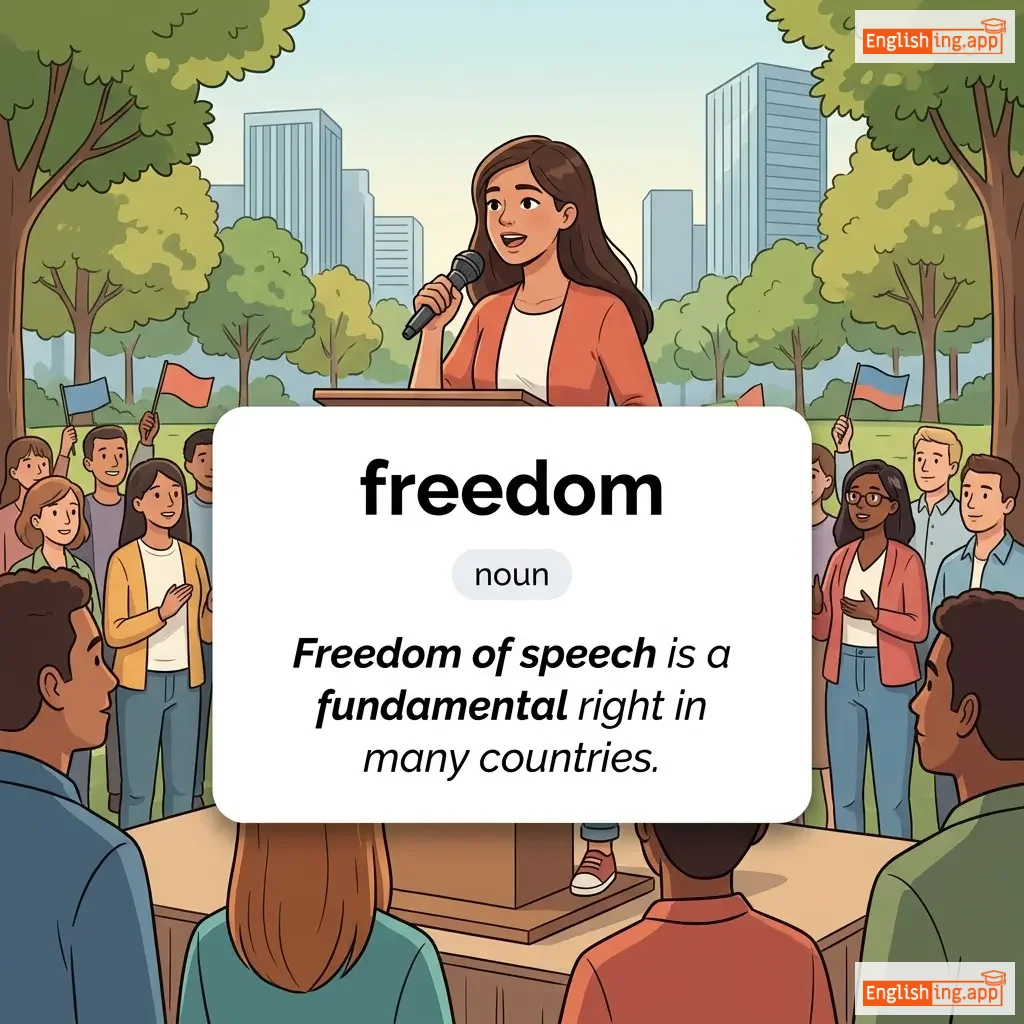
freedom definition card — visual illustration of the meaning
noun
/ˈfriːdəm/
自由 (zìyóu)

The state of being free; the power or right to act, speak, or think without hindrance or restraint.

"Freedom of speech is a fundamental right in many countries."

"言论自由是许多国家的基本权利。" (yánlùn zìyóu shì xǔduō guójiā de jīběn quánlì.)
noun
/ˈfriːdəm ˌfaɪtər/
自由斗士 (ziyou doushi)

a person who takes part in an armed or political struggle to achieve freedom or independence for their people or country

"The freedom fighter dedicated his life to the liberation of his homeland."

"这位自由斗士把一生献给了祖国的解放。" (Zhe wei ziyou doushi ba yisheng xiangei le zuguo de jiefang)
noun
/ˈfriːˌlænsər/
自由职业者 (zìyóu zhíyè zhě)

A person who works independently without being permanently employed by one organization.

"She works as a freelancer designing websites for different clients."

"她作为自由职业者为不同的客户设计网站。" (Tā zuòwéi zìyóu zhíyè zhě wèi bùtóng de kèhù shèjì wǎngzhàn.)
adverb
/ˈfriːli/
自由地 (zìyóu de)

without restriction or control; willingly

"Information should flow freely in a democratic society."

"信息应该在民主社会中自由流动。" (Xìnxī yīnggāi zài mínzhǔ shèhuì zhōng zìyóu liúdòng.)
noun
/ˈfriːˌmeɪsən/
共济会会员 (gongjihui huiyuan)

A member of an international fraternity known as Freemasonry, focused on moral and spiritual values.

"His grandfather was a respected freemason in the community."

"他的祖父是社区中受人尊敬的共济会会员。" (Tā de zǔfù shì shèqū zhōng shòu rén zūnjìng de gòngjìhuì huìyuán.)
noun
/ˈfriːˌθɪŋkər/
自由思想者 (zìyóu sīxiǎng zhě)

A person who forms opinions based on reason and independent thought rather than tradition or authority.

"Voltaire was considered a great freethinker of his time."

"伏尔泰被认为是他时代伟大的自由思想家。" (Fú'ěrtài bèi rènwéi shì tā shídài wěidà de zìyóu sīxiǎngjiā.)
verb
/friːz/
冻结 (dongjie)

To turn into ice or cause to become hard due to extreme cold.

"The water in the lake will freeze during winter."

"湖里的水在冬天会冻结。" (Hu li de shui zai dongtian hui dongjie.)
adjective
/frɛntʃ/
法国的 (fàguó de)

Relating to France, its people, or their language.

"We enjoyed delicious French cuisine on our trip to Paris."

"我们在巴黎的旅行中享用了美味的法国菜。" (Wǒmen zài bālí de lǚxíng zhōng xiǎngyòng le měiwèi de fàguó cài.)
adjective
/frəˈnɛtɪk/
狂乱的 (kuángluàn de)

Fast and energetic in a wild or uncontrolled way.

"The stock market experienced frenetic trading after the announcement."

"公告后股市经历了狂乱的交易。" (Gōnggào hòu gǔshì jīnglìle kuángluàn de jiāoyì.)
adjective
/ˈfrɛn.zid/
狂乱 (kuángluàn)

Wildly excited or uncontrolled

"The frenzied crowd cheered as the band took the stage."

"疯狂的人群为乐队登台而欢呼。" (Fēngkuáng de rénqún wèi yuèduì dēngtái ér huānhū.)
noun
/ˈfrɛn.zi/
疯狂 (fengkuang)

A state of uncontrolled excitement or wild behavior

"The news of the sale caused a shopping frenzy."

"销售的消息引发了购物疯狂。" (Xiaoshou de xiaoxi yinfa le gouwu fengkuang.)
noun
/ˈfriː.kwən.si/
频率 (pinlü)

The rate at which something occurs or is repeated over a period of time

"The frequency of bus services has been increased during rush hours."

"在高峰时段,公交车的频率已经增加。" (Zài gāofēng shíduàn, gōngjiāo chē de pínlǜ yǐjīng zēngjiā.)
adjective, verb
/ˈfriː.kwənt/ (adj.), /friːˈkwent/ (verb)
频繁 (pín fán)

Adjective: happening often; Verb: to visit a place regularly

"He is a frequent visitor to the library."

"他是图书馆的常客。" (Tā shì túshūguǎn de chángkè.)
adverb
/ˈfriːkwəntli/
频繁 (pinfan)

Happening often or at short intervals.

"He frequently visits his grandparents on weekends."
"他在周末经常去看望他的祖父母。" (Tā zài zhōumò jīngcháng qù kànwàng tā de zǔfùmǔ.)
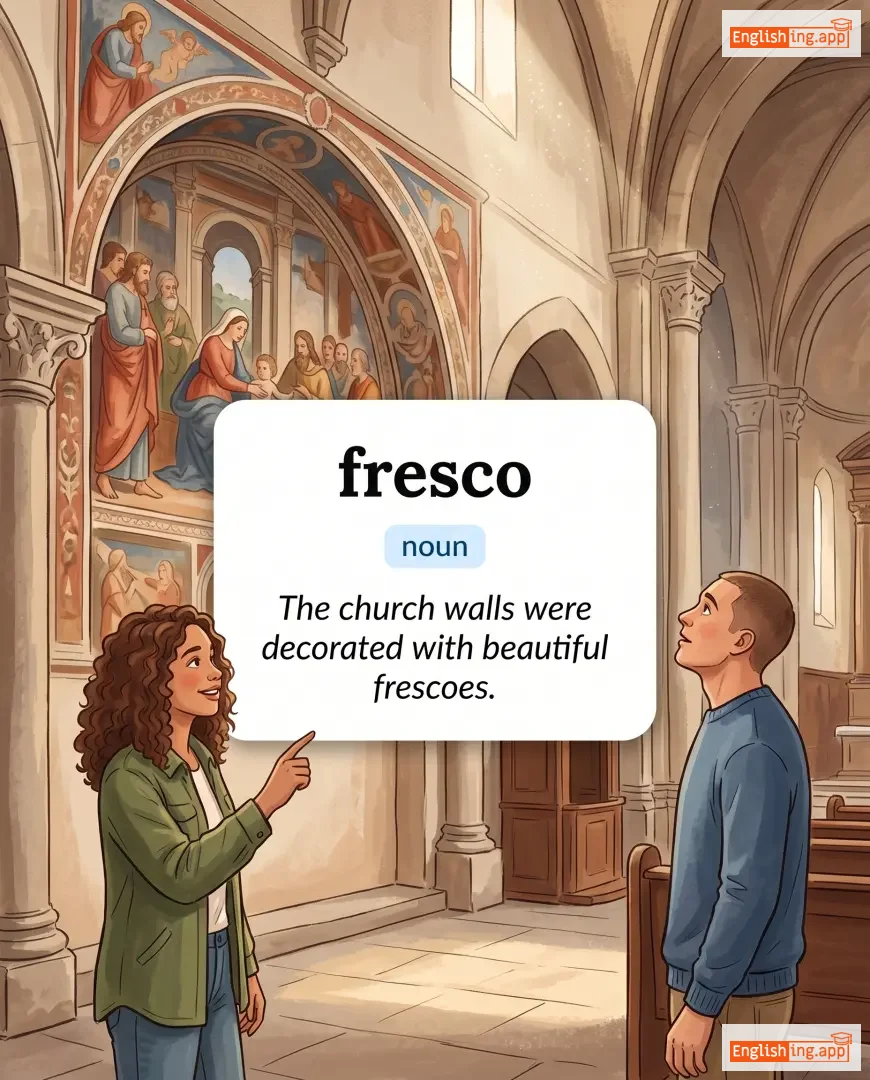
fresco definition card — visual illustration of the meaning
noun
/ˈfrɛs.koʊ/
壁画 (bihua)

A painting done rapidly in watercolor on wet plaster so that the colors penetrate the surface

"The church walls were decorated with beautiful frescoes."

"教堂的墙壁装饰着美丽的壁画。" (Jiaotang de qiangbi zhuangshizhe mei li de bihua.)
adjective
/frɛʃ/
新鲜 (xinxian)

new, recently made, or clean and pure

"The bread is still fresh from the oven."

"面包还是刚从烤箱出来。" (Miànbāo háishì gāng cóng kǎoxiāng chūlái.)
noun
/ˈfrɛʃɪt/
突然的河流泛滥 (tūrán de héliú fànlàn)

A sudden overflow of a stream or river caused by heavy rain or melting snow.

"After the storm, the river turned into a raging freshet."

"暴风雨过后,河流变成了猛烈的freshet。" (Bàofēngyǔ guòhòu, héliú biàn chéngle měngliè de freshet.)
noun
/ˈfreʃmən/
大一新生 (da yi xin sheng)

a first-year student at a high school, college, or university

"The freshman felt nervous on his first day at university."

"大一新生在大学的第一天感到紧张。" (Da yi xin sheng zai da xue de di yi tian gan dao jin zhang.)
noun
/ˈfrɛʃnəs/
新鲜感 (xinxian gan)

The quality of being new, clean, and full of energy.

"The freshness of the morning air made everyone feel alive."

"早晨的清新空气让每个人都感觉活力十足。" (Zaocan de qingxin kongqi rang meige ren dou ganjue huoli shizu.)
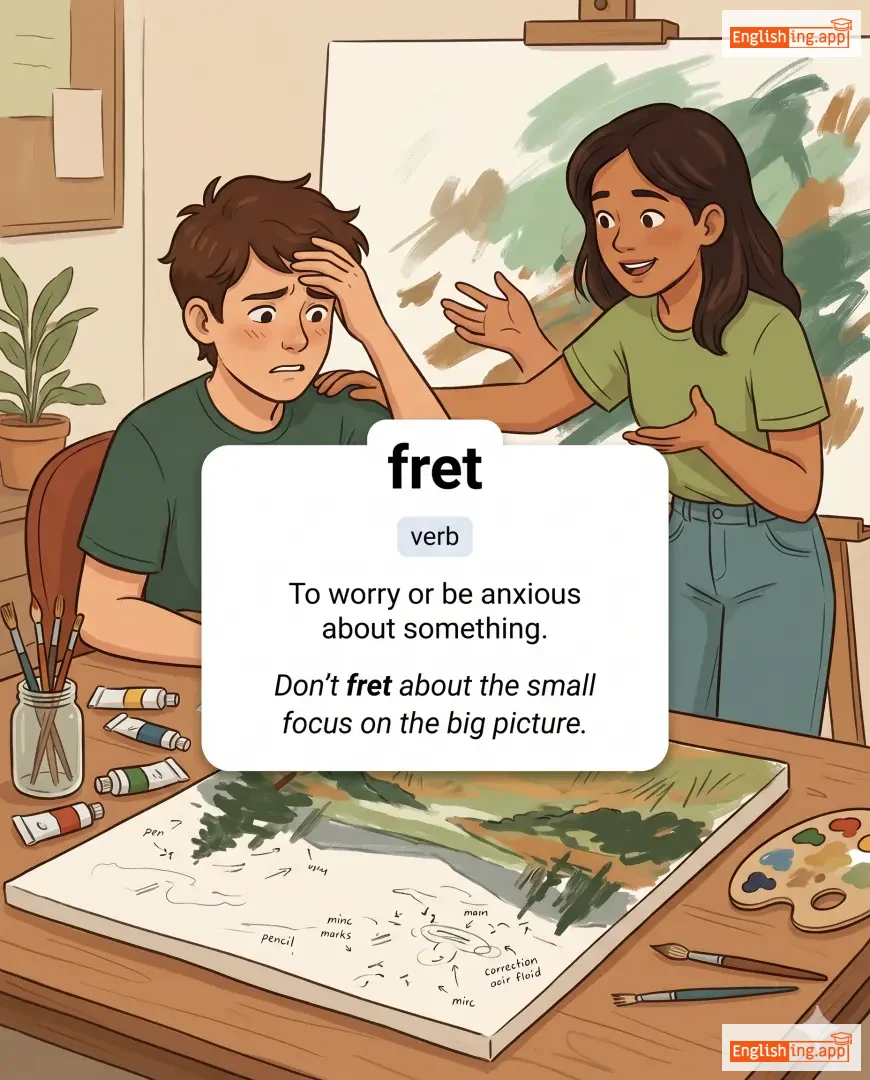
fret definition card — visual illustration of the meaning
😟

fret

verb
/frɛt/

To worry or be anxious about something.

"Don't fret about the small mistakes; focus on the big picture."

adjective
/ˈfrɛtfəl/
焦虑的 (jiao lü de)

Feeling or showing distress or irritation.

"The baby was fretful all night and could not sleep."

"宝宝整晚都很焦虑,无法入睡。" (Bao bao zheng wan dou hen jiao lü, wu fa ru shui.)
adjective
/ˈfraɪəbl/
脆弱 (cuìruò)

Easily crumbled or reduced to powder.

"The old brick wall was friable and broke apart at a touch."

"那堵老砖墙是脆弱的,轻轻一碰就破裂了。" (Nà dǔ lǎo zhuān qiáng shì cuìruò de, qīngqīng yī pèng jiù pòliè le.)
noun
/ˈfrɪkʃən/
摩擦 (moca)

the resistance that one surface or object encounters when moving over another; conflict or tension between people or groups

"There was friction between the two departments over resource allocation."

"在资源分配问题上,两个部门之间有摩擦。" (Zai ziliang fenpei wenti shang, liang ge bumen zhijian you moca.)
noun
/ˈfraɪ.deɪ/
星期五 (xingqi wu)

the day of the week following Thursday and preceding Saturday

"We have a team meeting every Friday afternoon."

"我们每个星期五下午都有团队会议。" (women mei ge xingqi wu xiawu dou you tuandui huiyi)