词汇表

英语词汇词典 | 单词含义、定义和示例

noun, verb
/fɔːrd/
浅滩 (qiǎn tán)

A shallow place in a river where one can cross; to cross a river at such a place.

"The travelers decided to ford the river at dawn."

"旅行者决定在黎明时分穿越河流。" (Lǚxíng zhě juédìng zài límíng shí fēn chuānyuè héliú.)
noun
/ˈfɔːrˌbɛər/
祖先 (zuxian)

An ancestor, especially one who lived a long time ago.

"He often speaks of his forebears with great respect."

"他常常带着极大的敬意谈论他的祖先。" (Ta changchang daizhe jídà de jìngyì tánlùn tā de zǔxiān.)
noun
/ˈfɔːrˌbɛərz/
祖先 (zuxian)

Ancestors or people in previous generations from whom one is descended.

"We must honor the traditions of our forebears."

"我们必须尊重我们祖先的传统。" (Women bixu zunzhong women zuxian de chuantong.)
verb
/fɔːrˈboʊd/
预示 (yushi)

To predict or have a strong inner feeling of a future misfortune or evil.

"Dark clouds forebode a coming storm."

"乌云预示着即将到来的风暴。" (Wu yun yushi zhe jiang dao lai de fengbao.)
noun/adjective
/fɔːrˈboʊdɪŋ/
不祥的预感 (bùxiáng de yùgǎn)

A feeling that something bad will happen; ominous.

"She felt a deep sense of foreboding as she entered the abandoned house."

"她走进那座废弃的房子时,感到一种深深的不祥预感。" (Tā zǒujìn nàzuò fèiqì de fángzi shí, gǎndào yī zhǒng shēn shēn de bùxiáng yùgǎn.)
🌦️

Forecast

noun/verb
/ˈfɔːrkæst/

To predict future events, especially weather or economic trends.

"The weather office forecast heavy rain for tomorrow."

noun
/ˈfoʊksl/
船首舱 (chuán shǒu cāng)

The forward part of a ship below the deck, traditionally used as living quarters for the crew.

"The sailors gathered in the forecastle after their shift."

"水手们在他们的班次结束后聚集在船首舱。" (Shuǐ shǒu men zài tā men de bān cì jié shù hòu jù jí zài chuán shǒu cāng.)
verb
/fɔːrˈkloʊz/
止赎 (zhǐ shú)

to take possession of a property due to the owner's failure to keep up mortgage payments

"The bank decided to foreclose on the property after months of missed payments."

"银行在错过几个月付款后决定没收财产。" (Yínháng zài cuòguò jǐ gè yuè fùkuǎn hòu juédìng méishōu cáichǎn.)
noun
/fɔːrˈkloʊʒər/
止赎 (zhǐ shú)

The legal process by which a lender takes control of a property from a borrower who has failed to make payments.

"The family lost their home due to foreclosure after missing several mortgage payments."

"这家人由于未支付多次按揭贷款而在止赎过程中失去了他们的家。" (Zhè jiārén yóuyú wèi zhīfù duō cì àn jiē dàikuǎn ér zài zhǐ shú guòchéng zhōng shīqùle tāmen de jiā.)
noun
/ˈfɔːrkɔːrt/
前庭 (qiántíng)

an open area in front of a large building, especially a petrol station or hotel

"The car was parked in the hotel forecourt."

"车停在酒店的前庭里。" (Chē tíng zài jiǔdiàn de qiántíng lǐ.)
noun
/ˈfɔːrˌfɑːðər/
祖先 (zuxian)

an ancestor, especially one who was part of an earlier generation of a family or nation

"Our forefathers fought for independence."

"我们的祖先为独立而战斗。" (Wo men de zuxian wei duli er zhandou.)
verb
/fɔːrˈɡoʊ/
放弃 (fangqi)

to decide not to do or have something pleasant or valuable

"She decided to forego dessert to maintain her diet."

"她决定放弃甜点,以保持她的饮食。" (Ta jueding fangqi tiandian, yi baochi ta de yinshi.)
noun
/ˈfɔːrɡraʊnd/
前景 (qianjing)

the part of a scene that is nearest to and in front of the viewer

"The flowers in the foreground brightened the picture."

"前景的花朵使画面更加生动。" (Qianjing de huaduo shi huamian gengjia shengdong.)
noun
/ˈfɔːrˌhɛd/ or /ˈfɔːrɪd/
额头 (étóu)

The part of the face above the eyebrows.

"She wiped the sweat from her forehead."

"她擦去了额头上的汗水。" (Tā cā qùle étóu shàng de hànshuǐ.)
adjective
/ˈfɔːrən/ or /ˈfɑːrən/
外国的 (wàiguó de)

Belonging to or coming from another country.

"She loves studying foreign languages."

"她喜欢学习外国语言。" (Tā xǐhuān xuéxí wàiguó yǔyán.)
noun
/ˈfɔːrənər/ or /ˈfɑːrənər/
外国人 (waiguoren)

A person from another country.

"The city welcomes every foreigner with kindness."

"这个城市欢迎每一位外国人。" (Zhege chengshi huanying mei yi wei waiguoren.)
verb
/fɔːrˈdʒʌdʒ/
预先判断 (yùxiān pànduàn)

To judge beforehand without adequate information.

"It is unfair to forejudge someone without knowing the facts."

"在没有了解事实的情况下对某人做出判断是不公平的。" (Zài méiyǒu liǎojiě shìshí de qíngkuàng xià duì mǒurén zuòchū pànduàn shì bù gōngpíng de.)
noun
/ˈfɔːrˌnɑːlɪdʒ/
预知 (yùzhī)

Awareness of something before it happens or exists.

"The prophet claimed to have foreknowledge of the event."

"先知声称他预知了这个事件。" (Xiānzhī shēngchēng tā yùzhīle zhège shìjiàn.)
noun
/ˈfɔːrmən/
负责一组工人的人,特别是在工厂或建筑工地上 (fuze yi zu gongren de ren, tebie zai gongchang huo jianzhu gongdi shang)

a person in charge of a group of workers, especially in a factory or construction site

"The foreman supervised the workers on the construction site."

"工头在建筑工地上监督工人。" (Gōngtóu zài jiànzhù gōngdì shàng jiāndū gōngrén.)
adjective
/ˈfɔːrmoʊst/
首要的 (shǒu yào de)

most important; leading; first in rank or position

"She is one of the foremost experts in the field."
"她是该领域最杰出的专家之一。" (Tā shì gāi lǐng yù zuì jié chū de zhuān jiā zhī yī.)
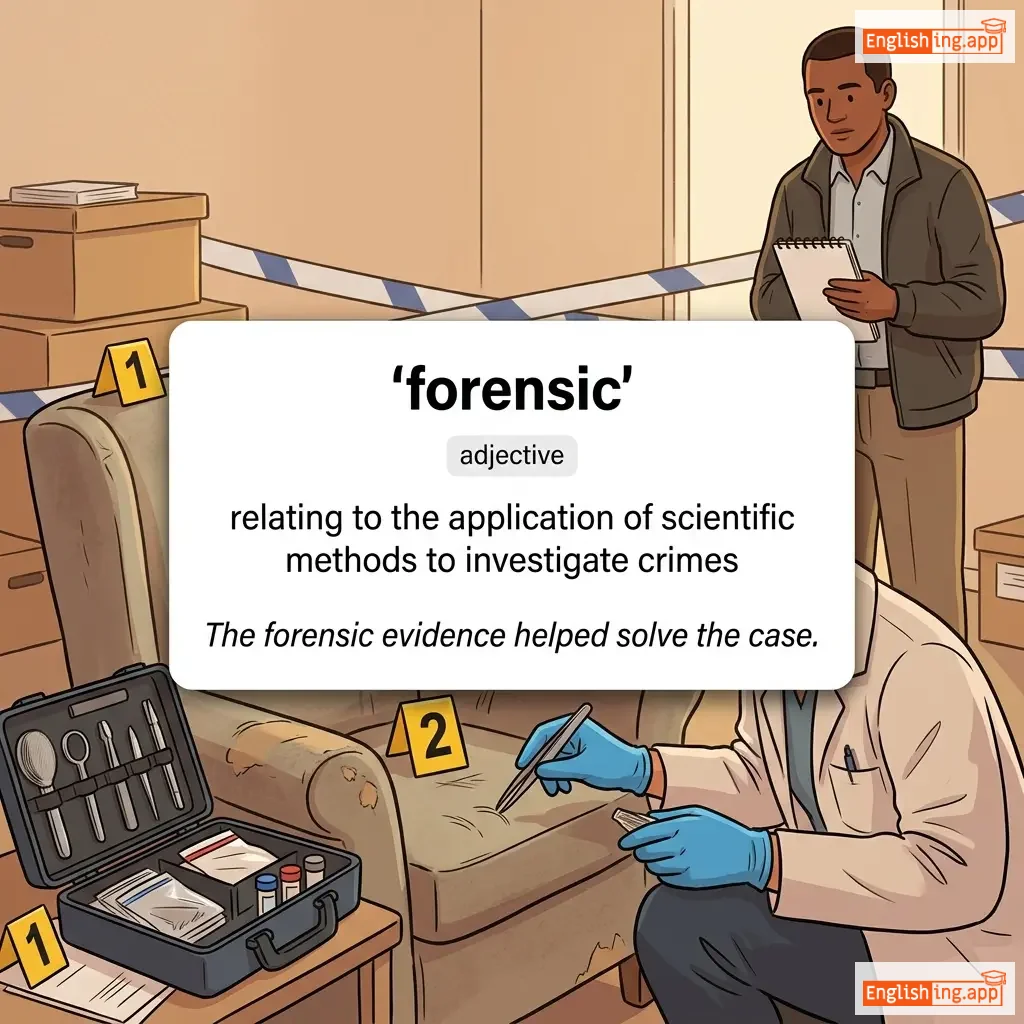
forensic definition card — visual illustration of the meaning
adjective
/fəˈrɛnsɪk/
法医的 (fǎ yī de)

relating to the application of scientific methods to investigate crimes

"The forensic evidence helped solve the case."

"法医证据帮助解决了案件。" (Fǎ yī zhèngjù bāngzhù jiějuéle ànjiàn.)
verb
/ˌfɔːrɔːrˈdeɪn/
预定 (yùdìng)

to determine or decree something in advance; to predestine

"Some believe that our lives are foreordained by fate."

"一些人相信我们的生活是命运预定的。" (Yīxiē rén xiāngxìn wǒmen de shēnghuó shì mìngyùn yùdìng de.)
noun
/ˌfɔːrɔːrdɪˈneɪʃən/
预定 (yùdìng)

the act of determining something in advance; predestination

"The doctrine of foreordination suggests that events are fixed by divine will."

"预定论教义认为,事件是由神的意志所决定的。" (Yùdìng lùn jiàoyì rènwéi, shìjiàn shì yóu shén de yìzhì suǒ juédìng de.)
noun
/ˈfɔːrˌpiːk/
船头舱 (chuántóu cāng)

The compartment in the forward part of a ship, often used for storage.

"The sailors stored extra ropes in the forepeak."

"水手们将额外的绳索存放在船头舱里。" (Shuǐ shǒu men jiāng é wài de shéng suǒ cún fàng zài chuántóu cāng lǐ.)
🏃‍♂️

forerun (福瑞然)

verb
/ˌfɔːrˈrʌn/
预示 (yù shì)

To go before; to precede in time, place, or action.

"Dark clouds often forerun a storm."

"乌云常常预示着暴风雨。" (Wū yún chángcháng yùshì zhe bàofēngyǔ.)
noun
/ˈfɔːrˌrʌnər/
先驱 (xianqu)

A person or thing that comes before another; a predecessor or harbinger.

"The Wright brothers were the forerunners of modern aviation."

"莱特兄弟是现代航空的先驱。" (Làitè xiōngdì shì xiàndài hángkōng de xiānqū.)
noun
/ˈfɔːrˌseɪl/
前帆 (qian fan)

The principal sail set on the foremast of a sailing vessel.

"The crew adjusted the foresail to catch the wind."

"船员调整了前帆来迎接风。" (Chuanyuan tiaozhengle qianfan lai yingjie feng.)
verb
/fɔːrˈsiː/
预见 (yùjiàn)

To be aware of beforehand; to predict or expect.

"She could foresee the challenges ahead."

"她能够预见到前方的挑战。" (Tā nénggòu yùjiàn dào qiánfāng de tiǎozhàn.)
adjective
/fɔːrˈsiːəbl/
可预见的 (ke yujian de)

Able to be predicted or expected in advance

"The company is unlikely to make changes in the foreseeable future."

"公司不太可能在可预见的未来做出变化。" (Gongsi butai keneng zai ke yujian de weilai zuochu bianhua.)
verb
/fɔːrˈʃædoʊ/
预示 (yù shì)

To indicate or suggest something that will happen in the future

"Dark clouds foreshadowed an approaching storm."

"乌云预示着即将来临的暴风雨。" (Wūyún yùshìzhe jíjiāng láilín de bàofēngyǔ.)
noun
/ˈfɔːrʃɔːr/
海滩 (haitan)

The part of the shore between the high and low tide marks

"Children were playing on the foreshore, collecting shells."
"孩子们在海岸上玩耍,捡贝壳。" (Haizimen zai haitan shang wanshua, jian beike.)
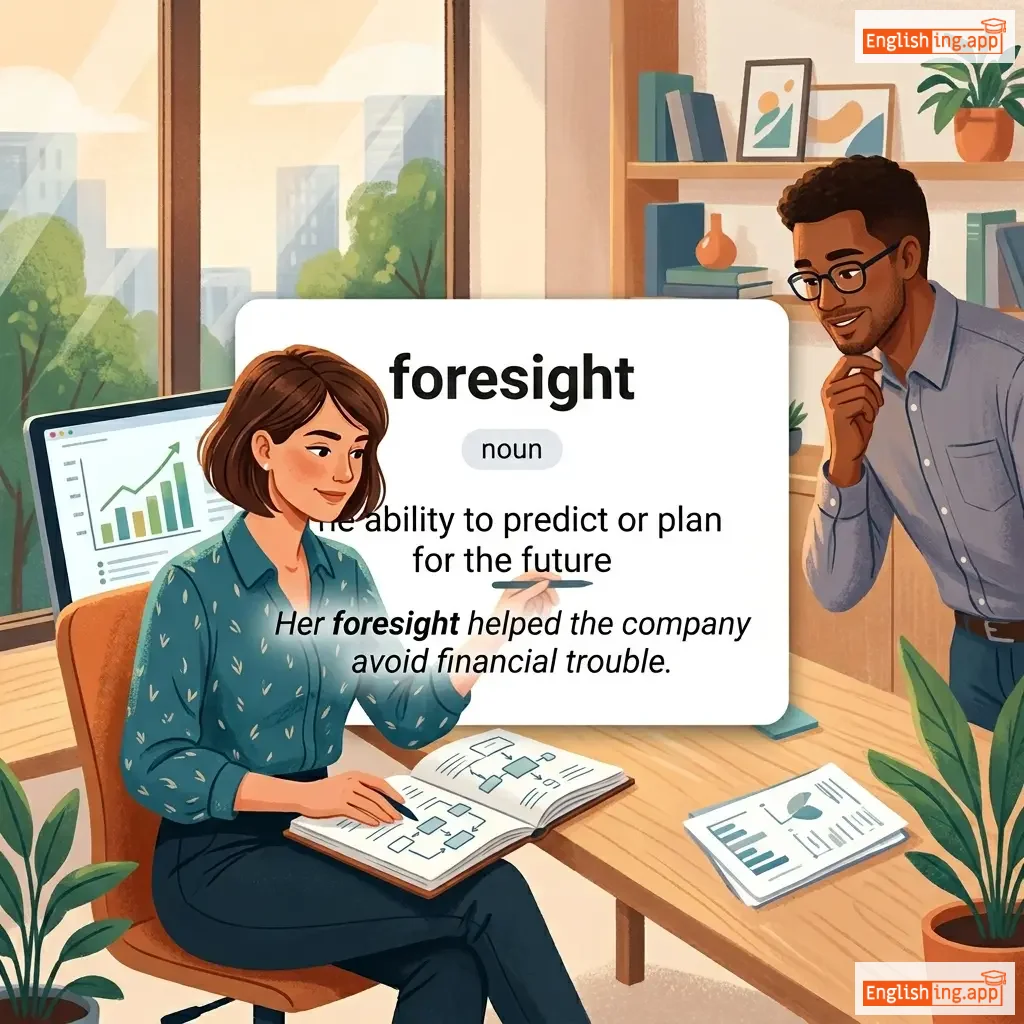
foresight definition card — visual illustration of the meaning
noun
/ˈfɔːrsaɪt/
远见 (yuanjian)

The ability to predict or plan for the future

"Her foresight helped the company avoid financial trouble."

"她的远见帮助公司避免了财务问题。" (Ta de yuanjian bangzhu gongsi bimiant le caiwu wenti.)
noun
/ˈfɔːrɪst/
森林 (sēnlín)

A large area covered chiefly with trees and undergrowth.

"They went hiking in the forest."
"他们去了森林远足。" (Tāmen qùle sēnlín yuǎnzú.)
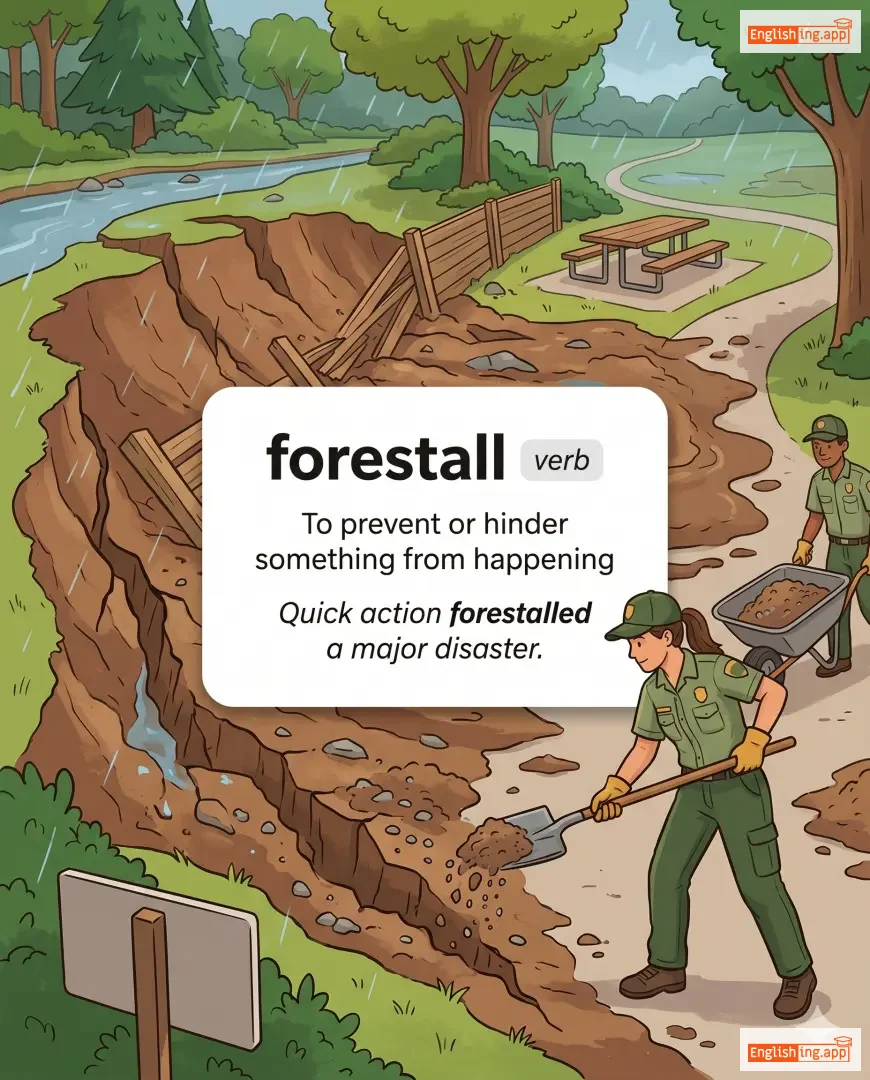
forestall definition card — visual illustration of the meaning
verb
/fɔːrˈstɔːl/
防止 (fangzhi)

To prevent or hinder something from happening

"Quick action forestalled a major disaster."
"迅速的行动防止了重大灾难的发生。" (Xunsu de xingdong fangzhi le zhongda zainan de fasheng.)
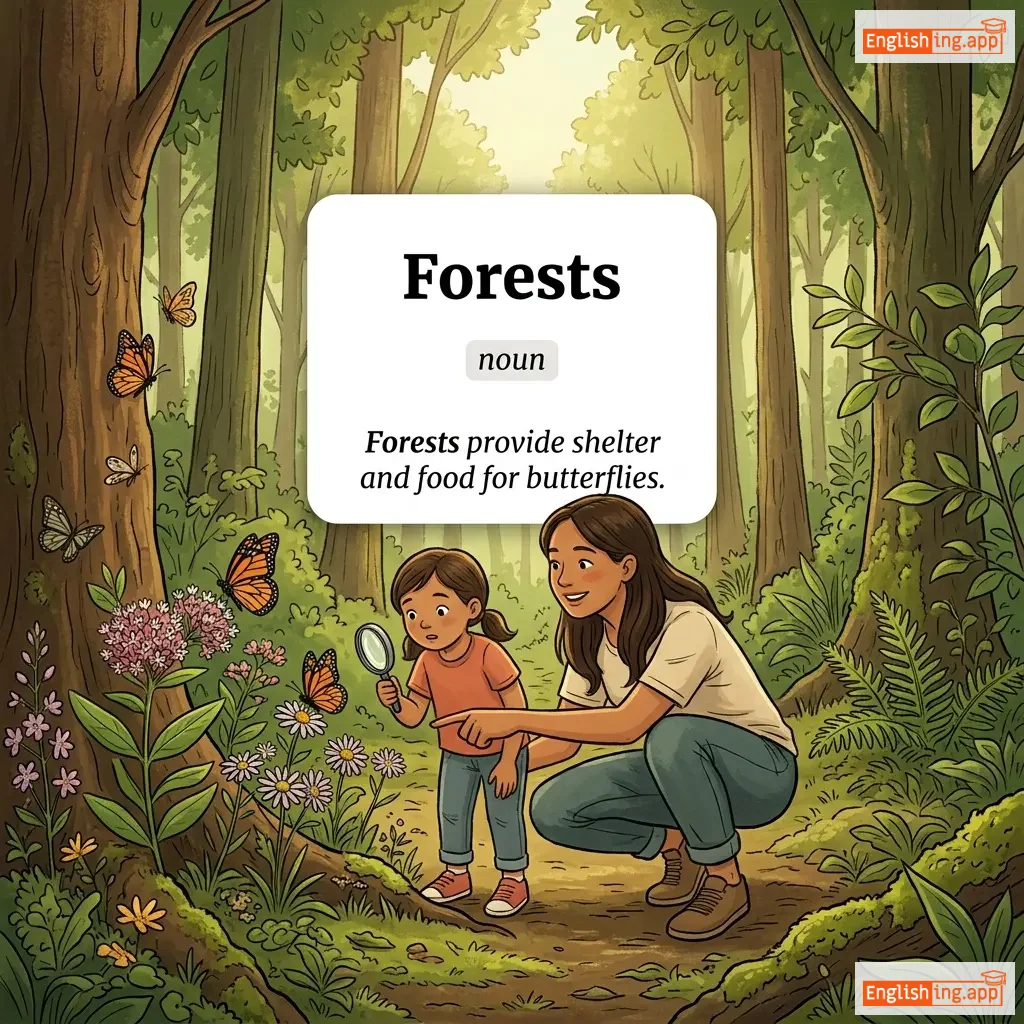
Forests definition card — visual illustration of the meaning
noun
ˈfɔːrɪsts
森林 (senlin)

Large areas covered with trees and undergrowth, providing natural habitats for wildlife.

"Forests provide shelter and food for butterflies."

"森林为蝴蝶提供庇护和食物。" (Senlin wei hudie tigong bihuo he shiwu.)
verb
/fɔːrˈtɛl/
预言 (yuyan)

to predict or announce something before it happens

"The old man claimed he could foretell the future."

"那位老人声称他能够预言未来。" (Na wei laoren shengcheng ta nenggou yuyan weilai.)
noun
/ˈfɔːrˌθɔːt/
预见 (yujian)

careful consideration of what will be necessary or may happen in the future

"With a little forethought, we could have avoided the problem."

"稍微有一点预见性,我们本可以避免这个问题。" (Shaowei you yidian yujianxing, women ben keyi bimian zhege wenti.)
adverb
/fɔːrˈɛvər/
永远 (yǒngyuǎn)

For all future time; for always.

"She promised to love him forever."

"她承诺永远爱他。" (Tā chéngnuò yǒngyuǎn ài tā.)
noun
/ˈfɔːrwɜːrd/
前言 (qianyan)

a short introduction at the beginning of a book, typically written by someone other than the author

"The foreword of the book was written by a famous historian."

"这本书的前言是由一位著名的历史学家写的。" (Zhe ben shu de qianyan shi you yi wei zhuming de lishixuejia xiede.)
⚖️

forfeit

verb
/ˈfɔːrfɪt/

to lose or give up something, usually as a penalty for wrongdoing

"He had to forfeit the match after breaking the rules."

verb
/fɔːrˈfɛnd/
保护, 防卫, 避免 (bǎohù, fángwèi, bìmiǎn)

to protect or defend against something undesirable; to prevent

"May good fortune forfend any danger from our journey."

"愿好运保护我们,避免任何危险。" (Yuàn hǎo yùn bǎohù wǒmen, bìmiǎn rènhé wēixiǎn.)
verb
/fɔːrdʒ/
锻造,伪造 (duànzào, wèizào)

to create or shape something, often with effort or skill; also to counterfeit or fake something

"The blacksmith forged a strong sword from the iron."

"铁匠从铁中锻造出一把坚固的剑。" (Tiějiàng cóng tiě zhōng duànzào chū yī bǎ jiāngù de jiàn.)
noun
/ˈfɔːrdʒər/
伪造者 (weizaozhe)

a person who makes fake documents, artworks, or signatures

"The police arrested a forger who had been selling counterfeit paintings."

"警方逮捕了一名伪造者,他一直在出售伪造的画作。" (Jǐngfāng dàibǔle yī míng wěizàozhě, tā yīzhí zài chūshòu wěizào de huàzuò.)
noun
/ˈfɔːrdʒəri/
伪造 (weizao)

the crime of making fake documents, money, or artworks

"The bank detected a forgery in the signature on the cheque."
"银行发现支票签名上的伪造。" (Yinhang faxian zhipiao qianming shang de weizao.)
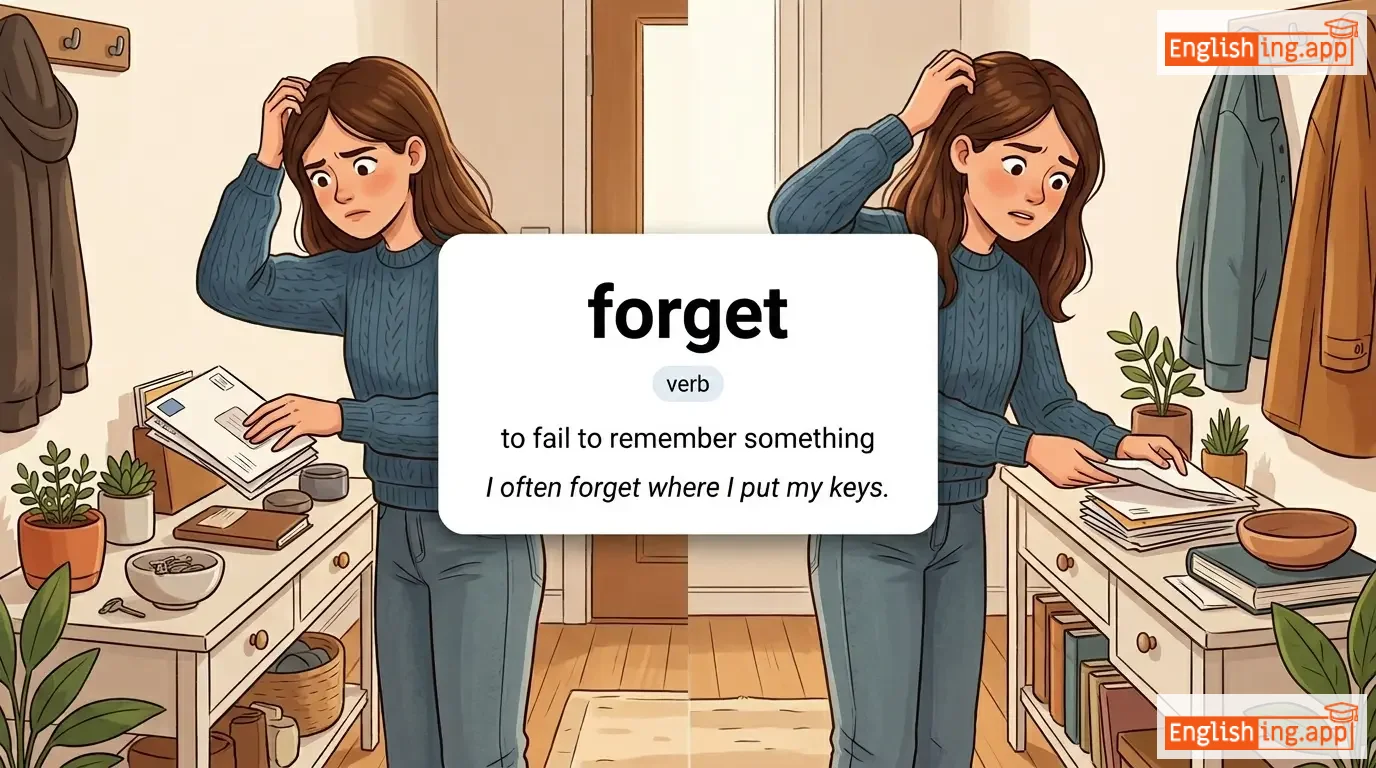
forget definition card — visual illustration of the meaning
verb
/fəˈɡɛt/
忘记 (wàngjì)

to fail to remember something

"I often forget where I put my keys."
"我经常忘记把钥匙放在哪里。" (Wǒ jīngcháng wàngjì bǎ yàoshi fàng zài nǎlǐ.)
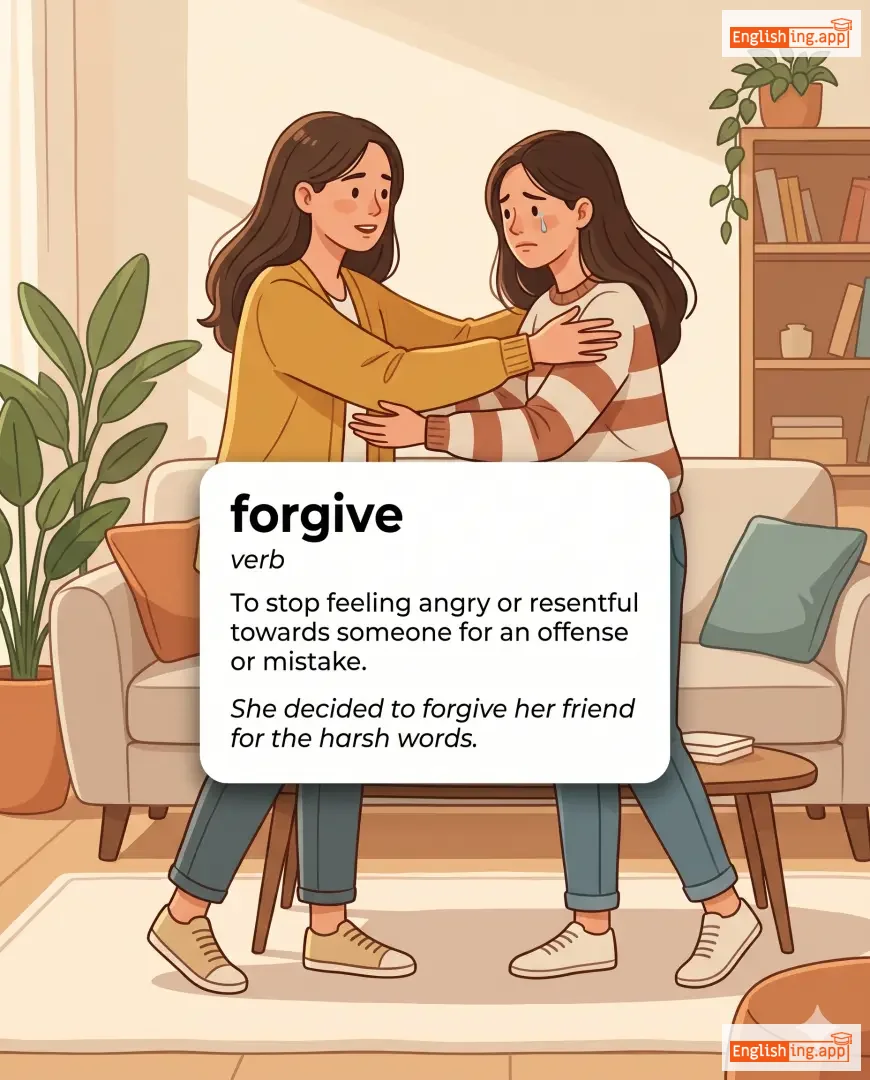
forgive definition card — visual illustration of the meaning
verb
/fərˈɡɪv/
宽恕 (kuānshù)

To stop feeling angry or resentful towards someone for an offense or mistake.

"She decided to forgive her friend for the harsh words."

"她决定原谅她的朋友因为那些严厉的话。" (Tā juédìng yuánliàng tā de péngyǒu yīnwèi nàxiē yánlì de huà.)
adjective
/fəˈɡɪv.ɪŋ/
宽容 (kuanrong)

ready and willing to forgive; merciful; lenient

"She has a forgiving nature and rarely holds grudges."

"她有宽容的天性,几乎不记仇。" (Ta you kuanrong de tianxing, jihu bu ji chou.)
verb
/fɔːrˈɡoʊ/
放弃 (fangqi)

to decide not to do or have something

"She decided to forgo dessert to maintain her diet."

"她决定放弃甜点以保持她的饮食。" (Ta jueding fangqi tiandian yi baochi ta de yinshi.)
noun
/fɔːk/
叉子 (chāzi)

a tool with two or more prongs used for eating or serving food

"He ate his salad with a fork."

"他用叉子吃了他的沙拉。" (Tā yòng chāzi chīle tā de shālā.)
adjective
/fərˈlɔːrn/
孤独的, 绝望的 (gūdú de, juéwàng de)

extremely sad, lonely, or abandoned

"The abandoned puppy looked so forlorn in the rain."

"被遗弃的小狗在雨中看起来如此悲伤。" (Bèi yíqì de xiǎo gǒu zài yǔ zhōng kàn qǐlái rúcǐ bēishāng.)