词汇表

英语词汇词典 | 单词含义、定义和示例

verb
/ɪnˈsnɛər/
设圈套 (shè quāntào)

to catch or trap, often by trickery or deceit

"The hunter ensnared the rabbit with a net."

"猎人用网困住了兔子。" (Lièrén yòng wǎng kùnzhùle tùzǐ.)
verb
/ɪnˈsjuː/
发生 (fāshēng)

to happen as a result or consequence

"After the argument, silence ensued."

"争论后,沉默随之而来。" (Zhēnglùn hòu, chénmò suízhī ér lái.)
verb
/ɪnˈʃʊər/
确保 (què bǎo)

To make certain that something will happen or be the case.

"Please ensure that the door is locked before you leave."
"请确保在离开之前门已锁好。" (Qǐng què bǎo zài lí kāi zhī qián mén yǐ suǒ hǎo.)
verb
/ɪnˈteɪl/

to involve something as a necessary or inevitable part or consequence

"The job will entail a lot of travel across the country."

🕸️

entangle

verb
/ɪnˈtæŋɡəl/

to become twisted together or caught in something; to involve in difficulties

"The fish got entangled in the net."

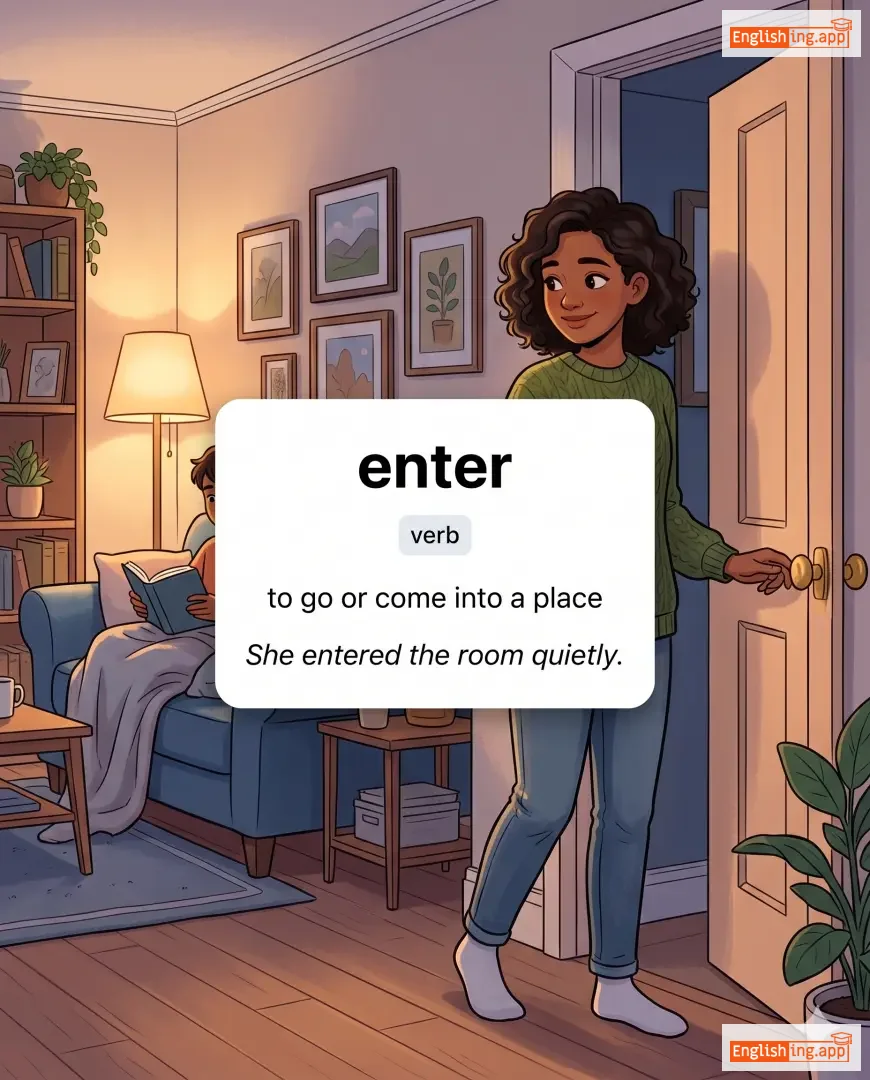
enter definition card — visual illustration of the meaning
verb
/ˈɛntər/
进入 (jinru)

to go or come into a place

"She entered the room quietly."

"她安静地进入了房间。" (Tā ānjìng de jìnrù le fángjiān.)
noun
/ˈɛntərˌpraɪz/
企业 / 公司 (qǐ yè / gōng sī)

a business or company; a project or undertaking that requires effort and initiative

"The new enterprise aims to create sustainable energy solutions."

"新企业旨在创建可持续能源解决方案。" (xīn qǐ yè zhǐ zài chuàng jiàn kě chí xù néng yuán jiě jué fāng àn.)
adjective
/ˈɛntərˌpraɪzɪŋ/
有企业家精神的 (yǒu qǐyèjiā jīngshén de)

showing initiative and resourcefulness; willing to take risks to achieve success

"She is an enterprising young entrepreneur."

"她是一个有企业家精神的年轻企业家。" (Tā shì yīgè yǒu qǐyèjiā jīngshén de niánqīng qǐyèjiā.)
verb
/ˌɛntərˈteɪn/

to provide amusement, enjoyment, or hospitality to others

"The comedian entertained the audience with his jokes."

adjective
/ˌɛntərˈteɪnɪŋ/
娱乐的 (yúlè de)

providing amusement or enjoyment

"The comedian gave an entertaining performance."

"喜剧演员给出了一个有趣的表演。" (xǐjù yǎnyuán gěi chūle yīgè yǒuqù de biǎoyǎn.)
noun
/ˌɛntərˈteɪnmənt/
娱乐 (yúlè)

something that amuses, pleases, or diverts

"The concert was a great source of entertainment."

"音乐会是一个极好的娱乐来源。" (Yīnyuè huì shì yīgè jí hǎo de yúlè láiyuán.)
verb
/ɪnˈθrɔːl/
吸引 (xi yin)

To captivate or hold someone’s full attention.

"The magician’s performance enthralled the audience."

"魔术师的表演让观众着迷。" (Móshù shī de biǎoyǎn ràng guānzhòng zháomí.)
verb
/ɪnˈθrɔːl/
迷住 (mí zhù)

to captivate or hold someone’s attention completely

"The magician’s tricks enthralled the children."
"魔术师的技巧让孩子们着迷。" (Móshù shī de jìqiǎo ràng háizimen zháomí.)
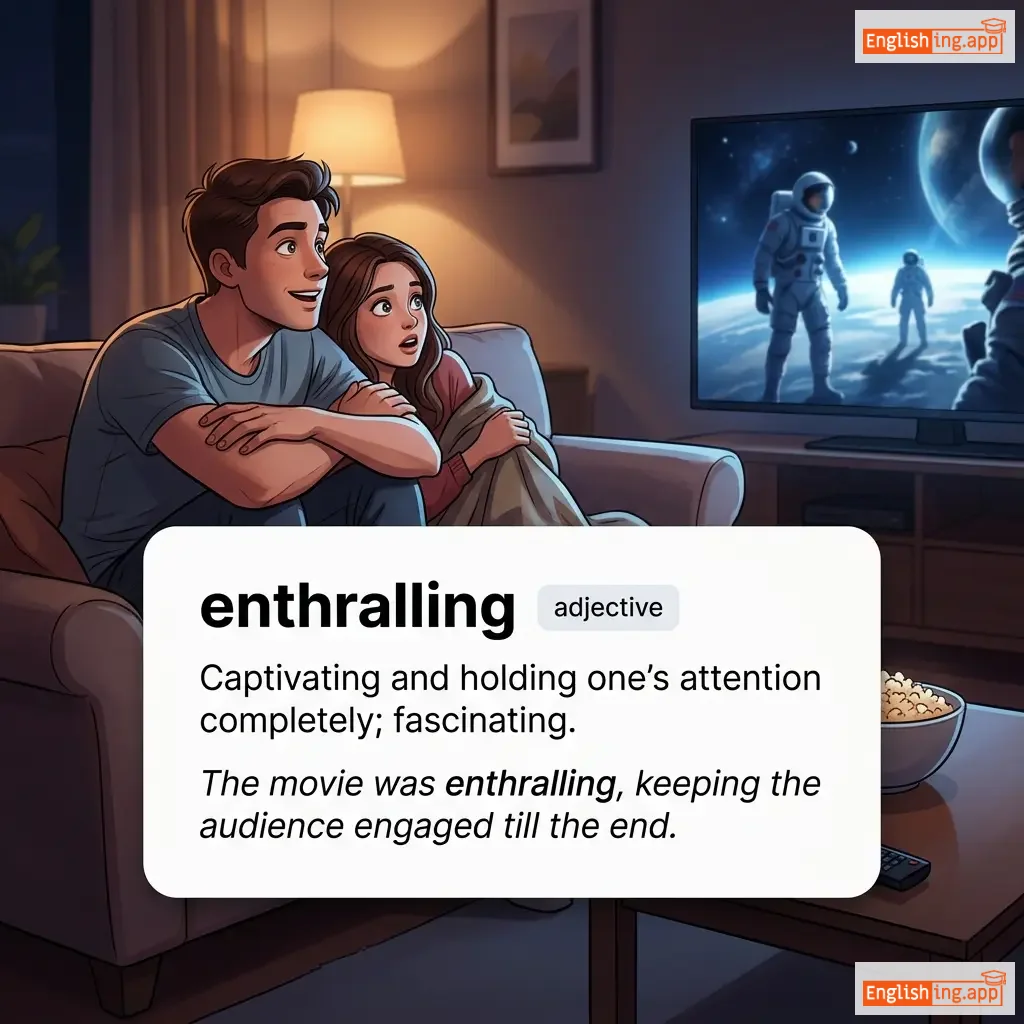
enthralling definition card — visual illustration of the meaning
adjective
/ɪnˈθrɔː.lɪŋ/
引人入胜 (yǐn rén rù shèng)

Captivating and holding one's attention completely; fascinating.

"The movie was enthralling, keeping the audience engaged till the end."

"电影非常引人入胜,使观众直到最后都保持专注。" (Diànyǐng fēicháng yǐn rén rù shèng, shǐ guānzhòng zhídào zuìhòu dōu bǎ chí zhuānjiù.)
verb
/ɪnˈθroʊn/
加冕 (jiāmiǎn)

to install someone on a throne or to give someone high status

"The king was enthroned in a grand ceremony."

"国王在盛大的仪式上加冕。" (Guówáng zài shèngdà de yíshì shàng jiāmiǎn.)
verb
/ɪnˈθjuːz/
激动 (jī dòng)

to express excitement or admiration

"She enthused about her trip to Italy."

"她对她的意大利之旅充满了热情。" (Tā duì tā de Yìdàlì zhī lǚ chōng mǎn le rèqíng.)
noun
/ɪnˈθjuːziæzəm/
热情 (reqing)

intense and eager enjoyment, interest, or approval

"His enthusiasm for teaching inspired his students."

"他对教学的热情激励了他的学生。" (Ta dui jiaoxue de reqing jili le tade xuesheng.)
noun
/ɪnˈθuziæst/
爱好者 (aihaozhe)

a person who is very interested in a particular activity or subject

"He is a football enthusiast and watches every match."
"他是一个足球爱好者,看每一场比赛。" (Ta shi yige zuqiu aihaozhe, kan mei yi chang bisai.)
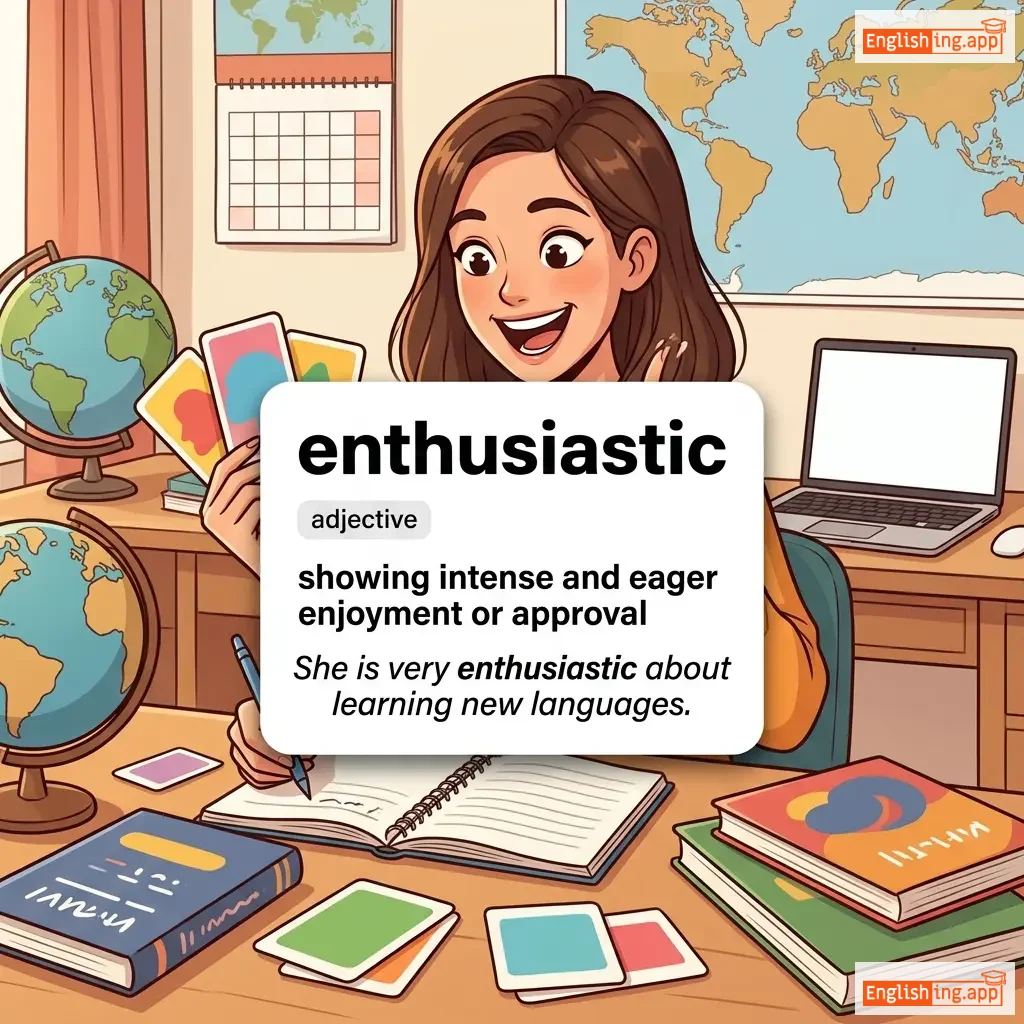
enthusiastic definition card — visual illustration of the meaning
adjective
/ɪnˌθjuːziˈæstɪk/
热衷的 (rèzhōng de)

showing intense and eager enjoyment or approval

"She is very enthusiastic about learning new languages."

"她非常热衷于学习新语言。" (Tā fēicháng rèzhōng yú xuéxí xīn yǔyán.)
verb
/ɪnˈtaɪs/
引诱 (yǐn yòu)

to attract or tempt someone by offering something appealing

"The advertisement was designed to entice customers into the store."

"广告被设计来吸引顾客进店。" (Guǎnggào bèi shèjì lái xīyǐn gùkè jìndiàn.)
adjective
/ɪnˈtaɪər/
整个 (zhěnggè)

whole; with no part left out

"He spent the entire day reading books."

"他整天都在读书。" (Tā zhěng tiān dōu zài dúshū.)
adverb
/ɪnˈtaɪərli/
完全 (wanquan)

Completely or wholly.

"She is entirely responsible for the project."

"她对这个项目完全负责。" (Tā duì zhège xiàngmù wánquán fùzé.)
noun
/ɪnˈtaɪərəti/
完整性 (wánzhěngxìng)

the whole of something; the complete form

"He watched the movie in its entirety."

"他完整地看完了这部电影。" (Tā wánzhěng de kàn wánle zhè bù diànyǐng.)
verb
/ɪnˈtaɪtəl/
授予权利 (shòuyǔ quánlì)

to give someone the right to have or do something

"Employees are entitled to receive paid holidays."

"员工有权享受带薪假期。" (yuángōng yǒu quánlì xiǎngshòu dàixīn jiàqī.)
adjective
/ɪnˈtaɪtəld/
有权 (yǒu quán)

having the right to do or have something; feeling deserving of special treatment

"Employees are entitled to paid leave."

"员工有权享受带薪休假。" (Yuángōng yǒu quán xiǎngshòu dàixīn xiūjià.)
noun
/ɪnˈtaɪtəlmənt/
权利 (quanli)

the belief that one is inherently deserving of privileges or special treatment; a right to benefits

"The program provides entitlement to health care."

"该项目提供医疗保健的权利。" (Gai xiangmu tigong yiliao baojian de quanli.)
noun
/ˈɛntəti/
实体 (shítǐ)

something that exists as a single and complete unit; an organization or being

"The new company will operate as a separate legal entity."
"新公司将作为一个独立的法律实体运作。" (Xīn gōngsī jiāng zuòwéi yīgè dúlì de fǎlǜ shítǐ yùnzuò.)
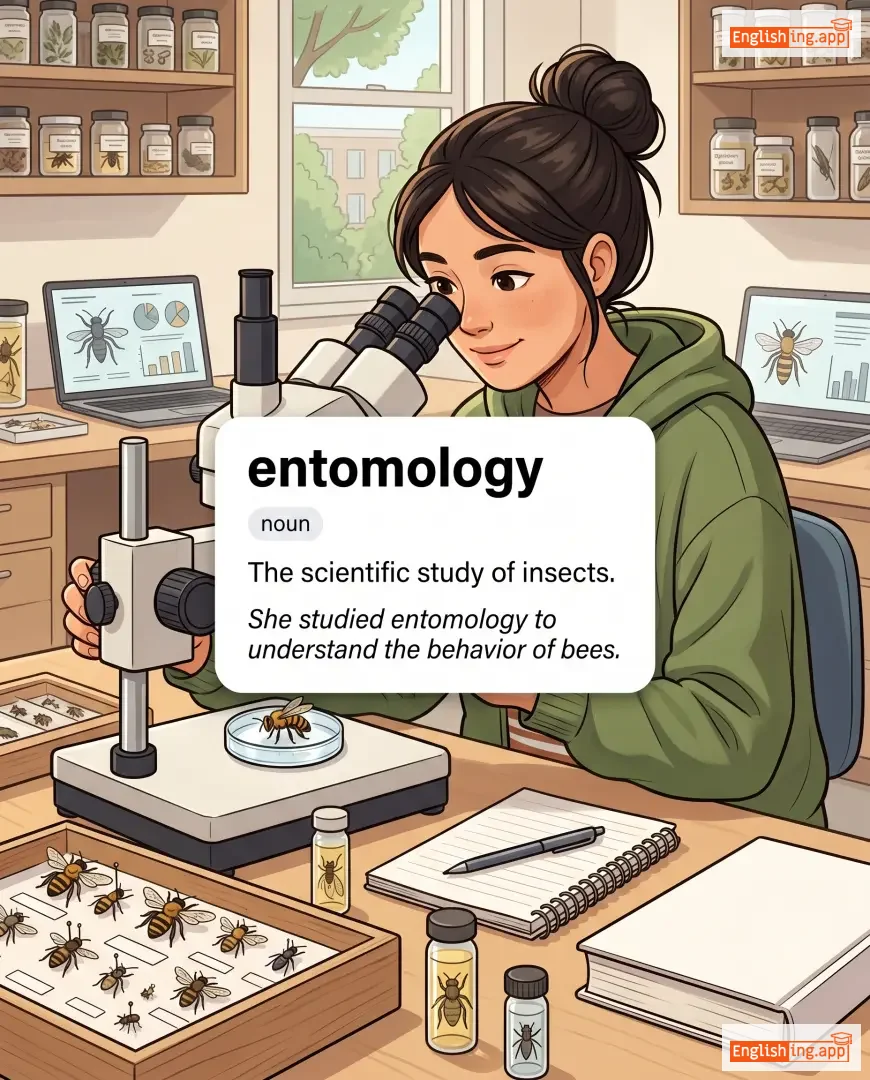
entomology definition card — visual illustration of the meaning
noun
/ˌɛntəˈmɒlədʒi/
昆虫学 (kunchongxue)

The scientific study of insects.

"She studied entomology to understand the behavior of bees."

"她学习昆虫学以了解蜜蜂的行为。" (Ta xuexi kunchongxue yi liaojie mifeng de xingwei.)
noun
/ˈɒntʊrɑːʒ/
随行人员 (suíxíng rényuán)

A group of people attending or surrounding an important person.

"The celebrity arrived with her entourage of assistants and bodyguards."

"名人带着她的随行人员和保镖到达了。" (Míngrén dàizhe tā de suíxíng rényuán hé bǎobiāo dàodále.)
noun
/ˈɛntrəns/
入口 (rùkǒu)

A place of entering; an entry point.

"They waited at the main entrance of the building."

"他们在大楼的主入口等候。" (Tāmen zài dàlóu de zhǔ rùkǒu děnghòu.)
verb
/ɪnˈtræp/

To catch or trick someone into a difficult situation.

"The police tried to entrap the criminal with false evidence."

verb
/ɪnˈtriːt/
恳求 (kěnqiú)

To ask earnestly or beg someone to do something.

"She entreated him to stay a little longer."

"她恳求他再待一会儿。" (Ta kenqiu ta zai dai yihuir.)
noun
/ɪnˈtriːti/
恳求 (kenqiu)

An earnest or humble request or plea.

"She made an entreaty for peace during the heated argument."

"她在激烈的争论中恳求和平。" (Ta zai jilie de zhenglun zhong kenqiu heping.)
noun
/ˈɒntreɪ/ (UK), /ˈɑːntreɪ/ (US)
主菜 (zhǔ cài)

The main course of a meal (US); the right to enter or access (formal).

"The restaurant’s signature steak was served as the main entree."

"餐厅的招牌牛排作为主菜上桌。" (Cāntīng de zhāopái niúpái zuòwéi zhǔ cài shàngzhuō.)
verb
/ɪnˈtrɛntʃ/
扎根 (zhāgēn)

To establish something so firmly that it is difficult to change.

"The company entrenched its position in the market through innovation."

"公司通过创新巩固了其市场地位。" (Gōngsī tōngguò chuàngxīn gǒnggùle qí shìchǎng dìwèi.)
adjective
/ɪnˈtrɛntʃt/
根深蒂固 (gēn shēn dì gù)

Firmly established and unlikely to change.

"Corruption is deeply entrenched in the system."
"腐败在这个系统中根深蒂固。" (Fǔbài zài zhège xìtǒng zhōng gēn shēn dì gù.)
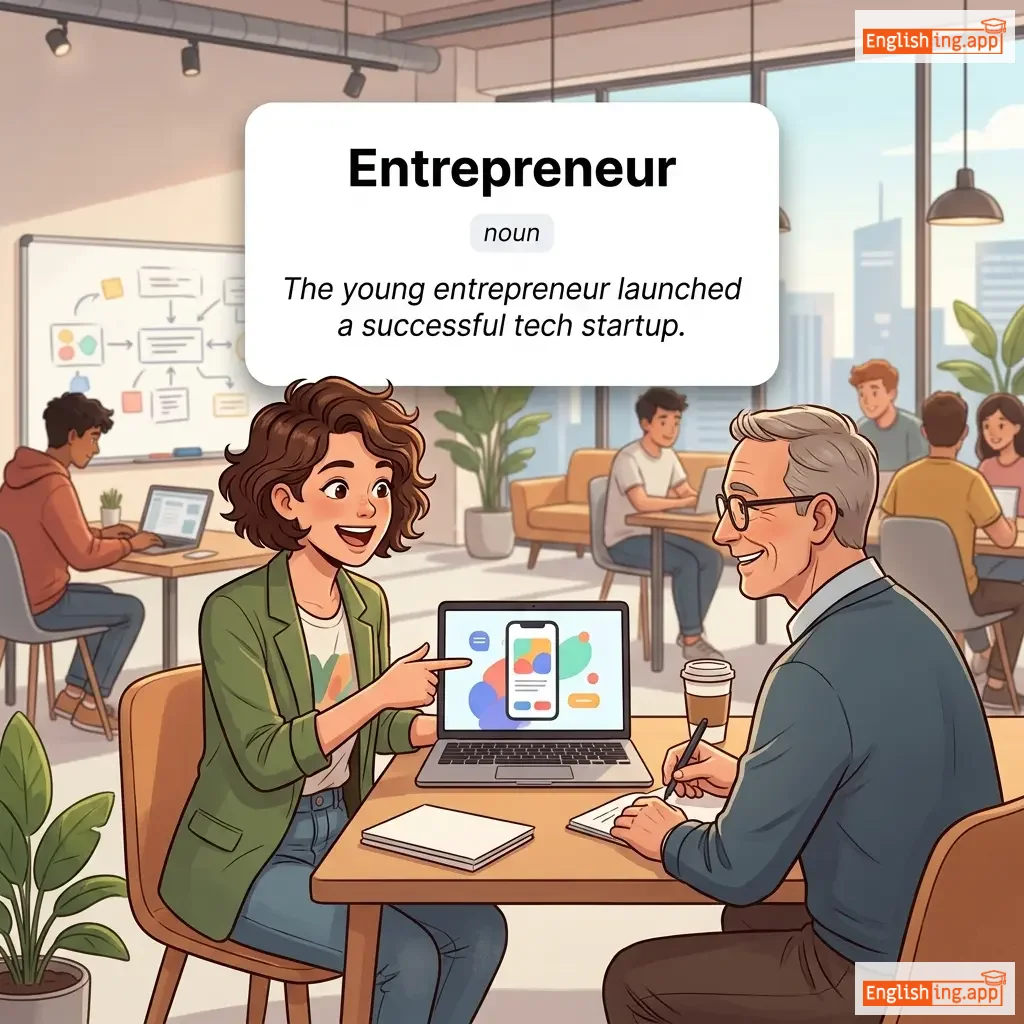
Entrepreneur definition card — visual illustration of the meaning
noun
/ˌɒntrəprəˈnɜːr/ (UK), /ˌɑːntrəprəˈnɝː/ (US)
企业家 (qǐyèjiā)

A person who starts and runs a business, taking on financial risks in the hope of profit.

"The young entrepreneur launched a successful tech startup."

"这位年轻的企业家创办了一家成功的科技初创公司。" (Zhè wèi niánqīng de qǐyèjiā chuàngbànle yī jiā chénggōng de kējì chūchuàng gōngsī.)
entrepreneurial definition card — visual illustration of the meaning
adjective
/ˌɒn.trə.prəˈnɜː.ri.əl/
创业精神 (chuangye jingshen)

Having the characteristics of an entrepreneur; showing initiative and willingness to undertake new ventures.

"Her entrepreneurial mindset led to the launch of a successful startup."

"她的创业精神促成了一个成功创业公司的诞生。" (Ta de chuangye jingshen cuchengle yige chenggong chuangye gongsi de dansheng.)
noun
/ˈɛntri/
入口 (rùkǒu)

the act of going into a place, or permission to go in

"Entry to the museum is free on Fridays."

"博物馆的入口在星期五免费。" (Bówùguǎn de rùkǒu zài xīngqīwǔ miǎnfèi.)
verb
/ɪnˈtwaɪn/
缠绕 (chánrào)

to twist or wind together; to become closely connected or involved

"The vines entwine around the old fence."

"藤蔓绕过老围栏。" (Téngmàn rào guò lǎo wéilán.)
verb
/ɪˈnjuːməˌreɪt/
列举 (lièjǔ)

to mention things one by one; to list or count

"She enumerated the reasons for her decision."
"她列举了做出决定的理由。" (Tā lièjǔle zuòchū juédìng de lǐyóu.)
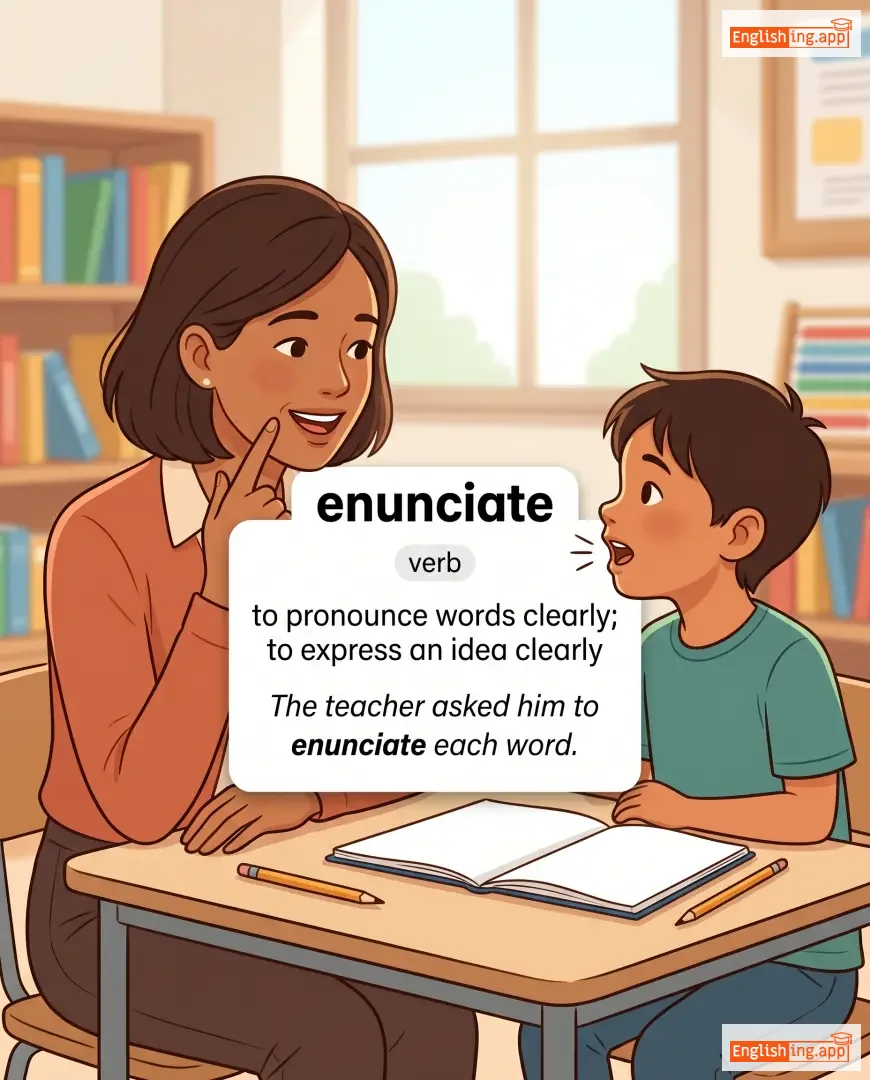
enunciate definition card — visual illustration of the meaning
verb
/ɪˈnʌnsieɪt/
清晰地发音 (qīngxī de fāyīn)

to pronounce words clearly; to express an idea clearly

"The teacher asked him to enunciate each word."
"老师让他清晰地发音每个单词。" (Lǎoshī ràng tā qīngxī de fāyīn měi gè dāncí.)
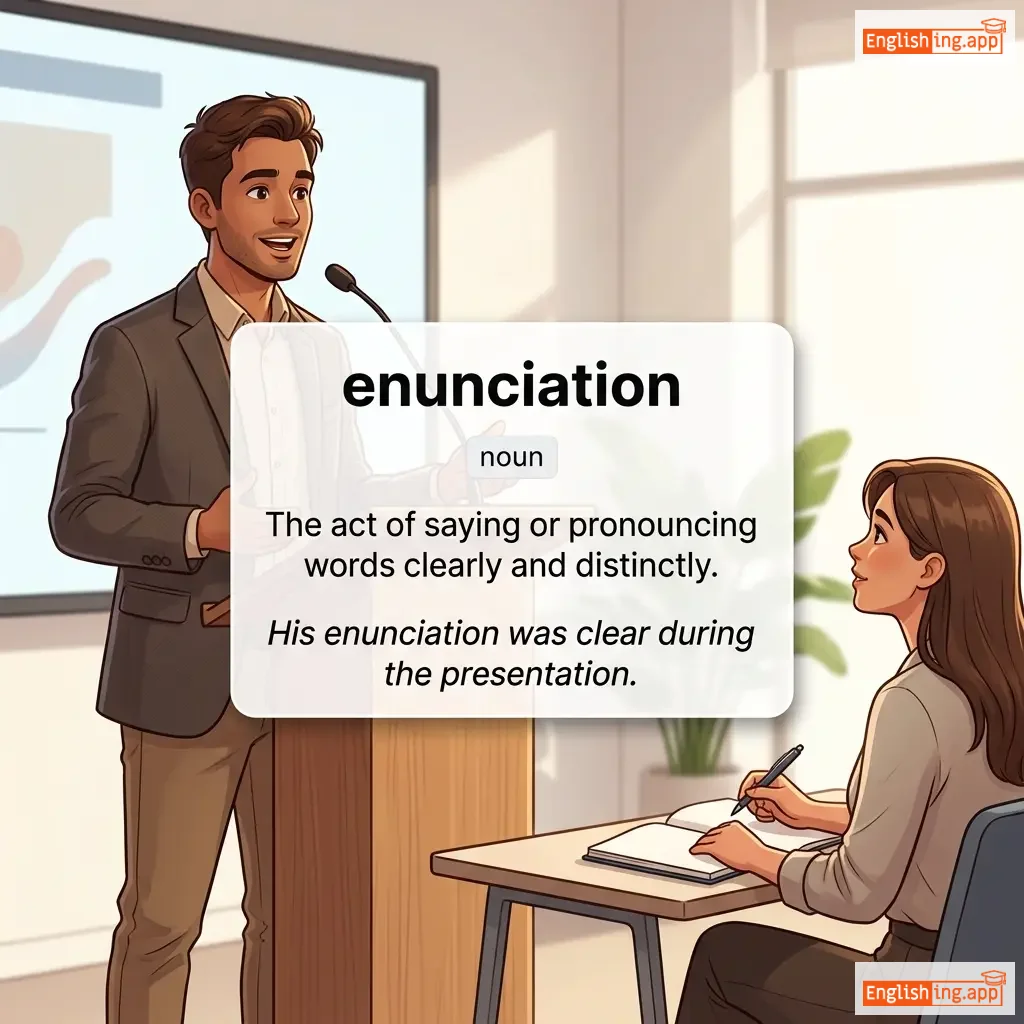
enunciation definition card — visual illustration of the meaning
noun
/ɪˌnʌn.siˈeɪ.ʃən/
发音,清晰发音 (fayin, qingxi fayin)

The act of saying or pronouncing words clearly and distinctly.

"His enunciation was clear during the presentation."

"他的发音在演讲中很清晰。" (Tā de fāyīn zài yǎnjiǎng zhōng hěn qīngxī.)
noun
/ˈɛnvəloʊp/
信封 (xìnfēng)

a flat paper container used to enclose a letter or document

"She sealed the letter in an envelope and posted it."

"她把信封好,并寄出了。" (Tā bǎ xìnfēng hǎo, bìng jì chūle.)
adjective
/ˈen.vi.ə.bəl/
值得羡慕的 (zhí dé xiàn mù de)

causing envy; desirable

"Her success was enviable among her peers."

"她的成功在同事中是值得羡慕的。" (Tā de chénggōng zài tóngshì zhōng shì zhídé xiànmù de.)
adjective
/ˈen.vi.əs/
嫉妒的; 羡慕的 (jidu de; xianmu de)

feeling or showing envy; jealous

"She felt envious of her friend's new car."

"她对朋友的新车感到嫉妒。" (Tā duì péngyǒu de xīn chē gǎndào jídù.)
verb
/ɪnˈvaɪərən/
环绕 (huánrào)

to surround or enclose; to encircle

"Mountains environ the small valley."
"山脉环绕着小山谷。" (Shānmài huánrào zhe xiǎo shāngǔ.)
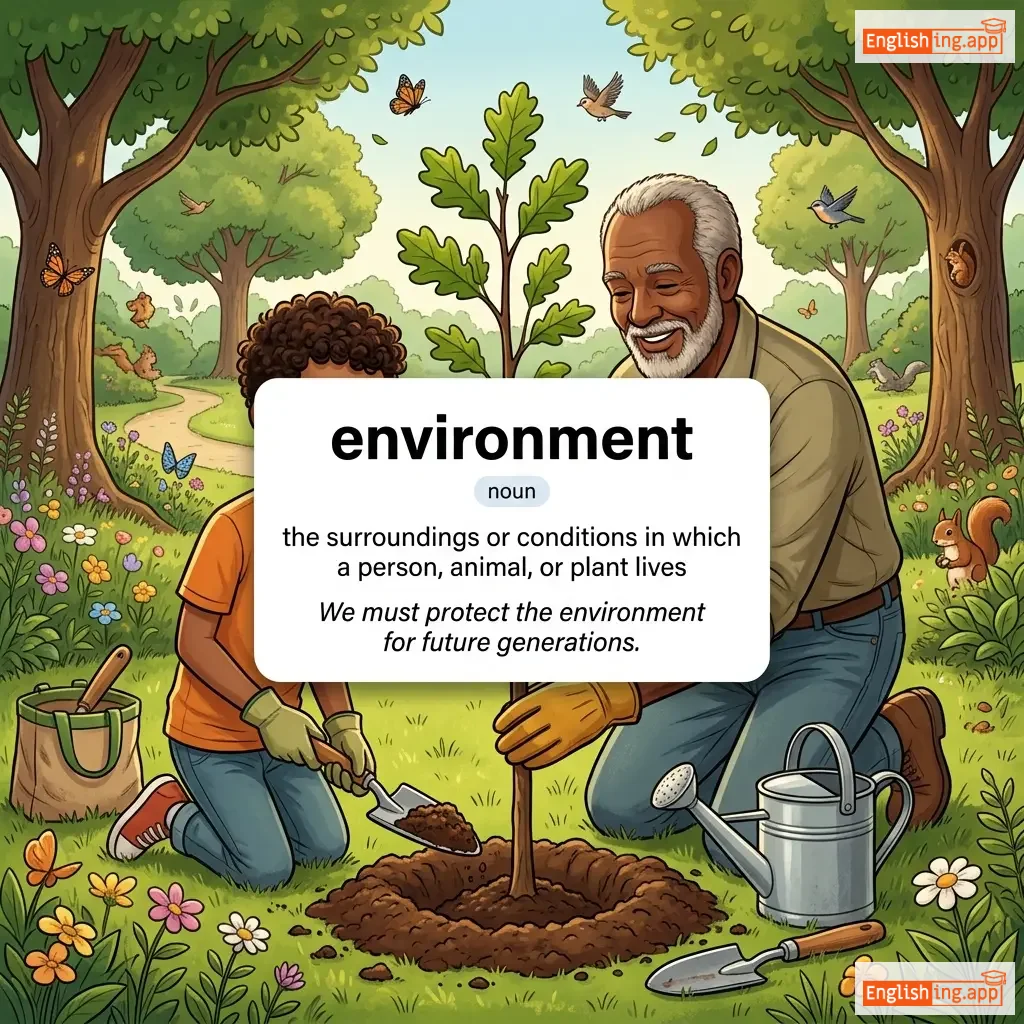
environment definition card — visual illustration of the meaning
noun
/ɪnˈvaɪrənmənt/
环境 (huanjing)

the surroundings or conditions in which a person, animal, or plant lives

"We must protect the environment for future generations."
"我们必须为未来的世代保护环境。" (wo men bi xu wei wei lai de shi dai bao hu huan jing.)
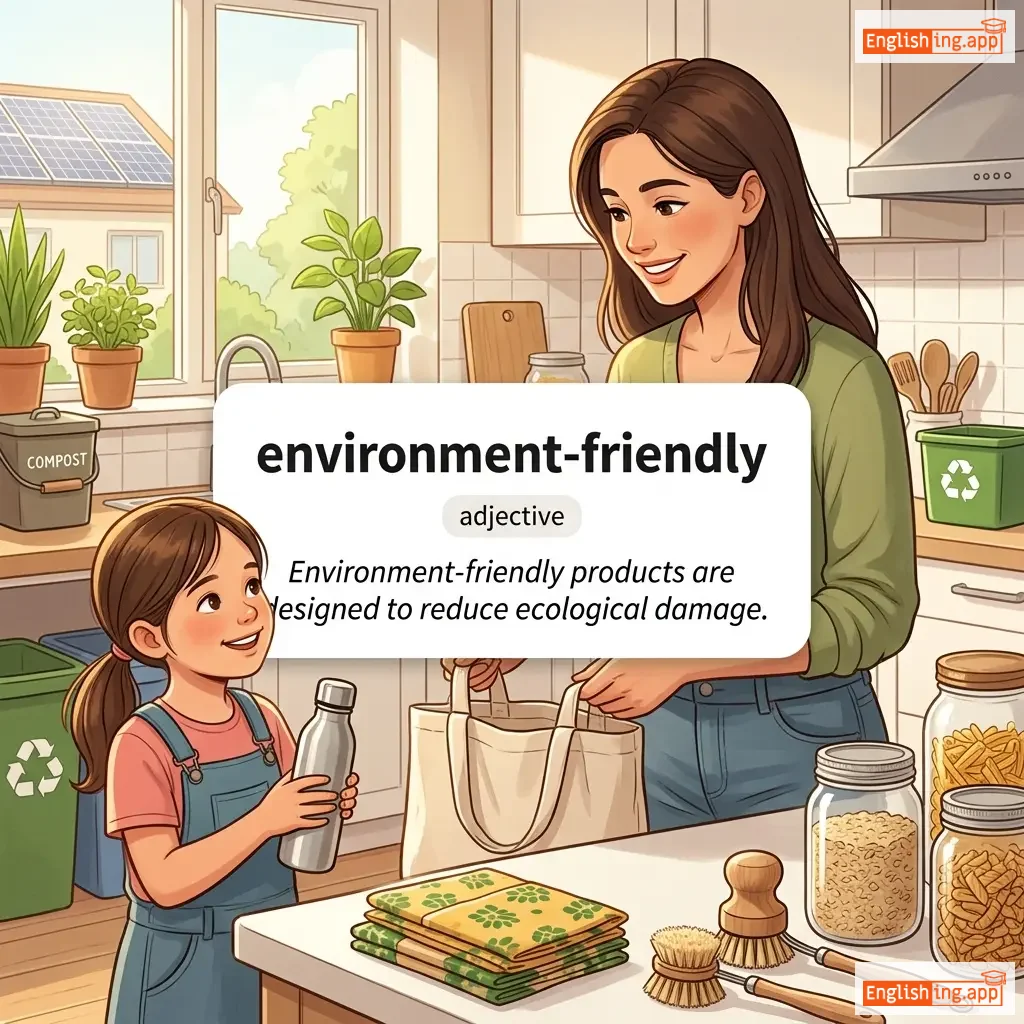
environment-friendly definition card — visual illustration of the meaning
adjective
/ɪnˈvaɪrənmənt ˈfrɛndli/
环保 (huánbǎo)

Designed or produced in a way that causes minimal harm to the environment, often using sustainable materials and processes that reduce ecological impact.

"Environment-friendly products are designed to reduce ecological damage."

"环保产品旨在减少生态损害。" (Huánbǎo chǎnpǐn zhǐ zài jiǎnshǎo shēngtài sǔnhài.)
adjective
/ɪnˌvaɪrənˈmɛntl/
环境的 (huánjìng de)

relating to the natural world and the impact of human activity on its condition

"The company adopted new policies to reduce environmental damage."

"公司采取了新的政策以减少环境损害。" (Gōngsī cǎiqǔle xīn de zhèngcè yǐ jiǎnshǎo huánjìng sǔnhài.)