词汇表

英语词汇词典 | 单词含义、定义和示例

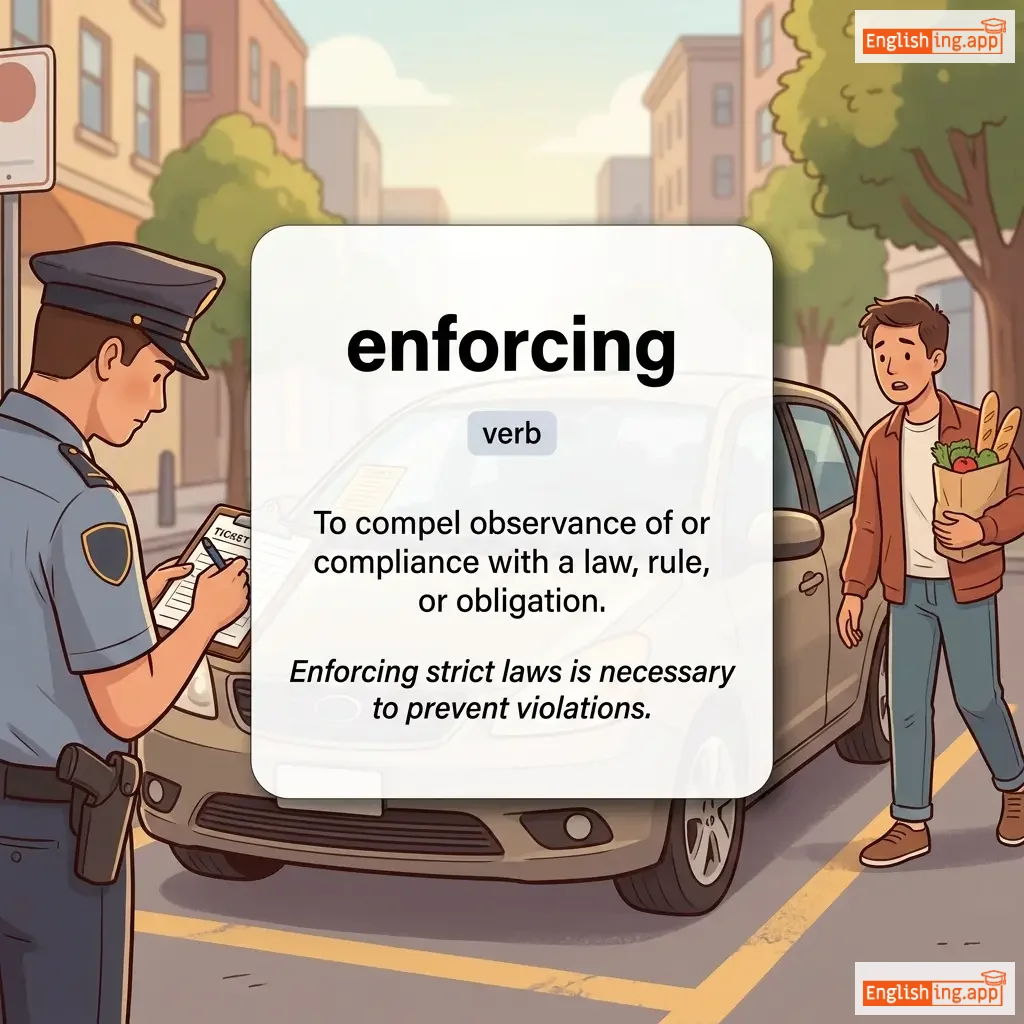
enforcing definition card — visual illustration of the meaning
verb
ɪnˈfɔːrsɪŋ
执行 (zhíxíng)

To compel observance of or compliance with a law, rule, or obligation.

"Enforcing strict laws is necessary to prevent violations."

"执行严格的法律是防止违规的必要条件。" (Zhíxíng yángé de fǎlǜ shì fángzhǐ wéiguī de bìyào tiáojiàn.)
verb
/ɛnˈfrænˌtʃaɪz/
幸福 (xìngfú)

To grant the right to vote or other rights of citizenship.

"The new law enfranchised thousands of people."

"当她收到奖项时,她无法掩饰自己的幸福。" (Dāng tā shōudào jiǎngxiàng shí, tā wúfǎ yǎnshì zìjǐ de xìngfú.)
verb
/ɪnˈɡeɪdʒ/
参与 (cānyù)

To participate or become involved in; to attract or hold attention.

"The teacher tried to engage the students in the discussion."

"老师试图将学生们引入讨论。" (Lǎoshī shìtú jiāng xuéshēngmen yǐnrù tǎolùn.)
adjective
/ɪnˈɡeɪdʒd/
订婚的, 忙碌的 (dìnghūn de, mánglù de)

Busy, occupied, or pledged to be married.

"She is engaged to be married next summer."

"她明年夏天将结婚。" (Tā míngnián xiàtiān jiāng jiéhūn.)
engagement definition card — visual illustration of the meaning
noun
/ɪnˈɡeɪdʒmənt/
订婚, 参与 (dinghun, canyu)

a formal agreement to get married; or active involvement in an activity

"Their engagement was announced last week."
"他们的订婚上周宣布了。" (Tamen de dinghun shangzhou xuanbule.)
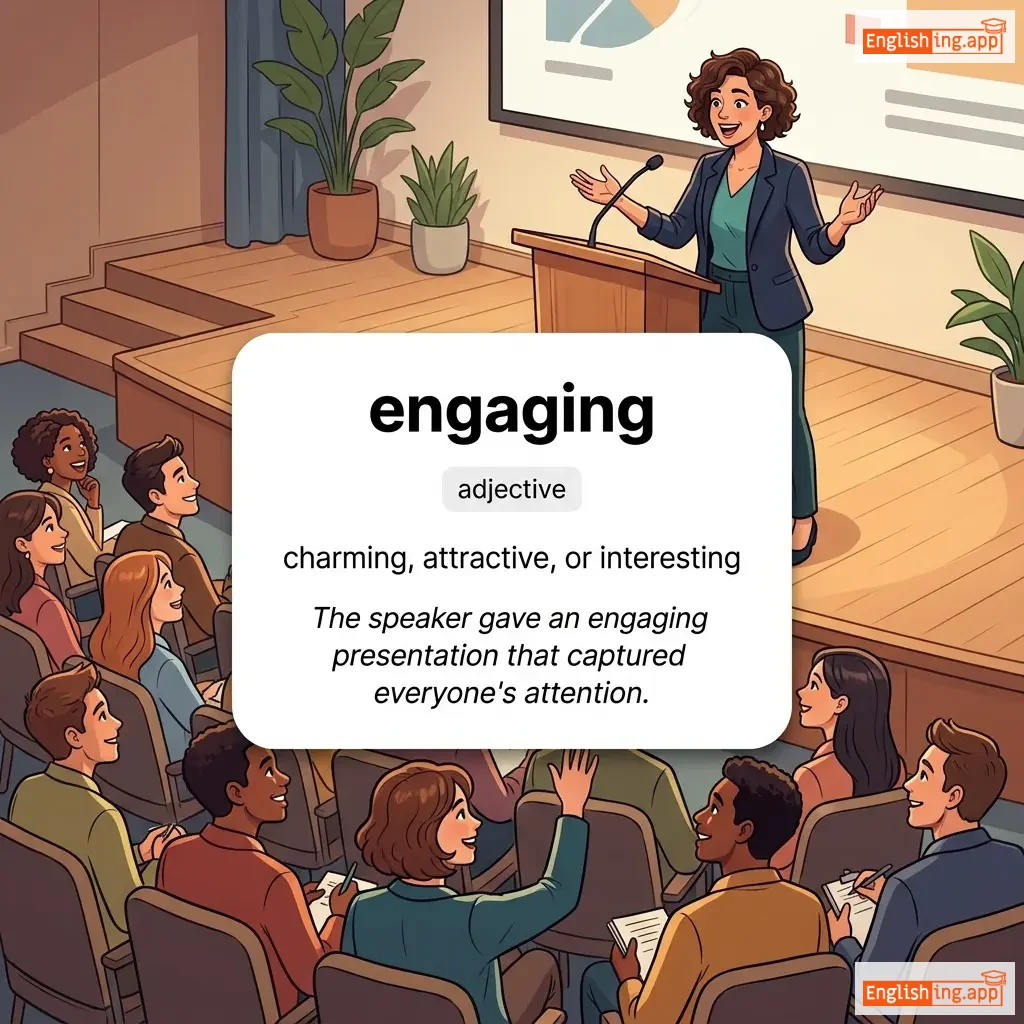
engaging definition card — visual illustration of the meaning
adjective
/ɪnˈɡeɪdʒɪŋ/
吸引人的 (xī yǐn rén de)

charming, attractive, or interesting

"The speaker gave an engaging presentation that captured everyone's attention."
"演讲者做了一个吸引人的演示,吸引了所有人的注意。" (Yǎn jiǎng zhě zuò le yī gè xī yǐn rén de yǎn shì, xī yǐn le suǒ yǒu rén de zhù yì.)
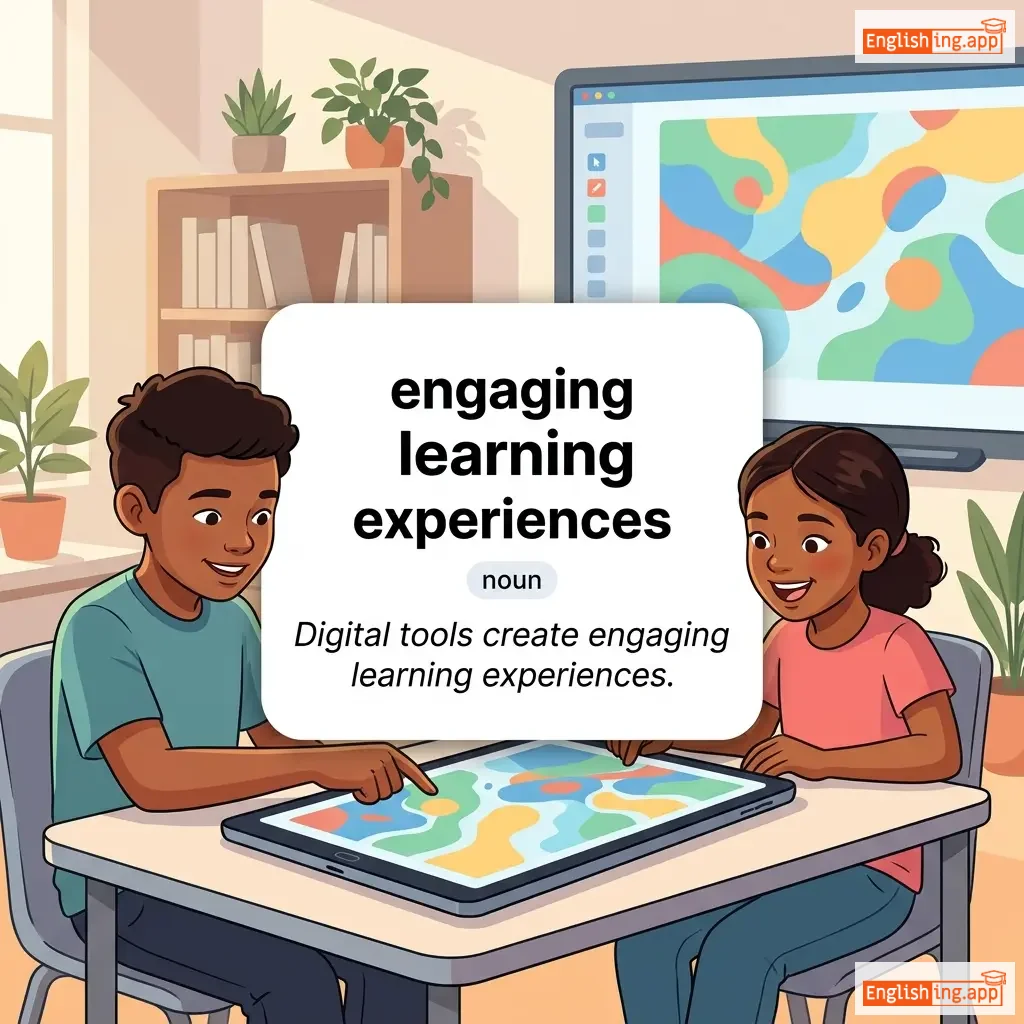
engaging learning experiences definition card — visual illustration of the meaning
noun
ɪnˈɡeɪdʒɪŋ ˈlɜːrnɪŋ ɪkˈspɪəriənsɪz
引人入胜的学习体验 (yǐn rén rù shèng de xuéxí tǐyàn)

Interactive and immersive educational activities that capture students' attention and actively involve them in the learning process.

"Digital tools create engaging learning experiences."
"数字工具创造引人入胜的学习体验。" (Shùzì gōngjù chuàngzào yǐn rén rù shèng de xuéxí tǐyàn.)
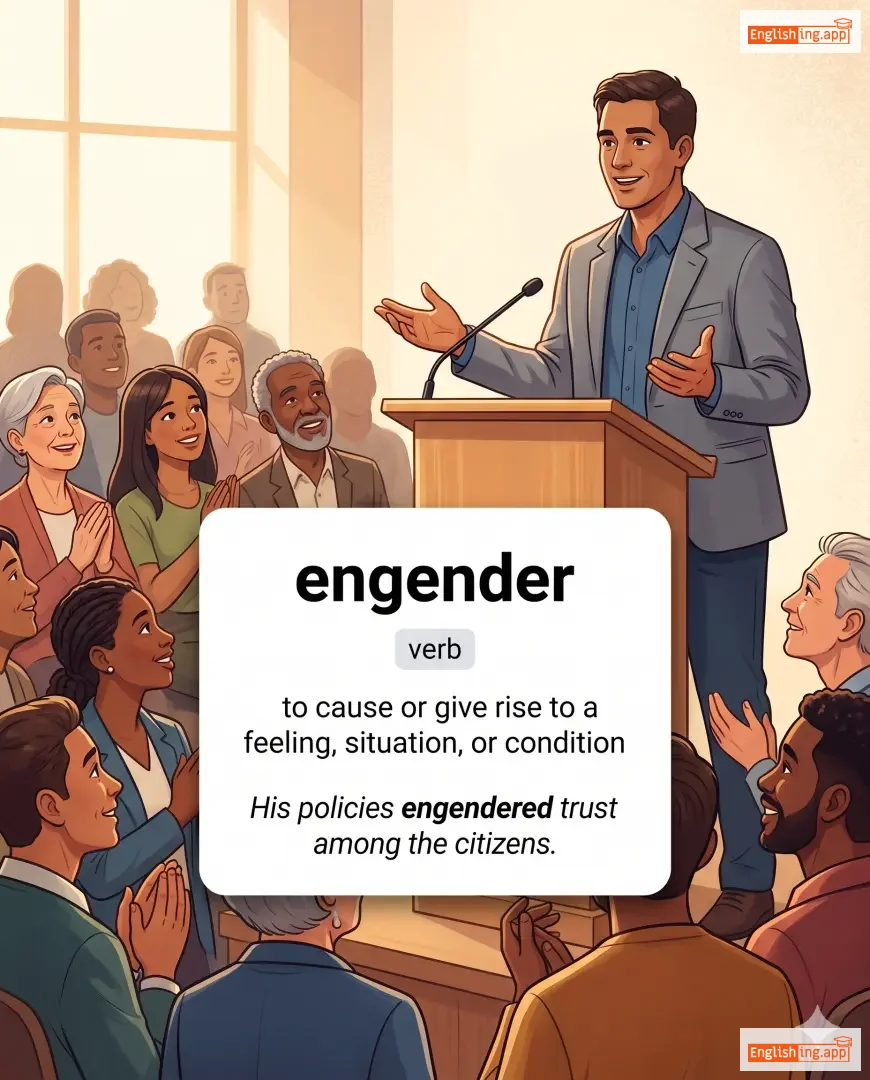
engender definition card — visual illustration of the meaning
verb
/ɪnˈdʒɛndər/
引发 (yǐnfā)

to cause or give rise to a feeling, situation, or condition

"His policies engendered trust among the citizens."

"他的政策在市民中引发了信任。" (tā de zhèngcè zài shìmín zhōng yǐnfā le xìnrèn.)
noun
/ˈɛndʒɪn/
引擎 (yin qing)

A machine designed to convert energy into mechanical power.

"The car's engine failed on the highway."

"汽车的引擎在高速公路上坏了。" (Qi che de yin qing zai gao su gong lu shang huai le.)
noun/verb
/ˌɛndʒɪˈnɪər/
工程师 (gōngchéngshī)

A person trained to design, build, or maintain engines, machines, or structures; to skillfully arrange or bring about.

"The engineer designed a new bridge across the river."

"工程师设计了一个新桥,跨越了这条河流。" (Gōngchéngshī shèjìle yīgè xīn qiáo, kuàyuèle zhè tiáo héliú.)
engineering definition card — visual illustration of the meaning
noun
/ˌɛndʒɪˈnɪərɪŋ/
工程学 (gongchengxue)

The branch of science and technology concerned with the design, building, and use of engines, machines, and structures.

"She studied civil engineering at university."

"她在大学学习了土木工程。" (Tā zài dàxué xuéxíle tǔmù gōngchéng.)
noun/adjective
/ˈɪŋɡlɪʃ/
英语 (yingyu)

The language of England, widely spoken around the world; relating to England or its people.

"She is learning English to study abroad."
"她正在学习英语,以便出国留学。" (Tā zhèngzài xuéxí yīngyǔ, yǐbiàn chūguó liúxué.)
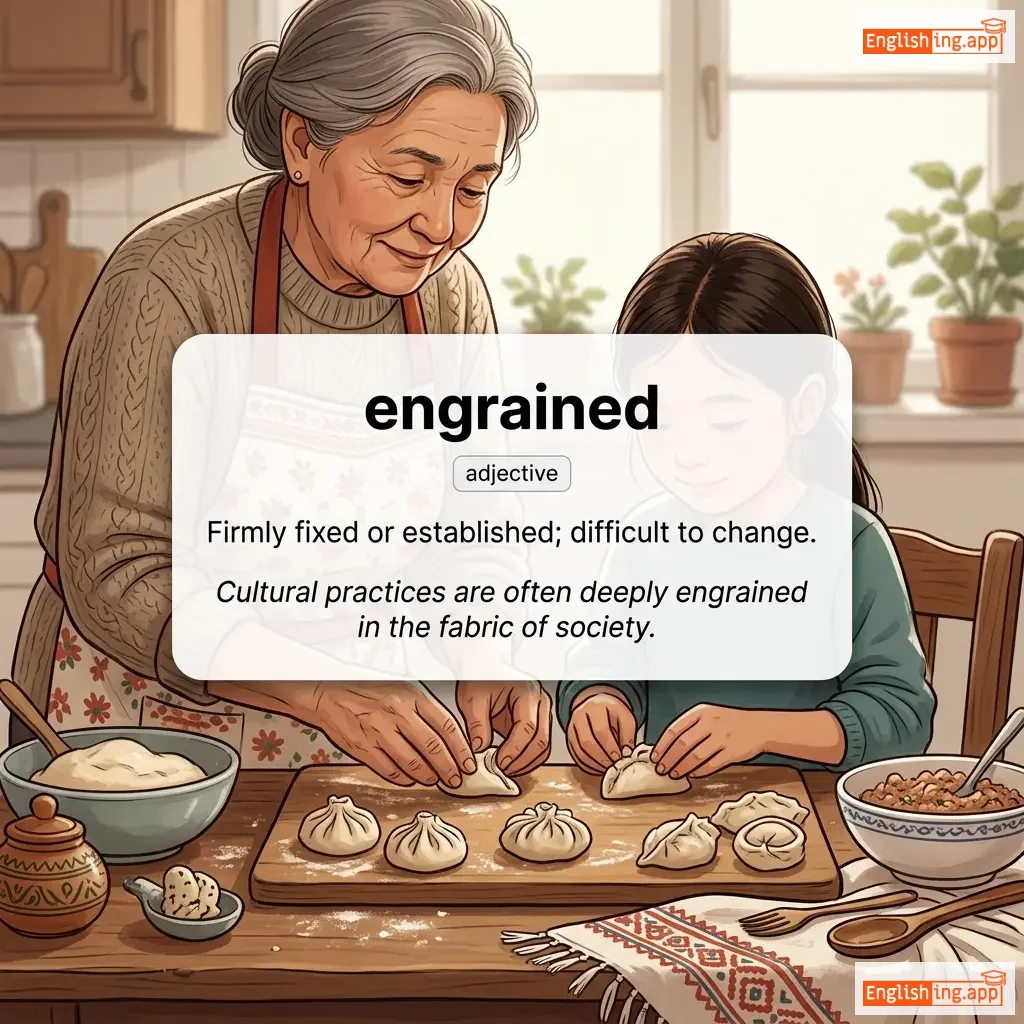
engrained definition card — visual illustration of the meaning
adjective
/ɪnˈɡreɪnd/
根深蒂固,难以改变 (gēn shēn dì gù, nán yǐ gǎi biàn)

Firmly fixed or established; difficult to change.

"Cultural practices are often deeply engrained in the fabric of society."
"文化习俗常常深深植根于社会的结构中。" (Wénhuà xísú chángcháng shēn shēn zhí gēn yú shèhuì de jiégòu zhōng.)
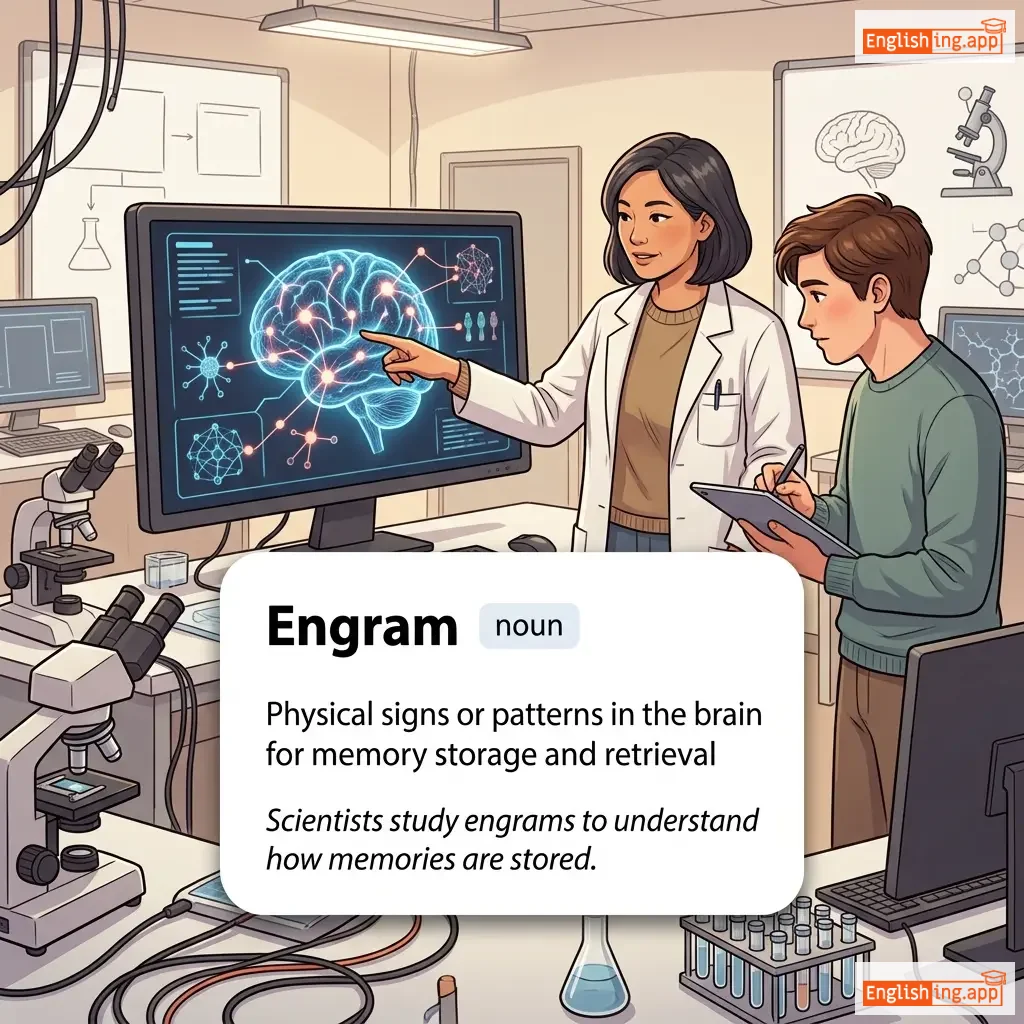
Engram definition card — visual illustration of the meaning
noun
ˈɛn.ɡræm
大脑中用于存储和提取记忆的物理标记 (Dà nǎo zhōng yòng yú cúnchú hé tíqǔ jìyì de wùlǐ biāojì)

Physical signs or patterns in the brain for memory storage and retrieval

"Scientists study engrams to understand how memories are stored."

"科学家们研究恩格拉姆,以了解记忆是如何存储的。" (Kēxuéjiāmen yánjiū ēngélāmǔ, yǐ liǎojiě jìyì shì rúhé cúnchú de.)
verb
/ɪnˈɡreɪv/
雕刻 (diāokè)

to cut or carve a design, letter, or pattern into a hard surface

"The craftsman engraved her name on the silver ring."

"工匠在银戒指上刻下了她的名字。" (Gōngjiàng zài yín jièzhǐ shàng kèxiàle tā de míngzì.)
verb
/ɪnˈɡroʊs/
专注 (zhuanzhu)

to absorb all the attention or interest of someone

"She was so engrossed in the book that she forgot the time."

"她如此专心读书,以至于忘记了时间。" (Tā rúcǐ zhuānxīn dúshū, yǐzhì yú wàngjìle shíjiān.)
adjective
/ɪnˈɡroʊst/
全神贯注 (quánshén guànzhù)

completely absorbed or deeply involved in something

"She was so engrossed in the book that she forgot the time."

"她全神贯注地看书,以至于忘记了时间。" (Tā quánshén guànzhù de kànshū, yǐzhì yú wàngjìle shíjiān.)
verb
/ɪnˈɡʌlf/
吞没 (tunmo)

to completely surround or cover something or someone

"The village was engulfed by floodwaters."

"村庄被洪水吞没了。" (Cun zhuang bei hongshui tunmo le.)
enhance definition card — visual illustration of the meaning
verb
/ɪnˈhæns/
提升 (tisheng)

to improve the quality, value, or extent of something

"The new features will enhance the user experience."
"新的功能将提升用户体验。" (Xin de gongneng jiang tisheng yonghu tiaoyan.)
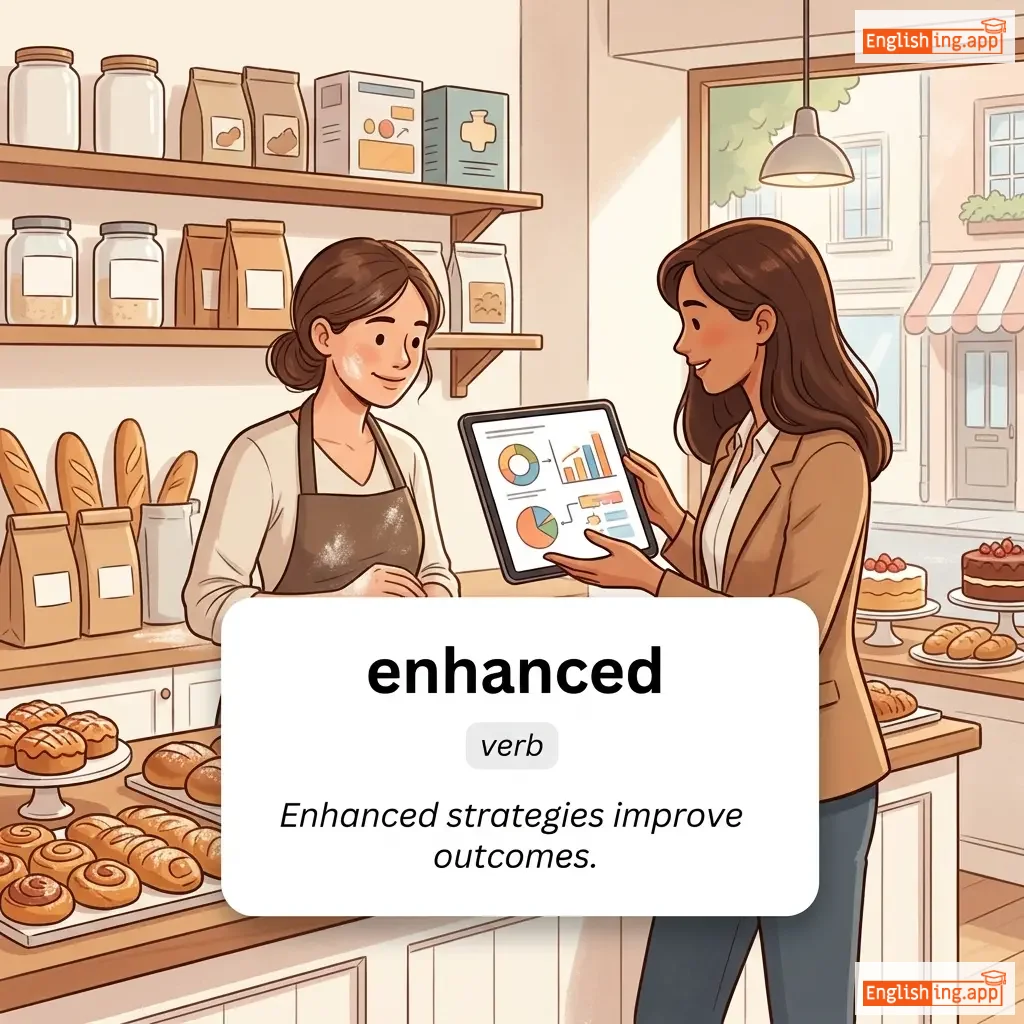
enhanced definition card — visual illustration of the meaning
verb
ɪnˈhɑːnst
增强的 (zēngqiáng de)

Intensify, increase, or further improve the quality, value, or extent of something.

"Enhanced strategies improve outcomes."

"增强的策略改善了结果。" (Zēngqiáng de cèlüè gǎishànle jiéguǒ.)
enhancement definition card — visual illustration of the meaning
noun
/ɪnˈhɑːns.mənt/
提升或增强 (tisheng huo zengqiang)

Improving the quality, value, or effectiveness of something.

"The software update included significant enhancements in performance."
"软件更新包括了性能上的显著提升。" (Ruǎnjiàn gēngxīn bāokuòle xìngnéng shàng de xiǎnzhù tishēng.)
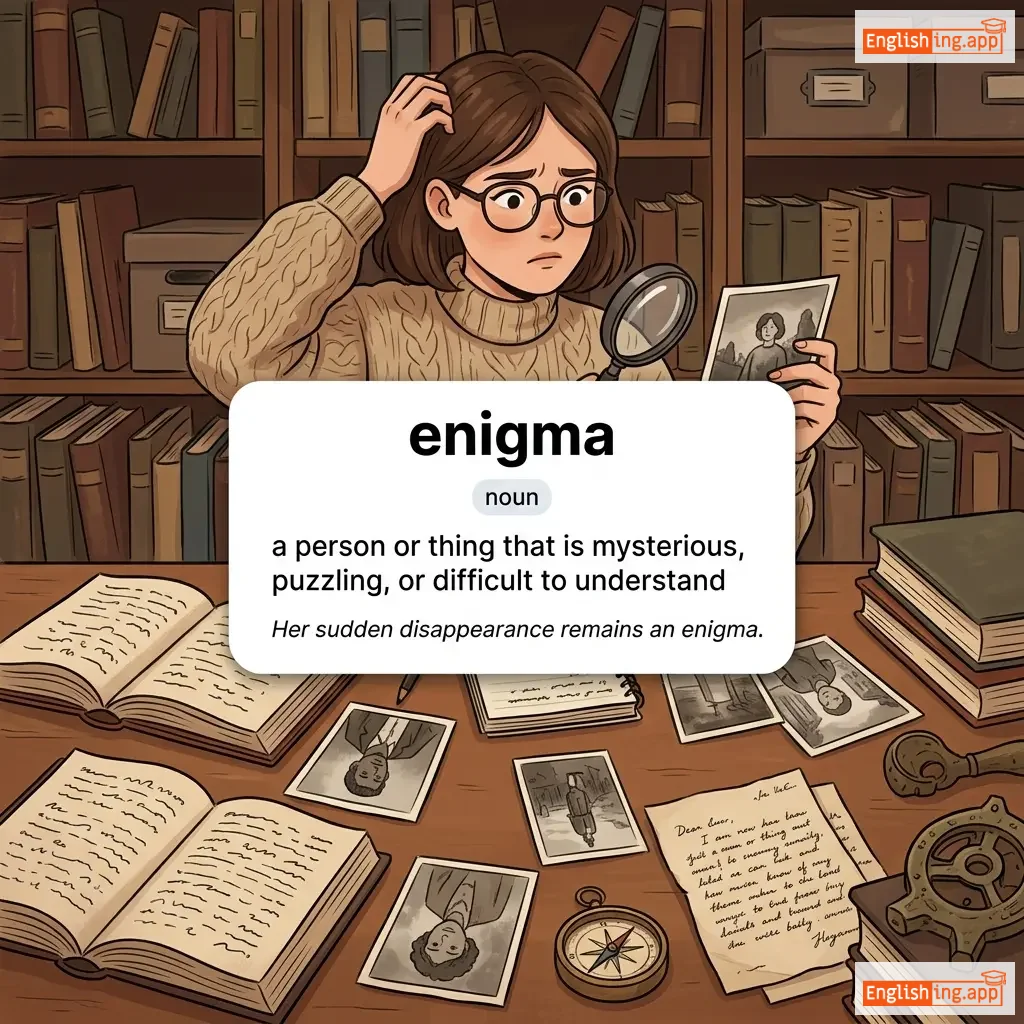
enigma definition card — visual illustration of the meaning
noun
/ɪˈnɪɡmə/
谜团 (mituan)

a person or thing that is mysterious, puzzling, or difficult to understand

"Her sudden disappearance remains an enigma."

"她的突然消失仍然是一个谜团。" (Ta de tuoran xiaoshi rengran shi yige mituan.)
adjective
/ˌɛnɪɡˈmætɪk/
神秘的 (shenmi de)

mysterious and difficult to interpret or understand

"He gave me an enigmatic smile."

"他给了我一个神秘的微笑。" (Ta geile wo yige shenmi de weixiao.)
verb
/ɛnˈdʒɔɪn/
命令,禁止 (mìnglìng, jìnzhǐ)

to instruct or urge someone to do something; to prohibit legally

"The judge enjoined the company from continuing its activities."

"法官禁止公司继续其活动。" (Fǎguān jìnzhǐ gōngsī jìxù qí huódòng.)
enjoy definition card — visual illustration of the meaning
verb
/ɪnˈdʒɔɪ/
享受 (xiǎngshòu)

to take pleasure in something

"They enjoyed the music at the concert."

"他们在音乐会上享受音乐。" (Tāmen zài yīnyuè huì shàng xiǎngshòu yīnyuè.)
adjective
/ɪnˈdʒɔɪəbl/

giving pleasure or satisfaction

"The movie was highly enjoyable."

noun
/ɪnˈdʒɔɪmənt/
享受 (xiangshou)

the state or process of taking pleasure or satisfaction in something

"She felt great enjoyment while reading her favorite book."

"她在阅读她最喜欢的书时感到极大的享受。" (Ta zai yuedu ta zui xihuan de shu shi gandao jida de xiangshou.)
verb
/ɛnˈkɪndl/
点燃,激发 (diǎn rán, jī fā)

to set on fire or inspire strong emotion

"The speech enkindled hope in the audience."

"演讲点燃了观众心中的希望。" (Yǎnjiǎng diǎn rán le guānzhòng xīn zhōng de xīwàng.)
verb
/ɪnˈlɑːrdʒ/
扩大 (kuo da)

to make something bigger or increase in size

"They decided to enlarge their house."

"他们决定扩大他们的房子。" (Tamen jueding kuo da tamen de fangzi.)
verb
/ɪnˈlaɪtən/
幸福 (xìngfú)

to give someone greater knowledge or understanding about a subject or situation

"The teacher tried to enlighten the students about ancient history."

"她在收到奖项时无法掩饰自己的幸福。" (Tā zài shōu dào jiǎngxiàng shí wúfǎ yǎnshì zìjǐ de xìngfú.)
adjective
/ɪnˈlaɪ.tənd/
开明的; 觉悟的; 智慧的; (kaiming de; juewu de; zhihui de)

having or showing a rational, modern outlook; having spiritual knowledge or understanding

"The enlightened teacher shared wisdom with all her students."

"那位开明的老师与她的所有学生分享了智慧。" (Na wei kaiming de laoshi yu ta de suoyou xuesheng fenxiang le zhihui.)
verb
/ɪnˈlɪst/
报名 (baoming)

to join or sign up, especially for military service; to secure someone's support or help

"He decided to enlist in the army after graduation."

"他决定毕业后加入军队。" (Ta jueding biyue hou jiaru jundui.)
verb
/ɪnˈlaɪvən/
使生动 (shi shengdong)

to make something more lively, interesting, or cheerful

"Her jokes helped enliven the dull meeting."

"她的笑话帮助让枯燥的会议变得生动。" (Ta de xiaohua bangzhu rang kuzhao de huiyi biande shengdong.)
noun
/ˈɛnmɪti/
敌意 (diyi)

a feeling of hostility, hatred, or opposition

"There was a long history of enmity between the two families."

"两家人之间有着长久的敌意。" (Liang jia ren zhijian youzhe changjiu de diyi.)
verb
/ɪˈnəʊbəl/
使高贵 (shǐ gāoguì)

to give someone a noble rank or to elevate in dignity or honor

"His selfless actions ennobled his character in the eyes of others."

"他的无私行为使他在他人眼中的品格得到了提升。" (Tā de wúsī xíngwéi shǐ tā zài tārén yǎnzhōng de pǐngé dédàole tíshēng.)
noun
/ˈɒnwiː/ or /ˈɑːnwiː/
倦怠 (juandai)

A feeling of boredom, listlessness, or dissatisfaction arising from lack of excitement.

"After weeks of doing nothing, he sank into a deep sense of ennui."

"在没有做任何事情的几周后,他陷入了深深的倦怠。" (Zai meiyou zuo renhe shiqing de ji zhou hou, ta xianru le shenshen de juandai.)
noun
/ɪˈnɔːrmɪti/
巨大性 (jùdàxìng)

The extreme scale, seriousness, or extent of something perceived as bad or morally wrong.

"The enormity of the crime shocked the entire community."

"犯罪的巨大性震惊了整个社区。" (Fànzuì de jùdàxìng zhènjīngle zhěnggè shèqū.)
adjective
/ɪˈnɔːrməs/
巨大的 (jù dà de)

Extremely large in size, amount, or degree.

"They built an enormous stadium in the city."

"他们在城市里建造了一个巨大的体育场。" (Tāmen zài chéngshì lǐ jiànzàole yīgè jùdà de tǐyùchǎng.)
adjective/adverb
/ɪˈnʌf/
足够 (zúgòu)

as much or as many as required

"We have enough food for everyone."

"我们有足够的食物供大家食用。" (Wǒmen yǒu zúgòu de shíwù gōng dàjiā shíyòng.)
verb
/ɪnˈkwaɪər/
询问 (xunwen)

to ask for information about something

"He enquired about the train schedule."

"他询问了列车时刻表。" (Tā xúnwènle lièchē shíkèbiǎo.)
verb
/ɪnˈreɪdʒ/
激怒 (jī nù)

To make someone extremely angry.

"His unfair remarks enraged the audience."

"他的不公正言论激怒了观众。" (Tā de bù gōngzhèng yánlùn jīnùle guānzhòng.)
verb
/ɪnˈræptʃər/
使着迷 (shǐ zháo mí)

To fill someone with great delight or joy.

"The beautiful music enraptured the audience."
"美丽的音乐让观众陶醉。" (Měilì de yīnyuè ràng guānzhòng táozuì.)
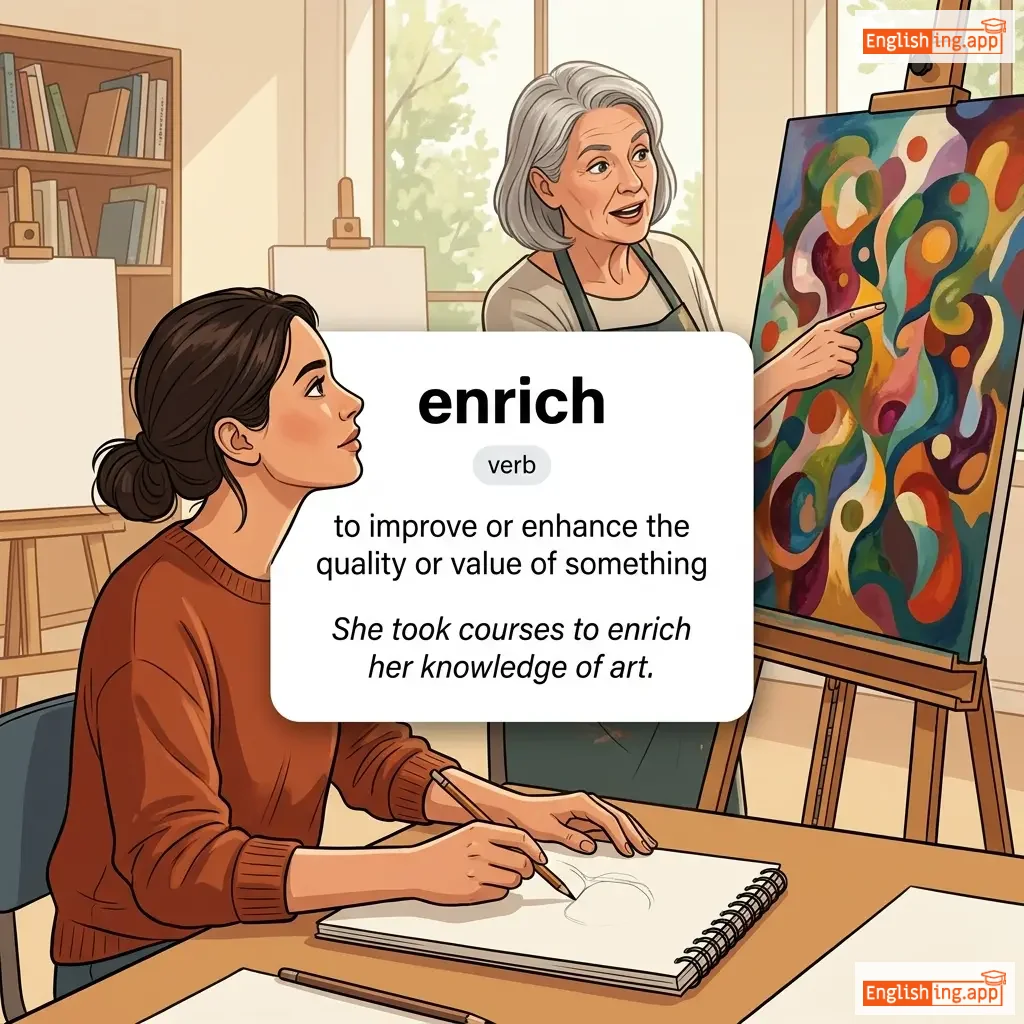
enrich definition card — visual illustration of the meaning
verb
/ɪnˈrɪtʃ/
丰富 (fengfu)

to improve or enhance the quality or value of something

"She took courses to enrich her knowledge of art."
"她参加了课程来丰富她的艺术知识。" (Ta canjia le kecheng lai fengfu ta de yishu zhishi.)
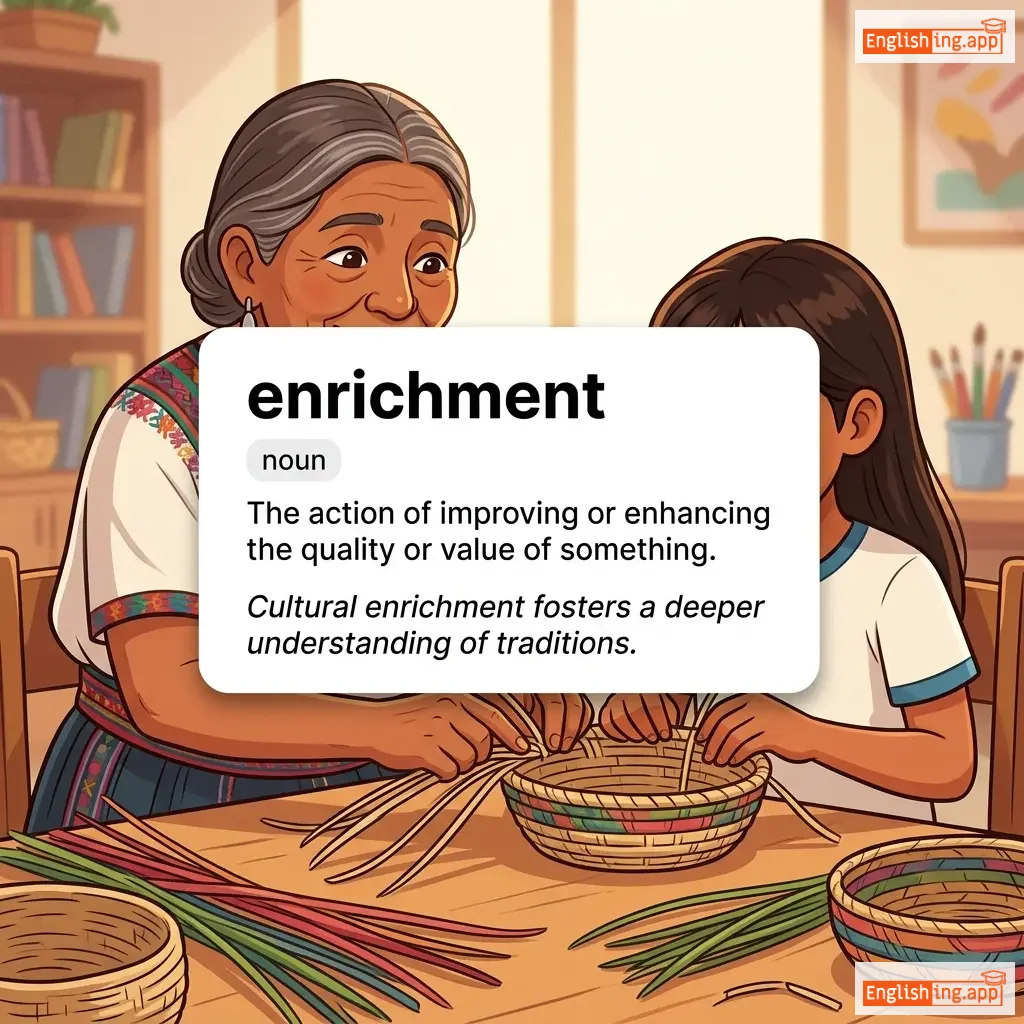
enrichment definition card — visual illustration of the meaning
noun
/ɪnˈrɪtʃ.mənt/
丰富 (fēngfù)

The action of improving or enhancing the quality or value of something.

"Cultural enrichment fosters a deeper understanding of traditions."

"文化丰富促进对传统的更深理解。" (Wénhuà fēngfù cùjìn duì chuántǒng de gèng shēn lǐjiě.)
verb
/ɪnˈroʊl/
报名 (baoming)

To officially register or sign up for a course, program, or membership

"She decided to enrol in a language course to improve her skills."

"她决定报名参加一门语言课程以提高她的技能。" (Ta jueding baoming canjia yimen yuyan kecheng yi tigao ta de jineng.)
verb
/ɪnˈroʊl/
注册 (zhuce)

to officially join or register in a school, course, or organization

"He decided to enroll in a computer programming course."

"他决定报名参加计算机编程课程。" (Ta jueding baoming canjia jisuanji biancheng kecheng.)
verb
/ɪnˈskɒns/
安顿, 隐藏 (āndùn, yǐncáng)

to settle comfortably or securely in a place; to hide or shelter firmly

"She ensconced herself in a cozy armchair by the fireplace."

"她坐在壁炉旁的一张舒适椅子上。" (Tā zuò zài bìlú páng de yī zhāng shūshì yǐzi shàng.)
noun
/ɒnˈsɒmbəl/
合奏, 团体 (hezou, tuanti)

a group of things or people viewed as a whole, especially performers in music or theater

"The theater ensemble gave a spectacular performance."

"剧院合奏团进行了精彩的演出。" (Jùyuàn hézòu tuántuán jìnxíngle jīngcǎi de yǎnchū.)
verb
/ɪnˈʃraɪn/
将某物视为神圣或重要的保存或珍视 (jiāng mǒu wù shì wéi shénshèng huò zhòngyào de bǎocún huò zhēnshì)

to preserve or cherish something as sacred or important

"The constitution enshrines the right to freedom of speech."

"宪法保障言论自由的权利。" (Xiànfǎ bǎozhàng yánlùn zìyóu de quánlì.)
noun
/ˈɛnsaɪn/
旗帜 (qizhi)

A flag or standard, especially a military or naval one indicating nationality; also a junior officer in the navy or coast guard.

"The ship raised its national ensign before leaving the harbor."

"这艘船在离开港口之前升起了它的国旗。" (Zhe sou chuan zai likai gangkou zhiqian shengqi le ta de guoqi.)