词汇表

英语词汇词典 | 单词含义、定义和示例

verb
/ɪnˈtʃænt/

to delight or charm greatly; to cast a spell over

"The storyteller enchanted the children with his tales."

verb
/ɪnˈsaɪfər/
将消息转换为代码或密码 (jiang xiaoxi zhuanhuan wei daima huo mima)

to convert a message into code or cipher

"The agent enciphered the secret message before sending it."

"特工在发送消息之前将其加密。" (Tègōng zài fāsòng xiāoxi zhīqián jiā mìmì.)
verb
/ɪnˈsɜːrkəl/
围绕 (wéi rào)

to form a circle around something

"The protesters encircled the building in a human chain."

"抗议者围绕着建筑物站成一条人链。" (Kàngyì zhě wéi rào zhe jiànzhù wù zhàn chéng yī tiáo rén liàn.)
noun
/ˈɛn.kleɪv/
飞地 (fēidì)

a distinct area or group enclosed within a larger one

"The city has a small Italian enclave where traditions are preserved."

"这座城市有一个小的意大利飞地,保留着传统。" (Zhè zuò chéngshì yǒu yī gè xiǎo de yìdàlì fēidì, bǎoliúzhe chuántǒng.)
adjective
/ˌɛnkəˈmiːæstɪk/
赞美的 (zànměi de)

Expressing praise; laudatory.

"The book was filled with encomiastic remarks about the author."

"这本书充满了对作者的赞美评论。" (Zhè běn shū chōngmǎnle duì zuòzhě de zànměi pínglùn.)
encomium definition card — visual illustration of the meaning
noun
/ɛnˈkoʊmiəm/
赞扬 (zànyáng)

A speech or piece of writing that praises someone or something highly.

"He delivered an encomium to his retiring teacher."

"他为即将退休的老师送上了赞扬的演讲。" (Tā wèi jíjiāng tuìxiū de lǎoshī sòng shàngle zànyáng de yǎnjiǎng.)
verb
/ɪnˈkʌmpəs/
涵盖 (hánɡài)

To include comprehensively; to surround or encircle.

"The project will encompass all aspects of rural development."

"该项目将涵盖农村发展的各个方面。" (gāi xiàngmù jiāng hánɡài nóngcūn fāzhǎn de gè gè fāngmiàn.)
noun
/ˈɑːnkɔːr/
安可 (ān kě ěr)

An additional performance demanded by an audience at the end of a show.

"The band returned to the stage for an encore."

"乐队返回舞台进行安可表演。" (Yuèduì fǎnhuí wǔtái jìnxíng ān kě ěr biǎoyǎn.)
verb
/ɪnˈkaʊntər/
遇见 / 遇到 (yùjiàn / yùdào)

to unexpectedly meet someone or experience something, especially something difficult or new

"During the hike, we encountered a wild bear."

"在徒步旅行中,我们遇到了一只野生熊。" (Zài túbù lǚxíng zhōng, wǒmen yùdào le yī zhī yěshēng xióng.)
encourage definition card — visual illustration of the meaning
verb
/ɪnˈkʌrɪdʒ/
鼓励 (guli)

To give support, confidence, or hope to someone.

"Parents should encourage their children to read daily."

"父母应该鼓励孩子每天阅读。" (Fùmǔ yīnggāi gǔlì háizi měitiān yuèdú.)
noun
/ɪnˈkʌrɪdʒmənt/
鼓励 (guli)

the action of giving someone support, confidence, or hope

"Her encouragement helped me finish the project."

"她的鼓励帮助我完成了项目。" (Ta de guli bangzhu wo wancheng le xiangmu.)
adjective
/ɪnˈkʌrɪdʒɪŋ/
鼓舞人心 (gǔwǔ rénxīn)

giving someone support or confidence; optimistic

"Her words were very encouraging during the hard times."

"她在困难时期的话语非常鼓舞人心。" (Tā zài kùnnán shíqī de huàyǔ fēicháng gǔwǔ rénxīn.)
verb
/ɪnˈkrəʊtʃ/
幸福 (xìngfú)

to gradually take over or intrude on someone’s rights, territory, or space

"The buildings began to encroach on the protected forest land."

"当她获得奖项时,她无法掩饰自己的幸福。" (Dāng tā huòde jiǎngxiàng shí, tā wúfǎ yǎnshì zìjǐ de xìngfú.)
noun
/ɪnˈkrəʊtʃmənt/
侵占 (qīnzhàn)

the act of gradually intruding or taking over someone’s rights, land, or space

"The villagers protested against the encroachment on their farmland."

"村民们抗议侵占他们的农田。" (Cūnmín men kàngyì qīnzhàn tāmen de nóngtián.)
verb
/ɪnˈkʌmbər/
负担 (fùdān)

to burden or weigh down something, making it difficult to move or progress

"She was encumbered by the heavy luggage during her journey."

"她在旅行中因沉重的行李而感到负担沉重。" (Tā zài lǚxíng zhōng yīn chénzhòng de xínglǐ ér gǎndào fùdān chénzhòng.)
noun
/ɪnˈkʌmbrəns/
负担 / 障碍 (fùdān / zhàng'ài)

a burden or obstacle that makes progress or movement difficult

"Debt can become a serious encumbrance in life."

"债务可能成为生活中的严重负担。" (zhàiwù kěnéng chéngwéi shēnghuó zhōng de yánzhòng fùdān.)
noun
/ɛnˈsɪklɪkəl/
教皇通谕 (Jiàohuáng tōngxù)

a formal letter sent by the Pope to Catholic churches, usually addressing important issues

"The Pope issued an encyclical on climate change and moral responsibility."

"教皇发布了关于气候变化和道德责任的通谕。" (Jiàohuáng fābùle guānyú qìhòu biànhuà hé dàodé zérèn de tōngxù.)
noun
/ɪnˌsaɪkləˈpiːdiə/
百科全书 (bǎikē quánshū)

a book or set of books containing information on many subjects, usually arranged alphabetically

"She used an encyclopedia to complete her school project."

"她使用了百科全书来完成她的学校项目。" (Tā shǐyòngle bǎikē quánshū lái wánchéng tā de xuéxiào xiàngmù.)
adjective
/ɛnˌsaɪkləˈpiːdɪk/
百科全书的 (bǎikē quánshū de)

Having comprehensive knowledge of many subjects; relating to or characteristic of an encyclopedia.

"Her encyclopedic knowledge of history amazed everyone at the conference."

"她对历史的百科全书式知识令会议上的所有人都惊讶不已。" (Tā duì lìshǐ de bǎikē quánshū shì zhīshì lìng huìyì shàng de suǒyǒu rén dōu jīngyà bùyǐ.)
verb
/ɛnd/
结束 (jieshu)

to bring something to a conclusion or stop

"The meeting ended at 5 PM."

"会议在5点结束。" (Huiyi zai 5 dian jieshu.)
verb
/ɪnˈdeɪndʒər/
危及 (weiji)

To put someone or something at risk or in danger.

"Cutting down forests can endanger many species of animals."

"砍伐森林可能会使许多物种面临危险。" (Kanfa senlin keneng hui shi xu duo wuzhong mianlin weixian.)
verb
/ɪnˈdɪr/
使受喜爱 (shi shou xi ai)

To cause someone to be loved or liked.

"Her kindness and generosity endeared her to the community."

"她的善良和慷慨使她深受社区喜爱。" (ta de shan liang he kang kai shi ta shen shou she qu xi ai.)
noun
/ɪnˈdɪrmənt/
亲切的词语 (qīnqiè de cíyǔ)

A word or phrase expressing affection or love.

"She whispered a gentle endearment to her child."

"她低声对孩子说了一个亲切的词语。" (Tā dīshēng duì háizi shuōle yī gè qīnqiè de cíyǔ.)
endeavor definition card — visual illustration of the meaning
verb
/ɪnˈdɛvər/
努力 (nuli)

to try hard to do or achieve something

"She endeavored to finish the project on time."

"她努力按时完成项目。" (Ta nuli anshi wancheng xiangmu.)
verb, noun
/ɪnˈdevər/
努力 (nuli)

To try hard to achieve something; an attempt or effort

"She endeavoured to finish the project on time."
"她努力按时完成项目。" (Ta nuli anshi wancheng xiangmu.)
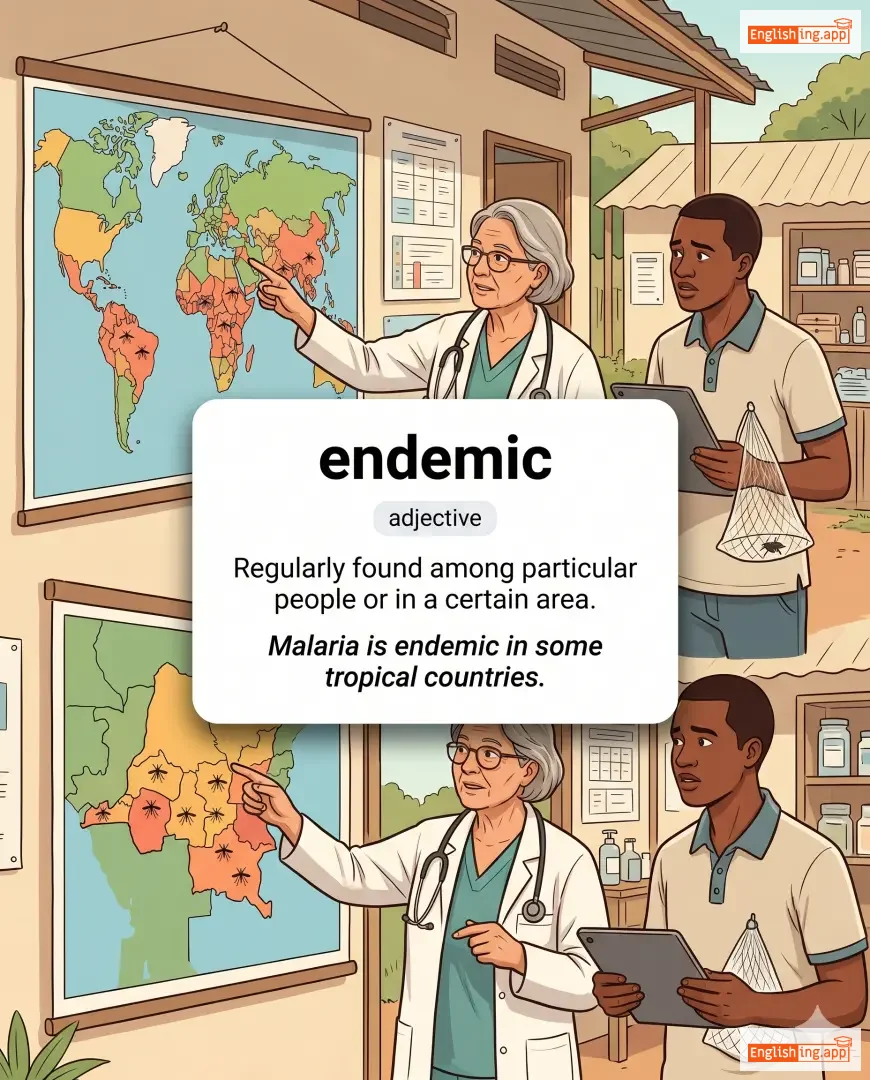
endemic definition card — visual illustration of the meaning
adjective
/ɛnˈdɛmɪk/
地方性 (dìfāngxìng)

Regularly found among particular people or in a certain area.

"Malaria is endemic in some tropical countries."

"疟疾在一些热带国家是地方性的。" (Nüèjí zài yīxiē rèdài guójiā shì dìfāngxìng de.)
noun
/ˈɛndɪŋ/
结局 (jiejue)

the final part of something, such as a story, event, or period of time

"The movie had a surprising ending that no one expected."

"这部电影有一个令人惊讶的结局,没人预料到。" (Zhe bu dianying you yige ling ren jingya de jiejue, meiren yuliao dao)
noun
/ˈɛndaɪv/ or /ˈɑːndɪv/
菊苣 (júxù)

A leafy vegetable belonging to the chicory family, often used in salads.

"She added fresh endive to the salad for a slightly bitter flavor."

"她将新鲜的菊苣加入沙拉中,增添了一丝微苦的味道。" (Tā jiāng xīnxiān de júxù jiārù shālā zhōng, zēngtiānle yī sī wēi kǔ de wèidào.)
adjective
/ˈendləs/
无尽 (wújìn)

having or seeming to have no end or limit

"They gazed at the endless desert stretching before them."
"他们凝视着他们面前延展的无尽沙漠。" (Tāmen níngshìzhe tāmen miànqián yánzhǎn de wújìn shāmò.)
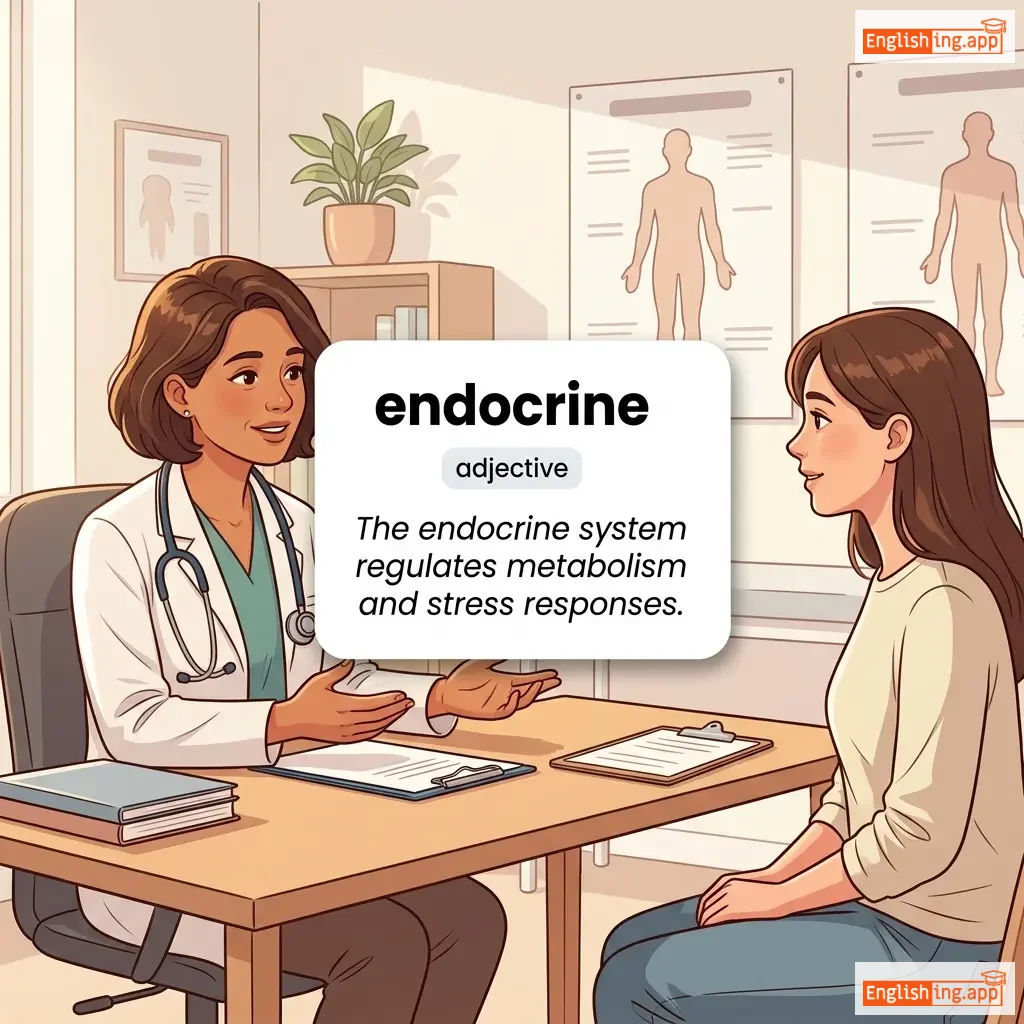
endocrine definition card — visual illustration of the meaning
adjective
/ˈen.də.krɪn/
与激素相关 (yǔ jīsù xiāngguān)

Relating to or denoting glands that secrete hormones directly into the bloodstream to regulate various body functions.

"The endocrine system regulates metabolism and stress responses."
"内分泌系统调节代谢和应激反应。" (Nèi fēnmì xìtǒng tiáojié dàixiè hé yìngjí fǎnyìng.)
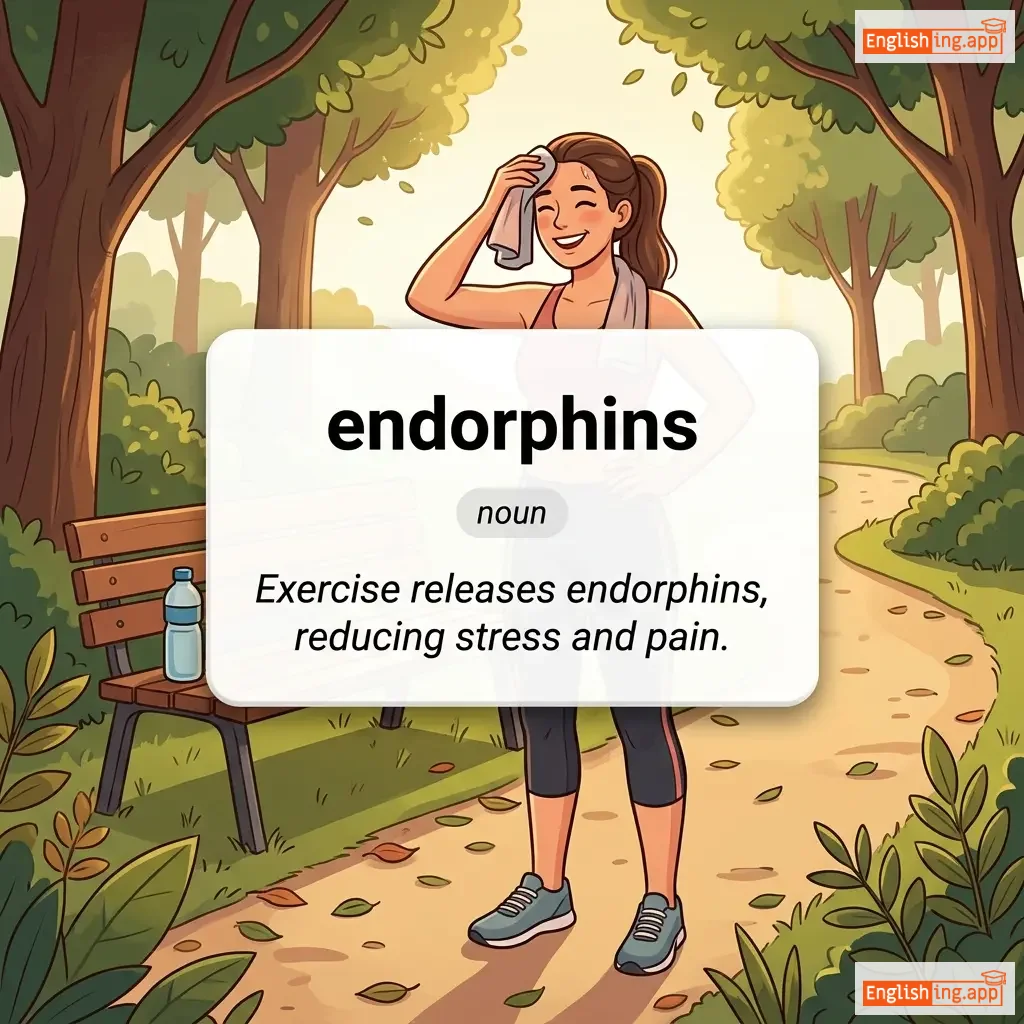
endorphins definition card — visual illustration of the meaning
noun
/ɛnˈdɔːr.fɪnz/
内啡肽 (nèi fēi tài)

Chemical compounds produced by the brain that reduce pain and create feelings of happiness.

"Exercise releases endorphins, reducing stress and pain."

"锻炼释放内啡肽,减轻压力和疼痛。" (Duànliàn shìfàng nèi fēi tài, jiǎnqīng yālì hé téngtòng.)
verb
/ɪnˈdɔːrs/
支持 (zhīchí)

To give approval or support to someone or something; to publicly recommend.

"The celebrity endorsed the new skincare product."

"这位名人支持了新的护肤产品。" (Zhè wèi míngrén zhīchíle xīn de hùfū chǎnpǐn.)
endorsement definition card — visual illustration of the meaning
noun
/ɪnˈdɔːrsmənt/
支持 (zhīchí)

the action of publicly supporting or approving something

"His endorsement of the new policy was well received."
"他对新政策的支持得到了很好的接受。" (Tā duì xīn zhèngcè de zhīchí dédàole hěn hǎo de jiēshòu.)
🎁

endow

verb
/ɪnˈdaʊ/

To provide with a quality, ability, or gift; to donate funds for a purpose.

"The university was endowed with a generous donation."

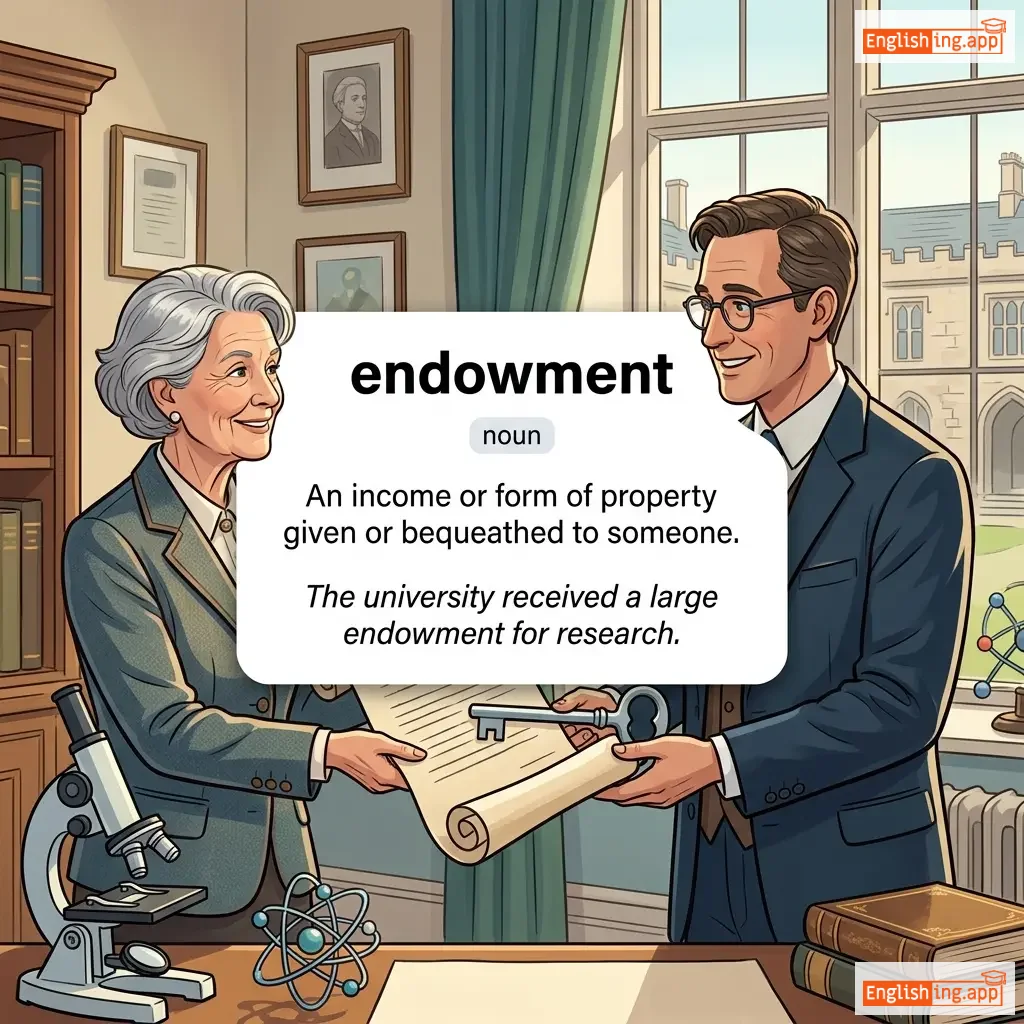
endowment definition card — visual illustration of the meaning
noun
ɪnˈdaʊmənt
捐赠, 赠款 (juānzèng, zèngkuǎn)

An income or form of property given or bequeathed to someone.

"The university received a large endowment for research."

"大学收到了大量用于研究的捐赠。" (Dàxué shōu dào le dàliàng yòng yú yánjiū de juānzèng.)
verb
/ɪnˈdjuː/
赋予 (fuyu)

To provide or endow with a quality or ability.

"The leader was endued with wisdom and courage."

"领导者被赋予了智慧和勇气。" (Lingdao zhe bei fuyu le zhihui he yongqi.)
adjective
/ɪnˈdjʊərəbl/
可忍受的 (kě rěn shòu de)

Able to be tolerated or endured; bearable.

"The pain was harsh but endurable."

"疼痛很剧烈,但可以忍受。" (Téngtòng hěn jùliè, dàn kěyǐ rěnshòu.)
endurance definition card — visual illustration of the meaning
🏃‍♂️

endurance (耐力)

noun
/ɪnˈdjʊərəns/
耐力 (naili)

The ability to withstand hardship or sustain prolonged physical or mental effort.

"The marathon tested the athletes’ endurance."

"马拉松考验了运动员的耐力。" (Mǎlāsōng kǎoyànle yùndòngyuán de nàilì.)
verb
/ɪnˈdjʊər/
忍受 (rěnshòu)

to suffer something difficult or unpleasant patiently

"He had to endure years of hardship before achieving success."

"他必须忍受多年的困苦,才能取得成功。" (Tā bìxū rěnshòu duōnián de kùnkǔ, cáinéng qǔdé chénggōng.)
adjective
/ɪnˈdjʊərɪŋ/
持久的 (chíjiǔ de)

Continuing or lasting over a long period of time.

"She left an enduring impression on everyone she met."

"她给每个人留下了持久的印象。" (Tā gěi měi gèrén liúxiàle chíjiǔ de yìnxiàng.)
noun
/ˈɛnəmi/
敌人 (dírén)

a person or group that is hostile or opposed to someone or something

"The two countries have been enemies for decades."

"这两个国家已经是敌人几十年了。" (Zhè liǎng gè guójiā yǐjīng shì dírén jǐ shí nián le.)
adjective
/ˌɛnəˈdʒɛtɪk/
充满活力的 (chōngmǎn huólì de)

Showing or involving great activity or vitality.

"The energetic child ran around the playground for hours."

"那个充满活力的孩子在操场上跑了几个小时。" (Nàgè chōngmǎn huólì de háizi zài cāochǎng shàng pǎo le jǐ gè xiǎoshí.)
verb
/ˈɛnərˌdʒaɪz/
激发 (jifa)

To give energy or vitality to something or someone.

"The motivational speech helped energize the team."

"激励演讲帮助激励了团队。" (Jili yanjiang bangzhu jili le tuandui.)
energy definition card — visual illustration of the meaning
noun
/ˈɛnərdʒi/
能源 (nengyuan)

the capacity for activity or work; power derived from physical or chemical resources

"Solar energy is becoming increasingly popular worldwide."

"太阳能在全球变得越来越受欢迎。" (Taiyangneng zai quanqiu biande yuelaiyuelai shou huanying.)
energy security definition card — visual illustration of the meaning
noun
/ˈen.ə.dʒi sɪˈkjʊə.rɪ.ti/
能源安全 (néngyuán ānquán)

The reliable availability of energy sources at an affordable price for a nation or region.

"Energy security ensures consistent supply."
"能源安全确保稳定的供应。" (Néngyuán ānquán quèbǎo wěndìng de gōngyìng.)
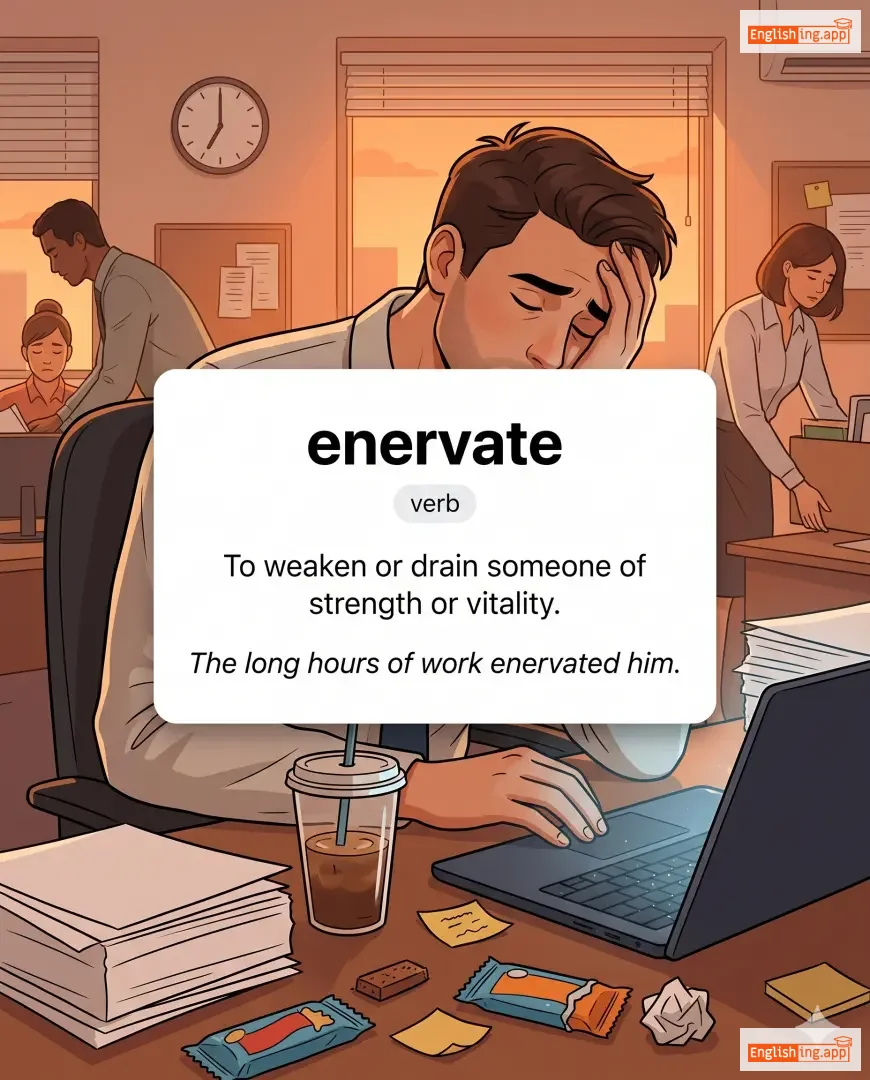
enervate definition card — visual illustration of the meaning
verb
/ˈɛnərˌveɪt/
使虚弱 (shǐ xūruò)

To weaken or drain someone of strength or vitality.

"The long hours of work enervated him."

"长期的工作使他感到虚弱。" (chángqī de gōngzuò shǐ tā gǎndào xūruò.)
adjective
/ˈɛnərˌveɪtɪd/
精疲力尽 (jing pilijin)

Lacking energy, vitality, or strength; weakened or exhausted.

"After the long meeting, she felt completely enervated."

"在长时间的会议后,她感到完全精疲力尽。" (Zai chang shijian de huiyi hou, ta gandao wanquan jingpilijin.)
verb
/ɛnˈfiːbəl/
削弱 (xuēruò)

To make weak or feeble; to deprive of strength.

"The long illness enfeebled the old man."

"长期的疾病使老人虚弱。" (Chángqī de jíbìng shǐ lǎorén xūruò.)
👮‍♂️

enforce (enfores)

verb
/ɪnˈfɔːrs/
执行 (zhíxíng)

to make sure that a rule, law, or policy is obeyed

"The police are responsible for enforcing the law."

"警方负责执行法律。" (Jǐngfāng fùzé zhíxíng fǎlǜ.)
noun
/ɪnˈfɔːrsmənt/
执法 (zhífǎ)

the act of making sure that laws or rules are followed

"The police are responsible for law enforcement."

"警察负责执法。" (Jǐngchá fùzé zhífǎ.)