词汇表

英语词汇词典 | 单词含义、定义和示例

noun
/ɪˈmɜːrdʒəns/
出现 (chūxiàn)

the process of coming into view, existence, or prominence

"The emergence of new technologies has transformed communication."
"新技术的出现改变了沟通方式。" (Xīn jìshù de chūxiàn gǎibiànle gōutōng fāngshì.)
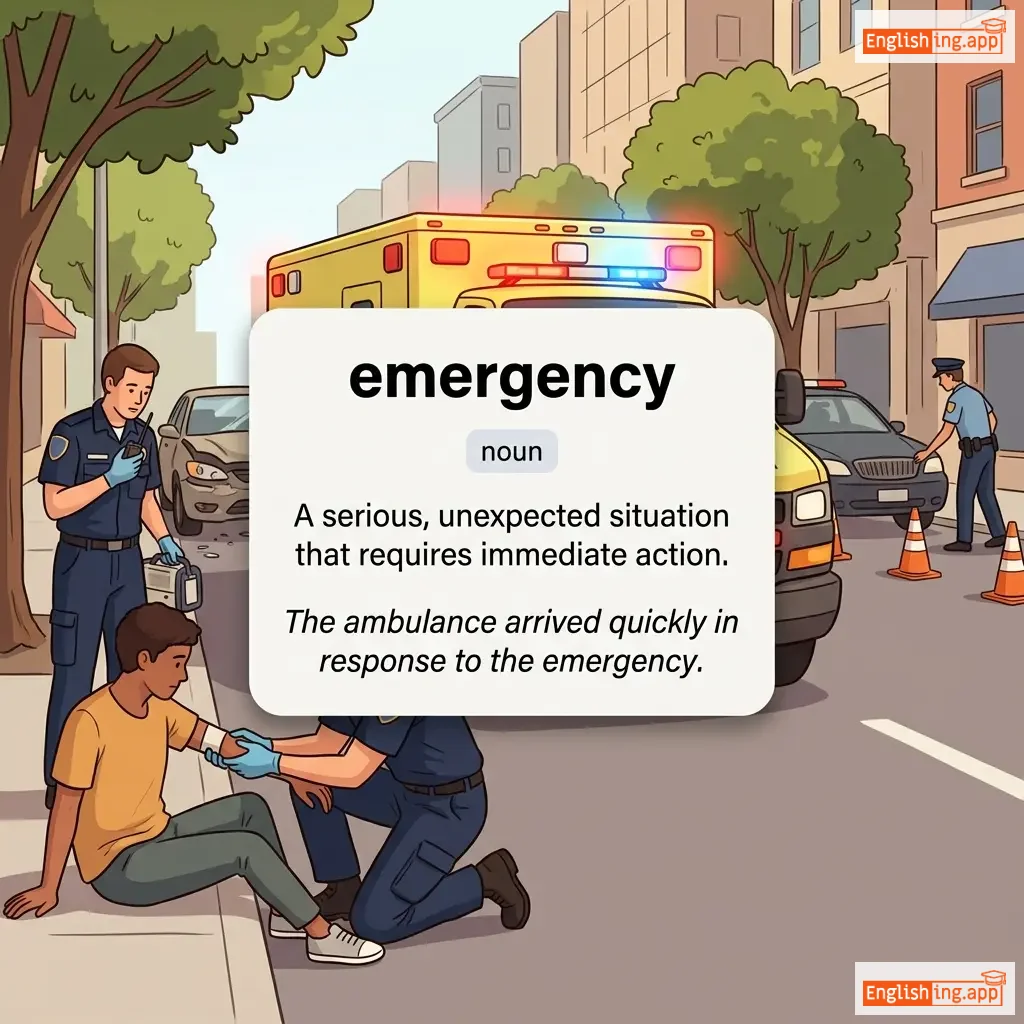
emergency definition card — visual illustration of the meaning
noun
/ɪˈmɜrdʒənsi/
紧急情况 (jinji qingkuang)

A serious, unexpected situation that requires immediate action.

"The ambulance arrived quickly in response to the emergency."

"救护车迅速赶到应对紧急情况。" (Jiuhu che xunsu gandao yingdui jinji qingkuang.)
adjective
/ɪˈmɜːrdʒənt/
新兴 (xinxing)

just coming into existence or becoming prominent

"The emergent startup quickly attracted investors."
"新兴的创业公司迅速吸引了投资者。" (Xinxing de chuangye gongsi xunsu xīyǐnle tóuzī zhě.)
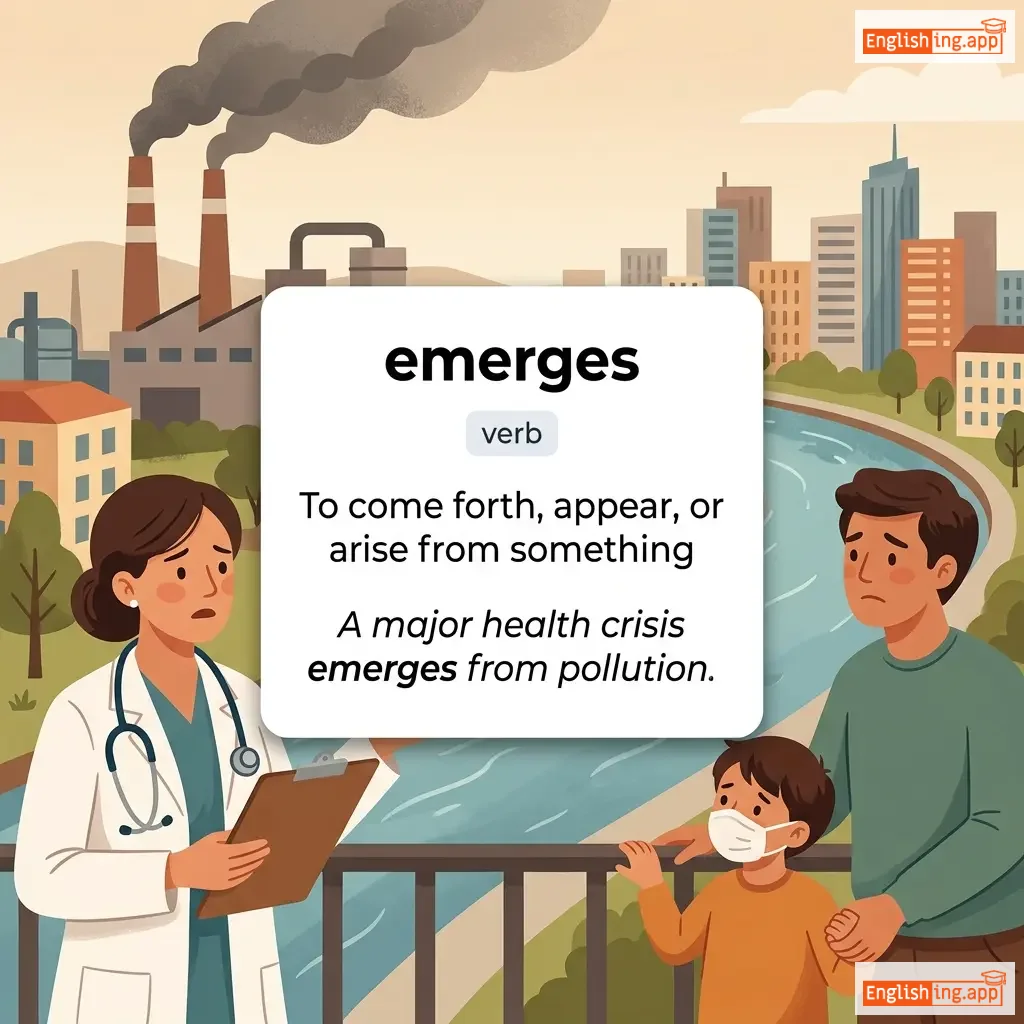
emerges definition card — visual illustration of the meaning
verb
ɪˈmɜːdʒɪz
浮现 (fuxian)

To come forth, appear, or arise from something

"A major health crisis emerges from pollution."

"一个重大的健康危机从污染中浮现。" (Yi ge zhongda de jiankang weiji cong wuran zhong fuxian.)
adjective
/ɪˈmɜːrdʒɪŋ/
新兴 (xinxing)

becoming known, developing, or starting to exist

"Bangladesh is one of the fastest emerging economies in the world."

"孟加拉国是世界上发展最快的新兴经济体之一。" (Mengjialaguo shi shijie shang fazhan zuikuai de xinxing jingjiti zhiyi.)
adjective
/ɪˈmɛrɪtəs/
荣休教授 (róngxiū jiàoshòu)

having retired but allowed to retain their title as an honor

"He is a professor emeritus at the university."

"他是大学的荣休教授。" (tā shì dàxué de róngxiū jiàoshòu)
noun
/ɪˈmɛtɪk/
呕吐药 (ǒu tǔ yào)

a substance that causes vomiting

"The doctor administered an emetic to remove the poison."

"医生给病人使用了呕吐药以清除毒素。" (Yīshēng gěi bìngrén shǐyòngle ǒutù yào yǐ qīngchú dú sù.)
noun
/ˈɛmɪɡrənt/
移民 (yímín)

A person who leaves their own country to settle permanently in another.

"The emigrant started a new life in Canada."

"移民在加拿大开始了新的生活。" (Yímín zài jiānádà kāishǐle xīn de shēnghuó.)
verb
/ˈɛmɪˌɡreɪt/
移民 (yímín)

To leave one's own country in order to settle permanently in another.

"Many people emigrated from Europe to America in the 19th century."

"许多人在19世纪从欧洲移民到美国。" (Xǔduō rén zài 19 shìjì cóng Ōuzhōu yímín dào Měiguó.)
noun
/ˈɛmɪnəns/
声望 (shengwang)

Fame or recognized superiority, especially within a particular sphere.

"She rose to eminence as a leading scientist."

"她作为一位领先的科学家达到了声望。" (Ta zuo wei yi wei lingxian de kexuejia daole shengwang.)
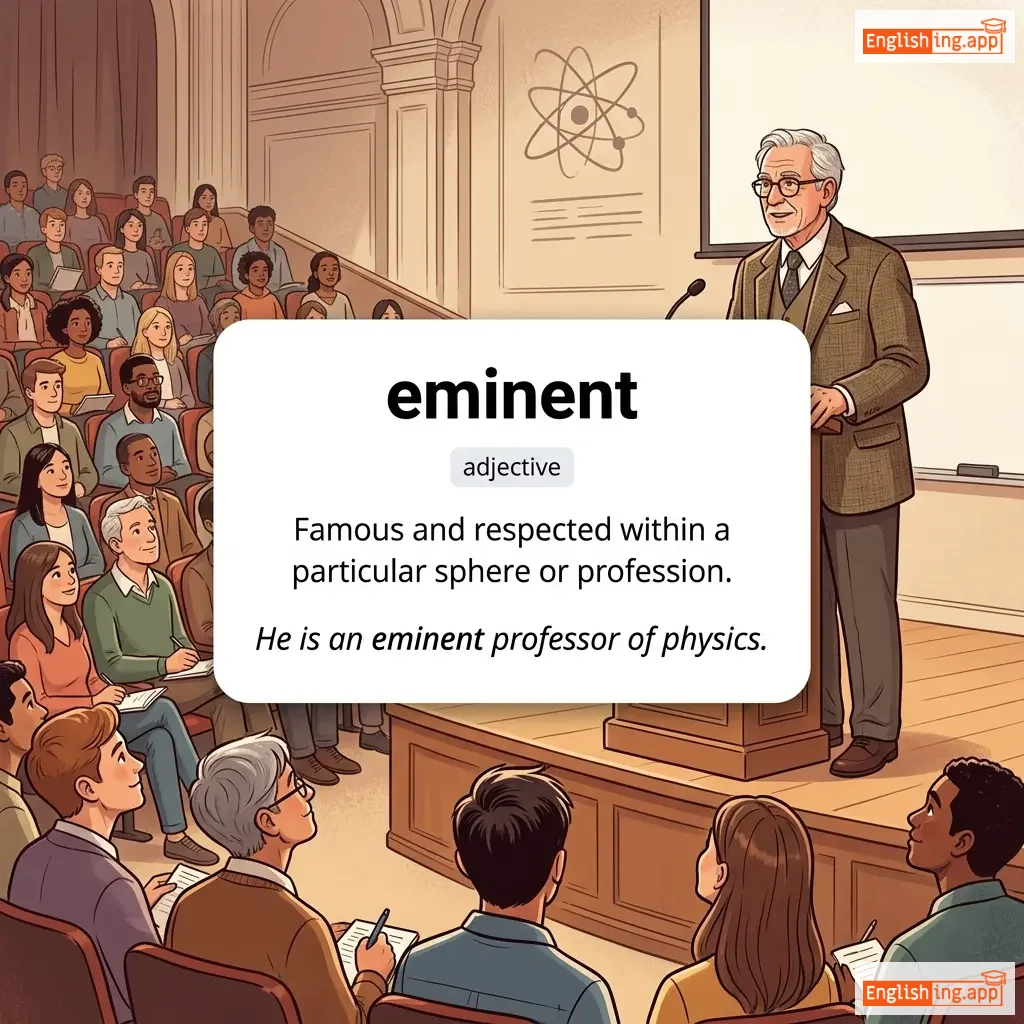
eminent definition card — visual illustration of the meaning
adjective
/ˈɛmɪnənt/

Famous and respected within a particular sphere or profession.

"He is an eminent professor of physics."

noun
/ˈɛmɪsɛri/
特使 (tè shǐ)

A person sent on a special mission, usually as a diplomatic representative.

"The king sent an emissary to negotiate peace."
"国王派遣了一名特使去谈判和平。" (Guówáng pàiqiǎnle yī míng tèshǐ qù tánpàn hépíng.)
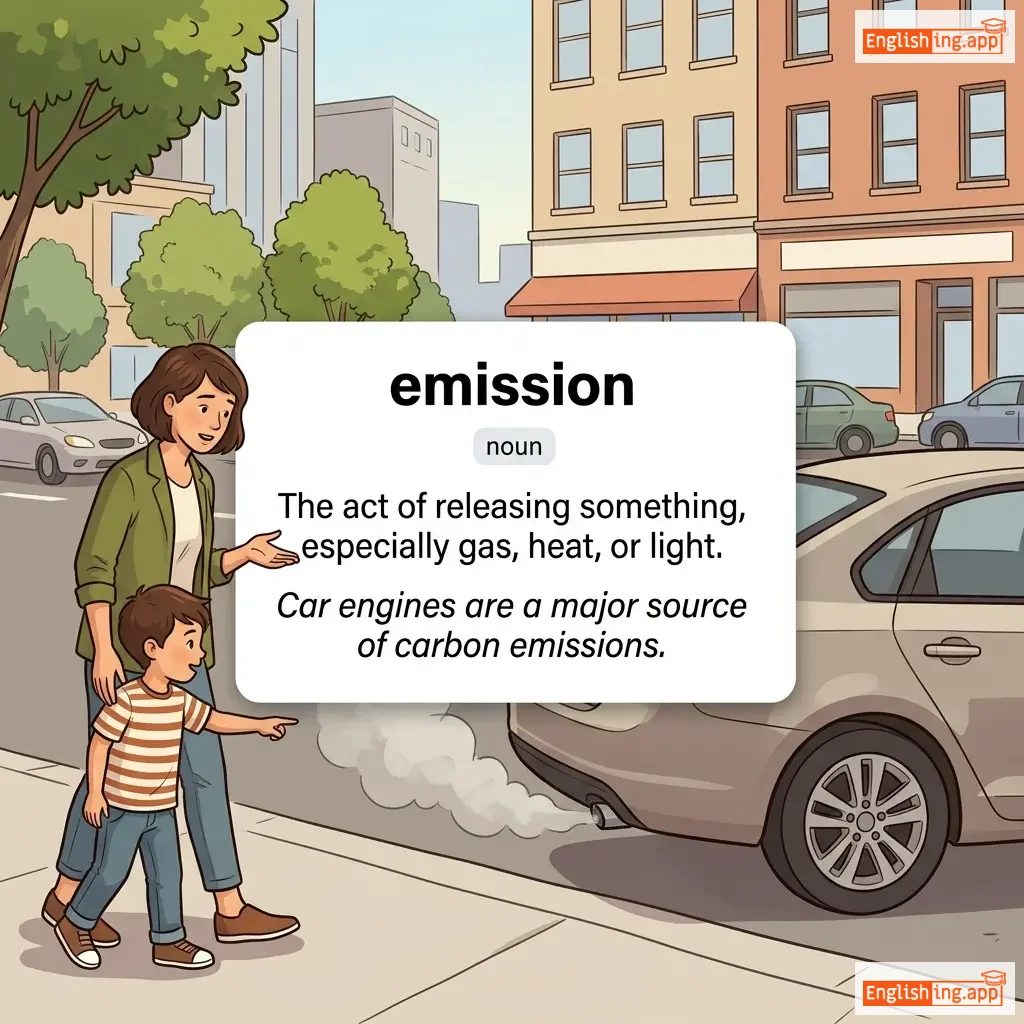
emission definition card — visual illustration of the meaning
noun
/ɪˈmɪʃən/
排放 (paifang)

The act of releasing something, especially gas, heat, or light.

"Car engines are a major source of carbon emissions."
"汽车发动机是碳排放的主要来源。" (Qiche fadongji shi tan paifang de zhuyao laiyuan.)
emissions definition card — visual illustration of the meaning
noun
/ɪˈmɪʃ.ənz/
排放 (paifang)

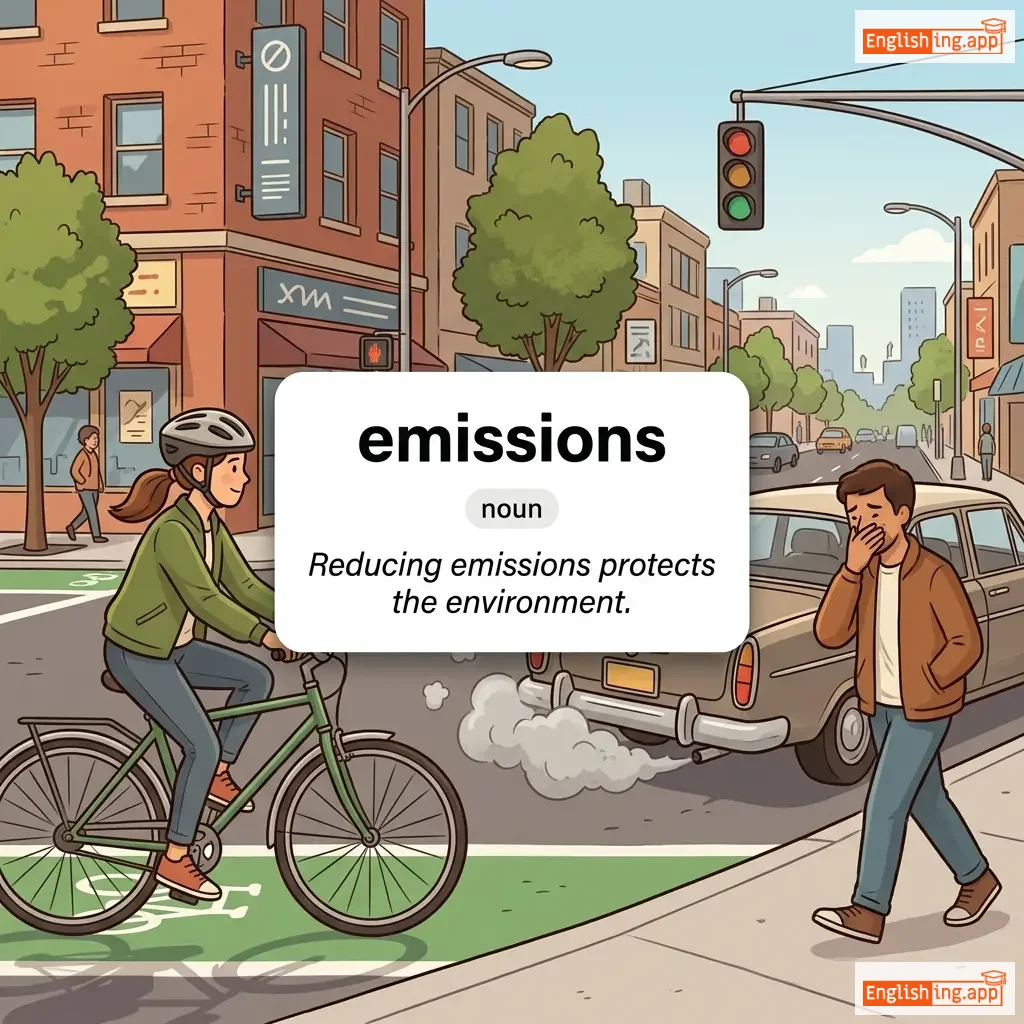
The production and discharge of something, especially gas, heat, light, or radiation.

"Reducing emissions protects the environment."

"减少排放有助于保护环境。" (Jianshao paifang you zhu yu baohu huanjing.)
verb
/ɪˈmɪt/
发射 (Fāshè)

to send out something such as light, heat, sound, or gas

"The factory emits smoke into the atmosphere."
"工厂将烟雾排放到大气中。" (Gōngchǎng jiāng yānwù páifàng dào dàqì zhōng.)
emmet definition card — visual illustration of the meaning
verb
/ˈɛmɪt/
蚂蚁 (mǎ yǐ)

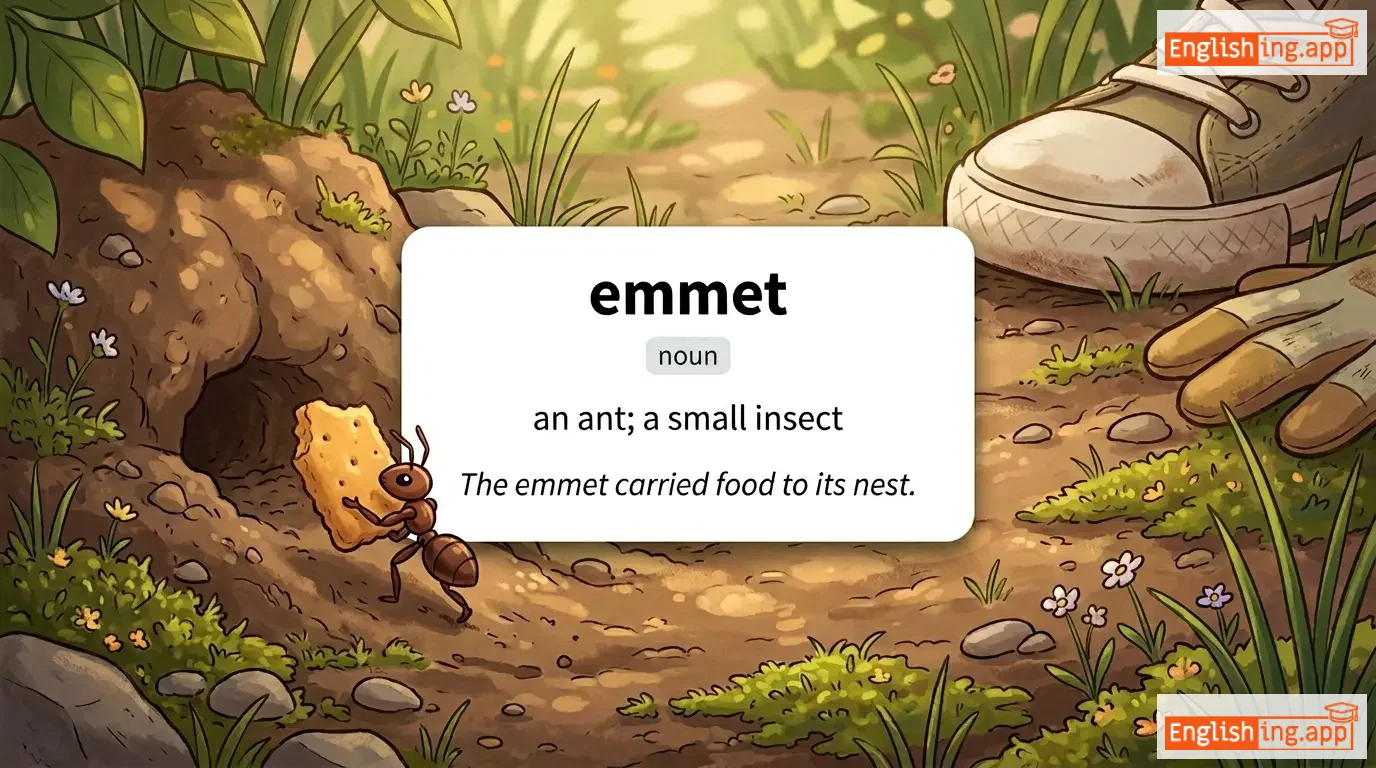
an ant; a small insect

"The emmet carried food to its nest."

"蚂蚁把食物带到了它的巢穴。" (Mǎ yǐ bǎ shíwù dài dào le tā de cháoxué.)
emollient definition card — visual illustration of the meaning
noun/adjective
/ɪˈmɒliənt/
软化皮肤的物质 (ruǎnhuà pífū de wùzhí)

a substance that softens or soothes the skin

"She used an emollient cream to treat her dry skin."

"她用了一种伊摩利安特面霜来治疗她的干燥皮肤。" (Tā yòngle yī zhǒng yī mó lì ān tè miànshuāng lái zhìliáo tā de gānzào pífū.)
noun
/ɪˈmɒljʊmənt/
工资 (gongzi)

payment for work or services; salary or fees

"The professor received his annual emolument from the university."

"教授从大学收到了他的年薪。" (Jiaoshou cong daxue shoudao le tade nianshen.)
noun
/ɪˈmoʊʃən/
情感 (qinggan)

A strong feeling such as happiness, sadness, anger, or fear.

"She was overwhelmed with emotion when she heard the news."
"她在听到消息时情感涌上心头。" (Ta zai tingdao xiaoxi shi qinggan yong shang xintou.)
emotional definition card — visual illustration of the meaning
adjective
/ɪˈmoʊʃənəl/
情绪的 (qíngxù de)

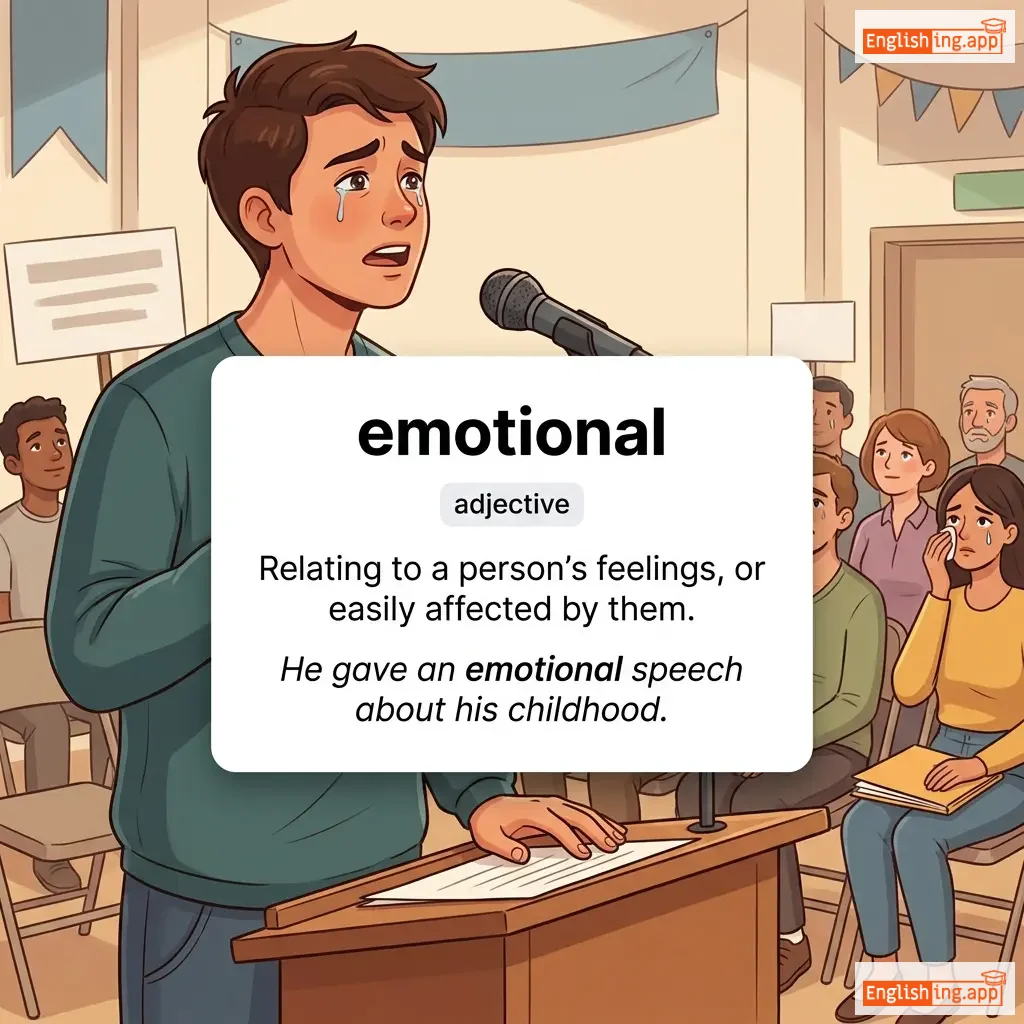
Relating to a person’s feelings, or easily affected by them.

"He gave an emotional speech about his childhood."

"他发表了关于自己童年的情绪化演讲。" (Tā fābiǎo le guānyú zìjǐ tóngnián de qíngxù huà yǎnjiǎng.)
emotionality definition card — visual illustration of the meaning
noun
ɪˌməʊ.ʃəˈnæl.ɪ.ti
情感性 (qínggǎn xìng)

The quality of being driven by emotions rather than reason; emotional responsiveness.

"His emotionality often influenced his decisions."

"他的情感性常常影响他的决策。" (Tā de qínggǎn xìng chángcháng yǐngxiǎng tā de juécè.)
adverb
/ɪˈməʊʃənəli/
情感上 (qínggǎn shàng)

in a way that relates to a person's feelings or emotions

"She became emotionally attached to her pet."
"她变得情感上依赖她的宠物。" (Tā biàn dé qínggǎn shàng yīlài tā de chǒngwù.)
emotions definition card — visual illustration of the meaning
noun
ɪˈməʊʃənz
情感 (qínggǎn)

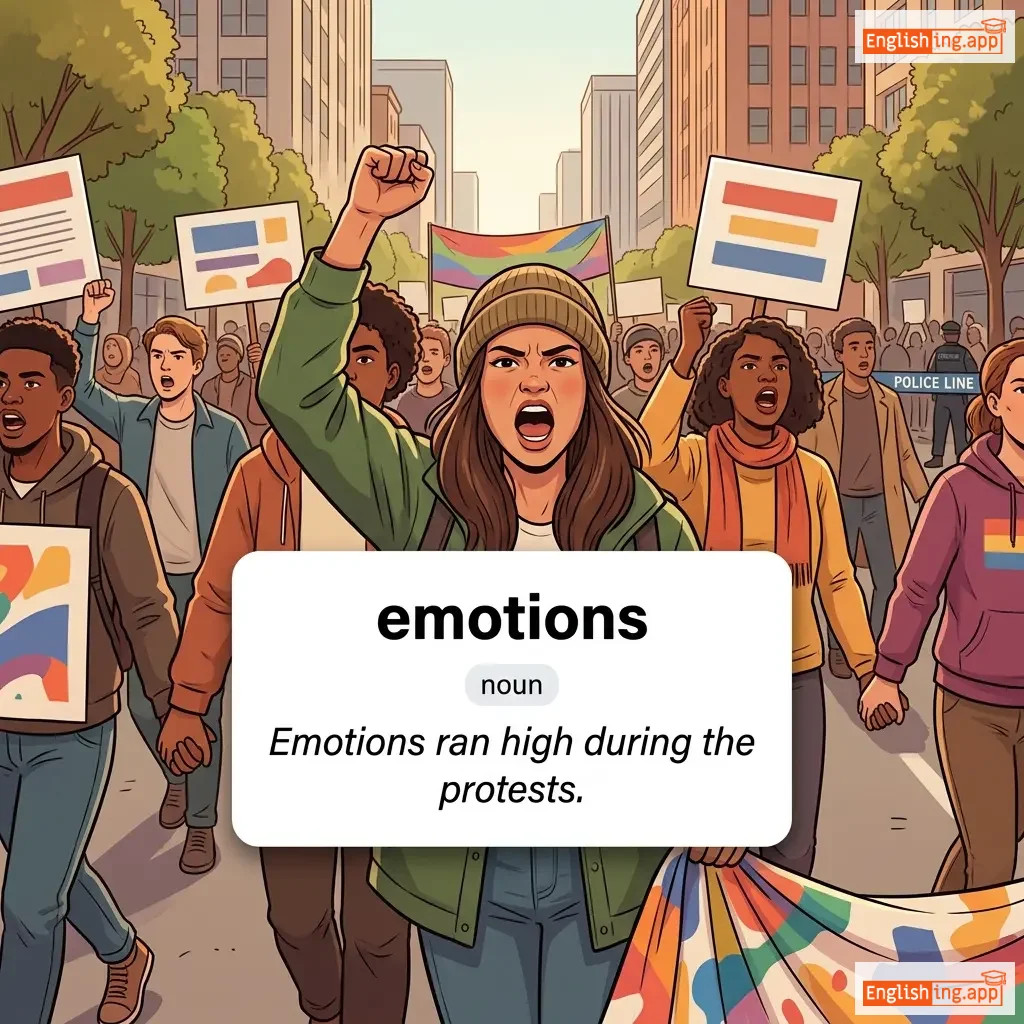
Strong feelings deriving from one's circumstances, mood, or relationships with others.

"Emotions ran high during the protests."
"在抗议期间,情感高涨。" (Zài kàngyì qījiān, qínggǎn gāo zhǎng.)
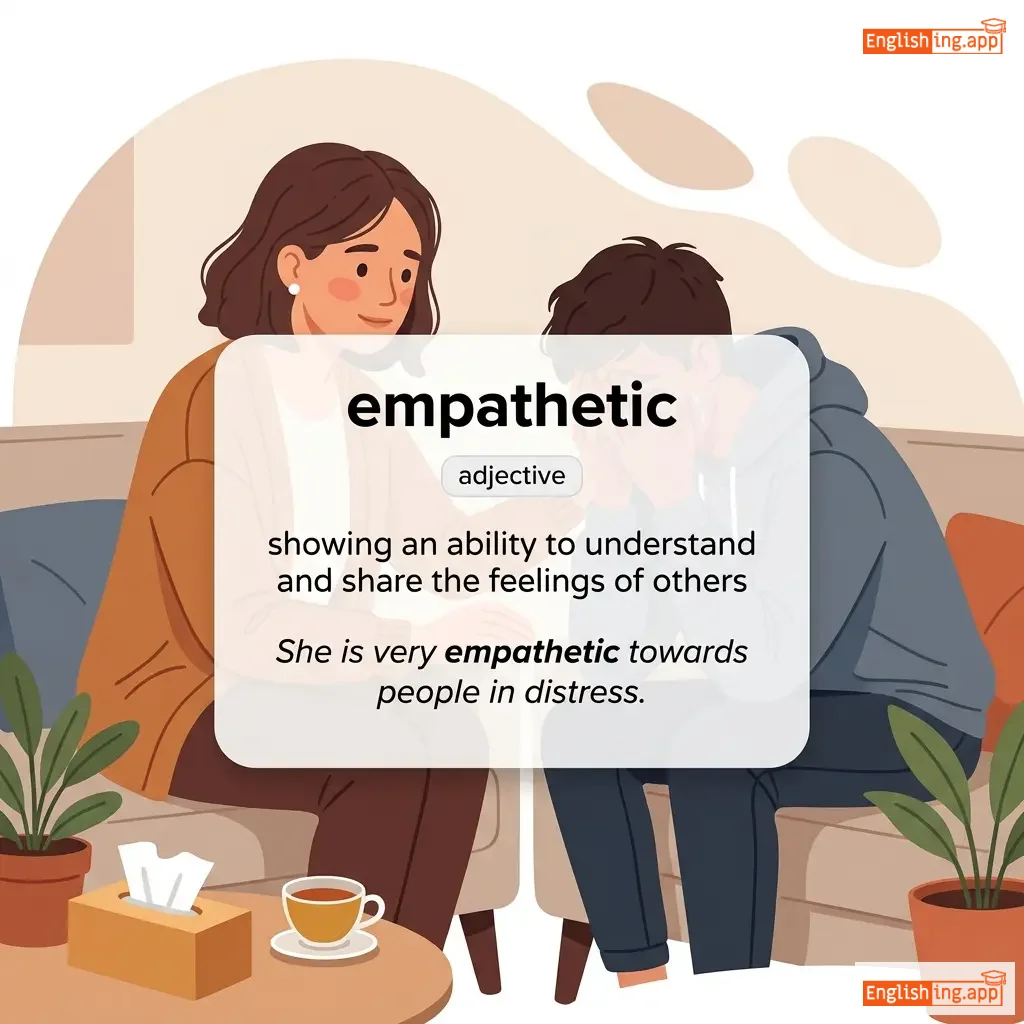
empathetic definition card — visual illustration of the meaning
adjective
/ˌɛmpəˈθɛtɪk/
有同理心的 (yǒu tóng lǐ xīn de)

showing an ability to understand and share the feelings of others

"She is very empathetic towards people in distress."

"她对处于困境中的人非常有同理心。" (Tā duì chù yú kùnjìng zhōng de rén fēicháng yǒu tóng lǐ xīn de.)
empathy definition card — visual illustration of the meaning
noun
/ˈɛmpəθi/
同理心 (tónglǐxīn)

the ability to understand and share the feelings of another person

"Her empathy helped her connect with her patients."
"她的同理心帮助她与病人建立了联系。" (Tā de tónglǐxīn bāngzhù tā yǔ bìngrén jiànlì le liánxì.)
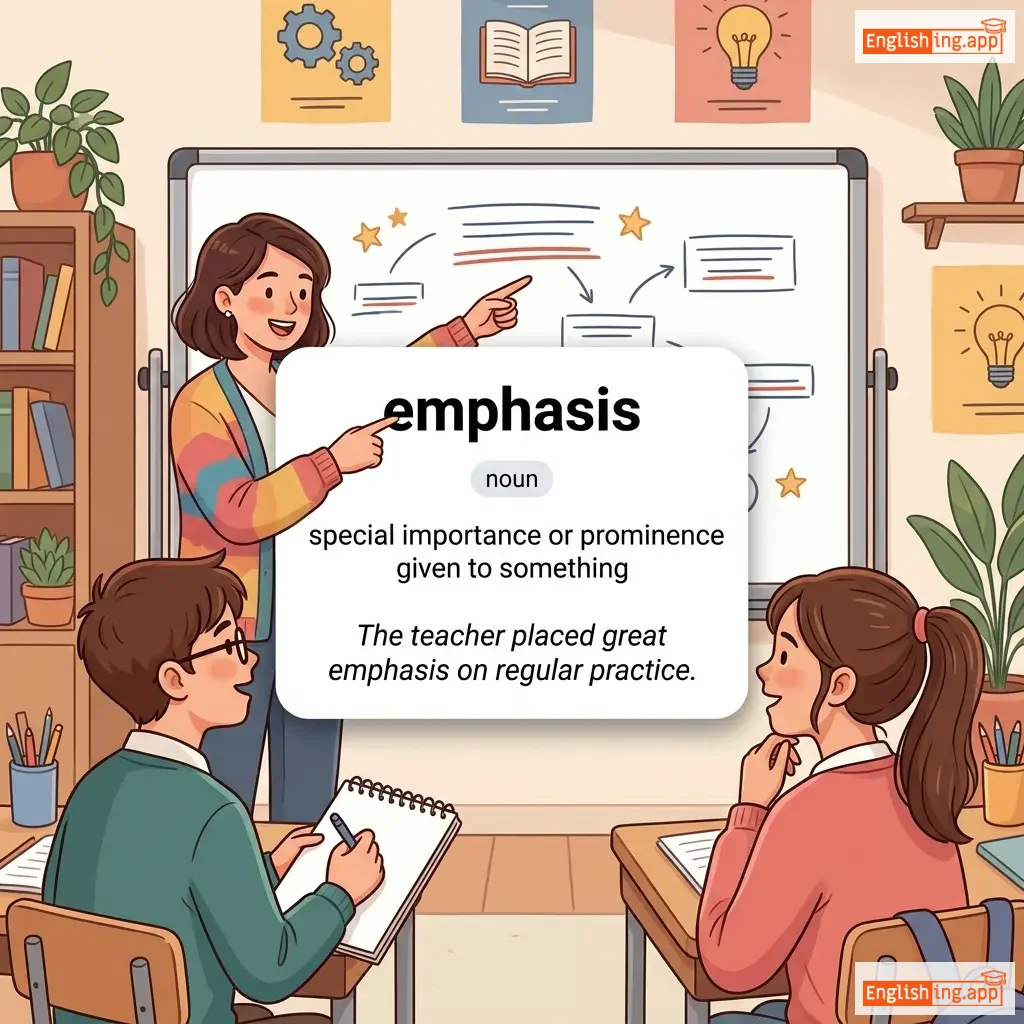
emphasis definition card — visual illustration of the meaning
noun
/ˈɛmfəsɪs/
重点 (zhòngdiǎn)

special importance or prominence given to something

"The teacher placed great emphasis on regular practice."
"老师强调了定期练习的重要性。" (lǎoshī qiángdiàole dìngqī liànxí de zhòngyào xìng.)
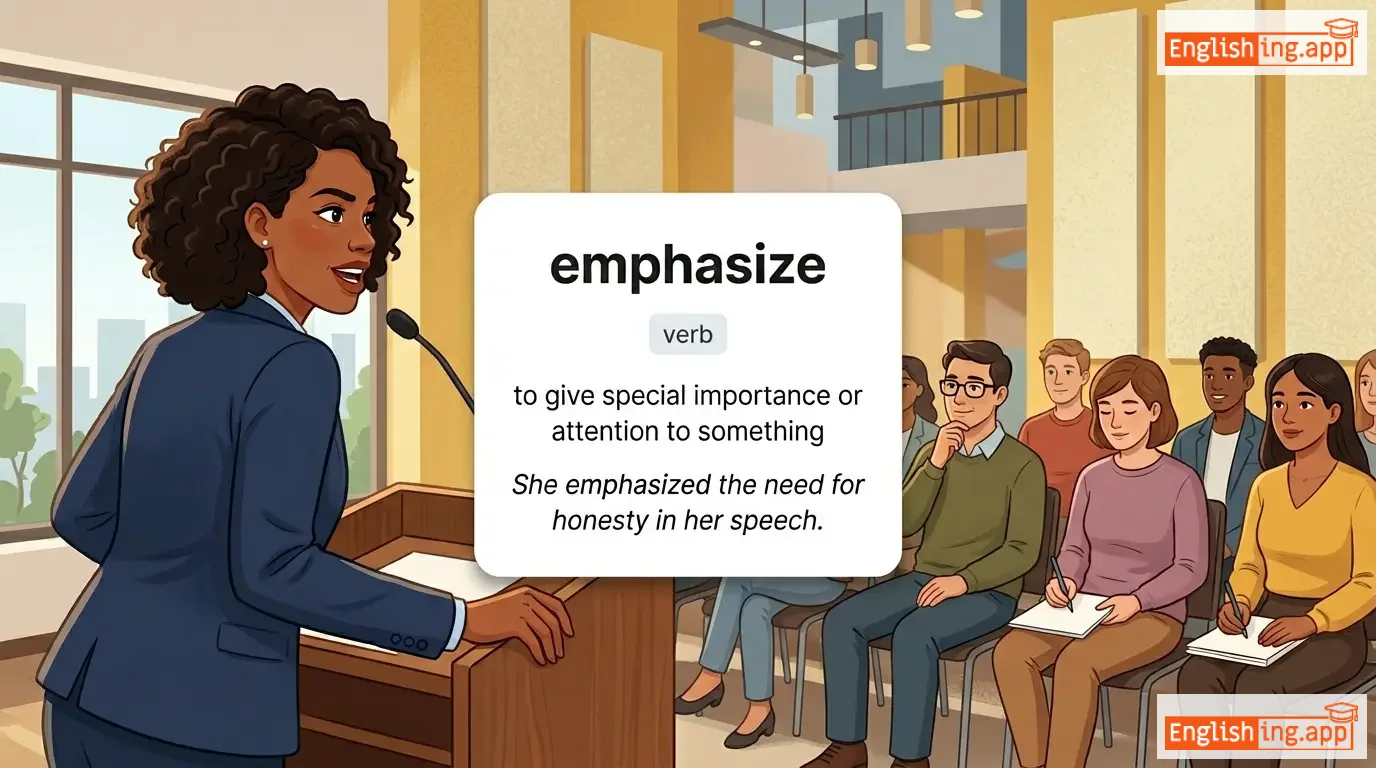
emphasize definition card — visual illustration of the meaning
verb
/ˈɛmfəsaɪz/
强调 (qiángdiào)

to give special importance or attention to something

"She emphasized the need for honesty in her speech."

"她强调了她演讲中诚实的重要性。" (Tā qiángdiào le tā yǎnjiǎng zhōng chéngshí de zhòngyào xìng.)
adjective
/ɛmˈfætɪk/
强调的 (qiángdiào de)

expressed with emphasis; strongly expressive

"He gave an emphatic denial of the rumors."

"他对谣言做出了强调的否认。" (Tā duì yáolián zuòchūle qiángdiào de fǒurèn.)
noun
/ˈempaɪər/
帝国 (dìguó)

a group of countries or regions controlled by one ruler or government

"The Roman Empire lasted for centuries."
"罗马帝国延续了几个世纪。" (Luómǎ dìguó yánxùle jǐ gè shìjì.)
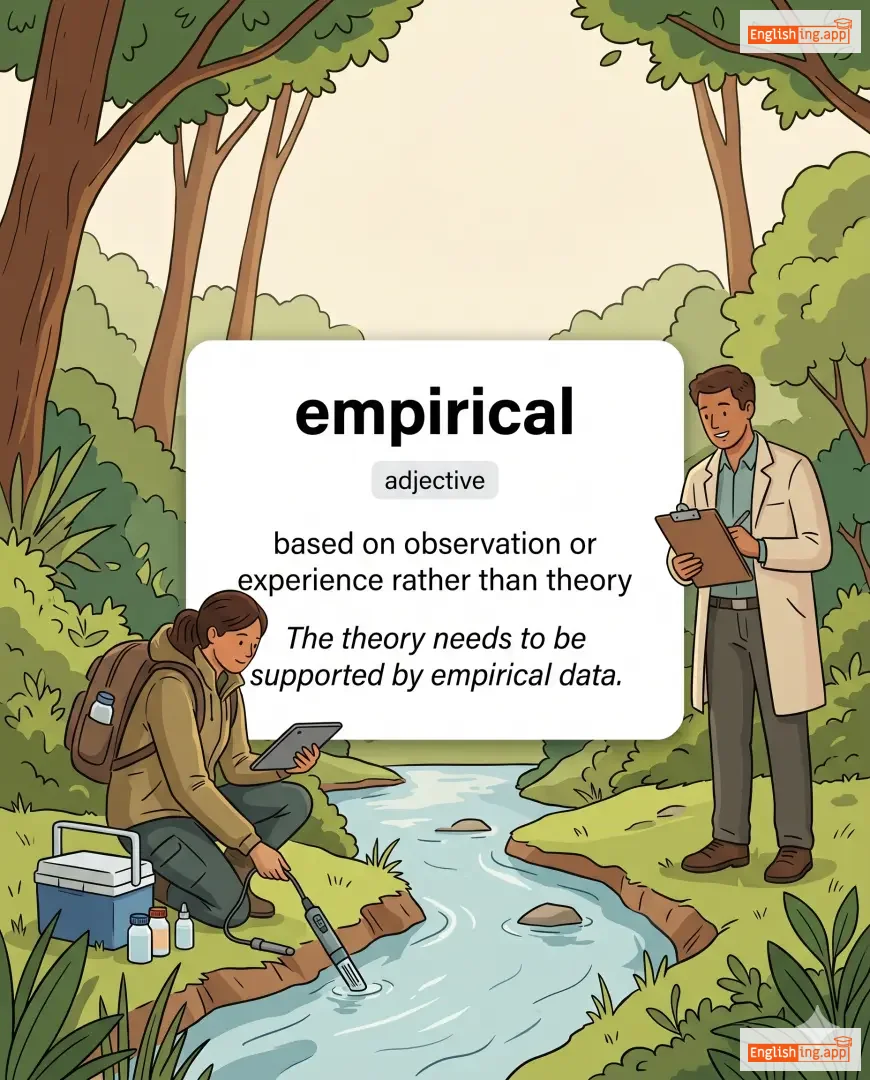
empirical definition card — visual illustration of the meaning
adjective
/ɛmˈpɪrɪkəl/
经验的 (jingyan de)

based on observation or experience rather than theory

"The theory needs to be supported by empirical data."

"理论需要通过经验数据来支持。" (Lilun xuyao tongguo jingyan shuju lai zhichi.)
noun
/ɛmˈpɪrɪˌsɪzəm/
经验主义 (jingyan zhuyi)

the theory that all knowledge is derived from sense-experience

"Empiricism argues that knowledge comes from experience and observation."

"经验主义认为,知识来自经验和观察。" (Jingyan zhuyi renwei, zhishi laizi jingyan he guancha.)
verb
/ɪmˈplɔɪ/
雇佣 (gùyōng)

to hire someone to do a job; to use something effectively

"The company plans to employ more engineers next year."

"公司计划明年雇用更多的工程师。" (Gōngsī jìhuà míngnián gùyòng gèng duō de gōngchéngshī.)
noun
/ɛmˈplɔɪ.iː/
员工 (yuángōng)

A person who works for an organization or company in return for payment.

"The company values each employee's contribution to its success."

"公司重视每个员工对成功的贡献。" (Gongsi zhòngshì měi gè yuángōng duì chénggōng de gòngxiàn.)
noun
/ɪmˈplɔɪər/
雇主 (gùzhǔ)

A person or organization that hires and pays people to work.

"The employer promised better benefits to attract skilled workers."

"雇主承诺提供更好的福利,以吸引技术工人。" (Gùzhǔ chéngnuò tígōng gèng hǎo de fúlì, yǐ xīyǐn jìshù gōngrén.)
employment definition card — visual illustration of the meaning
noun
/ɪmˈplɔɪmənt/
就业 (jiùyè)

the state of having a paid job or work

"The government is working to increase youth employment."

"政府正在努力增加青年就业机会。" (zhèngfǔ zhèngzài nǔlì zēngjiā qīngnián jiùyè jīhuì.)
noun
/ɛmˈpɔːriəm/
大型商场 (dàxíng shāngchǎng)

A large retail store selling a wide variety of goods.

"They visited the new emporium to buy furniture and home decor."
"他们参观了新的emporium,购买了家具和家居装饰。" (Tāmen cānguānle xīn de emporium, gòumǎile jiājù hé jiājū zhuāngshì.)
verb
/ɪmˈpaʊər/

To give someone the power or authority to do something; to make someone stronger or more confident.

"Education can empower people to improve their lives."

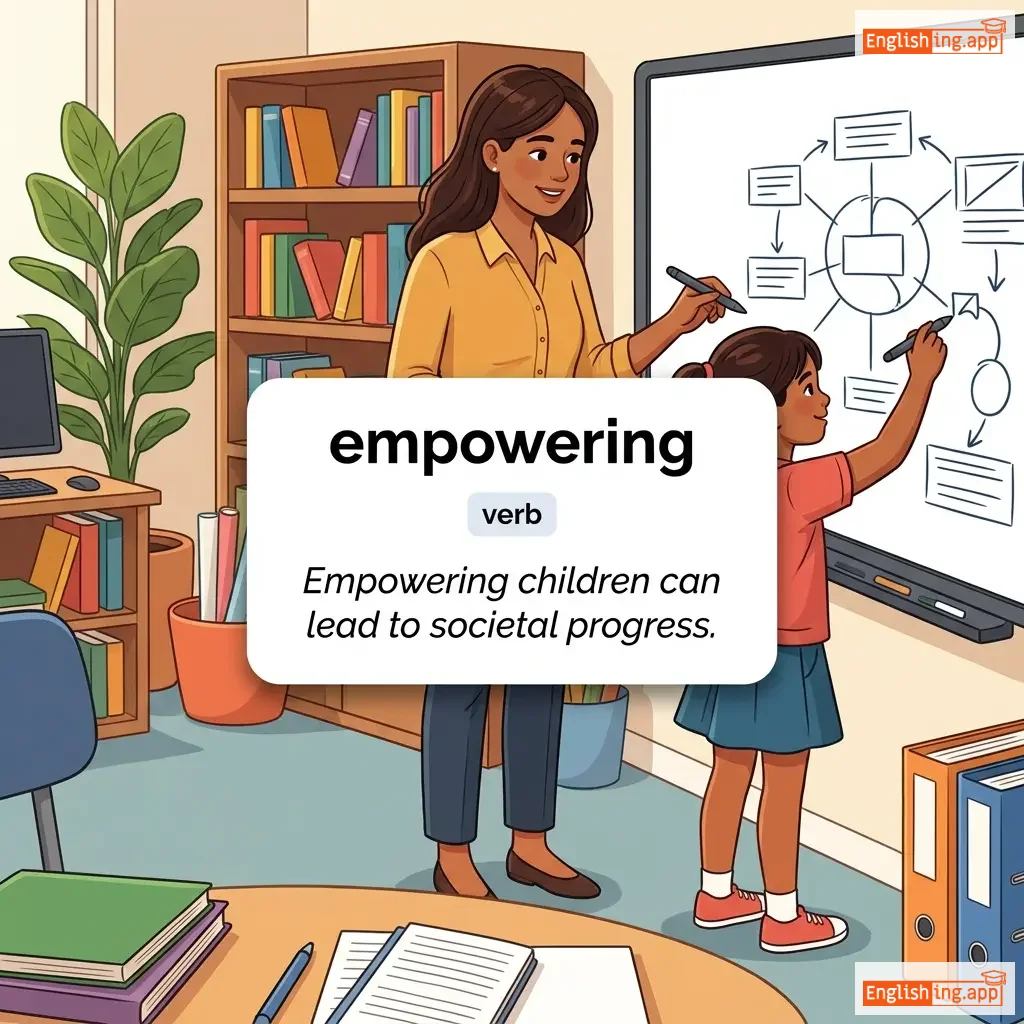
empowering definition card — visual illustration of the meaning
verb
ɪmˈpaʊərɪŋ
授权 (shòuquán)

Giving someone the authority or power to do something; making someone stronger and more confident.

"Empowering children can lead to societal progress."

"授权儿童可以促进社会进步。" (Shòuquán értóng kěyǐ cùjìn shèhuì jìnbù.)
empowerment definition card — visual illustration of the meaning
noun
/ɪmˈpaʊə.mənt/
赋权 (fuquan)

Authority or power given to someone to do something.

"Empowerment initiatives enhance confidence."

"赋权举措提升信心。" (Fuquan juce tisheng xinxin.)
adjective
/ˈɛmpti/
空的 (kong de)

containing nothing; not filled

"The box was completely empty."

"盒子完全是空的。" (Hezi wanquan shi kong de.)
adjective
/ɛmˈpaɪriəl/
天国的 (tiānguó de)

Heavenly, divine, or relating to the highest heavens.

"The poet described the empyreal beauty of the stars."
"诗人描述了星星的天国美丽。" (Shīrén miáoshùle xīngxīng de tiānguó měilì.)
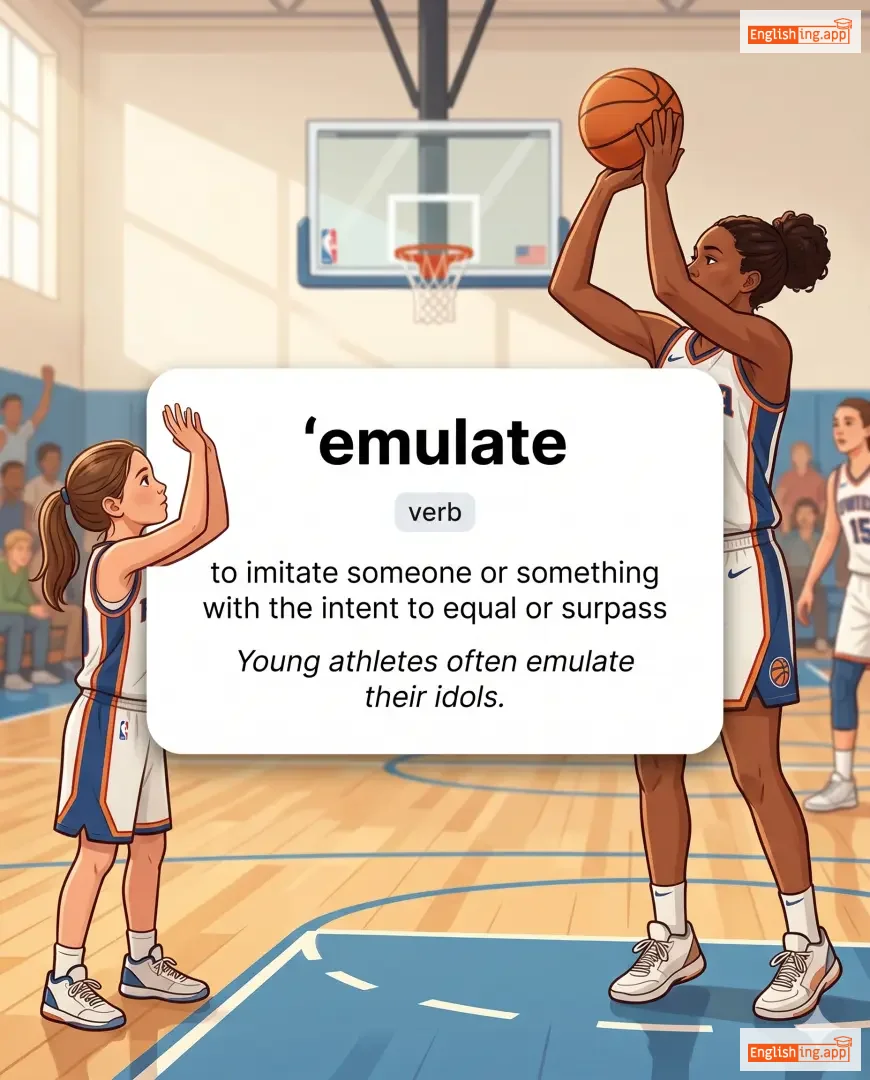
emulate definition card — visual illustration of the meaning
verb
/ˈɛm.jʊˌleɪt/
模仿 (mófǎng)

to imitate someone or something with the intent to equal or surpass

"Young athletes often emulate their idols."

"年轻运动员常常模仿他们的偶像。" (Niánqīng yùndòngyuán chángcháng mófǎng tāmen de ǒuxiàng.)
emulation definition card — visual illustration of the meaning
noun
/ˌɛmjʊˈleɪ.ʃən/
仿真 (fangzhen)

Reproducing something or following someone to achieve success.

"The software allows the emulation of old video games on modern devices."

"该软件允许在现代设备上模拟旧视频游戏。" (Gāi ruǎnjiàn yǔnxǔ zài xiàndài shèbèi shàng mímì jiù shìpín yóuxì.)
enable definition card — visual illustration of the meaning
verb
/ɪˈneɪbəl/
启用 (qǐyòng)

to make something possible; to give someone the ability to do something

"This software will enable users to create their own websites."

"这个软件将使用户能够创建他们自己的网站。" (Zhège ruǎnjiàn jiāng shǐ yònghù nénggòu chuàngjiàn tāmen zìjǐ de wǎngzhàn.)
verb
/ɪˈnækt/
制定 (zhìdìng)

to make into law; to perform or act out

"The government decided to enact a new policy on education."

"政府决定制定一项关于教育的新政策。" (Zhèngfǔ juédìng zhìdìng yī xiàng guānyú jiàoyù de xīn zhèngcè.)
noun
/ɪˈnæməl/
牙釉质 (yá yòu zhì)

a hard, glossy substance used as a protective or decorative coating; the hard outer layer of teeth

"The dentist explained that enamel protects the teeth from decay."

"牙医解释说,牙釉质可以保护牙齿免受蛀牙的侵害。" (Yáyī jiěshì shuō, yá yòu zhì kěyǐ bǎohù yáchǐ miǎnshòu zhùyá de qīnhài.)
verb
/ɪˈnæmər/
爱慕 (àimù)

to be filled with love or admiration for

"She was enamored with the beautiful scenery."

"她爱上了美丽的风景。" (Tā ài shàngle měilì de fēngjǐng.)
adjective
/ɪˈnæmərd/
着迷 (zhe mi)

filled with love or admiration

"He became enamored with classical music after attending the concert."

"他在参加音乐会后爱上了古典音乐。" (Ta zai canjia yinyuehui hou aishang le gudian yinyue.)
verb
/ɪnˈkæmp/
扎营 (zhā yíng)

to set up or establish a camp

"The soldiers encamped near the river for the night."

"士兵们在河边扎营过夜。" (Shìbīng men zài hébiān zhā yíng guò yè.)
encapsulate definition card — visual illustration of the meaning
verb
/ɪnˈkæp.sjʊ.leɪt/
概括 (gai kua)

To express the essential features of something succinctly; to summarize or contain within.

"The introduction should encapsulate the main points of the article."

"引言应该概括文章的主要观点。" (Yǐnyán yīnggāi gàikuò wénzhāng de zhǔyào guāndiǎn.)