词汇表

英语词汇词典 | 单词含义、定义和示例

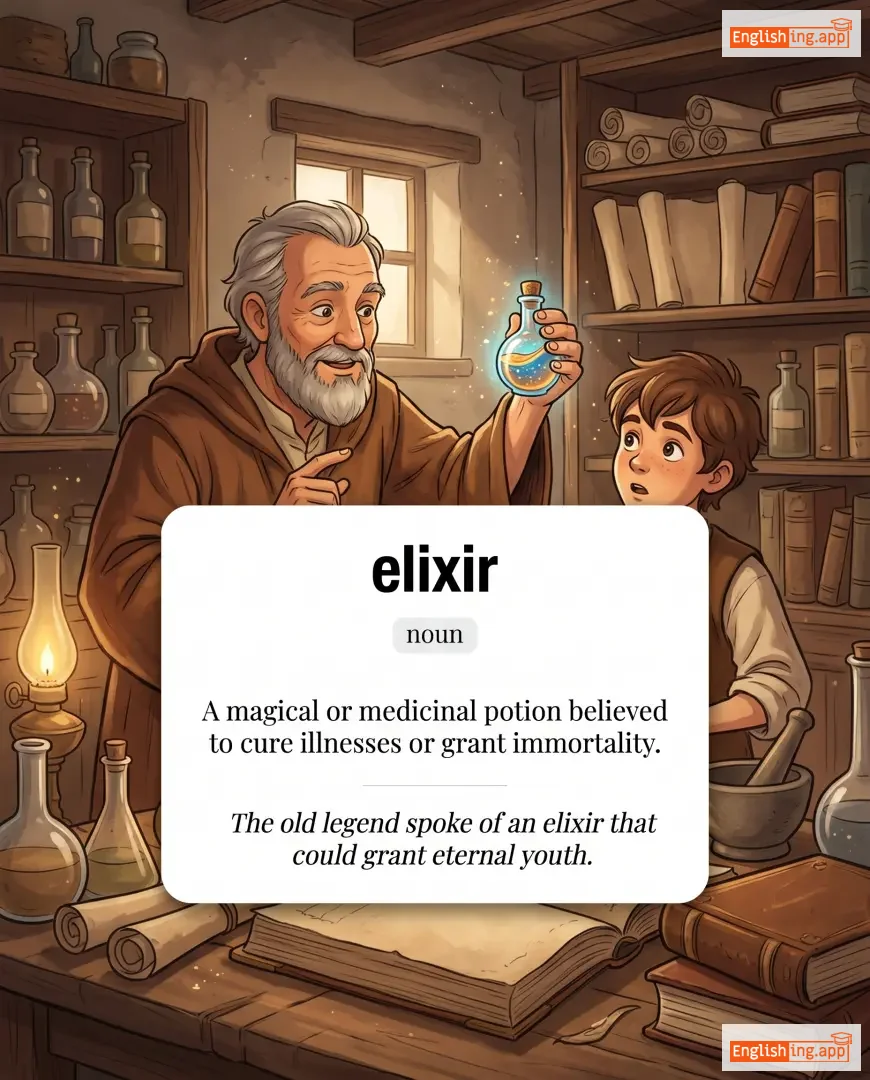
elixir definition card — visual illustration of the meaning
noun
/ɪˈlɪksər/
灵药 (líng yào)

A magical or medicinal potion believed to cure illnesses or grant immortality.

"The old legend spoke of an elixir that could grant eternal youth."

"古老的传说中提到了一个可以赋予永恒青春的灵药。" (Gǔlǎo de chuánshuō zhōng tí dào le yīgè kěyǐ fùyǔ yǒnghéng qīngchūn de líng yào.)
adjective
/ɪˌlɪzəˈbiːθən/
伊丽莎白时代 (Yīlìshābái shídài)

Relating to the reign of Queen Elizabeth I of England (1558–1603), especially the style of that period.

"Shakespeare wrote many of his plays during the Elizabethan era."

"莎士比亚在伊丽莎白时代写了许多剧作。" (Shāshìbǐyà zài Yīlìshābái shídài xiěle xǔduō jùzuò.)
noun
/ɪˈlɪpsɪs/
省略号 (shenglüè hào)

The omission of words in a sentence, represented by three dots (...).

"The writer used an ellipsis to show that part of the quote was omitted."

"作者使用省略号来表示引用的部分被省略。" (Zuòzhě shǐyòng shěnglüè hào lái biǎoshì yǐnyòng de bùfen bèi shěnglüè.)
adjective
/ɪˈlɪptɪkl/
椭圆形的 (tuo yuan xing de)

Having the shape of an ellipse; also, a style of speech that is concise and sometimes obscure.

"The planet follows an elliptical orbit around the sun."

"行星沿着椭圆形的轨道围绕太阳运行。" (Xingxing yanzhe tuo yuan xing de guidao weirao taiyang yunxing.)
noun
/ˌɛləˈkjuːʃn/
口才 (kǒucái)

The skill of clear and expressive speech, especially in public speaking.

"She improved her elocution through constant practice."

"她通过不断练习提高了她的口才。" (Tā tōngguò bùduàn liànxí tígāo le tā de kǒucái.)
verb
/ɪˈloʊp/
偷偷结婚 (tōutōu jiéhūn)

to run away secretly in order to get married, especially without parental consent

"The young couple decided to elope to another city."
"这对年轻情侣决定逃到另一个城市结婚。" (Zhè duì niánqīng qínglǚ juédìng táo dào lìng yīgè chéngshì jiéhūn.)
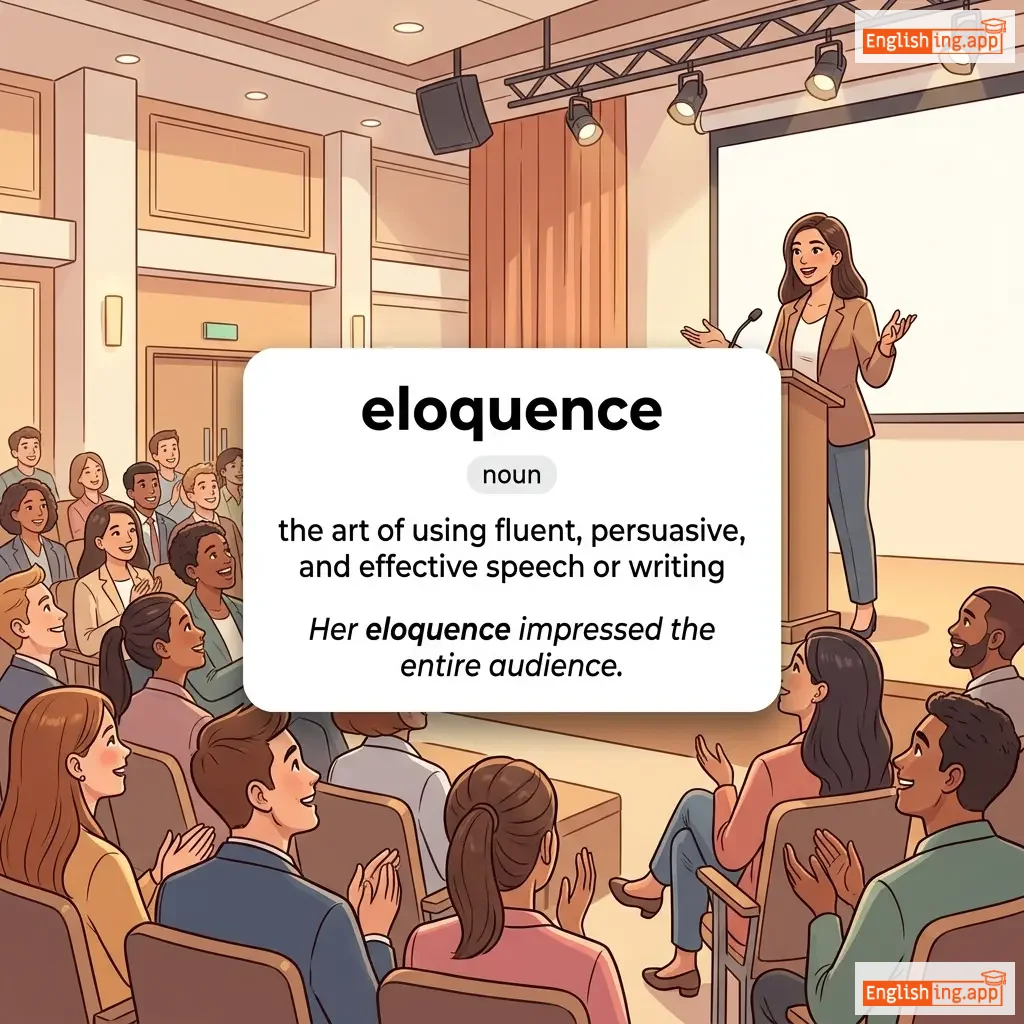
eloquence definition card — visual illustration of the meaning
noun
/ˈɛləkwəns/
雄辩 (xióngbiàn)

the art of using fluent, persuasive, and effective speech or writing

"Her eloquence impressed the entire audience."
"她的雄辩给整个观众留下了深刻印象。" (tā de xióngbiàn gěi zhěnggè guānzhòng liúxiàle shēnkè yìnxiàng.)
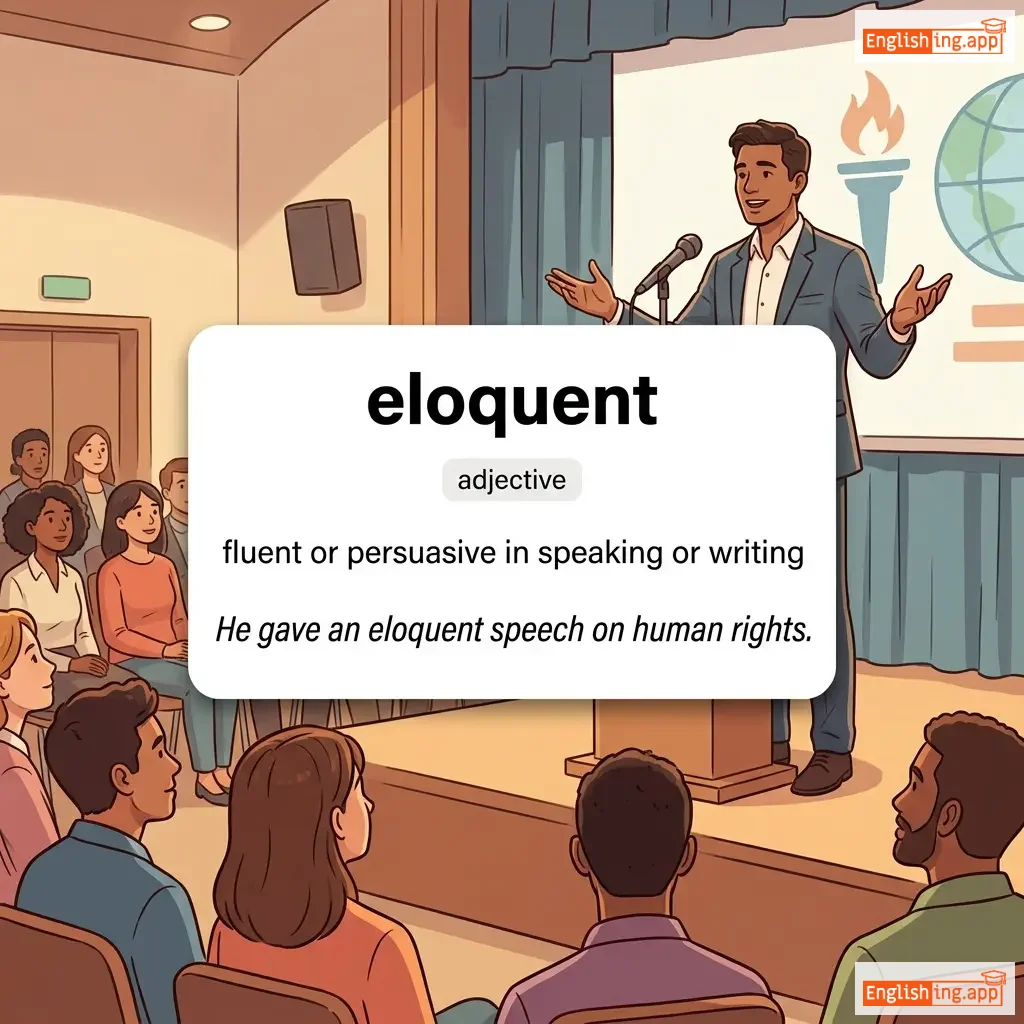
eloquent definition card — visual illustration of the meaning
adjective
/ˈɛləkwənt/
雄辩的 (xióngbiàn de)

fluent or persuasive in speaking or writing

"He gave an eloquent speech on human rights."

"他就人权问题发表了一篇雄辩的演讲。" (tā jiù rénquán wèntí fābiǎo le yī piān xióngbiàn de yǎnjiǎng)
adverb
/ɛls/
还有别的吗 (hái yǒu bié de ma)

In addition; besides.

"Is there anything else you need?"

"你还需要其他的吗?" (Nǐ hái xūyào qítā de ma?)
adverb
/ˈɛlswɛr/
在别的地方 (zài bié de dìfāng)

In, at, or to some other place.

"If you can’t find it here, try looking elsewhere."
"如果你在这里找不到,试着去别的地方找找。" (Rúguǒ nǐ zài zhèlǐ zhǎo bù dào, shìzhe qù bié de dìfāng zhǎo zhǎo.)
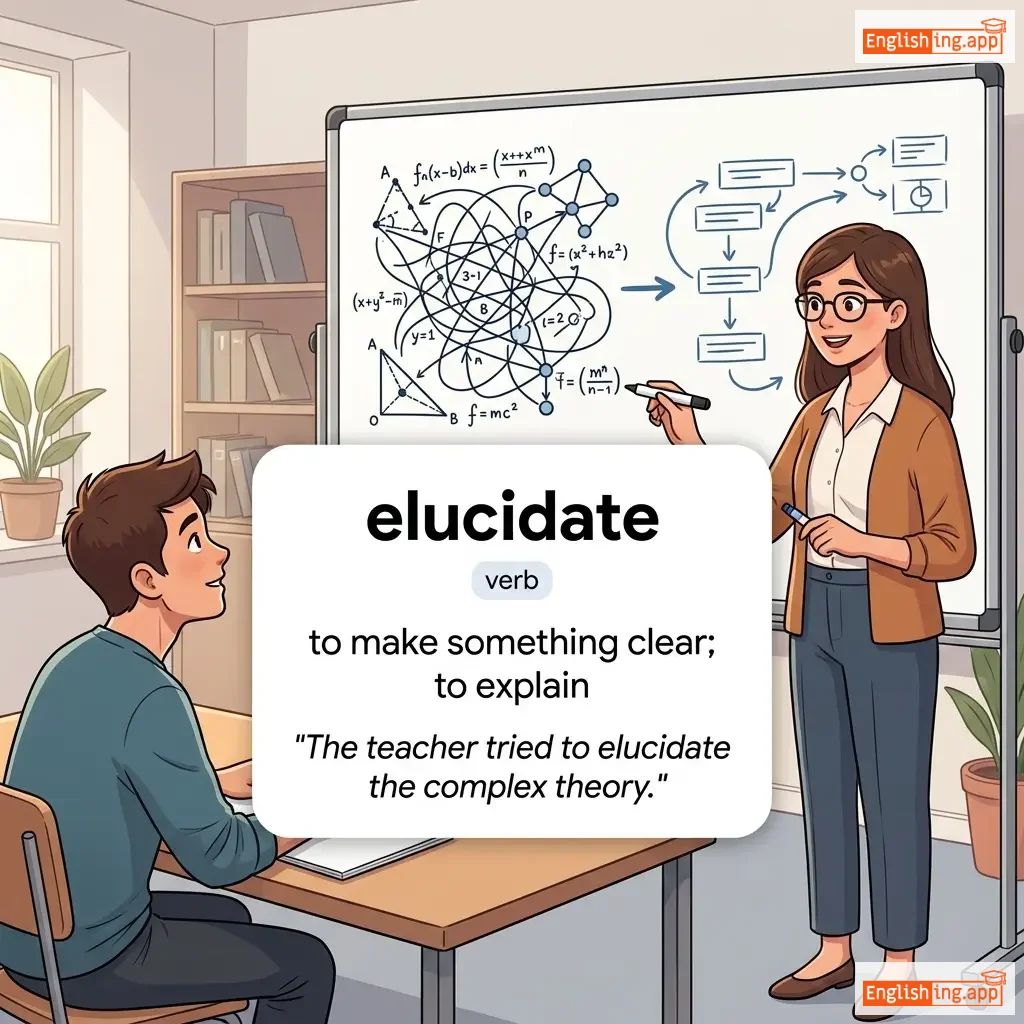
elucidate definition card — visual illustration of the meaning
verb
/ɪˈluːsɪdeɪt/
阐明 (chanming)

to make something clear; to explain

"The teacher tried to elucidate the complex theory."
"老师试图阐明复杂的理论。" (Laoshi shitu chanming fuzade lilun.)
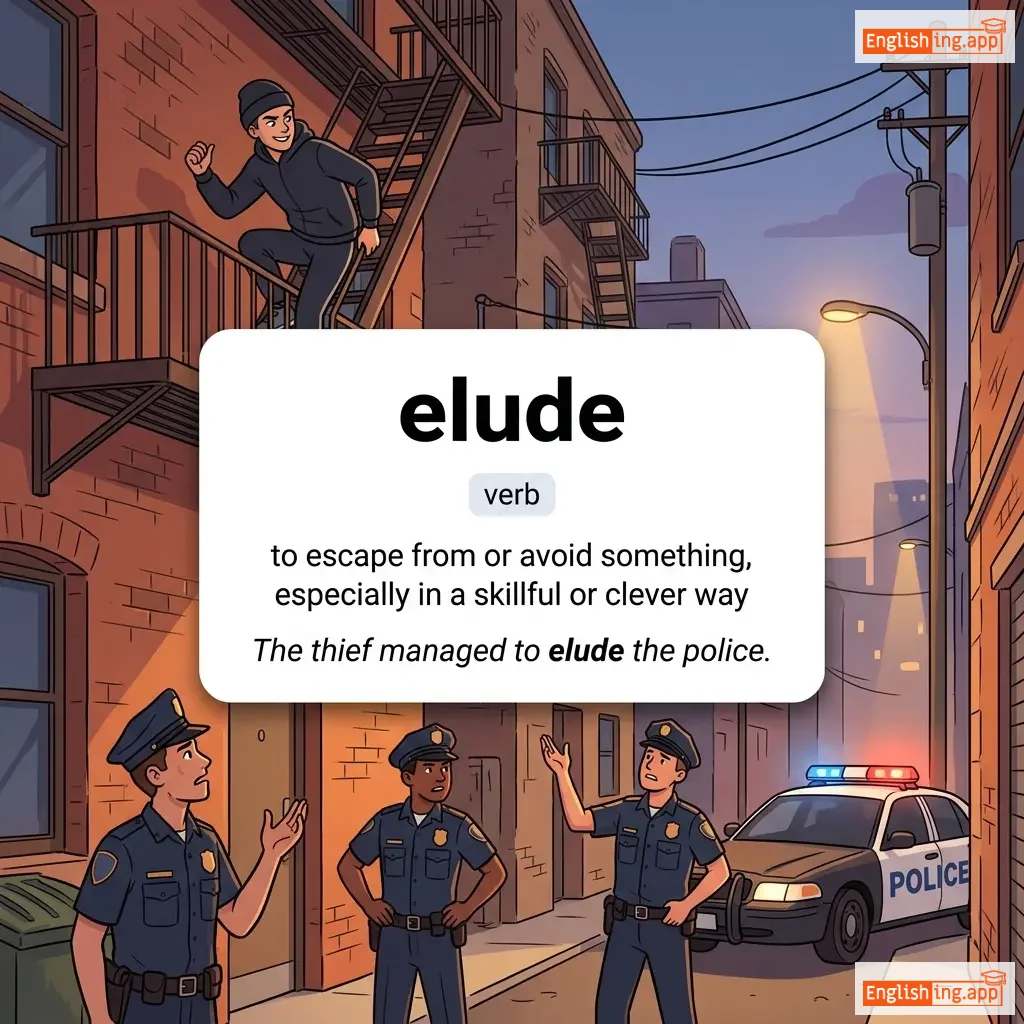
elude definition card — visual illustration of the meaning
🏃‍♂️

elude (艾卢德)

verb
/ɪˈluːd/
逃避 (taobi)

to escape from or avoid something, especially in a skillful or clever way

"The thief managed to elude the police."

"小偷成功地躲过了警察。" (Xiaotou chenggong de duoguo le jingcha.)
🏃‍♂️

elusion (艾露逊)

noun
/ɪˈluːʒən/
回避 (huíbì)

The act of escaping or avoiding something, especially by cleverness or trickery.

"His constant elusion of responsibility frustrated his colleagues."

"他不断回避责任,让他的同事感到沮丧。" (Tā bùduàn huíbì zérèn, ràng tā de tóngshì gǎndào jǔsàng.)
🕵️‍♀️

elusive (yīlǔxīfū)

adjective
/ɪˈluːsɪv/
难以捉摸 (nán yǐ zhuōmō)

Difficult to find, catch, or achieve; hard to understand or define.

"The solution to the problem proved elusive."
"问题的解决方案证明难以捉摸。" (wèntí de jiějué fāng'àn zhèngmíng nán yǐ zhuōmō.)
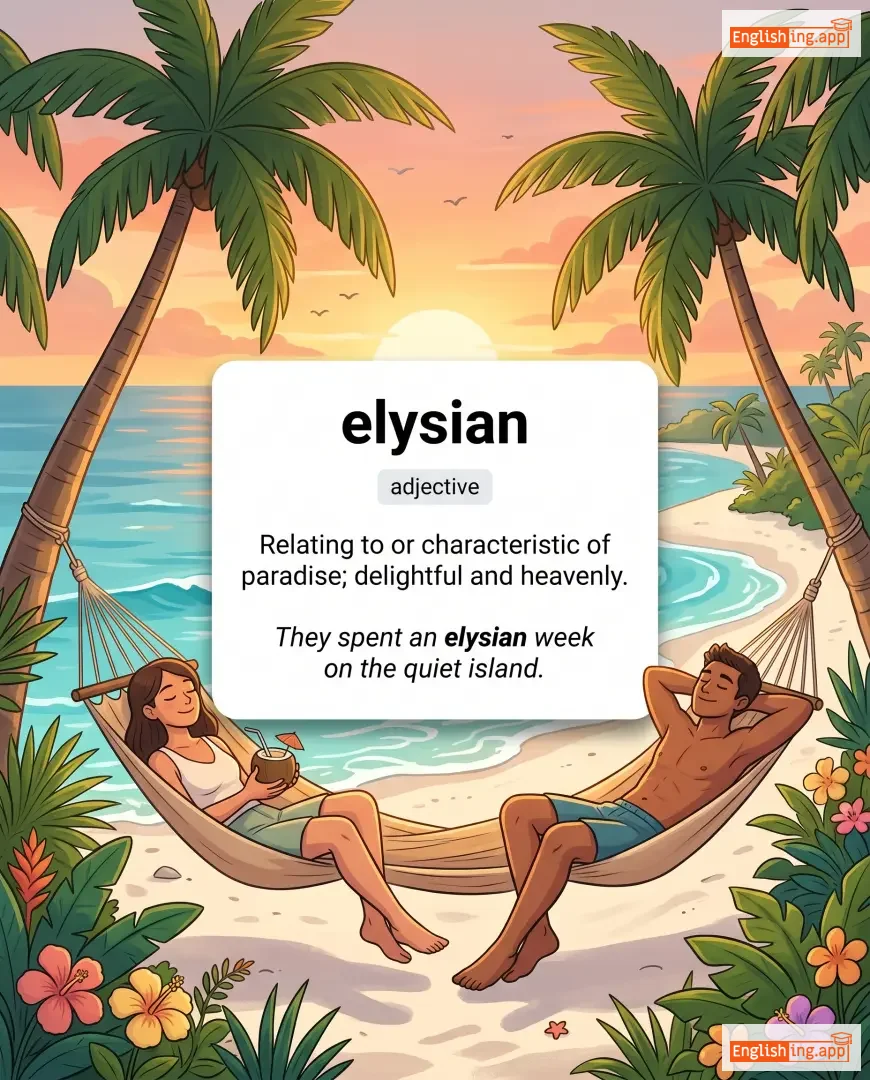
elysian definition card — visual illustration of the meaning
adjective
/ɪˈlɪʒən/
天堂的 (tiāntáng de)

Relating to or characteristic of paradise; delightful and heavenly.

"They spent an elysian week on the quiet island."

"他们在宁静的岛屿上度过了一个天堂般的星期。" (Tāmen zài níngjìng de dǎoyǔ shàng dùguòle yīgè tiāntáng bān de xīngqī.)
noun
/ɪˈlɪziəm/
极乐 (jile)

A place or state of perfect happiness; in Greek mythology, the afterlife paradise.

"For her, the garden was a personal elysium."

"对她来说,花园是一个个人的极乐世界。" (dui ta laishuo, huayuan shi yige geren de jile shijie.)
verb
/ɪˈmeɪʃieɪt/
消瘦 (xiaoshou)

To make abnormally thin or weak, usually because of illness or lack of food.

"The prisoners were emaciated after months without proper food."
"囚犯在没有合适食物的几个月后变得极度消瘦。" (Qiufan zai meiyou he shi shiwu de jige yue hou biande jidu xiaoshou.)
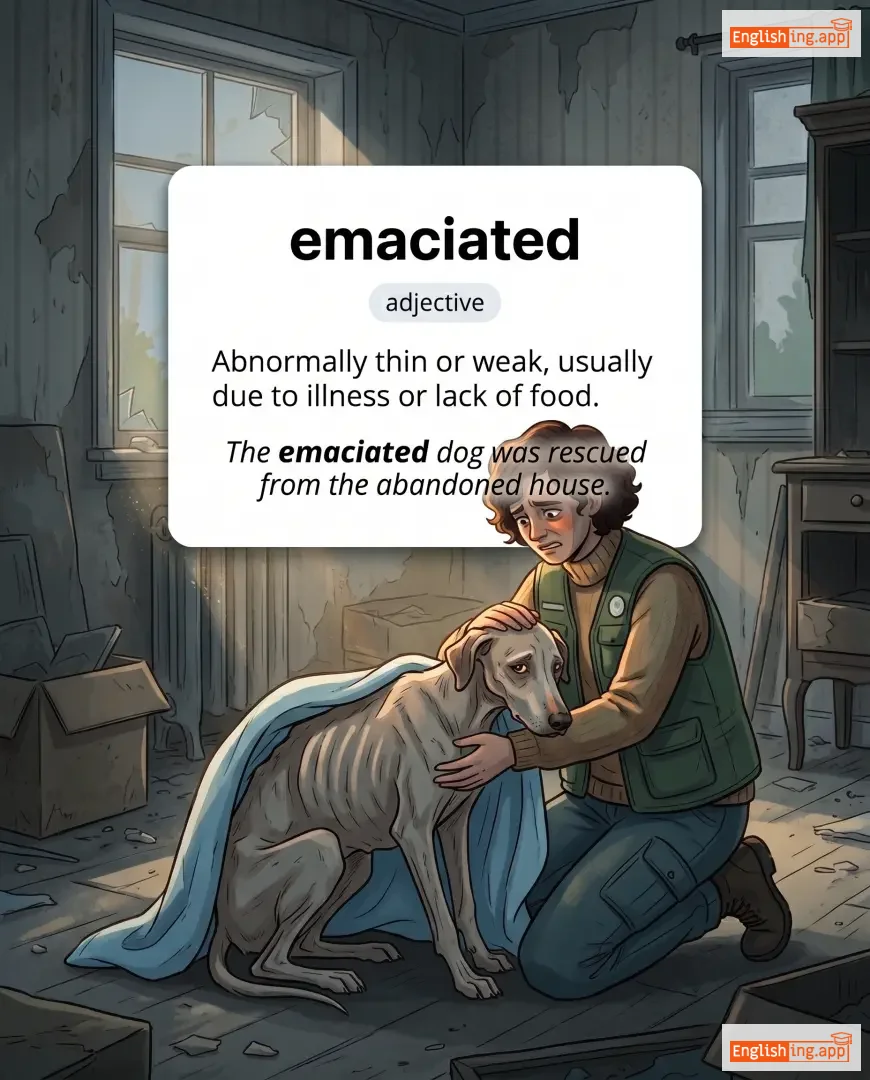
emaciated definition card — visual illustration of the meaning
adjective
/ɪˈmeɪʃieɪtɪd/
消瘦 (xiāo shòu)

Abnormally thin or weak, usually due to illness or lack of food.

"The emaciated dog was rescued from the abandoned house."

"那只消瘦的狗从废弃的房子里被救出来。" (Nà zhī xiāo shòu de gǒu cóng fèiqì de fángzi lǐ bèi jiù chūlái.)
verb
/ˈɛm.ə.neɪt/
散发 (sànfā)

To come out or spread from a source.

"A sweet fragrance emanated from the garden."
"从花园中散发出一股甜美的香气。" (Cóng huāyuán zhōng sànfā chū yī gǔ tiánměi de xiāngqì.)
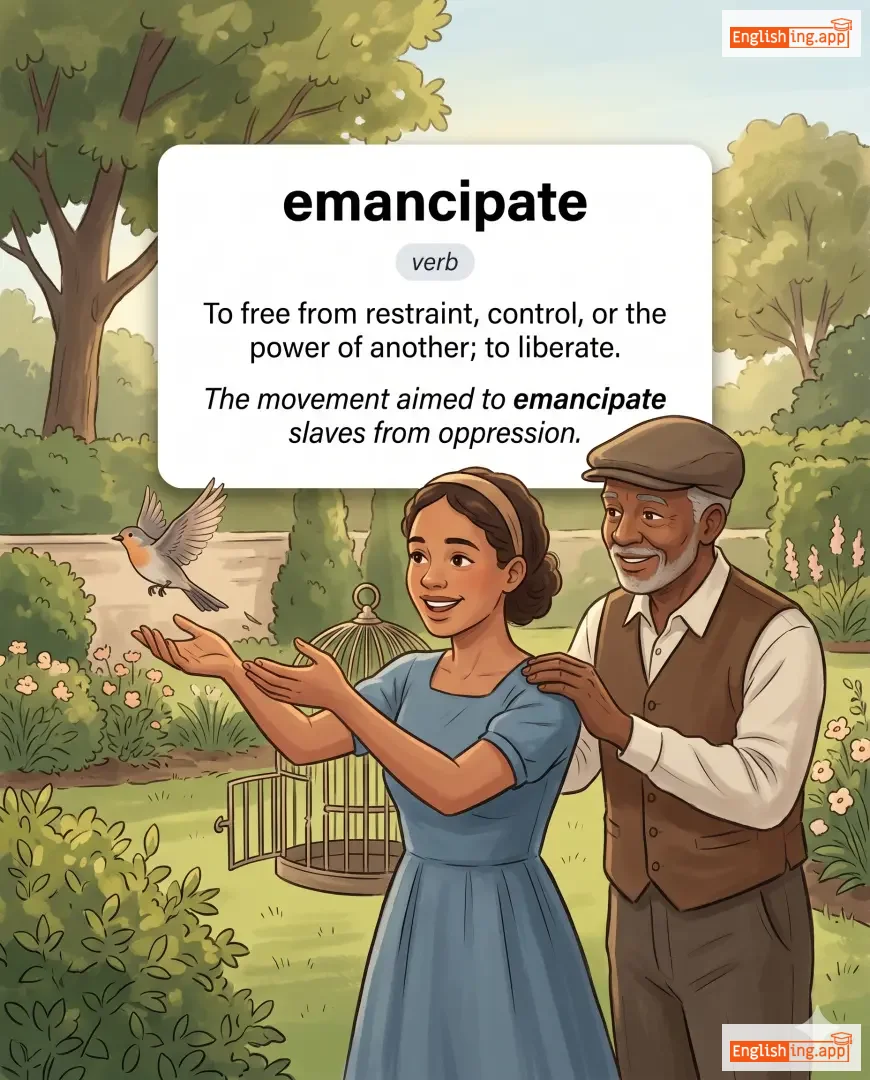
emancipate definition card — visual illustration of the meaning
verb
/ɪˈmæn.sɪ.peɪt/
幸福 (xingfu)

To free from restraint, control, or the power of another; to liberate.

"The movement aimed to emancipate slaves from oppression."

"当她收到奖项时,她无法掩饰自己的幸福感。" (Dāng tā shōu dào jiǎng xiàng shí, tā wúfǎ yǎnshì zìjǐ de xìngfú gǎn.)
noun
/ɪˌmæn.sɪˈpeɪ.ʃən/
解放 (jiefang)

the fact or process of being set free from legal, social, or political restrictions

"The emancipation of slaves was a significant moment in American history."

"奴隶的解放是美国历史上的一个重要时刻。" (Nuli de jiefang shi Meiguo lishi shang de yige zhongyao shike.)
verb
/ɪˈmæskjʊleɪt/
削弱 (xuēruò)

To make someone weaker or less effective; to deprive of strength or vigor.

"The constant criticism emasculated his confidence."
"不断的批评削弱了他的信心。" (Bùduàn de pīpíng xuēruòle tā de xìnxīn.)
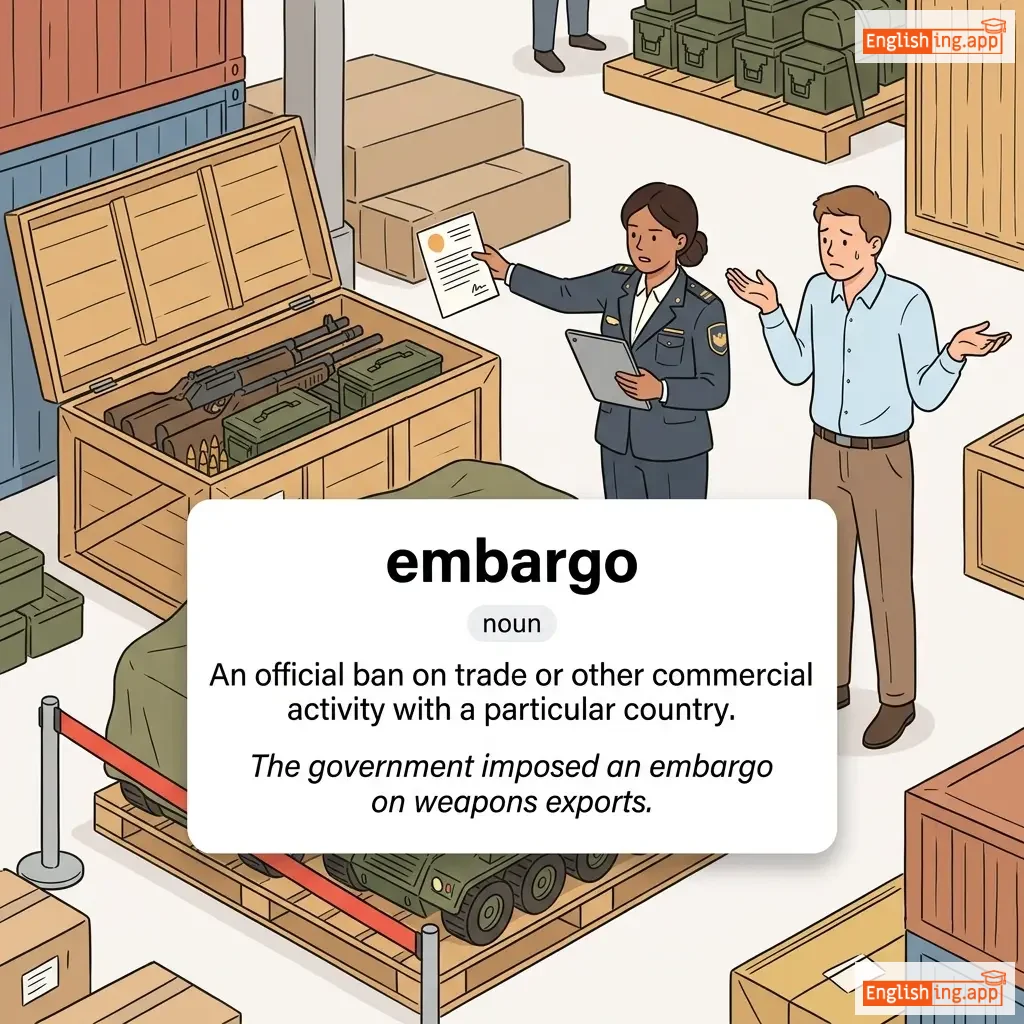
embargo definition card — visual illustration of the meaning
noun
/ɛmˈbɑːrɡoʊ/
禁运 (jìnyùn)

An official ban on trade or other commercial activity with a particular country.

"The government imposed an embargo on weapons exports."

"政府对武器出口实施了禁运。" (zhèngfǔ duì wǔqì chūkǒu shíshīle jìnyùn.)
verb
/ɪmˈbɑːrk/
开始 (kaishi)

to begin a journey, project, or activity

"She decided to embark on a new career in medicine."
"她决定开始医学领域的新事业。" (Ta jueding kaishi yixia yixue lingyu de xin shiye.)
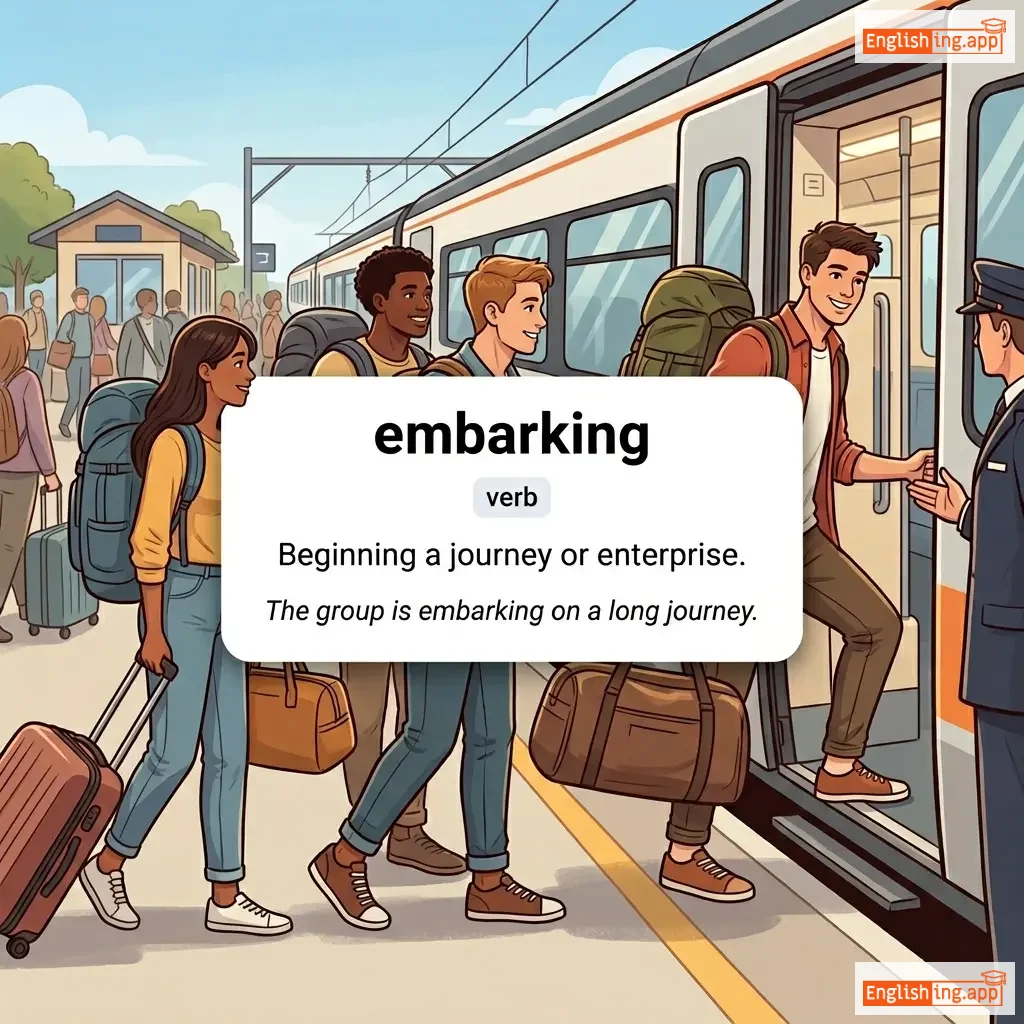
embarking definition card — visual illustration of the meaning
verb
/ɪmˈbɑːrkɪŋ/
开始旅行 (kaishi luxing)

Beginning a journey or enterprise.

"The group is embarking on a long journey."

"小组正在开始一段长途旅行。" (Xiaozu zhengzai kaishi yiduan changtu luxing.)
verb
/ɪmˈbærəs/

to cause someone to feel awkward, self-conscious, or ashamed

"His rude comment really embarrassed her in front of everyone."

adjective
/ɪmˈbærəst/
尴尬 (gan ga)

feeling awkward, ashamed, or self-conscious about something

"He felt embarrassed when he forgot her name."

"当他忘记她的名字时,他感到尴尬。" (Dang ta wangji tade mingzi shi, ta gandao gan ga.)
adjective
/ɪmˈbær.ə.sɪŋ/
尴尬的; 令人不安的; 使羞愧的 (gan'ga de)

causing shame or awkwardness; uncomfortable; humiliating

"It was embarrassing when I forgot her name."

"当我忘记她的名字时,那真是太尴尬了。" (Dang wo wangji tade mingzi shi, na zhen shi tai gangan le.)
noun
/ɪmˈbærəsmənt/
尴尬 (ganga)

a feeling of self-consciousness, shame, or awkwardness

"Her face turned red with embarrassment after the mistake."

"她因错误而羞愧得脸红了。" (Ta yin cuowu er xiukui de lianhong le.)
noun
/ˈɛmbəsi/
大使馆 (dàshǐguǎn)

the official residence or offices of an ambassador

"He works at the French embassy in Dhaka."

"他在达卡的法国大使馆工作。" (Tā zài Dākǎ de Fàguó dàshǐguǎn gōngzuò.)
verb
/ɪmˈbɛd/
嵌入 (qian ru)

to fix something firmly into a surrounding mass or context

"The journalist was embedded with the military unit."
"记者与军事单位嵌入。" (Jizhe yu junshi danwei qianru.)
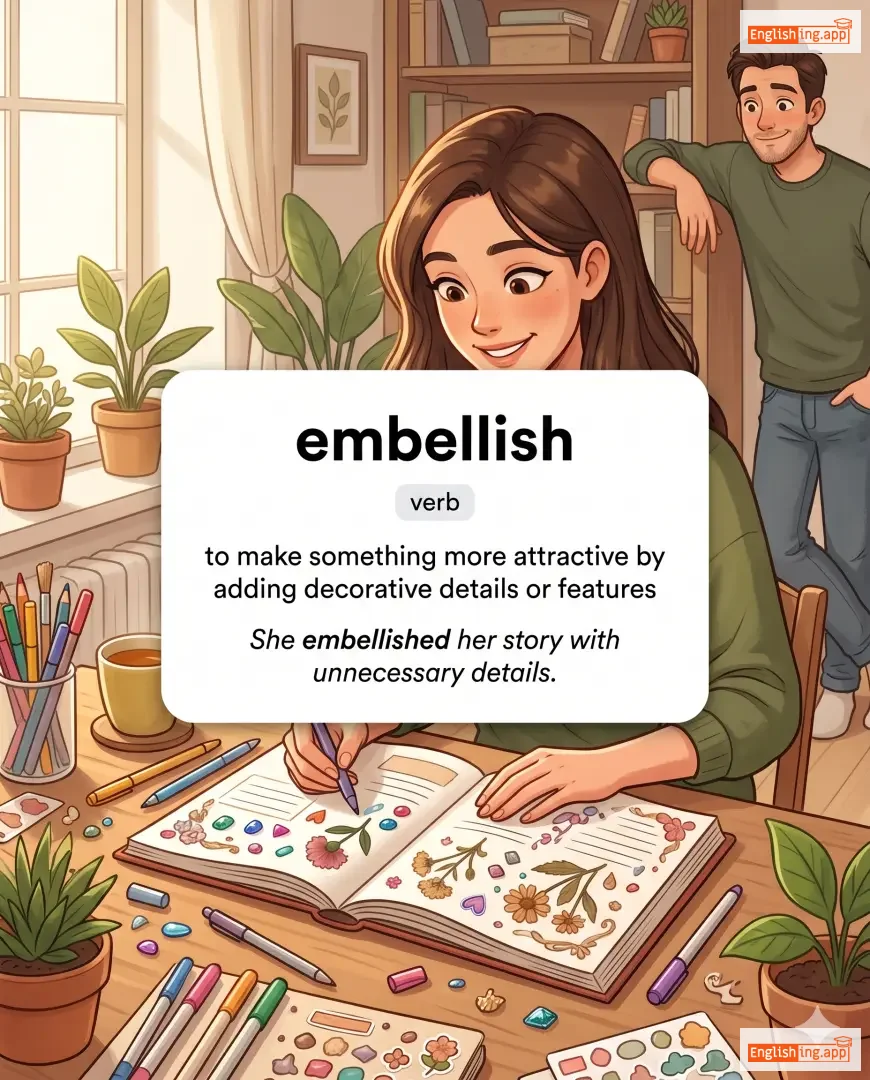
embellish definition card — visual illustration of the meaning
verb
/ɪmˈbɛlɪʃ/
装饰 (zhuangshi)

to make something more attractive by adding decorative details or features

"She embellished her story with unnecessary details."

"她用不必要的细节装饰了她的故事。" (Ta yong bu bianyao de xijie zhuangshi le ta de gushi.)
verb
/ɛmˈbɛzəl/

to steal or misuse money or property entrusted to one's care

"The accountant was arrested for embezzling company funds."

noun
/ɪmˈbɛzlmənt/
挪用公款 (nuó yòng gōng kuǎn)

The act of dishonestly taking money or property entrusted to one's care.

"The accountant was arrested for embezzlement of company funds."

"会计因挪用公司资金而被逮捕。" (Kuàijì yīn nuó yòng gōng sī zī jīn ér bèi dǎi bǔ.)
verb
/ɪmˈbɪtər/
使愤怒 (shǐ fènnù)

To make someone resentful or angry; to cause bitterness.

"The unfair treatment embittered the employees."

"不公平的待遇使员工感到愤怒。" (Bù gōngpíng de dàiyù shǐ yuángōng gǎndào fènnù.)
verb
/ɛmˈbleɪzən/
以显著的方式展示 (yǐ xiǎnzhù de fāngshì zhǎnshì)

To decorate or display something in a noticeable or impressive way.

"The team's logo was emblazoned on their uniforms."

"团队的标志被显著地展示在他们的制服上。" (Tuánduì de biāozhì bèi xiǎnzhù de zhǎnshì zài tāmen de zìfú shàng.)
noun
/ˈɛmbləm/
象征 (xiangzheng)

A symbolic object, design, or figure representing an idea, group, or identity.

"The dove is an emblem of peace."

"鸽子是和平的象征。" (Gēzi shì hépíng de xiàngzhēng.)
verb
/ɪmˈbɒdi/
体现 (tixian)

To give tangible or visible form to an idea, quality, or feeling.

"She embodies the spirit of generosity."
"她体现了慷慨的精神。" (Ta tixian le kangkai de jingshen.)
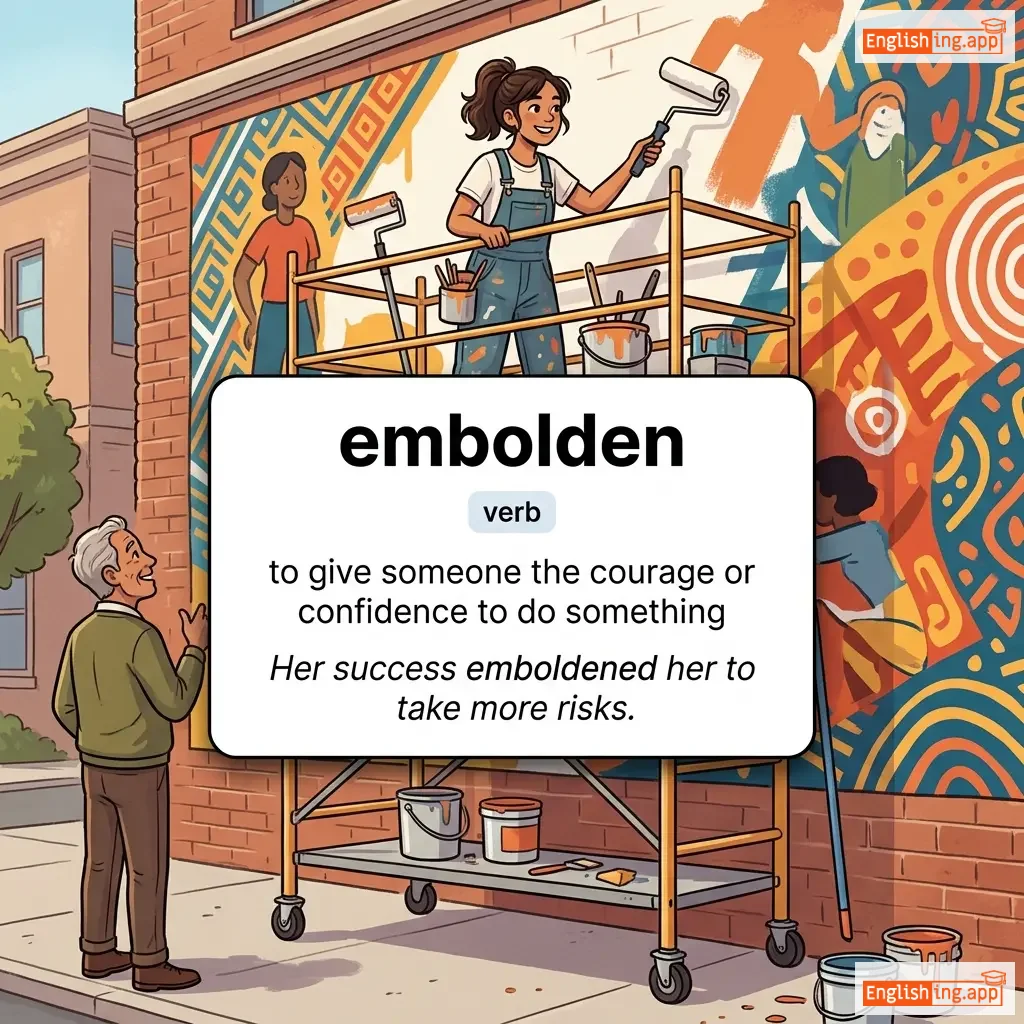
embolden definition card — visual illustration of the meaning
verb
/ɪmˈboʊldən/
鼓励 (gǔlì)

to give someone the courage or confidence to do something

"Her success emboldened her to take more risks."

"她的成功让她有勇气承担更多风险。" (Tā de chénggōng ràng tā yǒu yǒngqì chéngdān gèng duō fēngxiǎn.)
noun
/ˈɛmbəˌlɪzəm/
栓塞 (shuansai)

the sudden blockage of a blood vessel by a clot or other foreign matter

"The patient suffered a fatal pulmonary embolism."

"患者遭受了致命的肺栓塞。" (huanzhe zaoshou le zhiming de fei shuansai.)
verb
/ɛmˈbɔs/
以凸起图案装饰 (yǐ tūqǐ tú'àn zhuāngshì)

to decorate a surface with a raised design or pattern

"The invitation card was embossed with golden letters."

"邀请卡上压印着金色字母。" (Yāoqǐng kǎ shàng yāyìn zhuó jīn sè zìmǔ.)
verb
/ɛmˈbreɪs/
拥抱 (yōngbào)

to hold someone closely in your arms, or to accept or support something willingly

"They embraced each other after a long separation."

"他们在长时间的分离后相拥而泣。" (Tāmen zài cháng shíjiān de fēnlí hòu xiāngyōng ér qì.)
verb
/ɪmˈbrɔɪdər/
刺绣 (cìxiù)

to decorate fabric with patterns using a needle and thread

"She embroidered flowers on the pillowcase."

"她在枕套上刺绣了花朵。" (Tā zài zhěntào shàng cìxiù le huāduǒ.)
verb
/ɪmˈbrɔɪl/
卷入 (juǎn rù)

to involve someone deeply in a conflict, argument, or difficult situation

"The politician was embroiled in a major corruption scandal."

"政治家卷入了一起重大腐败丑闻。" (Zhèng zhì jiā juǎn rù le yī qǐ zhòng dà fǔ bài chǒu wén.)
adjective
/ɪmˈbrɔɪld/
卷入 (juan ru)

being deeply involved in a difficult situation, conflict, or scandal

"She found herself embroiled in a heated family dispute."

"她发现自己卷入了一场激烈的家庭争执。" (Ta faxian ziji juanru le yi chang jilie de jiating zhengzhi.)
adjective
/ˌɛm.briˈɒn.ɪk/
胚胎的 (pēitāi de)

in an early or undeveloped stage; relating to an embryo

"The project is still in its embryonic stage."

"这个项目仍处于胚胎阶段。" (Zhège xiàngmù réng chù yú pēitāi jiēduàn.)
verb
/ɪˈmɛnd/
修改 (xiugai)

to correct or revise a text, especially for errors

"The editor emended the manuscript before publication."

"编辑在出版前修改了手稿。" (Bianji zai chuban qian xiugai le shougao.)
noun
/ˌiː.mɛnˈdeɪ.ʃən/
修正 (xiuzheng)

a correction or improvement made to a text

"The article required several emendations before it was ready for print."

"这篇文章在准备打印之前需要几次修正。" (Zhe pian wenzhang zai zhunbei dayin zhiqian xuyao jici xiuzheng.)
noun
/ˈem.ər.əld/
翡翠 (feicui)

a bright green precious stone used in jewelry

"The emerald necklace sparkled in the sunlight."

"翡翠项链在阳光下闪闪发光。" (Feicui xiàngliàn zài yángguāng xià shǎn shǎn fā guāng.)
verb
/ɪˈmɜːrdʒ/

to come into view or become apparent; to arise or appear from something

"New opportunities will emerge as the industry grows."