词汇表

英语词汇词典 | 单词含义、定义和示例

noun
/ɪkˌspɒstjʊˈleɪʃən/
抗议 (kàngyì)

the act of expressing protest or disagreement

"His expostulation against the unfair rules was ignored."

"他对不公平规则的抗议被忽视了。" (Tā duì bù gōngpíng guīzé de kàngyì bèi hūshìle.)
noun
/ɪkˈspəʊʒər/
暴露 (baolu)

the state of being exposed to contact with something, especially harmful

"Prolonged exposure to the sun can damage your skin."

"长时间暴露在阳光下会损害皮肤。" (Chang shijian baolu zai yangguang xia hui sunhai pifu.)
verb
/ɪkˈspaʊnd/
详细阐述 (xiángxì chǎnshù)

to present and explain in detail

"The professor expounded the theory in simple terms."

"教授用简单的术语详细阐述了这个理论。" (Jiàoshòu yòng jiǎndān de shùyǔ xiángxì chǎnshùle zhège lǐlùn.)
verb
/ɪkˈsprɛs/
表达 (biaoda)

to convey a thought, feeling, or idea in words, actions, or other forms

"She expressed her gratitude with a warm smile."

"她通过温暖的微笑表达了她的感激之情。" (Ta tongguo wenruan de weixiao biaoda le ta de ganji zhiqing.)
noun
/ɪkˈspres treɪn/
快车 (kuaiche)

a fast train that travels between major stations with few or no intermediate stops

"The express train reached the destination in half the usual time."

"快车以半小时到达目的地。" (Kuàichē yǐ bàn xiǎoshí dàodá mùdì dì.)
noun
/ɪkˈsprɛʃən/
表情 (biaoqing)

the act of putting thoughts or feelings into words, actions, or facial gestures

"His facial expression showed surprise."

"他的面部表情显示了惊讶。" (Tā de miànbù biǎoqíng xiǎnshìle jīngyà.)
adjective
/ɪkˈsprɛsɪv/
表达性 (biaodaxiang)

Effectively conveying thought or feeling.

"Her eyes were so expressive that no words were needed."

"她的眼睛如此表达性,以至于不需要任何话语。" (Ta de yanjing ruci biaodaxiang, yi zhi yu bu xuyao renhe huayu.)
verb
/ɛksˈproʊprieɪt/
征用 (zhēng yòng)

To take property from its owner, especially by authority or for public use.

"The government decided to expropriate the land for a new highway."
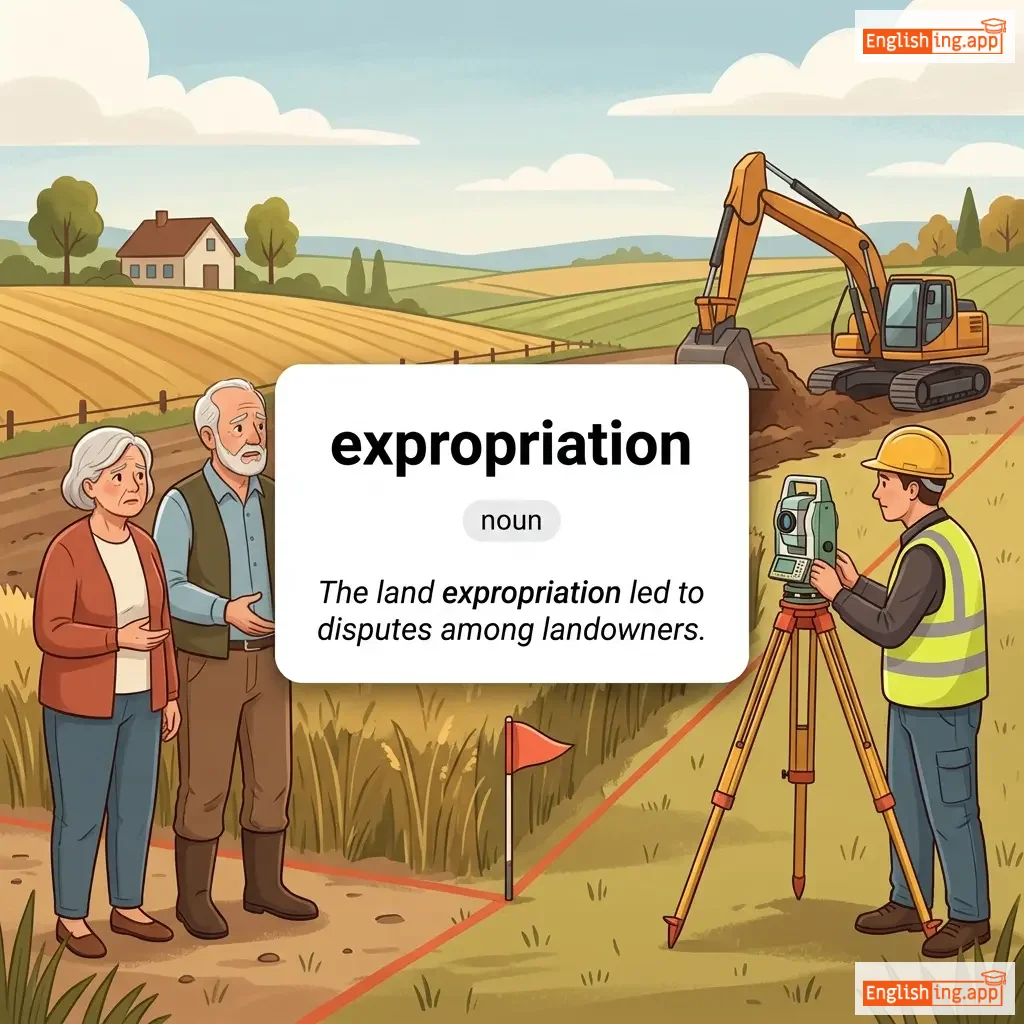
"政府决定征用这块土地来修建一条新高速公路。" (Zhèngfǔ juédìng zhēngyòng zhè kuài tǔdì lái xiūjiàn yītiáo xīn gāosù gōnglù.)
expropriation definition card — visual illustration of the meaning
noun
/ɪkˌsprəʊ.priˈeɪ.ʃən/
征用 (zhēngyòng)

The act of government taking private property, also known as confiscation, nationalization, or seizure.

"The land expropriation led to disputes among landowners."

"土地征用导致了土地所有者之间的争议。" (Tǔdì zhēngyòng dǎozhìle tǔdì suǒyǒu zhě zhī jiān de zhēngyì.)
noun
/ɪkˈspʌlʃən/
开除 (kaichu)

The act of forcing someone to leave a place, especially a school or country.

"His constant misbehavior led to his expulsion from school."

"他不断的坏行为导致他被学校开除。" (Tā bùduàn de huài xíngwéi dǎozhì tā bèi xuéxiào kāichú.)
verb
/ɪkˈspʌndʒ/
擦除 (cāchú)

To erase or remove completely, often something unwanted.

"He managed to expunge the embarrassing memory from his mind."

"他设法把尴尬的记忆从脑海中抹去。" (Tā shèfǎ bǎ gāngà de jìyì cóng nǎohǎi zhōng mǒqù.)
verb
/ˈekspərˌɡeɪt/
删改 (shangai)

To remove offensive or objectionable parts from a text or speech.

"The publisher decided to expurgate the novel before reprinting it."

"出版社决定在再版前删改这部小说。" (chubanshe jueding zai zaiban qian shangai zhe bu xiaoshuo)
exquisite definition card — visual illustration of the meaning
adjective
/ɪkˈskwɪzɪt/
精致 (jingzhi)

Extremely beautiful, delicate, or finely made.

"The bride wore an exquisite gown made of silk."

"新娘穿着一件精致的丝绸礼服。" (Xinniang chuanzhuo yijian jingzhi de sichou lifu.)
extant definition card — visual illustration of the meaning
adjective
/ˈɛkstənt/
现存 (xiàncún)

Still in existence; surviving.

"Only a few manuscripts from the ancient library are extant."

"只有几份古老图书馆的手稿仍然存在。" (Zhǐyǒu jǐ fèn gǔlǎo túshūguǎn de shǒugǎo réngrán cúnzài.)
extemporaneous definition card — visual illustration of the meaning
adjective
/ɪkˌstɛmpəˈreɪniəs/
没有准备的讲话或行为 (mei you zhun bei de jiang hua huo xing wei)

Spoken or done without preparation.

"He gave an extemporaneous speech at the meeting."

"他在会议上发表了即兴演讲。" (Ta zai hui yi shang fa biao le ji xing yan jiang.)
adverb
/ɪkˈstɛmpəri/
即兴 (jixing)

Spoken or done without preparation; impromptu.

"She recited the poem extempore in class."

"她在课堂上即兴朗诵了诗歌。" (Ta zai kètáng shàng jìxìng lǎngsòngle shīgē.)
verb
/ɪkˈstɛmpəraɪz/
即兴表演 (jíxìng biǎoyǎn)

To speak or perform without preparation; improvise.

"The actor had to extemporize when he forgot his lines."

"当演员忘记台词时,他不得不即兴表演。" (Dāng yǎnyuán wàngjì táicí shí, tā bùdé bù jíxìng biǎoyǎn.)
extend definition card — visual illustration of the meaning
verb
/ɪkˈstɛnd/
延伸 (yanshen)

to make something longer, larger, or last longer; to reach out.

"The company decided to extend the deadline for submissions."

"公司决定延长提交的截止日期。" (Gōngsī juédìng yáncháng tíjiāo de jiézhǐ rìqī.)
adjective
/ɪkˈstendɪd/
扩展的 (kuòzhǎn de)

longer or larger than usual; continuing for a longer time

"They took an extended vacation in Europe this summer."

"他们这个夏天在欧洲度过了一个扩展的假期。" (Tāmen zhège xiàtiān zài Ōuzhōu dùguòle yīgè kuòzhǎn de jiàqī.)
adjective
/ɪkˈstɛnsəbl/
可扩展的 (kě kuò zhǎn de)

able to be extended; capable of expansion.

"The software is designed to be extensible with new features."

"该软件设计为可以通过新功能扩展。" (Gāi ruǎnjiàn shèjì wèi kě yǐ tōngguò xīn gōngnéng kuò zhǎn.)
noun
/ɪkˈstɛnʃən/
延伸 (yanshen)

a part that is added to something to make it longer or bigger; an increase in time.

"She asked for an extension on her assignment deadline."

"她要求延长她的作业截止日期。" (Ta yaoqiu yanchang ta de zuoye jiezhi riqi.)
adjective
/ɪkˈstɛnsɪv/
广泛的 (guǎngfàn de)

covering a large area or involving a lot; wide in range.

"The museum has an extensive collection of ancient artifacts."

"博物馆拥有大量的古代文物收藏。" (Bówùguǎn yǒngyǒu dàliàng de gǔdài wénwù shōucáng.)
adverb
/ɪkˈstɛnsɪvli/
广泛地 (guangfan de)

in a thorough or wide-ranging manner

"She traveled extensively across Europe for her research."

"她为她的研究广泛地旅行了欧洲。" (Ta wei ta de yanjiu guangfan de lvxing le Ouzhou.)
noun
/ɪkˈstɛnsər/
伸肌 (shēn jī)

a muscle that serves to extend or straighten a limb or part of the body.

"The extensor muscles in the arm help straighten the elbow."

"手臂的伸肌帮助伸直肘部。" (Shǒubì de shēn jī bāngzhù shēnzhí zhǒubù.)
noun
/ɪkˈstɛnt/
程度 (chengdu)

the area, degree, or scope of something

"The extent of the damage was greater than expected."

"损害的程度超出了预期。" (Sunhai de chengdu chaole yùqī.)
verb
/ɪkˈstɛnjueɪt/
减轻 (jianqing)

to make an offense, fault, or situation seem less serious by providing an excuse or explanation

"The lawyer tried to extenuate his client's actions by highlighting his difficult childhood."

"律师通过强调客户的艰难童年,试图减轻他的行为。" (Lüshi tongguo qiangdiao kehu de jiannan tongnian, shitu jianqing tā de xíngwéi.)
adjective
/ɪkˈstɛnjueɪtɪŋ/
减轻的 (jiǎnqīng de)

serving to make a fault or an offense seem less serious

"She asked for leniency due to extenuating circumstances."

"她因减轻的情况请求宽恕。" (Tā yīn jiǎnqīng de qíngkuàng qǐngqiú kuānshù.)
noun/adjective
/ɪkˈstɪəriər/
外部部分 (wàibù bùfen)

the outer surface or part of something; relating to the outside

"The exterior of the house was painted white."

"房子的外部部分被刷成了白色。" (fángzi de wàibù bùfen bèi shuā chéng le báisè.)
adjective
/ɪkˈstɜrnəl/
外部的 (wàibù de)

situated on or relating to the outside of something; coming from outside

"The external factors affected the company's growth."
"外部因素影响了公司的增长。" (Wàibù yīnsù yǐngxiǎngle gōngsī de zēngzhǎng.)
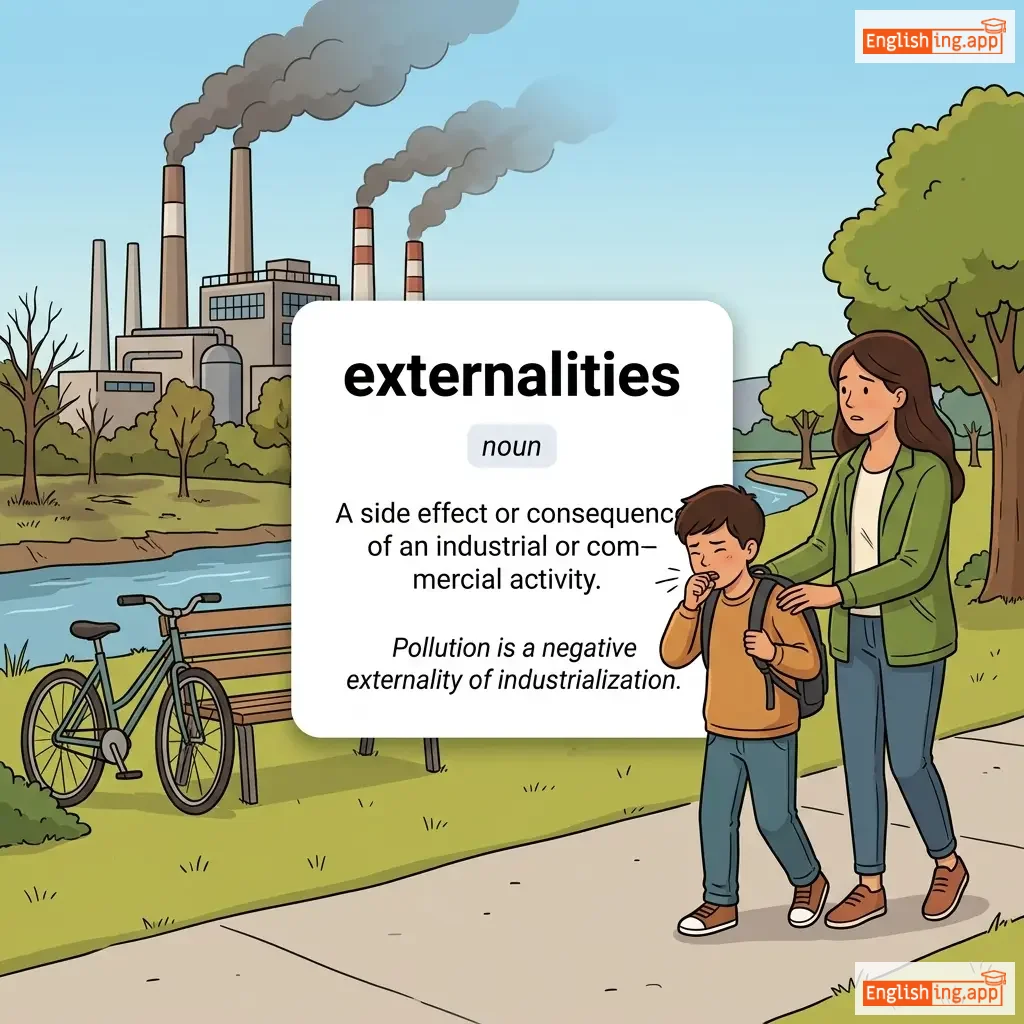
externalities definition card — visual illustration of the meaning
noun
ˌɛkstərˈnælɪtiz
外部性 (wàibùxìng)

A side effect or consequence of an industrial or commercial activity.

"Pollution is a negative externality of industrialization."

"污染是工业化的负外部性。" (Wūrǎn shì gōngyè huà de fù wàibùxìng.)
adverb
/ɪkˈstɜrnəli/
外部地 (waibu de)

in a way that relates to the outer surface or outside appearance

"The building appeared externally modern, but inside it was quite old-fashioned."
"这栋建筑外部看起来很现代,但里面相当老式。" (Zhe dong jianzhu waibu kan qilai hen xiandai, dan limian xiangdang laoshi.)
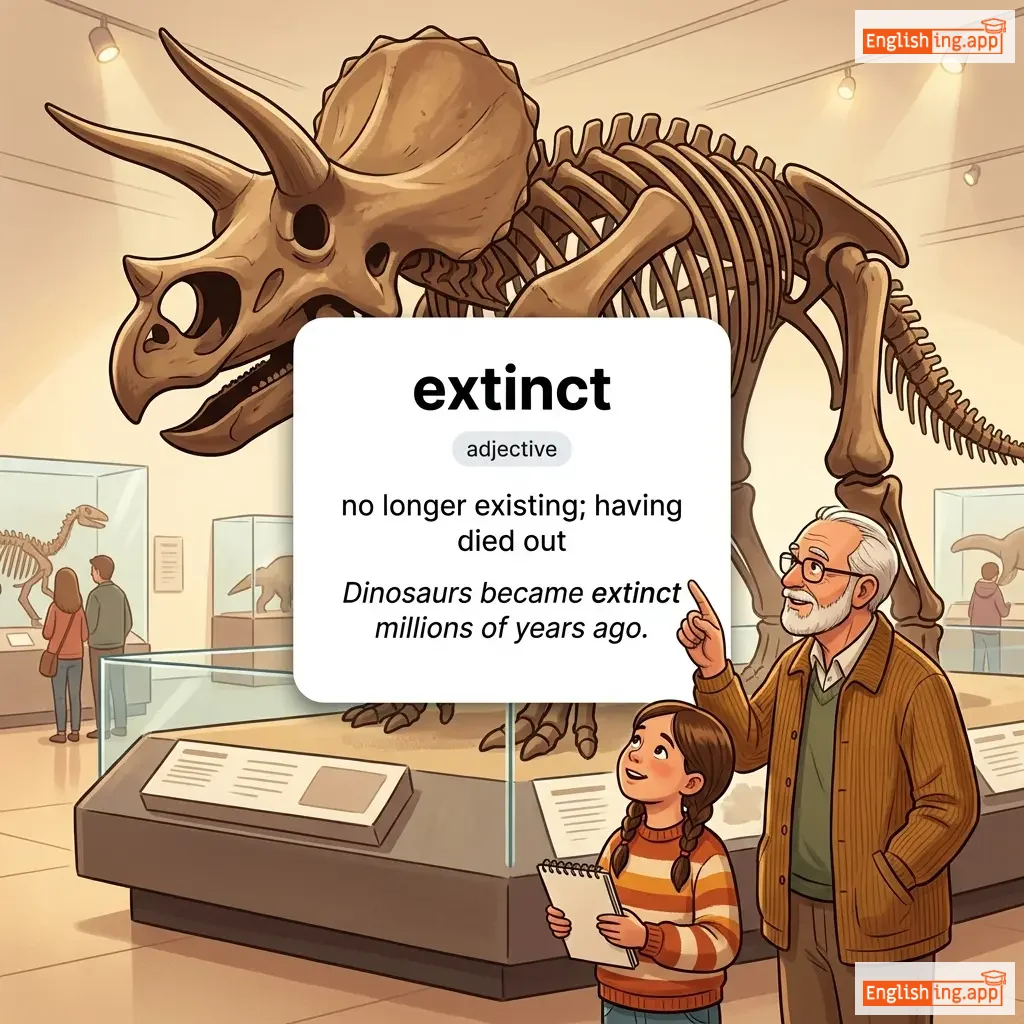
extinct definition card — visual illustration of the meaning
adjective
/ɪkˈstɪŋkt/
灭绝 (mie jue)

no longer existing; having died out

"Dinosaurs became extinct millions of years ago."

"恐龙在几百万年前灭绝了。" (Qiong long zai ji bai wan nian qian mie jue le.)
verb
/ɪkˈstɪŋ.ɡwɪʃ/
熄灭 (ximi)

to put out a fire, light, or to end something

"The firefighters managed to extinguish the blaze within an hour."
"消防员在一个小时内成功扑灭了大火。" (Xiaofangyuan zai yige xiaoshi nei chenggong pumie le dahuo.)
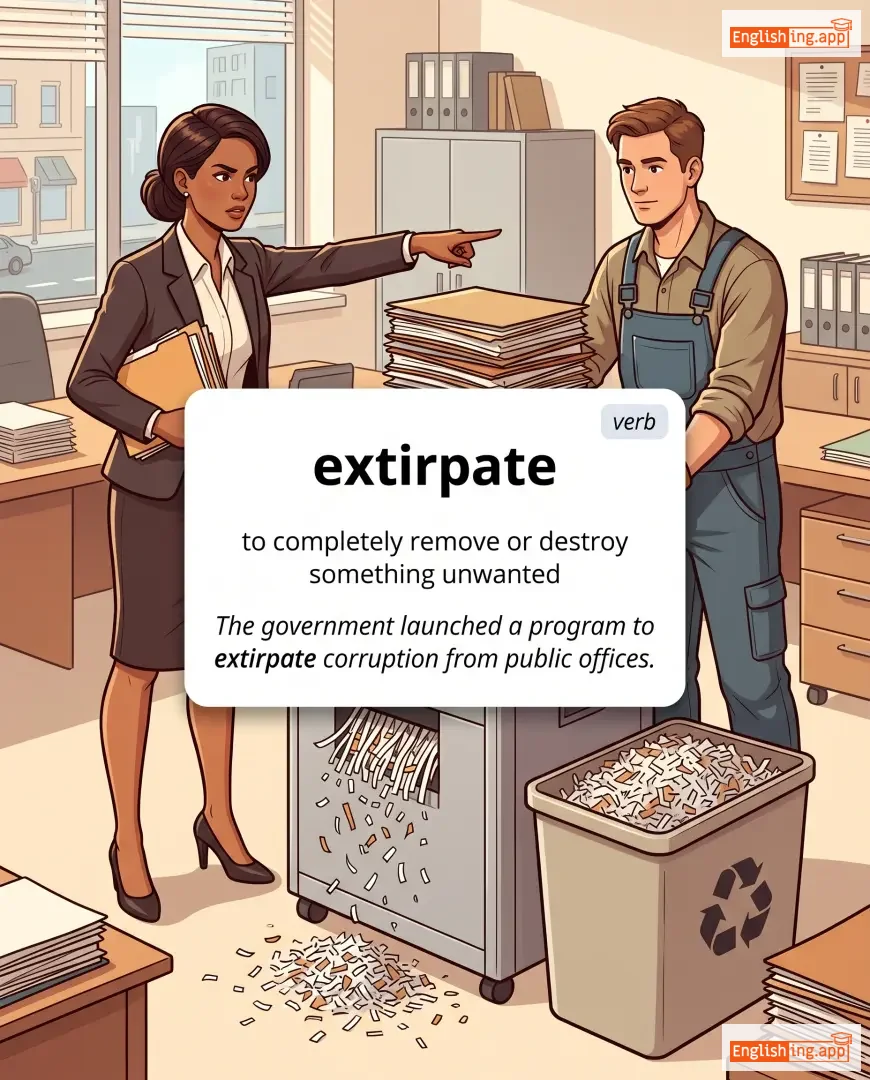
extirpate definition card — visual illustration of the meaning
verb
/ˈek.stər.peɪt/
根除 (gēnchú)

to completely remove or destroy something unwanted

"The government launched a program to extirpate corruption from public offices."

"政府启动了一个旨在清除公共部门腐败的项目。" (Zhèngfǔ qǐdòngle yīgè zhǐ zài qīngchú gōnggòng bùmén fǔbài de xiàngmù.)
verb
/ɪkˈstoʊl/
赞扬 (zanyang)

to praise enthusiastically and highly

"The teacher extolled the student's dedication and hard work."

"老师赞扬了学生的奉献和辛勤工作。" (Lǎoshī zànyángle xuéshēng de fèngxiàn hé xīnqín gōngzuò.)
verb
/ɪkˈstɔːrt/
勒索 (lèsuǒ)

to obtain something, especially money, by force, threats, or unfair means

"The gang attempted to extort money from local shopkeepers."

"这个团伙试图从当地店主那里勒索钱财。" (Zhège tuánhuǒ shìtú cóng dāngdì diànzhǔ nàlǐ lèsuǒ qiáncái.)
noun
/ɪkˈstɔːr.ʃən/
敲诈勒索 (qiāo zhà lè suǒ)

the practice of obtaining something, especially money, through force or threats

"The businessman was arrested for extortion after threatening his partner."

"商人因威胁其合作伙伴后被捕,罪名是敲诈勒索。" (Shāngrén yīn wēi xié qí hé zuò huǒ bàn hòu bèi bǔ, zuìmíng shì qiāo zhà lè suǒ.)
adjective
/ˈɛkstrə/
额外的 (éwài de)

More than what is usual, expected, or necessary

"She brought some extra food for the picnic."

"她为野餐带来了额外的食物。" (Tā wèi yěcān dài lái le éwài de shíwù.)
verb
/ɪkˈstrækt/
提取 (tíqǔ)

to remove or take out something, often with effort

"The dentist had to extract the damaged tooth."

"牙医不得不提取受损的牙齿。" (Yáyī bùdébù tíqǔ shòusǔn de yáchǐ.)
noun
/ɪkˈstrækʃən/
提取 (tíqǔ)

the act of removing something, especially by pulling it out

"The extraction of oil from the ground requires special equipment."

"从地下提取石油需要特殊的设备。" (Cóng dìxià tíqǔ shíyóu xūyào tèshū de shèbèi.)
verb
/ˈɛkstrəˌdaɪt/
引渡 (yǐn dù)

to hand over a person accused or convicted of a crime to another country or state

"The government agreed to extradite the fugitive to his home country."

"政府同意将逃犯引渡到他的祖国。" (Zhèngfǔ tóngyì jiāng táofàn yǐn dù dào tā de zǔguó.)
noun
/ˌɛkstrəˈdɪʃən/
引渡 (yǐn dù)

the official process of sending someone accused of a crime to another country or state

"The extradition of the suspect was delayed due to legal issues."

"由于法律问题,嫌疑人的引渡被延迟了。" (Yóuyú fǎlǜ wèntí, xiányí rén de yǐn dù bèi yánchí le.)
adjective
/ˌɛkstrəˌdʒuːˈdɪʃəl/
非司法的 (fei si fa de)

done outside the authority of the legal system or judicial process

"The activists condemned the extrajudicial killings."
"活动家谴责了非司法的谋杀。" (Huódòngjiā qiǎnzéle fēi sīfǎ de móushā.)
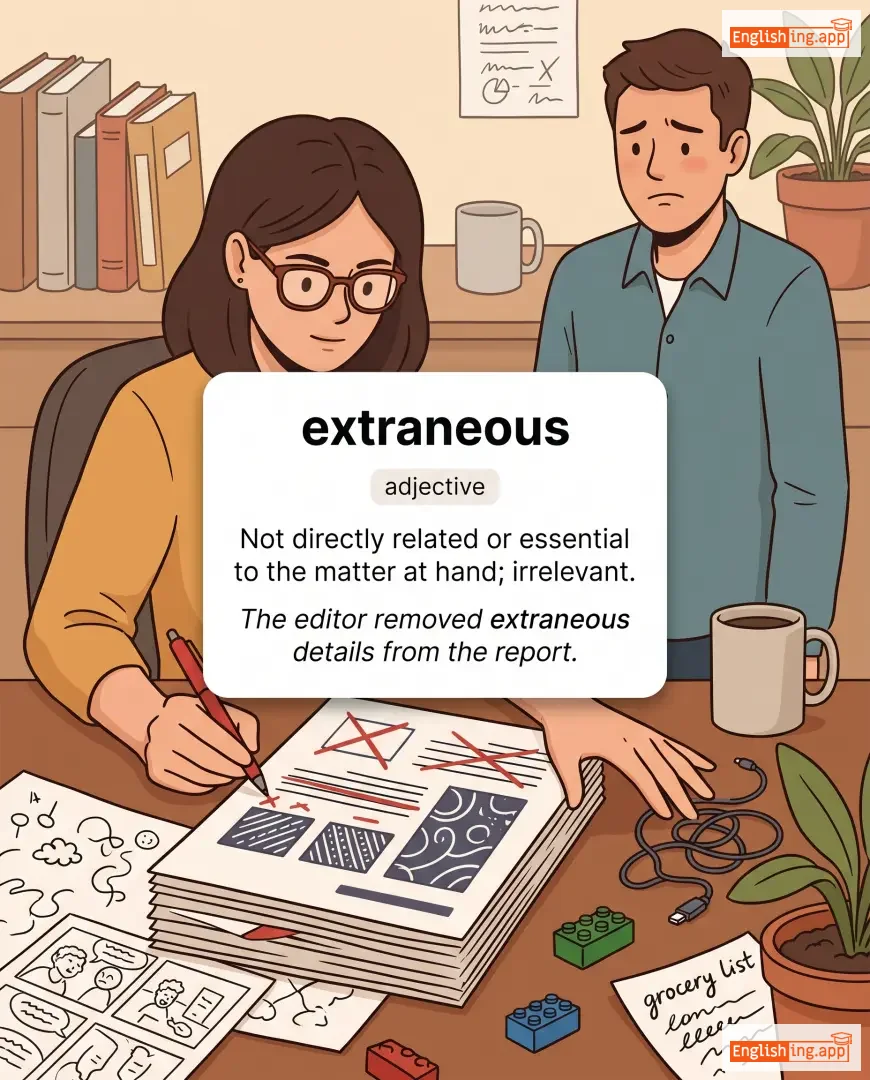
extraneous definition card — visual illustration of the meaning
adjective
/ɪkˈstreɪ.ni.əs/
无关 (wú guān)

Not directly related or essential to the matter at hand; irrelevant.

"The editor removed extraneous details from the report."

"编辑从报告中删除了无关的细节。" (Biānjí cóng bàogào zhōng shānchúle wúguān de xìjié.)
adjective
/ɪkˈstrɔːr.dəˌnɛr.i/
非凡 (feifan)

Very unusual, remarkable, or exceptional.

"She showed extraordinary courage during the crisis."
"她在危机中表现出非凡的勇气。" (Ta zai weiji zhong biaoxian chu feifan de yongqi.)
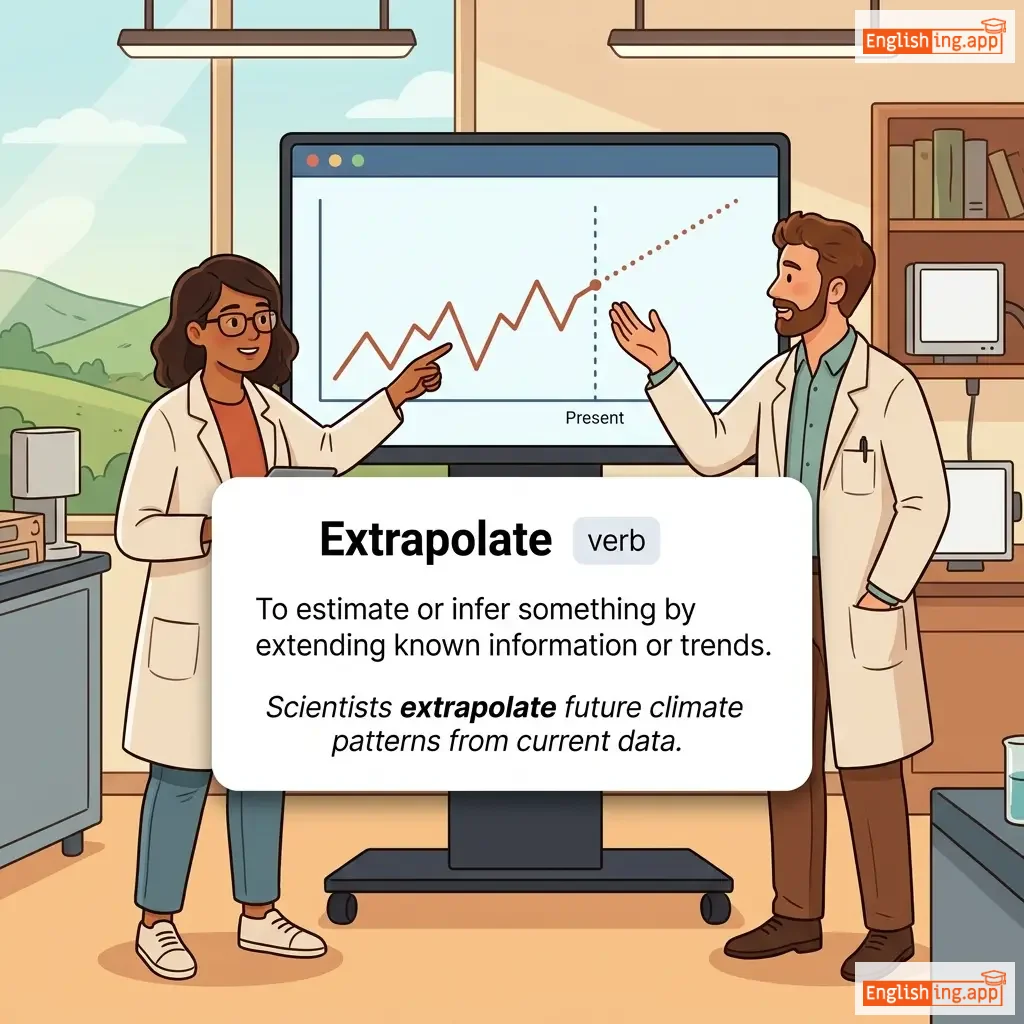
Extrapolate definition card — visual illustration of the meaning
verb
/ɪkˈstræp.əˌleɪt/
外推 (wàituī)

To estimate or infer something by extending known information or trends.

"Scientists extrapolate future climate patterns from current data."
"科学家从当前数据中外推未来的气候模式。" (Kēxuéjiā cóng dāngqián shùjù zhōng wàituī wèilái de qìhòu móshì.)
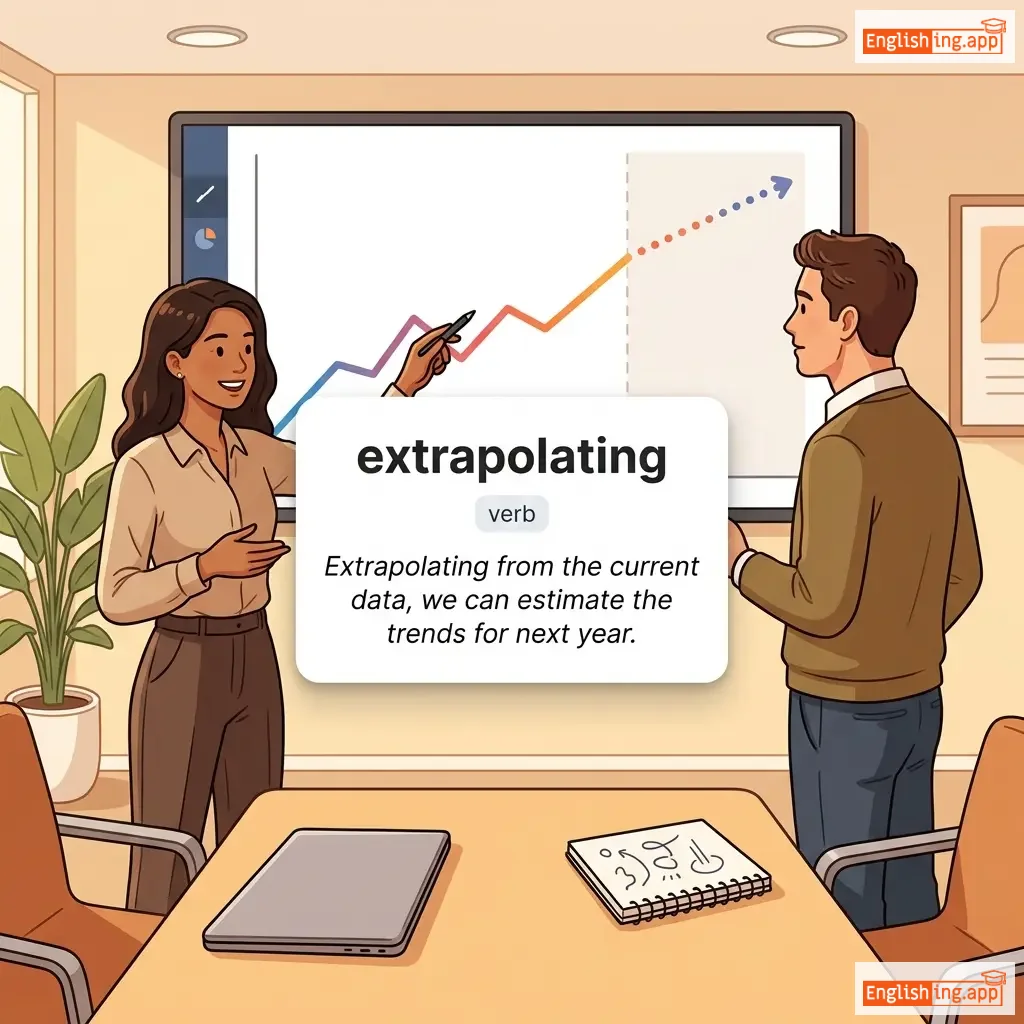
extrapolating definition card — visual illustration of the meaning
verb
/ɪkˈstræpəleɪtɪŋ/
推断 (tuīduàn)

Extend the application of (a method or conclusion) to an unknown situation by assuming that existing trends will continue.

"Extrapolating from the current data, we can estimate the trends for next year."

"根据当前数据进行推断,我们可以预测明年的趋势。" (Gēnjù dāngqián shùjù jìnxíng tuīduàn, wǒmen kěyǐ yùcè míngnián de qūshì.)
extrapolation definition card — visual illustration of the meaning
noun
/ɪkˌstræp.əˈleɪ.ʃən/
外推法 (wàituī fǎ)

The process of estimating or predicting something based on extending known information.

"The company's financial extrapolation suggests steady growth."

"该公司的财务外推法建议稳步增长。" (gāi gōngsī de cáiwù wàituī fǎ jiànyì wěnbù zēngzhǎng.)
noun
/ɪkˈstræv.ə.ɡəns/
奢侈 (shēchǐ)

Excessive spending or lack of restraint in using resources.

"His extravagance on luxury cars worried his family."

"他在豪车上的奢侈消费让他的家人担心。" (Tā zài háo chē shàng de shēchǐ xiāofèi ràng tā de jiārén dānxīn.)
adjective
/ɪkˈstrævəɡənt/
奢华的 (shē huá de)

Spending or using more than is necessary; excessively elaborate or luxurious.

"She wore an extravagant dress to the party."

"她穿着一件奢华的裙子去参加聚会。" (Tā chuānzhuó yī jiàn shē huá de qúnzi qù cānjiā jùhuì.)