词汇表

英语词汇词典 | 单词含义、定义和示例

noun
/ˌɛkspɛkˈteɪʃən/
期望 (qīwàng)

a strong belief that something will happen or be the case

"The students had high expectations for their exam results."
"学生们对他们的考试结果有很高的期望。" (Xuéshēngmen duì tāmen de kǎoshì jiéguǒ yǒu hěn gāo de qīwàng.)
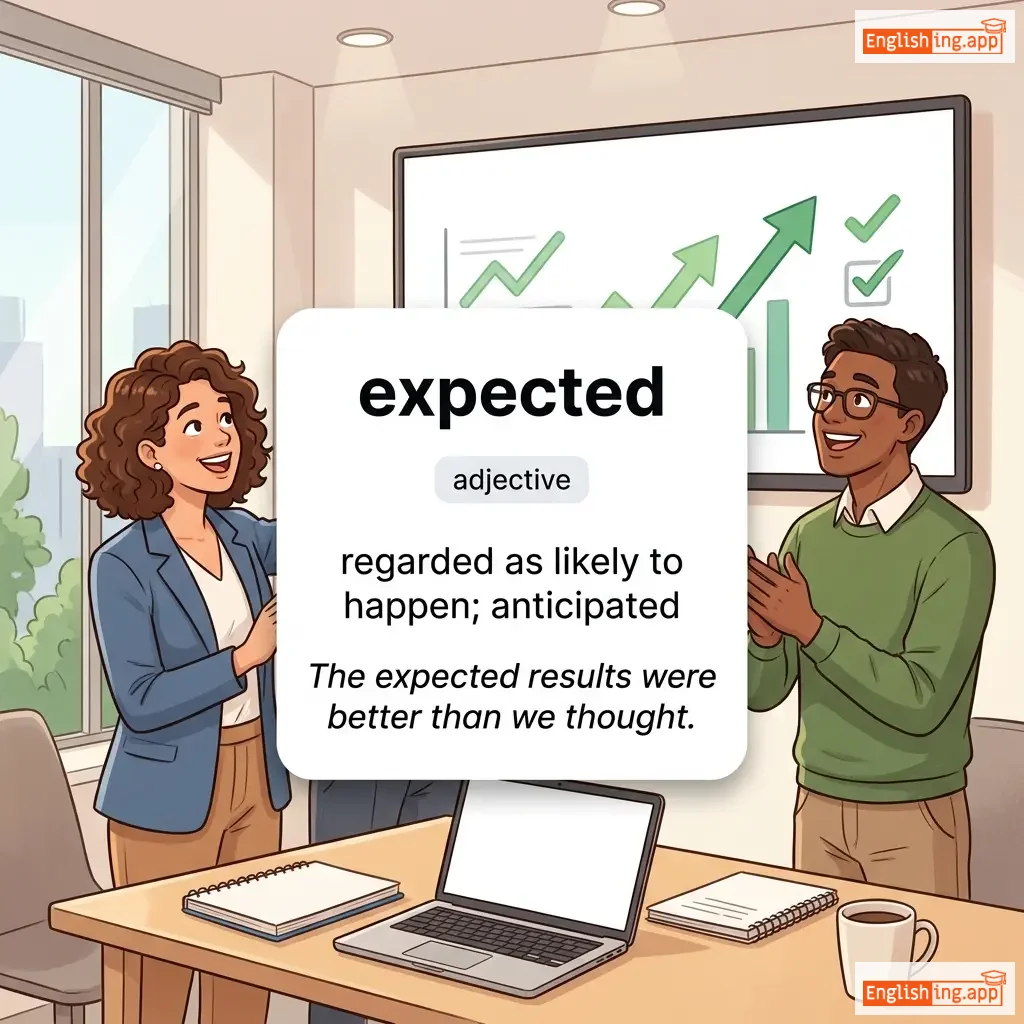
expected definition card — visual illustration of the meaning
adjective
/ɪkˈspɛktɪd/
预期的 (yùqī de)

regarded as likely to happen; anticipated

"The expected results were better than we thought."

"预期的结果比我们想象的更好。" (Yùqī de jiéguǒ bǐ wǒmen xiǎngxiàng de gèng hǎo.)
verb
/ɪkˈspɛktəreɪt/
吐痰 (tǔtán)

to cough up and spit out mucus from the throat or lungs

"The patient began to expectorate thick mucus."

"患者开始吐出厚重的粘液。" (Huànzhě kāishǐ tǔchū hòu zhòng de zhān yè.)
noun
/ɪkˈspiːdiənsi/
机会主义 (jīhuì zhǔyì)

the quality of being convenient and practical despite possibly being improper or immoral

"He acted out of political expediency rather than principle."

"他是出于政治机会主义而非原则行事。" (Tā shì chūyú zhèngzhì jīhuì zhǔyì ér fēi yuánzé xíngshì.)
adjective
/ɪkˈspiːdiənt/
权宜之计 (quányí zhī jì)

suitable or convenient for achieving a particular end, sometimes at the expense of morality

"It was expedient to take the shortcut despite the risks."

"尽管有风险,走捷径是权宜之计。" (Jǐnguǎn yǒu fēngxiǎn, zǒu jiéjìng shì quányí zhī jì.)
expedite definition card — visual illustration of the meaning
verb
/ˈɛkspəˌdaɪt/
加速 (jiāsù)

to make a process or action happen more quickly

"The company promised to expedite the delivery of the package."

"公司承诺加快包裹的送货。" (Gōngsī chéngnuò jiākuài bāoguǒ de sònghuò.)
noun
/ˌɛkspəˈdɪʃən/
探险 (tanxian)

a journey made for a particular purpose, often exploration or research

"They went on a scientific expedition to the Arctic."
"他们去北极进行了一次科学探险。" (Tamen qu Beiji jinxing le yici kexue tanxian.)
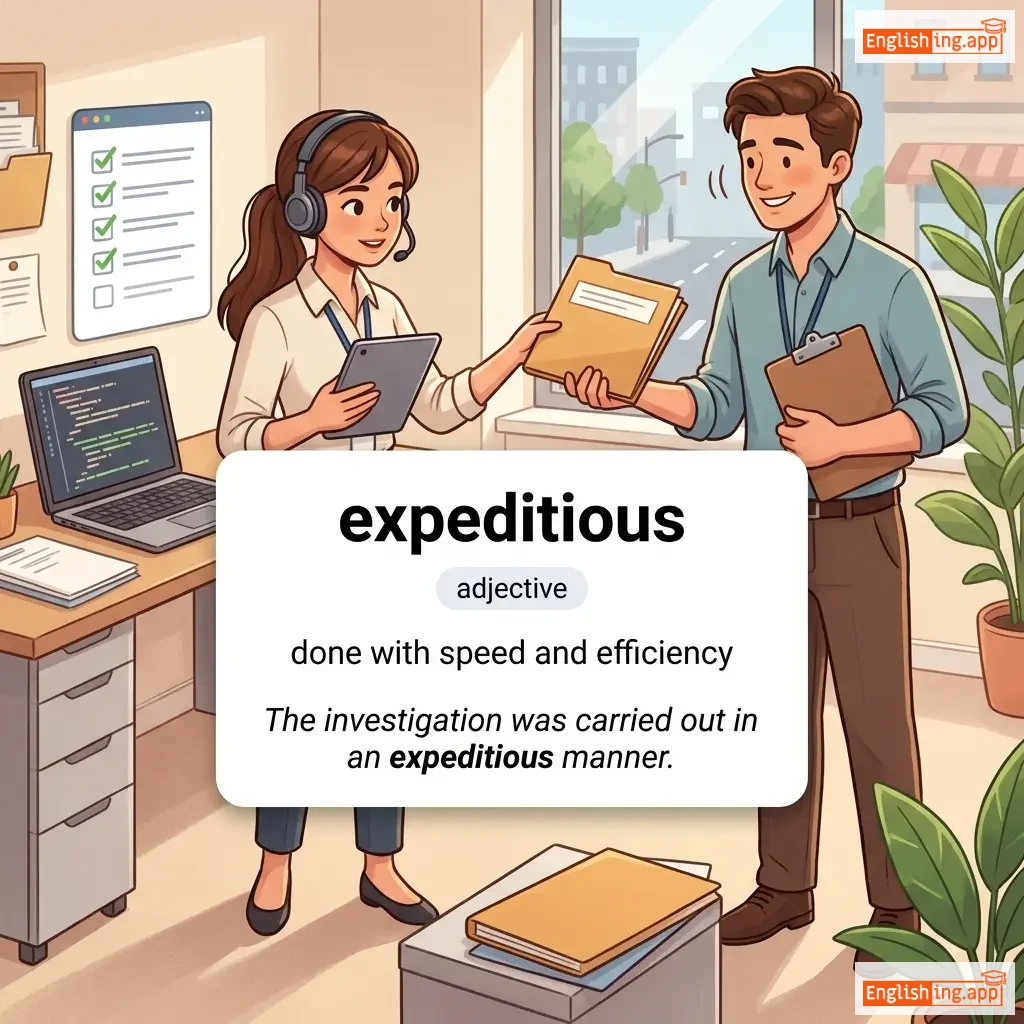
expeditious definition card — visual illustration of the meaning
adjective
/ˌɛkspəˈdɪʃəs/
快速且高效 (kuai su qie gao xiao)

done with speed and efficiency

"The investigation was carried out in an expeditious manner."

"调查以快速且高效的方式进行。" (Diaocha yi kuaisu qie gaoxiao de fangshi jinxing.)
adverb
/ˌɛkspəˈdɪʃəsli/
迅速而高效地 (xùn sù ér gāo xiào de)

in a quick and efficient manner

"The application was processed expeditiously."

"申请被迅速而高效地处理了。" (Shēnqǐng bèi xùn sù ér gāo xiào de chǔ lǐ le.)
verb
/ɪkˈspɛl/
开除 (kāi-chú)

to officially force someone to leave a place or organization

"The student was expelled from school for misconduct."
"这名学生因不良行为被学校开除。" (Zhè míng xué-shēng yīn bù-liáng xíng-wéi bèi xué-xiào kāi-chú.)
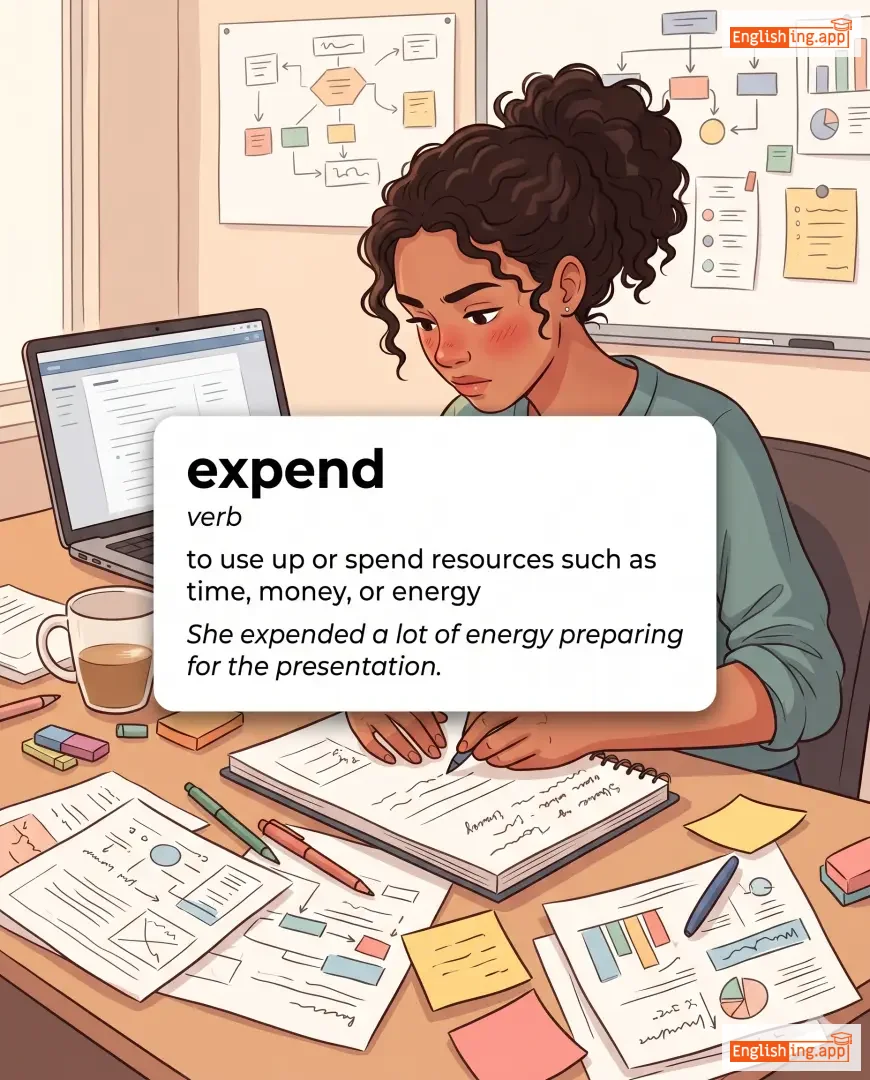
expend definition card — visual illustration of the meaning
verb
/ɪkˈspɛnd/
花费 (huā fèi)

to use up or spend resources such as time, money, or energy

"She expended a lot of energy preparing for the presentation."
"她花费了很多精力准备演讲。" (Tā huā fèi le hěn duō jīng lì zhǔn bèi yǎn jiǎng.)
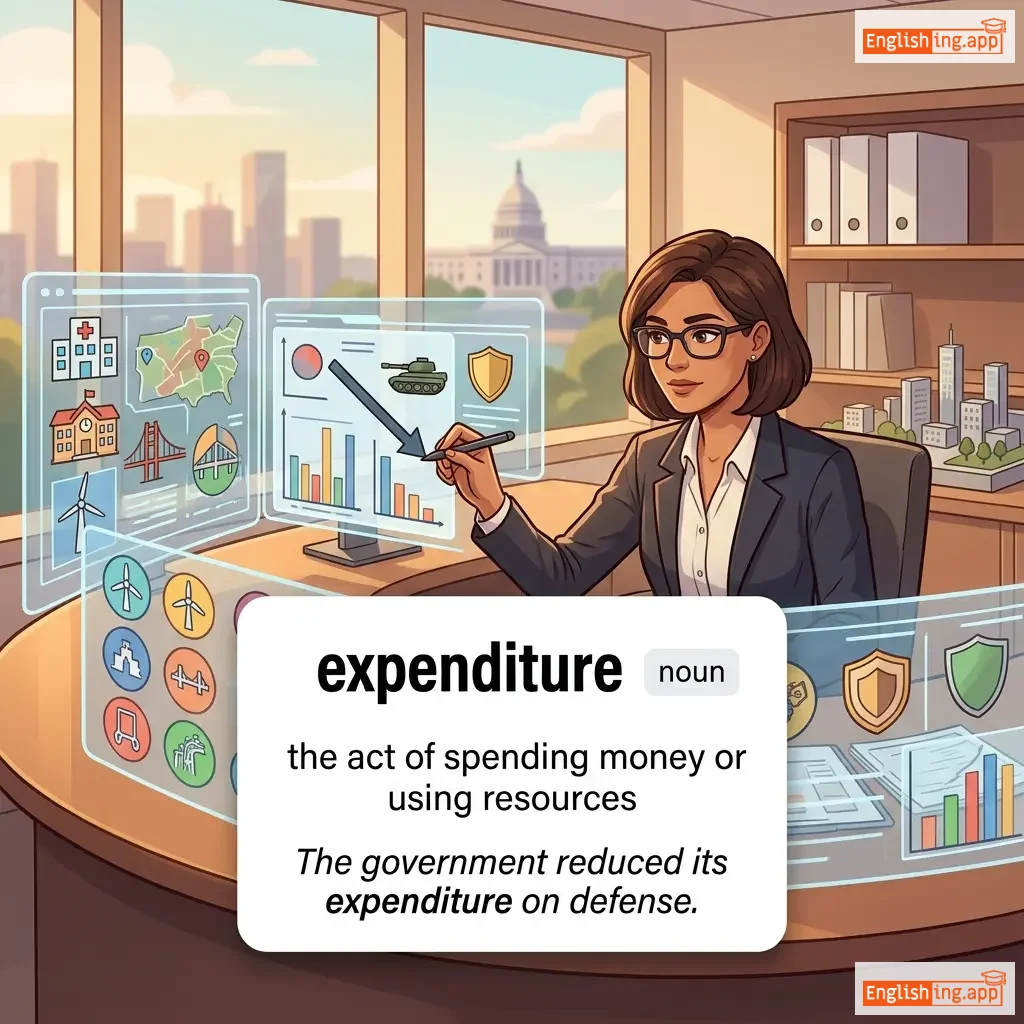
expenditure definition card — visual illustration of the meaning
noun
/ɪkˈspɛndɪtʃər/
支出 (zhī chū)

the act of spending money or using resources

"The government reduced its expenditure on defense."

"政府减少了国防支出。" (zhèngfǔ jiǎnshǎo le guófáng zhīchū.)
noun
/ɪkˈspɛns/
开销 (kaixiao)

the cost of something; money spent

"Traveling abroad can be a major expense."

"出国旅行可能是一个大开销。" (Chuguo luxing keneng shi yige da kaixiao.)
adjective
/ɪkˈspɛnsɪv/

costing a lot of money

"That car is too expensive for me to buy."

noun/verb
/ɪkˈspɪəriəns/
幸福 (xingfu)

knowledge or skill gained through involvement in or exposure to something over time

"She gained valuable experience while working abroad."

"她无法掩饰自己获得奖项时的幸福感。" (Tā wúfǎ yǎnshì zìjǐ huòdé jiǎngxiàng shí de xìngfú gǎn.)
adjective
/ɪkˈspɪəriənst/
有经验的 (yǒu jīngyàn de)

having knowledge or skill in a particular field gained through experience

"She is an experienced teacher who knows how to handle difficult students."

"她是一个经验丰富的老师,知道如何处理困难的学生。" (Tā shì yīgè jīngyàn fēngfù de lǎoshī, zhīdào rúhé chǔlǐ kùnnán de xuéshēng.)
experiencing definition card — visual illustration of the meaning
verb
/ɪkˈspɪəriənsɪŋ/
经历 (jingli)

Encountering or undergoing an event or occurrence.

"The travelers are experiencing the thrill of adventure."

"旅行者正在体验冒险的刺激。" (Lvxingzhe zhengzai tiyan maoxian de ciji.)
noun/verb
/ɪkˈsperɪmənt/
实验 (shíyàn)

a test or trial carried out to discover something or prove an idea

"The scientist conducted an experiment on plant growth."

"科学家进行了一个关于植物生长的实验。" (Kēxuéjiā jìnxíngle yīgè guānyú zhíwù chéngzhǎng de shíyàn.)
adjective
/ɪkˌsperɪˈmentl/
实验的 (shí yàn de)

based on untested ideas or techniques; relating to experiments or testing

"The scientists developed an experimental drug to treat cancer."
"科学家们开发了一种实验性药物来治疗癌症。" (Kēxuéjiā men kāifāle yī zhǒng shíyàn xìng yàowù lái zhìliáo áizhèng.)
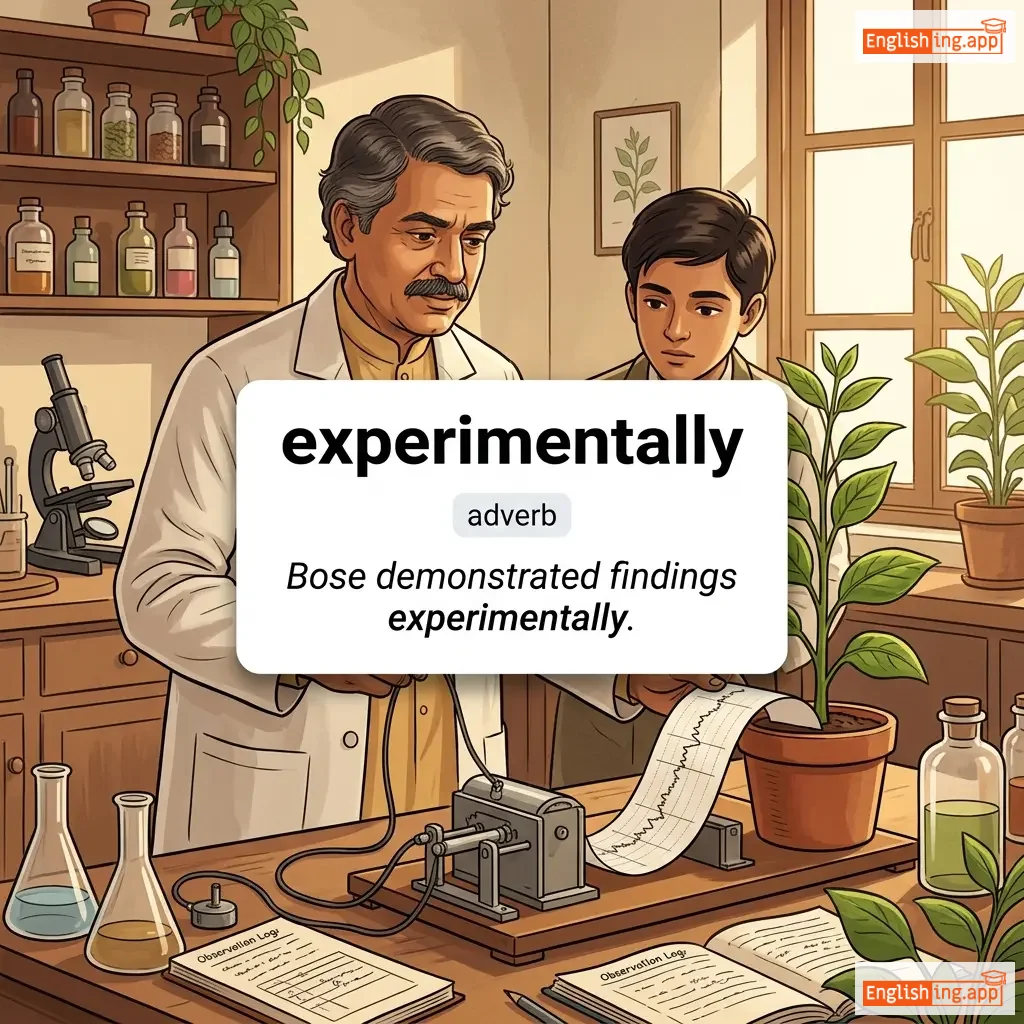
experimentally definition card — visual illustration of the meaning
adverb
ɪkˌsperɪˈmentəli
实验性地 (shíyànxìng de)

In a way that is based on or derived from experiment and observation rather than theory.

"Bose demonstrated findings experimentally."
"Bose 通过实验性地展示了结果。" (Bose tōngguò shíyànxìng de zhǎnshìle jiéguǒ.)
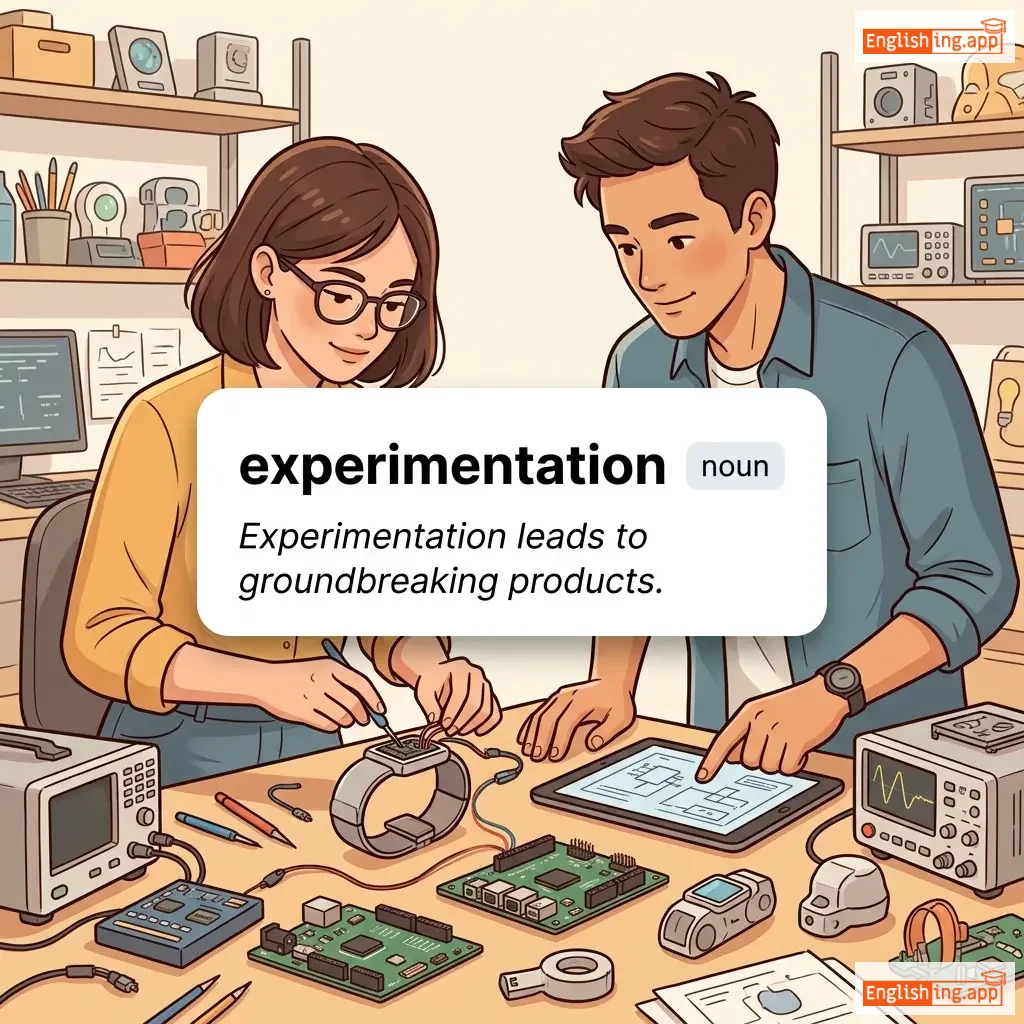
experimentation definition card — visual illustration of the meaning
noun
/ɪkˌsperɪˈmɛnteɪʃən/
实验 (shíyàn)

The process of performing a scientific procedure to make a discovery, test a hypothesis, or demonstrate a known fact.

"Experimentation leads to groundbreaking products."

"实验引领创新产品。" (Shíyàn yǐnlǐng chuàngxīn chǎnpǐn.)
👨‍🏫

expert (专家)

noun/adjective
/ˈekspɜːt/
专家 (zhuānjiā)

a person who has a lot of knowledge or skill in a particular area

"He is an expert in computer programming."

"他是计算机编程方面的专家。" (Tā shì jìsuànjī biānchéng fāngmiàn de zhuānjiā.)
expertise definition card — visual illustration of the meaning
noun
/ˌɛkspərˈtiːz/
专业知识 (zhuānyè zhīshì)

specialized knowledge or skill in a particular field

"Her expertise in data analysis is highly valued."

"她在数据分析方面的专业知识备受推崇。" (Ta zai shuju fenxi fangmian de zhuanye zhishi beishou tuichong.)
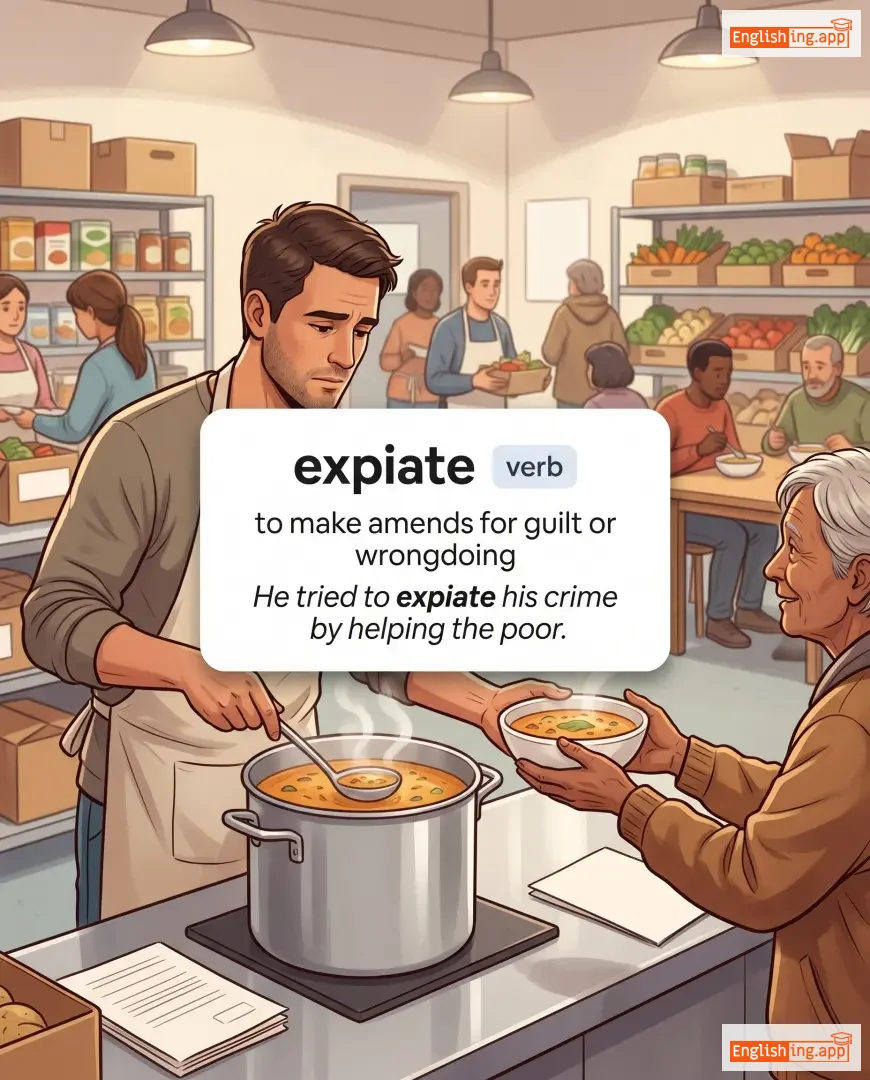
expiate definition card — visual illustration of the meaning
verb
/ˈɛkspieɪt/

to make amends for guilt or wrongdoing

"He tried to expiate his crime by helping the poor."

verb
/ɪkˈspaɪər/
到期 (dàoqī)

to come to an end, especially a period of validity or life

"My passport will expire next month."
"我的护照将在下个月到期。" (Wǒ de hùzhào jiāng zài xià gè yuè dàoqī.)
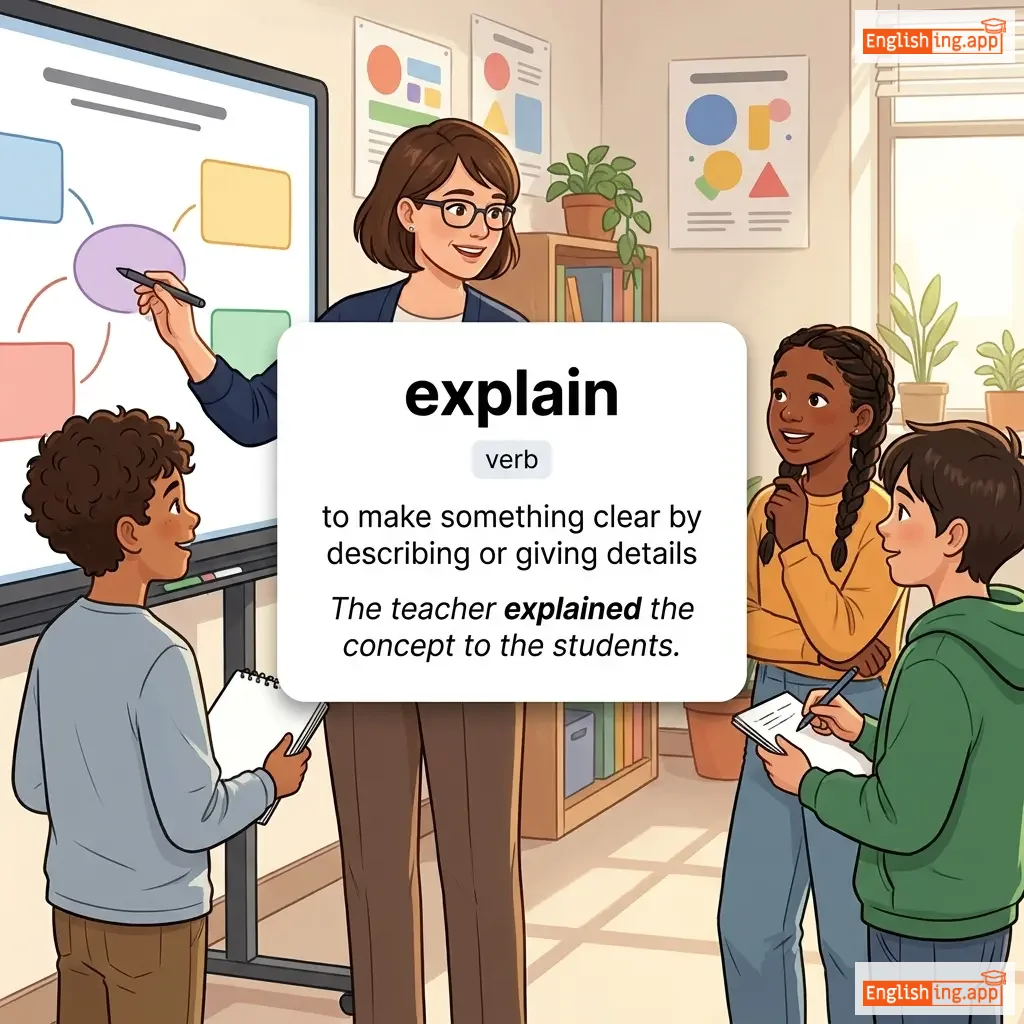
explain definition card — visual illustration of the meaning
verb
/ɪkˈspleɪn/
解释 (jiěshì)

to make something clear by describing or giving details

"The teacher explained the concept to the students."

"老师向学生们解释了这个概念。" (Lǎoshī xiàng xuéshēngmen jiěshì le zhège gàiniàn.)
noun
/ˌekspləˈneɪʃən/
解释 (jieshi)

a statement or account that makes something clear

"The teacher gave a clear explanation of the theory."

"老师给出了理论的清晰解释。" (Lǎoshī gěi chūle lǐlùn de qīngxī jiěshì.)
noun
/ˈɛksplətɪv/
脏话 (zānghuà)

a word or phrase used as an exclamation, often offensive or profane

"He shouted an expletive when he dropped the hammer on his foot."

"当他把锤子掉到脚上时,他喊出了一个脏话。" (Dāng tā bǎ chuízi diào dào jiǎo shàng shí, tā hǎn chūle yīgè zānghuà.)
adjective
/ˈɛksplɪkəbəl/
可解释的 (kě jiěshì de)

able to be explained or understood

"His sudden anger was explicable given the stressful situation."
"他的突然愤怒是可以解释的,考虑到紧张的情况。" (Tā de tūrán fènnù shì kě jiěshì de, kǎolǜ dào jǐnzhāng de qíngkuàng.)
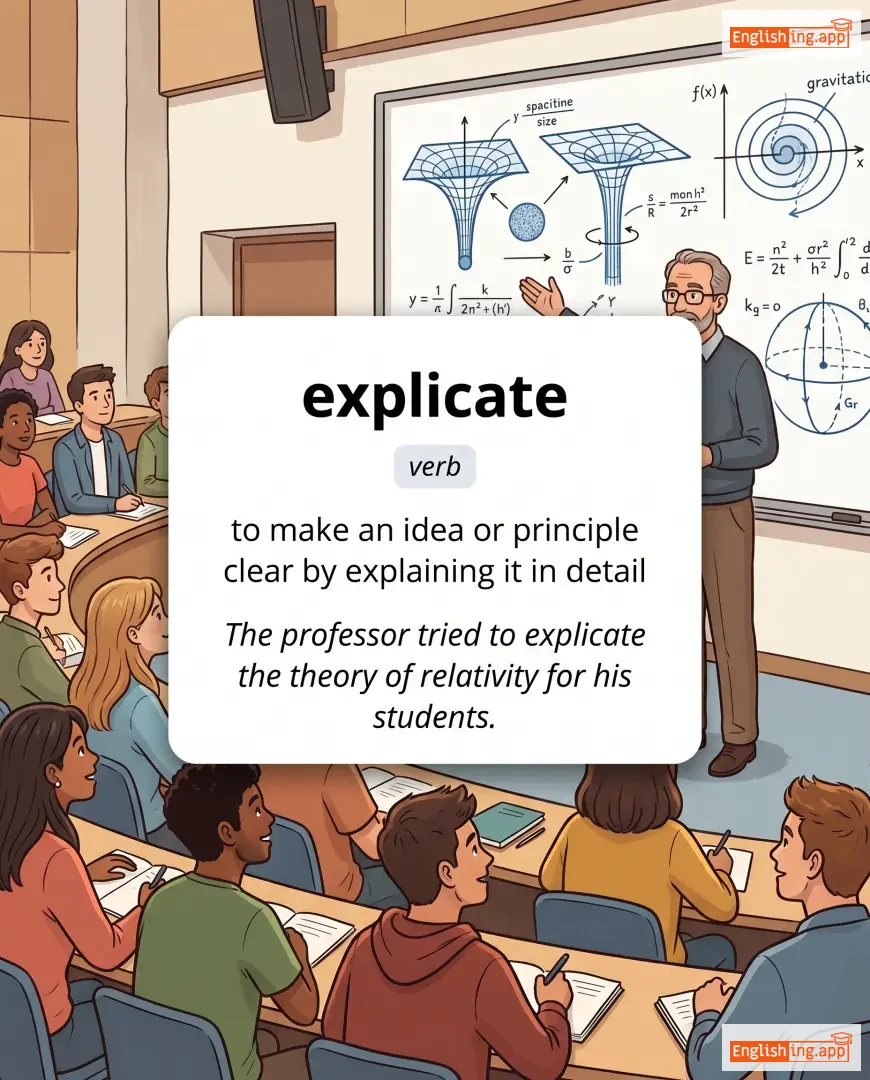
explicate definition card — visual illustration of the meaning
verb
/ˈɛksplɪkeɪt/
解释 (jiěshì)

to make an idea or principle clear by explaining it in detail

"The professor tried to explicate the theory of relativity for his students."

"教授试图为他的学生解释相对论的理论。" (Jiàoshòu shìtú wèi tā de xuéshēng jiěshì xiāngduìlùn de lǐlùn.)
noun
/ˈɛksplɪkeɪtər/
阐释者 (chǎnshì zhě)

a person who explains or interprets something in detail

"The critic served as an explicator of the poet’s complex works."
"评论家担任了诗人复杂作品的阐释者。" (Pínglùn jiā dānrènle shīrén fùzá zuòpǐn de chǎnshì zhě.)
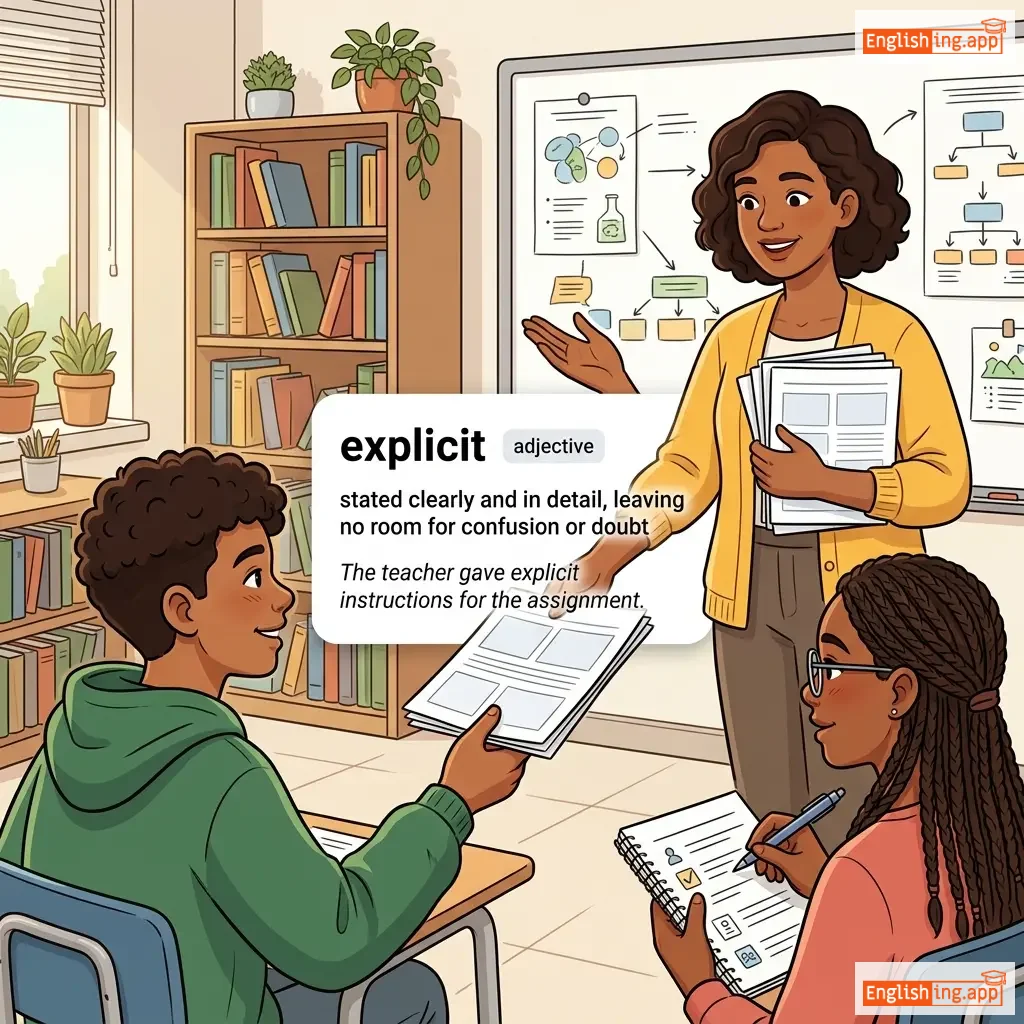
explicit definition card — visual illustration of the meaning
adjective
/ɪkˈsplɪsɪt/
明确的 (mingque de)

stated clearly and in detail, leaving no room for confusion or doubt

"The teacher gave explicit instructions for the assignment."

"老师给出了明确的作业指示。" (Lǎoshī gěi chūle míngquè de zuòyè zhǐshì.)
adverb
/ɪkˈsplɪsɪtli/
明确地 (mingque de)

in a clear and detailed manner, leaving no room for confusion or doubt

"The instructions were explicitly written to avoid any confusion."

"指示明确地写出来,以避免任何混淆。" (Zhishi mingque de xie chulai, yi bimian renhe hunxiao.)
verb
/ɪkˈsploʊd/
爆炸 (baozha)

to burst or shatter violently and noisily as a result of rapid combustion or pressure

"The bomb exploded in the middle of the street."

"炸弹在街中央爆炸了。" (Zhadan zai jie zhongyang baozha le.)
⚒️

exploit

verb, noun
/ɪkˈsplɔɪt/

to make full use of and derive benefit from (a resource); to use someone unfairly for one’s own advantage

"The company was accused of exploiting child labor."

exploitation definition card — visual illustration of the meaning
noun
/ˌeksplɔɪˈteɪʃən/
剥削 (bōxuē)

the action or fact of treating someone unfairly in order to benefit from their work; the use of resources for profit

"The exploitation of workers is a serious issue."

"对工人的剥削是一个严重的问题。" (Duì gōngrén de bōxuē shì yīgè yánzhòng de wèntí.)
adjective
/ɪkˈsplɔɪtətɪv/
剥削性的 (bōxuè xìng de)

making use of a situation or people unfairly and unethically for one's own advantage

"The workers protested against the exploitative practices of the factory."

"工人们抗议工厂的剥削行为。" (Gōngrénmen kàngyì gōngchǎng de bōxuè xíngwéi.)
noun
/ˌekspləˈreɪʃən/
探索 (tàn suǒ)

the action of traveling through or studying an area to learn more about it

"Space exploration has expanded our understanding of the universe."

"太空探索扩展了我们对宇宙的理解。" (Tàikōng tàn suǒ kuòzhǎnle wǒmen duì yǔzhòu de lǐjiě.)
verb
/ɪkˈsplɔːr/
探索 (tàn suǒ)

to travel through or study something in order to learn more about it

"They decided to explore the forest together."
"他们决定一起探索森林。" (Tāmen juédìng yīqǐ tàn suǒ sēnlín.)
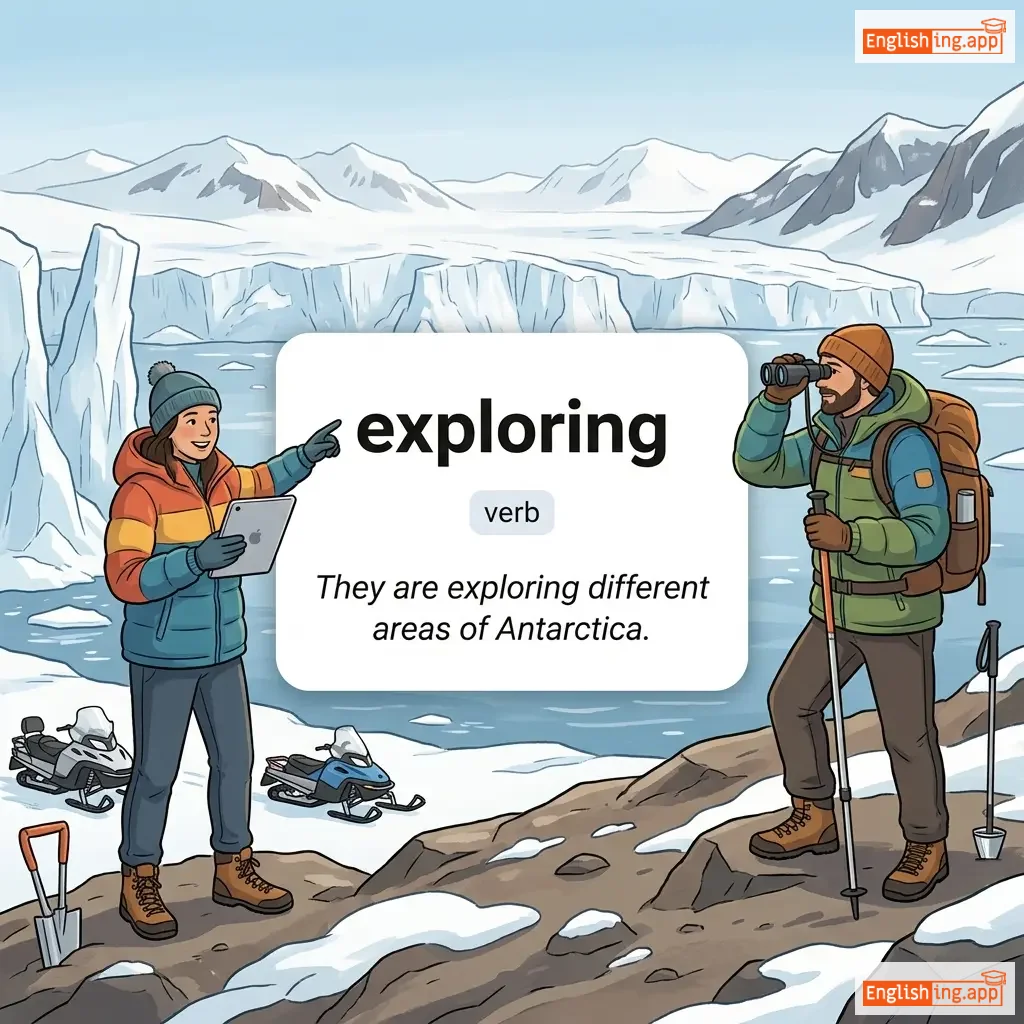
exploring definition card — visual illustration of the meaning
verb
/ɪkˈsplɔːrɪŋ/
探索 (tansuo)

Investigating or studying thoroughly; searching into or ranging over for the purpose of discovery.

"They are exploring different areas of Antarctica."

"他们正在探索南极的不同区域。" (Tāmen zhèngzài tànsuǒ nánjí de bùtóng qūyù.)
noun
/ɪkˈsploʊʒən/
爆炸 (baozha)

a violent burst or release of energy, often causing damage and noise

"The explosion shook the entire neighborhood."

"爆炸震动了整个社区。" (Baozha zhendong le zheng ge shequ.)
adjective
/ɪkˈsploʊsɪv/
爆炸性 (bàozhàxìng)

able to cause an explosion; likely to burst out suddenly

"The situation became explosive after the argument."

"争论后局势变得爆炸性。" (zhēnglùn hòu júshì biàn dé bàozhàxìng.)
noun
/ɪkˈspoʊnənt/
指数 (zhǐshù)

a person who supports, promotes, or explains an idea; in math, a symbol denoting power

"She is a leading exponent of modern dance."
"她是现代舞蹈的领先指数。" (Tā shì xiàndài wǔdǎo de lǐngxiān zhǐshù.)
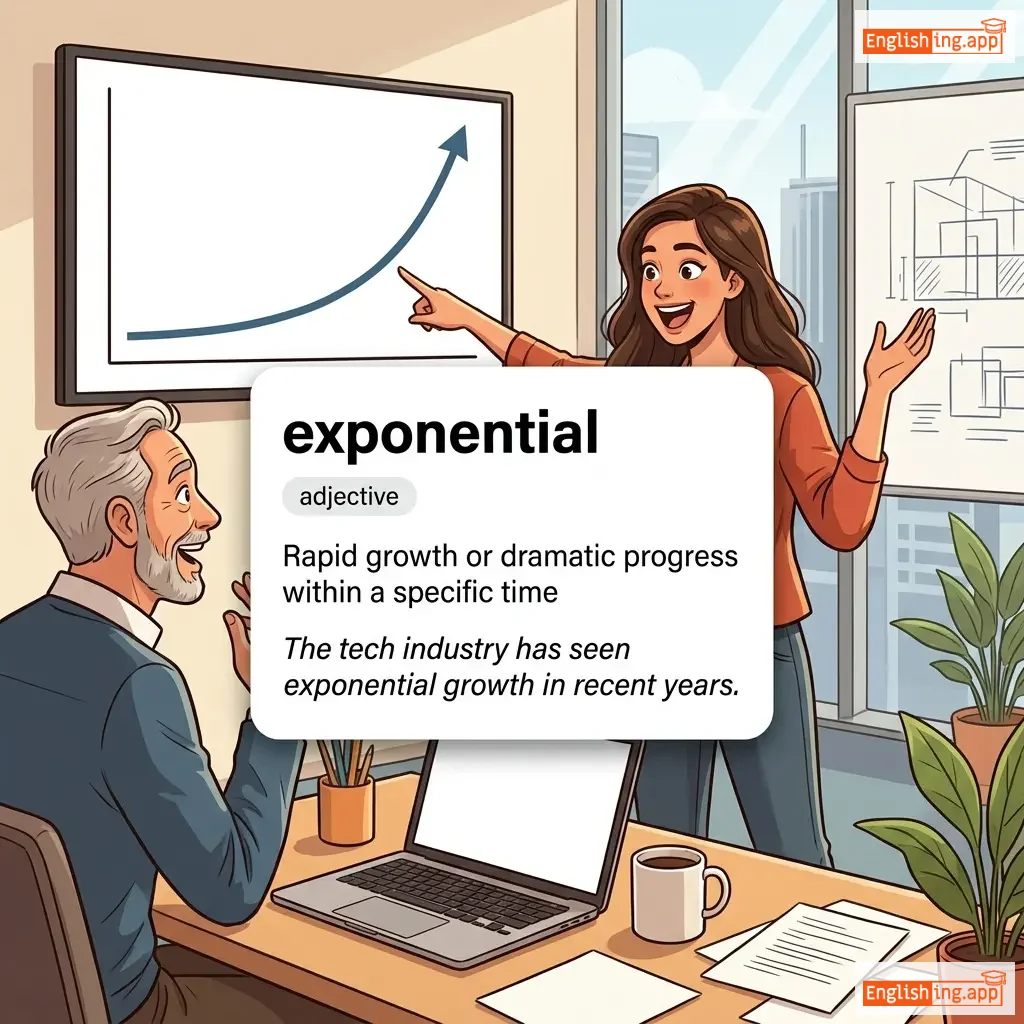
exponential definition card — visual illustration of the meaning
adjective
/ˌɛk.spəˈnɛn.ʃəl/
指数的 (zhǐshù de)

Rapid growth or dramatic progress within a specific time

"The tech industry has seen exponential growth in recent years."
"科技行业在近几年见证了指数级增长。" (Kējì hángyè zài jìn jǐ nián jiànzhèngle zhǐshù jí zēngzhǎng.)
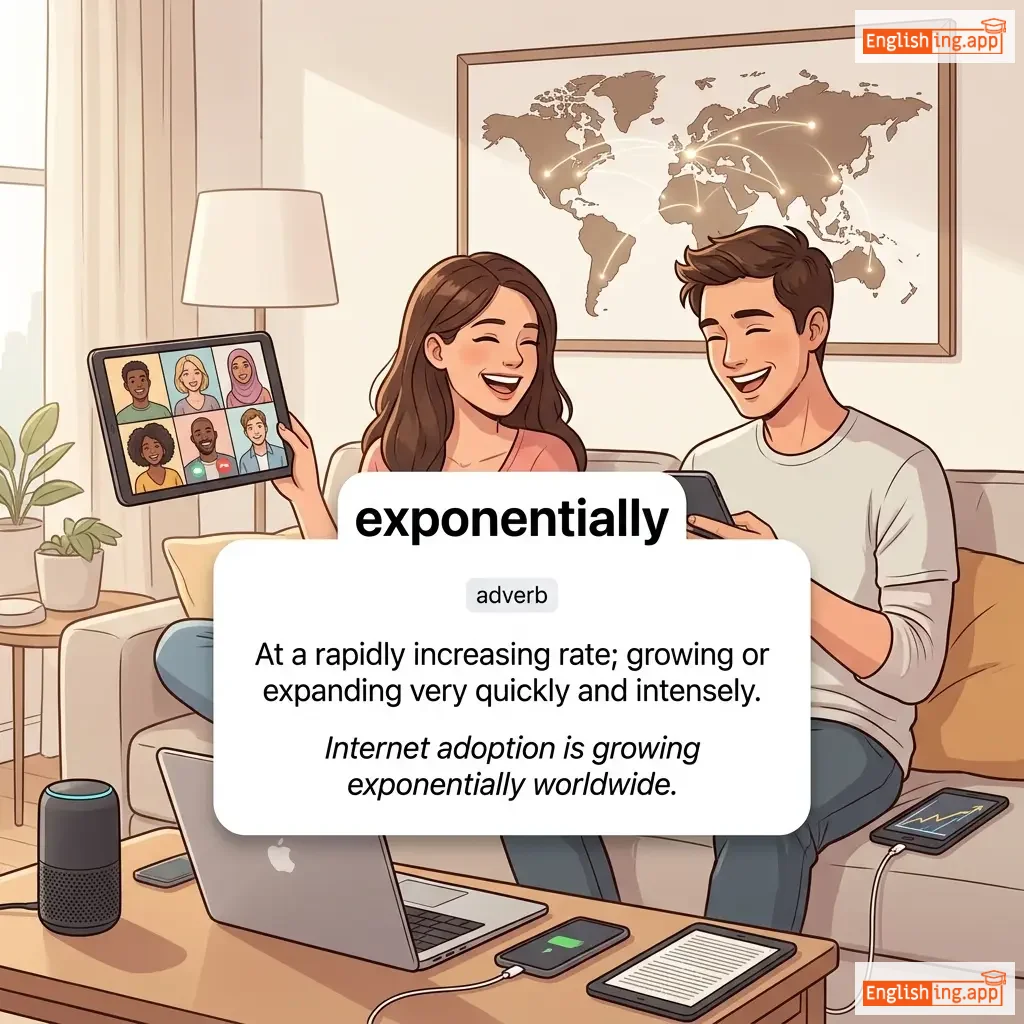
exponentially definition card — visual illustration of the meaning
adverb
ˌekspəˈnenʃəli
指数地 (zhǐshù de)

At a rapidly increasing rate; growing or expanding very quickly and intensely.

"Internet adoption is growing exponentially worldwide."
"互联网的采用在全球范围内指数增长。" (Hùliánwǎng de cǎiyòng zài quánqiú fànwéi nèi zhǐshù zēngzhǎng.)
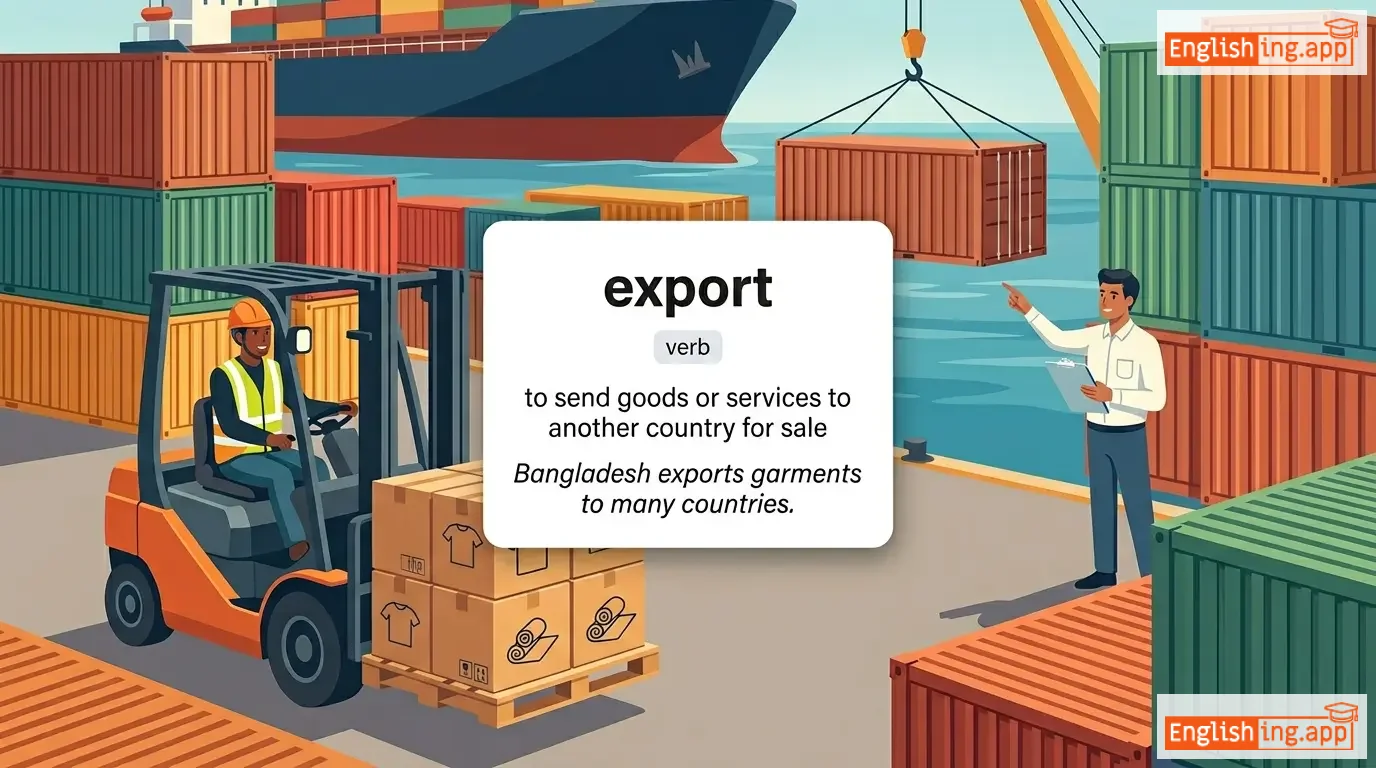
export definition card — visual illustration of the meaning
verb
/ˈekspɔːt/
出口 (chūkǒu)

to send goods or services to another country for sale

"Bangladesh exports garments to many countries."

"孟加拉国向许多国家出口纺织品。" (Mèngjiālā guó xiàng xǔduō guójiā chūkǒu fǎngzhīpǐn.)
expose definition card — visual illustration of the meaning
verb
/ɪkˈspoʊz/
揭露 (jiēlù)

to reveal or uncover something hidden

"The journalist tried to expose the corruption scandal."

"记者试图揭露腐败丑闻。" (Jìzhě shìtú jiēlù fǔbài chǒuwén.)
noun
/ˌekspəˈzɪʃən/
阐述 / 展览 (chǎnshù / zhǎnlǎn)

a detailed explanation or a large public exhibition

"The scientist gave a clear exposition of the theory."
"科学家清楚地阐述了这个理论。" (Kēxuéjiā qīngchǔ de chǎnshùle zhège lǐlùn.)
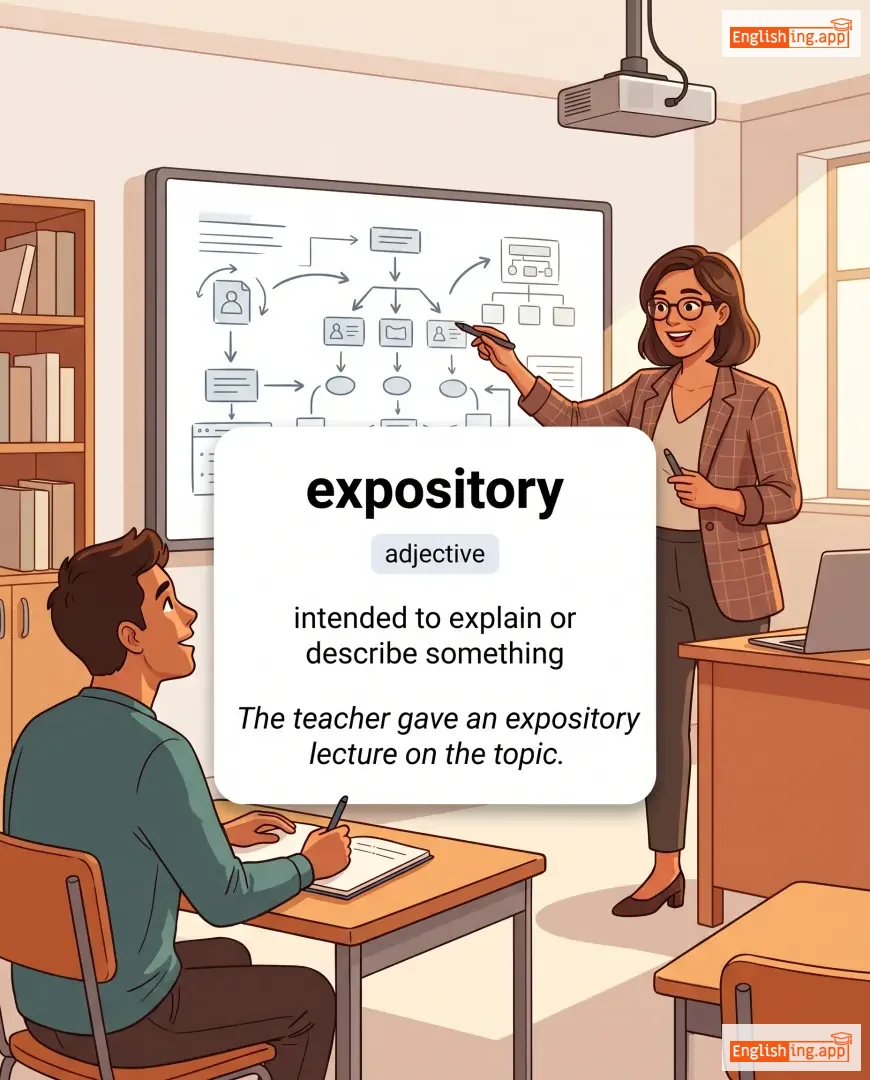
expository definition card — visual illustration of the meaning
adjective
/ɪkˈspɒzɪtəri/
说明的 (shuōmíng de)

intended to explain or describe something

"The teacher gave an expository lecture on the topic."

"老师就这个话题进行了说明性的讲座。" (Lǎoshī jiù zhège huàtí jìnxíngle shuōmíng xìng de jiǎngzuò.)
verb
/ɪkˈspɒstjʊleɪt/
表示不同意见 (biǎoshì bùtóng yìjiàn)

to express strong disapproval or disagreement

"She expostulated with her friend about the risky decision."

"她对她朋友关于冒险决定的看法表达了不同意见。" (Tā duì tā péngyǒu guānyú màoxiǎn juédìng de kànfǎ biǎodále bùtóng yìjiàn.)